Electrical Circuits 1
 Call Kai
 Learn
Learn Practice Test
 Spaced Repetition
 Match
Match Flashcards
 Knowt Play
1/46

There's no tags or description
Looks like no tags are added yet.
Name | Mastery | Learn | Test | Matching | Spaced | Call with Kai | Chat |
|---|
No analytics yet
Send a link to your students to track their progress
47 Terms
What are the three quantities related by Ohm's Law?
Voltage, current and resistance.
What is the symbol for current?
I
What is the unit of current?
Ampere (A)
What is the symbol for voltage/potential difference?
V
What is the unit of voltage?
Volt (V)
What is the symbol for resistance?
R
What is the unit of resistance?
Ohm (Ω)
What is Ohm’s law?
V = IR
What does Ohm’s law describe?
The relationship between voltage, current, and resistance in an electrical circuit

What does this symbol mean in a circuit and what does it provide?
Battery - provides potential difference/voltage

What is this symbol in a circuit and what does it do?
Resistor - it inhibits/reduces current flow
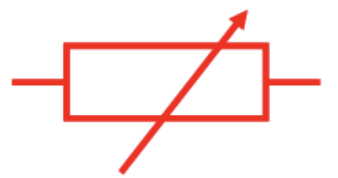
What is this symbol and what does it mean?
Rheostat - a variable resistor
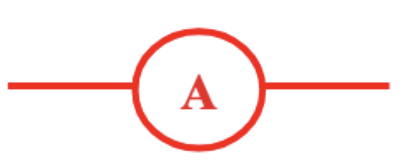
What is this symbol and what does it do?
Ammeter - measures current (Amperes (A))

What is this symbol and what does it do?
Voltmeter - measures voltage (V)

What is this symbol and what does it do?
Diode - allows current to flow in one direction only

What is this symbol and what does it do?
Switch - turns circuit on or off

What is this symbol and what does it represent?
Lamp - light source (or something that is being powered on)
What happens to the voltage when batteries are connected in series?
Their voltages add together


Why might batteries be combined in series?
To increase the total potential difference/voltage
What happens to the voltage when identical batteries are connected in parallel?
The voltage does not increase; it remains the voltage of one battery

What is the advantage of connecting batteries in parallel?
They can supply current for longer

What should you remember about batteries connected in parallel?
They should have equal potential/voltage
What happens if I mix parallel batteries by mistake?
The battery with the higher voltage tries to charge the lower-voltage or weaker battery instantly. Because parallel connections have virtually no internal resistance between terminals, current flows at maximum speed. Both the charged and discharged batteries rapidly heat up as energy dumps from one to the other, potentially causing a fire/explosion
What happens if two 1.5 V batteries are accidentally connected in opposite directions in series?
Their voltages oppose each other and cancel: 1.5 + (-1.5) = 0V
What current would flow through a 6 Ohm resistance with 0V applied?
0A
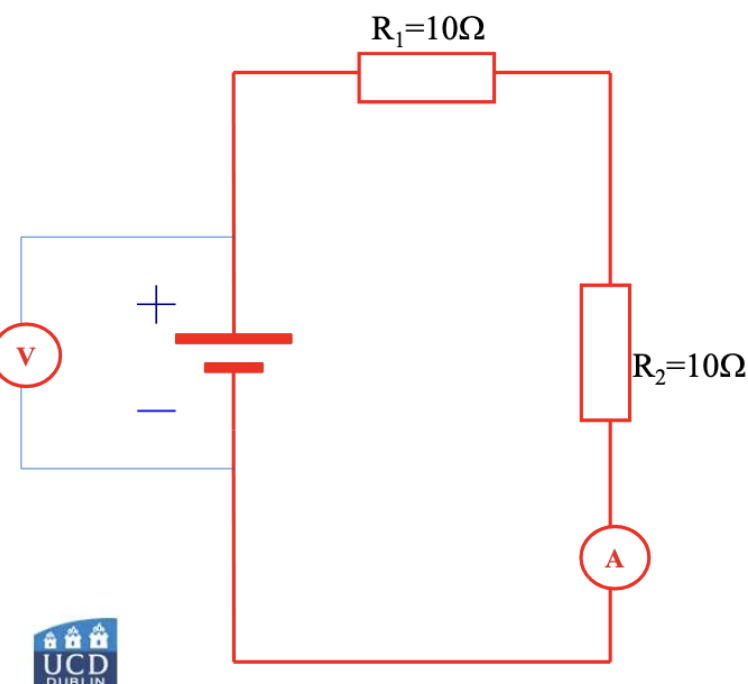
What happens to resistance when resistors are connected in series?
The resistances add together
What is the formula for total resistance in series?
RT = R1 + R2 + R3 + …
What is the current through each resistor in a simple series circuit?
The same current flows through each resistor
What do the voltage drops across series resistors add up to?
The supply voltage
How can you calculate the amount of volts that go into each resistor?
V = IR

What is the formula for resistors in parallel?

Is the total resistance of parallel resistors higher or lower than the individual resistances?
Lower than the smallest individual resistance

What happens to voltage across components connected in parallel?
Each parallel branch has the same voltage across it
What happens to electrical potential (V) as current flows through resistance?
Electrical potential/voltage drops
What does Kirchhoff’s voltage law state for a DC circuit?
The sum of the voltage drops across all components equals the supply voltage

What is the first step when solving a mixed resistor circuit?
Simplify the parallel resistors into a single equivalent resistor

What is the second step?
Simplify the circuit into one total resistance

What is the third step?
Calculate the total current using Ohm’s law
What is the fourth step?
Determine voltage drop through each stage, doing the series resistors first
What is the fifth step?
When current splits between parallel branches, use I = V/R to calculate the current through each resistor
When calculating power for a parallel resistor, which current should you use in P = I2R
The current through that specific resistor, NOT the total circuit current
What is a common mistake when calculating two parallel resistors?
Forgetting that 1/Rp = 1/R1 + 1/R2 rather than simply adding the resistances
What is the formula for electrical power?
P = IV
What is the unit of power?
Watt (W)
What do P, I and V represent in P = IV?
P - power
I - amperes
V = volts
What alternative power formula can be used with resistance and current?
P = I2R
What alternative power formula can be used with voltage and resistance?
P = V2/R