Urologic Disorders Part 1
 Call Kai
 Learn
Learn Practice Test
 Spaced Repetition
 Match
Match Flashcards
 Knowt Play
1/114

There's no tags or description
Looks like no tags are added yet.
Name | Mastery | Learn | Test | Matching | Spaced | Call with Kai | Chat |
|---|
No analytics yet
Send a link to your students to track their progress
115 Terms
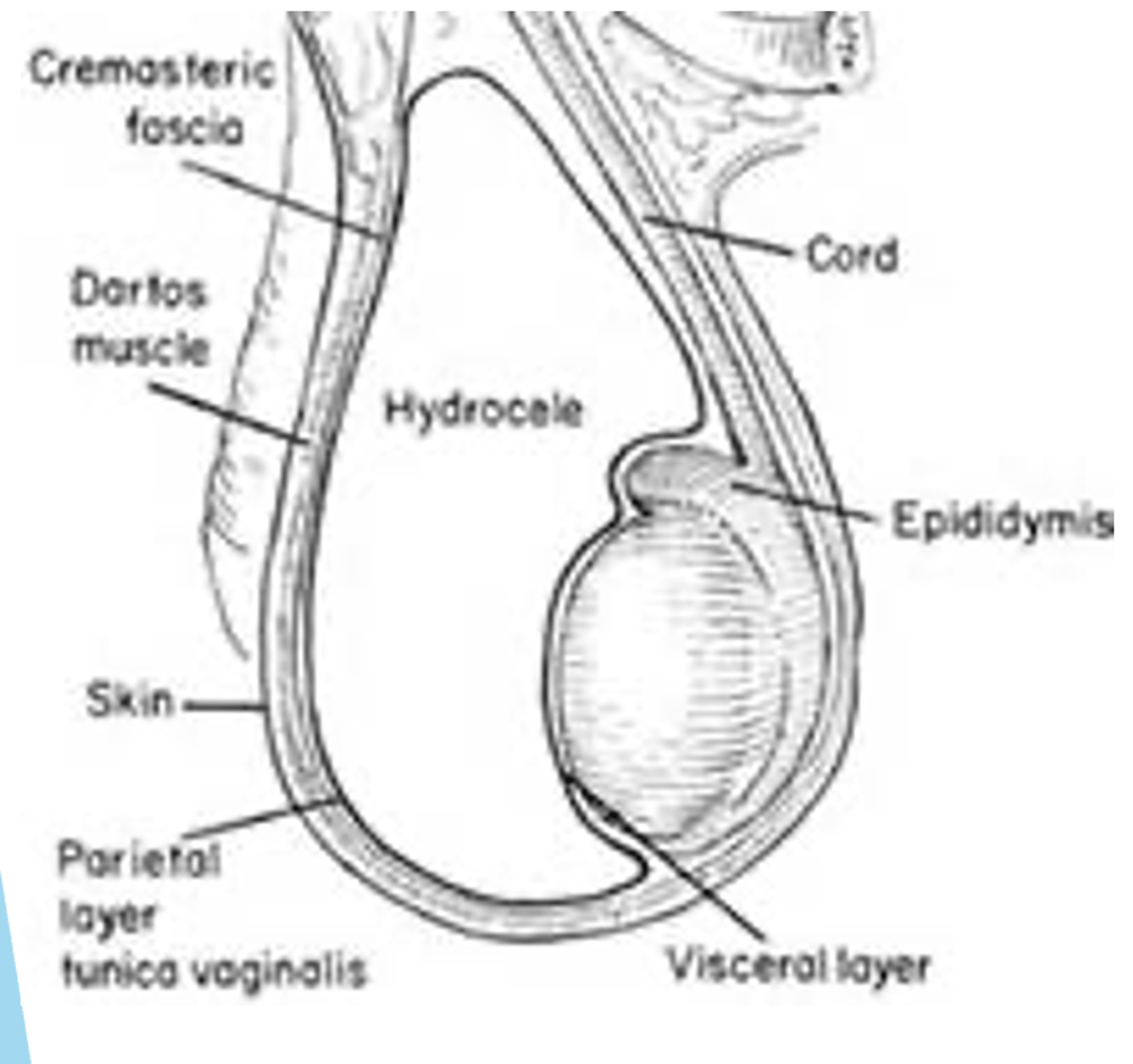
What is a hydrocele?
Collection of fluid around the testicle, forming between the parietal tunica vaginalis and the visceral tunica vaginalis
What conditions are hydroceles associated with?
Epididymitis, torsed appendix testis, or idiopathic
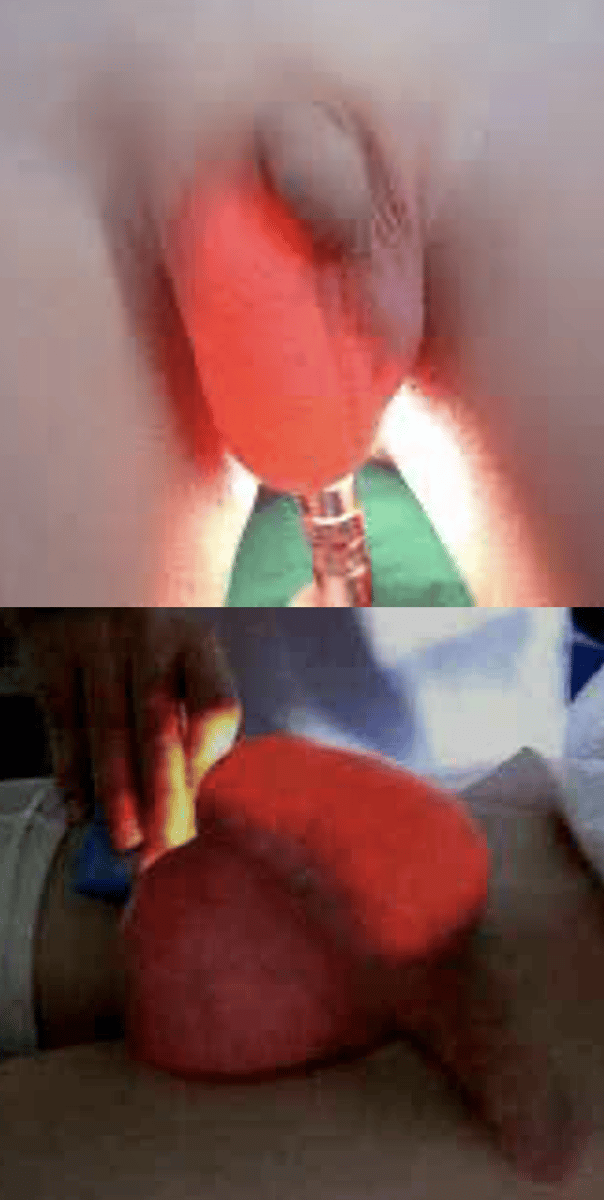
What is the clinical presentation of hydrocele?
Unilateral scrotal enlargement with transillumination
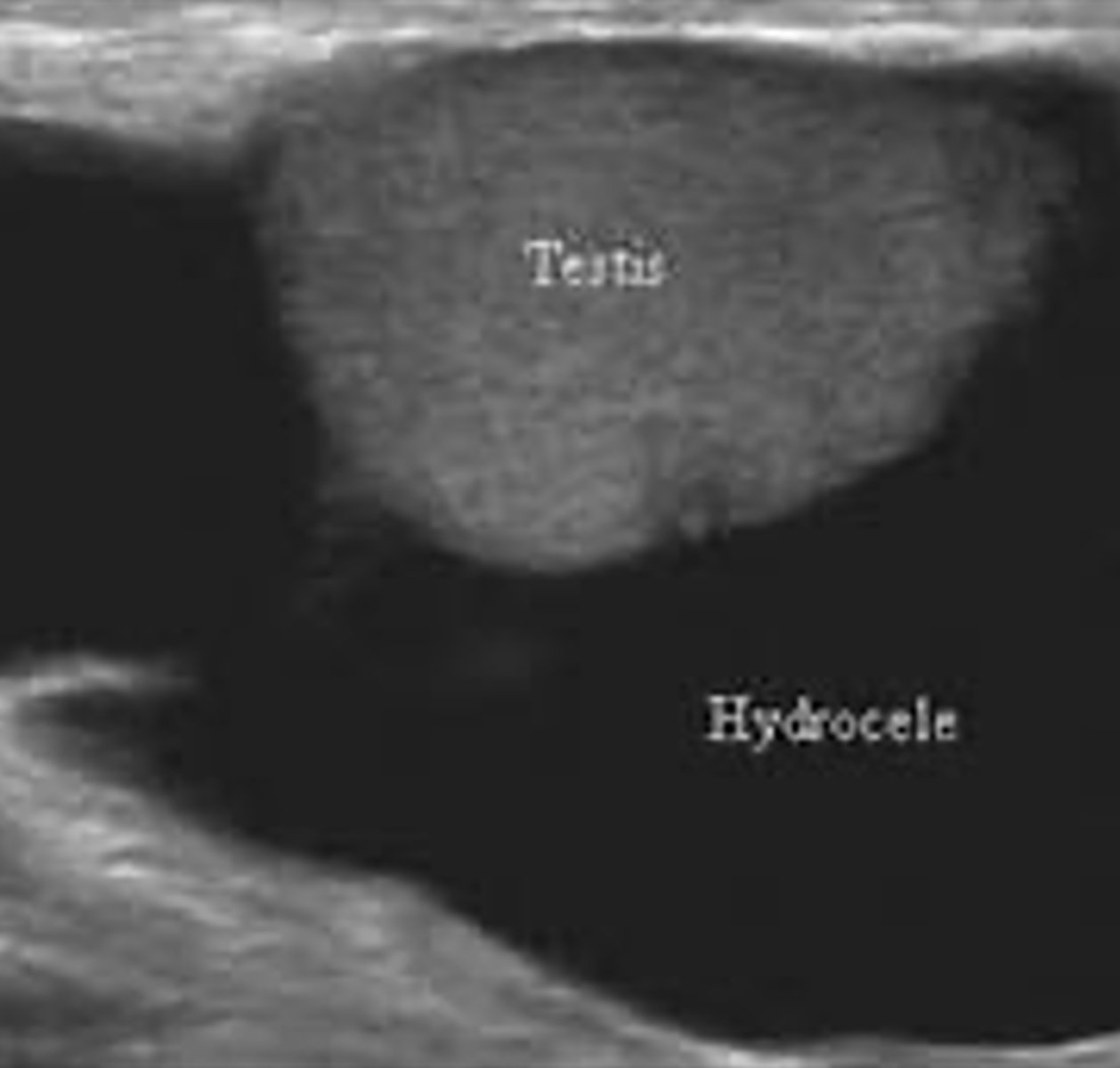
What imaging is obtained for hydrocele?
scrotal ultrasound
What is the treatment for hydroceles?
monitoring, needle aspiration, hydrocelectomy
What is a varicocele?
Dilated veins of the pampiniform plexus (MC on left)
What are the effects of varicoceles?
pain, heaviness, atrophy of testis, infertility
What is the clinical presentation of varicoceles?
"bag of worms" appearance that increases with valsalva
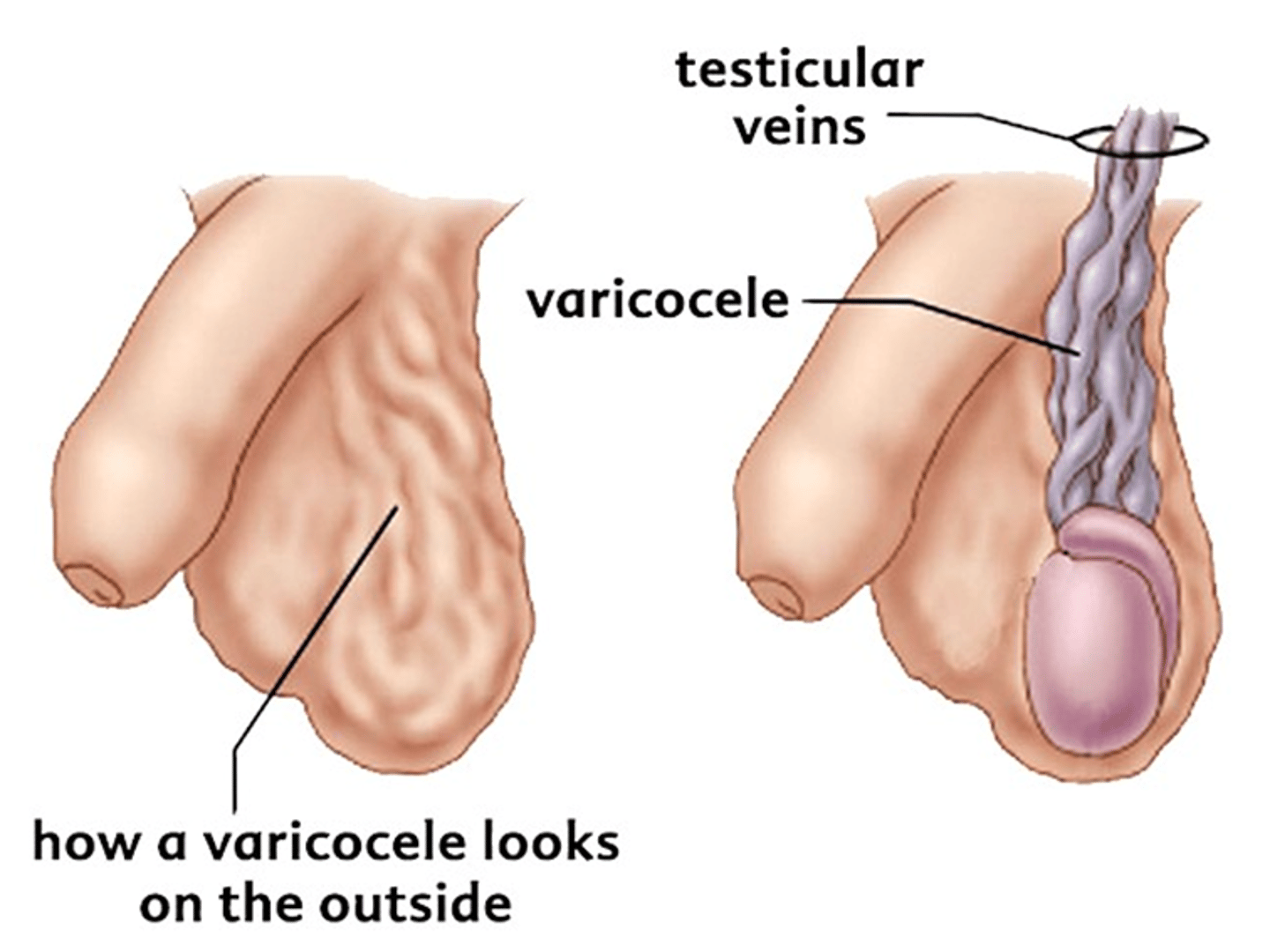
What are the grades of a varicocele?
I: small, not grossly visible, only palpable during valsalva
II: moderate in size, not grossly visible, palpable while standing
III: large, grossly visible
What imaging is obtained for varicoceles?
Ultrasound if inconclusive +/- CT for rapid onset (malignancy risk)
What is the management of varicoceles?
surveillance or varicocelectomy (symptomatic)
What are the risk factors for testicular torsion?
cryptorchidism and "bell clapper" deformity
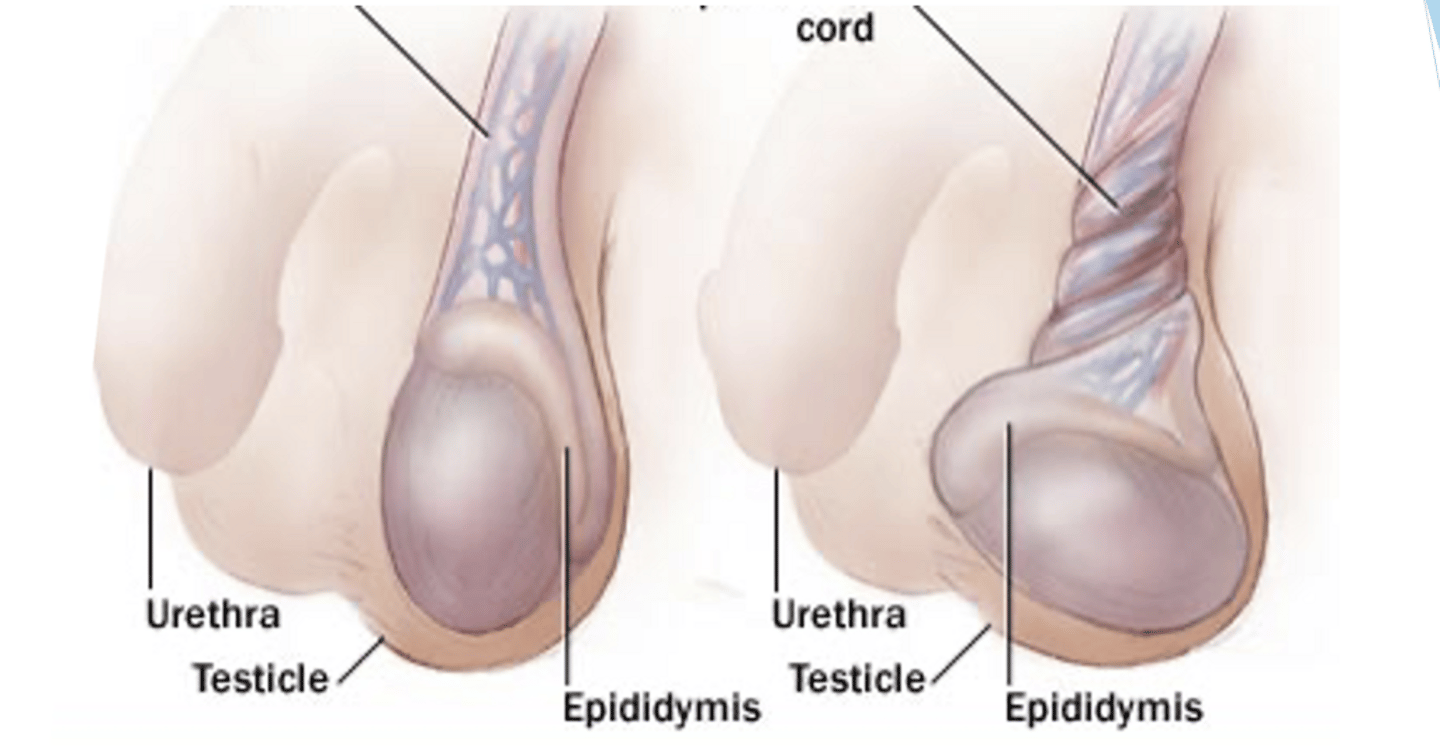
What is the clinical presentation for testicular torsion?
tender/firm testis, high/horizontal riding, absent cremasteric reflex, knotted sperm cord, epididymis not posterior to testis
What imaging is obtained for testicular torsion?
doppler ultrasound +/- nuclear testicular scan (decreased activity) only obtained if uncertain
What is the management for testicular torsion?
surgical exploration ideally within 6 hours
What is paraphismosis?
Prepuce stuck proximal to glans, unable to be reduced and may result in penile necrosis
What is the management of paraphimosis?
manual reduction, dorsal slit, or circumcision with monitoring for Fournier’s gangrene if immunocompromised
What is peyronie's disease?
acquired penile abnormality caused by fibrosis of the tunica albuginea leading to curvature
What are the symptoms of peyronie's disease?
pain, shortening, erectile dysfunction
What is the acute or inflammatory phase of peyronie's disease?
Changing degree of penile curvature or deformity and pain
What is the chronic phase of peyronie's disease?
Non-progression and Absence of pain
What is the reccomended treatment for acute/inflammatory peyronie's disease?
NSAIDs and Pentoxifylline
What is the reccomended treatment for stable peyronie's disease?
- Injection with Collagenase Clostridium histolyticum or verapamil
- Penile traction 2-8hr/day X 6 months
- manual modeling
When is surgery indicated for Peyronies disease?
refractory severe PD compromising sexual function
What is hypospadias?
urethra opens onto the ventral surface instead of at the tip; MC congenital anomaly of the penis
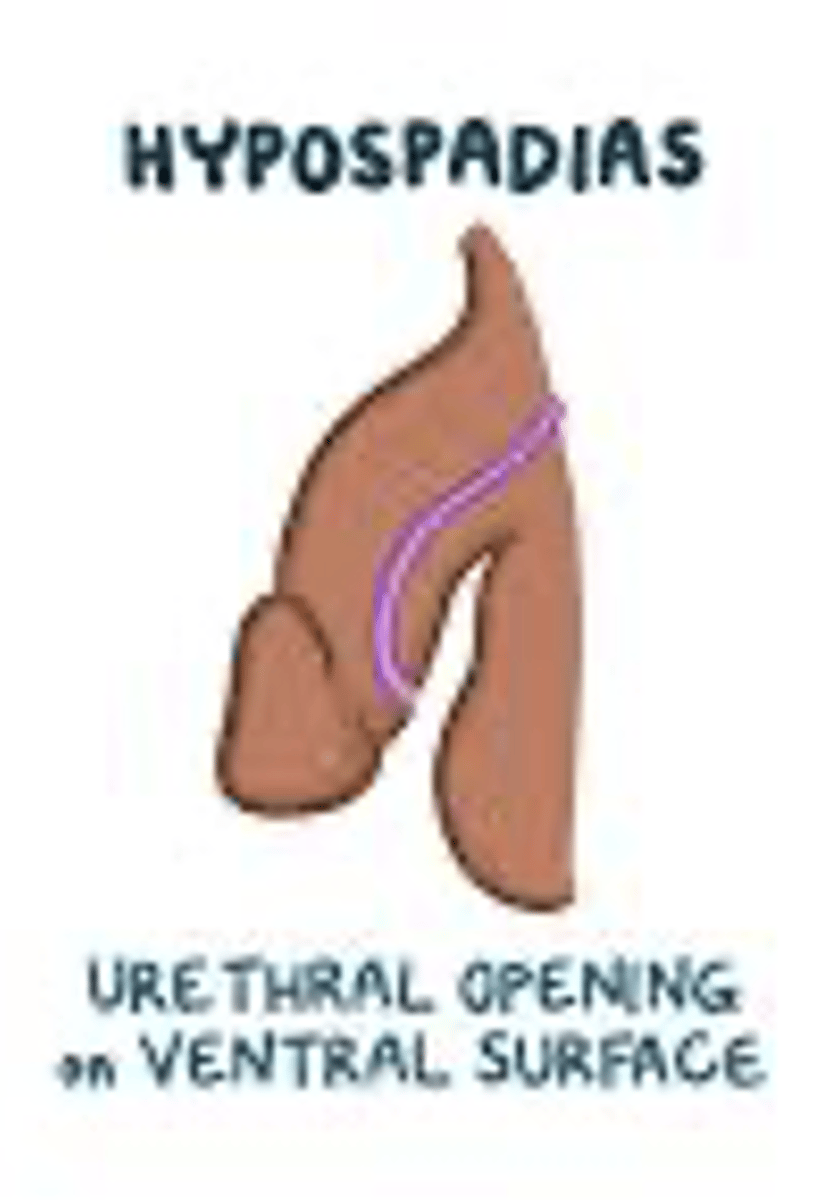
What are the associated symptoms of hypospadias?
chordee (ventral curvature of the glans), stream splaying, and leakage
What is the treatment of hypospadias?
surgical reconstruction
What are some complications following surgical repair of hypospadias?
urethral stricture, diverticulum, urethrocutaneous fistula, and urinary extravasation
What is the follow up for hypospadias treatment?
After first year, follow up at 5 years, prior to puberty, and at age 18
What is epispadias?
urethra opens onto the dorsal penile surface
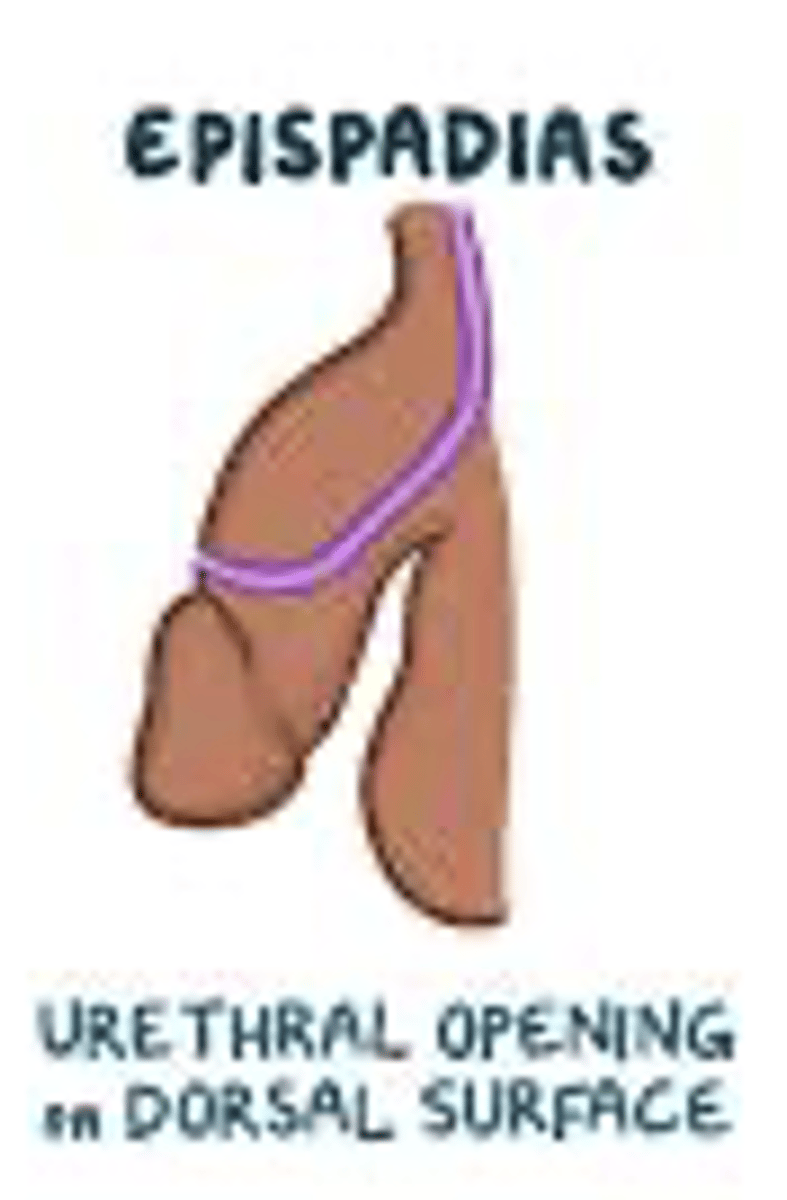
What are the associated symptoms of epispadias?
bladder exstrophy and bifid clitoris
What is the treatment of epispadias?
surgical correction
What are some complications following surgical repair of epispadias?
fistula, stricture, and diverticulum
What is urethral prolapse?
Evagination of the urethral mucosa beyond the external urethral meatus
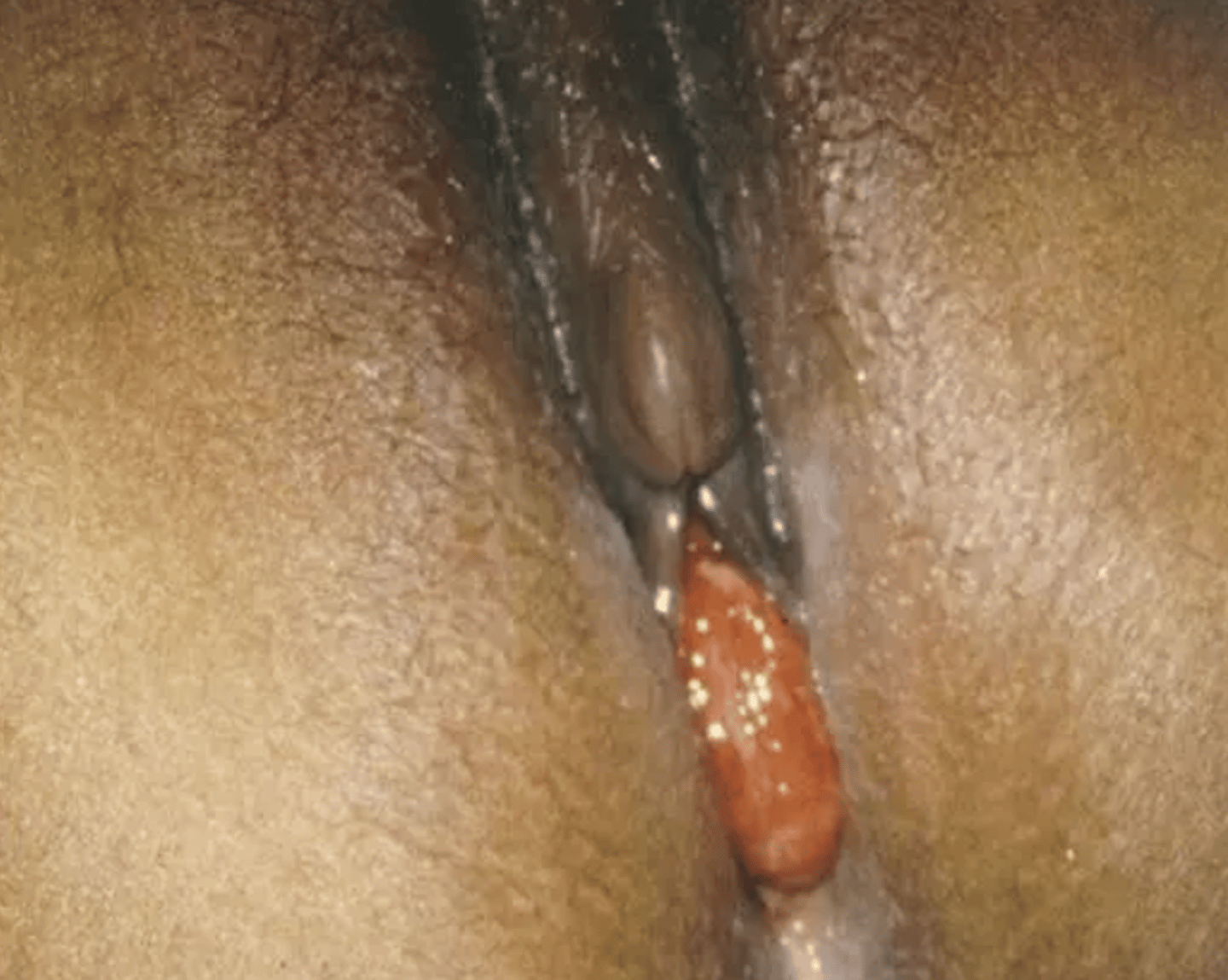
What are the possible causes of urethral prolapse?
development of a cleavage plane between smooth muscle layers of urethra +/- increased intra-abdominal pressure
What are some associated symptoms of urethral prolapse?
vaginal bleeding, dysuria, Mucosal ring of edematous red/purple tissue surrounding the urethral meatus
What is the management of urethral prolapse?
sitz bath, topical estrogen x 4-6/week, or surgery
What is urethral diverticula?
Sac or pocket that comes off the urethra MC in parous females 20-60 years old
What are the symptoms of urethral diverticula?
recurrent UTIs, incontinence, pelvic pain, dyspareunia
What is the management of urethral diverticula?
low dose prophylactic antibiotics (recurrent UTIs) or surgical excision
What causes urethral stricture?
instrumentation, catheters, trauma, STIs, radiation, malignancy, surgery
What diagnostics are used for urethral stricture?
cytology (infection or malignancy), urine flow test, US, PVR, MRI, Retrograde Urethrogram (RUG), cytoscopy
What is the management for urethral stricture?
urethral dilation, urethrotomy, surgical urethroplasty
What is cystitis?
Urinary infection involving the bladder
What are the risk factors for cystitis?
immunocompromised and urinary stasis/obstruction
What is the most common pathogen responsible for cystitis?
E. coli; followed by klebsiella, enterobacter proteus, pseudomonas, staphylococcus
What are the symptoms of cystitis?
Dysuria, urgency, frequency, suprapubic pain, cloudy/malodorous urine, fever, mental status change
What are the possible UA results for cystitis?
Leukocyte esterase, nitrates, >5 WBCs (pyuria), >100,000 bacterial organisms
What is the treatment of cystitis?
- Nitrofurantoin (Macrodantin, Macrobid) 100 mg BID x 5 days
- TMP-SMX (Bactrim) BID x 3 days
- Fosfomycin Trometamol (Monurol) 3g dissolved in water one time
What are some options for post/pre-coital antibiotic prophylaxis for UTIs?
- TMP-SMX 40mg/200mg
- TMP-SMX 80mg/400mg
- Nitrofurantoin 50-100mg
- Cephalexin 250mg
What is the management for cystitis in the presence of a catheter?
culture, change catheter, antibiotics, and removal of catheter when no longer necessary
What are the non-infectious causes of urethritis?
Trauma, Reiter's (Reactive arthritis), stricture, stone, or lesions
What are the infectious causes of urethritis?
Gonococcal or Non-gonococcal: chlamydia, mycoplasma, ureaplasma, trichomonas
What are the symptoms of urethritis?
Dysuria, urethral discharge, urethral pruritus
What labs are seen with urethritis?
leukocyte esterase, > 10 WBCs, >5 WBCs / oil immersion field
What is the treatment for gonococcal urethritis?
- Ceftriaxone 500 mg IM x 1 dose (1000mg for >150kg)
- follow up in 1 week and 3 months after treatment
What is the treatment for chlamydial urethritis?
- Azithromycin 1 g po x 1 dose or Doxycycline 100 mg po bid x 7d
- follow up in 3-4 weeks for pregnant patients
What are the causes of epididymitis?
Infection, Behcet's disease, Amiodarone, Testicular/Epididymal tumor
Which bacteria cause epididymitis in men < 35 vs > 35 years old?
< 35: gonorrhoeae and chlamydia
> 35: E. coli
What are the symptoms of epididymitis?
Edematous tender testicle, epididymis and spermatic cord +/- hydrocele
What labs may need to be obtained for epididymitis?
urine culture +/- STI testing
What is the treatment of epididymitis?
scrotal support, analgesia, cold compress, antibiotics
What is orchitis?
Inflammation and/or infection of the testicle that is isolated or part of epididymo-orchitis
What are the most common causes of orchitis?
mumps, UTIs, STIs, scrotal trauma
What are the symptoms of orchitis?
testicular pain/swelling, myalgia, headache, malaise, anorexia, low-grade fever +/- parotitis (mumps)
How do you differentiate orchitis from epididymitis or epididymo-orchitis?
Normal non-tender epididymis
What diagnostics are used for orchitis?
PCR, serology, UA/culture, NAAT
What is the treatment of orchitis?
viral supportive care or antibiotics for STIs
What are the types of prostatitis?
- Acute Bacterial Prostatitis
- Chronic Bacterial Prostatitis
- Inflammatory Chronic Pelvic Pain Syndrome (Nonbacterial Prostatitis)
- Noninflammatory Chronic Pelvic Pain Syndrome (Prostadynia)
What are the symptoms of Acute Bacterial Prostatitis?
Fever, irritative, positive obstructive voiding sx, warm boggy tender prostate
What imaging is indicated if the patient is persistently febrile?
CT pelvis (r/o prostatic abscess)
What is the management for Acute Bacterial Prostatitis based on symptoms?
- Fever, high WBCs, or Sepsis: IV antibiotics followed by oral antibiotics after discharge
- Urinary retention: suprapubic tube might be preferable
What are the symptoms of chronic bacterial prostatitis?
pain in genitals, urinary tract, perineum, low back, and/or with ejaculation
What is the physical exam finding for chronic bacterial prostatitis?
tender boggy prostate
What labs are seen in chronic bacterial prostatitis?
Expressed prostatic secretion (EPS)
What medications are used in the management of chronic bacterial prostatitis?
- TMP-SMX or Fluoroquinolones
- NSAIDs
- Alpha Blockers
- Anticholinergics/antimuscarinics
What is the clinical presentation of Inflammatory Chronic Pelvic Pain Syndrome?
History of UTIs with negative cultures but protatic tenderness
What labs are seen with Inflammatory Chronic Pelvic Pain Syndrome?
Prostatic fluid with leukocytes; cultures do not grow out bacterial pathogen
What is the treatment for Inflammatory Chronic Pelvic Pain Syndrome?
- NSAIDS, anticholinergics, alpha blockers, sitz baths
- TMP-SMX or doxycycline if unresponsive
What is the differentiating factor for Non Inflammatory Chronic Pelvic Pain Syndrome?
no bacteria on culture, and no leukocytes in prostatic fluid
What is the management for Non Inflammatory Chronic Pelvic Pain Syndrome?
- NSAIDs, anticholinergics, alpha blockers, sitz baths
- Benzodiazepines and TCAs
What is pyelonephritis?
Infection involving kidney's renal parenchyma
What are the symptoms of pyelonephritis?
Fevers, chills, flank pain, abdominal pain, nausea, vomiting, CVA tenderness
What lab findings are consistent with pyelonephritis?
WBC casts, Left shift Leukocytosis +/- blood culture
What imaging is indicated for more complicated presentations of pyelonephritis?
CT Urogram (CTU) and Renal U/S
What is the treatment for mild pyelonephritis (febrile <72 hrs with clinical improvement)?
Oral ciprofloxacin x 7-days +/- long acting IV antibiotic (Cipro 400mg or ceftriaxone 1g)
What is the treatment for mod-severe pyelonephritis?
IV antibiotics with urine/blood cultures and imaging
What complications can occur with mod-severe pyelonephritis?
renal or perinephric abscess
What is the pathophysiology behind benign prostatic hyperplasia?
- Growth of prostatic glandular tissue of transitional zone into lumen of urinary tract
- Increased smooth muscle tone of prostatic stroma and at bladder neck
What are lower urinary tract symptoms (LUTS)?
weak stream, hesitancy, intermittency, dribbling, nocturia
What are the DRE results of BPH?
indurated, firm, boggy, or nodular prostate +/- tenderness
What diagnostics are obtained in BPH?
Uroflow study: low flow
Post void residual: high
Cystoscopy: "kissing lobes"
Urodynamic study: low flow with elevated intravesical pressure
What medications are used for BPH management?
Phytotherapy, alpha blockers, 5-alpha-reductase inhibitors (5-ARI), PDE5-I
What should be avoided in BPH managment?
pseudoephedrine, alpha agonists, anticholinergics (caution), caffeine, alcohol, spicy foods
What is the gold standard surgical procedure for BPH?
Transurethral Resection of Prostate (TURP)
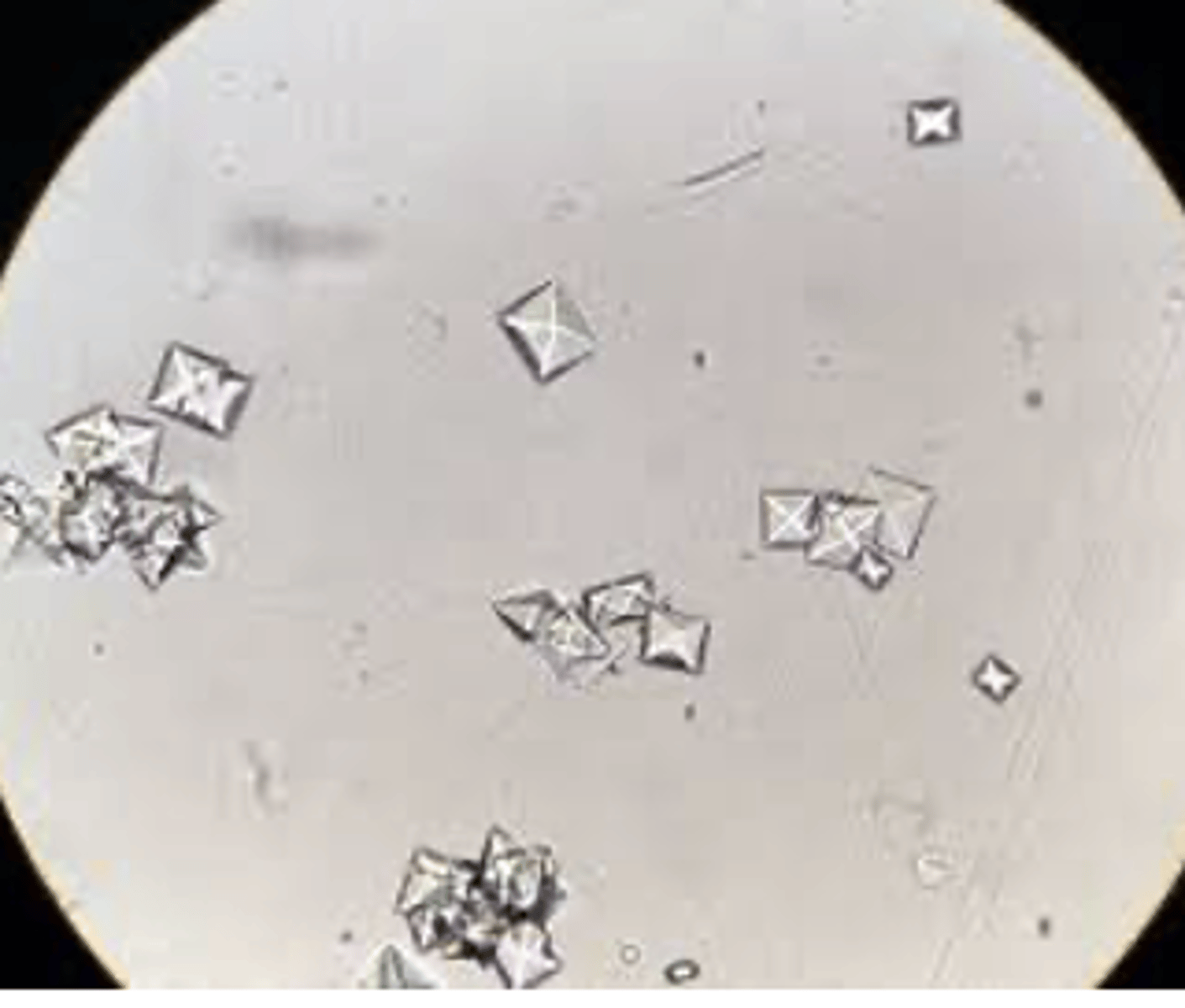
What are the characteristics of calcium oxalate urolithiasis?
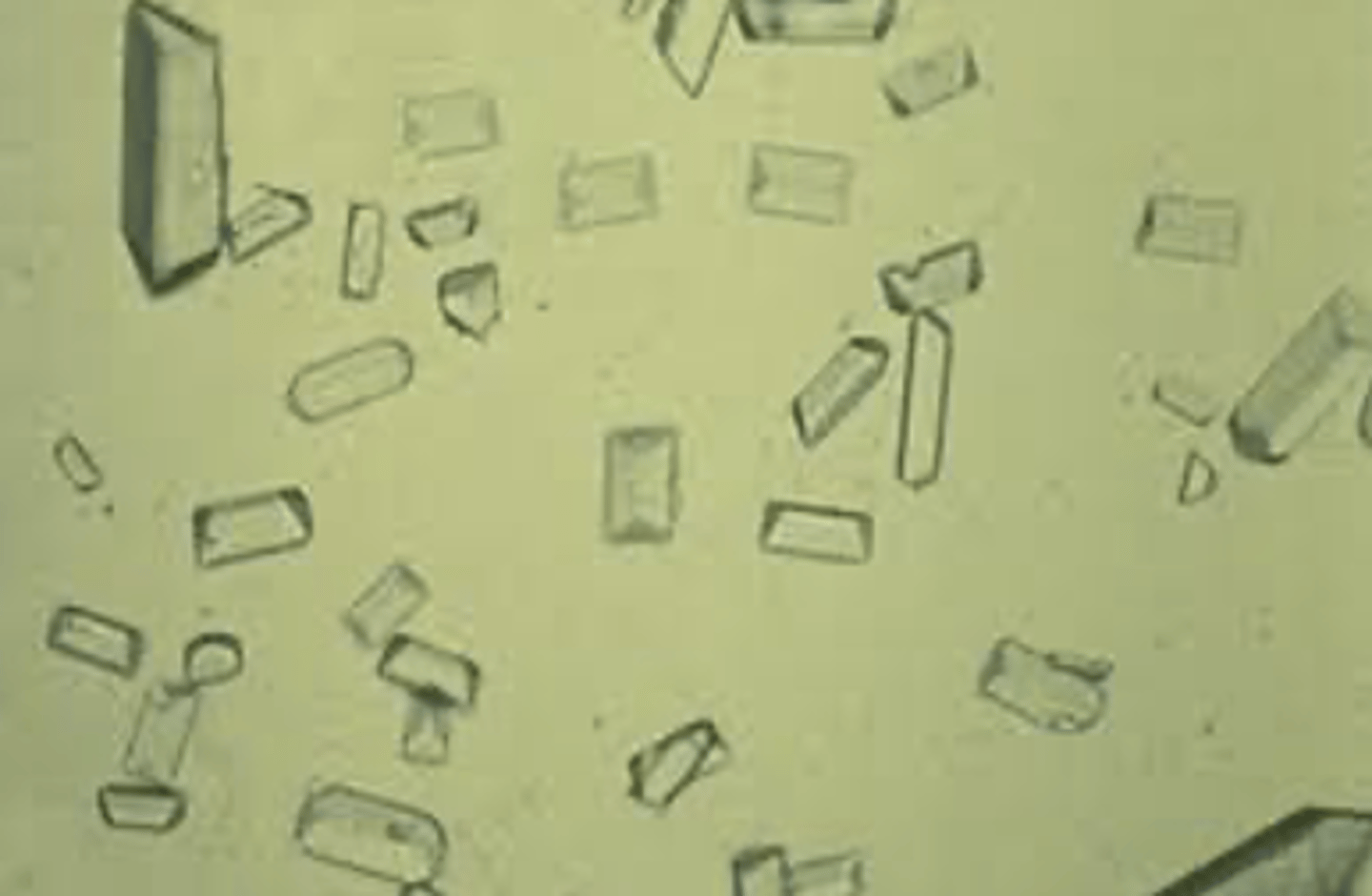
MC type, radio-opaque on XR, "mail envelope" shape and resistant to dissolution
What causes calcium oxalate urolithiasis?
Volume depletion, hyperparathyroidism, hyperoxaluria
What are the characteristics of uric acid (urate) urolithiasis?
Radiolucent, forms in acidic urine <6.0, dissolves in alkalinize urine
What causes uric acid (urate) urolithiasis?
Hyperuricosuria (high uric acid excretion)
What are the characteristics of magnesium ammonium phosphate urolithiasis?
Radio-opaque, "coffin-lid" crystals forming in alkaline urine and dissolved with acidification