IR and NMR
 View linked note
 Call Kai
 Learn
Learn Practice Test
 Spaced Repetition
 Match
Match Flashcards
 Knowt Play
1/46

There's no tags or description
Looks like no tags are added yet.
Name | Mastery | Learn | Test | Matching | Spaced | Call with Kai | Chat |
|---|
No analytics yet
Send a link to your students to track their progress
47 Terms
What is the fingerprint region?
600-1400cm-1
lots of C-C bonds
stay away from this
low frequency (low energy)
Basic chart for IR
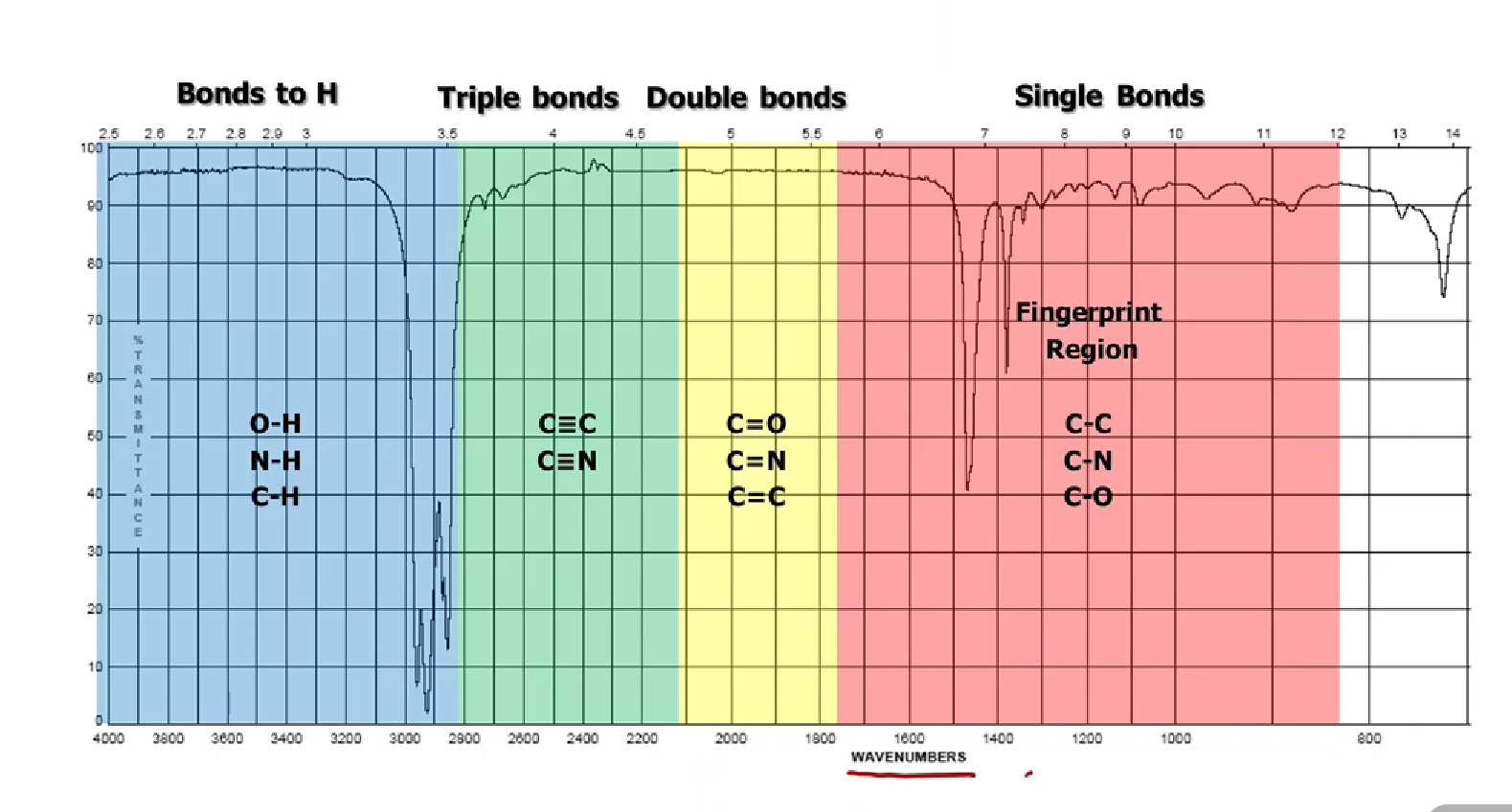
Double bond region
C=O
C=N
C=C
1500-2000cm-1
Triple bond region
2000-2500cm-1
Bonds to H
O-H
N-H
C-H
H is a smaller atom (so lighter), therefore vibrates at a higher frequency (high energy)
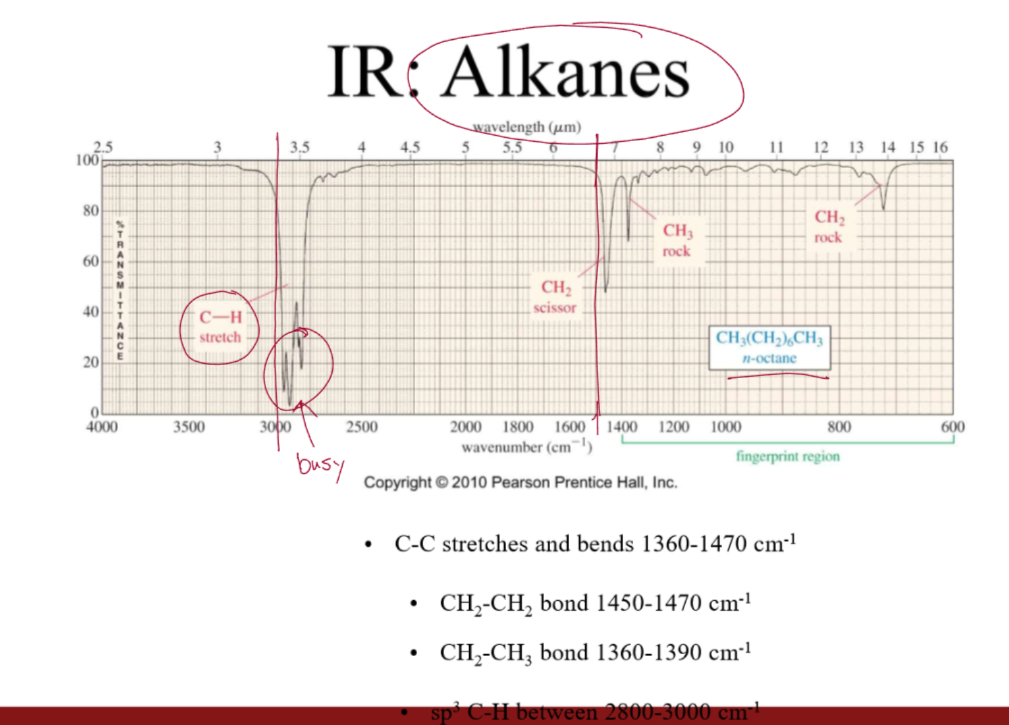
IR : alkanes
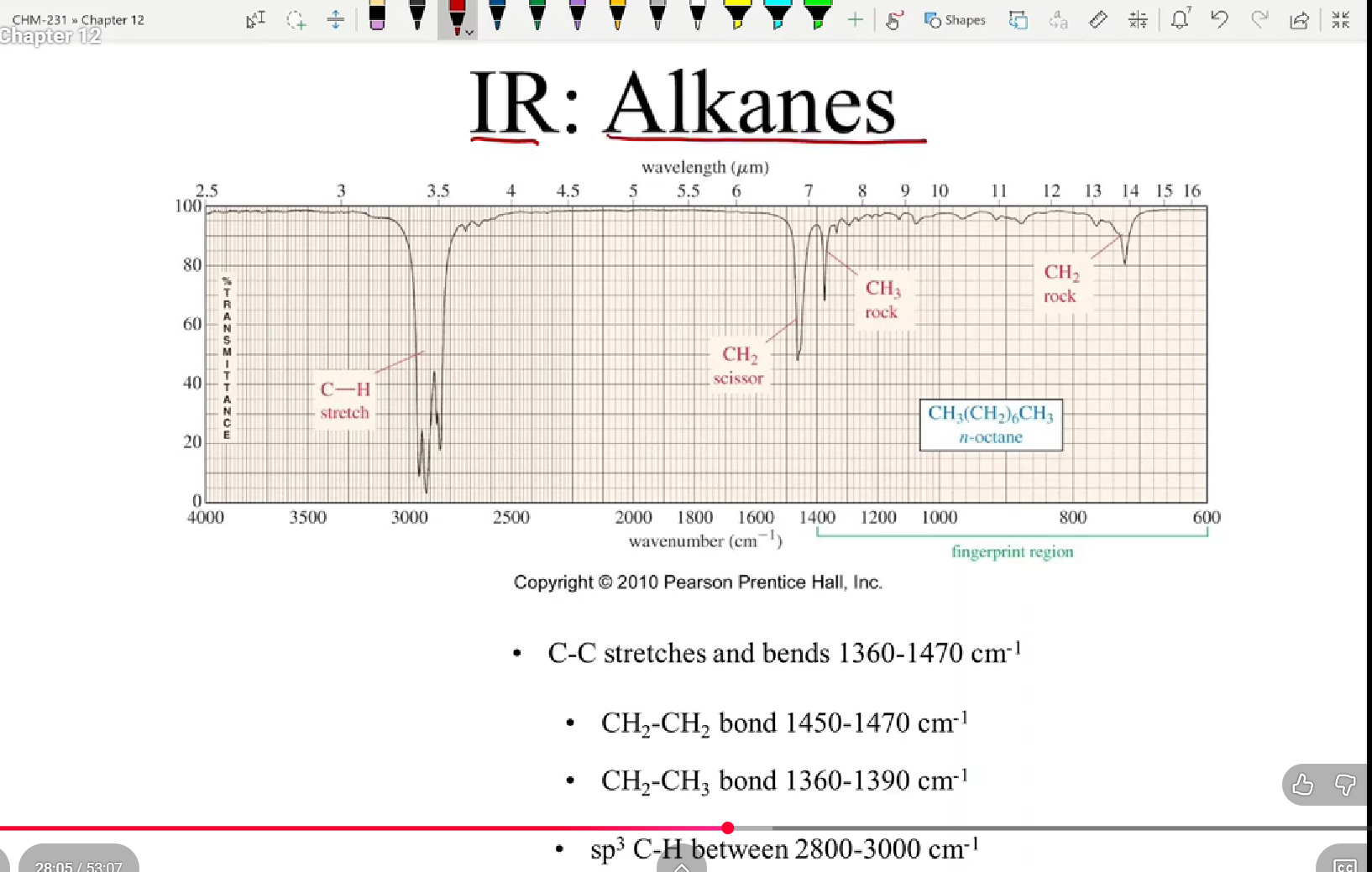
C-H stretch sp3
2800cm-1 to 3000cm-1
multiple peaks
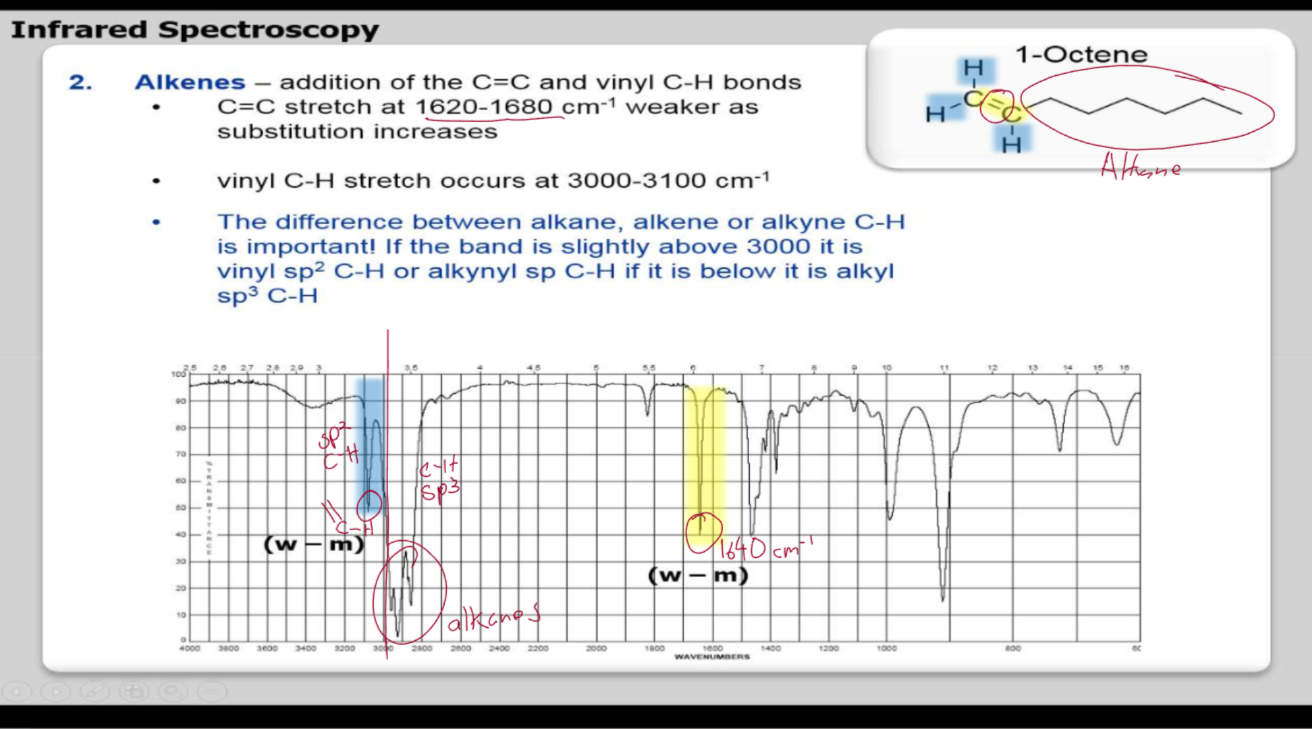
Alkenes
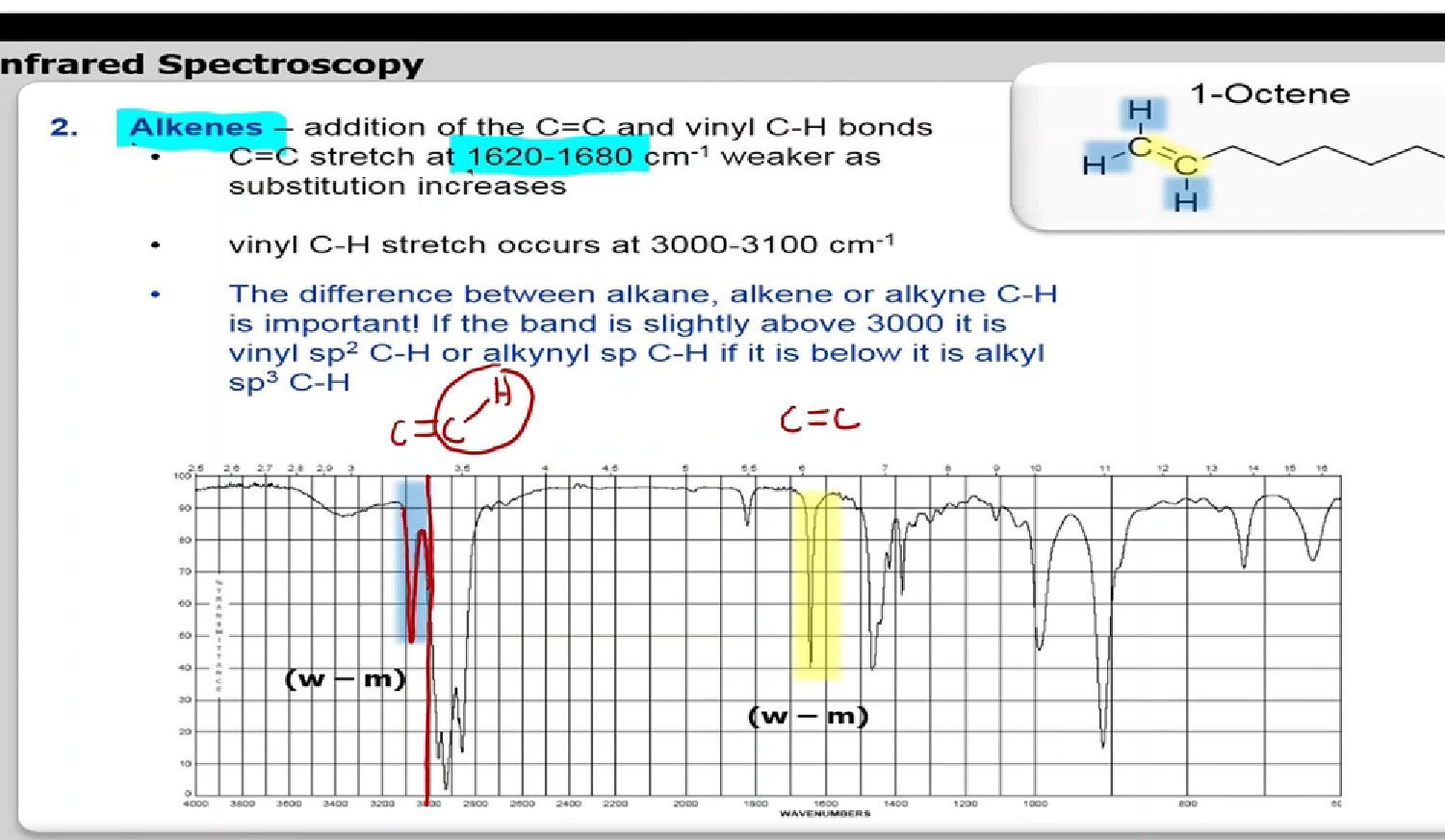
C=((C-H))
sharp peak after 3000cm-1
low to medium strength
C=C
sharp peak at 1600-1680cm-1
low to medium strength
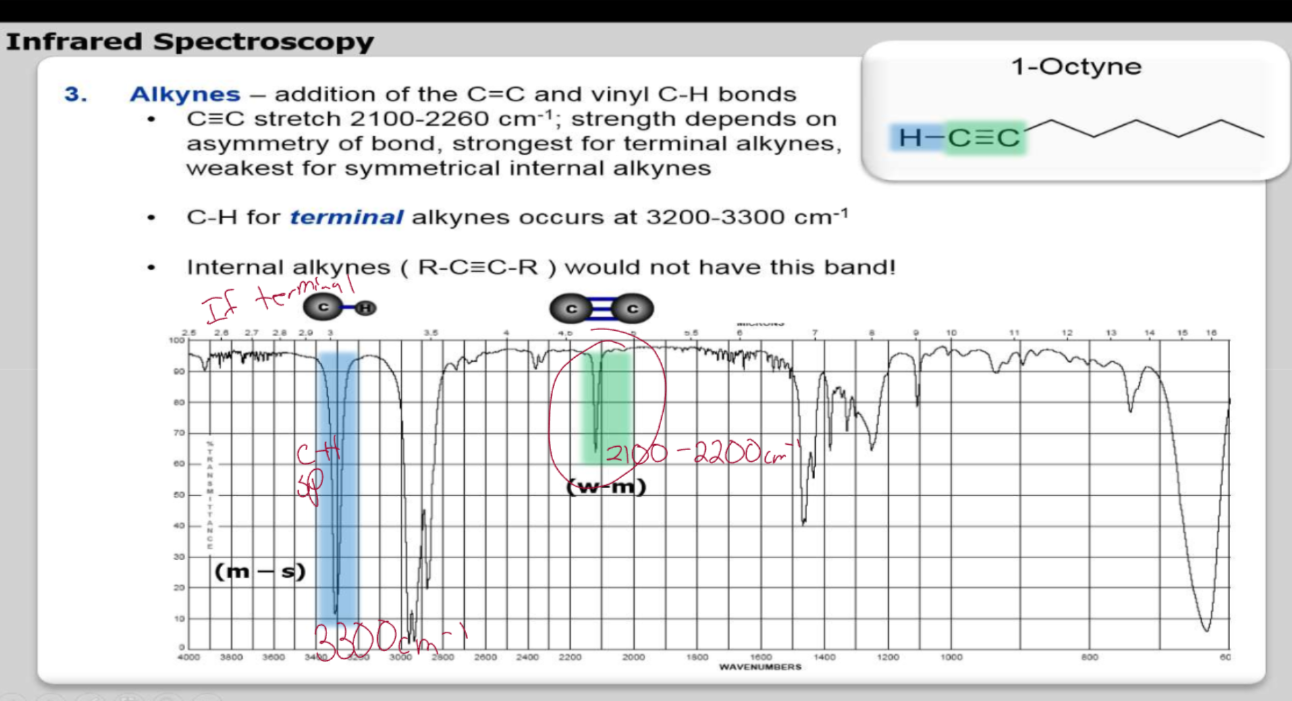
Alkynes
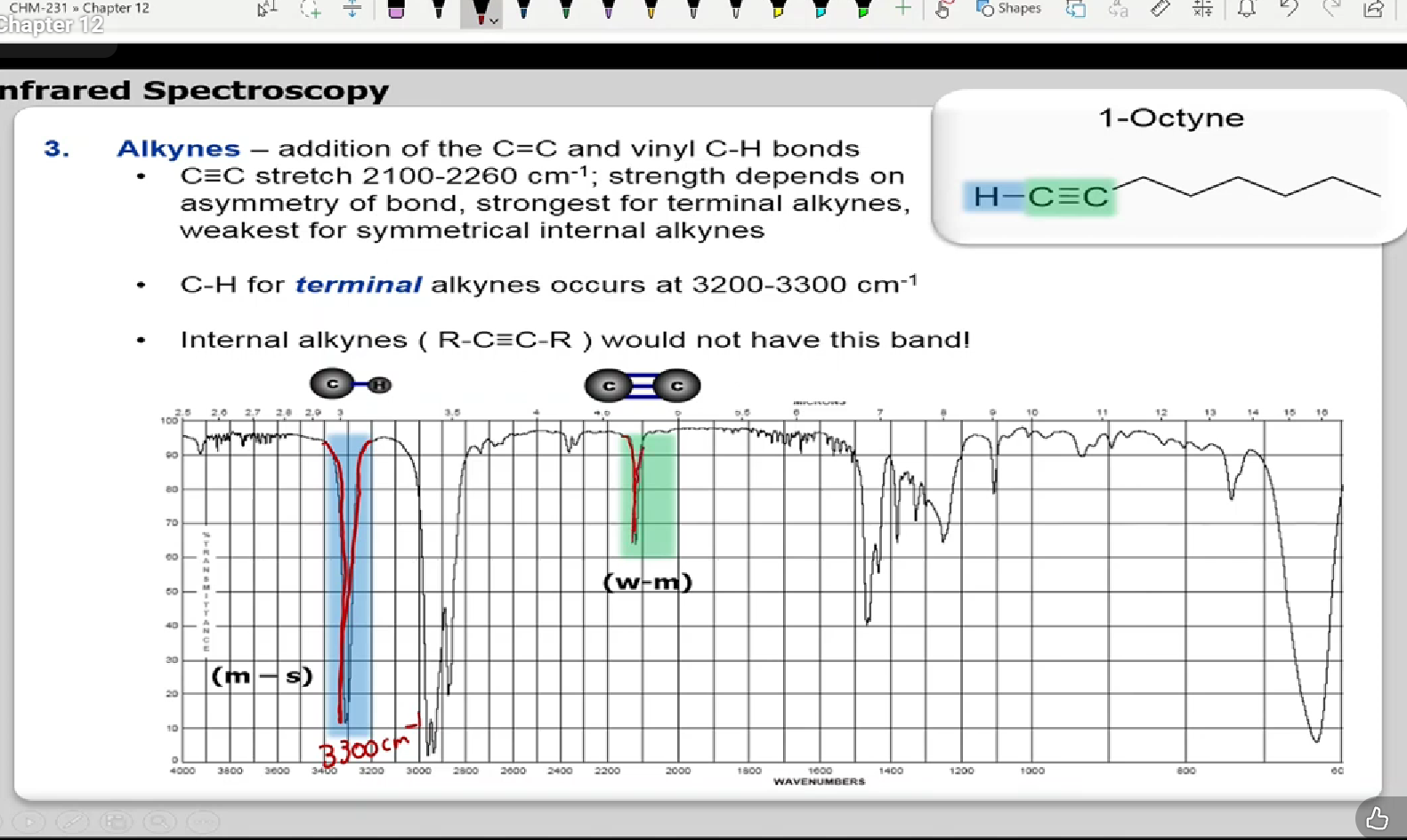
((H-C))-triple bond-C
3200cm-1 to 3300cm-1
very sharp (due to the carbon hydrogen stretching)
show up as one normally and not a pair
C-H
called terminal alkyne (at the end of the carbon chain)
C-triple bond-C
2100cm-1 to 2260cm-1
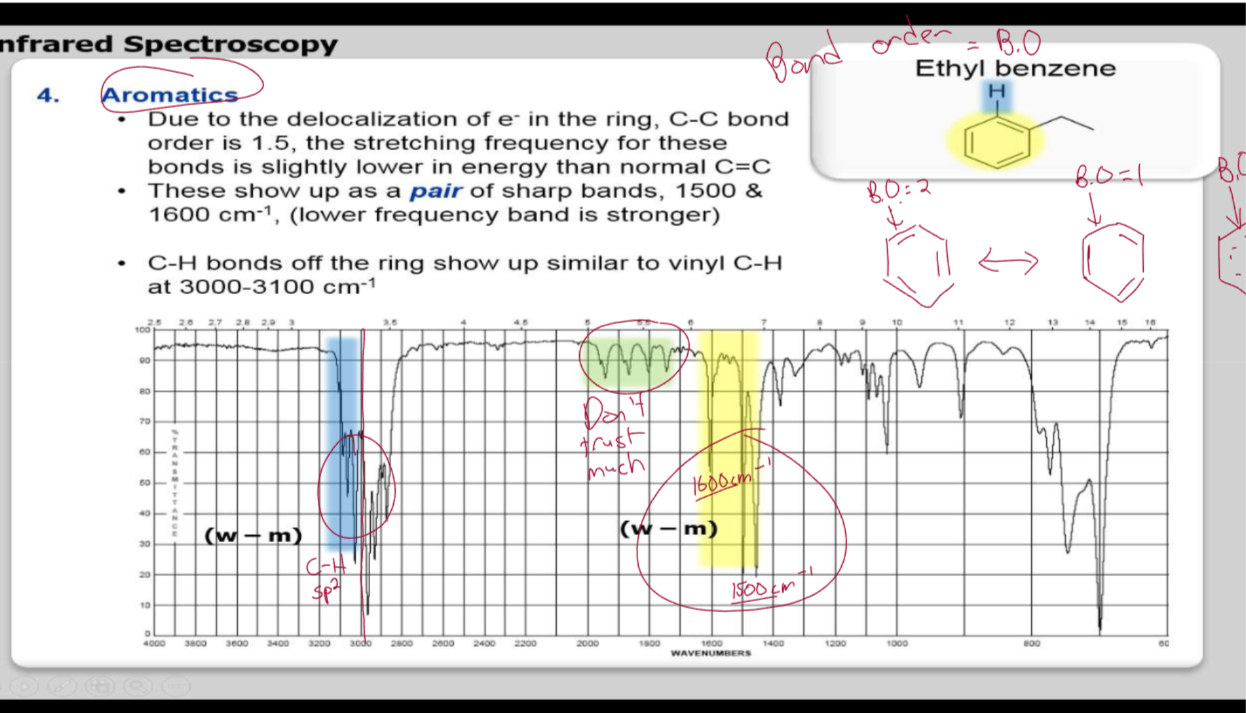
Aromatics
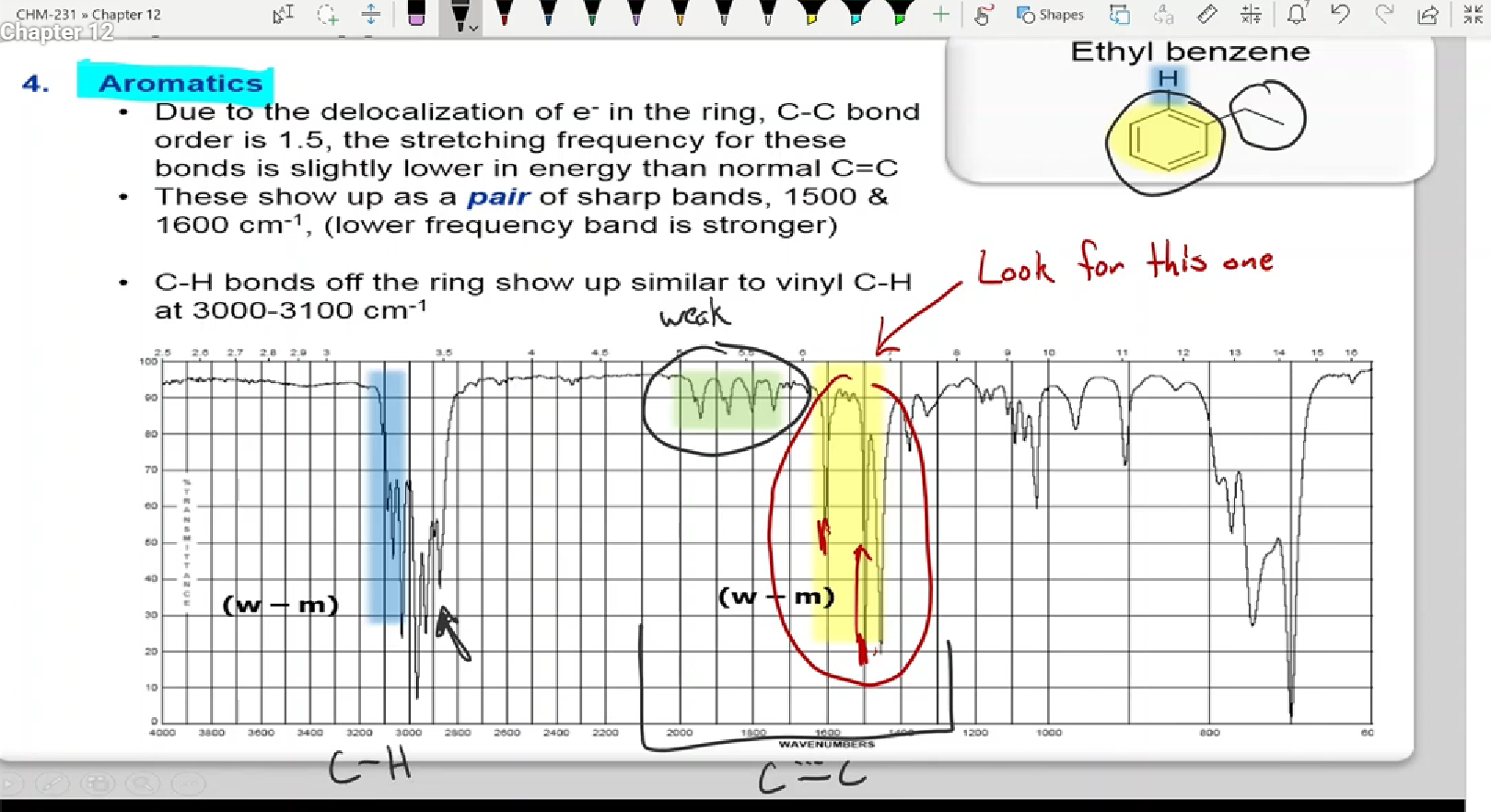
C-H bonds off the ring in aromatics
show up as pair of sharp peaks
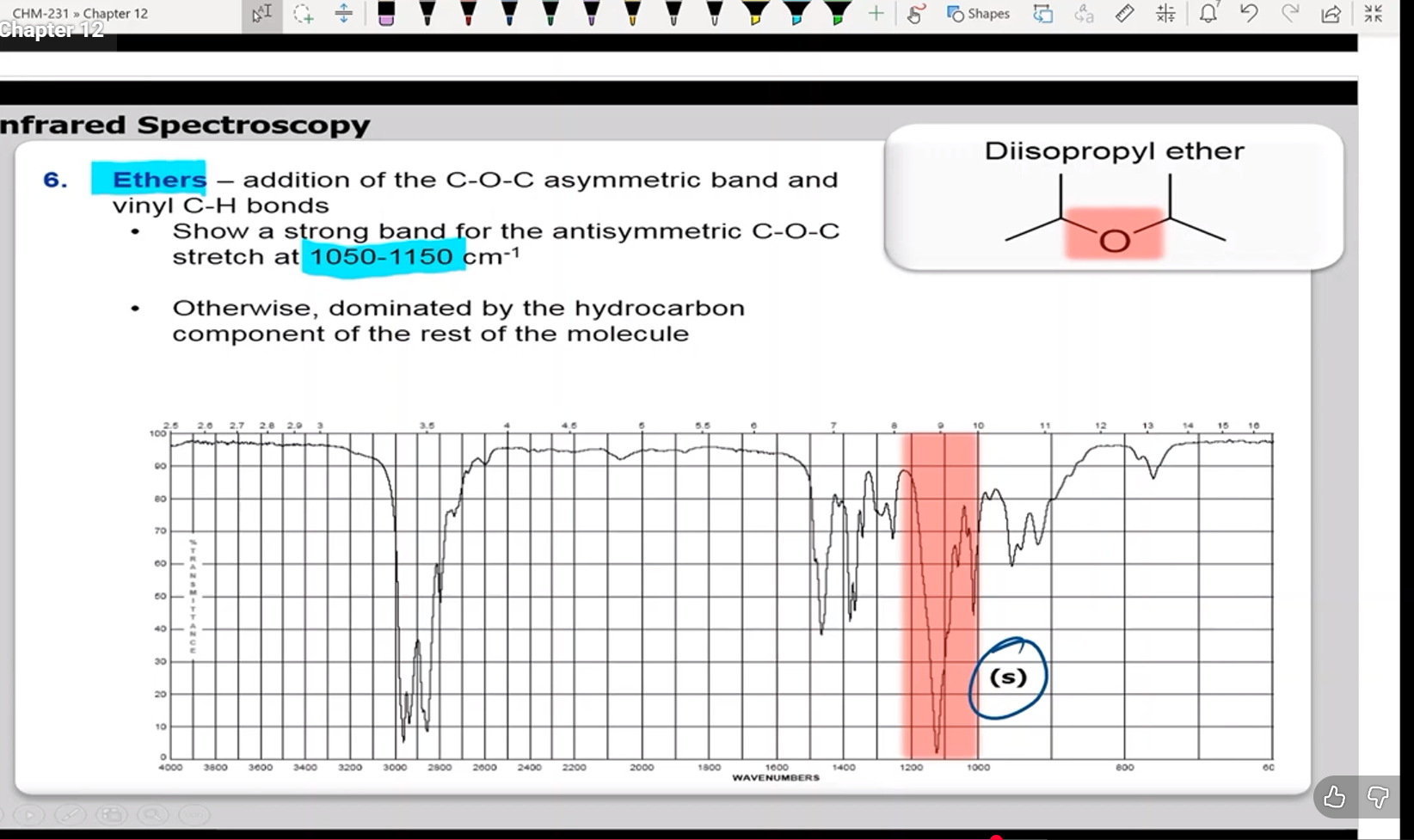
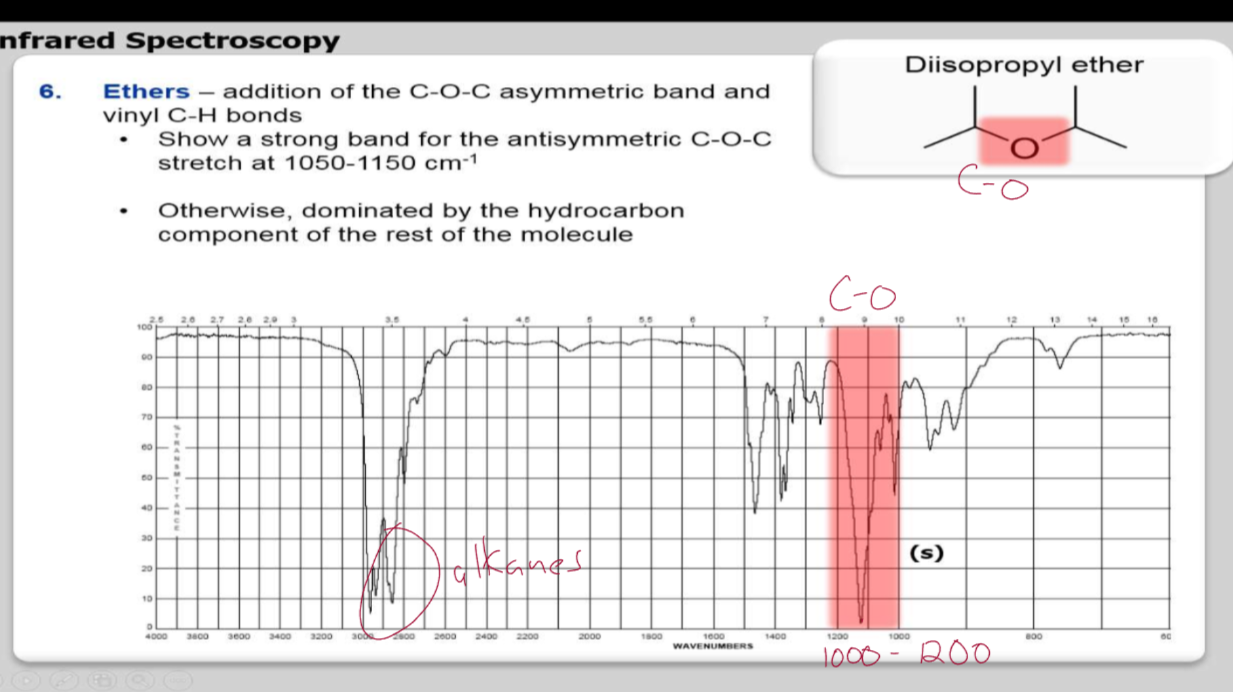
Ethers MUST KNOW
C-O-C
fingerprint reigon
1050-1150 cm-1
VERY strong peaks
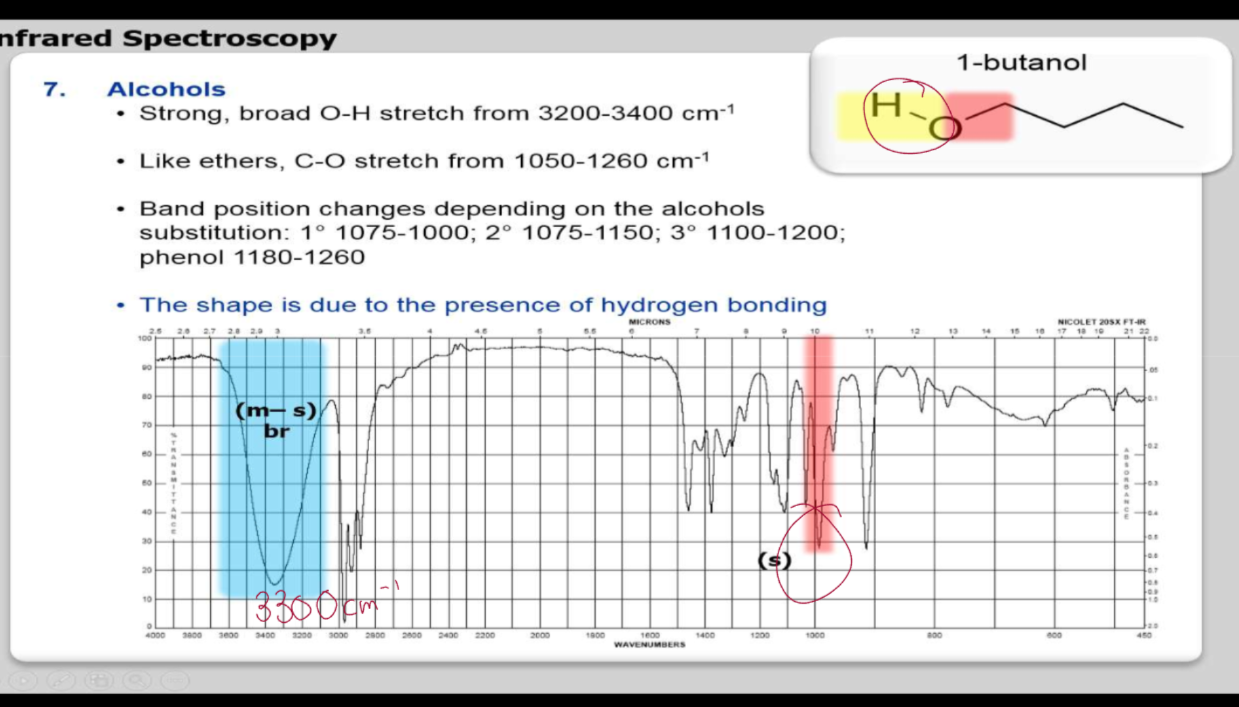
Alcohols
Strong, BROAD O-H stretch from 3200-3400 cm-1
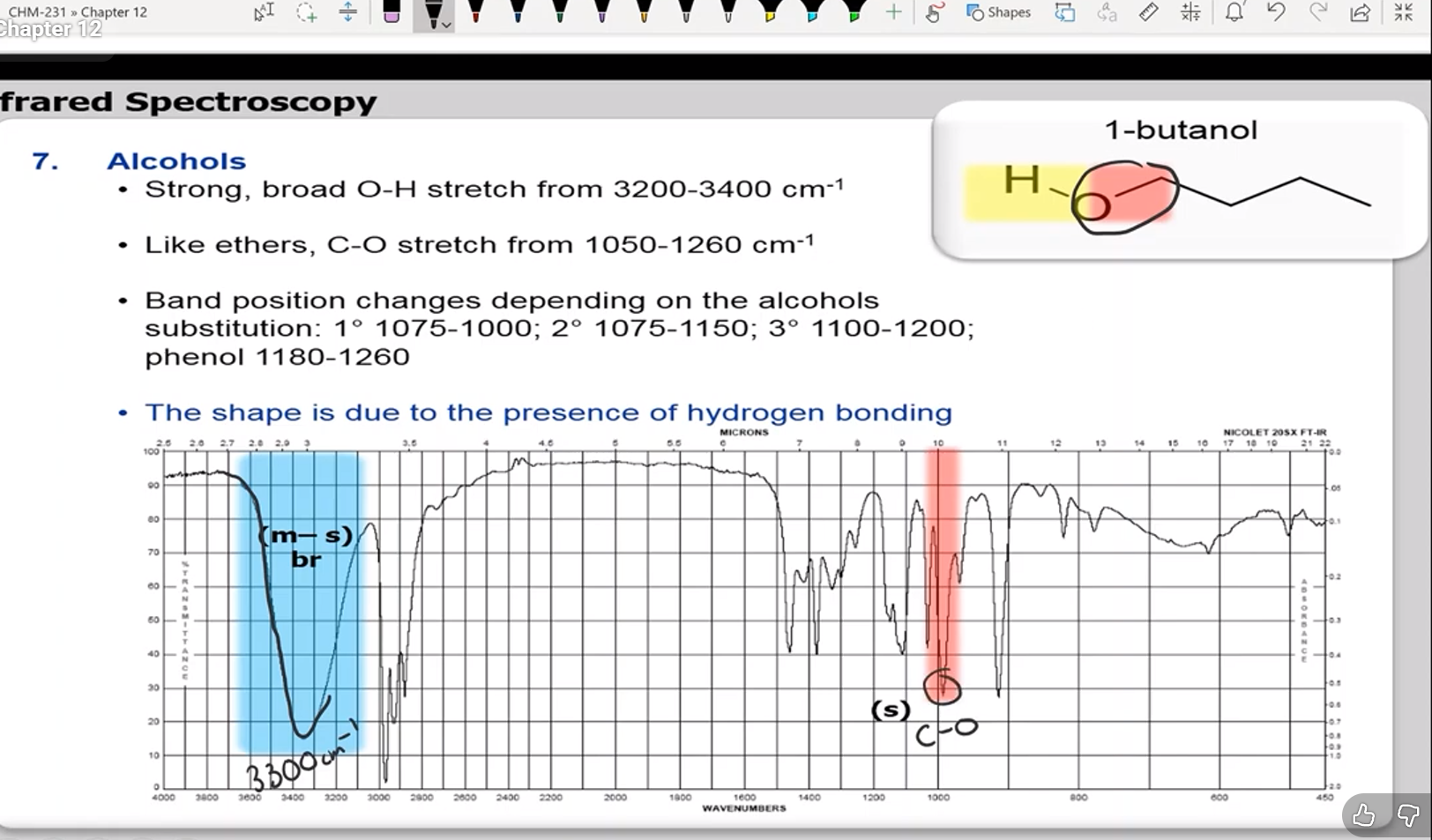
C-O
Similar to ethers, 1050-1260 cm-1
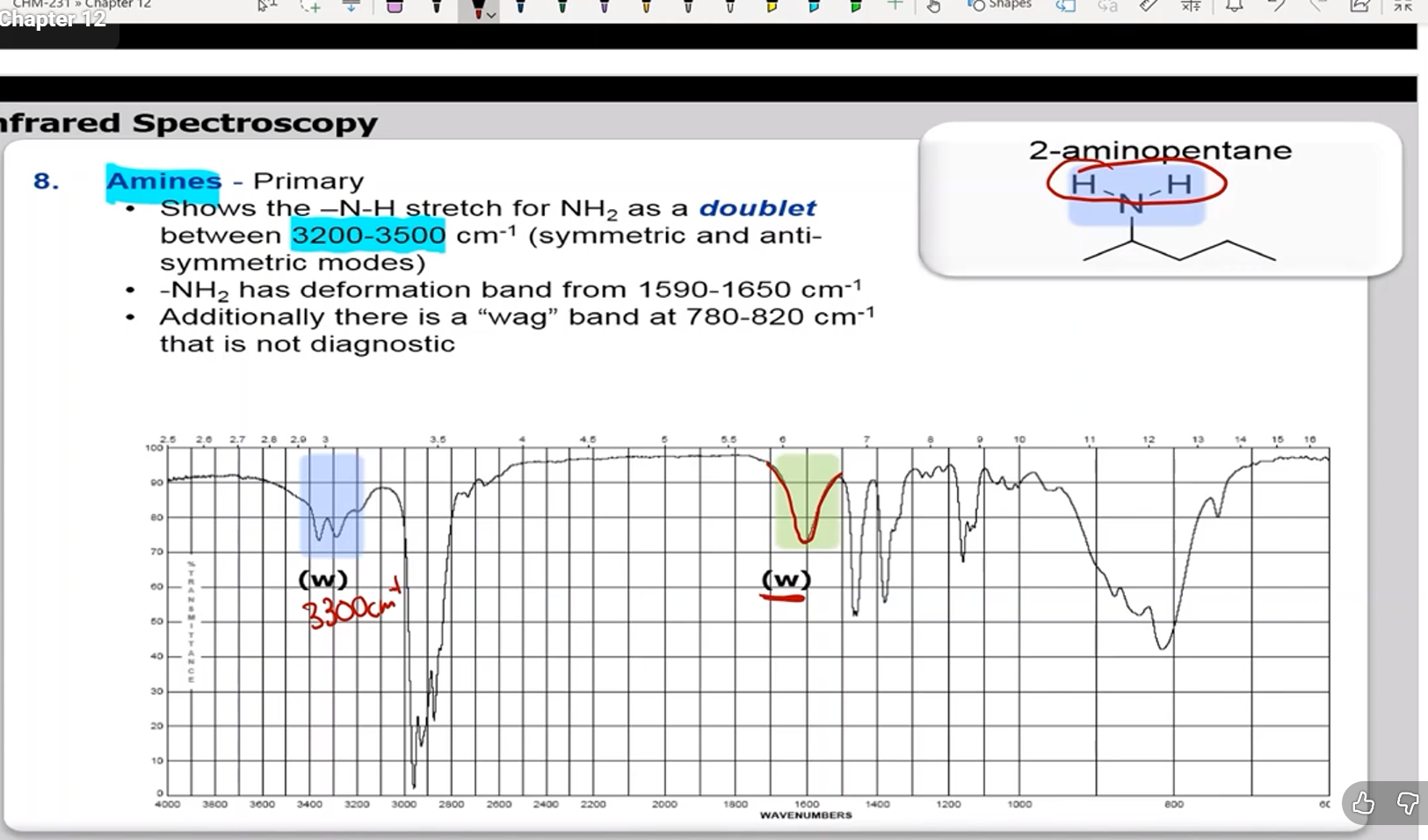
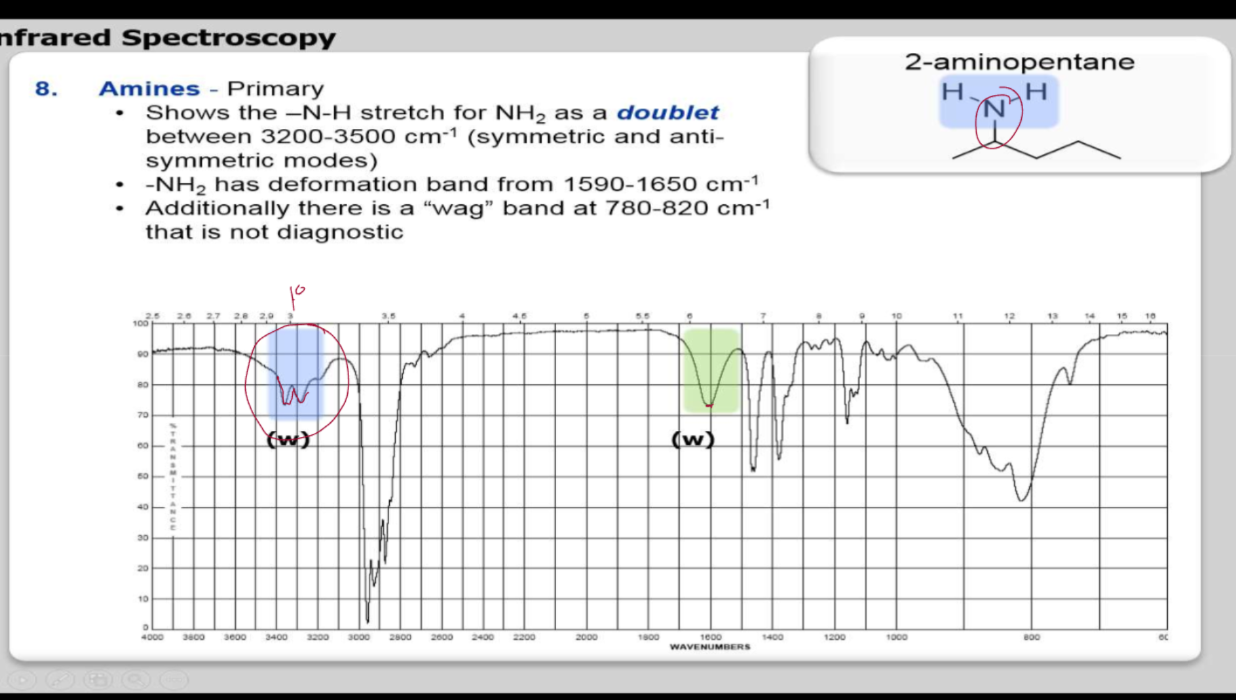
Amines - primary
N-H stretch for NH2, looks like a cowlick (2 little peaks)
3200 to 3500 cm-1
R1NH2
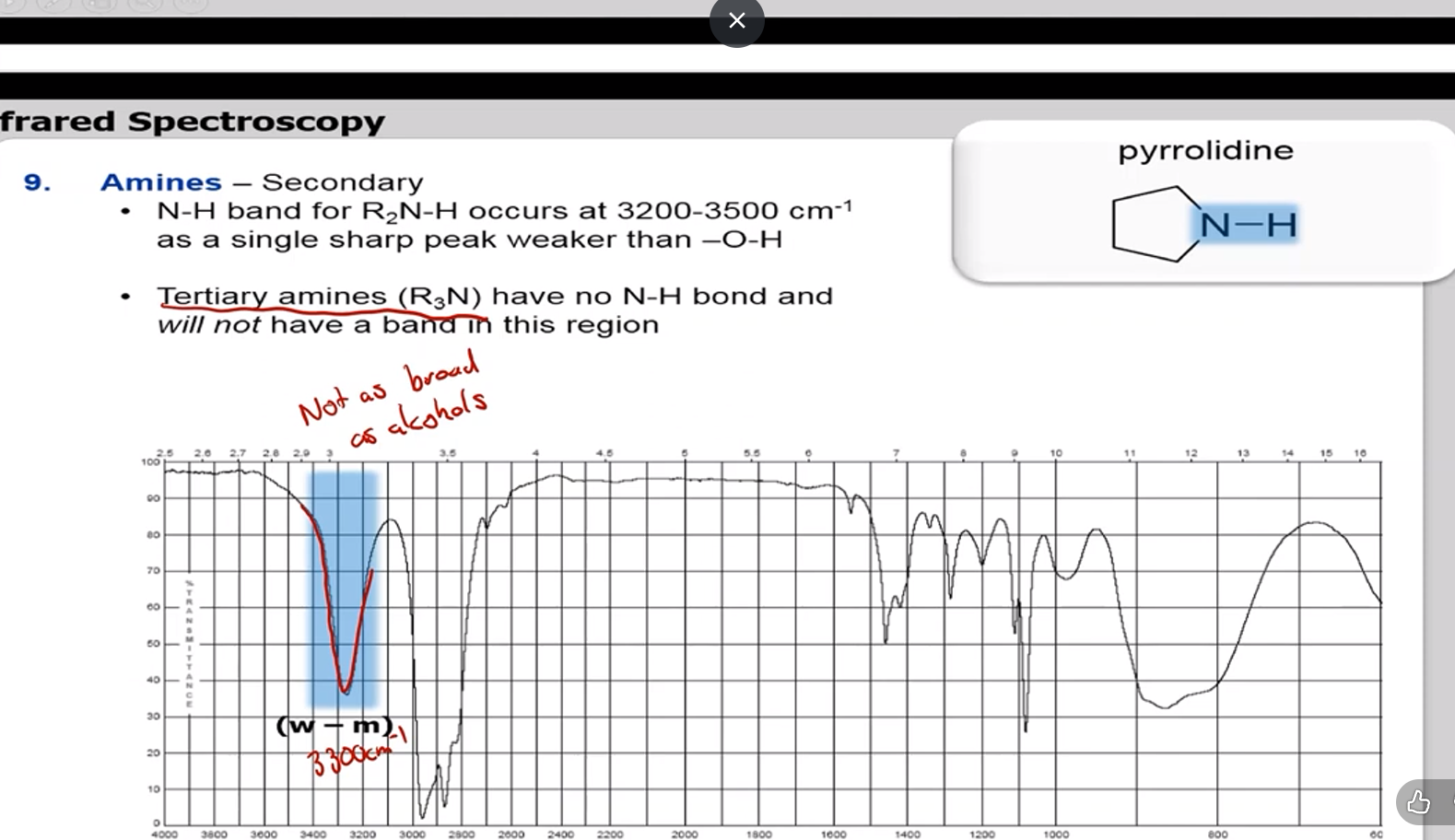
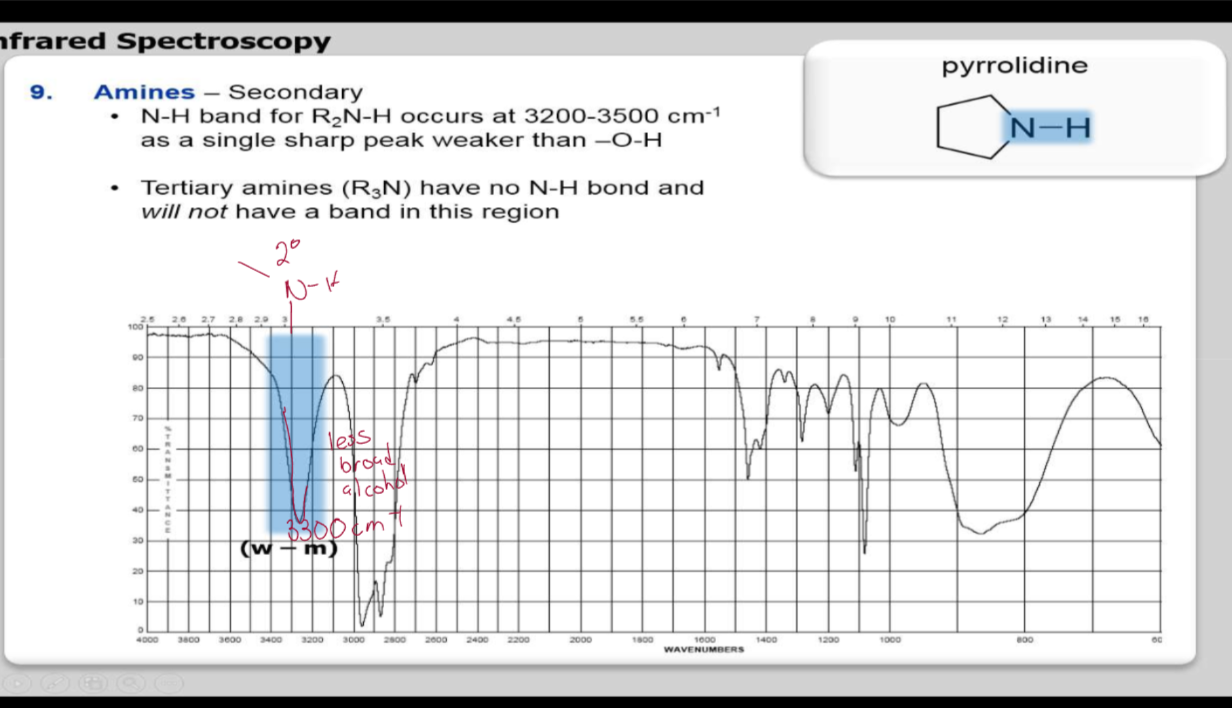
Amines - secondary
N-H band for R2NH1
3200 to 3500 cm-1
single sharp peak
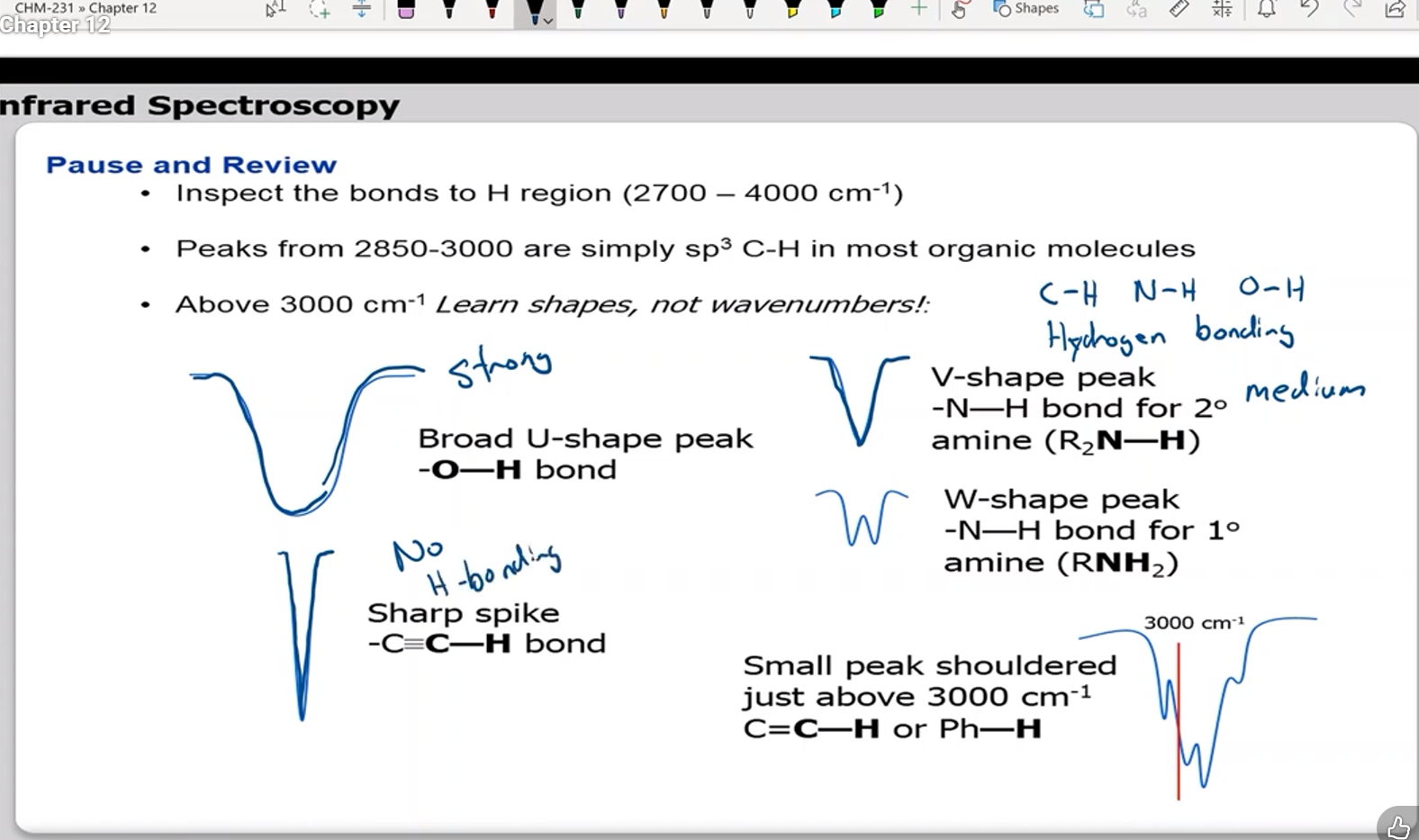
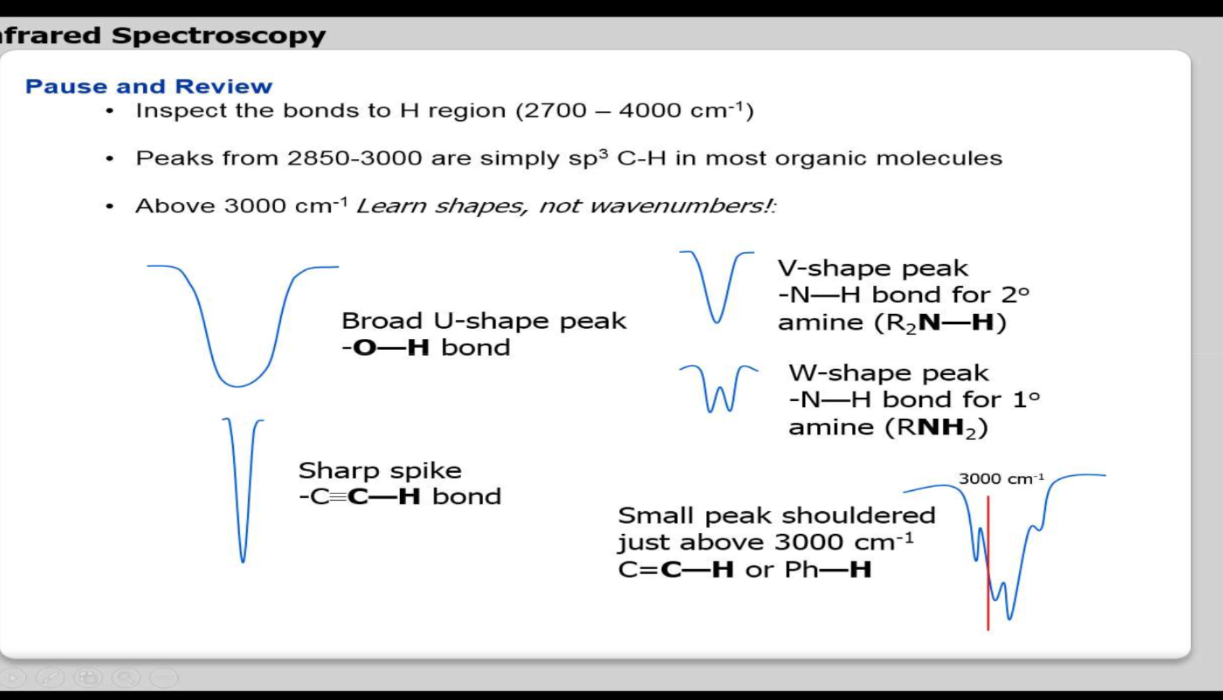
Review shapes above 3000 cm-1
O-H: strong & broad U shape peak
C-triple bond-C-H: sharp spike
primary amine, R1NH2, (N-H): W shape
secondary amine, R2NH1 (N-H): medium V shape peak
C=C-H: small peak shouldered above 3000 cm-1
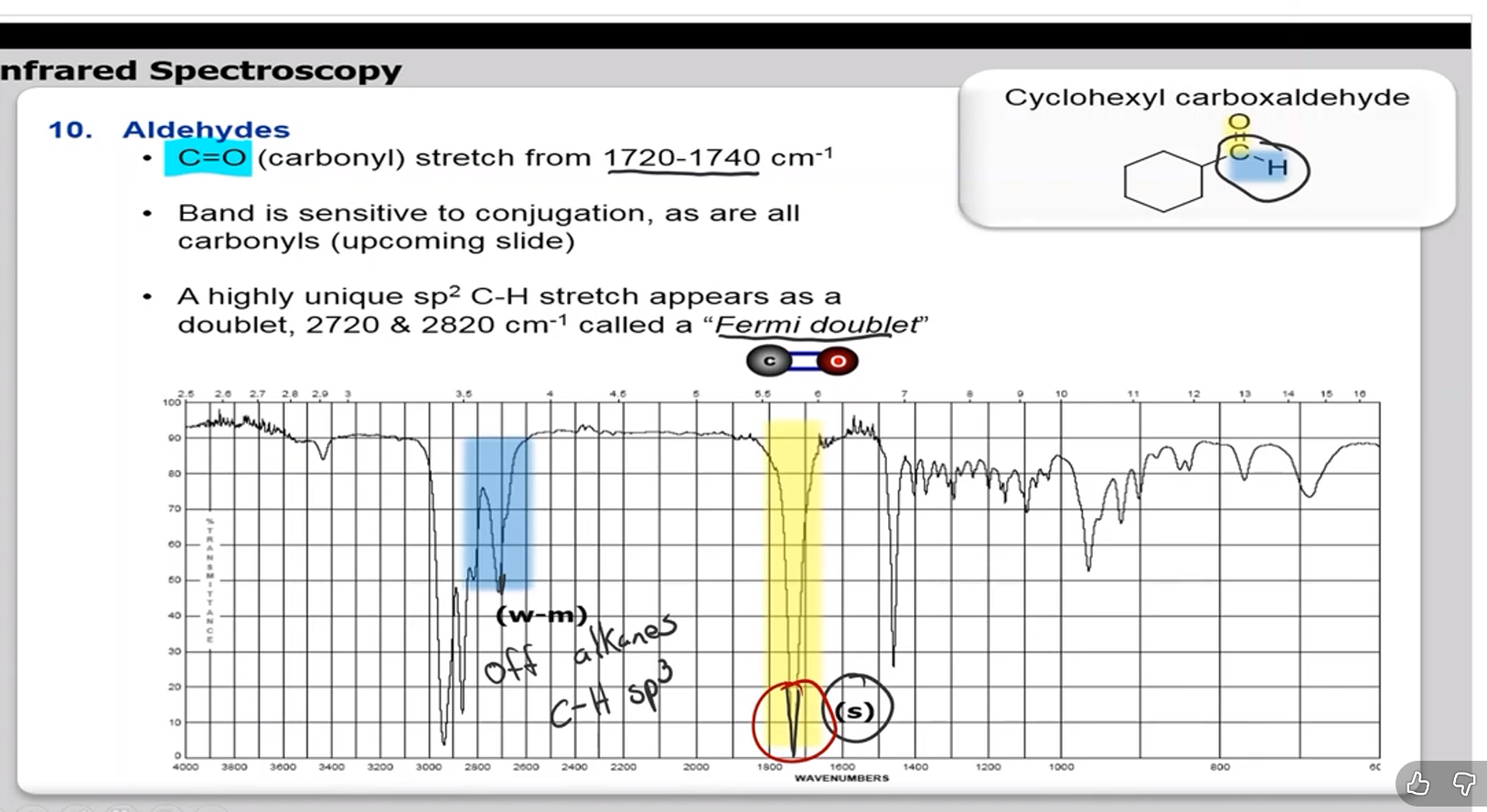
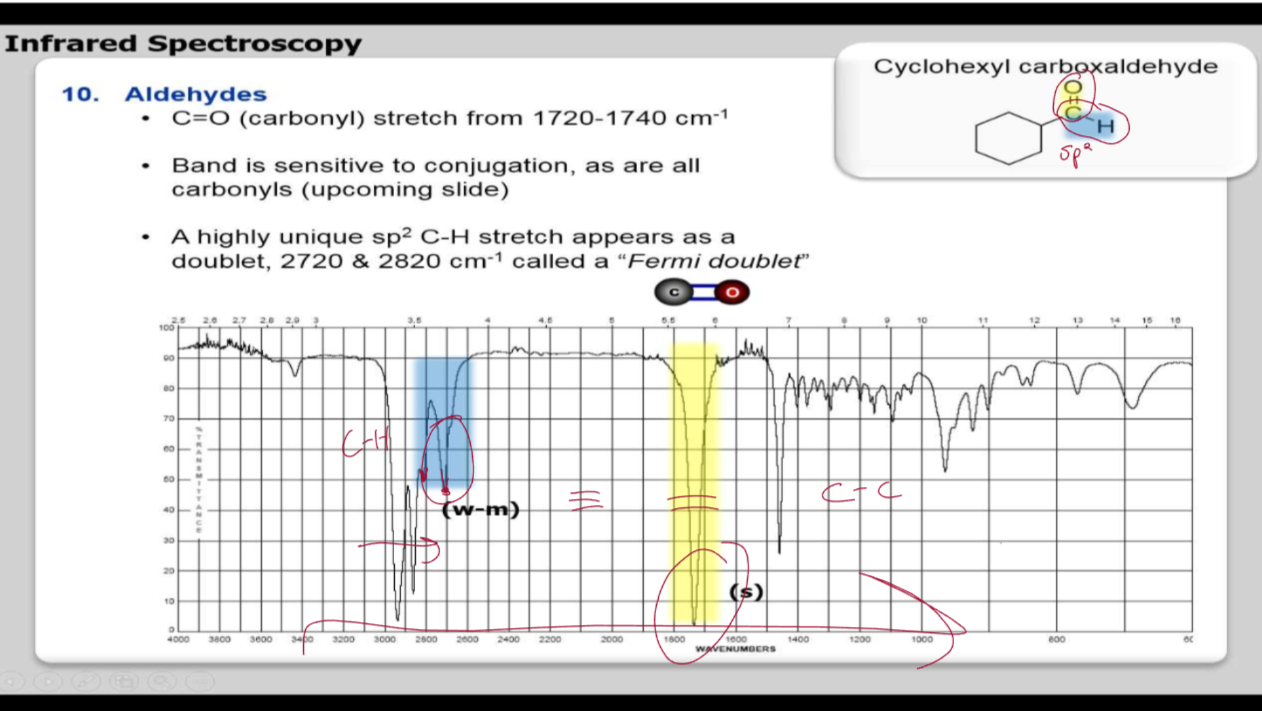
Aldehyde
C=O (carbonyl) stretch from 1720-1740 cm-1
highly unique sp2 C-H appears of alkanes (2720-2820)
if you have an aldehyde, look for the doublet off the alkane, if there ISNT, it is a ketone
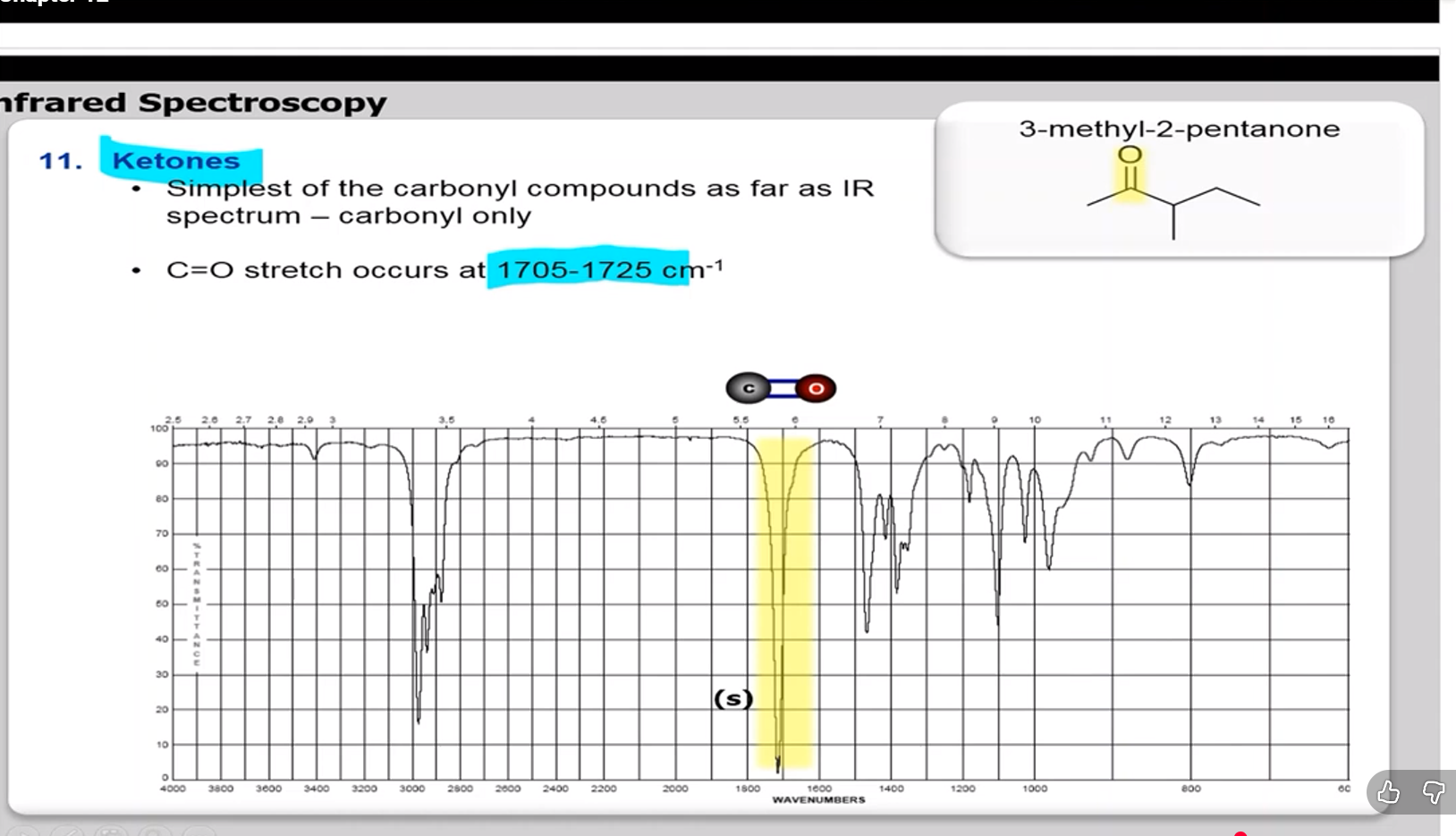
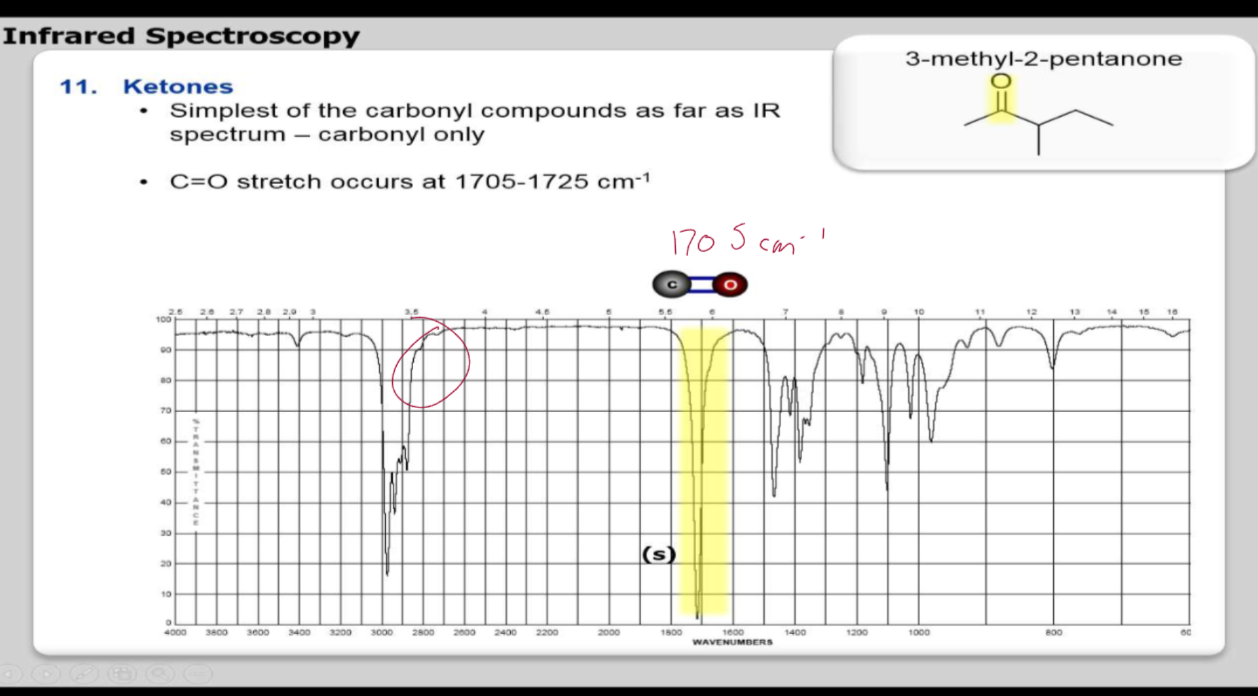
Ketones
C=O stretch occurs at 1705-1725 cm-1
very similiar to aldehydes LOOK FOR THE DOUBLET, if there is none off the alkane or at the 2700-2800 cm-1 region, it is a ketone
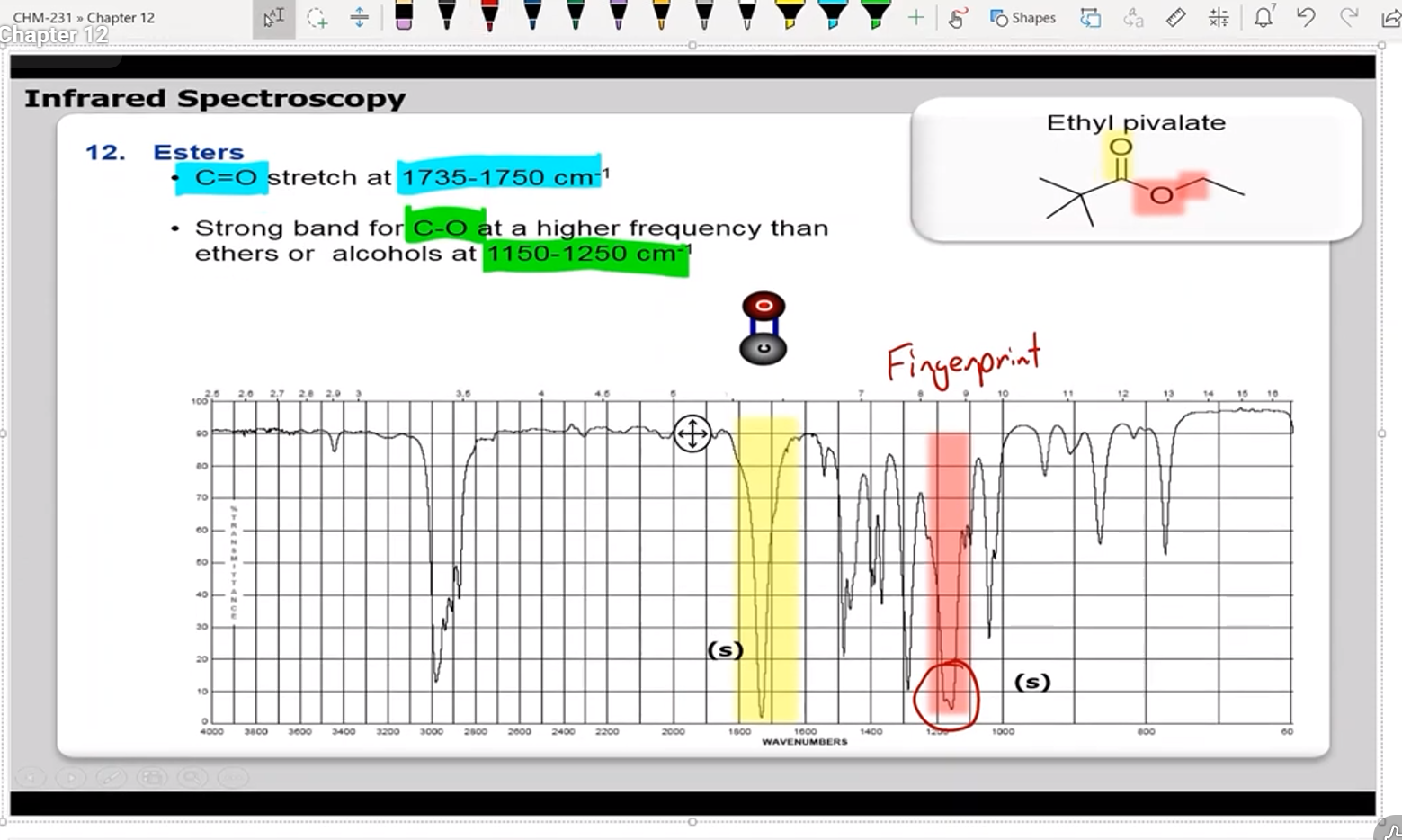
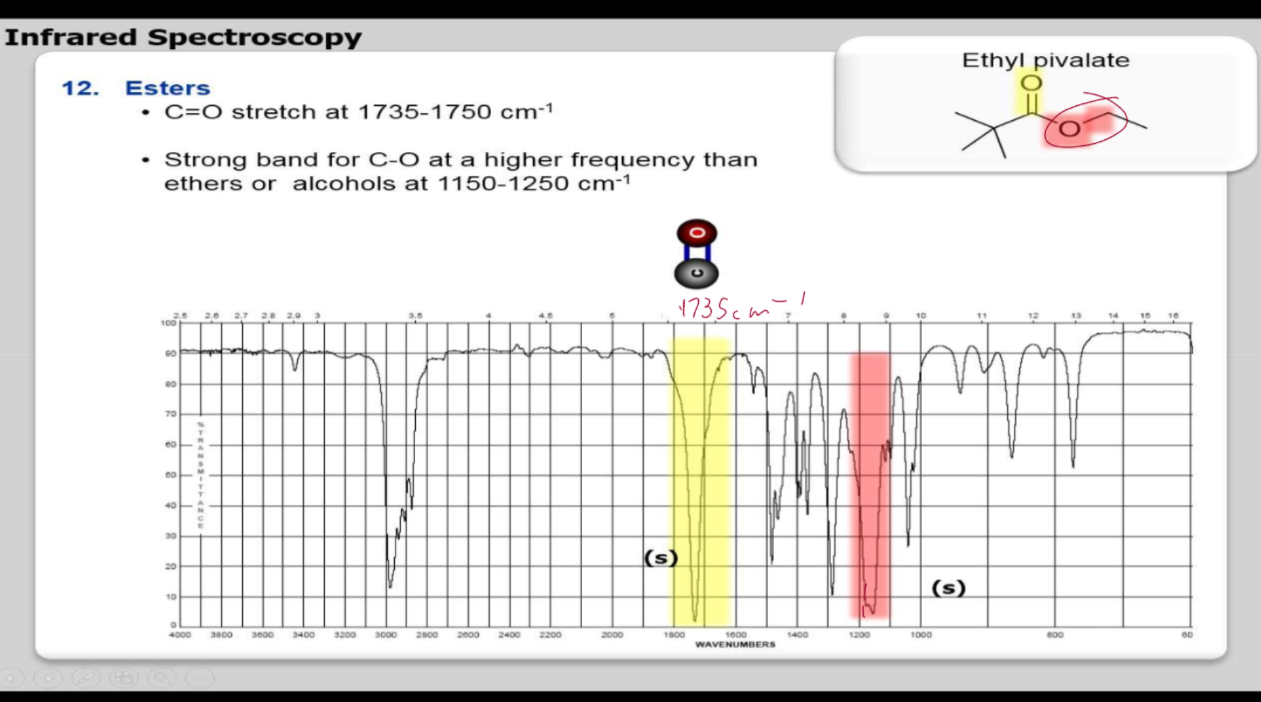
esters
C=O stretch at 1735-1750 cm-1
strong band for C-O at a higher frequency than ethers or alcohols at 1150-1250 cm-1
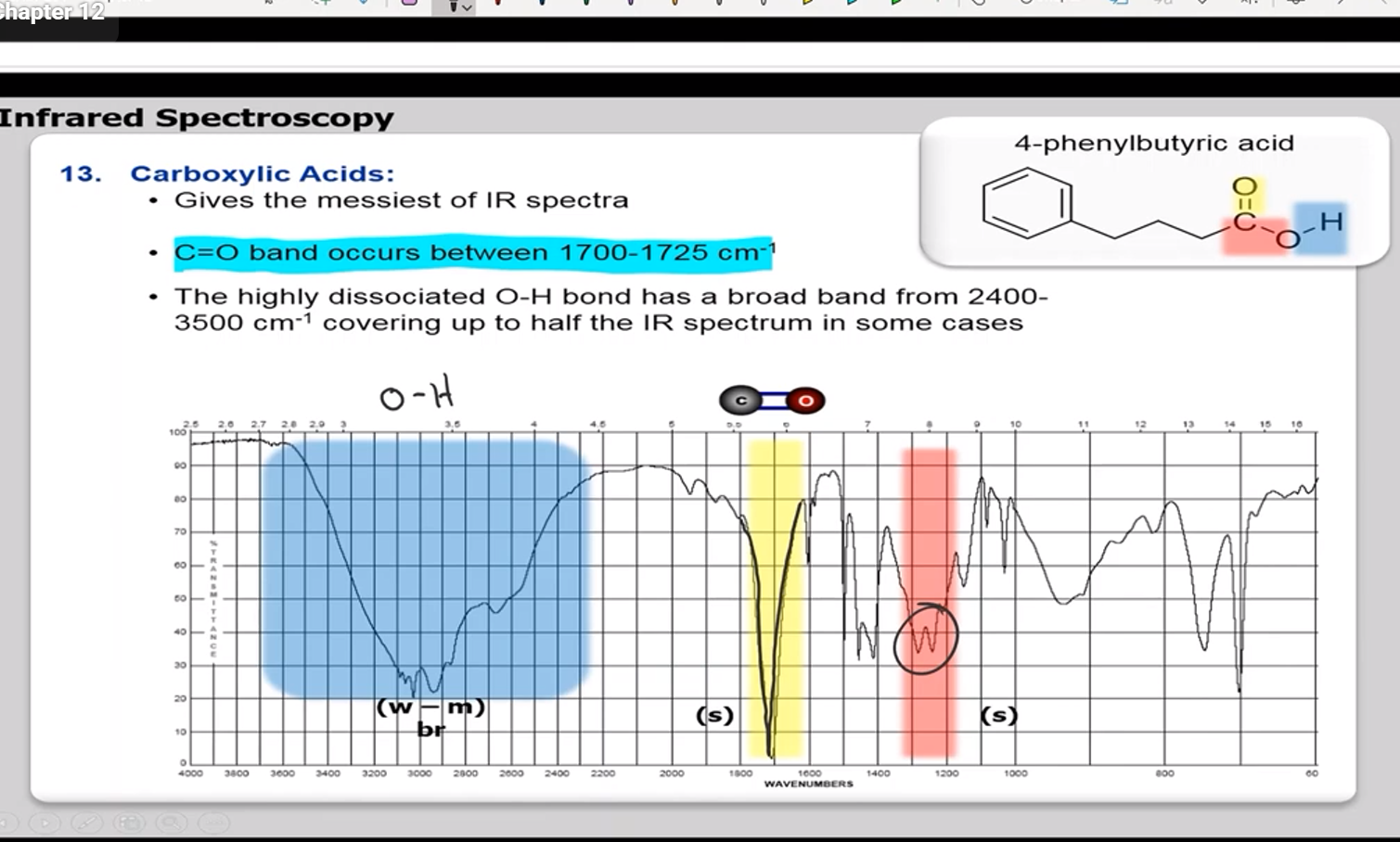
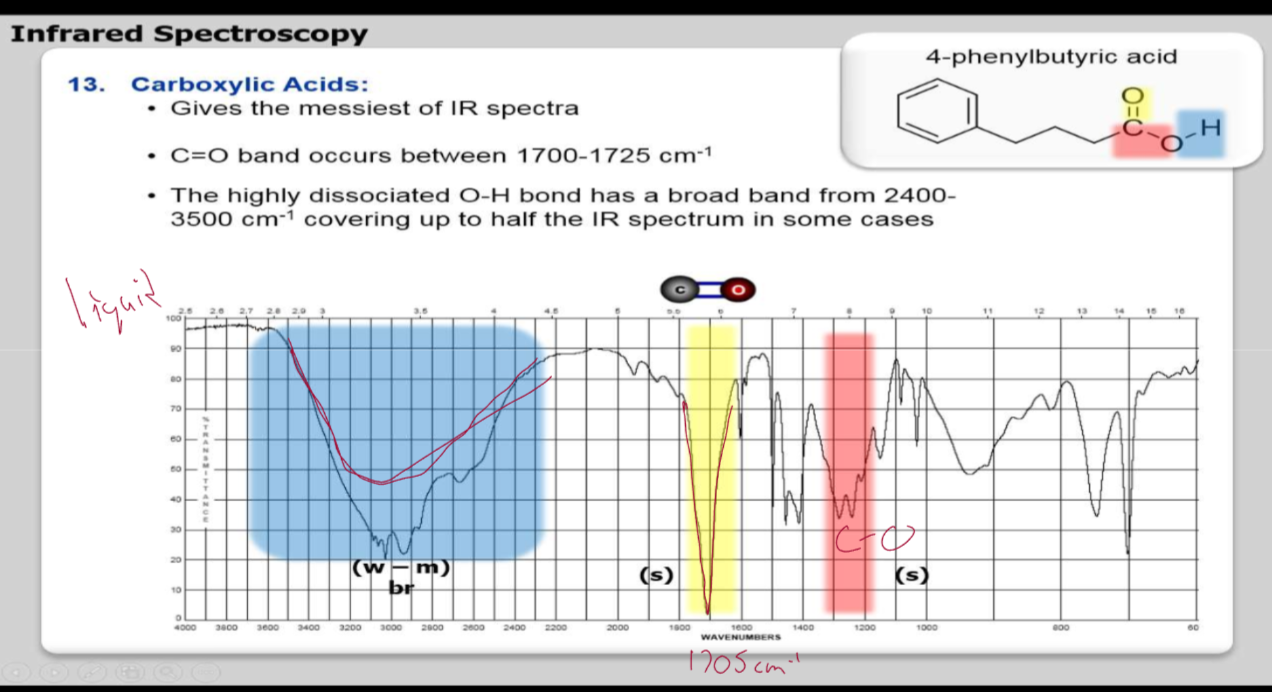
Carboxylic Acid
Messiest IR spectra
C=O band occurs between 1700-1725 cm-1
O-H has a broad band from 2400-3500 cm-1
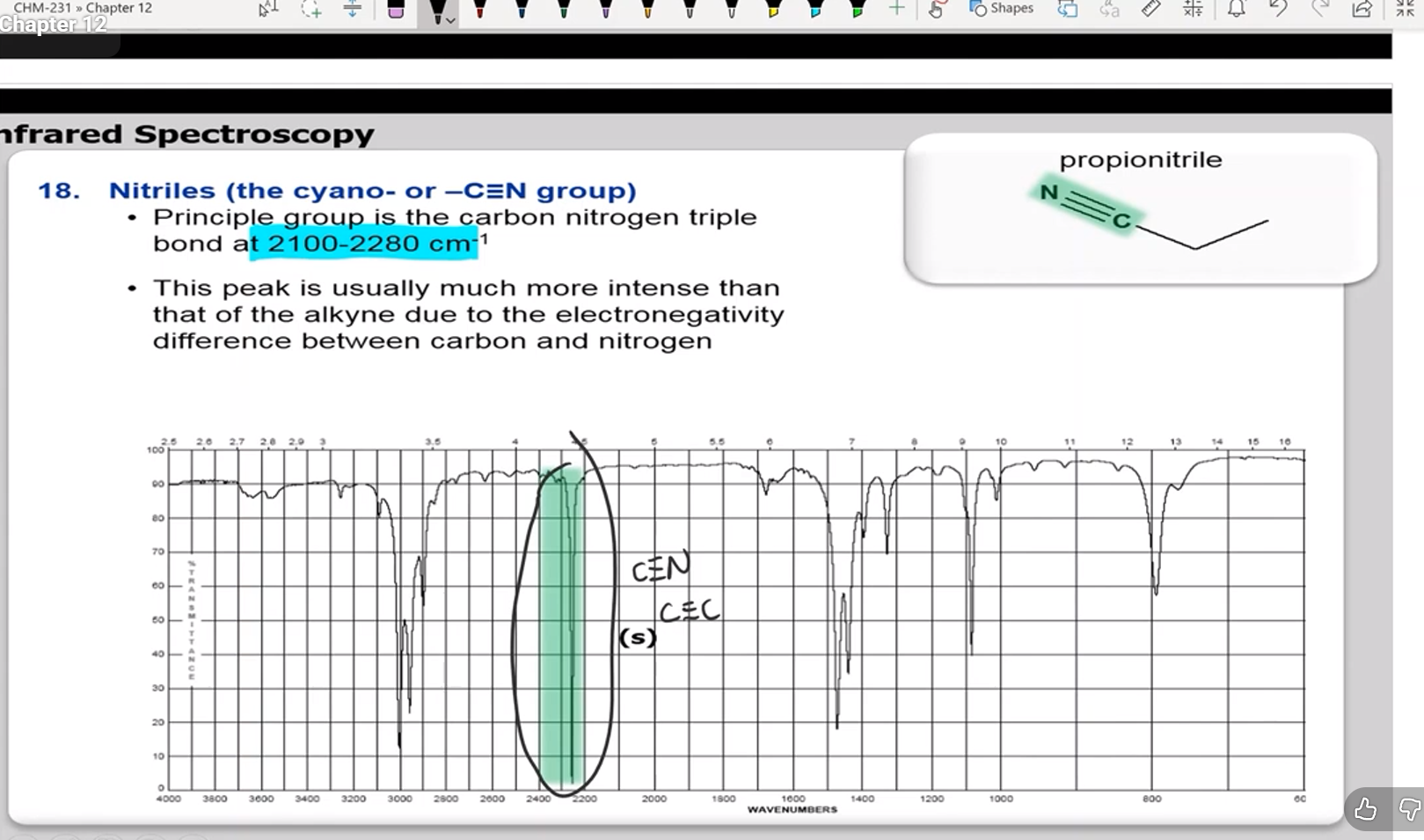
Nitriles
C-triple bond-N
2100 to 2280 cm-1
peak is much more intense than alkyne
H NMR
EWG shift your signal to higher ppm (downfield)
EWG deshield’s your signal
n+1 rule for HNMR
count the adjacent/neighbor hydrogens, then add +1 to it, this will tell you how many peaks show up.
How many peaks are there for A, B and C
(A)CH3-O-(B)CH3-(C)CH2
A - 1 peak (0 hydrogens on O +1)
B- 3 peaks (2 hydrogens +1)
C- 4 peaks (3 hydrogens +1)
Alkanes
Alkenes
Alkynes
Aromatics
Ethers (must memorize shape since its in fingerprint region)
Alcohols
Amine - primary
Amine - secondary
memorize these shapes for above 3000cm-1
aldehydes
ketone
esters (also must memorize shapes since it is apart of fingerprint region)
carboxylic acid
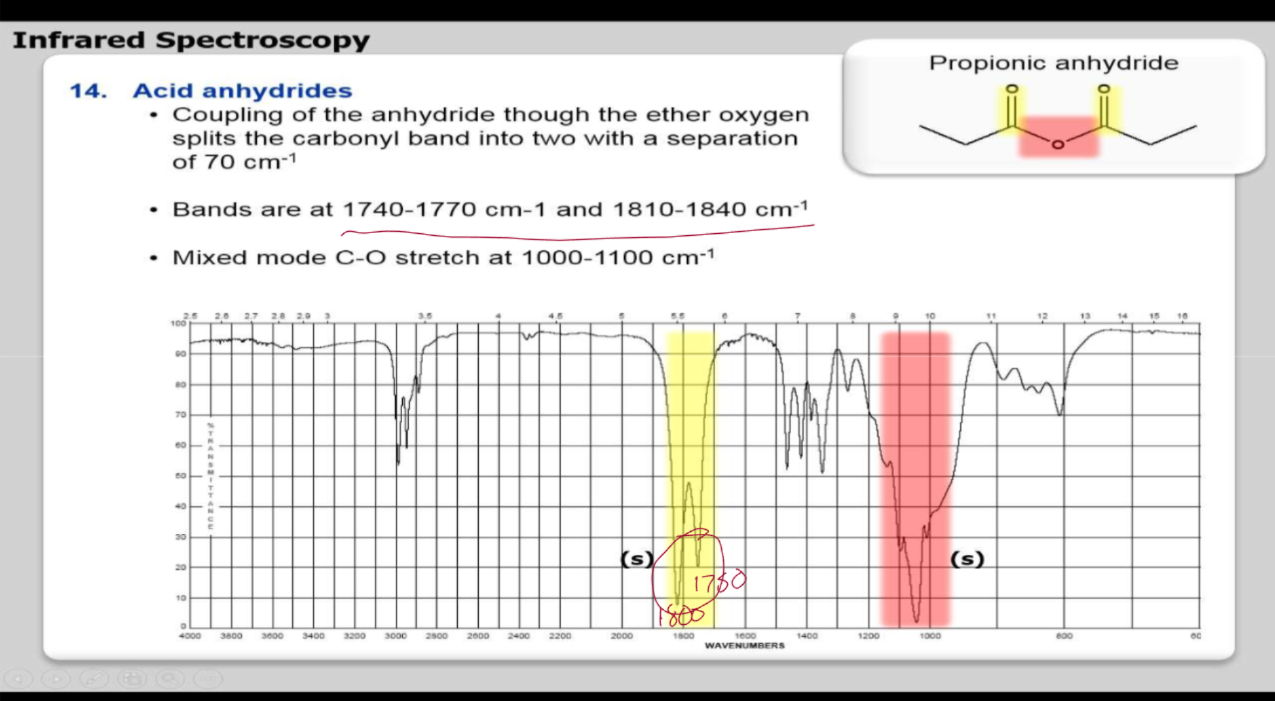
acid anhydride (may not come up havent seen it yet, just memorize incase)
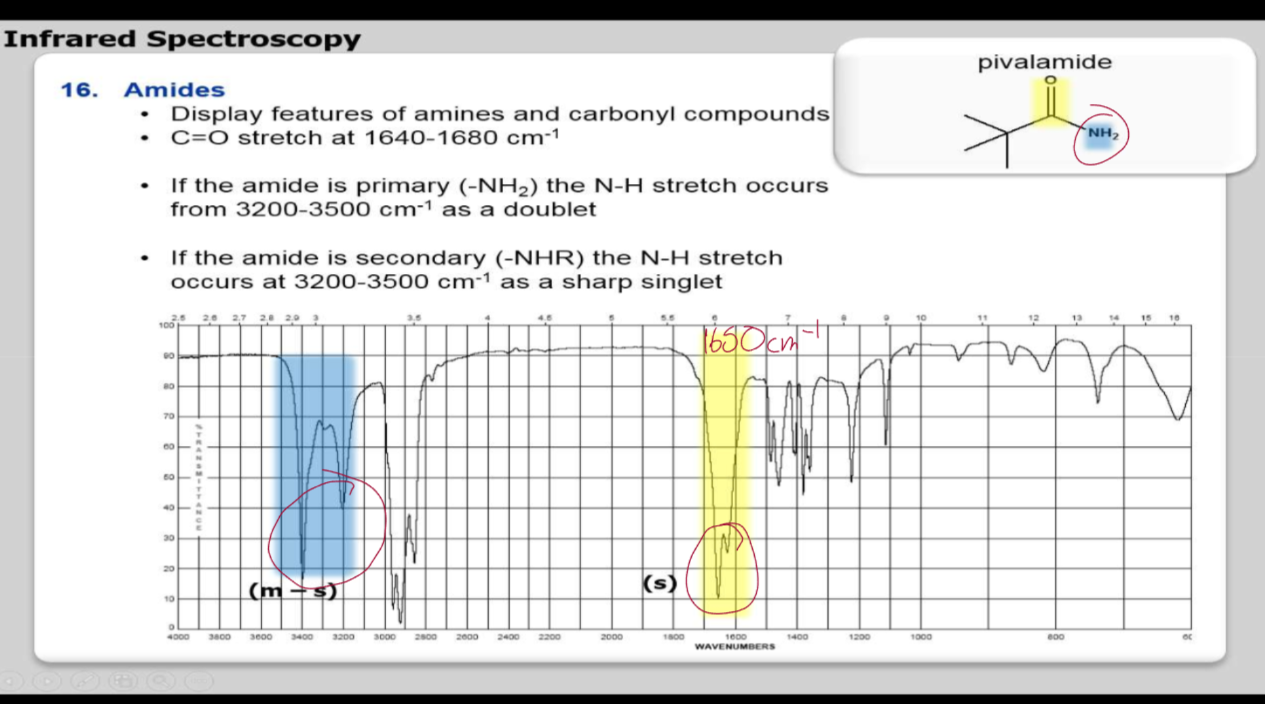
Amides
-primary (R1NH2): doublet peak shows up at 3200-3500cm-1
-secondary (R2NH1): single sharp peak shows up at 3200-3500cm-1