Anatomy Practical 1 Tissues
 Call Kai
 Learn
Learn Practice Test
 Spaced Repetition
 Match
Match Flashcards
 Knowt Play
1/34

There's no tags or description
Looks like no tags are added yet.
Name | Mastery | Learn | Test | Matching | Spaced | Call with Kai | Chat |
|---|
No analytics yet
Send a link to your students to track their progress
35 Terms

Simple Squamous Epithelium
Flat single cells, flat nucleus, found in air sacs of lungs/capillaries
40x magnification
Function: Easy diffisuion of O2/CO2
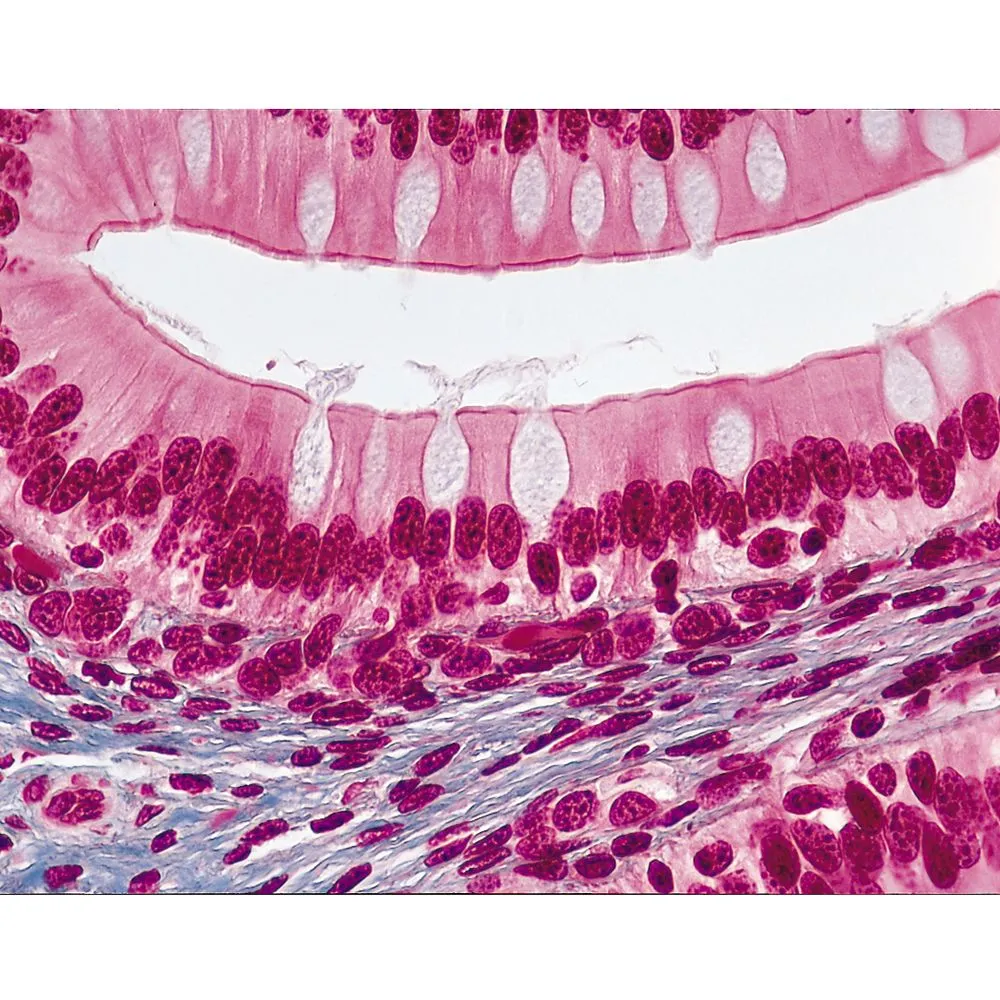
Simple Columnar Epithelium
Tall columns of cells, elongated nucleus, found in intestines
Magnification: 40x
Functions: Aids in secretion and absorption

Simple Cuboidal Epithelium
Cuboidal cells, round nucleus, found in kidney, tubules, and thyroid gland
Magnification: 100x
Function: Handles secretion, absorption, and excretion

Pseudostratified (Ciliated) Columnar Epithelium
More than 1 layer, all touch basement membrane, typically can see cilia on apical surface, found in lumen of trachea and epididymis
Magnification: 400x
Function: Mucus production, protection

Transitional Epithelium
Stratified, but not classified by shape of cell
Cell can change when organ is stretched, found in urinary bladder and ureters
Magnification: 100x
Function: Changes shape to allow organs to stretch and relax

Adipose Tissue
Has chicken-wire appearance; cell full of triglyceride molecules
Found throughout the body under skin and around organs
Magnification: 100x
Function: Energy storage, endocrine control, protection

Areolar CT
Fibroblasts are the nuclei, lots of fibers (pink fibers are collagen and purple are elastin), found in basement membrane of epithelial tissue and walls of hollow organs
Total Magnification: 100x

Dense Regular CT
Comprised of cells (fibroblasts) that can withstand great tensile stress, found in ligaments and tissues
Magnification: 100x
Function: Unidirectional strength and structural support
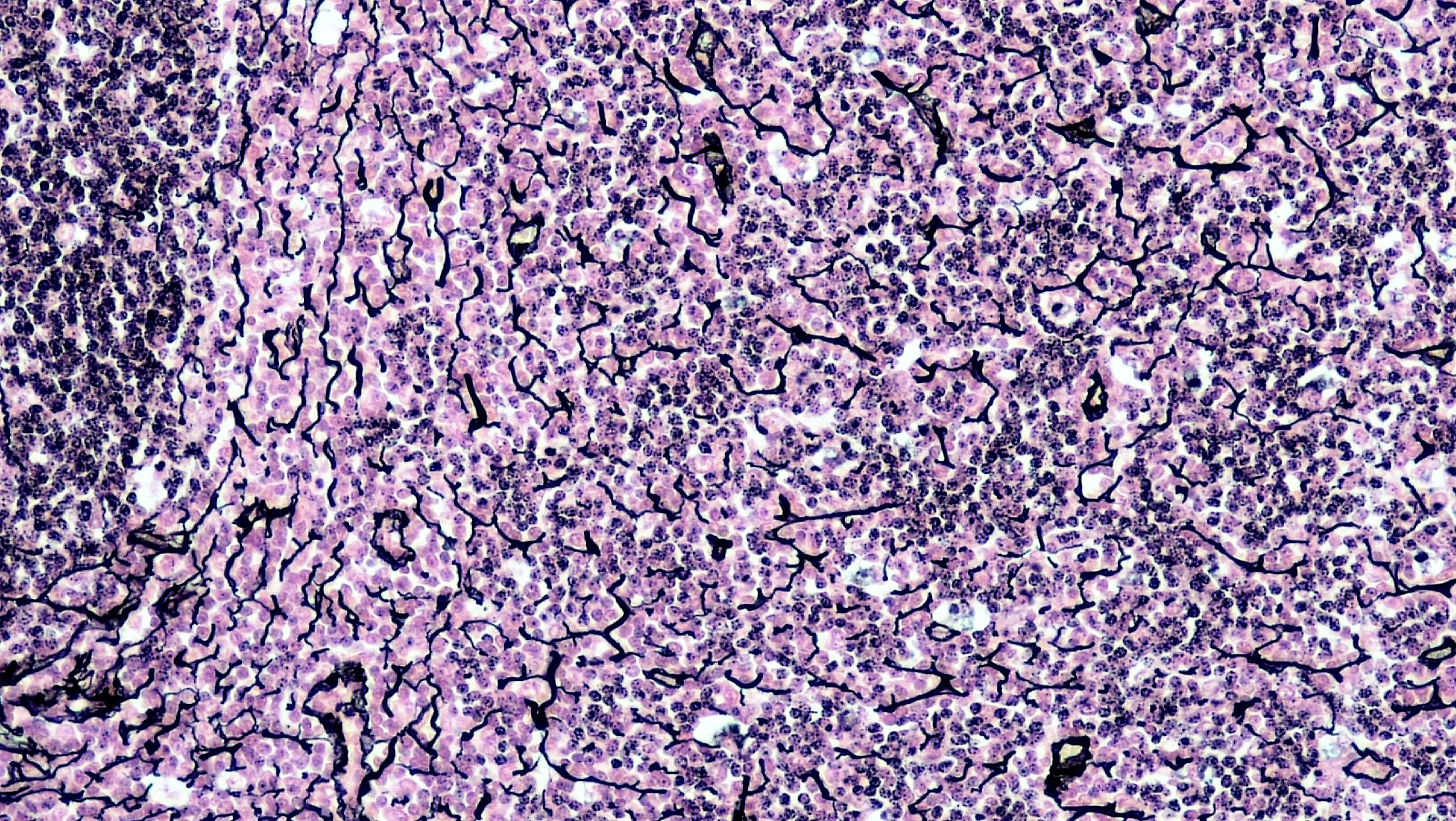
Reticular CT
Dark-stained network of reticular fibers, found in the spleen and lymph nodes, and around blood vessels and nerves
Magnification: 100x
Function: Supporting framework, filtering, blood cell production

Blood Tissue
Consists of liquid extracellular matrix (ECM) called plasma and contains red blood cells (without nucleus) and white blood cells (darkly stained nucleus)
Magnification: 400x (connective tissue)
Function: Circulates the body to transport oxygen, defend against infection, and maintain stable internal conditions (homeostasis)

Smooth Muscle
Identify concentric ring of smooth muscle surrounding the organ; cells are individual, spindle shaped with a centrally located nucleus that lack striation, found mainly in the walls of hollow organs
Magnification: 100x
Function: Digestive tract, regulates blood pressure/blood flow pressure, controls air flow, and manages waste in the blatter

Cardiac Muscle
Only located in the walls of the heart. Cells have branching patterns and are uninucleate with strataions, dark bonds are called intercalated discs. Gap junctions at the discs allow for rapid electrical stimulation of the heart
Magnification: 100x
Function: Involuntary pumping, pacemaker regulation, endurance
Isotonic
The Extracellular matrix has same solute concentration as the cells cytosol, therefore there is no net movement of water into or out of the cell when an isotonic solution
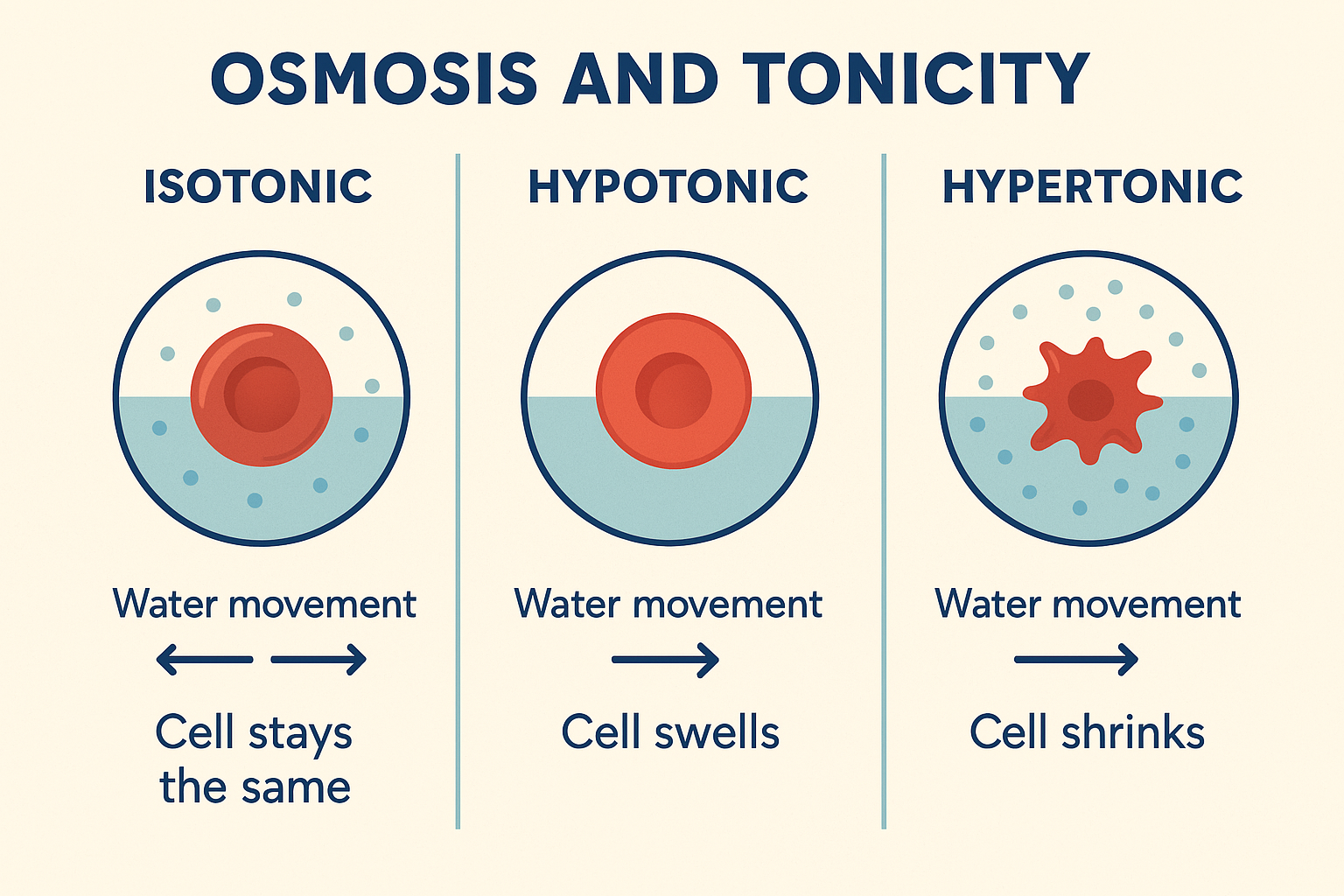
Hypotonic Solution
The ECM has a lower solute (particles) concentration than inside the cell in the cytosol. A higher solvent (water) concentration outside cell means the water will move across the cell membrane INTO the cell causing the cell to increase in volume
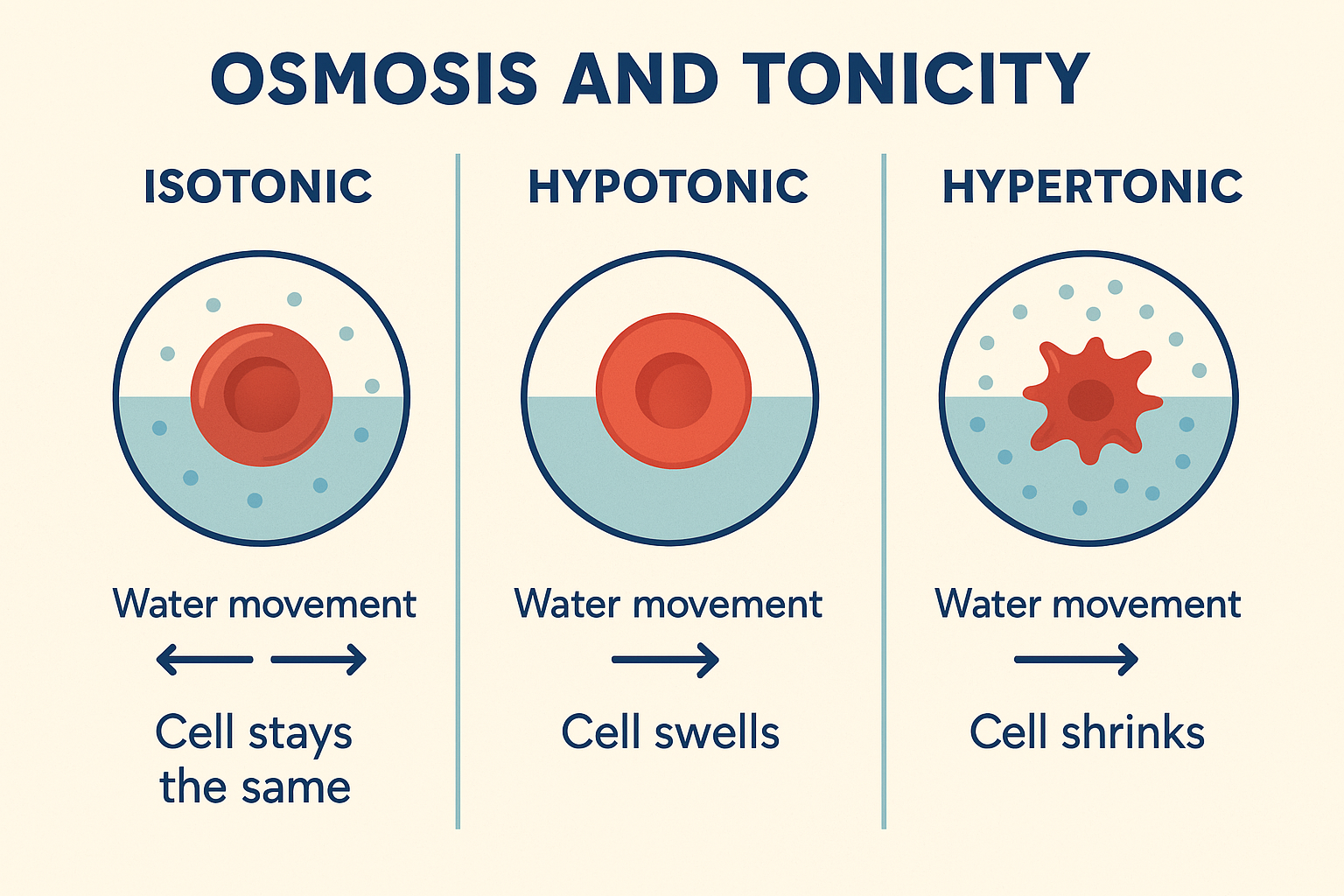
Hypertonic Solution
The ECM has a higher solute (particles) concentration than inside the ell. A lower solvent (water) concentration outside the cell means the ester will move OUT OF the cell causing it to decrease in volume
Prophase
DNA condenses and is getting ready to be copied
chromosomes copy into sister chromatins

Metaphase
Sister chromatins line up; spindle fibers attach

Anaphase
Sister chromatins separate; starts division

Telophase
New cell membrane is formed; 2 daughter cells

Cytokinesis
The cytoplasm is divided among the 2 daughter cells

Passive Transport
Molecules go down its concentration gradient from a high concentration to a low concentration (no energy is required)
Osmosis
Water moves across the plasma membrane, changing the volume of the cell (no energy is required)
Active Transport
The movement of molecules a cell membrane from a low concentration to a high concentration; going against the concentration gradient and requires cellular energy
Mitochondria
Generates energy for cells (glucose + O2__ ATP+ H20+CO2)
2 membranes: Electron transport occurs (cellular respiration)
Self-replicating: Have their own DNA (increases in numbers as active cells required)

Ribosome
Site of protein synthesis (translation)
2 subunits (large=adds amino acids, small=decodes DNA)
Free in cytoplasm; attached to membrane

Endoplasmic Reticulum
“within cytoplasm” a network
Rough ER
ribosomes- protein synthesis occurs here

Smooth ER
Continuation of eER: no protein synthesis
Abundant in liver, kidney cells, and muscle cells
Metabolism of lipids; synthesis of cholesterol
Detoxification of toxins; glycogen (stores CO2 in animal cells)

Golgi Apparatus
Modifies, packages, and releases proteins (post office of cells)
proteins are the final destination

Lysosomes
“A body that breaks things down”
Digests (contents of endocytosis)
Degrade old organelles
Metabolic functions (glycogen__glucose)

Centrosome and centrioles
Sets up mitotic spindle
All built of micro tubules

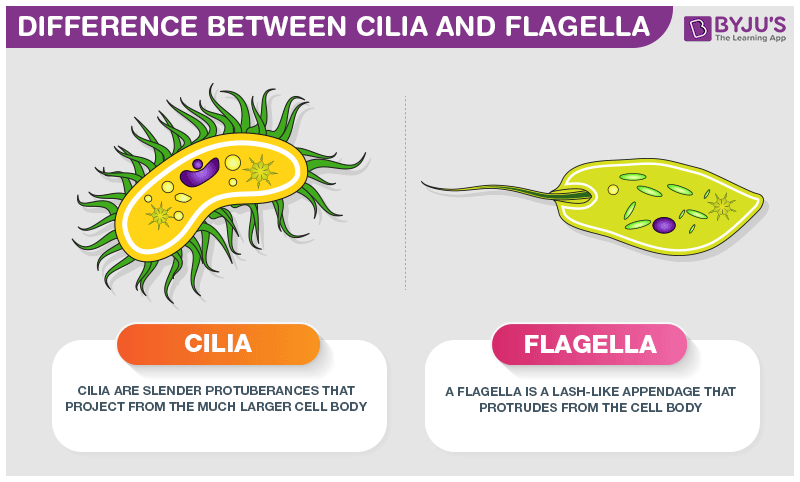
Cilia and Flagella
Cilia: Motile “move” stuff of themselves
On pseudostrafitied columnar cells in respiratory tract
Flagella: Only human cells=sperm
The Nucleus and Nuclear Envelope
Nucleus: Control Center: Encloses DNA
Red blood cells have no nucleus__can’t divide
Nuclear Envelope: Large nuclear pores (allow control for passage)
mRNA exists; transcription factors enter
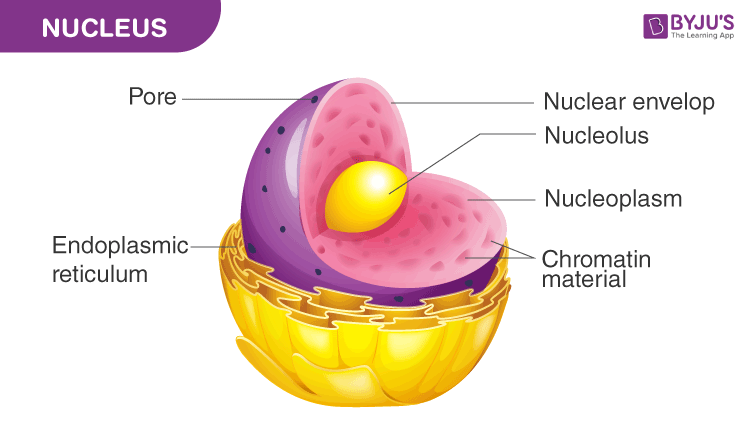
Nuceoli
Within nucleus
larger in growing cells (more numerous)
transcribes ribosomal RNA and assemble it with ribosomal proteins to create the large/small subunits of ribosomes

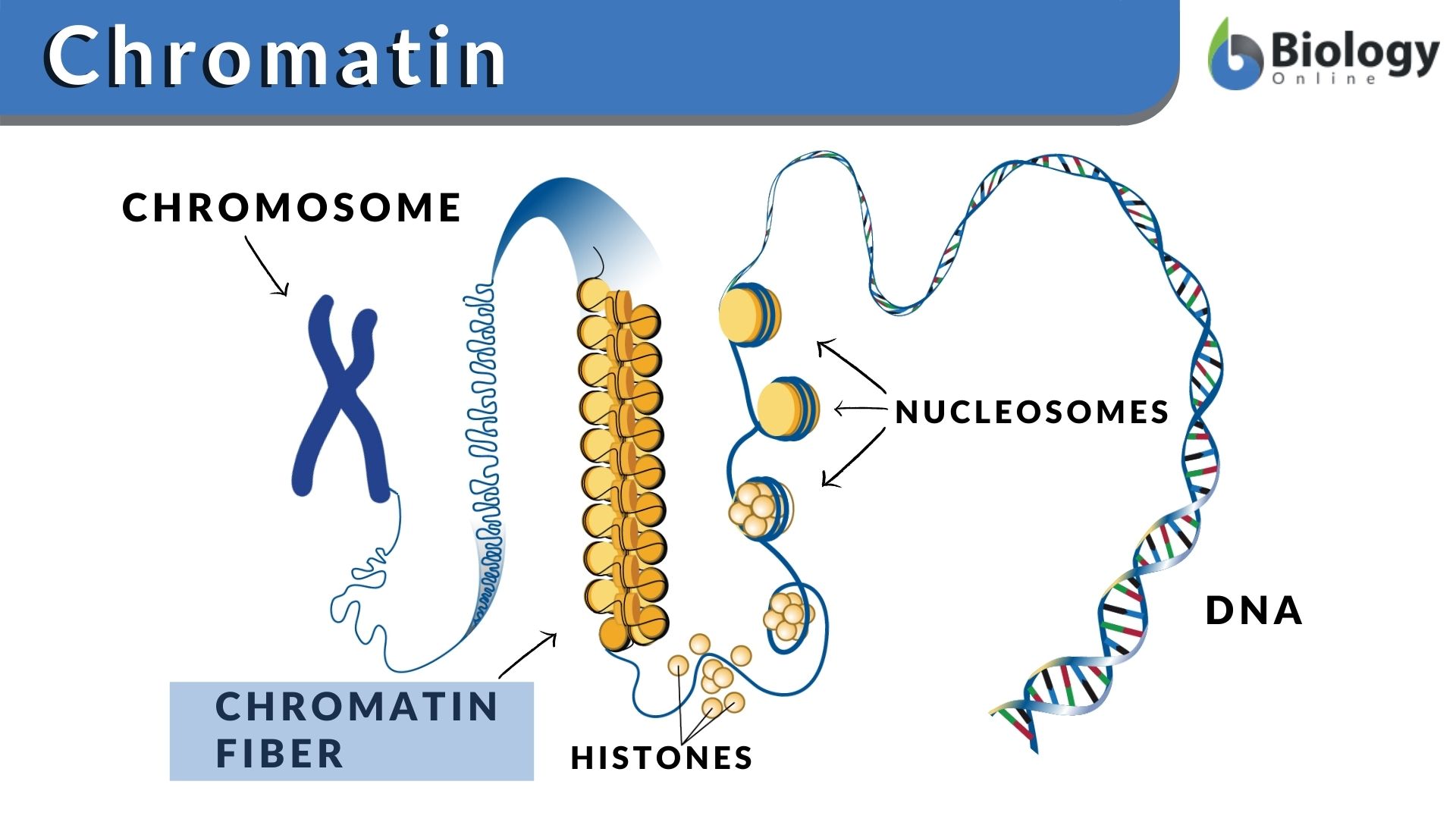
Chromatin
Chromosomes: How DNA is condensed
Visible at mitosis
DNA (packaged around)___Histone proteins (makeup)__Nucleosomes (protein at DNA wrapped around)