Lecture 2- basic principles of toxicology
 Call Kai
 Learn
Learn Practice Test
 Spaced Repetition
 Match
Match Flashcards
 Knowt Play
1/35

There's no tags or description
Looks like no tags are added yet.
Name | Mastery | Learn | Test | Matching | Spaced | Call with Kai | Chat |
|---|
No analytics yet
Send a link to your students to track their progress
36 Terms
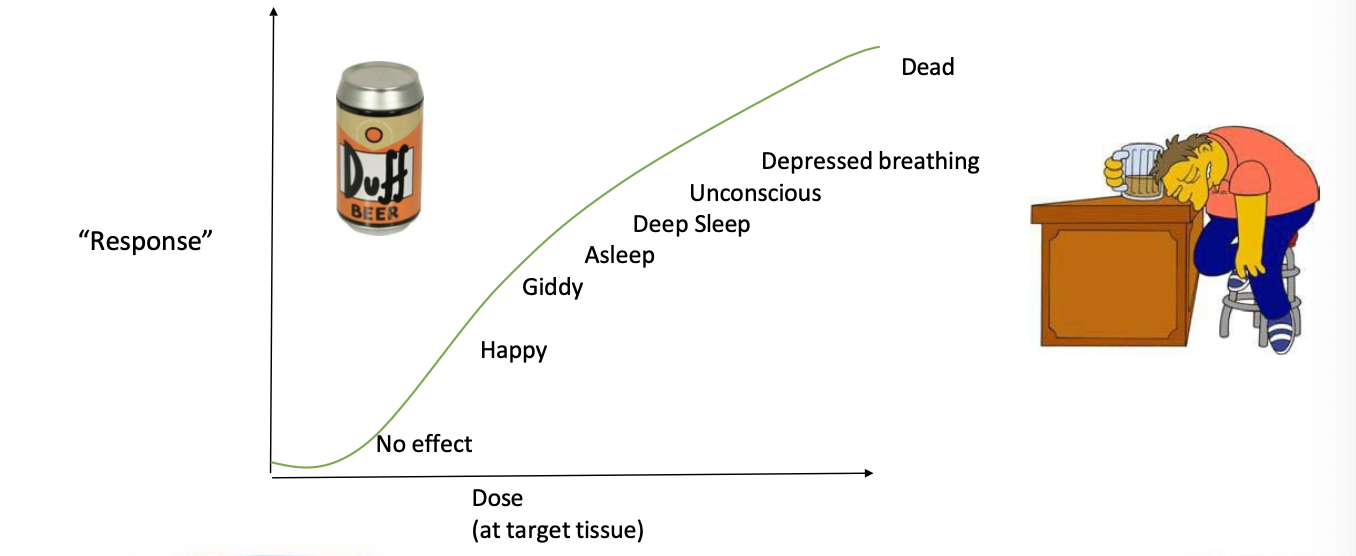
basic principle #1
the dose makes the poison
NOAEL
no observed adverse effect level
LD50
lethal dose/ concentration that kills 50% of a test population
MTD
minimum toxic dose
MLD or MLC
minimum lethal dose concentration
what toxicity parameters is the most clinical used
minimum toxic dose
T/F exposure does not equal intoxication
true
what must happen for a toxic effect (toxicokinetics) to occur
the toxin must be absorbed and reach its site of action at a high enough concentration and for a sufficient period of time to cause a toxic effect
what is basic principle 2
basic toxicokinetics
what are the basic events of basic toxicokinetics
ADME
absorption
distribution
metabolism
excretion
what is absorption
how does it get into the body
can we minimize absorption
distribution
where dos it go
can we take advantage of these properties to limit exposure of the target organ?
metabolism
what happens to it when it gets there?
big species differences can exist for various metabolic pathways
can we block a metabolic pathway/ enzyme and prevent or limit production of a more toxic metabolite
excretion
how does it get out of body?
primary routes of excretion
urinary
biliary/ fecal
lesser: milk, sweat, saliva
acute
generally 24 hours or less
usually involves exposure over less than a day
subacute
>24 hours but < 1 month
a subacute toxicity study is usually 14-28 days of exposure
subchronic
several months definitely less than a year
a subchronic toxicity study is often 3 months of exposure
chronic
over a significant portion of the lifetime
a chronic toxicity study is often 2 years of exposure
basic principle 3
the typical dose response curve has imporant exceptions/ variations
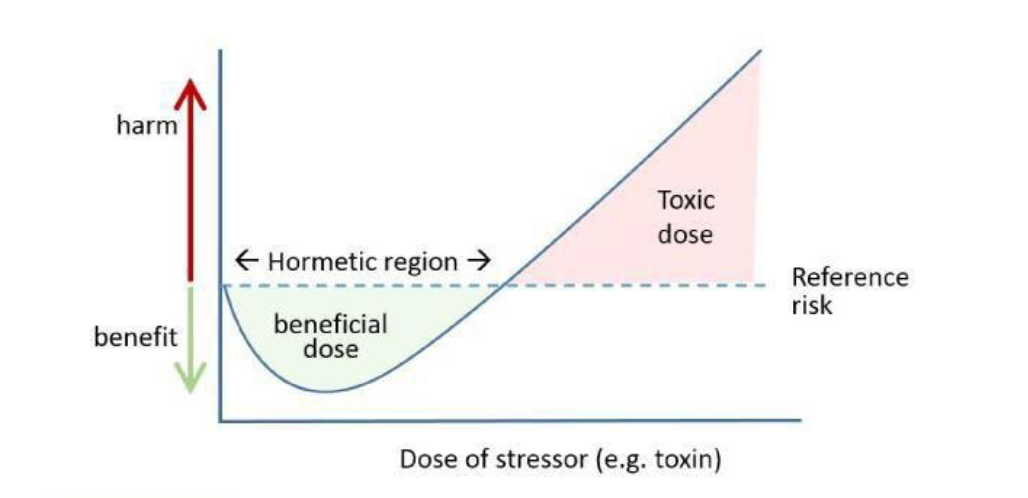
hormesis
small exposures are protective, large are dangerous
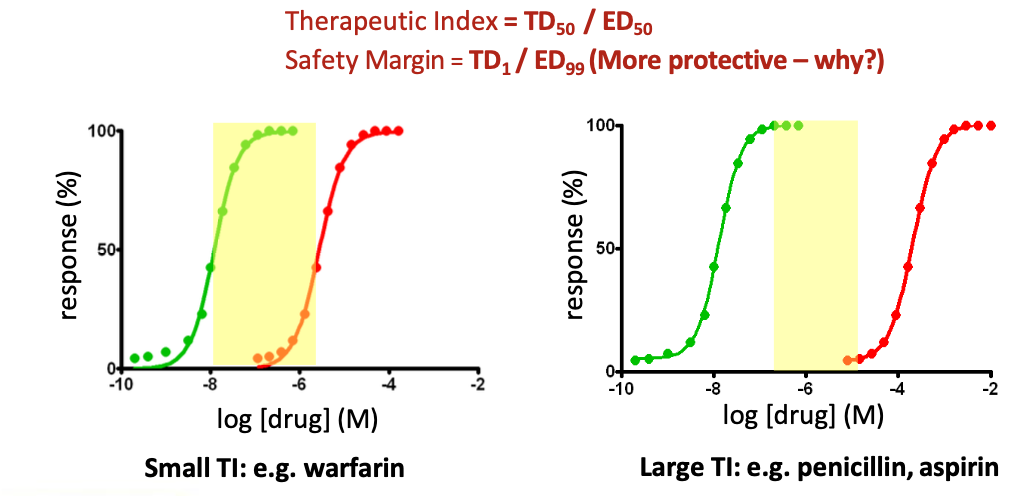
therapeutic index
the ratio of the dose of the drug that produces an unwanted (toxic) effect to that producing a wanted (therapeutic) effect
many factors influence toxicity include
• Characteristics of the animal/animals exposed
• Route of exposure
• Frequency of exposure
• Characteristics of the toxicant
• Environmental conditions
characteristics of the animal
• SPECIES
• Genetic differences (polymorphisms)
• Age
• Sex, reproductive status
• Concurrent disease (comorbidities)
• Concurrent exposure to other drugs or chemicals
• Nutritional status
basic principle 4
many factors influence toxicity
characteristics of the toxicant
• Formulation, vehicle
• Valence state of metals
• Ionization
• Decomposition
• Impurities
• Strain/subspecies
frequency of exposure
• One time exposure
• Repeated exposures
• Cumulative effects
environmental conditions
• Drought
• Time of year
• Growth stage
• Temperature
• Photo period
• Winds
what should you ask instead of is this toxic
at what dosage
in what species
under what condition
why calculate dose of exposure
to determine if the dose is high enough to pose a risk of intoxication or death
why not just treat any exposure
Risks (and expense) of treatment may outweigh risk of intoxication
aggressiveness of treatment is determined by
severity of intoication
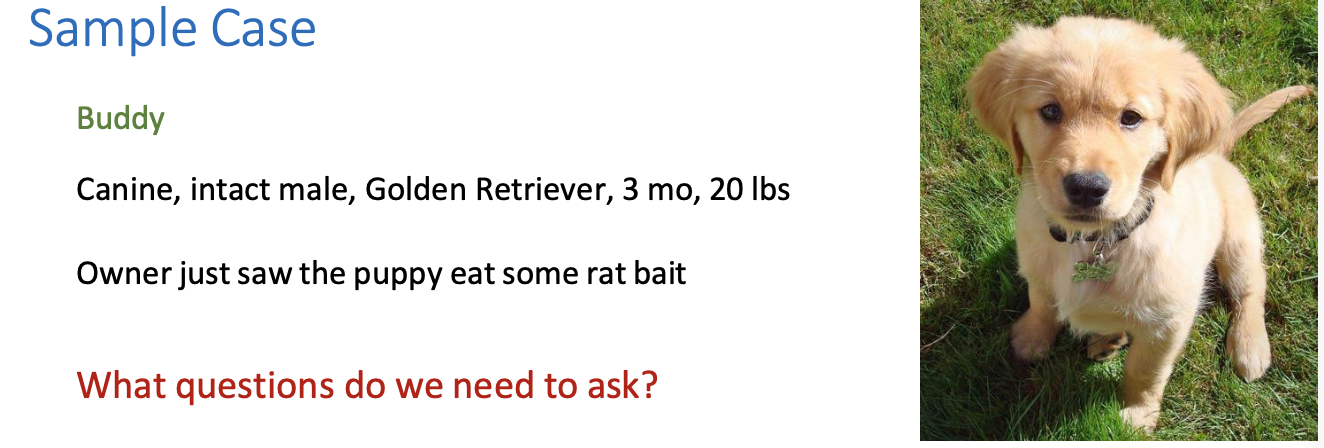
What kind of rat bait? (Active ingredient!)
How much did he eat?
Is that enough to cause poisoning?
Enough to cause death?
GET THE LABEL!!!
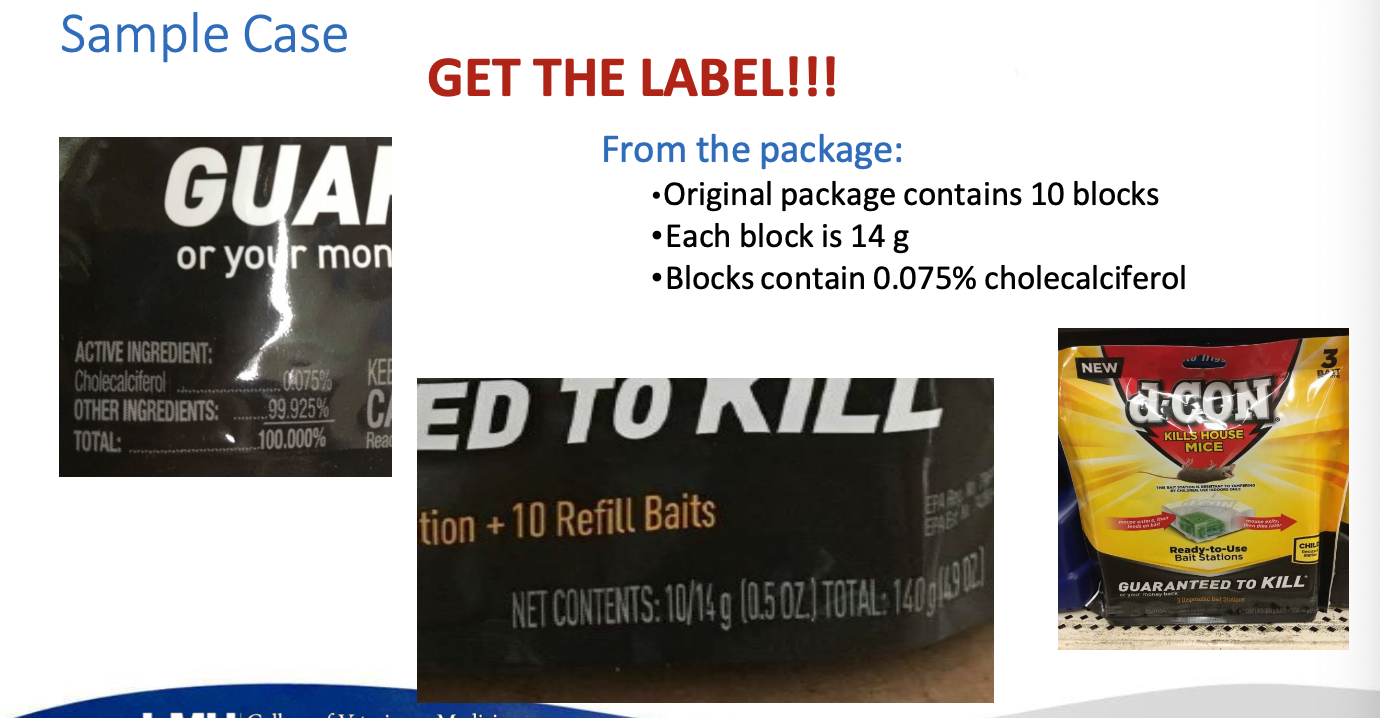
owner thinks they used one or two of the bait blocks
there are 6 blocks in the package now
you must assume the pet ate all 4 of the unaccounted for packages
calculate MLD, MTD, and potentially ingested
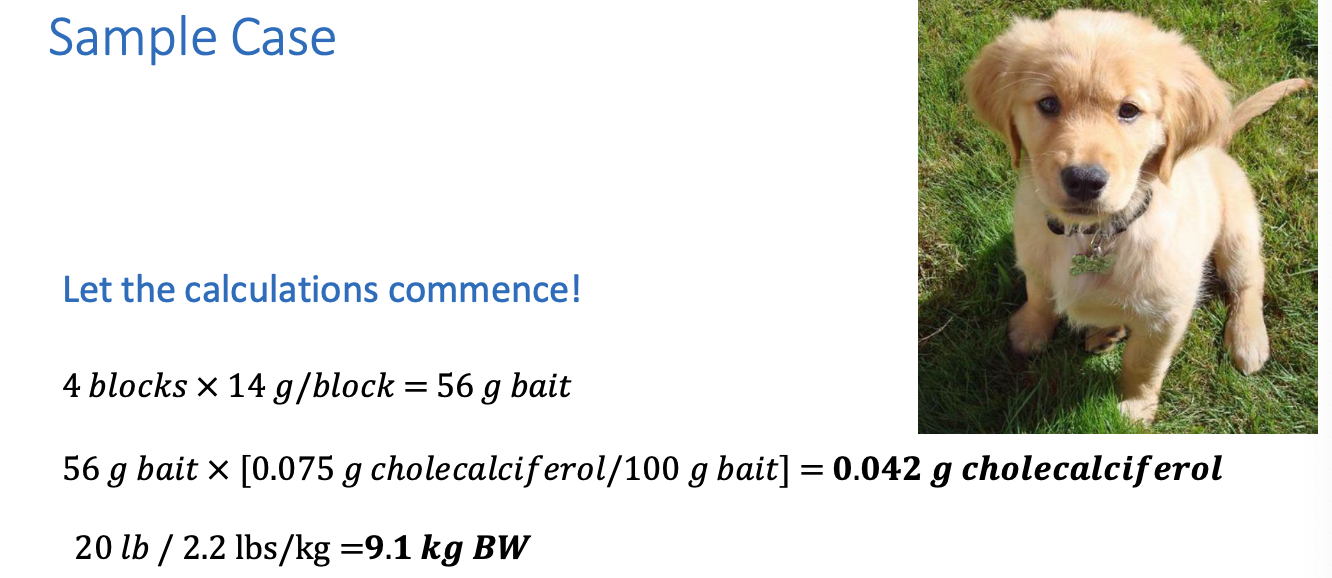
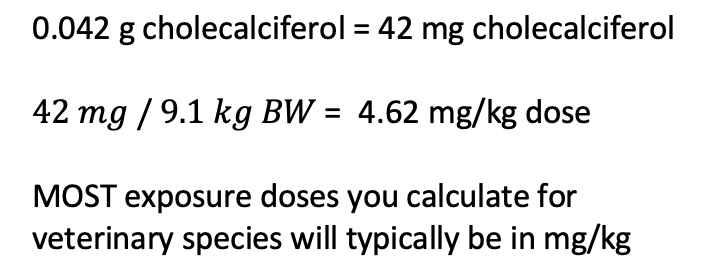
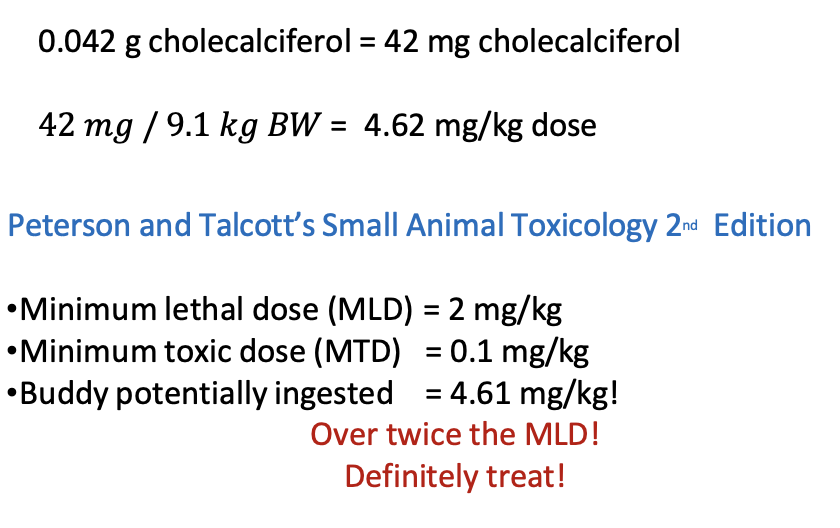
why calculate dose of exposure
to determine if the dose is high enough to pose a risk of intoxication or death
why not just treat any exposure
Risks/expense of treatment may outweigh risk of intoxication
Aggressiveness of treatment will be determined by severity of potential intoxication