Good Words List
 Call Kai
 Learn
Learn Practice Test
 Spaced Repetition
 Match
Match Flashcards
 Knowt Play
1/49

There's no tags or description
Looks like no tags are added yet.
Name | Mastery | Learn | Test | Matching | Spaced | Call with Kai |
|---|
No analytics yet
Send a link to your students to track their progress
50 Terms
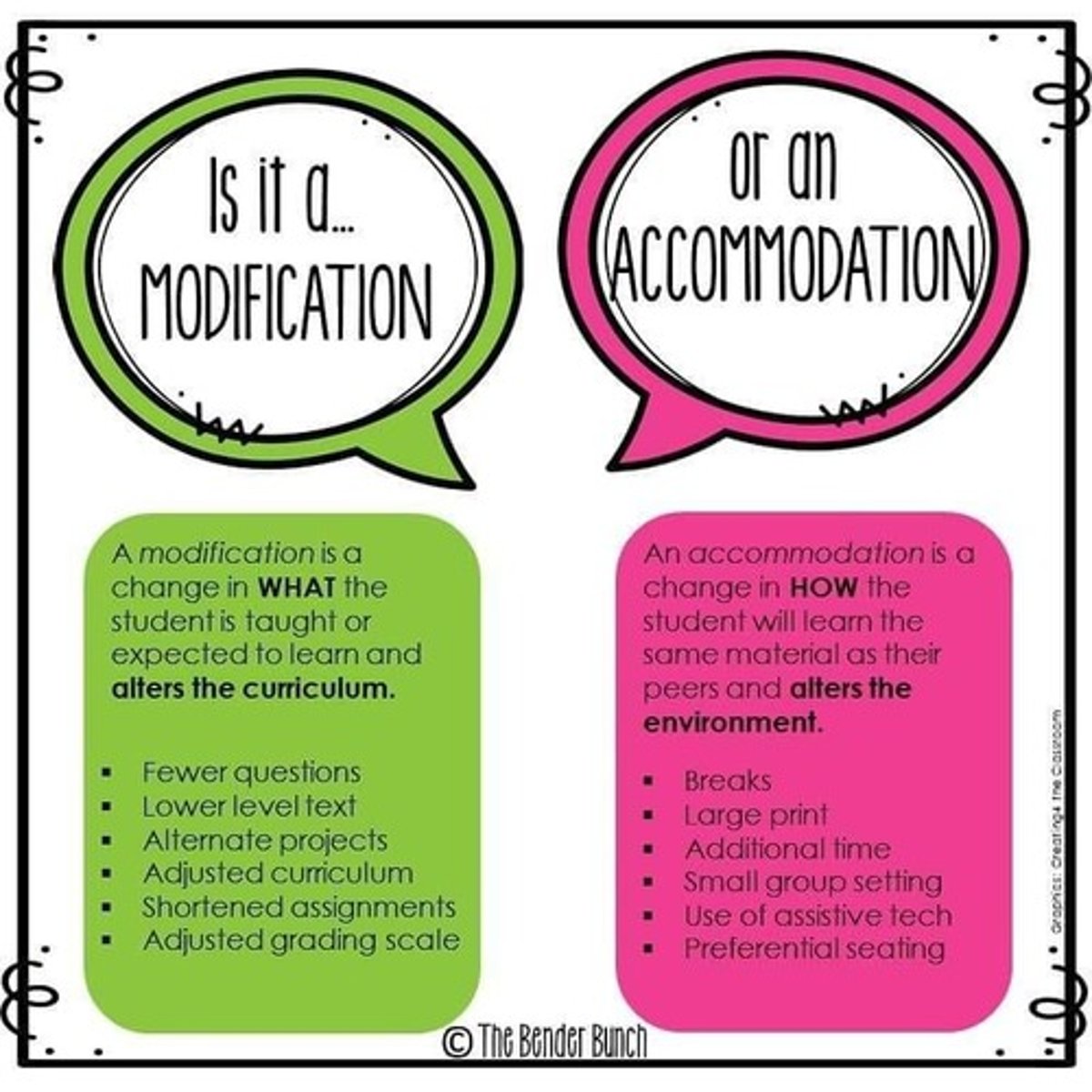
Accommodations.
Modifying instruction or using supports to help special education students achieve. Accommodations do NOT involve lowering the standard or delaying learning.
Action research.
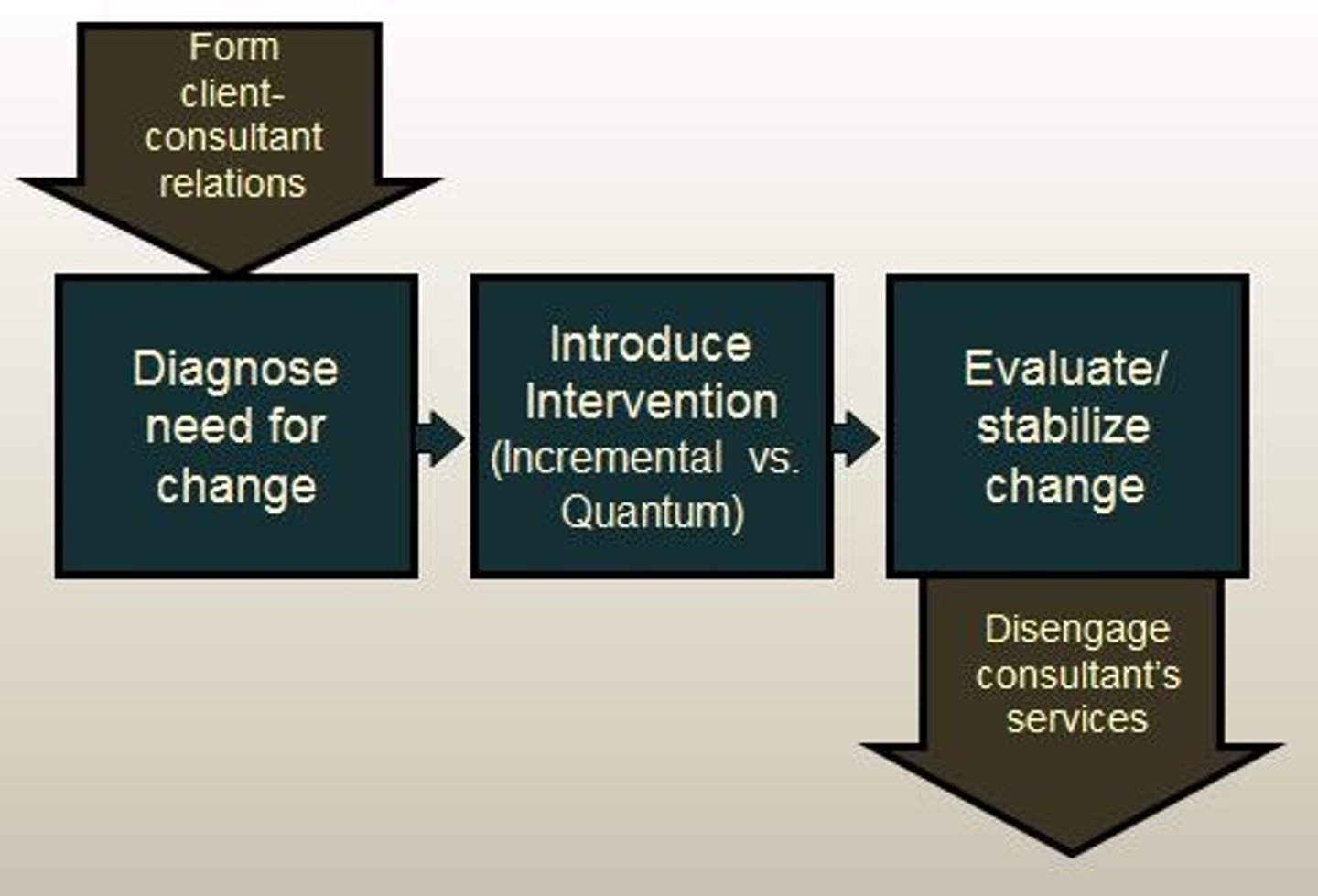
The process of evaluating data in the classroom to identify issues and implementing effective and quick actions to solve problems.
Allocating resources.
Portioning resources so all students have equal opportunity and time while balancing curriculum and instruction.
Assessments.
Using formative and summative data to monitor progress and measure outcomes.
Authentic instruction.
Providing students with meaningful, relevant, and useful learning experiences and activities.
Balanced literacy.
Reading and writing instruction that uses a variety of literary genres including literary and informational texts.
Bilingual instruction.
Helping students use elements of their first language to support learning in English.
Celebrate culture.
Finding materials and resources to celebrate the different cultures represented in your classroom.
Classroom management.
A variety of skills and techniques that teachers use to keep students organized, orderly, focused, attentive, on task, and academically productive during class.
Collaborative learning.
These are strategies that are student-centered and self-directed rather than led by the teacher. Collaboration can also be working with colleagues or stakeholders to improve, create, or produce something.
Comprehensible education.
Making information and lessons understandable to students by accommodating and using ancillary materials to help with language barriers.
Concept map.
Visual representation of content. Especially useful for illustrating concepts like cause and effect, problem and solution, compare and contrast, etc.
Consent Decree.
Protects students' right to a free, comprehensible education. It addresses civil and academic rights of English language learners (ELLs) and requires instruction be delivered in a comprehensible manner so all students can fully participate.
Critical thinking.
Higher-order thinking skills that involve evaluating, analyzing, creating, and applying knowledge.
Cultural responsiveness.
Instruction as a pedagogy that empowers students intellectually, socially, and emotionally by celebrating and learning about other cultures. This includes recognizing the importance of including students' cultural references in all aspects of learning and designing a productive learning environment.
Data driven decisions.
Using scores, writing samples, observations, and other types of qualitative and quantitative data to make instructional decisions.
Depth of knowledge.
Framework that is used to identify the cognitive complexity of a problem.
Developmentally appropriate instruction (DAP).
Choosing text, tools, and activities that are appropriate for the students' grade level.
Differentiated instruction.
Providing all learners in a diverse classroom with different methods to understand instruction.
Diversity as an asset.
Seeing diversity in the classroom as an opportunity to learn new things through the perspectives of others.
Evidenced-based.
Providing instruction using materials with the best scientific evidence available.
Follow the IEP.
A student's individualized education program (IEP) is a legal document. If you see IEP in the answer choices, it is most likely the correct answer.
High expectations for ALL learners.
Holding all students to high academic standards regardless of the students' achievement level, ethnicity, language, socioeconomic status.
Horizontal alignment.
Organization and coordination of standards and learning goals across content areas in the same grade level.
Inclusive.
Providing students with resources and experiences that represent their culture and ethnicity.
Informal learning.
Supporting students with selfdirected, collaborative learning outside of the classroom.
Interdisciplinary activities.
Activities that connect two or more content areas; promotes relevance and critical thinking.
Intrinsic motivation.
Answers that promote autonomy, relatedness, and competence are ways to apply intrinsic motivation. Be on the lookout for these answer choices.
Metacognition.
Analysis of your own thinking.
Modeling.
Demonstrating the application of a skill or knowledge.
Modifications.
Changes to the curriculum and learning environment in accordance to a student's IEP. Modifications change the expectations for learning and the level of assessment.
Outcomes.
The results of a program, strategy, or resources implemented in the classroom.
Performance assessment.
An activity assigned to students to assess their mastery of multiple learning goals aligned to standards.
Play.
In early childhood and beyond, play is essential in learning and understanding.
Primary resource.
These are materials and information in their original form like diaries, journals, songs, paintings, and autobiographies.
Prior knowledge.
What students know about a topic from their previous experiences and learning.
Progress monitor.
Keeping track of student or whole class learning in real time. Quantifiable measures of progress, conferring, observing, exit tickets, and student self-assessments.
Relevance, real-world, and relatable.
Be sure to choose answers that promote realworld application and make learning relatable to students' lives.
Reliable.
Consistent. Producing consistent results under similar conditions.
Remediation.
Correcting or changing something to make it better.
Rigorous.
A word used to describe curriculum that is challenging and requires students to use higherorder thinking skills.
Scaffolding.
Using supports to help students achieve a standard that they would not achieve on their own.
Secondary resource.
These are materials and information derived from the original like newspaper articles, history textbooks, and reviews.
Specific and meaningful feedback.
More than just a grade at the top of a paper, effective feedback includes positive aspects and how students can apply those positive aspects to improving. In addition, feedback should contain specific things the student should do to improve.
Standards-aligned.
Ensuring that curriculum and instruction is aligned to the state-adopted standards.
Student centered/learner centered.
A variety of educational programs, learning experiences, instructional approaches, and academic-support strategies that address students' distinct learning needs, interests, or cultural backgrounds.
Validity.
Accuracy. How accurately knowledge or skills are measured.
Vertical alignment.
Organization of standards and learning goals across grade levels. Structure for which learning and understanding is built from grade level to grade level.
Vocabulary in-context.
Always teach vocabulary in context. It helps to relate the vocabulary to the real-world.
Wait time.
Time between a question and when a student is called on or a response to a student's reply