Exam 1, Topic 2: The Carbon Atom
 Call Kai
 Learn
Learn Practice Test
 Spaced Repetition
 Match
Match Flashcards
 Knowt Play
1/18

There's no tags or description
Looks like no tags are added yet.
Name | Mastery | Learn | Test | Matching | Spaced | Call with Kai | Chat |
|---|
No analytics yet
Send a link to your students to track their progress
19 Terms
Organic chemistry
The science of carbon-containing molecules
Important features of carbon atoms
1. Can form 4 covalent bonds
2. Forms bonds that are stable at a large range of temperatures
3. Allows for a variety of configurations (linear, rings, branched)
Hydrocarbons
Molecules with a high proportion of hydrogen-carbon bonds
Functional groups
A group of atoms with a characteristic chemical structure that exhibits particular properties that remain constant in all molecules that the functional group is in
Amino group
-NH2

Carbonyl ketone group
-CO
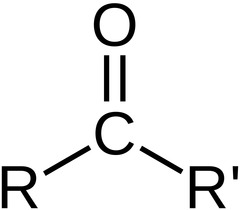
Aldehyde group
-CHO

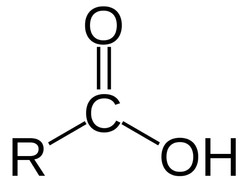
Carboxyl group
-COOH
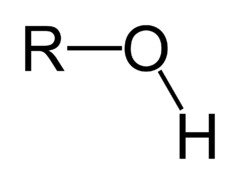
Hydroxyl group
-OH
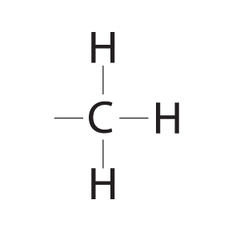
Methyl group
-CH3
Phosphate group
-PO4 2-
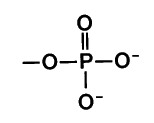
Sulfate group
-SO4-

Sulfhydryl group
-SH

Isomers
Two or more molecules with the same chemical formula but different structures and characteristics.
Structural isomers
Isomers that have the same atoms but in different bonding relationships.
ex. Urea & ammonium cyanate
Stereoisomer
Isomers with identical bonding relationships but different spatial positioning
Two types: cis-trans isomers and enantiomers
Cis-trans isomers
The atoms linked to the two carbons of a C=C bond are either on the same side (cis) or opposing sides (trans)
Difference in chemical properties of cis-trans isomers
Stability & sensitivity to heat and light
Enantiomers
A pair of isomers that exist as mirror images of each other; left and right-handed structures