Pelvc Inflammatory Disease and Infertility
 Call Kai
 Learn
Learn Practice Test
 Spaced Repetition
 Match
Match Flashcards
 Knowt Play
1/88

There's no tags or description
Looks like no tags are added yet.
Name | Mastery | Learn | Test | Matching | Spaced | Call with Kai | Chat |
|---|
No analytics yet
Send a link to your students to track their progress
89 Terms
What is PID (Pelvic inflammatory disease)?
An infection of the upper genital tract (uterus, ovaries, fallopian tubes)
What are the risk factors for developing PID?
Previous history of PID
IUD or IUCD
Postabortion
Post childbirth
Douching
Multiple sexual partners
Early sexual contact
PID may manifest after
Pelvis surgery, accompany tuberculosis, or in association with an abscessed appendix or ruptured colonic diverticulum
A common cause of PID is STD’s like
Chlamydia and gonorrhea
The sequela of PID range from negligible infection that is relatively easy to treat to the development of a
Tubo-ovarian abscess
What is tubo-ovarian abscess?
A pelvic abscess involving the fallopian tubes and ovaries that is often caused by PID
What is the evolution of PID
Vaginitis
Cervicitis
Endometritis
Salpingitis
Tubo-ovarian complex
Tubo-ovarian abscess
Clinical findings of ACUTE PID
Possible history of a STD (chlamydia or gonorrhea)
Fever
Chills
Pelvic pain/tenderness
Purulent vaginal discharge
Vaginal bleeding or itchiness
Dyspareunia
Leukocytosis
Sonographic findings of ACUTE PID
Endometritis
Ill-defined uterine borders
Pyosalpinx
Hydrosalpinx
Cul-de-sac fluid
Multicystic and solid complex adnexal mass(es)
Clinical findings of CHRONIC PID
Continual pelvic or abdominal pain
Infertility (resulting from adhesions and scaring of the fallopian tubes)
Possible palpable adnexal mass
Irregular menses
Purulent vaginal discharge
Sonographic findings of CHRONIC PID
Hydrosalpinx
Scars may be noted within the dilated tube and appear as echogenic bands within the tube
Tubo-Ovarian-complex or Tubo-ovarian-abscess
Multicystic and solid complex adnexal mass(es)
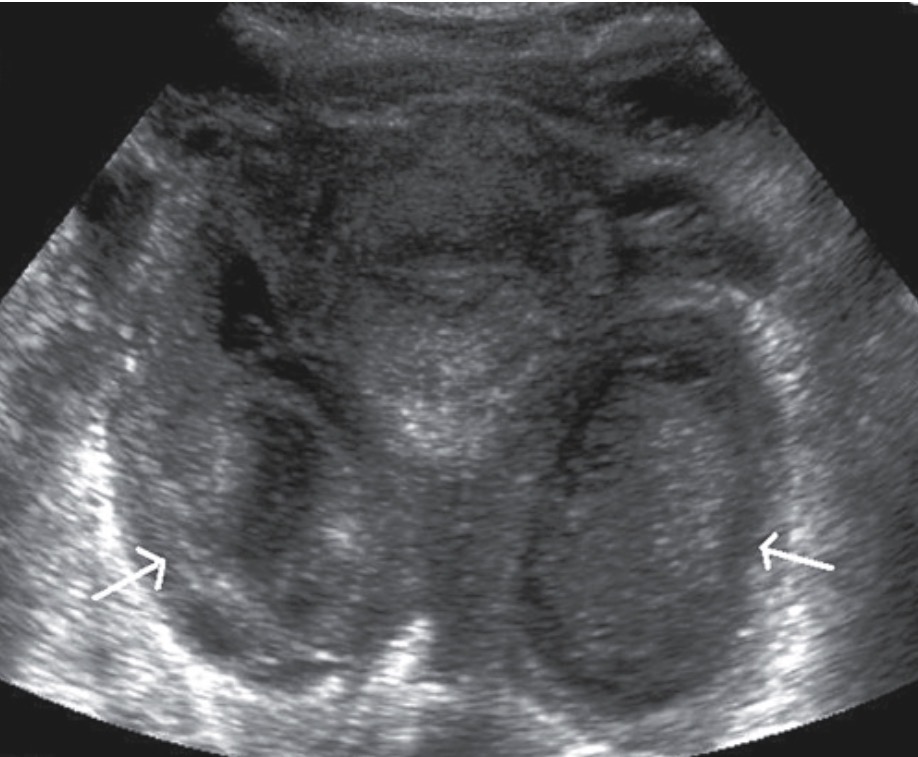
What is vaginitis?
It is the inflammation of the vagina. It is the most common initial clinical presentation in the early stages of PID.
Vaginitis can lead to ?
Excessive vaginal discharge, in cases of PID pt may present with purulent, foul-smelling discharge.
The progression of infection into cervix is termed?
Cervicitis
The progression of infection that ascends into the endometrium is termed?
Endometritis
Clinical findings of endometritis
History of recent abortion, postpartum, D&C, PID, surgery or IUD
Pelvic tenderness
Fever
Leukocytosis
Sonographic findings of endometritis
Thickened echogenic or irregular endometrium
Endometrial fluid
Ring-down artifact from gas or air within endometrium (pneumouterus/ pneumometra)
Color doppler may yield hyperemia
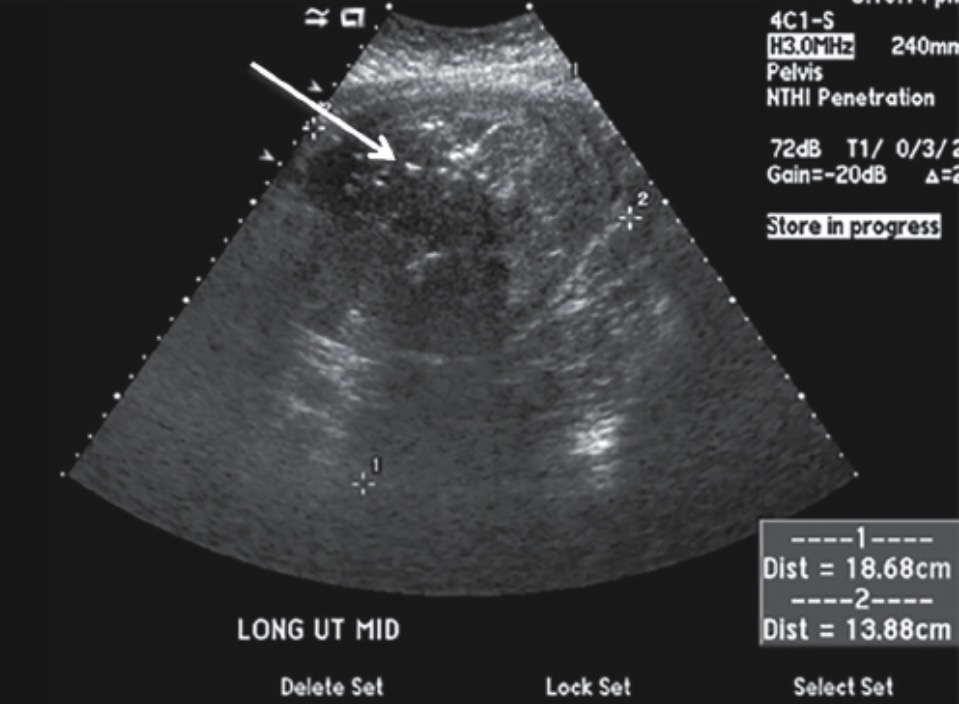
The spread of infection beyond endometrium can lead to inflammation of the fallopian tubes termed
Salpingitis, the tubes subsequently distend , allowing it to be seen on sono
Patients suffering from salpingitis from PID can develop a perihepatic infection and subsequent development of adhesions located between liver and diaphragm. Resulting in the liver capsule being inflamed and leading to clinical presentation much similar to gallbladder disease. This event is called?
Perihepatitis or Fitz-Hugh-Curtis syndrome. Therefore RUQ pain, free fluid within hepatorenal space (morrison pouch), and elevated liver function tests may be noticed with salpingitis
Tubal infections may lead to fluid or pus accumulation within lumen of fallopian tubes and ovaries termed
Hydrosalpinx or pyosalpinx
PID is also linked with fertility and ectopic pregnancy secondary to
formation of scars within inflamed opening of fallopian tubes and ovaries
Scar formation in the tubes can
Disrupt the motility and function of the tube and inhibit likelihood of conception. If conception does occur, the scar formations within tube increases risk of ectopic pregnancy
Clinical findings of salpingitis
Findings consistent with PID
Pelvic tenderness
Fever
Leukocytosis
Sonographic findings of salpingitis
Distended fallopian tube filled with echogenic material (pus) or anechoic fluid
Hyperemic flow within or around affected fallopian tubes with color doppler
Nodular thickened wall of fallopian tube
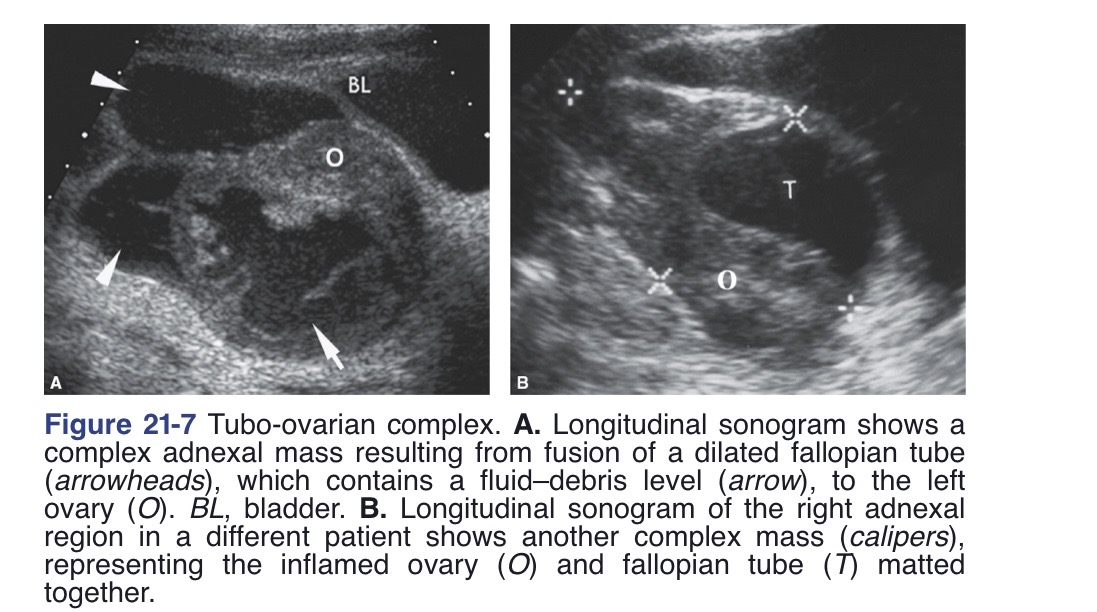
As PID progresses and reaches beyond fallopian tubes, the ovaries and peritoneum become involved termed the?
Tubo-ovarian-complex
What is tubo-ovarian-complex?
Adhesion that develop within pelvis that leads to fusion of the ovaries and dilated tubes
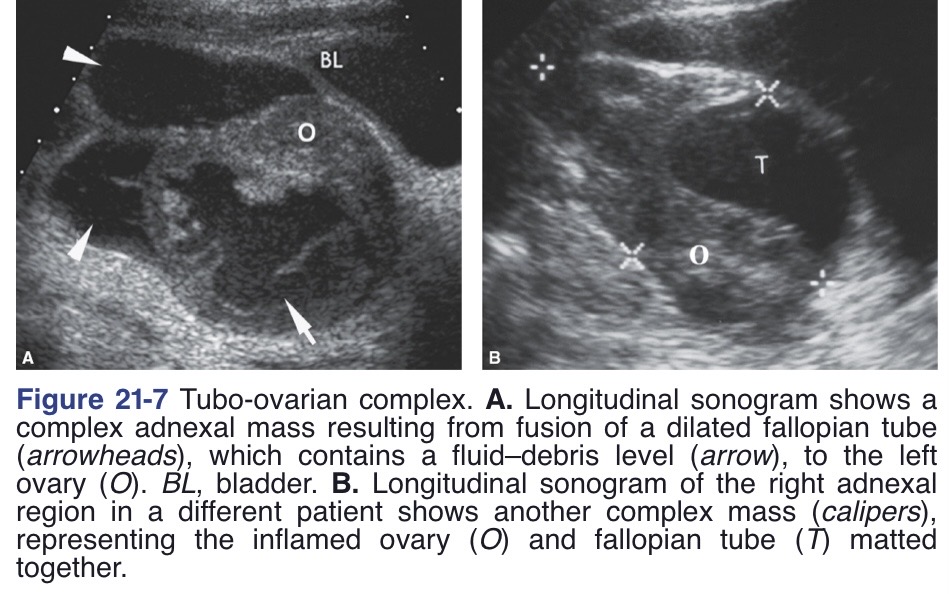
Further progression of PID beyond tubo-ovarian-complex is termed the?
Tubo-ovarian-abscess
Sonographically the distinguishing feature of the two is?
With tubo-ovarian complex, the ovaries and tubes are more readily recognized as distinct structures but ovaries will not be able to be seprated from the tube by pushing with the vaginal probe
Clinical findings of Tubo-Ovarian Complex and Tubo-Ovarian Abscess
Findings consistent with PID
Sonographic findings of Tubo-Ovarian-COMPLEX
‘Thickened, irregular endometrium
Pyosalpinx or hydrosalpinx
Cul-de-sac fluid
Multicystic and solid complex adnexal mass(es)
Ovaries and tubes recognized as distinct structures, but the ovaries will not be separated from the tube by pushing with the vaginal probe
Sonographic findings of tubo-ovarian ABSCESS
Thickened, irregular endometrium
Pyosalpinx or hydrosalpinx
Cul-de-sac fluid
Multicystic and solid complex adnexal mass(es)
Complete loss of borders of all adnexal structures and the development of a conglomerated adnexal (possibly bilateral) mass
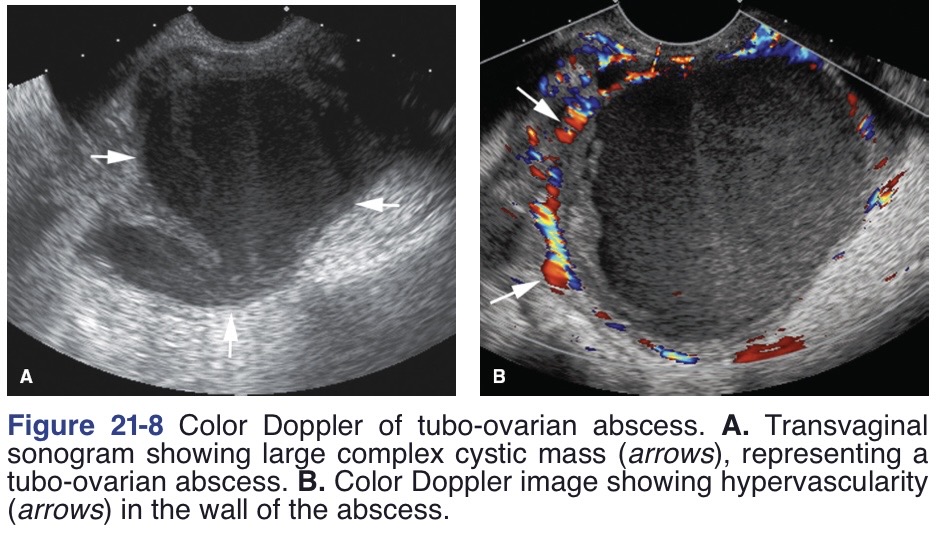
What is a common cause of infertility?
PID
Congenital uterine malformations / mullerian anomalies have been linked to female infertility not because it prevents pregnancy but because of
structural abnormalities
What is a common structural defect of the uterus that leads to fertility troubles
Bicornuate uterus
What is another common structural defect of the uterus that leads to repeated abortions/fertility troubles
Septate uterus. It frequently requires surgical intervention to reduce division of uterine cavity.
For patients with a septate uterus, sonography can also aid in resection of septum during
Hysterescopic uterine septoplasty
What is endometriosis
Functional, ectopic endometrial tissue located outside the uterus.
Hemorrhage of this ectopic tissue often occurs resulting in focal areas of bloody tumors called
Endometriomas/ Chocolate Cysts
Endometriosis can be located anywhere throughout pelvis; the most common location being the
Ovaries
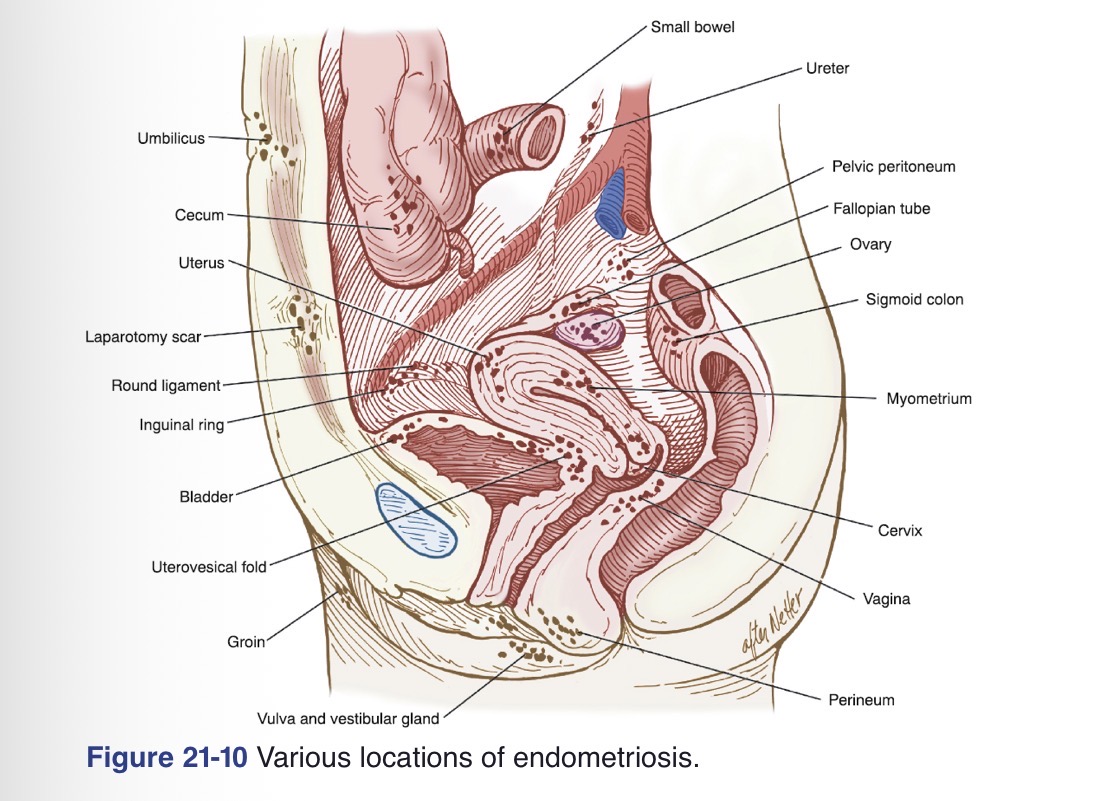
The link between endometriosis and infertility
Development of pelvic adhesions thay may alter normal anatomy, preventing ovum pickup or tubal obstruction
Clinical findings of endometriosis
Patient may be asymptomatic
Pelvic pain
Infertility
Dysmenorrhea
Menorrhagia
Dyspareunia
Dyschezia
Sonographic findings of endometriosis
Predominantly cystic mass with low-level internal echoes (may resemble a hemorrhagic cyst)
Anechoic or complex mostly cystic mass with posterior enhancement and may contain a fluid–fluid level
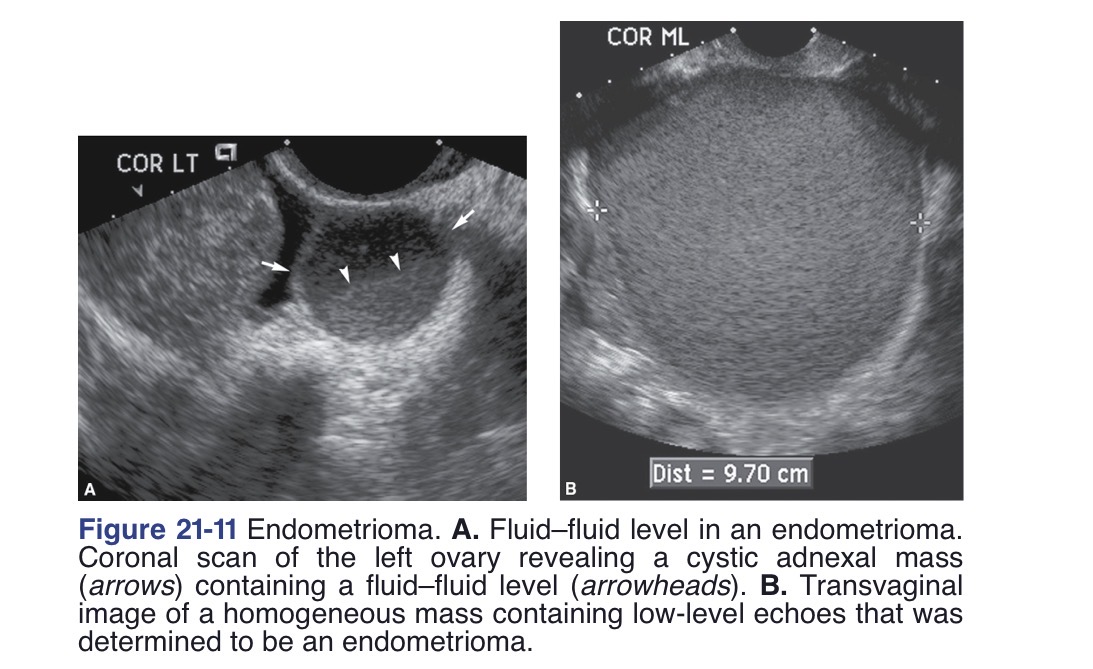
What is PCOS/Stein-Levanthal syndrome
Endocrinologic ovarian disorder linked with infertility. Characterized by chronic anovulation ,amenorrhea, hirsutism and obesity
What is the most common cause of androgen (male hormones) excess
PCOS
Clinical findings of PCOS
Stein–Leventhal syndrome (amenorrhea, hirsutism, and obesity)
Infertility
Oligomenorrhea cycles (<35 days apart)
Hyperandrogenism
Sonographic findings of PCOS
“String of pearls” sign or “necklace” sign: many small follicles along periphery
Bilateral enlargement of the ovaries
Increased stroma and increased stromal echogenicity
One or both ovaries should contain 12 or more follicles that measure between 2 and 9 mm in diameter
Ovarian volume greater than 10 mL
Threshold of 25 small follicles can also be used
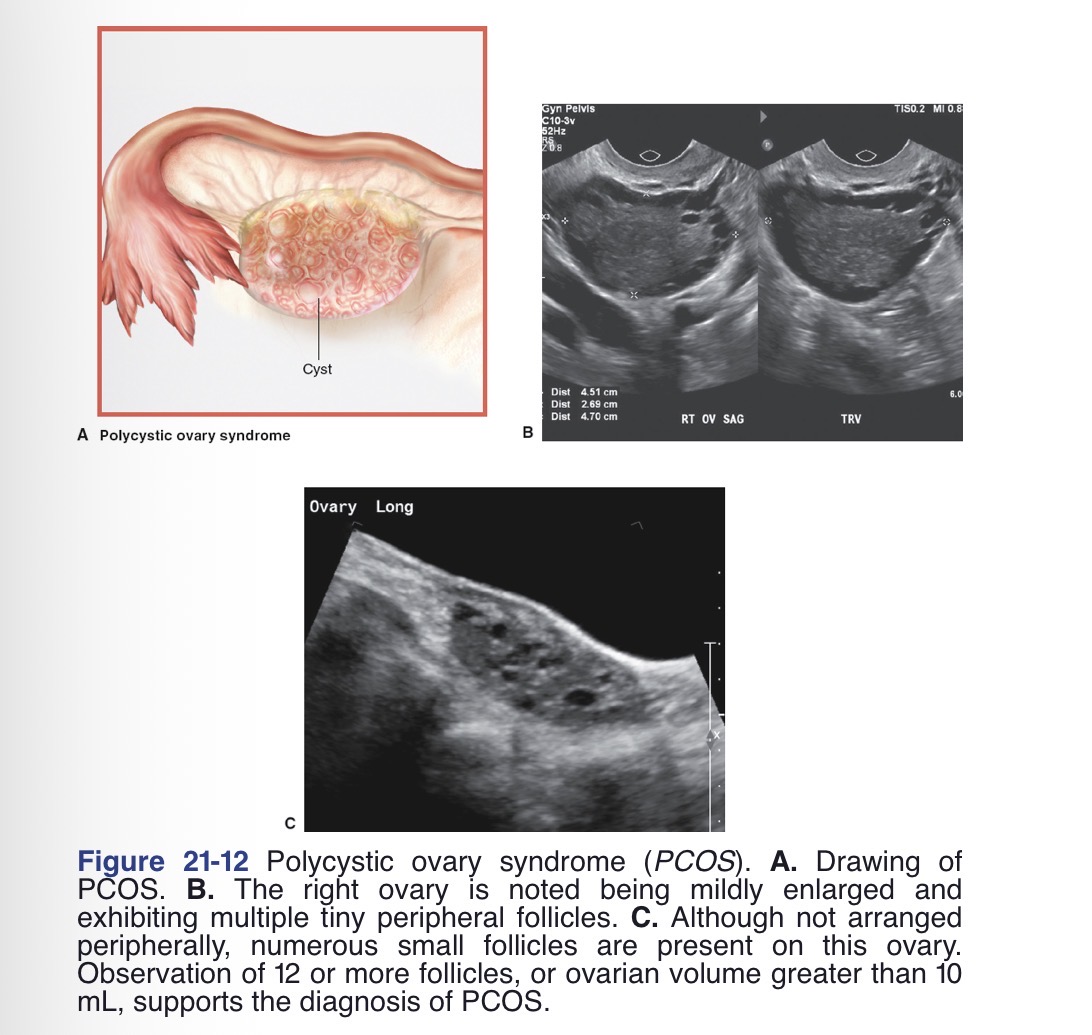
Imaging diagnosis of PCOS one or both ovaries should contain
12 or more follicles measuring between 2-9mm in diameter
For imaging diagnosis of PCOS ovarian volume should exceed
10 mL
For imaging diagnosis of PCOS, a threshold of
25 small follicles should be used
What is often the result of fallopian tube obstruction by adhesions
Hydrosalpinx; hysterography or SIS should be used to evaluate patency
The presence of adhesions within tube can prevent what
Normal peristaltic motions that typically occur.
Adhesion development can occur as a result of
Long-standing PID, endometriosis, tubal surgery
What is an endometrial factor that contributes to infertility
Luteal phase deficiency
What is luteal phase deficiency
When endometrium does not develop appropriately in luteal phase of endometrial cycle as a result of reduced progesterone production
What is ashermans syndrome
Presence of intrauterine adhesions or synechiae within uterine cavity typically resulting from scar formation after uterine surgery especially after a d&c
What is ashermans syndrome link to infertility
Ashermans syndrome often prevent implantation or lead to recurrent early pregancy loss
Clinical findings of asherman syndrome
History of D&C, trauma, and uterine surgery
Recurrent pregnancy loss
Amenorrhea or hypomenorrhea
Sonographic Findings of Asherman Syndrome
Bright areas within the endometrium
Sonohysterography findings include bright bands of tissue traversing the uterine cavity
What is the link between uterine leiomyomas/fibroids and infetility
Fibroids that are intracavitary or submucosal may distort endometrium and prevent implantation
Clinical findings of a uterine leiomyoma/fibroid
Pelvic pressure
Menorrhagia
Palpable abdominal mass
Enlarged, bulky uterus (if multiple)
Urinary frequency
Dysuria
Constipation
Infertility
Sonographic findings of a uterine leiomyoma
Hypoechoic mass within the uterus
Posterior shadowing from mass
Degenerating fibroids may have calcifications or cystic components
Multiple fibroids appear as an enlarged, irregular shaped, diffusely heterogeneous uterus
What is follicular aspiration
Technique used for IVF that drains the follicle for oocyte retrieval
What is oocyte retrieval
Removal of oocytes from ovarian follicles by aspiration
What is in vitro fertilization (IVF)
Fertility treatment that requires a mature ovum to be extracted from the ovary, with fertilization taking place outside the body (4-8 embryos are placed into uterus)
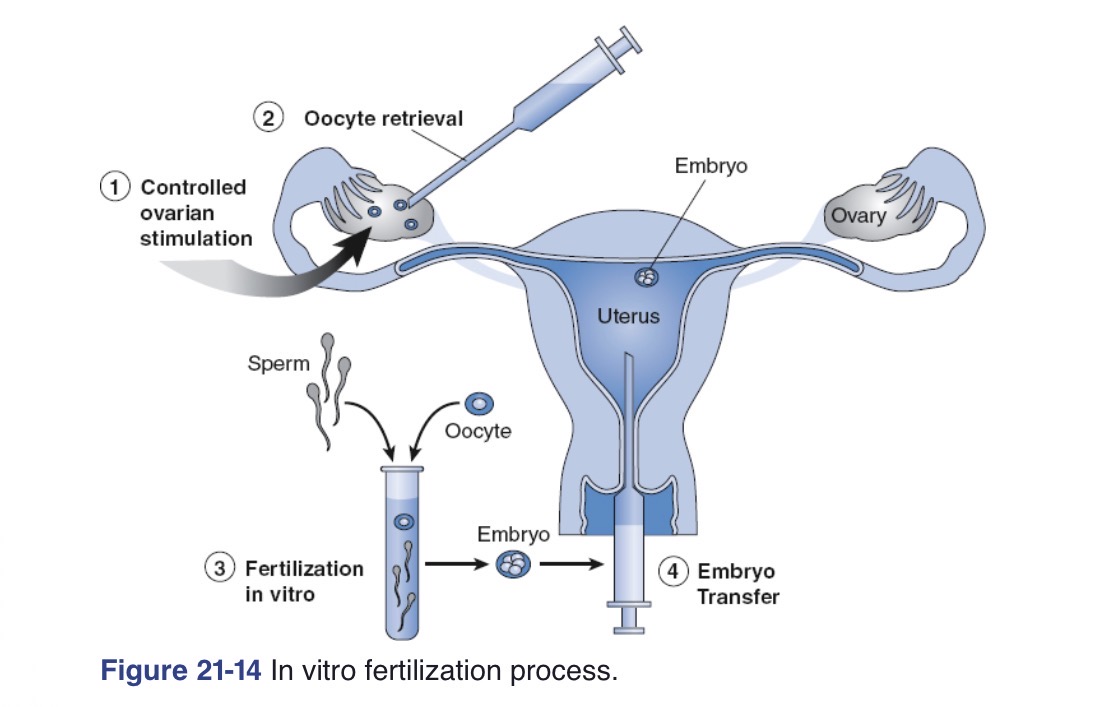
IVF can result in multiple gestations, however it can be reduced by
Selective reduction/ multifetal pregnancy reduction
An additional technique of ART (Assisted- Reproductive- Technology) , where fertilization takes place in fallopian tube by means of laparoscopy
Gamete intrafallopian tube transfer (GIFT)
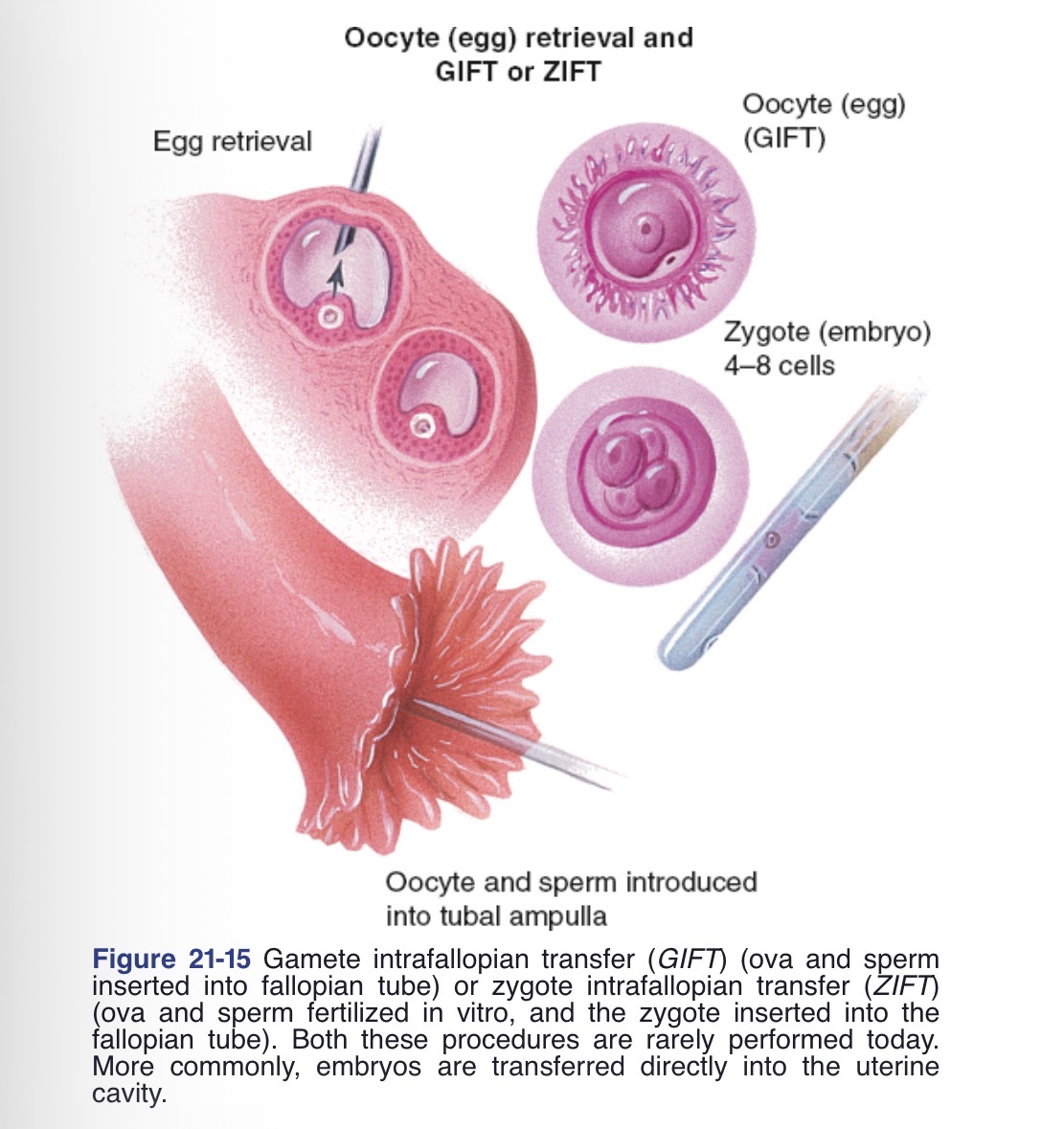
Another method of ART that requires zygote to be inserted into fallopian tube is termed
Zygote intrafallopian transfer
Sonographers should be aware that patients who are being treated with ART are an increased risk for
Ectopic pregnancy
Heterotopic pregnancy (coexisting ectopic and intrauterine pregnancy)
Multiple gestations
Ovarian hyperstimulation syndrome
Ovulatory dyfunction can occur for many reasons including
Thyroid disorders and diabetes mellitus
What is Ovulation induction
Stimulation of ovaries by hormonal therapy to treat infertility
What drugs are used to stimulate pituitary gland to secrete amounts of follicle-stimulating-hormones (FSH) to encourage development of multiple follicles
Clomid or clomiphene citrate
What is pergonal? And when is it used
a fertility drug made from hormones extracted from postmenopausal urine. It is used when clomid administration is not successful. It consists of a mixture of FSH & LH and given in conjuction with hCG
Ovulation induction dramatically increases the risk of
Multiple gestations and OHS
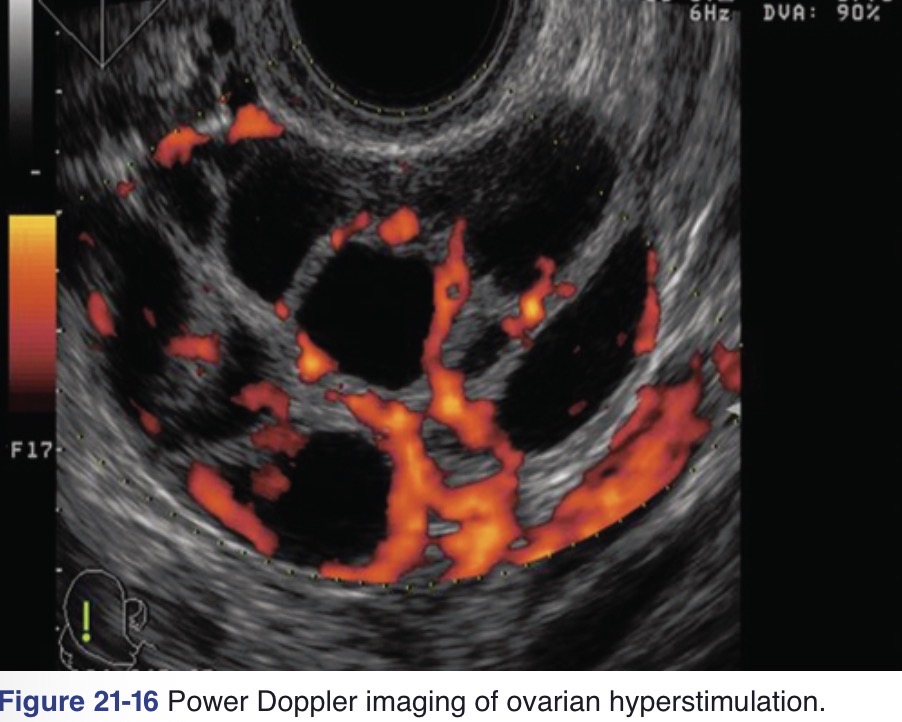
What is ovarian hyperstimulation syndrome
Syndrome resulting from hyperstimulation of ovaries by fertility drugs, resulting in multiple enlarged follicular ovarian cysts. Ovaries can enlarge (5-12cm)
Because of hCG administered as part of ovulation induction, the ovary will contain multiple large follicles known as
Theca lutein cysts
Theca lutein cysts are large so patient could suffer from
Ovarian torsion
OHS can initiate these following conditions:
Renal failure
Thromboembolism
Acute respiratory distress syndrome
Clinical findings of ovarian hyperstimulation syndrome OHS
Fertility treatment, including ovulation induction
Electrolyte imbalance
Oliguria (low urine)
Nausea
Vomiting
Abdominal distension
Ovarian enlargement
Sonographic findings of ovarian hyperstimulation syndrome OHS
Cystic enlargement of the ovaries greater than 5 cm
Ascites
Possible pleural effusion
What are some examples of progestin-releasing IUDs
Mirena
Liletta
Skyla
Kyleena
What is an example of a IUD that utilizes copper
ParaGard
Copper T
Copper 7
IUDs create _____________ and have been described as producing an “________________” on a sonogram
Posterior shadowing, entrance and exit echo
The use of IUDs has been linked with?
PID
Ectopic pregnancy
Spontaneous abortions
Which IUD is used throughout the world besides the US
Lippes loop
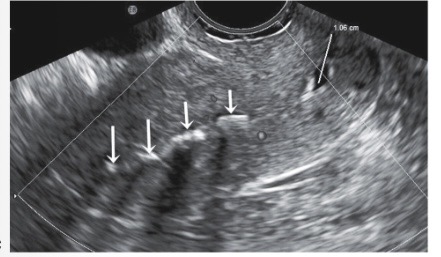
Patients who have an IUD that has perforated into uterine wall or myometrium will often complain of
Irregular or heavy bleeding
Cramping
What is female tubal sterilization/ tubal ligation
Permanent form of female sterilization in which the fallopian tubes are severed by clipping or cauterization
What is the procedure for male sterilization
Vasectomy
If a patient presents with a history of tubal ligation and a positive pregnancy test, what should be highly suspected
An ectopic pregnancy
What is a permanent form of birth control that is implanted into the fallopian tubes to block sperm
essure device, no longer used in US