Antibiotics Pharmacology
 Call Kai
 Learn
Learn Practice Test
 Spaced Repetition
 Match
Match Flashcards
 Knowt Play
1/81

There's no tags or description
Looks like no tags are added yet.
Name | Mastery | Learn | Test | Matching | Spaced | Call with Kai | Chat |
|---|
No analytics yet
Send a link to your students to track their progress
82 Terms
Why does a cell wall synthesis inhibitor work?
cell wall needs to be maintained as a required structure for bacterial survival
new cell wall needs to be synthesized in order for bacterial cells to replicate
more effective in gram-positive bacteria
B-lactam antibiotics
penicillins, cephalosporins, monobactams, carbapenems and B-lactamase inhibitors
four-membered ring = lactam ring
needs to be intact to have antibacterial effect
can be hydrolyzed by bacterial B-lactamases
B-lactams MOA
interfere with transpeptidation required for cell wall synthesis
B-lactam binds to the penicillin-binding protein (PBP) is a a transpeptidase enzyme, takes once AA off peptide and inhibits the formation of a cross-link to the adjacent peptide
will cause the cell to have a weak or patchy cell wall, and isn’t enough to maintain cellular integrity
B-lactams bind covalently to the active sites of PBPs
B-lactams only kill bacterial cells when actively growing and synthesizing cell wall
B-lactams pharmacokinetics
oral absorption depends on acid stability
oral absorption impaired by food
except amoxicillin
needs to be dose 1-2 hours before or after a meal
primarily excreted by kidneys
CNS penetration is low
B-lactams adverse effects
GI upset (NVD)
secondary opportunistic infections
skin rash - if aminopenicillin inappropriately prescribed for viral illness
rare: bone marrow suppression, hepatotoxicity
serious: hypersensitivity
B-lactams hypersensitivity
are cross-sensitizing and cross-reacting within class and across classes
antigens are presented during penicillin metabolism
when transiently bound to host protein, results in a hapten and is identified as non-self by the immune system
non-dose dependent
B-lactams resistance
primary mechanism is inactivation by B-lactamase
several different lactamase enzymes with different spectrums
secondary mechanism is:
alterd PBP
impaired penetration
drug efflux
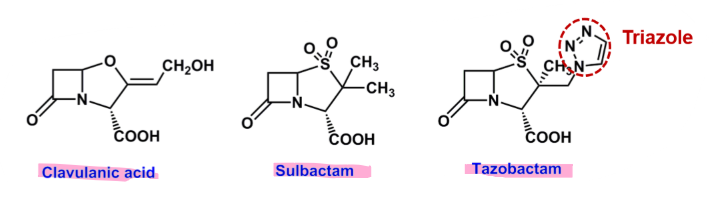
B-lactamase inhibitors
clavulanic acid, sulbactam, tazobactam
very weak/no antibacterial activity on their own
very high (irreversible) affinity for catalytic side of B-lactamases
impairs the ability of bacteria to hydrolyze penicillins
increases effective drug concentration at infection site
B-lactams in combo with B-lactamases
can be used in combination
addition of B-lactamase inhibitor extends activity
covering B-lactamase producing strains S. aureus and some gram-negative
PK of B-lactams and B-lactamase inhibitors may differ between each other and get into different compartments
Why are there so many different b-lactams?
by changing the chemical structure (rings and side chains) can develop antibiotics with:
better PK characteristics
expanded spectrum of action
resistance to B-lactamases
Penicillin
penicillin G (parenteral)
penicillin V (oral)
susceptible to acidic/basic hydrolysis
Stability of penicillins in basic conditions
the double bonded O becomes negatively charged
B-lactam ring is hydrolyzed to penicilloic acid
which has no activity
can cause an allergic reaction
Stability of penicillins in acidic conditions
depends on the R substituent
can be modified to be more stable at the acidic pH
can undergo intermolecular cyclization and converted to penicilloic acid
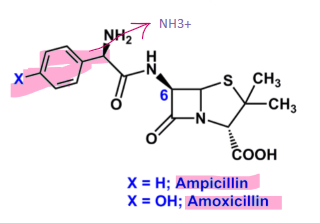
Ampicillin/Amoxicillin
semi-synthetic penicillin
acid stable
due to primary amine is charged at acidic pH
becomes an EWG and hinders the intermolecular cyclization because decreases the electron density
orally active
sensitive to hydrolysis by B-lactamases and alkaline pH
Antistaphylococcal penicillins
nafcillin
methicillin (parenteral)
cloxacillin (oral)
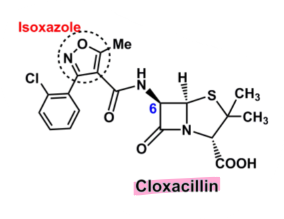
Cloxacillin
acid-stable
pharmacophore: isoxazole
oral
food interferes with absorption
greater degree of stability towards lactamases
from the additional functional groups
greater hepatic & biliary metabolism/excretion compared to penicillin
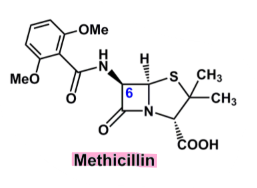
Methicillin
synthetic penicillin
pharmacophore: dimethoxybenzene
IM/IV
greater antibacterial spectrum versus cloxacillin
greater degree of stability towards lactamases
from the additional functional groups = steric bulk
Antipseudomonal penicillins
ticarcillin
piperacillin
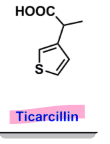
Ticarcillin
semi-synthetic penicillin
not stable in the acidic pH of the stomach
in acid will do through decarboxylation and loses activity
pharmacophore: thiophene ring
diminished gram-positive activity
sensitive to hydrolysis by B-lactamases
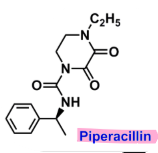
Piperacillin
semi-synthetic penicillin
not stable in the acidic pH of the stomach
pharmacophore: piperazine
superior activity to pseudomonas versus ticarcillin
sensitive to hydrolysis by B-lactamases
Penicillin: SAR summary
need B-lactam ring
fused to 5-thiazolidine or 6-membered ring with nitrogen and sulfur atoms
sulfur at C1 necessary
dimethyl at C2 necessary
carboxylic acid (or esters for prodrugs) at C3 necessary
tertiary nitrogen at N4 critical
can alter substituents at C-6 to improve spectra, b-lactamase stability, in vivo stability
has H bonds, hydrostatic interactions and VDW forces
Cephalosporins
same MOA as penicillins
generally, broader spectrum of activity compared to penicillins
can be hydrolyzed by some b-lactamases
Cephalosporins pharmacokinetics
can be prodrug esters
eliminated renally
decreased allergic reaction
generally more resistant to hydrolysis by B-lactamases
generations based of antibacterial spectrum
spectrum and PK sensitive to changes in C7 amino group and C3
Cephalosporins toxicity
similar to penicillins
are sensitizing
cross-sensitivity between penicillins and cephalosporins is 1-5%
serious: nephrotoxicity
rare: may cause disulfiram-like reactions by inhibiting alcohol dehydrogenase
Cefotaxime
not stable at acidic pH
broad spec activity
resistance to B-lactamases
pharmacophore: imino-methoxy amino-thiazole
provides steric bulk to protect against B-lactamase
parenteral
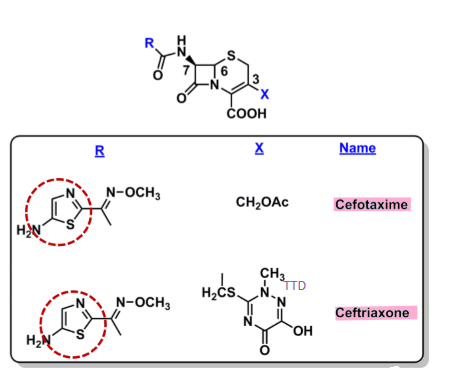
Ceftriaxone
not stable at acidic pH
also has a thiotriazinedione (TTD)
broad spec activity
resistance to B-lactamases
pharmacophore: imino-methoxy amino-thiazole
provides steric bulk to protect against B-lactamase
parenteral
Ceftazidime
pharmacophore: imino-methoxy amino-thiazole and pyridine
provides steric bulk to protect against B-lactamase
has a positive charge that is highly polar
increased ability to penetrate gram-negative
poor oral absorption
parenteral
Cefixime
pharmacophore: imino-methoxy amino-thiazole
provides steric bulk to protect against B-lactamase
has double bonded carbons
increases lipophilicity
oral
Cefuroxime axetil
prodrug (ester)
pharmacophore: imino-methoxy furan
provides steric bulk to exhibit resistance to B-lactamase
oral
Cefepime
pharmacophore: imino-methoxy amino-thiazole and pyrrolidine
imino = steric bulk to exhibit resistance to B-lactamase
Pyrrolidine = increase activity against gram-neg
parenteral
Carbapenems
imipenem
co-administered with cilastatin (inhibitor of dipeptidase enzyme)
meropenem
not sensitive to dipeptidase enzymes
ertapenem
all have B-lactam MOA
Carbapenems toxicity
NV
rare: seizures with imipenem
less with meropenem
up to 10% cross-reactivity with penicillin allergy
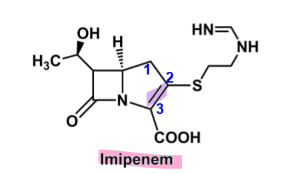
Imipenem
synthetic penicillin derivative w/ B-lactam
broad spectrum
resistance to B-lactamases
due to double bond in 5 member ring
short in vivo half-life due to hydrolysis
parenteral
not stable at stomach pH because no bulk substituents
Meropenem
synthetic penicillin derivative w/ B-lactam
broad spectrum
resistance to B-lactamases
pharmacophore: pyrrolidine
parenteral
not stable at stomach pH because no bulk substituents
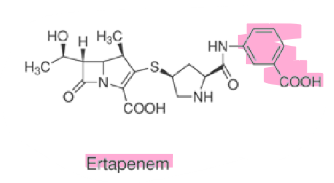
Ertapenem
synthetic penicillin derivative w/ B-lactam
broad spectrum
has longer in vivo half-life versus imipenem and meropenem
due to benzoic acid ring (also helps increase activity)
resistance to B-lactamases
parenteral
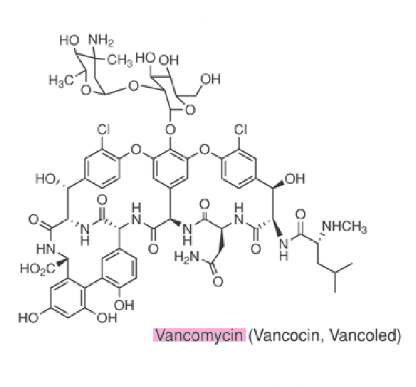
Vancomycin
cell-wall targeting agent
will NOT penetrate outer membrane of gram-negative bacteria
not a B-lactam
binds alanine-alanine terminus of peptidoglycan pentapeptide
cyclic glycopeptide
fermented from Amycolatopsis orientalis
Vancomycin pharmacokinetics
not orally bioavailable
will not absorb, so only use orally for GI infections
not stable in the stomach
short in vivo half-life
parenteral
90% unchanged in urine
distribution:
soft tissue
bone distribution
some CNS
Vancomycin toxicity
hypersensitivity reactions
injection site pain
flushing, tachycardia, hypotension from rapid IV admin
skin reactions
serious:
ototoxicity - not correlated well to dose/concentration
aminoglycoside nephrotoxicity
Vancomycin resistance
from mutation of ala-ala binding site
changes to ala-lactate or ala-serine
described as Van A-type through Van E-type - based on specific genes
other types detected but mechanism unknown
Fosfomycin
non-B-lactam cell wall agent
acts as a “PEP” analog which inhibits MurA enzymes that work on cell wall
decreases ability of bacteria to interact with urinary epithelium
very little cross-resistance with others b/c unique MOA
Fosfomycin pharmacokinetics
oral and IV
very water soluble
good for UTIs because naturally accumulates there
prokinetic GI agents can reduce absorption
Fosfomycin toxicities
ND and headache
rare: neutropenia, angioedema
Protein Synthesis Inhibitors
bacterial ribosome composed of 30S and 50S vs. mammalian 40S and 60S
differences between bacterial and mammalian translation are enough for agent to be relatively-selective for only bacterial protein synthesis
aminoglycosides
tetracyclines
macrolides
clindamycin
linezolid
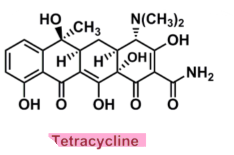
Tetracyclines
inhibit bacterial synthesis by binding 30S subunit, blocks binding of any incoming tRNA
translation may stop cause cannot add anymore AA’s and get incomplete protein
could get wrong AA put on the protein chain
pharmacophore: napthacene
tetracycline
doxycycline
tigecycline
minocycline
Tetracycline pharmacokinetics
excreted in urine and bile with some enterohepatic recycling
tigecycline excreted unchanged
minocycline metabolized extensively
Tetracycline toxicities
NVD
anorexia
heartburn
photosensitization
rare:
liver toxicity large doses
renal toxicity with expired (Fanconi syndrome) - from breakdown product
vestibular reactions with minocycline
Tetracycline metallic chelation adverse effects
calcium chelation, agent binds to and damages growing bones and teeth
can cause discolouration and bone deformity if used in pregnancy and early childhood (<5y)
greatest risk between second trimester to 6 months
related to dose (body weight NOT duration)
except doxycycline because lower affinity to calcium
also to any di or trivalent metal ion
cause decreased solubility and absorption
avoid antacids, mineral supplements and dairy
Tetracycline resistance
Primary: drug efflux
secondary:
impaired influx
increased expression of binding sites that are NOT active
enzymatic inactivation
Tetracycline Resistance - Efflux pumps
Tet(AE): in gram-negative - newer agents are not substrates
Tet(K): staphylococci confers resistance tetracycline
Tet(M): in gram-positive resistance against tetracycline, doxycycline and minocycline, NOT tigecycline (bulky side chain confers resistance - but NOT in Proteus or Pseudomonas aeruginosa)
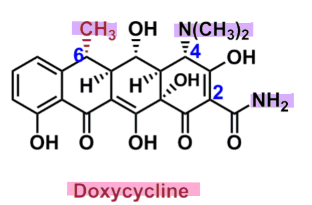
Doxycycline
semisynthetic tetracycline - with increased stability
lipophilic compound with long half-life
both nitrogen substituents are important for activity
methyl group on C6 is important for oral absorption - more stable in acidic pH
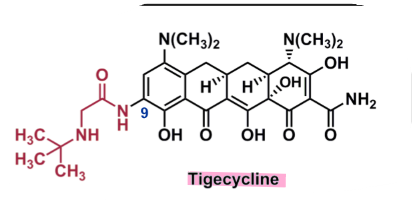
Tigecycline
new class of tetracycline called glycylcyclines
contains 9-t-butyl-glycoamido substituent
more stable towards bacterial enzymes due to steric bulk
fairly lipophilic
parenteral
due to rapid phase II conjugation by glucuronic acid
Macrolides
binds reversibly to 50S ribosomal subunit
inhibits transpeptidation and translocation in protein formation
transpeptidation is not the same as cell wall but in creating peptide chain
blocks adding new AA to growing chain
isolated from Streptomyces species
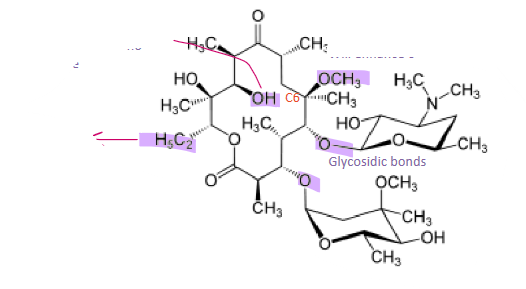
made of lactone (cyclic ester) ring and amino sugars linked by glycoside bonds
erythromycin
clarithromycin
azithromycin
Erythromycin
acid-labile (easily destroyed in acid environment)
must be admin with enteric coating
food interferes with absorption
shortest half-life of the macrolides
extensively hepatically metabolized by CYP3A4
also inhibits P450 enzymes, mainly CYP3A4
lots of drug interaction
Clarithromycin
best oral absorbed on the macrolides
longer half-life than erythromycin (3-4h) and less than azithromycin
14-member cyclic ring
extensively hepatically metabolized by CYP3A4
also inhibits P450 enzymes, mainly CYP3A4
lots of drug interaction
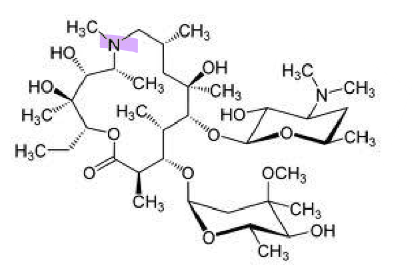
Azithromycin
best on empty stomach
15-member cyclic ring
any increase in pH (antacid) delays absorption
longest half-life (68h)
NOT substrate for CYP3A4
tertiary amine in lactone ring increases acid stability
will become positively charged so increases gram-negative activity
Macrolide toxicity
anorexia, NVD
clarithromycin and azithromycin are better tolerated
hypersensitivity reactions
fever
eosinophilia
rashes
hepatotoxicity due to cholestatic hepatitis
mainly erythromycin
Macrolide adverse effect - QT prolongation
greatest risk erythromycin > clarithromycin > azithromycin
if gets too long it can trigger Torsades de Pointes
risk factors:
previous diagnosis
HR <60bpm
changes in configuration of heart
low K+ or Mg+
certain drugs
Macrolide resistance
reduced permeability of cell membrane in gram-negatives
active efflux in gram-positives
bacterial esterases that hydrolyze macrolides
altered ribosomal binding site
increased expression of enzymes that methylate the ribosome
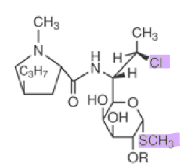
Clindamycin
chemically distance from macrolides, but same MOA
binds 50S ribosomal subunit, identical to macrolides
sulfur-containing N-methylpyrrolidylcarboxylic acid
synthetic derivative of lincomycin
cross-resistance may occur
may compete for binding
also can be given as a phosphate ester (prodrug)
given parenterally
Clindamycin pharmacokinetics
fully absorbed, taken with food
wide distribution
NOT the CNS
extensively metabolized
may accumulate if hepatic dysfunction is present
Clindamycin toxicity
ND
skin rashes
impaired liver function/tests
neutropenia
Clindamycin resistance
ribosomal access
very poor porin permeability in gram-negatives
NOT a substrate for gram-positive efflux pumps, unlike macrolides
decreased ribosomal binding
altered binding target
shared resistance with macrolides
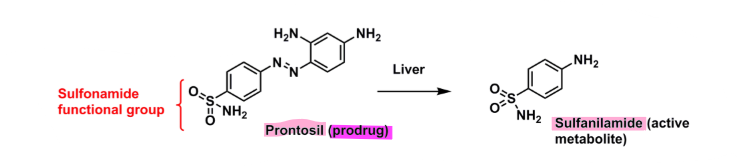
Sulfonamides
bind to dihydropteroate synthase and inhibit bacterial protein synthesis
can also act as a false metabolite and get incorporated into DNA biosynthesis
“sulfa allergy” or allergic skin reactions (rashes and hives) due to presence of -SO2NH2 functional group
Prontosil/sulfanilamide
prontosil is prodrug
sulfanilamide is active metabolite
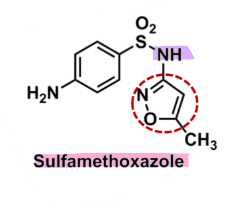
Sulfamethoxazole
benzenesulfonamide is essential for antibacterial activity
isoxazole provides optimum activity
acts as an EWG which increases
Hydrogen is important off chain N
without loss of activity
oral
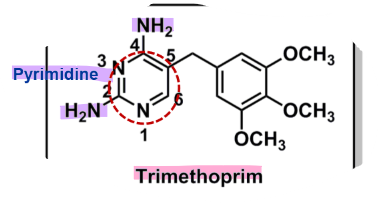
Trimethoprin
diaminopyrimadine derivative
inhibits enzyme dihydrofolate reductase (DHFR)
highly selective to bacterial DHFR (40,000x)
primary amines important for activity
pharmacophore: pyrimidine
oral
DNA-targeted antibiotics
target bacterial DNA synthesis and replication
different enough from human to get relative-selectivity
fluoroquinolones
sulfonamides
trimethoprim
Fluoroquinolones
bactericidal
pharmacophore: quinolone
ciprofloxacin
norfloxacin
ofloxacin
sub-class called respiratory fluoroquinolones
levofloxacin
gemifloxacin
moxifloxacin
Fluoroquinolones MOA
block DNA synthesis by inhibiting 2 bacterial enzymes:
topoisomerase II (aka DNA gyrase) - supercoiled DNA cannot relax
topoisomerase IV replicated chromosomal DNA does not separate into daughter cells during cell division
relatively-selective 100-1000x bacterial > mammalian
Fluoroquinolones pharmacokinetics
oral
food delays peak concentration, but not bioavailability
chelation with divalent cations
wide distribution into bones and joints
cross the placenta
renal excretion
Fluoroquinolones toxicity
VND
photosensitivity
headache, dizziness, drowsiness
skin rash
abnormal liver function
QT prolongation
hyper/hypo- glycemia
Fluoroquinolones toxicity - cartilage damage
joint and tendon toxicity in preclinical
not to be used in patients still in process of developing tendons and bones
<18y
>60y - tendonitis, tendon rupture
corticosteroids
immunosuppressants
pregnancy (relative)
Fluoroquinolones resistance
mutation in binding region of target enzyme
specifically gyrA subunit of DNA gyrase
change in permeability
expression of proteins that protect DNA gyrase or inhibit fluoroquinolones
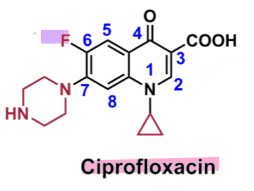
Ciprofloxacin
contains piperazine ring at C7
increases antibacterial spectrum and PK
contains cyclopropyl off N in ring
provides broad spectrum activirty
contains fluorine off C6
aids in cell wall penetration
can cause reactive oxygen species
pharmaceutical drug interaction with calcium (and divalent/trivalent cations) due to double bonded O and COOH
decreases absorption and therapeutic effect
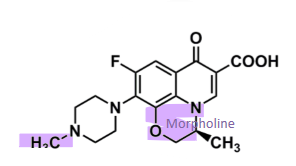
Levofloxacin
contains morpholine ring
broad spectrum activity compared to ciprofloxacin
is the S-enantiomer of ofloxacin
more lipophilic than ciprofloxacin
oral and parenteral
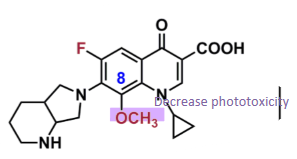
Moxifloxacin
contains pyrrolopyridine at C7 and cyclopropyl at N1
increases gram-positive activity versus ciprofloxacin
contains methoxy at C8
reduces degree of phototoxicity
oral, parenteral and topical
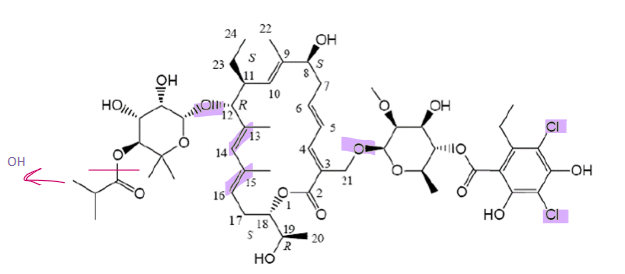
Fidaxomicin
18-member macrocyclic lactone
binds to sigma subunit of RNA polymerase
can undergo metabolism through esterase
metabolite has similar activity to parent
Chlorines on benzene rings increase activity
less stable in acidic pH
lots of double bonds - need to be protected from light
oral
for local effect only
polar and will accumulate in local site (colon)
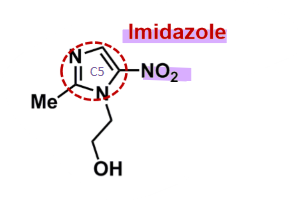
Metronidazole
is a prodrug
converted to many metabolites
by bacterial enzymes or liver
pharmacophore: imidazole
NO2 needs to be at C5 for activity
oral or parenteral
side effects is because of the reactive metabolites
can react with proteins causing toxicity
Metronidazole MOA
nitro group in chemically reduced in anaerobic bacteria/protozoa
leads to nitro radical anion that reacts with DNA (positively charged groups in cell)
activated by the ferrodoxins and other electron transporters NOT found in aerobic bacteria
after radical nitro anion reacts with target, oxidized metronidazole reformed
O2 inhibits metronidazole by competing for electrons
Metronidazole pharmacokinetics
oral, suppository, and IV
widely distributed with CNS
metabolized in liver
can accumulate in patients with liver dysfunction
Metronidazole toxicity
headache
NVD
dry mouth, metallic taste
disulfiram-like effects
can increase prothrombin time
rare: more serious CNS (ataxia, paresthesia or numbness in extremities)
associated with duration
Metronidazole resistance
any changes that impair production of nitro anion
decreased oxygen-scavenging ability
leads to increased O2 in the cells
not enough to kill bacteria, but enough to inactivate metronidazole
lowered levels of ferredoxin and other electron transporters so less activation