IGCSE Biology: Breathing and Respiration
 Call Kai
 Learn
Learn Practice Test
 Spaced Repetition
 Match
Match Flashcards
 Knowt Play
1/64

There's no tags or description
Looks like no tags are added yet.
Name | Mastery | Learn | Test | Matching | Spaced | Call with Kai | Chat |
|---|
No analytics yet
Send a link to your students to track their progress
65 Terms
respiration
The process by which cells break down simple food molecules to release the energy they contain.
ATP
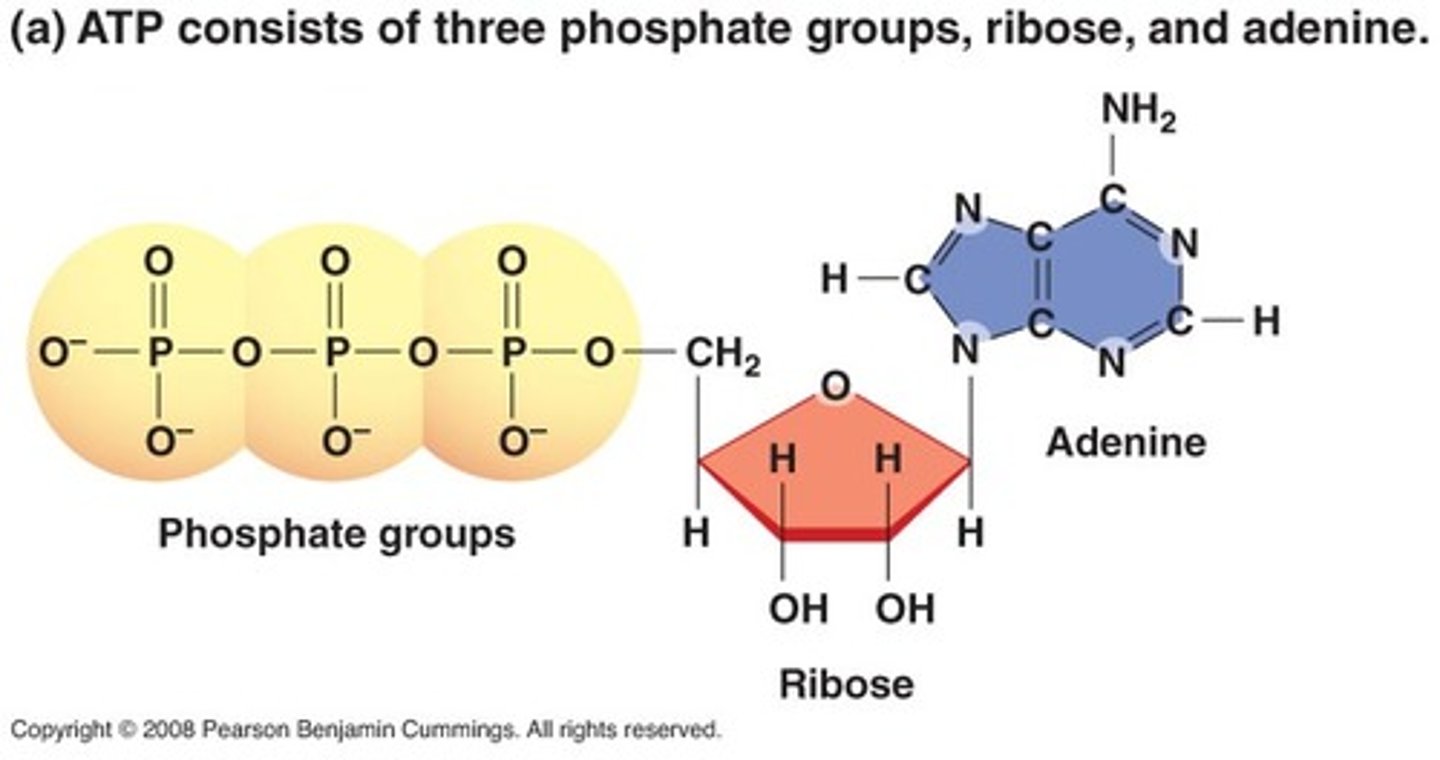
(adenosine triphosphate) main energy source that cells use for most of their work
aerobic respiration
respiration in the mitochondria that requires oxygen
aerobic respiration equation
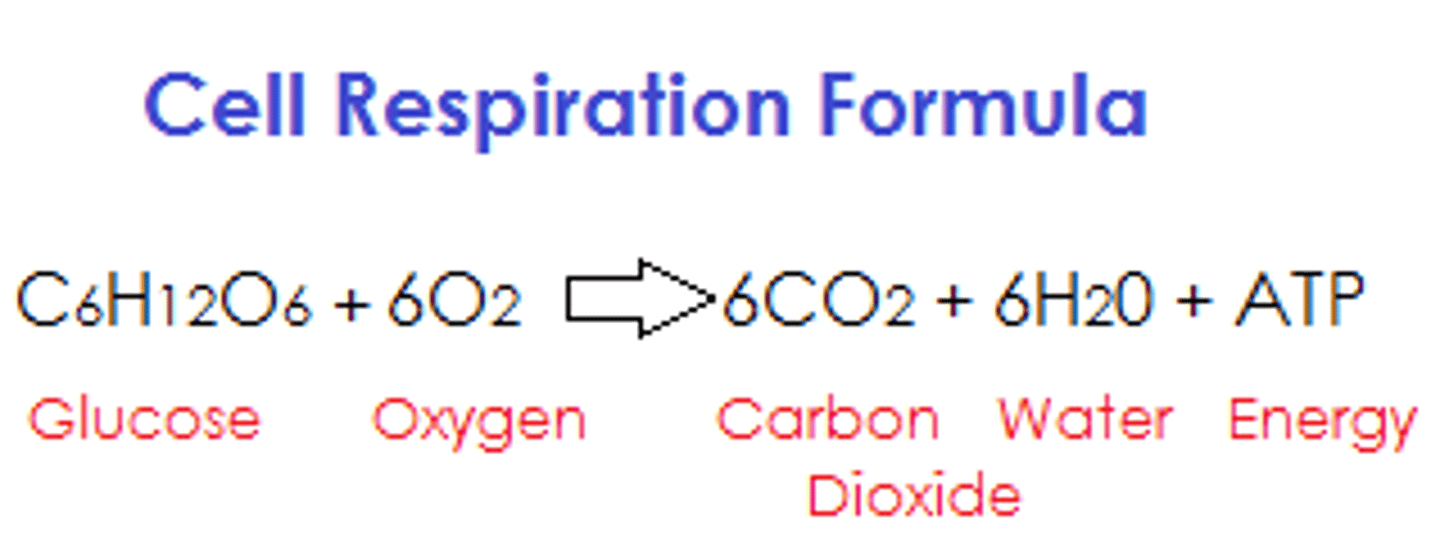
C6H12O6 + 6 O2 > 6 CO2 + 6 H2O + energy
anaerobic respiration
respiration without oxygen in the cytoplasm
animal anaerobic respiration equation
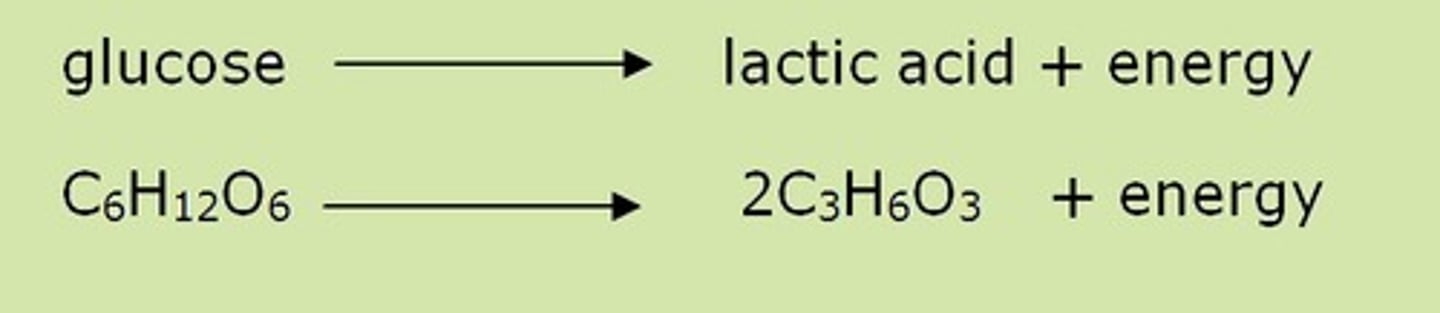
C6H12O6 > 2C3H6O3 + energy
glucose → lactic acid + energy released
lactic acid
product of fermentation in many types of cells, including human muscle cells
oxygen debt
the amount of oxygen required after physical exercise to convert accumulated lactic acid to glucose
The amount of oxygen required to remove the lactic acid, and replace the body's reserves of oxygen, is called the oxygen debt.
plants and fungi anaerobic respiration equation
C6H1206 > 2C2H5OH + 2CO2 + energy

fermentation
A catabolic process that makes a limited amount of ATP from glucose without an electron transport chain and that produces a characteristic end product, such as ethyl alcohol or lactic acid.
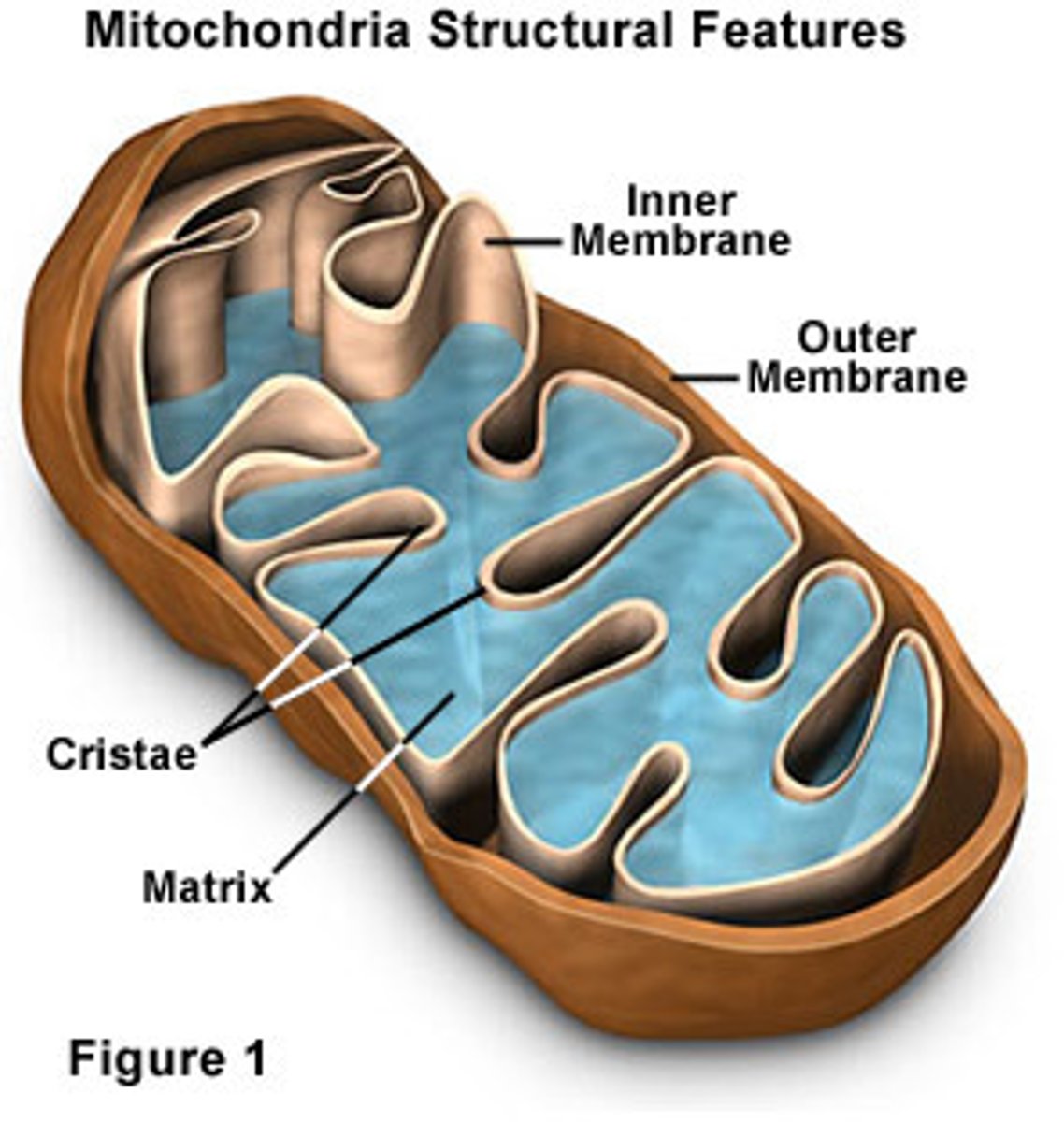
mitochondria
organelle that is the site of ATP (energy) production
thorax
chest
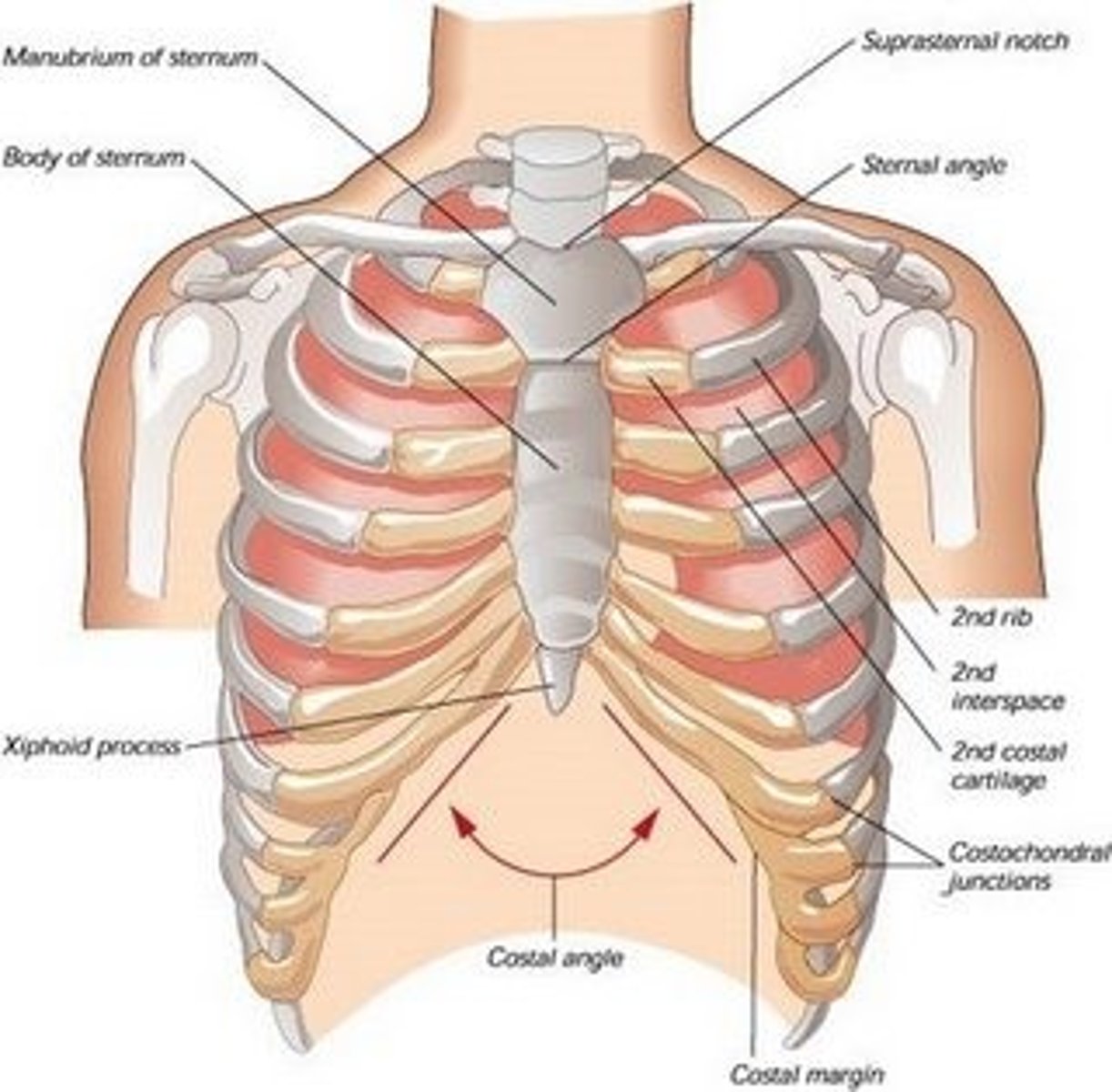
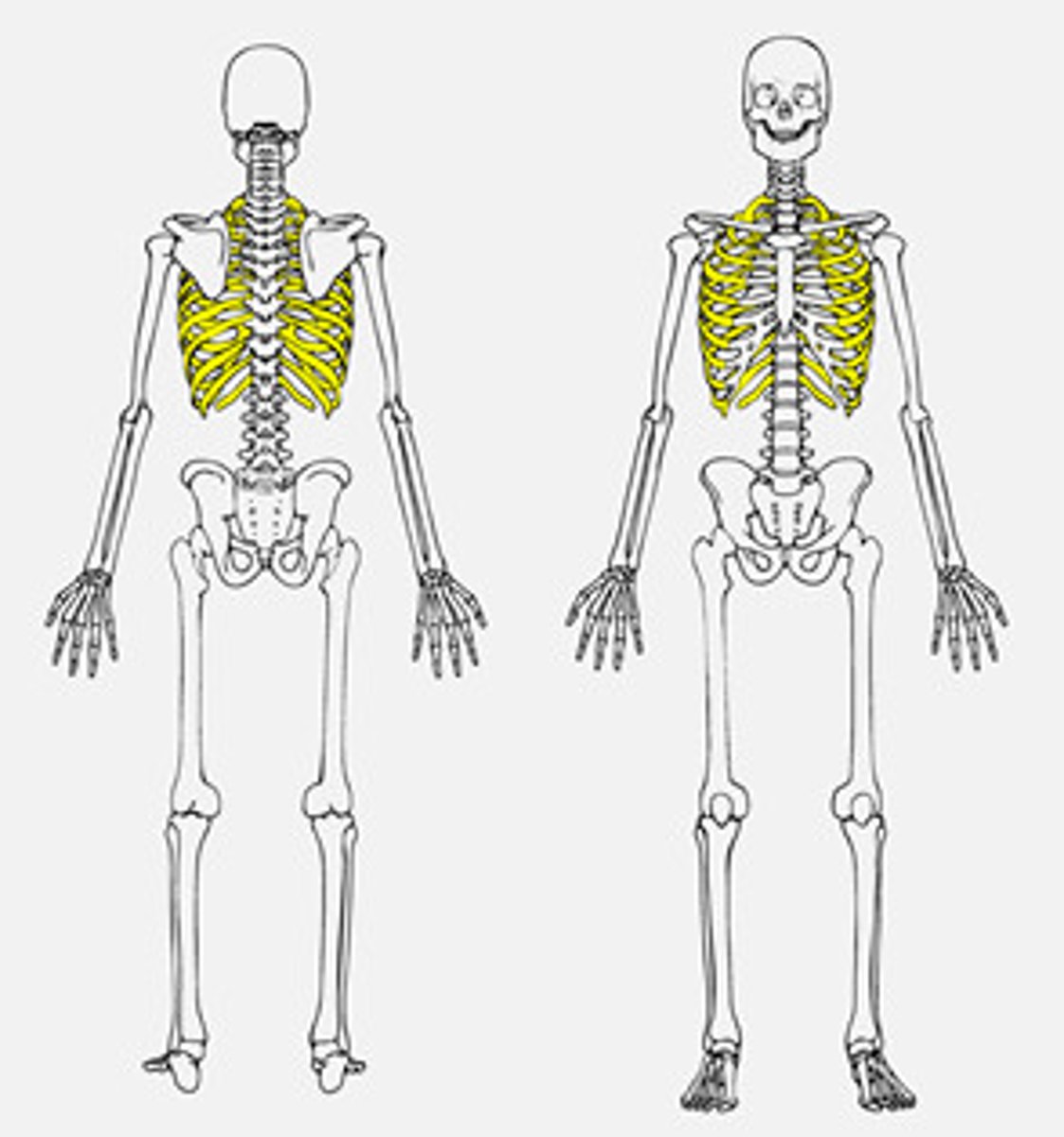
ribs
the bones in the chest that protect the heart and the lungs
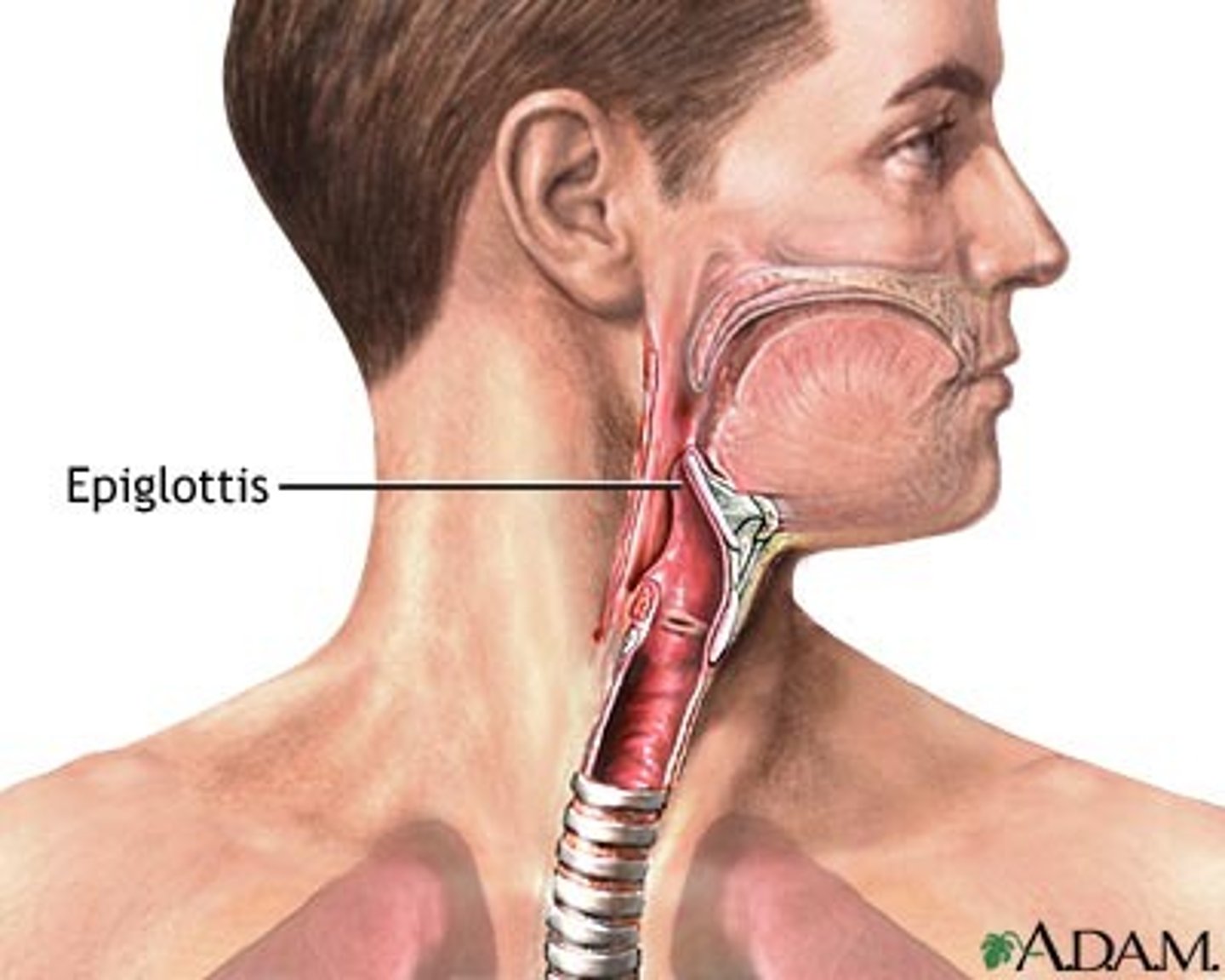
epiglottis
a flap of cartilage at the root of the tongue, which is depressed during swallowing to cover the opening of the windpipe.
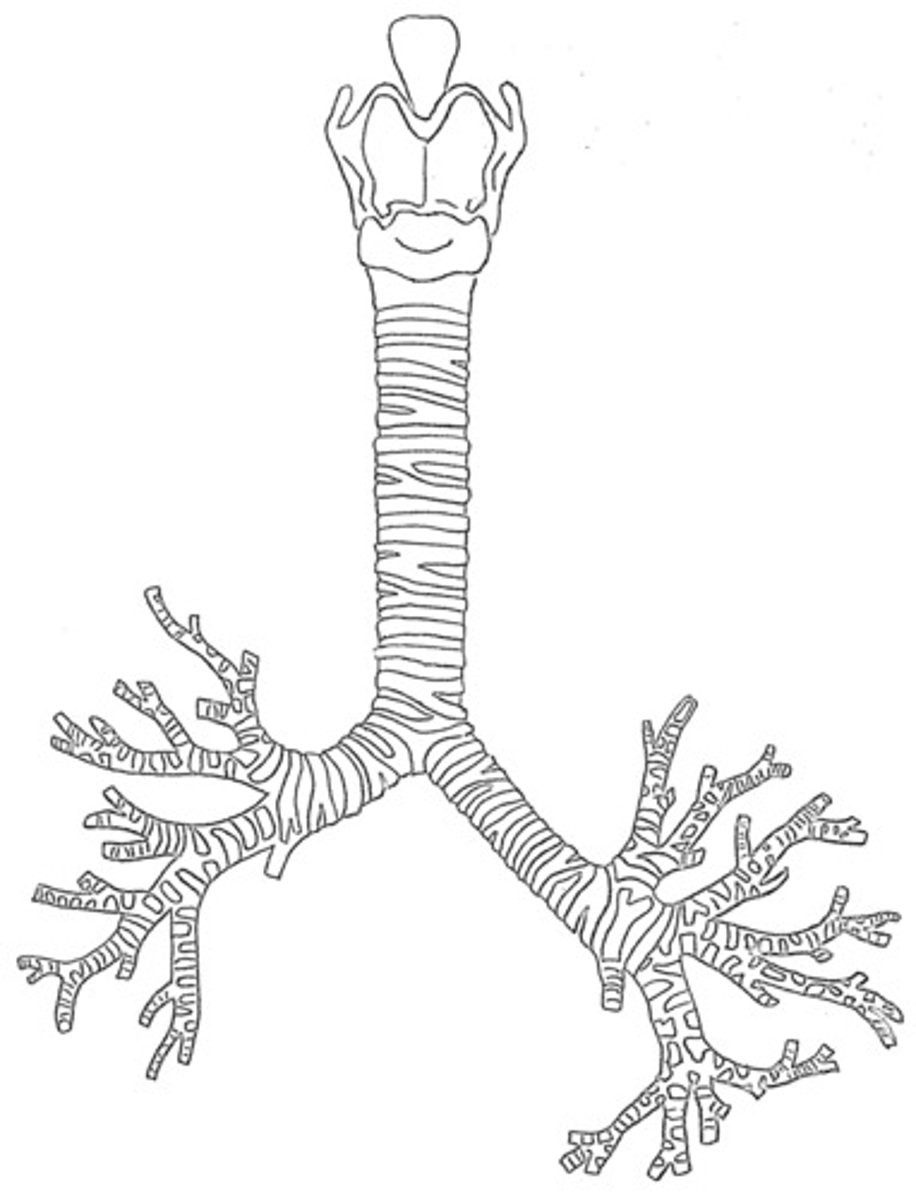
trachea
a large membranous tube reinforced by rings of cartilage, extending from the larynx to the bronchial tubes and conveying air to and from the lungs; the windpipe.
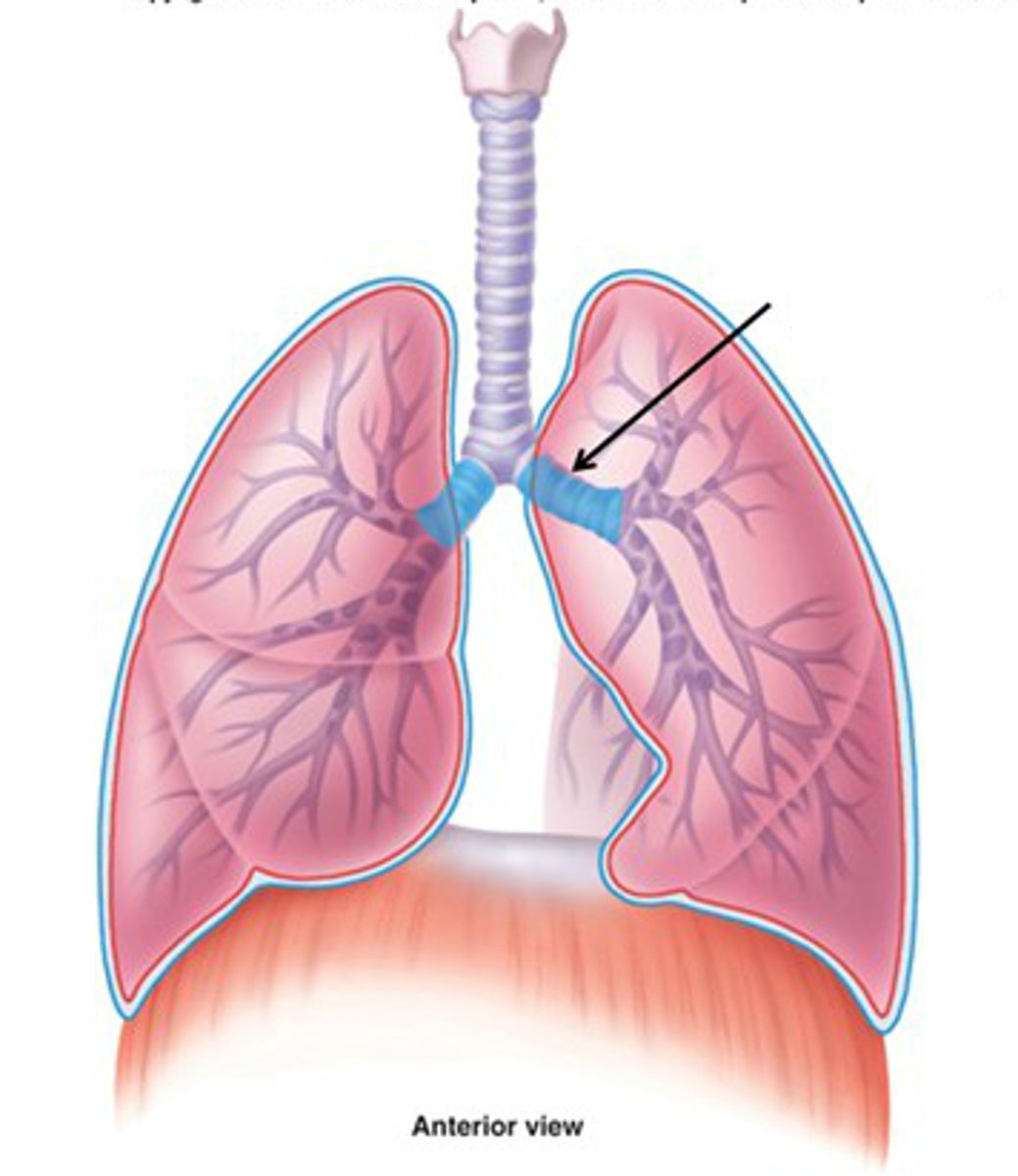
bronchi
two short branches located at the lower end of the trachea that carry air into the lungs.
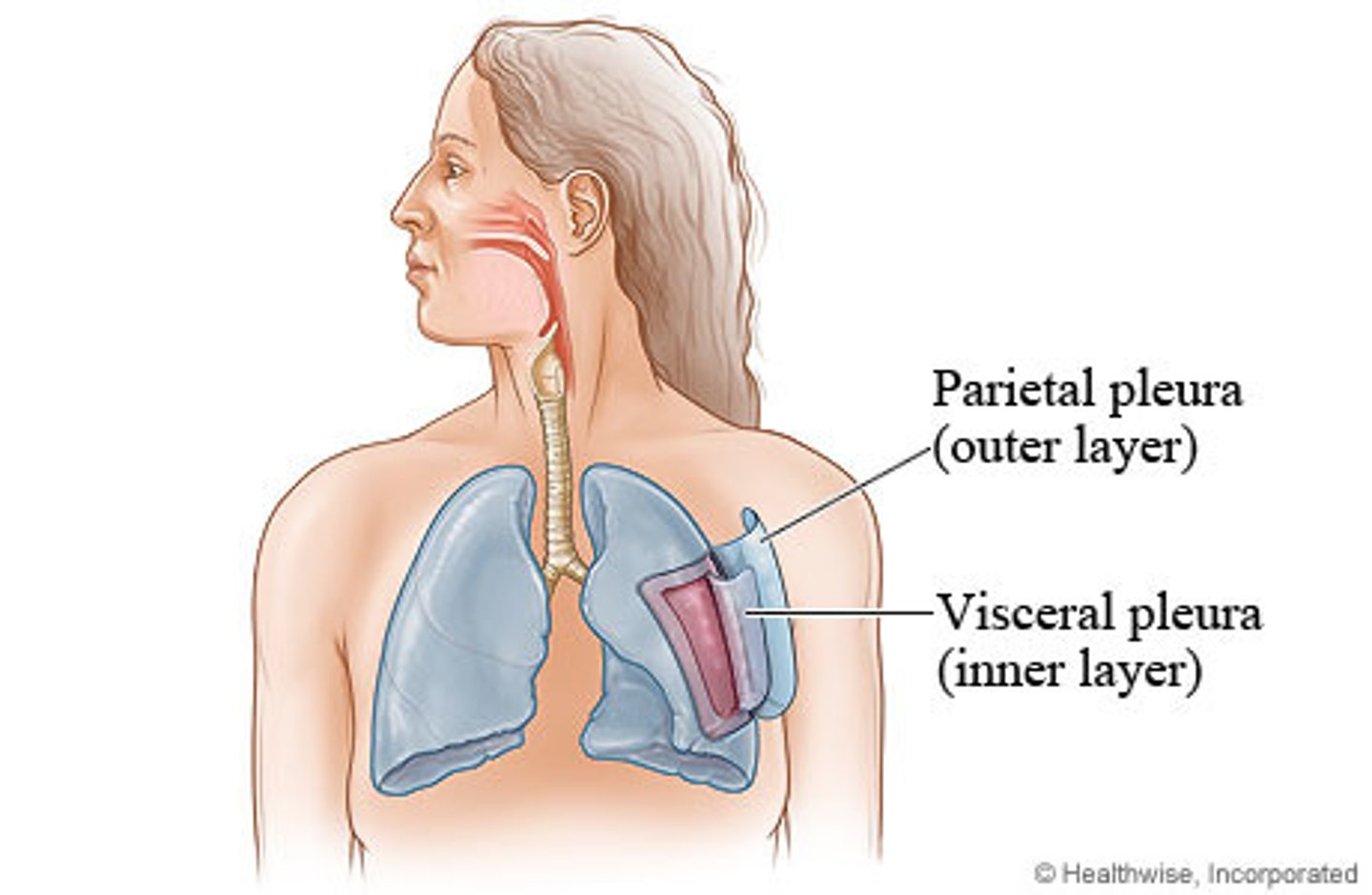
pleural membrane
double-layered serous membrane that encloses and protects each lung
bronchioles
smallest branches of the bronchi
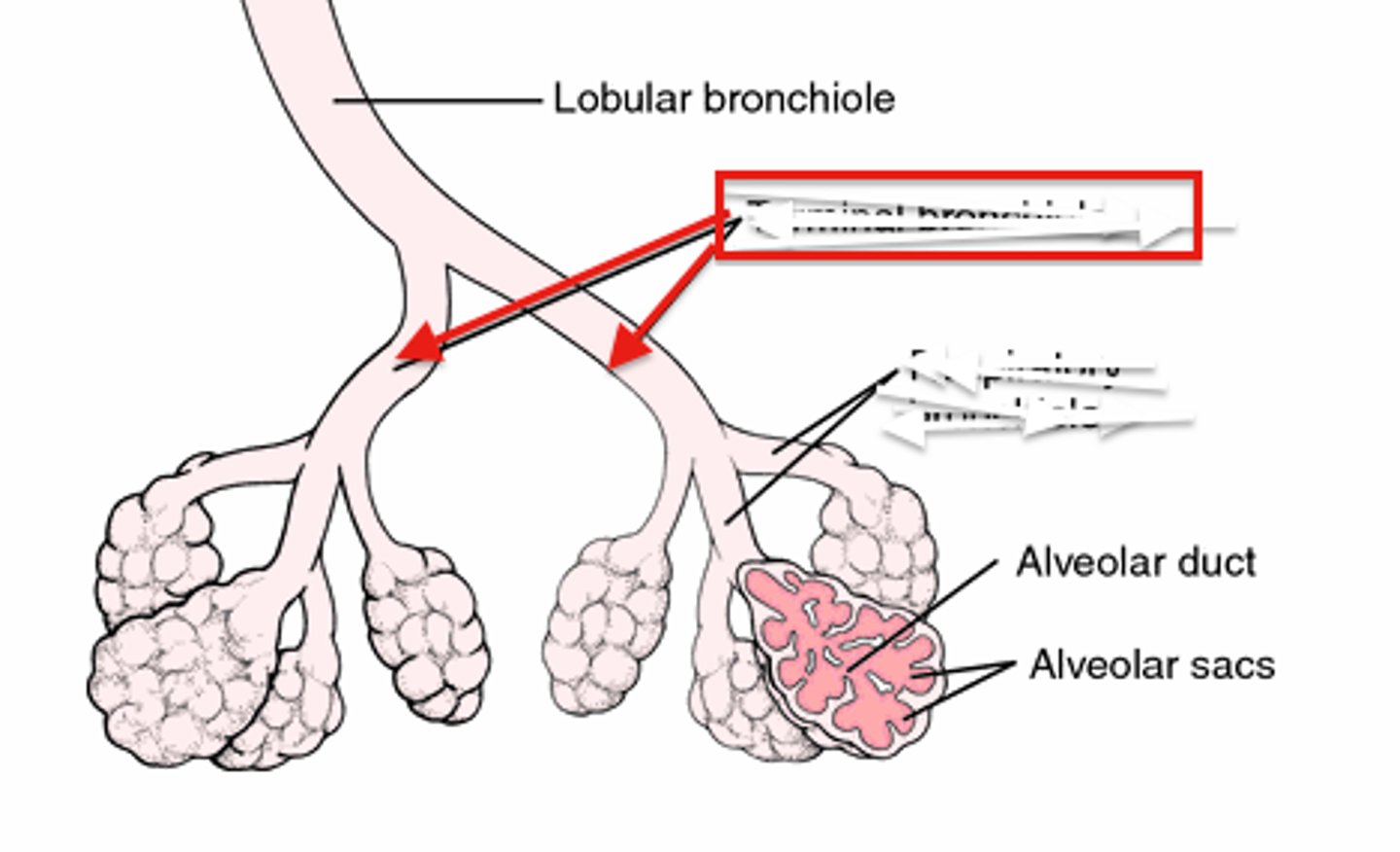
alveoli
tiny sacs of lung tissue specialized for gas exchange between air and blood
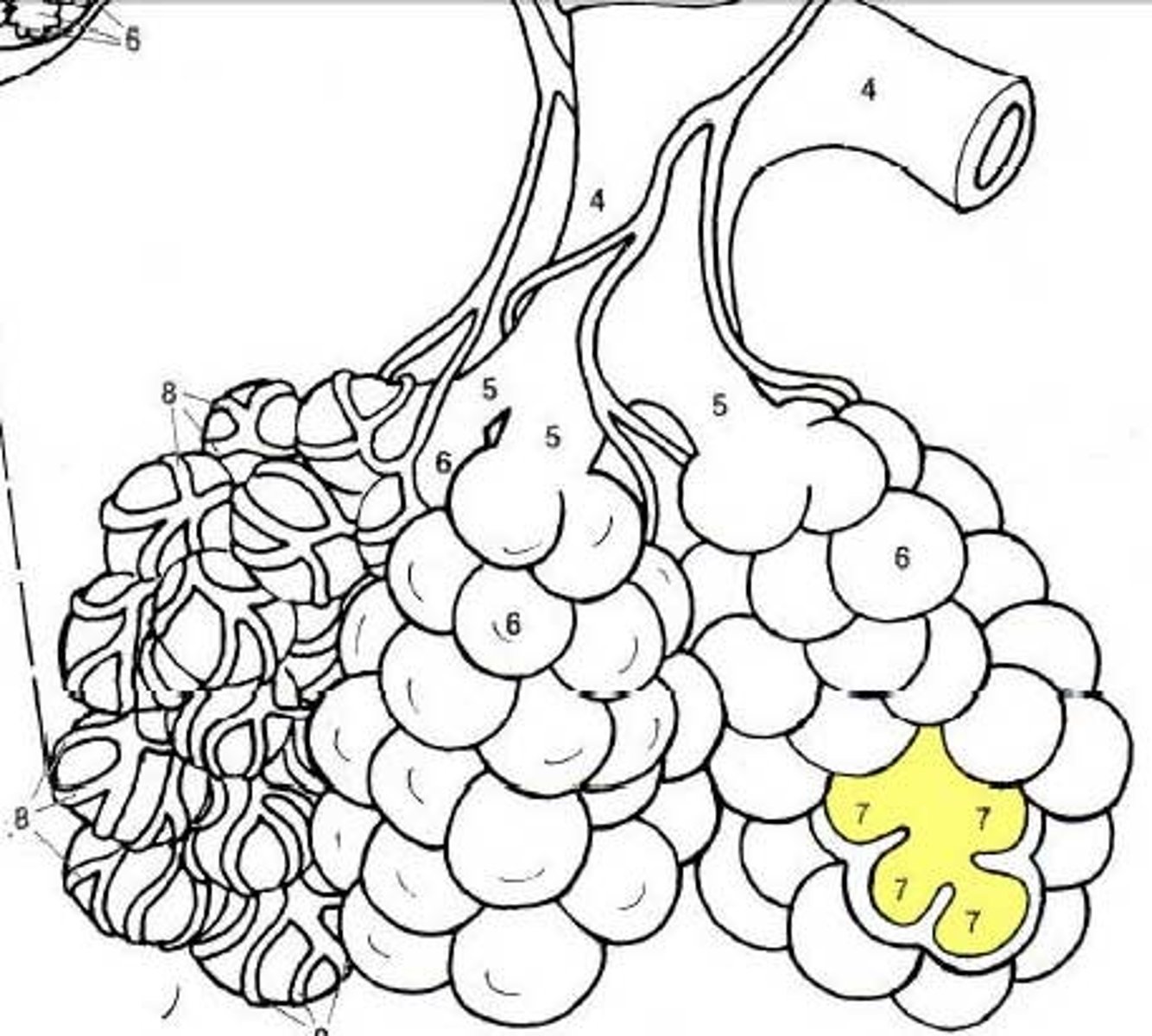
intercostal muscles
the muscles between the ribs that contract to lift and the ribs and move them out when we breath in.
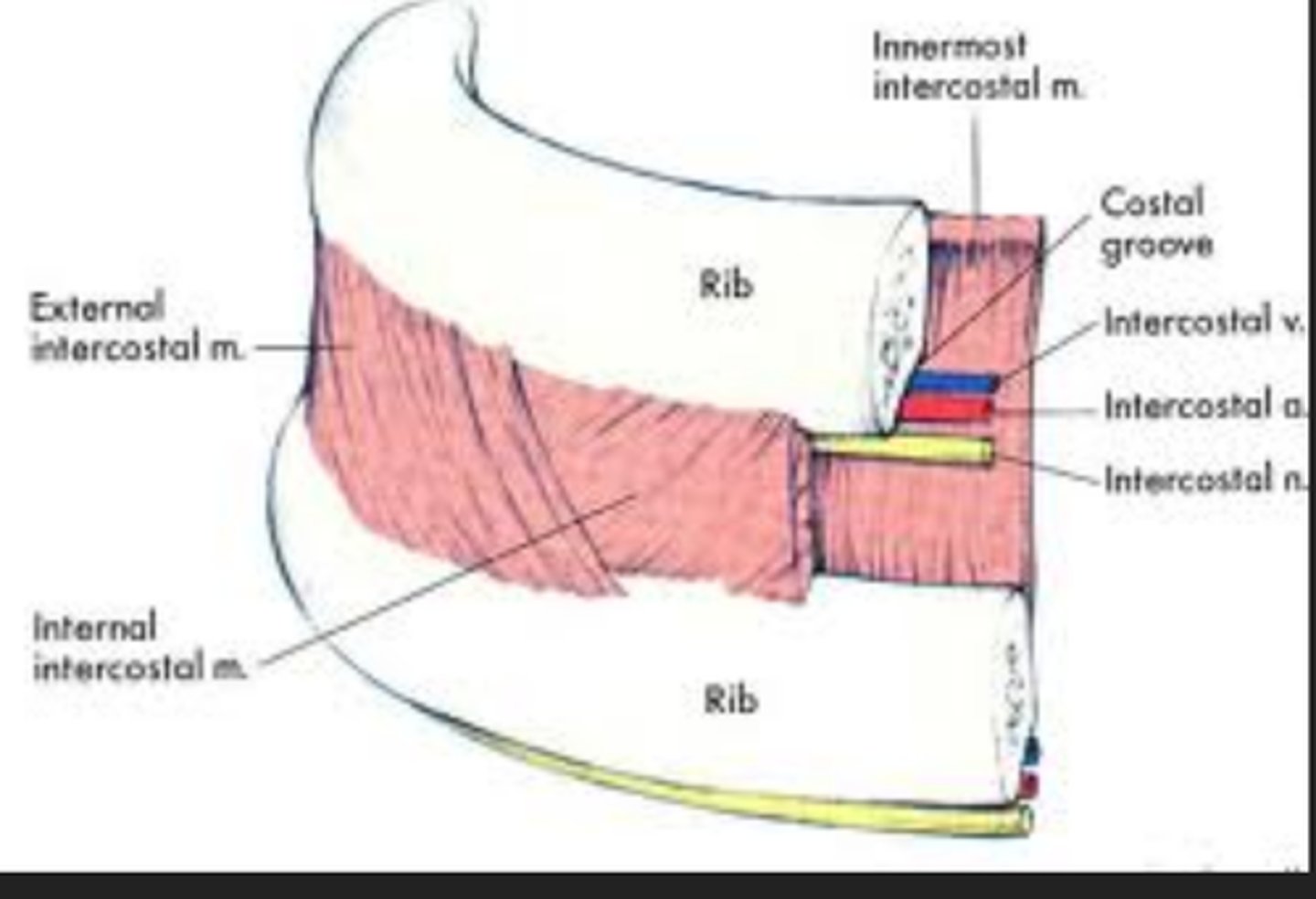
lung
an organ found in air-breathing vertebrates that exchanges oxygen and carbon dioxide with the blood
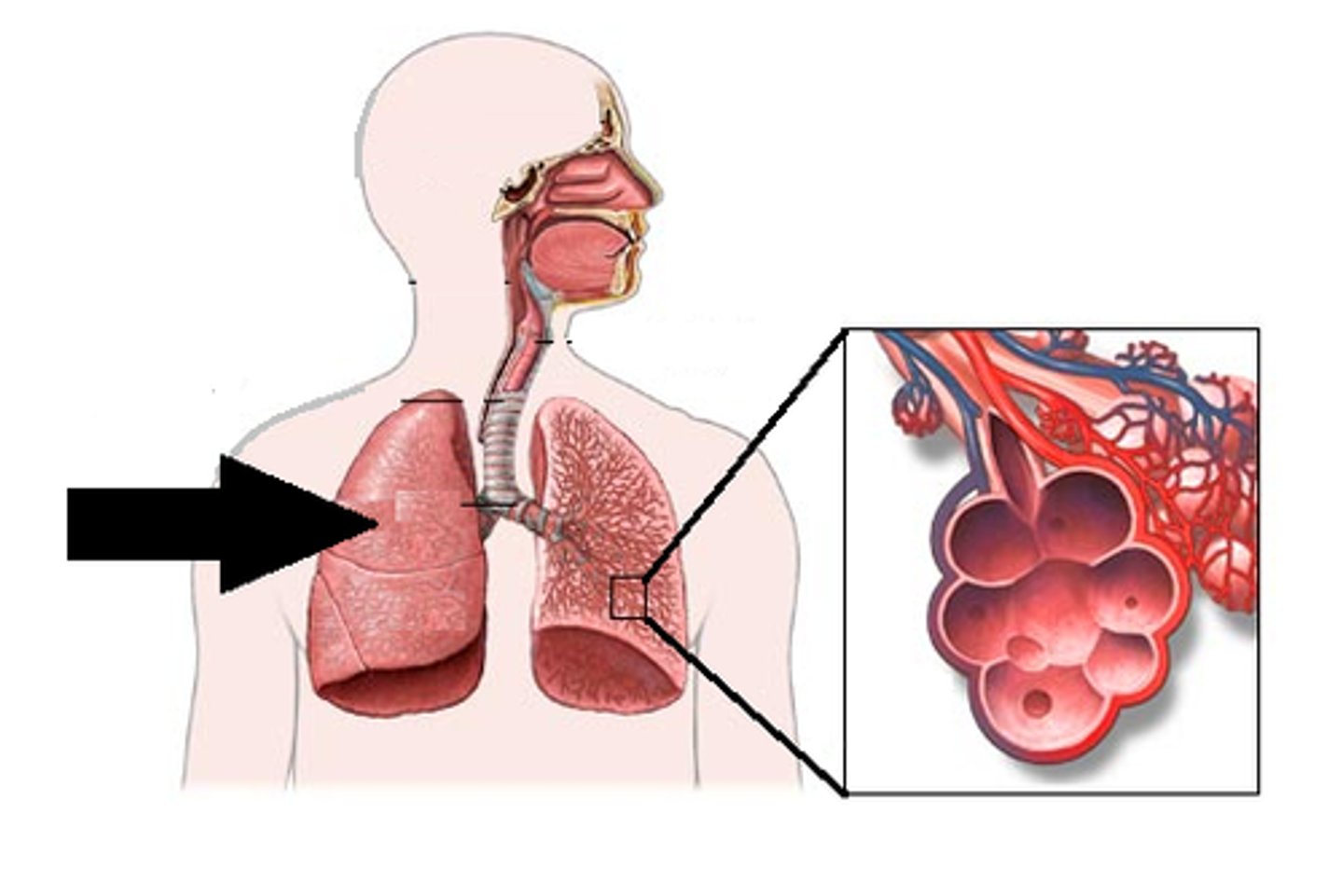
heart
a hollow, muscular organ that pumps blood throughout the body.
diaphragm
dome-shaped sheet of muscle that separates the thoracic cavity from the abdomen
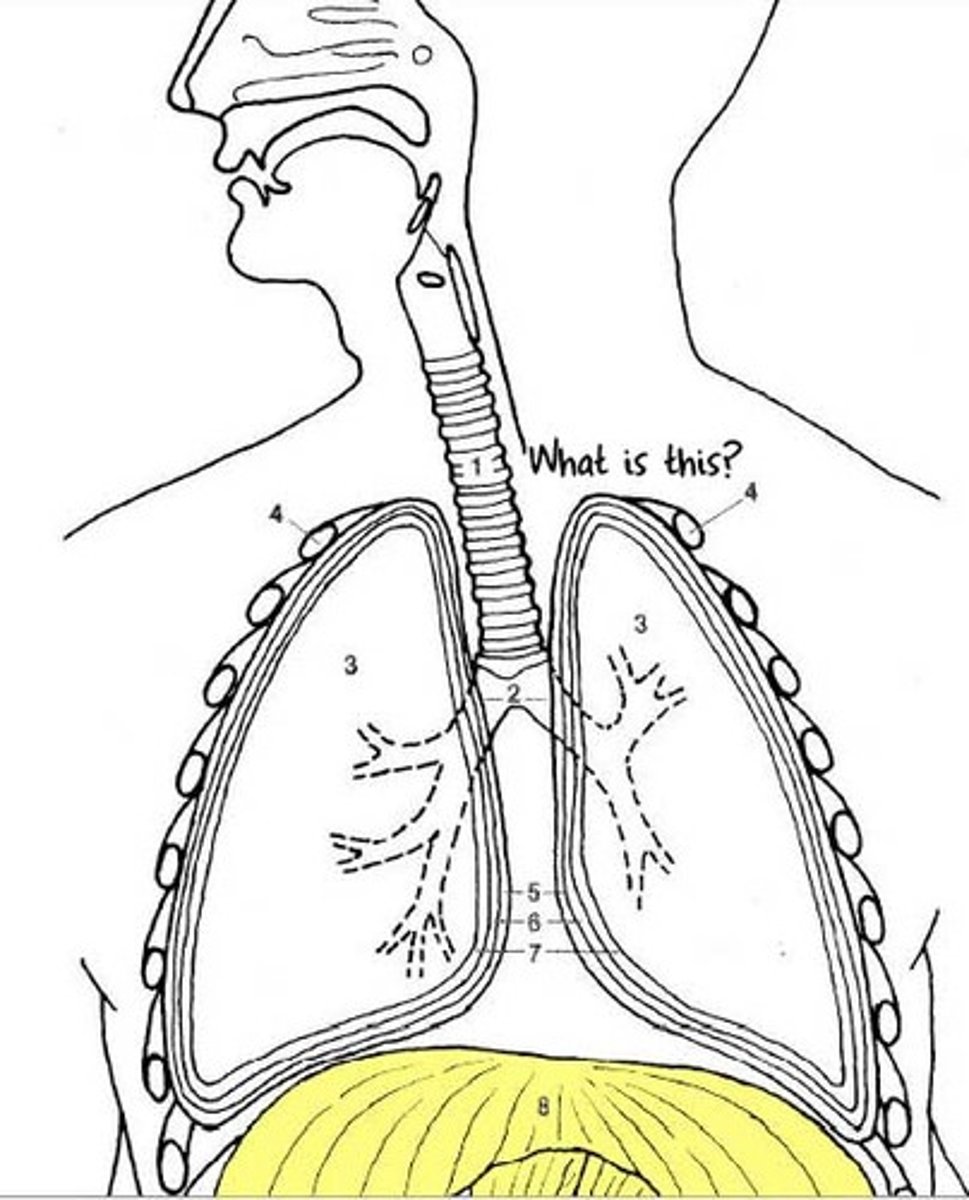
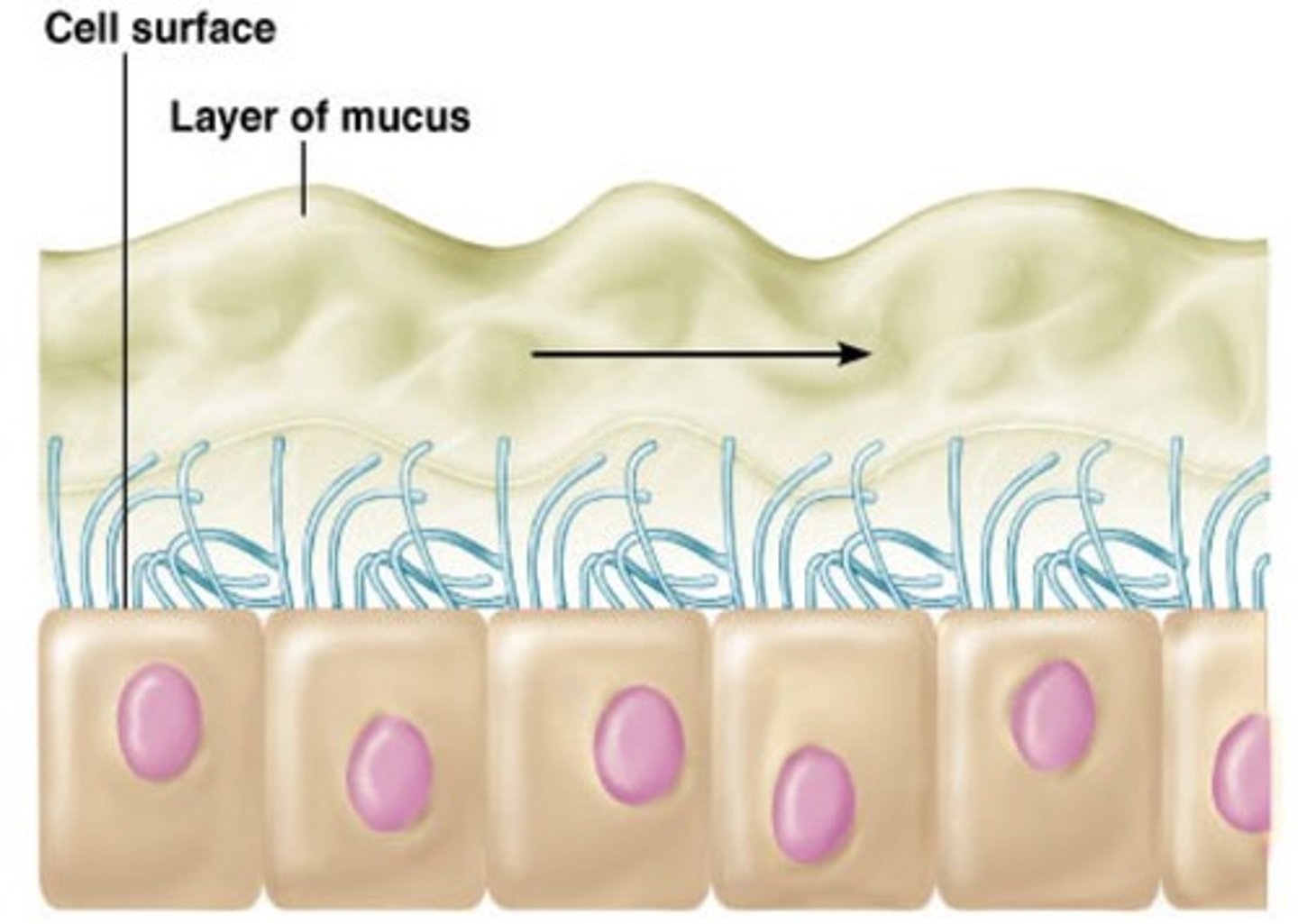
goblet cells
secrete mucus
mucus
a slimy substance produced in the nose and throat to moisten and protect them by trapping dirt and bacteria
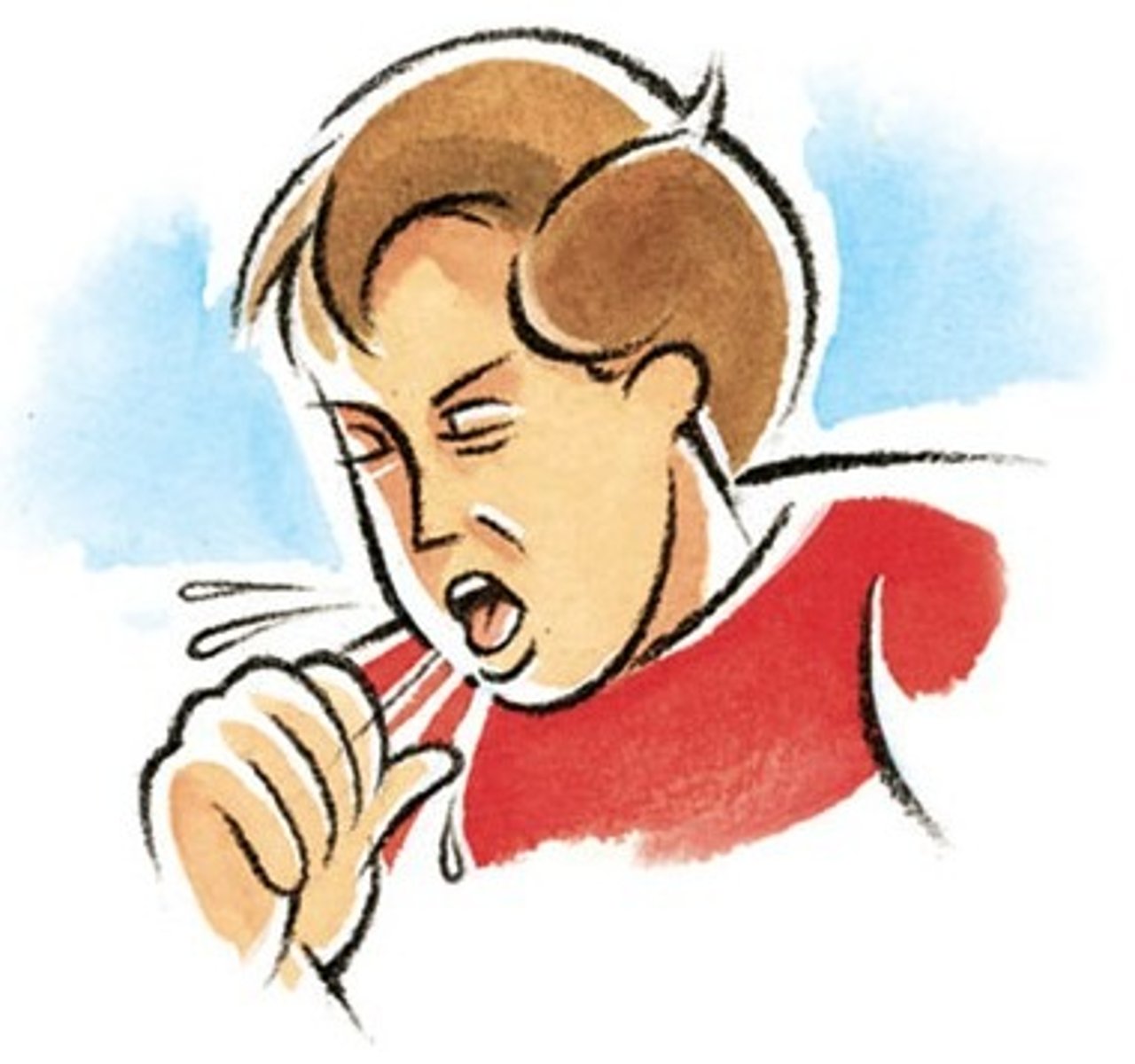
Why do we cough and sneeze?
it is a way in which our body gets rid of foreign particles, irritants, microbes, mucus and bacteria - among other allergens from the throat.
cilia
hairlike projections on the outside of cells that move in a wavelike manner
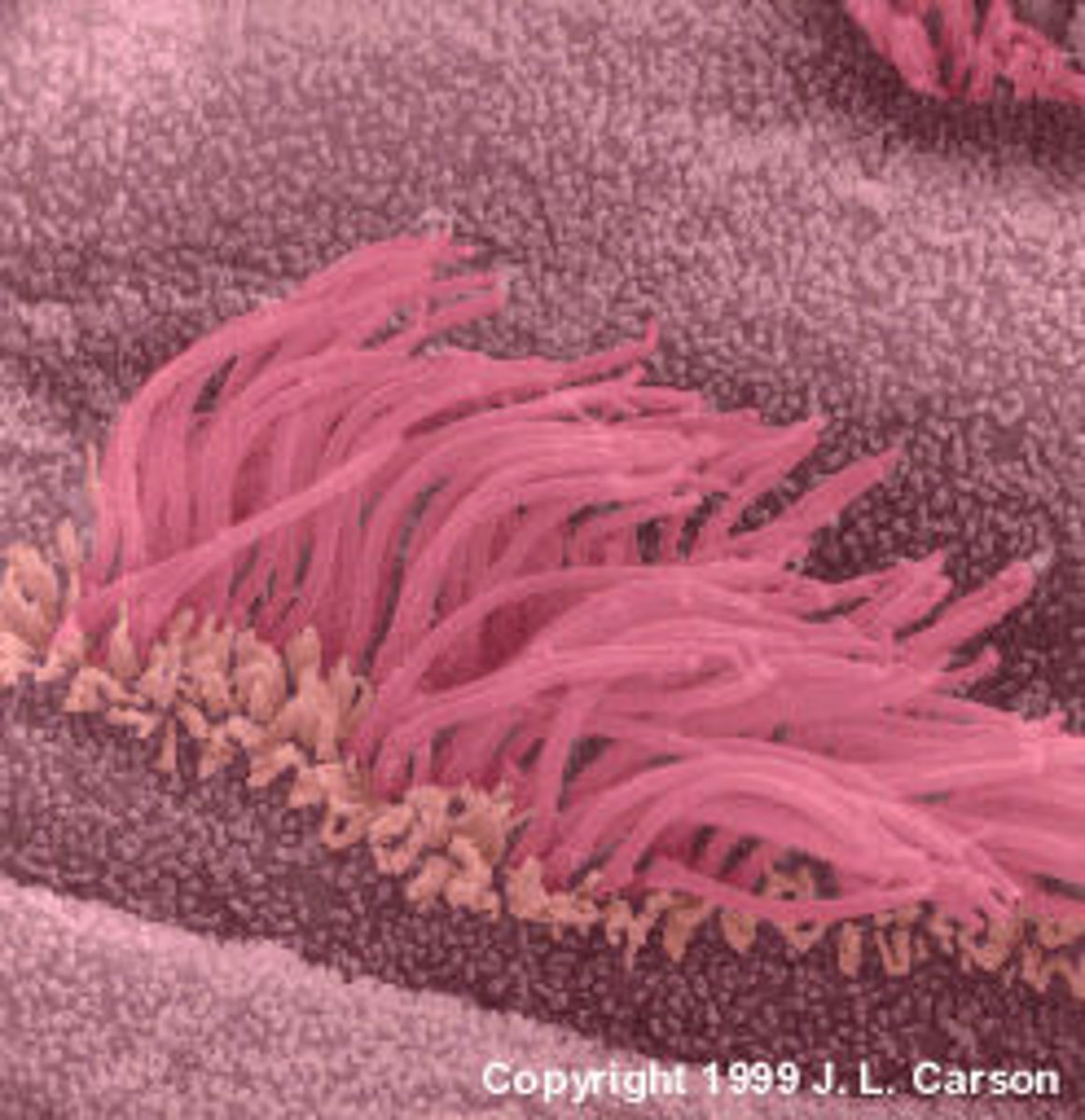
How are the airways kept clean?
The trachea and larger airways are lined with a layer of cells, with some cells secreting mucus that traps dirt and bacteria. Other cells covered in cilia sweep the mucus and trapped particles out towards the mouth. This prevents dirt and bacteria entering the lungs to prevent infection.
ventilation of the lungs
volume and pressure changes caused by internal and external intercostal muscles, the diaphragm, and abdominal muscles
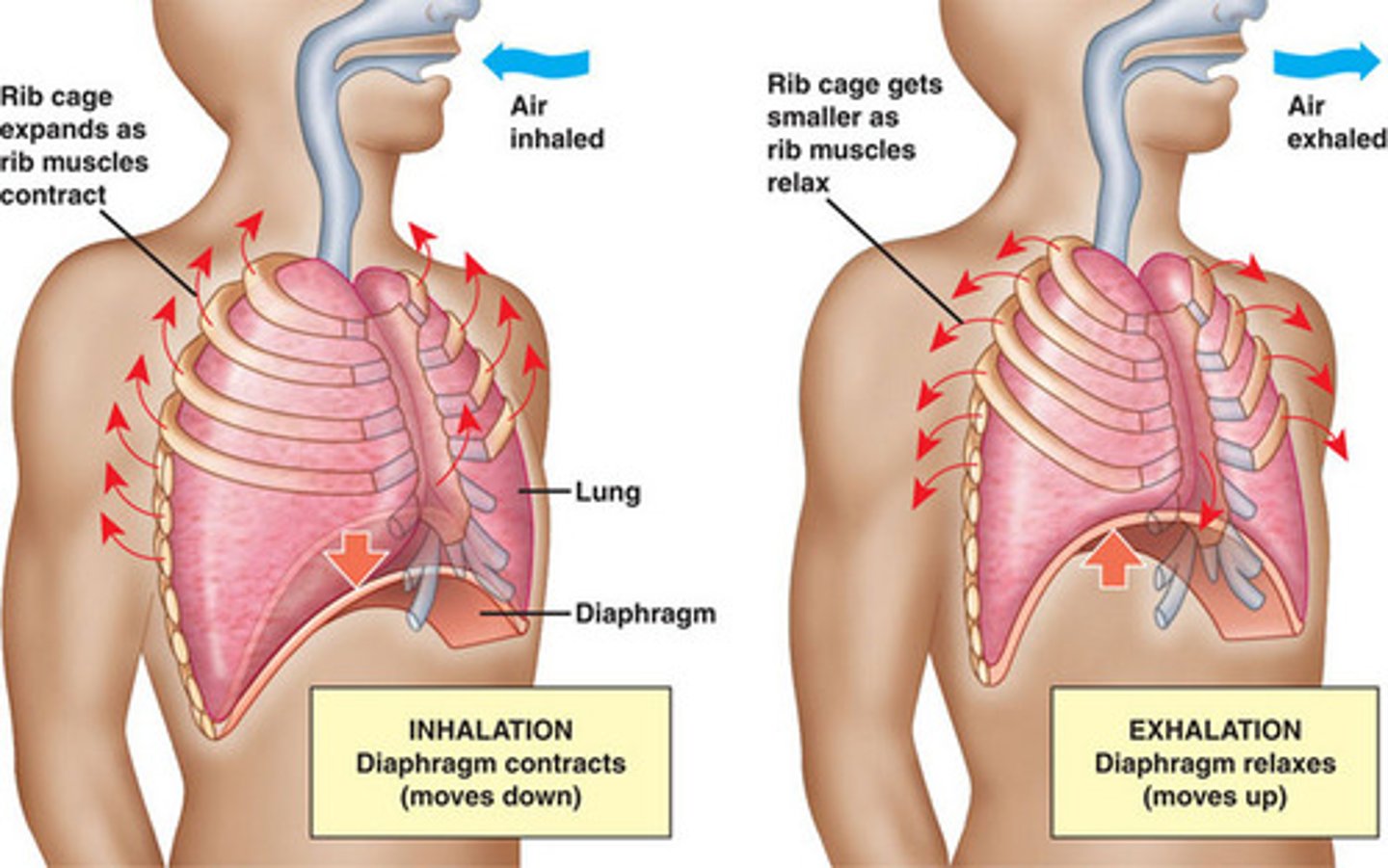
How does increased volume affect pressure in the lungs?
increasing the volume, decreases the pressure so therefore air enters the lungs
How does decreased volume affect pressure in the lungs?
decreasing the volume, increases the pressure so therefore air leaves the lungs
high air pressure in the lungs:
air moves out (breathe out)
low air pressure in the lungs:
air moves in (breathe in)
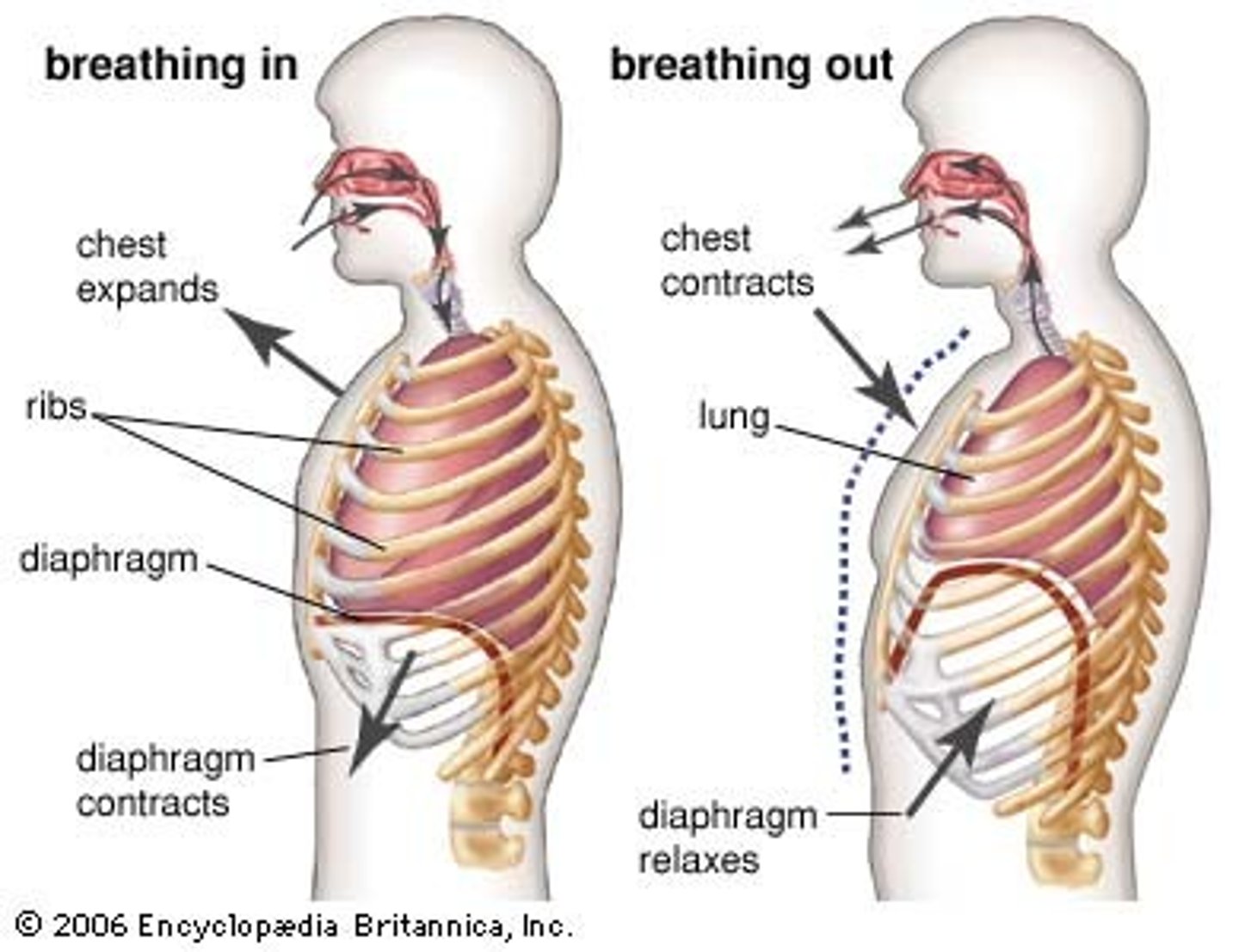
breathing in: intercostal muscles
contract causing the ribs to move up and out
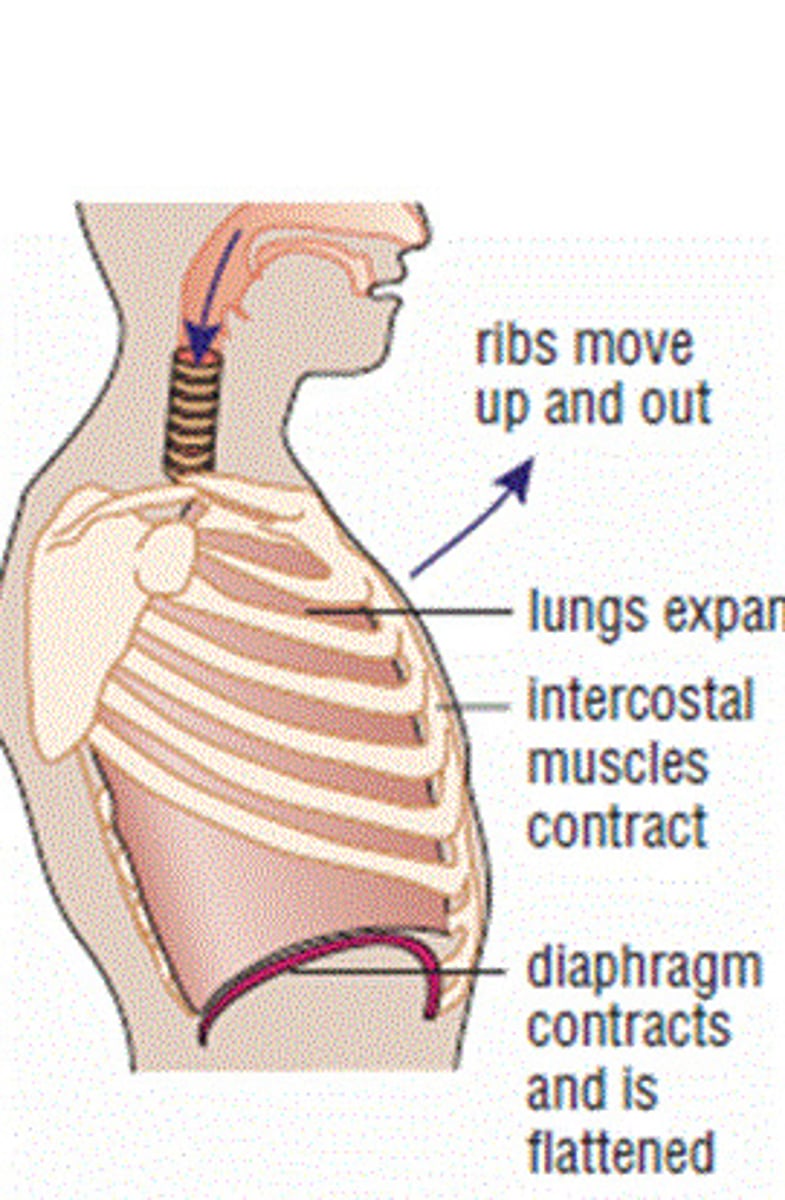
breathing in: diaphragm
contract and flatten down
decrease in pressure, allowing air to rush in. Increasing the volume decreases the pressure
breathing out: intercostal muscles
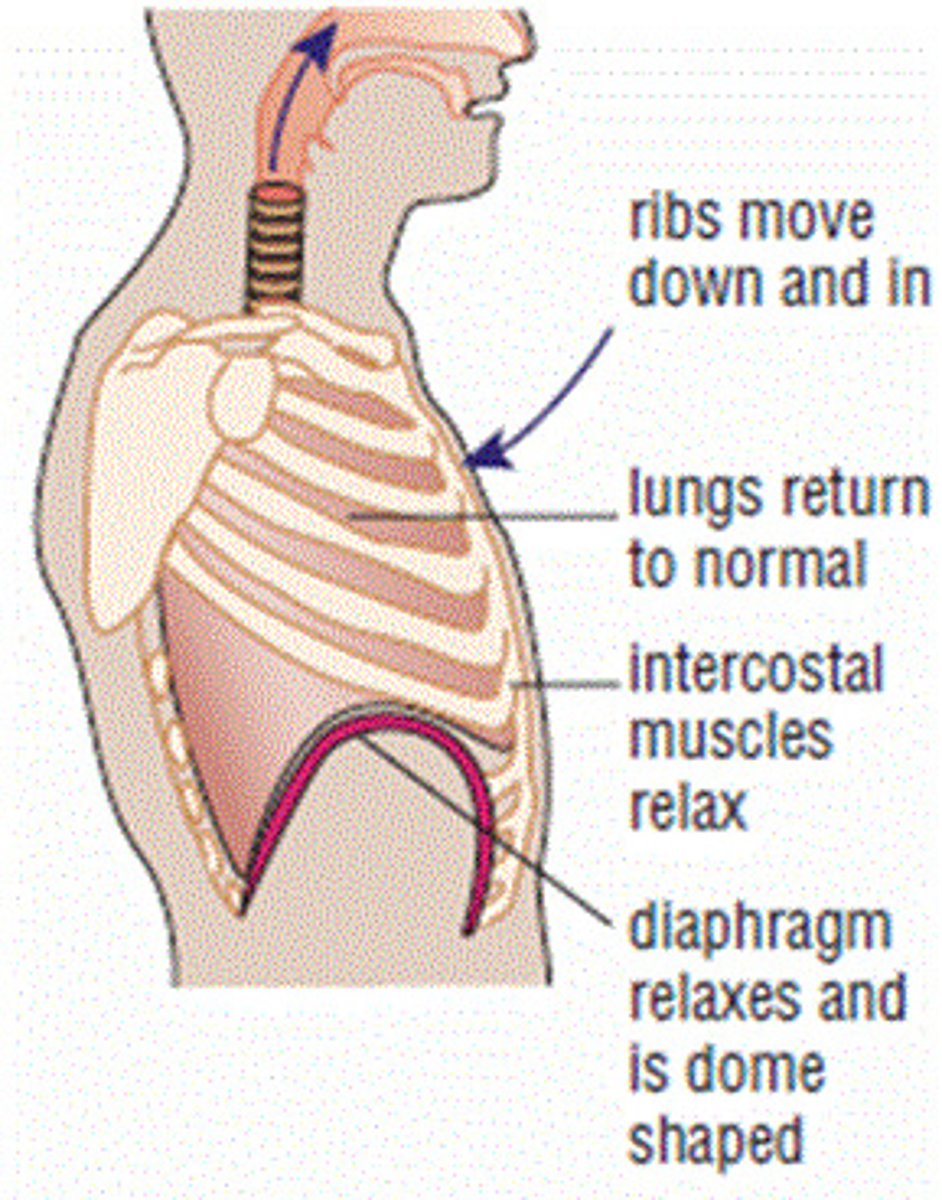
relax causing the ribs to move down and in
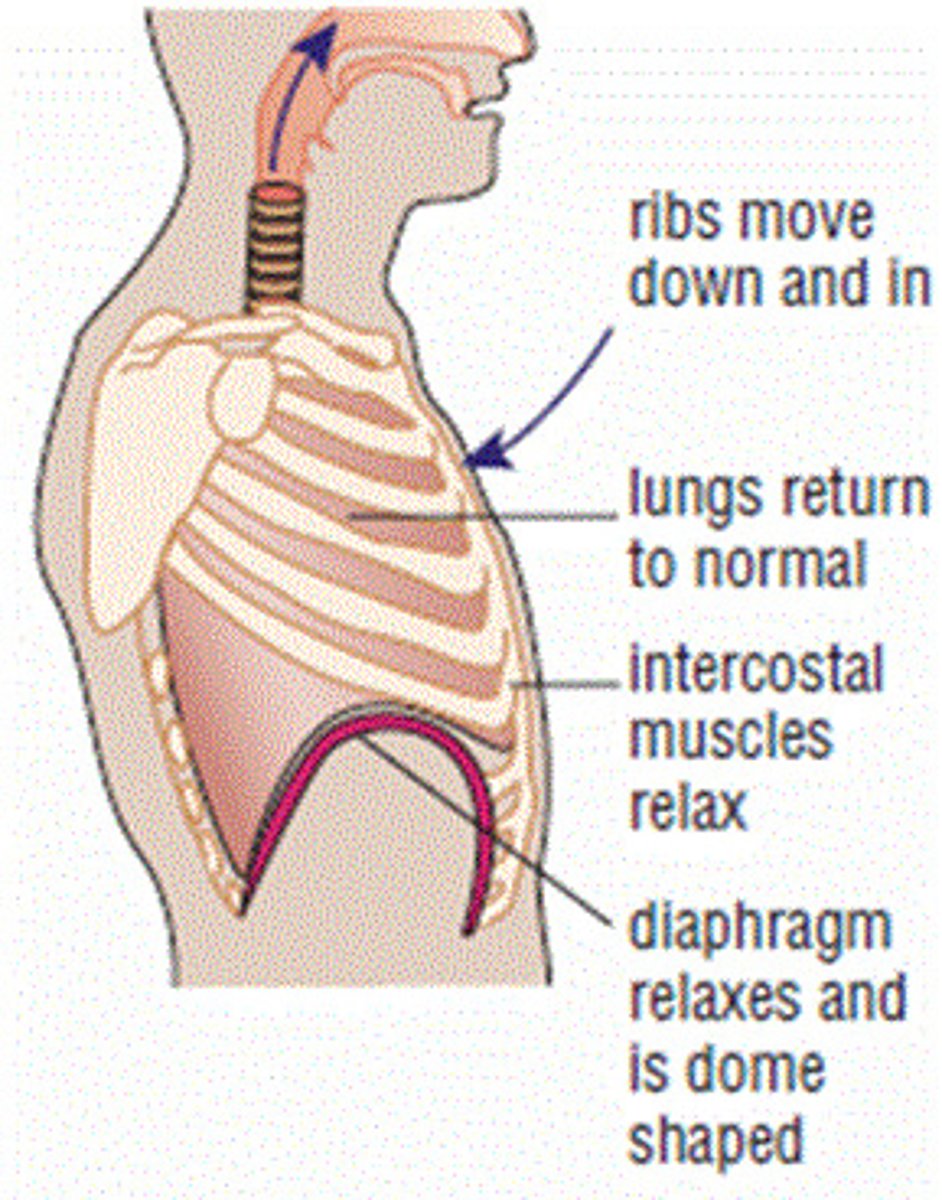
breathing out: diaphragm
relax and returns to dome shape
increase in pressure, allowing air to rush out. Decreasing the volume increases the pressure
How does breathing work?
diaphragm contracts, rib cage rises, air inhaled, diaphragm relaxes, rib cage lowers, air exhaled, repeat.
breathing rate
12-20 bpm
Why does breathing rate increase during exercise?
It allows more oxygen to be delivered to the active muscles and extra carbon dioxide can be removed.
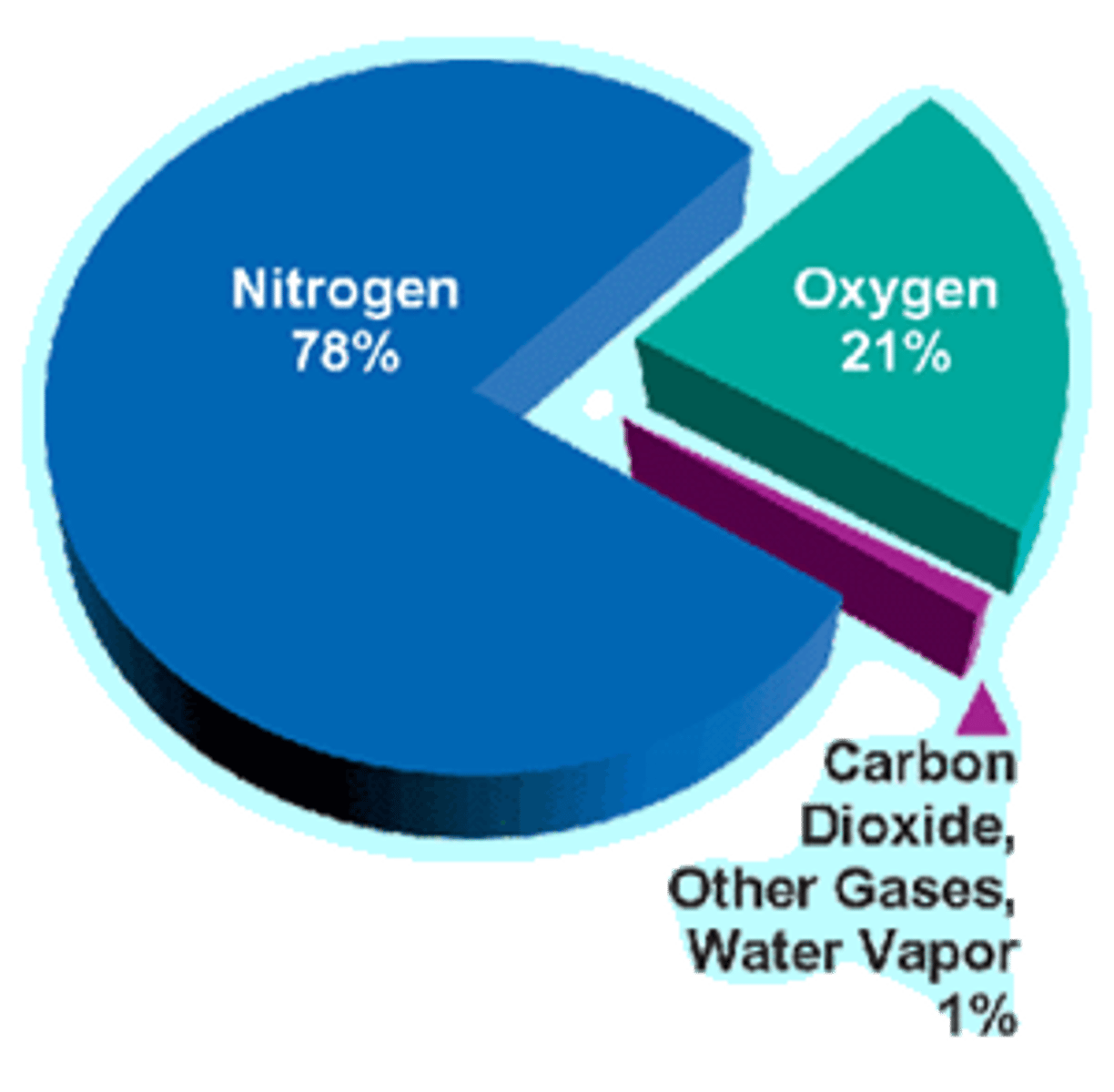
gases in the atmosphere
Nitrogen - 78 percent.
Oxygen - 21 percent.
Argon - 0.93 percent.
Carbon dioxide - 0.038 percent.
How does gas exchange occur in the alveoli?
Blood enters the lung through the pulmonary artery and enters the capillaries that surround the alveoli. Air entering the alveoli has a high concentration of oxygen compared to the blood in the capillary so thus oxygen diffuses into the blood. There is more carbon dioxide in the blood than in the air so CO2 diffuses out of the blood.
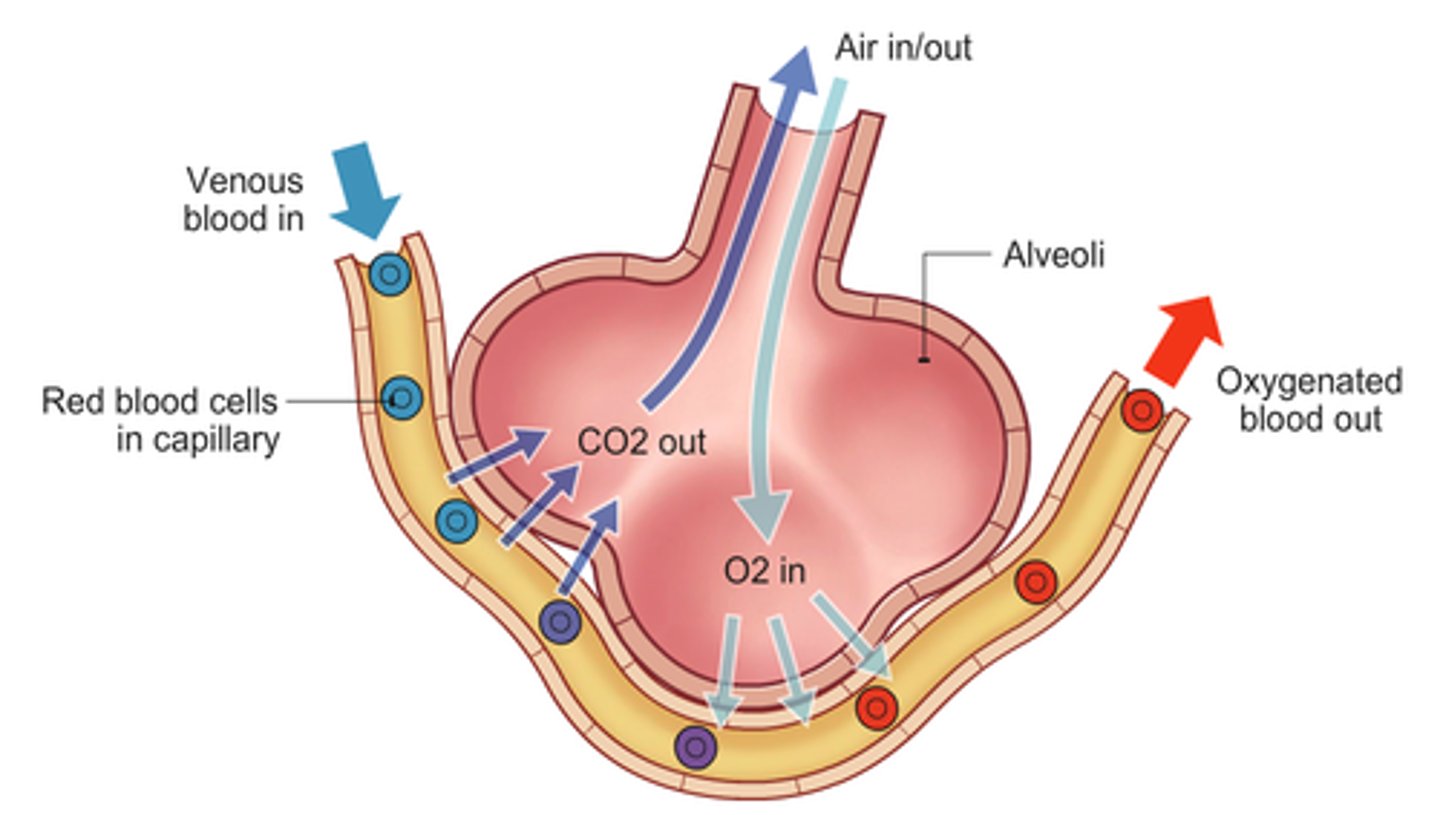
How do the alveoli maximize gas exchange?
two-cell layer, large surface area, ventilation, blood supply, moist surface
Why is the large surface area of the alveoli so important?
It maximises gas exchange
Why is the two-cell layer of the alveoli important?
It increases the rate of diffusion as there is a shorter distance
Why does the alveoli have a moist surface area?
Gases must dissolve in water before they diffuse across a cell membrane
Why does the alveoli have good blood supply?
The continual removal of oxygen by the capillaries and the arrival of carbon dioxide ensures a steep diffusion gradient for both gases
What does cigarette smoke contain?
nicotine, tar and carbon monoxide
nicotine
an addictive drug found in tobacco that causes a narcotic effect
How does nicotine damage the respiratory system?
It increases heart rate and blood pressures and also promotes the formation of fatty deposits in the artery wall, narrowing the lumen.
narcotic
drug that relieves pain and induces sleep by depressing the central nervous system
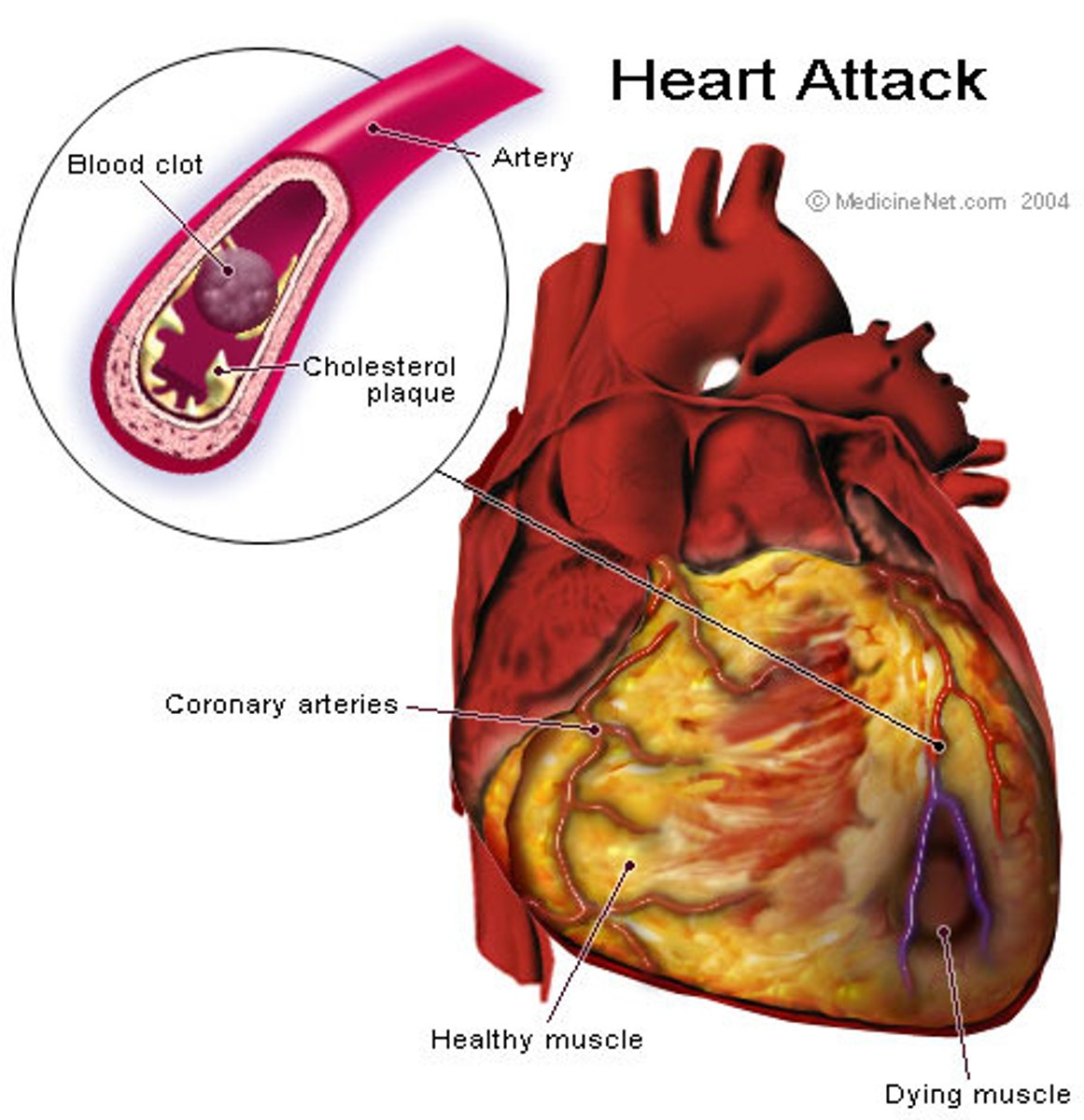
coronary heart disease
the clogging of the vessels that nourish the heart muscle; the leading cause of death in many developed countries
heart attack
a condition in which blood flow to part of the heart muscle is blocked, causing heart cells to die
carbon monoxide
a colorless, odorless toxic flammable gas formed by incomplete combustion of carbon.
Why is carbon monoxide dangerous?
As haemoglobin has more affinity to CO than to Oxygen, it causes less oxygen to be carried in the blood, preventing the maximum rate of respiration
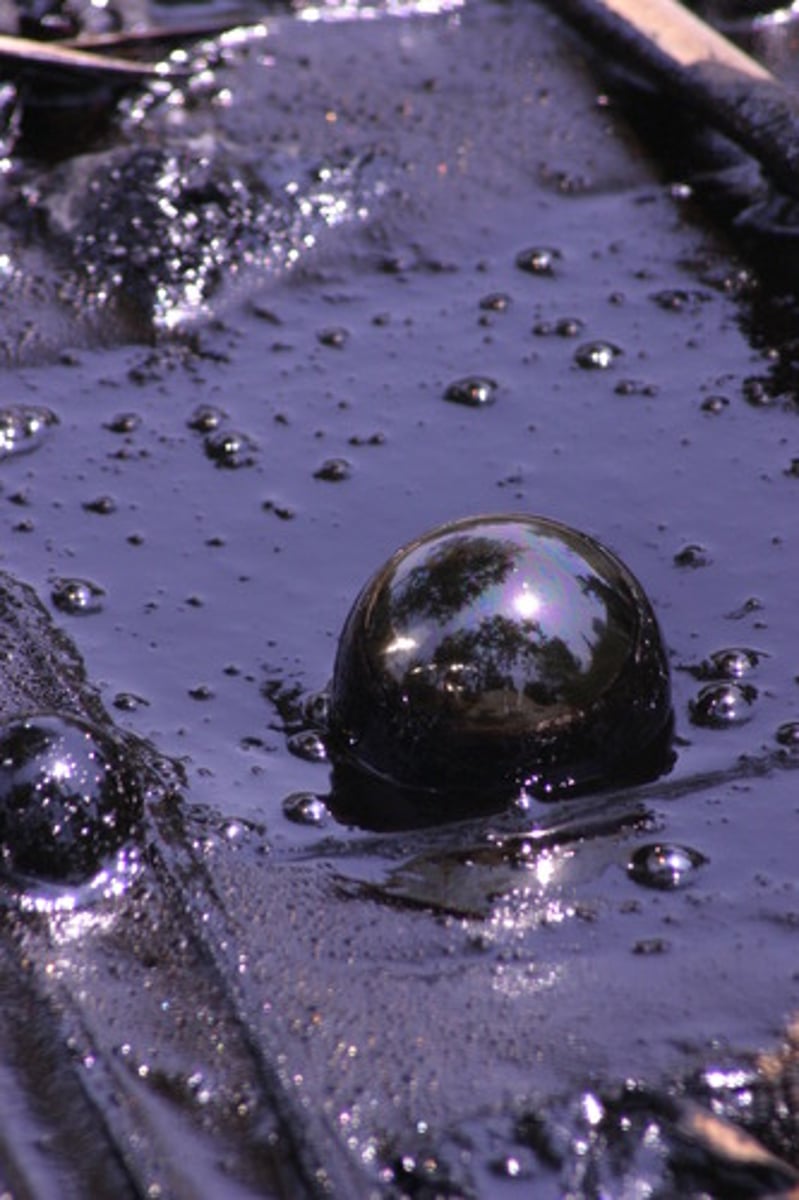
tar
a thick, sticky, dark fluid produced when tobacco burns
How does tar damage the respiratory system?
paralyses cilia that moves mucus out of the lungs so thus mucus accumulates in the lungs
smoker's cough
this is a persistent hacking cough resulting from a build-up of mucus in the lungs which occurs when the cilia no longer function
cough
a reflex to keep the airway free of foreign matter.
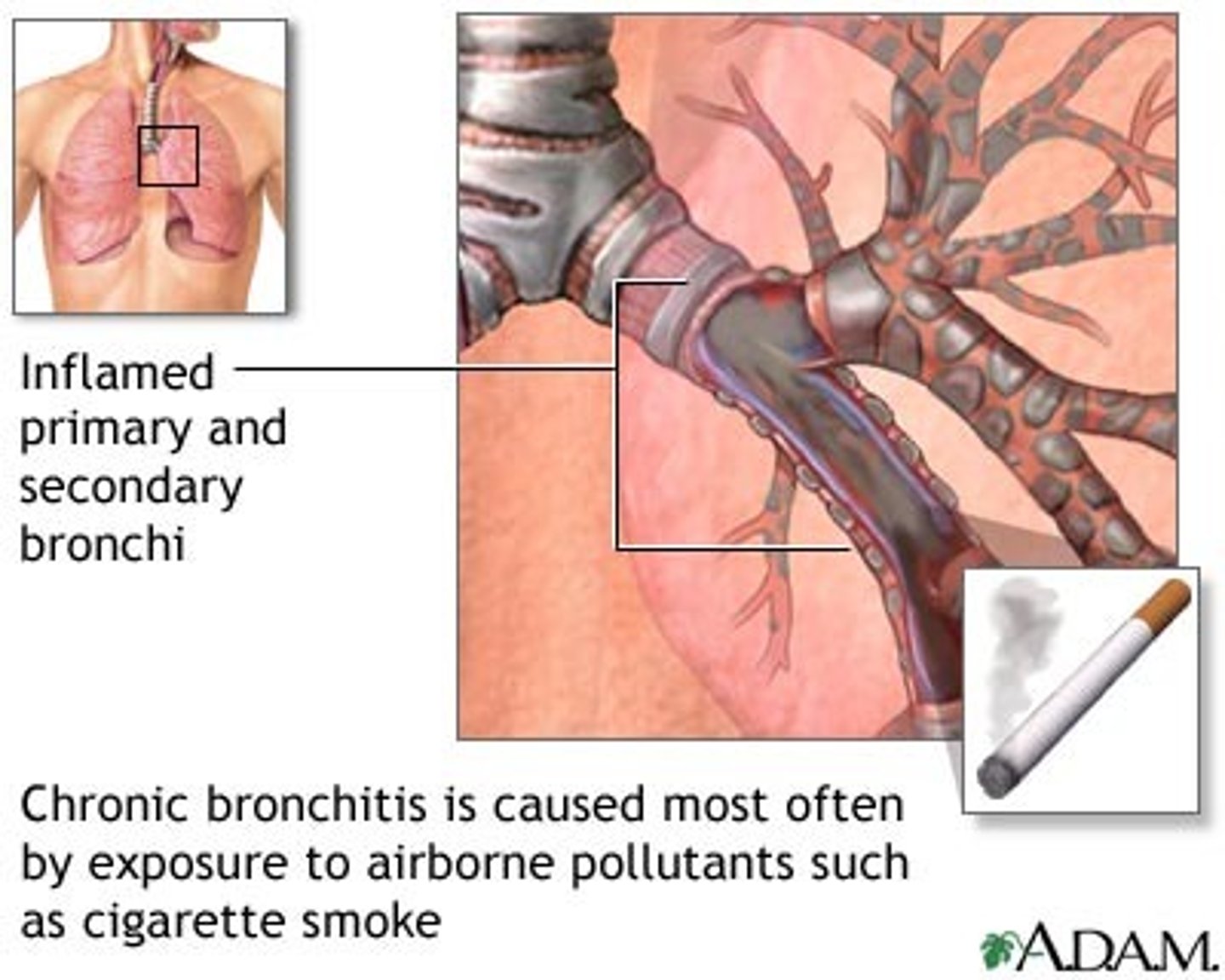
bronchitis
inflammation of the bronchi with partial obstruction of bronchi due to excessive mucus secretion
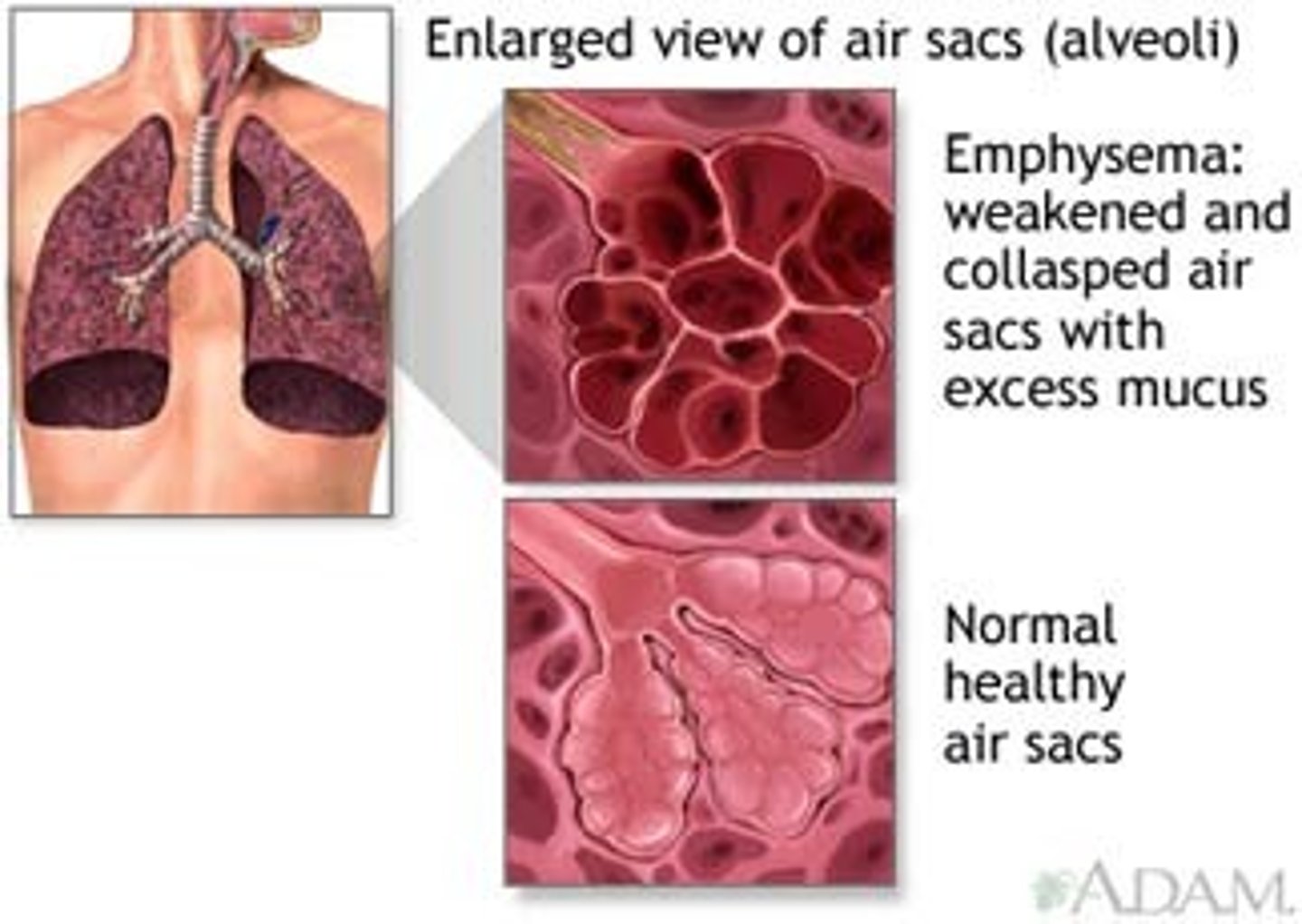
emphysema
a condition in which the alveoli lose most of their ability to function because of excessive coughing damaging the walls
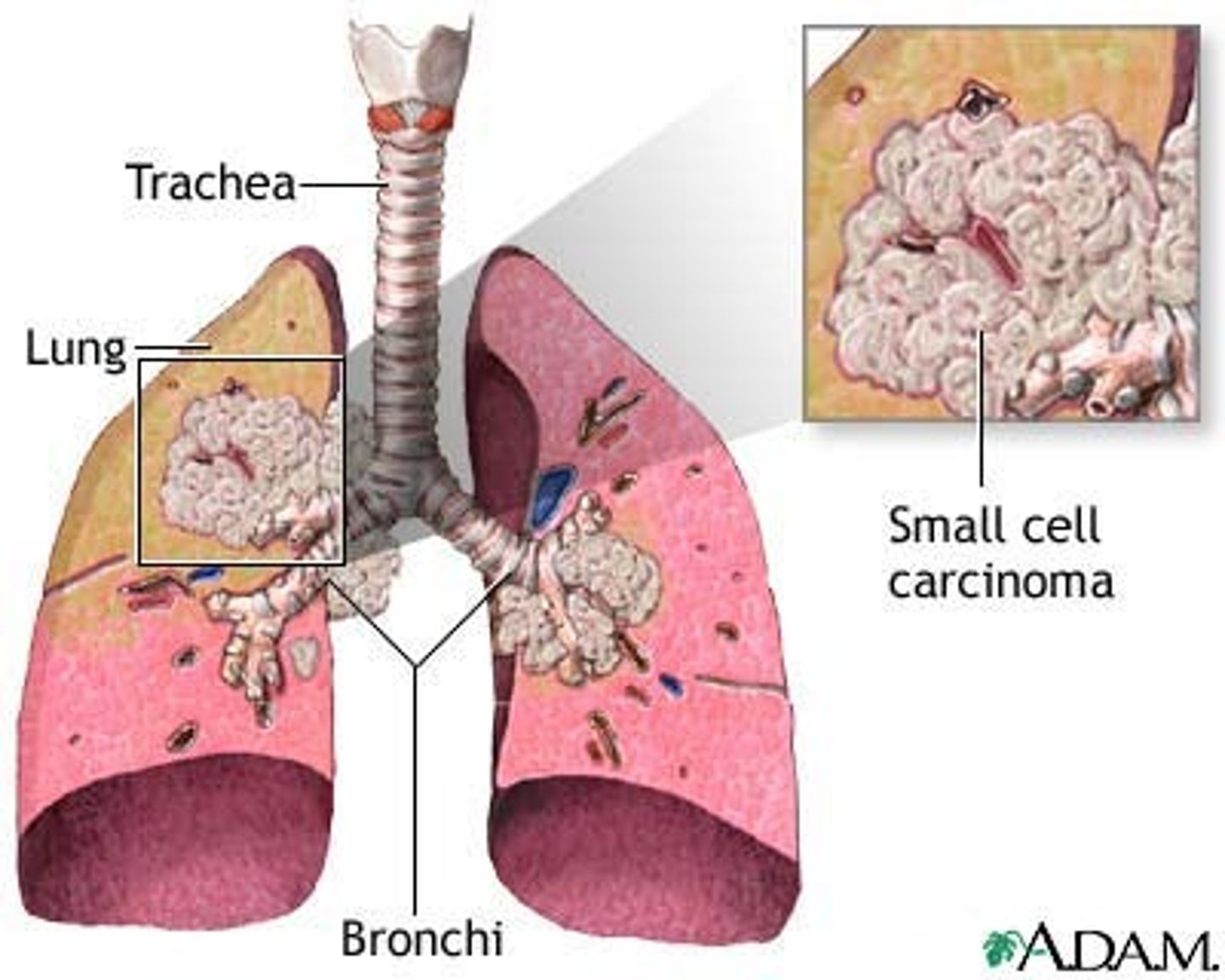
lung cancer
malignant tumor arising from the lungs and bronchi
Why is a smoker more likely to be out of breath running?
-Cigarettes contain carbon monoxide. Haemoglobin prefers to bind to carbon monoxide so thus reduces oxygen carried in the blood which prevents the maximum rate of respiration.
-Tar paralyses the cilia so thus mucus can only be removed by coughing. Coughing damages the alveoli.
When the alveoli are damaged, surface area for gas exchange is reduced. Muscles used for ventilation work harder to breathe deeper for gas exchange.
Why are smokers more likely to have a heart attack?
-Nicotine promotes the formation of fatty deposits in the artery wall which narrows the lumen. Less blood is able to flow which could cause blockages in the coronary artery. As less blood is able to flow, there is less oxygen for respiring heart muscle cells which kills cells.
microorganism
a small living plant or animal seen only with a microscope; a microbe