Introduction to Carbohydrates: Monosaccharides, Disaccharides, and Polysaccharides
 Call Kai
 Learn
Learn Practice Test
 Spaced Repetition
 Match
Match Flashcards
 Knowt Play
1/54

There's no tags or description
Looks like no tags are added yet.
Name | Mastery | Learn | Test | Matching | Spaced | Call with Kai | Chat |
|---|
No analytics yet
Send a link to your students to track their progress
55 Terms
What are carbohydrates?
Carbohydrates are sugars and starches, polyhydroxy aldehydes or ketones, or compounds that can be hydrolyzed to them.
What are the simplest carbohydrates?
Monosaccharides
What are disaccharides composed of?
Two monosaccharide units joined together.
What are polysaccharides composed of?
Three or more monosaccharide units joined together.
How are carbohydrates synthesized in plants?
Through photosynthesis, where energy from the sun is stored as chemical energy in carbohydrates.
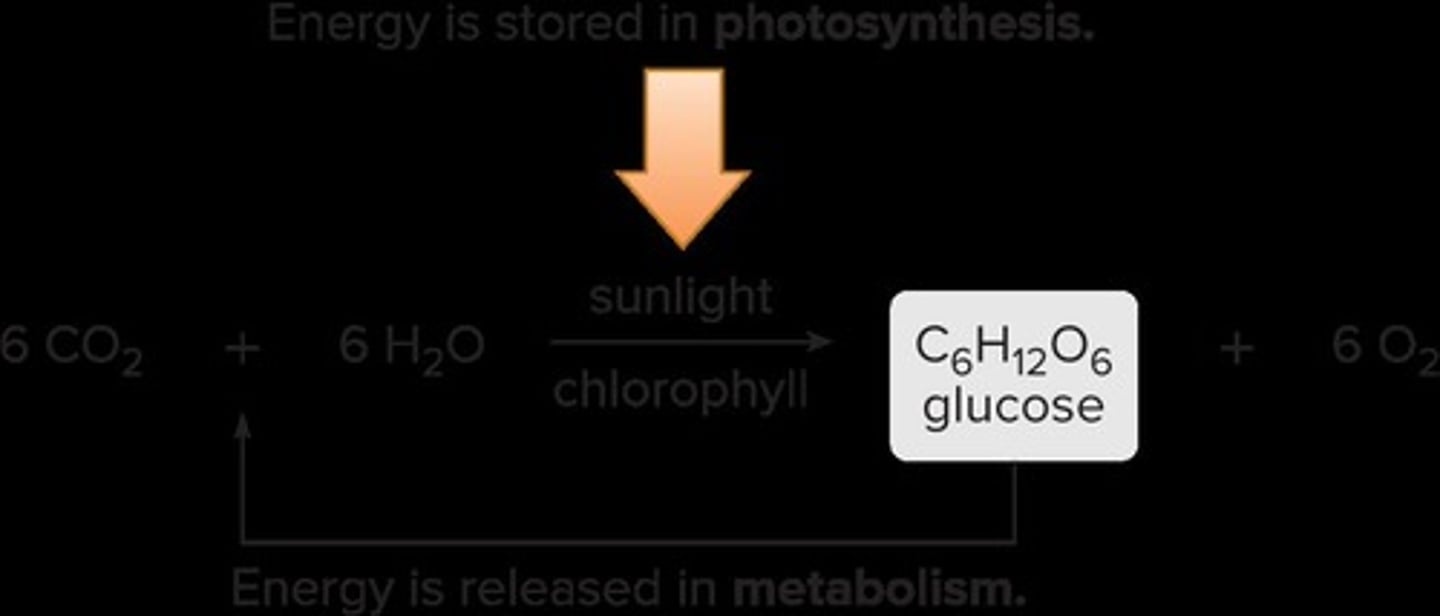
What is the primary use of carbohydrates in the body?
They are used for bursts of energy needed during exercise in the form of glucose.
What is the general structure of monosaccharides?
They generally have 3 to 6 carbon atoms in a chain with an aldehyde or ketone ending and many hydroxyl (-OH) groups.
What are aldoses?
Monosaccharides with an aldehyde group.
What are ketoses?
Monosaccharides with a ketone group.
What is the simplest aldose?
Glyceraldehyde
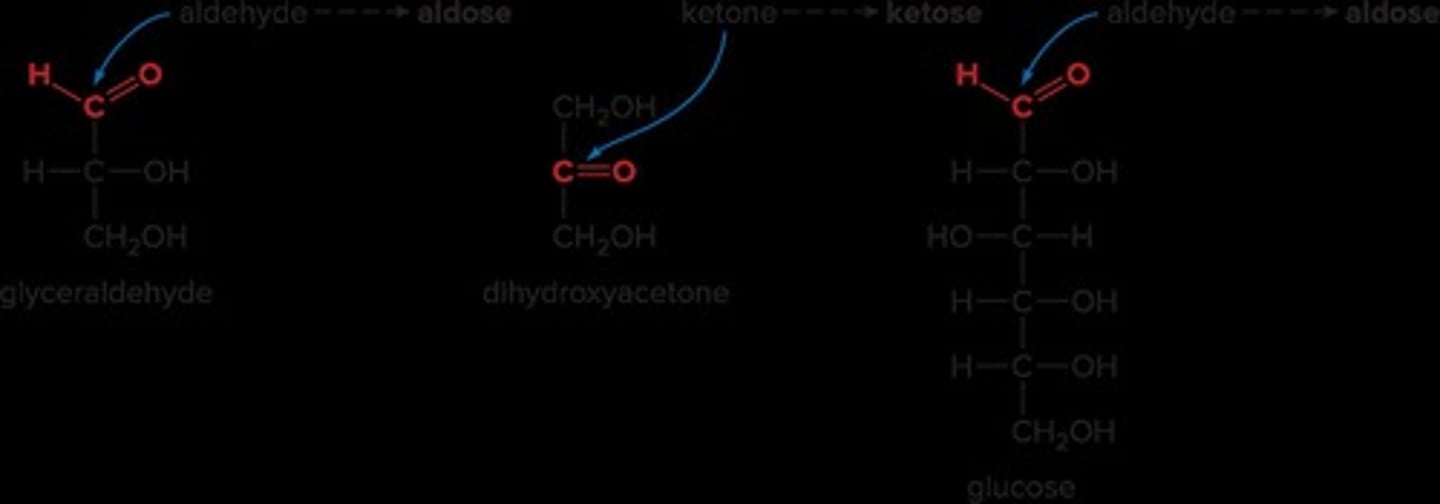
What is the simplest ketose?
Dihydroxyacetone
What is a triose?
A monosaccharide with 3 carbon atoms.
What is a tetrose?
A monosaccharide with 4 carbon atoms.
What is a pentose?
A monosaccharide with 5 carbon atoms.
What is a hexose?
A monosaccharide with 6 carbon atoms.
What is the sweetness level of monosaccharides?
Monosaccharides are sweet tasting, but their relative sweetness varies greatly.
What makes monosaccharides highly water soluble?
The presence of many polar functional groups capable of hydrogen bonding.
What is a chirality center in carbohydrates?
A carbon atom bonded to four different groups, leading to enantiomers.
What does the prefix 'D' indicate in carbohydrate structure?
The -OH group is drawn on the right side of the carbon chain.
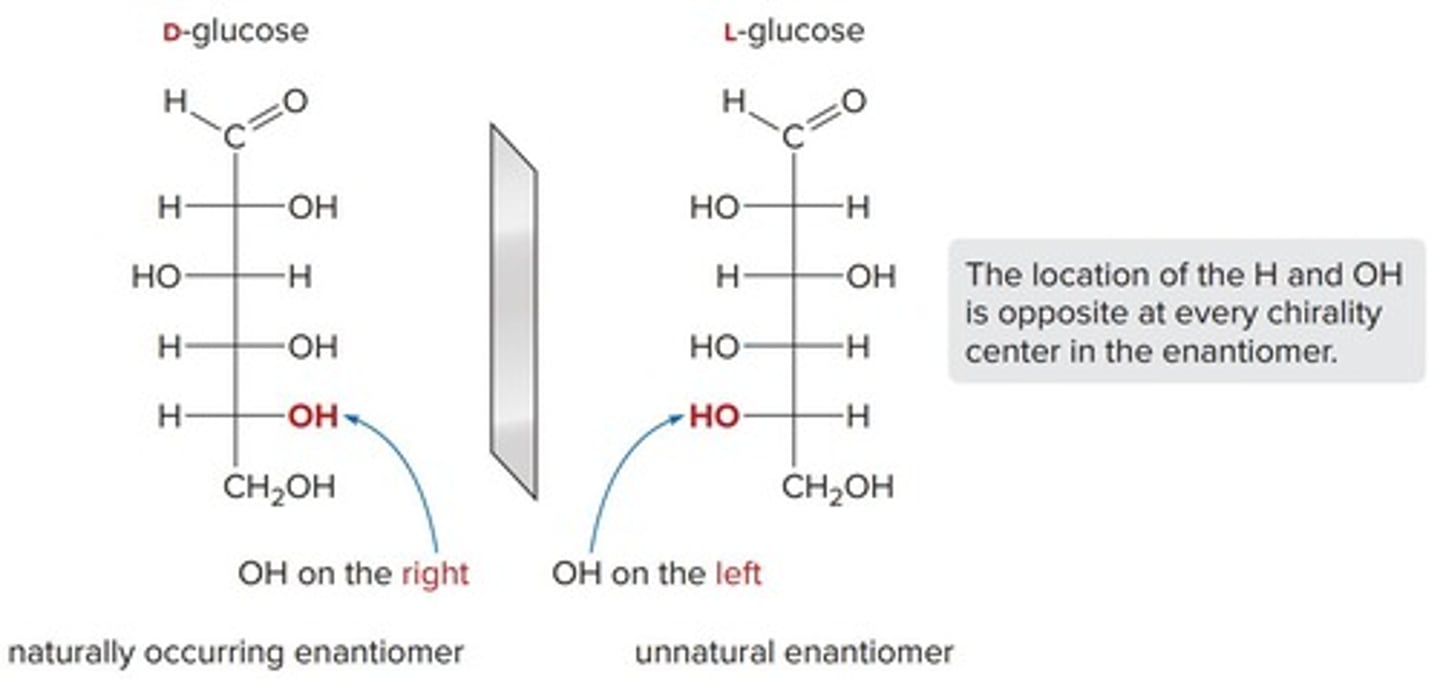
What does the prefix 'L' indicate in carbohydrate structure?
The -OH group is drawn on the left side of the carbon chain.
What is glucose commonly known as?
Dextrose or blood sugar.
What is the normal range for blood glucose levels?
70-110 mg/dL.
What happens to excess glucose in the body?
It is stored as the polysaccharide glycogen or as fat.
What role does insulin play in glucose regulation?
Insulin stimulates the uptake of glucose into tissues or the formation of glycogen.
What is galactose?
A component of the disaccharide lactose.
What condition is caused by a lack of enzyme to metabolize galactose?
Galactosemia, which can lead to cataracts and cirrhosis.
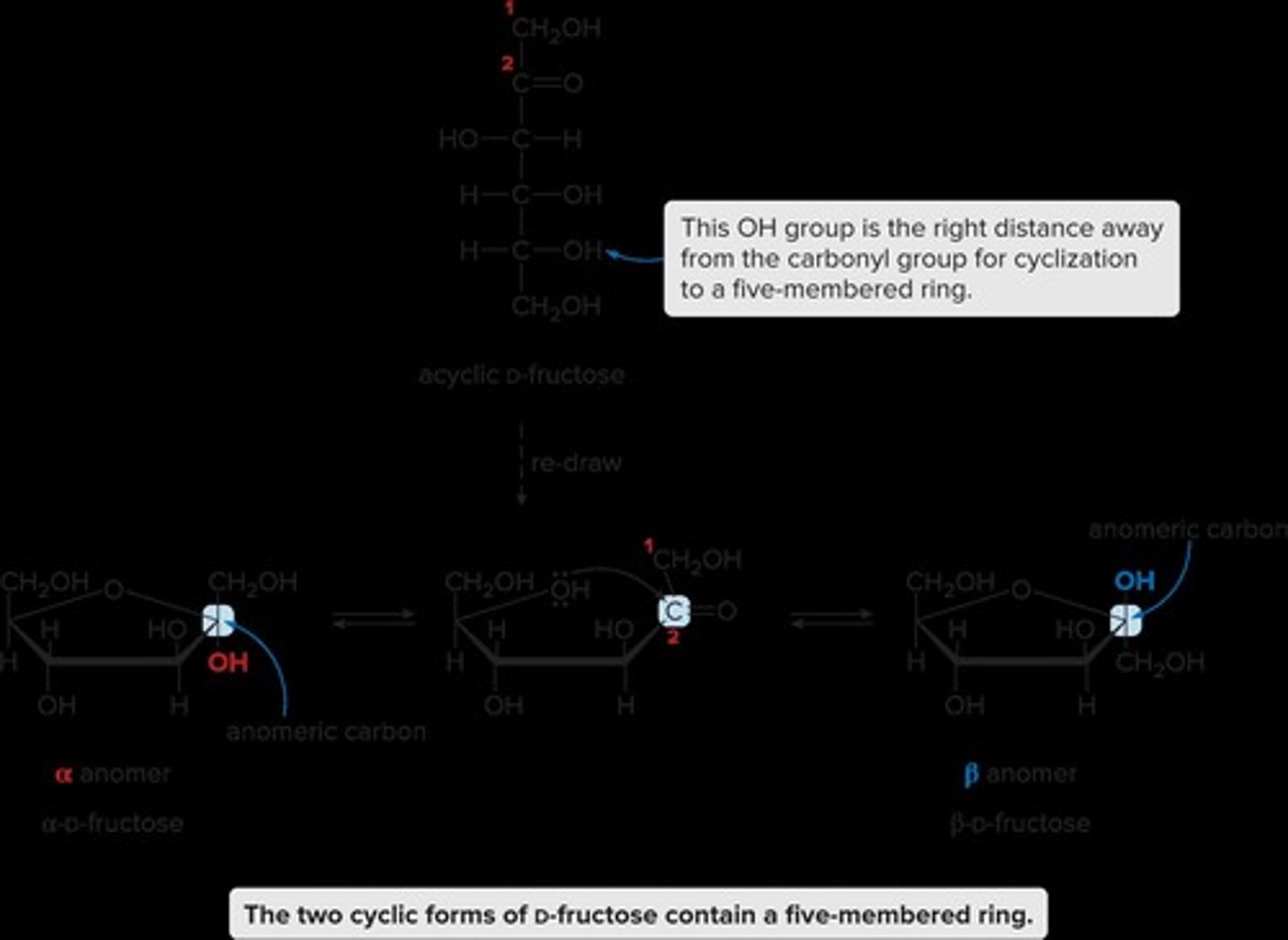
What is fructose known for?
It is a ketohexose found in honey, almost twice as sweet as table sugar.
What is a hemiacetal?
A compound formed when an aldehyde reacts with an alcohol.
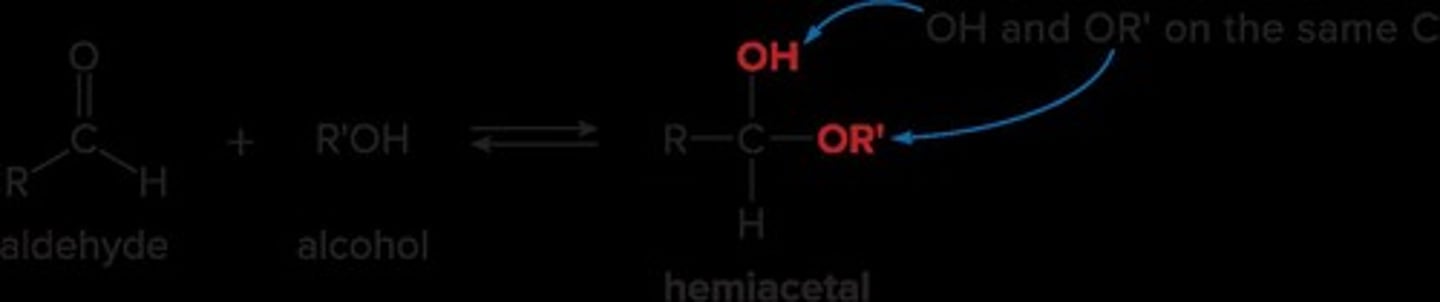
What is the anomeric carbon?
The carbon atom that becomes a chirality center in a cyclic monosaccharide.
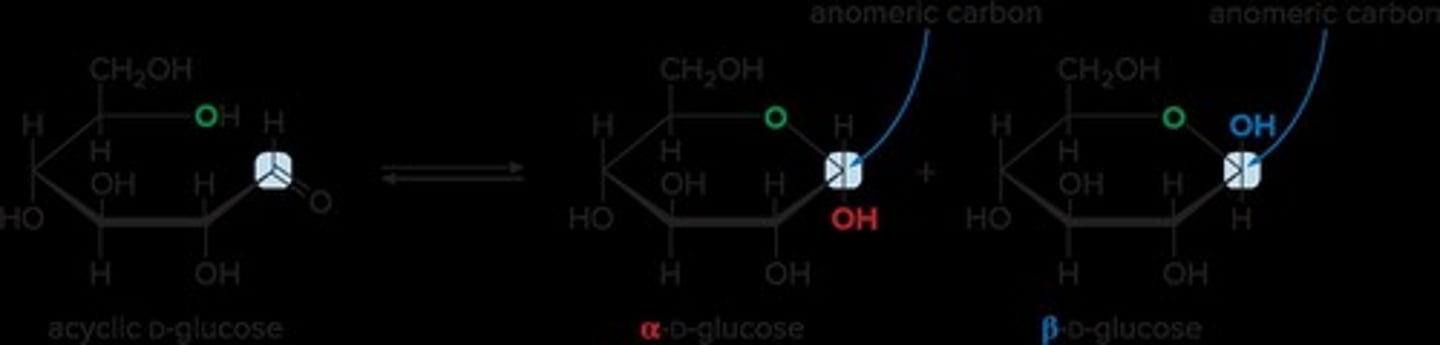
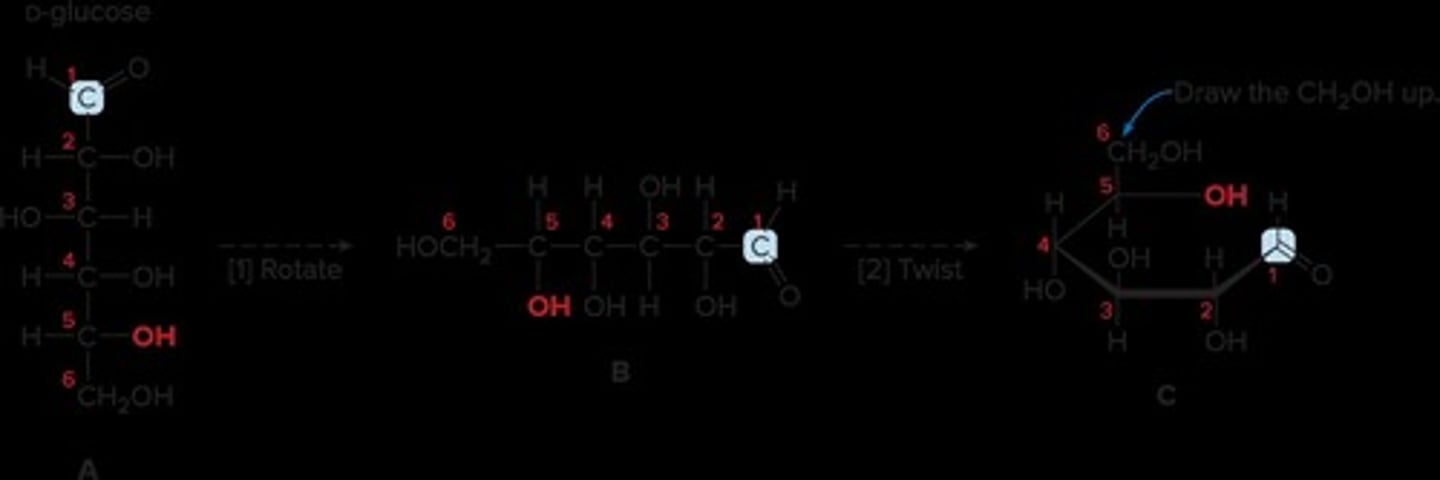
What are Haworth projections?
A way to represent cyclic forms of carbohydrates.
What type of sugar is fructose?
A ketohexose.
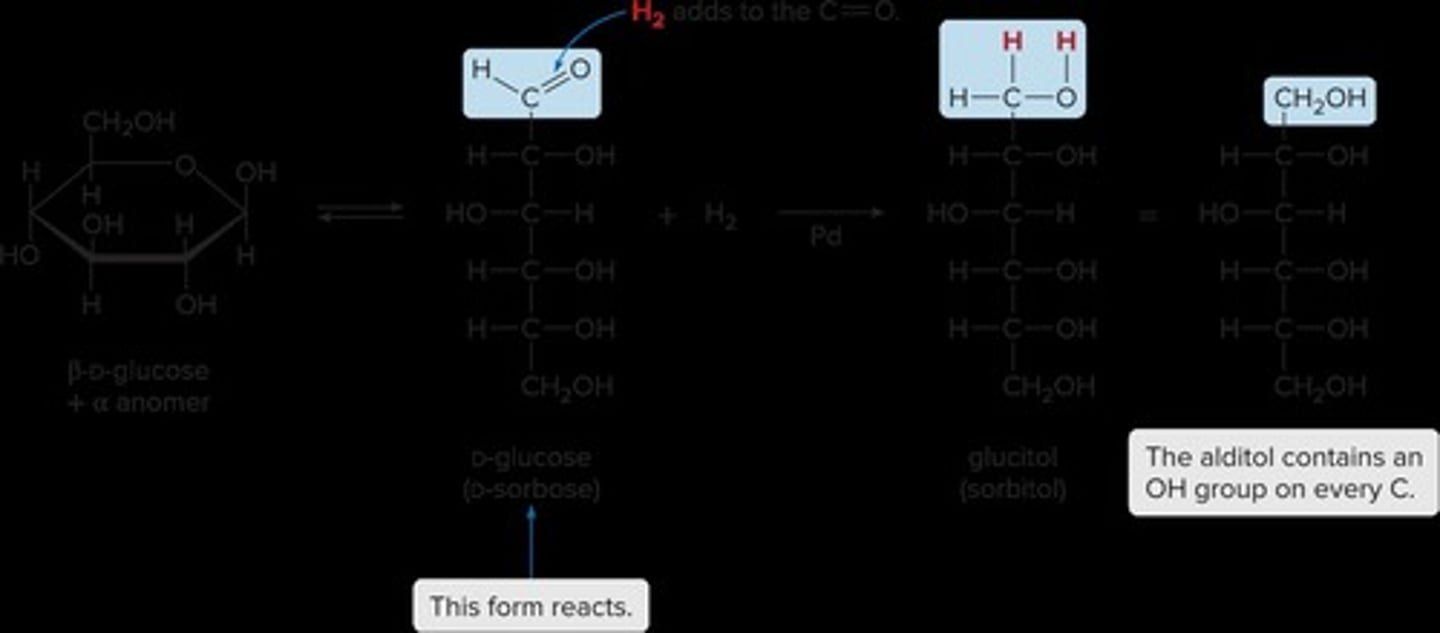
What happens to the carbonyl group of an aldose during reduction?
It is reduced to an alcohol using Pd.
What reagent is used to oxidize the aldehyde group of an aldose?
Benedict's reagent.
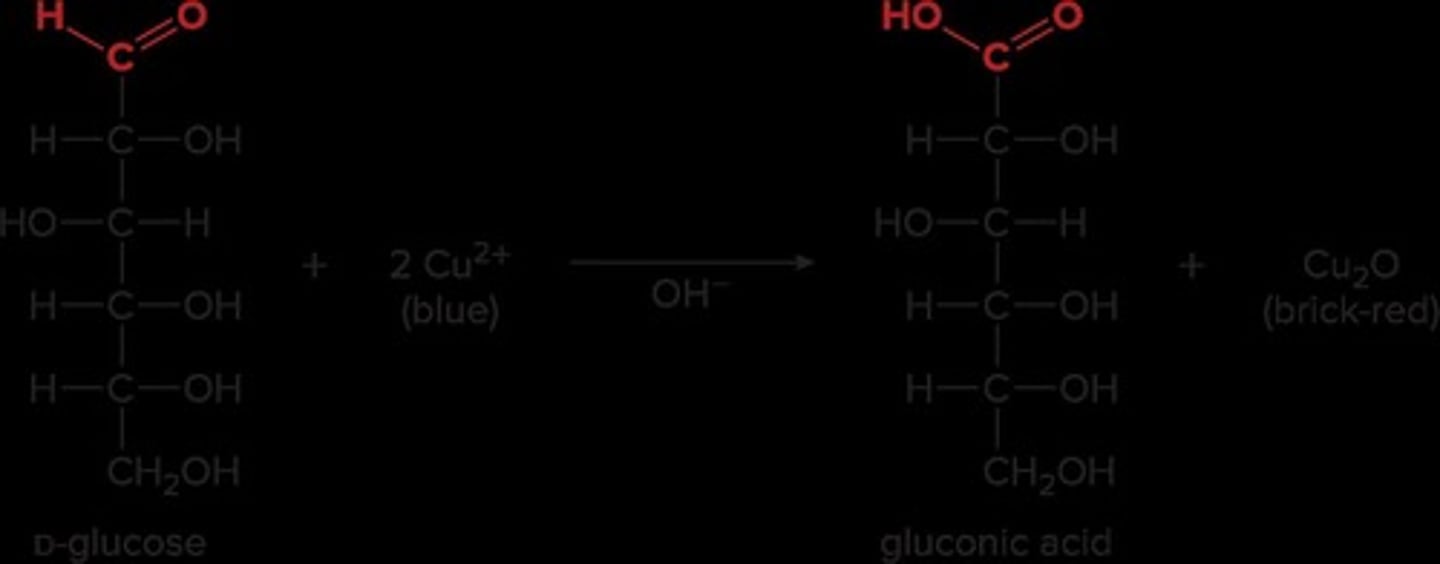
Can ketoses be readily oxidized?
No, but they can rearrange in a basic environment to form an aldose, which can be oxidized.
What type of bond links monosaccharides in disaccharides?
A glycosidic linkage.
What is the orientation of an alpha glycosidic bond?
It points down.
What is the orientation of a beta glycosidic bond?
It points up.
What does hydrolysis of a glycosidic linkage produce?
Two monosaccharides.
What is lactose composed of?
1 galactose ring and 1 glucose ring.
What enzyme cleaves the bond in lactose?
Lactase.
What condition results from the lack of lactase?
Lactose intolerance.
What is sucrose composed of?
1 glucose ring and 1 fructose ring.
What is aspartame hydrolyzed into?
Phenylalanine.
What is the major form of polysaccharide storage in animals?
Glycogen.
What are the three prevalent polysaccharides in nature?
Cellulose, starch, and glycogen.
What type of polymer is cellulose?
An unbranched polymer made of glucose units.
What is the primary function of cellulose in plants?
To provide support and rigidity to cell walls.
What type of starch is amylose?
An unbranched polymer of glucose.
What type of starch is amylopectin?
A branched polymer of glucose.
What enzyme digests starch in humans?
Amylase.
What are glycosaminoglycans (GAGs)?
Unbranched carbohydrates derived from alternating amino sugar and glucuronate units.
What is chitin?
A polysaccharide formed from N-acetyl-D-glucosamine units.
What determines blood type in humans?
The presence of specific monosaccharides attached to membrane proteins of red blood cells.
What are universal donors in blood types?
Individuals with type O blood.
What are universal recipients in blood types?
Individuals with type AB blood.