Lecture 19. Liver Infections 2
 Call Kai
 Learn
Learn Practice Test
 Spaced Repetition
 Match
Match Flashcards
 Knowt Play
1/27

There's no tags or description
Looks like no tags are added yet.
Name | Mastery | Learn | Test | Matching | Spaced | Call with Kai | Chat |
|---|
No analytics yet
Send a link to your students to track their progress
28 Terms
Causative agent of Infectious Necrotic Hepatitis (Black Disease)
Clostridium novyi type B.
etiology of bacterium Clostridium novyi type B
Anaerobic, gram-negative, rod-shaped; found in soil and liver.
Clostridium novyi type B.
what organism is indicated here that causes black disease
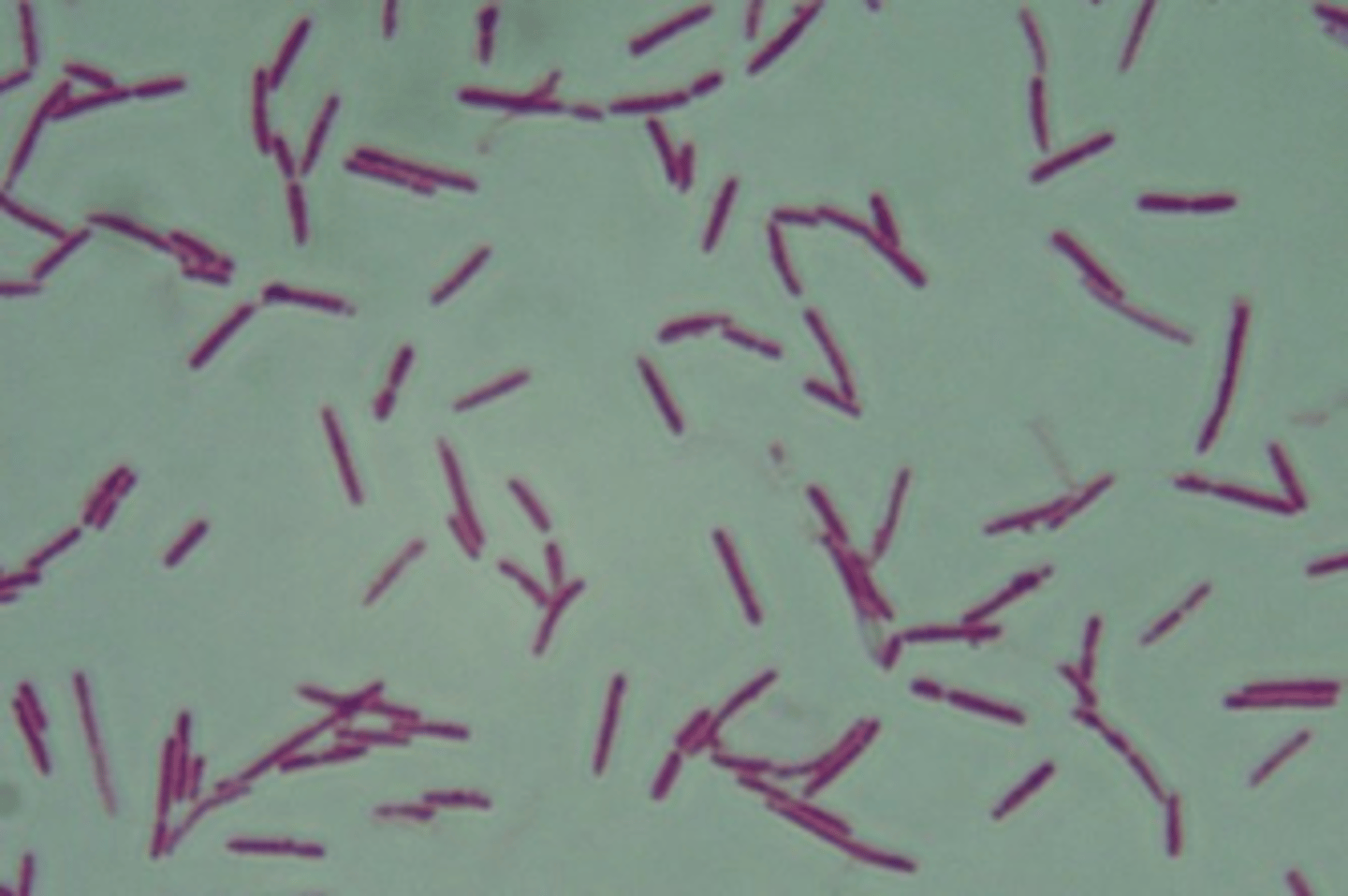
Trigger for toxin production in Clostridium novyi type B
A primary necrotic process in the liver.
What parasite is associated with seasonal outbreaks of Black Disease
Liver flukes.
Contribution of fluke migration to Black Disease
It creates anaerobic conditions in liver tissue, triggering C. novyi toxin production.
Animals primarily affected by Black Disease
Sheep (mainly), also cattle, pigs, and horses.
Transmission route of Clostridium novyi type B
Fecal-oral transmission.
Common clinical sign in sheep with Black Disease
Sudden death without prior signs.
Signs of Black Disease in cattle and horses
ADR, toxemia, abdominal pain, peritonitis.
Postmortem liver findings associated with Black Disease
1. Yellow necrosis, swollen grey-brown liver
2. hyperemia
3. engorged subcutaneous vessels.
Diagnostic tools used for Black Disease
1. Necropsy
2. anaerobic culture
3. FAT (fluorescent antibody test).
Treatment for Black Disease in cattle and horses
Parenteral penicillin.
Treatment for sheep with Black Disease
No Tx. , disease progression is too rapid.
Control measures for Black Disease
1. Vaccination
2. fluke control (molluscicides/flukicides)
3. avoiding carcass contamination.
Causative agent of Bacillary Hemoglobinuria (Red Water Disease)
Clostridium haemolyticum (C. novyi type D).
Common location for Bacillary Hemoglobinuria
Western U.S., mainly in cattle during summer to fall.
Condition that predisposes animals to Bacillary Hemoglobinuria
Fasciolosis (liver fluke infection).
Toxin produced by Clostridium haemolyticum under anaerobic conditions
Phospholipase C (B-toxin).
Effects of the B-toxin in Red Water Disease
Necrosis and hemolysis of hepatocytes and capillary endothelium.
Clinical signs of Bacillary Hemoglobinuria
ADR, anemia, fever, hemoglobinuria, jaundice, sudden anorexia, abdominal pain, and brisket edema.
Mortality rate of Bacillary Hemoglobinuria
Around 95%.
Appearance of urine in animals with Red Water Disease
Dark red (hemoglobinuria).
Diagnosis of Bacillary Hemoglobinuria
1. Necropsy (focal hepatic necrosis + zone of hyperemia)
2. FAT staining
3. PCR.
Bacillary Hemoglobinuria
the pathology of this liver indicates what disease
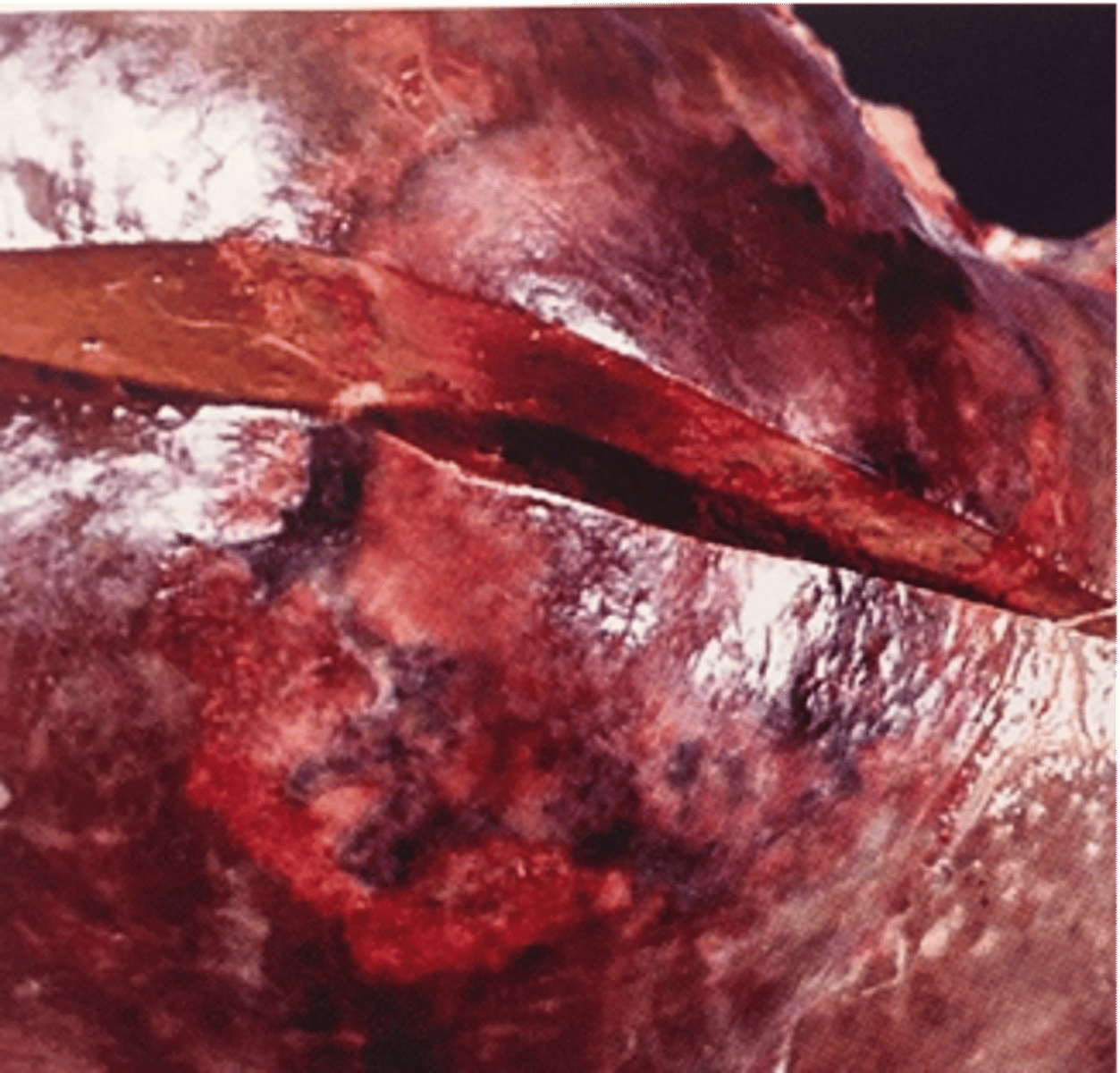
Treatments available for Bacillary Hemoglobinuria
1. Penicillin and tetracycline
2. antiserum
3. blood transfusion.
Prognosis for Bacillary Hemoglobinuria
Guarded.
Control measures for Bacillary Hemoglobinuria
Formalin-killed whole culture vaccine.