Physics- Electric circuits
 Call Kai
 Learn
Learn Practice Test
 Spaced Repetition
 Match
Match Flashcards
 Knowt Play
1/36

There's no tags or description
Looks like no tags are added yet.
Name | Mastery | Learn | Test | Matching | Spaced | Call with Kai | Chat |
|---|
No analytics yet
Send a link to your students to track their progress
37 Terms
What is electricity?
Flow of charged particles
What is static electricity?
Stationary electrical charged
What is current electricity?
Flowing electrical charge
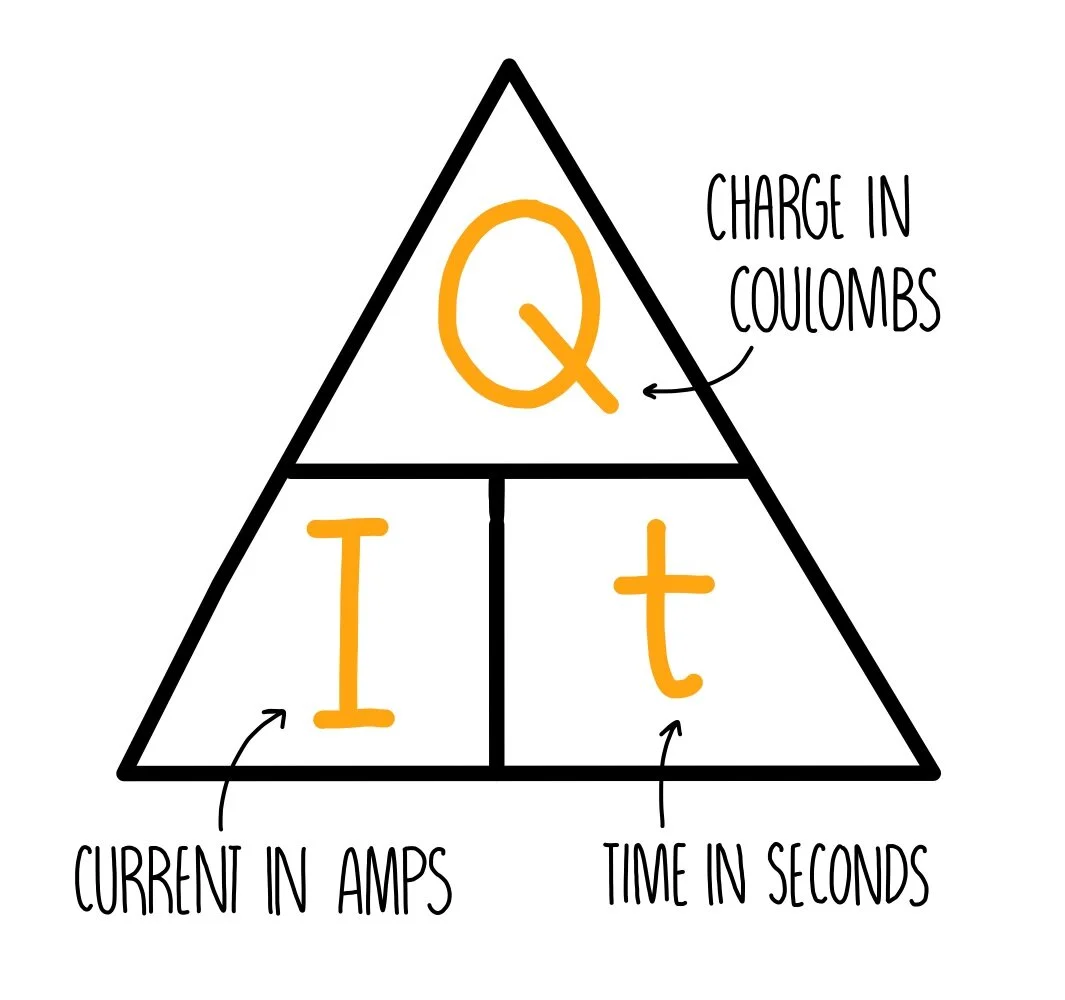
What is the equation for electrical current? (plus units)
Electrical current I (Amps) = quantity of charge passed a point Q (Coulombs) / time taken t (seconds)

What is an electric field? What does the arrows tell us?
A region around a charges object where other charges experience a force. The dirrection of the field tells us the way a positive charge would move
What is an electric conductor? e.g
A material that lets charges pass easily through the material (low electric resistance) e.g metals
What is an electric insulator? E.g
Electric charges cannot easily pass through the material (high electrical resistance) e.g plastic and rubbers
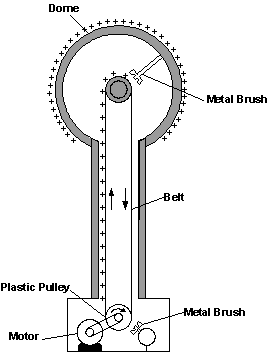
How does a Van de Graff generator work?
The spinning roller moves the belt, as they rub the friction makes the belt collect a negative charge which is then carried upwards. The collection points cause the charge to transfer to the metal dome and spread out due to repulsion.
How do you measure electrical resistance?
We measure electrical resistance by how many volts are needed to make 1amp of current flow through a material or device
What happens to some insulating materials when they are rubbed together?
When some insulating materials are rubbed together, friction causes negative charged electrons to transfer to the other material leaving a positive static charge.
What happens when a cloth rubs a polythene rod vs a acetate rod? SPLIT INTO 2
When a cloth rubs a polythene rod, the rod becomes negatively charged and the cloth has an equal positive charge
When a cloth rubs an acetate rod, the rod becomes positively charged and the cloth has an equal negative charge

What is the equation for potential difference? + units
Potential difference V (Volts) = energy transferred E (Joules) / charge Q (coulombs)

What is potential difference?
The energy transferred per unit of charge
What happens when you reverse the potential difference across a resistor?
Reversing the potential difference across a resistor reverses the direction of the current through it
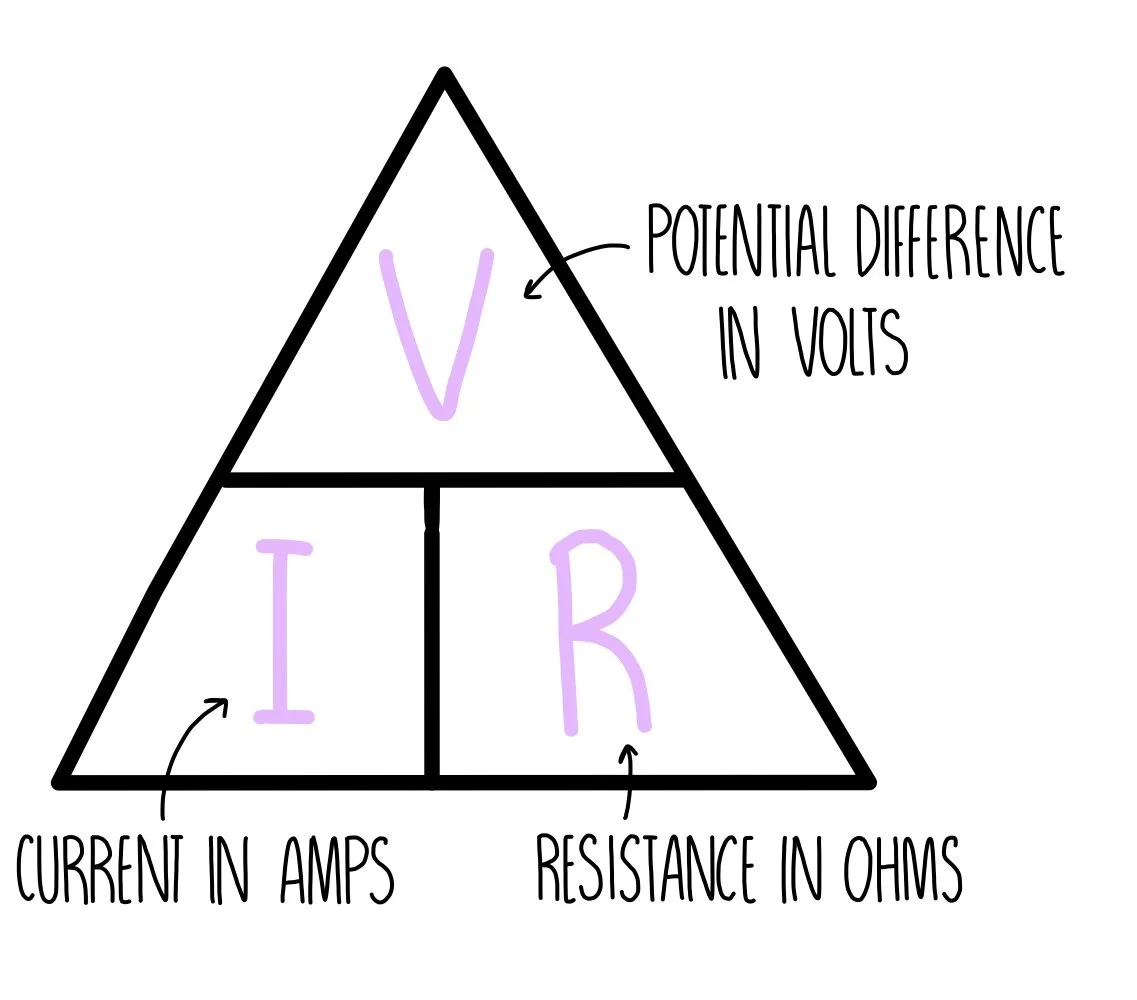
What is the equation for resistance?
Resistance R (Ω) = potential difference V (V) / Current I (A)
What is resistance caused by?
Delocalised electrons colliding with atoms and ion
What is Ohms law?
The current through a resistor at constant temperature is directly proportional to the potential difference across the resistor
What is a circuit? What do we find in it?
A circuit is a complete electrical path. In it we find;
Power supply (battery or cell)
conductive paths (wires)
Components along conductive path
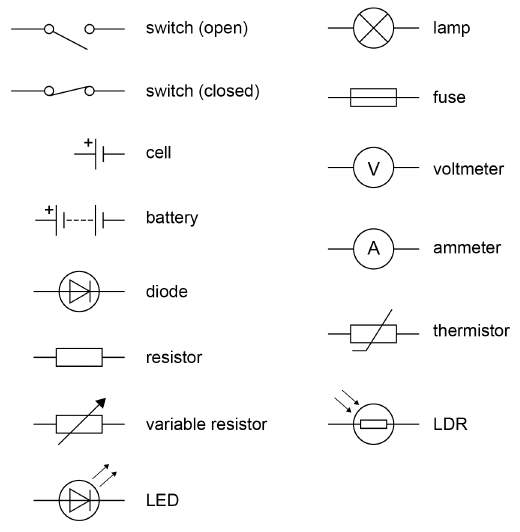
Draw a switch, cell, battery, diode, resistor, variable resistor, LED, lamp, fuse, voltmeter, ammeter, thermistor, LDR
What does a Voltmeter measure? How is it connected?
Measures potential difference, always connected in parallel
What does a Ammeter measure? How is it connected?
Measures current, always connected in series
How does the amount of resistors in a seriescircuit affect the resistance?
The more resistors in a series circuit the higher the resistance because there is only 1 path for the electric current to flow meaning the current must pass through every resistor

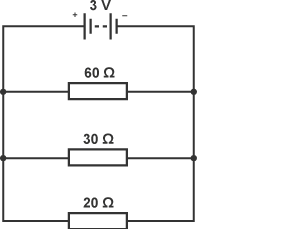
How does the amount of resistors in a parallel circuit affect the resistance?
The more resistors in a parallel circuit the lower the resistance because each new resistor creates an extra pathway for the electric current to flow through
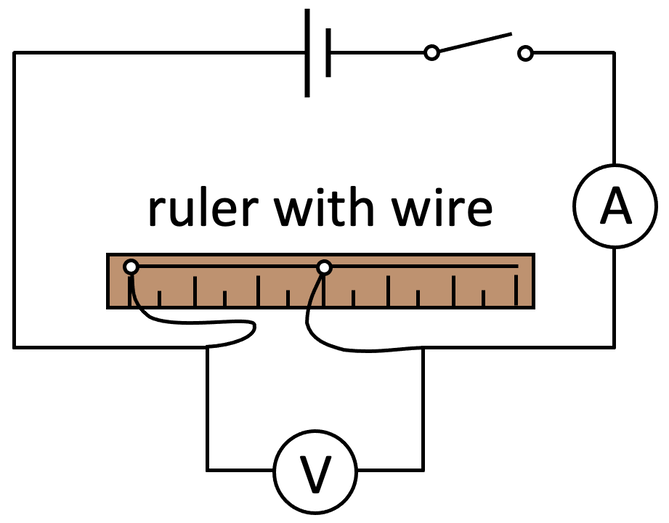
What happens to the resistance when you increase the length of a metal wire?
Resistance increases linearly with length- There is resistance in a metal wire as particles vibrate in fixed positions making it harder for electrons to flow through. As length increases, resistance increases as there is further for the electrons travel and more collisions.

IV graph for a Ohmic resistor- What does the graph look like and why?
The resistance is constant- the p.d/voltage is directly proportional to the current (Ohms law)

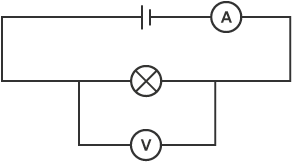
IV graph for a filament lamp- What does the graph look like and why?
Potential difference increases causing an increase in current. As the filament heats up, there's a higher kinetic energy so the ions vibrate faster and there’s a higher amount of collisions between the electrons and metal ions. This makes it harder for the electrons to flow increasing resistance so the line flattens out.
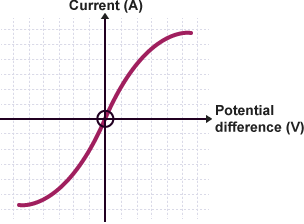
IV graph for a diode - What does the graph look like and why?
No current- diodes only allows current to flow in one direction
Steep increase- not a lot of voltage in needed for a rapid increase in current (energy efficient)

Rules for current in a series circuit
Current is the same everywhere
Rules for potential difference in a series circuit
Voltage is shared between components (not always evenly)
Rules for current in a parallel circuit
Current splits at junctions, amount of current depends on its resistance
Rules for potential difference in a parallel circuit
Voltage is the same across each path/branch
What is a thermistor?
A temperature dependent resistor- as temperature increases, its resistance decreases
What is a LDR?
Light dependent resistor- as light increases, its resistance decreases
Temperature/light vs resistance of a Thermistor/LDR experiment-
What is the independent, dependent and control variable?
Independent variable- temperature
Dependant variable- resistance
Control variable- time submerged, equipment used
Temperature/light vs resistance of a Thermistor/LDR experiment-
What were the results + graph
As temperature increases resistance decreases (inversely proportional)
Same for LDR - as light increases resistance decreases (inversely proportional

What is current?
The rate of flow of electrical charge per second