Biology OCR Gateway paper 1
 Call Kai
 Learn
Learn Practice Test
 Spaced Repetition
 Match
Match Flashcards
 Knowt Play
1/161

There's no tags or description
Looks like no tags are added yet.
Name | Mastery | Learn | Test | Matching | Spaced | Call with Kai | Chat |
|---|
No analytics yet
Send a link to your students to track their progress
162 Terms
prokaryotic cell
bacteria cell (smaller than animal)
eukaryotic cell
animal cell
Bacteria Cell: Flagella
Like a tail. Allows movement. Bacteria can have 1+
Bacteria Cell: Pilus (s)
Protein structures that extend from the bacterial cell envelope. They attach the cells to surfaces.
Bacteria Cell: Capsule
Protects the cell from the harsh conditions in order for it to survive. Allows them to adhere to surfaces
Plasma membrane
Regulates the transport of materials in and out of the cell
What do bacteria cells not have?
mitochondria, a nucleus or chloroplasts
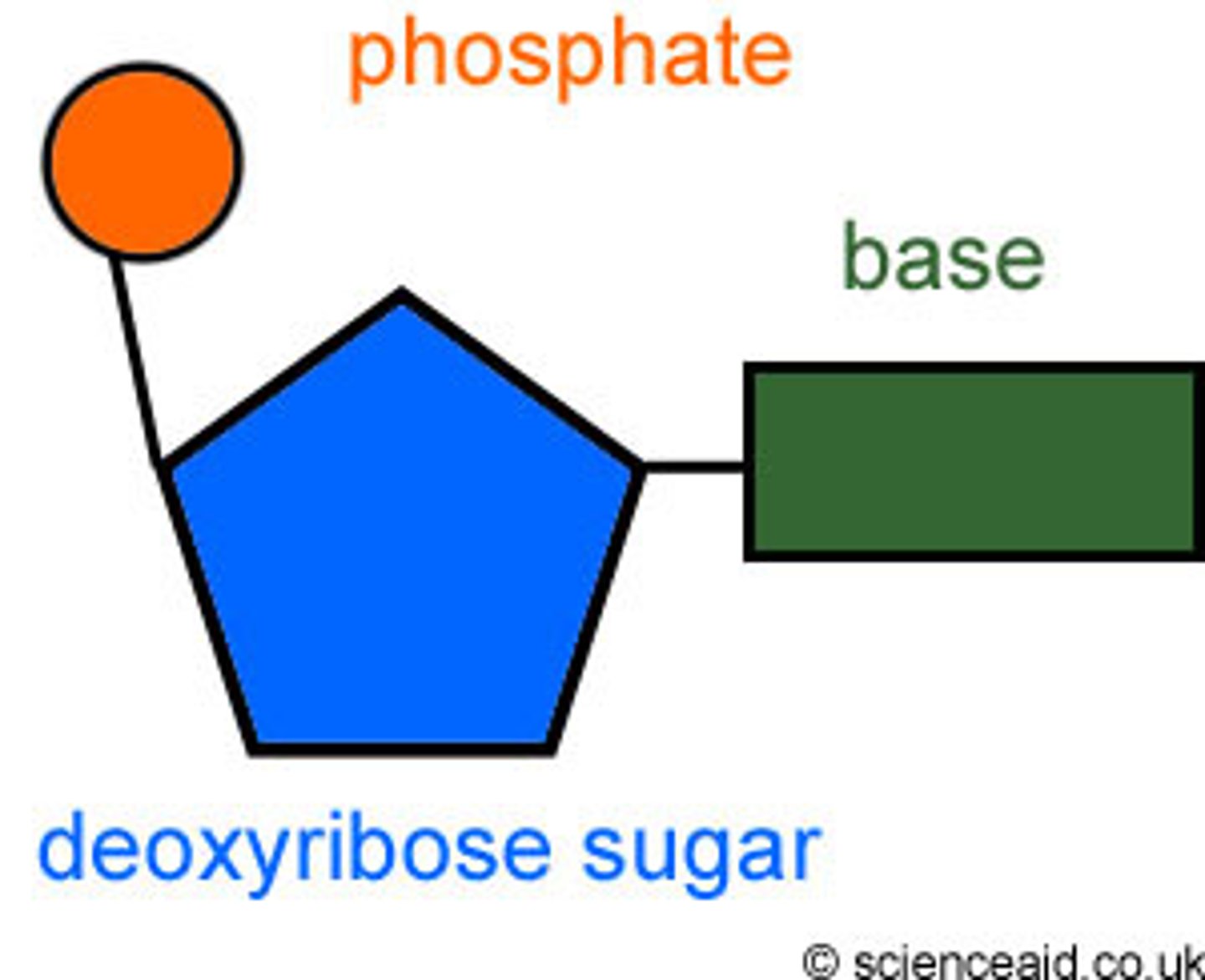
Describe a nucleotide
makes up RNA or DNA. The base changes
What are proteins made up of?
Amino acids
Describe protein synthesis
Transcription: takes place in the nucleus
base sequence of gene is copied into a complementary template molecule called mRNA. This passes out of the nucleus and into the cytoplasm
Translation: takes place in cytoplasm
The mRNA attaches to a ribosome. Amino acids are brought to the ribosome on carrier molecules (called tRNA)
The ribosome reads the triplets of bases on the mRNA and uses this to join together the correct amino acids in the correct order. Once the protein chain is complete, it folds into its unique shape.
Why is RNA different from DNA?
1. single strand, DNA is a double strand
2. RNA has a base of U instead of T
3. DNA has the sugar deoxyribose whereas RNA has the sugar ribose
4 types of proteins
enzymes, hormones, carrier proteins, structural proteins (e.g keratin)
3 enzymes and what they break down things into
Lipase: Fats → Fatty acids and glycerol. Found in small intestine
Protease: protein → amino acids. Found in stomach, small intestine
Amylase: starch → sugars. Found in mouth, small intestine
What effects enzyme activity?
temperature, pH, substrate concentration, enzyme concentration
anaerobic respiration in yeast and plant cells
Glucose --> ethanol + carbon dioxide
anaerobic respiration
glucose -> lactic acid
is bile an enzyme?
Bile is not an enzyme. It doesn't digest it emulsifies fat droplets.
Rate of photosynthesis
Rate of photosynthesis = 1/time
Inverse square law
When you double the distance from the light source, the LI falls by a factor of 4
1/distance from light source²
factors affecting photosynthesis
light intensity, CO2 concentration, temperature
What does FSH do?
Pituitary gland secretes FSH, which causes an egg in the ovaries to mature- period happens
FSH stimulates the ovaries to release oestrogen
What does oestrogen do?
inhibits FSH and makes the uterus lining repair itself and grow after menstruation (a period) stimulates LH to be released.
What does LH do?
The Pituitary gland releases LH, which causes an egg to be released from the ovaries. This is called ovulation and happens on day 14 of the menstrual cycle.
What does Progesterone do?
Progesterone is released from the empty follicle in the ovaries. It maintains the uterus lining after ovulation. Inhibits LH + FSH. Once levels have decreased the uterus lining sheds again- a period.
What type of reaction is photosynthesis?
Endothermic
What type of reaction is respiration?
Exothermic
What does a potometer measure?
the rate of water uptake by a plant
Diffusion
The net movement of particles from an area of high concentration to an area of low concentration. It's a passive process.
3 ways the rate of diffusion can be increased
- increase the surface area (decreasing diffusion distance)
- increase the temperature
- a greater concentration gradient
Active transport
when particles move from an area of low concentration to an area of high concentration (against the concentration gradient) It requires energy
an example of active transport in plants
ions moving into root hair cells
an example of active transport in animals
glucose molecules moving across the gut wall into the blood
osmosis
the movement of water molecules from an area of high water potential to an area of low water potential across a partially permeable membrane
what is it called when an animal cell looses too much water and shrivels up?
crenulation
what is it called when an animal cell swells up and the cell membrane ruptures due to too much water?
lysis
what is it called when a plant cell becomes swollen due to too much water? (it will not burst due to the cell wall)
turgid
what is it called when a plant cell becomes plasmolysed (it collapses away from the cell wall) due to water loss?
flaccid
name the stages of mitosis
Prophase
Metaphase
Anaphase
Telophase
What happens in Prophase?
chromosomes condense, nuclear membrane disappears
What happens in metaphase?
Chromosomes line up in the middle of the cell
What happens in anaphase?
Chromosomes and their copies are pulled to different ends of the cell.
What happens in telophase?
two new nuclei form
What are the 2 stages of the cell cycle that are not in mitosis?
1. interphase - the cell is growing, replicating its DNA and carrying out its daily functions
6. Cytokinesis- the cell membrane pinches in and eventually divides into two daughter cells
A specialised animal cell
Sperm cell
A specialised plant cell
Root hair cell
Cell differentiation
the process by which a cell becomes specialised
How is the sperm cell specialised?
streamlined shape for swimming, lots of mitochondria, flagellum so the sperm can swim, half as much genetic material as normal adult cell, digestive enzymes to break a hole into the egg when the sperm reaches it
what are the two types of stem cells?
adult stem cells and embryonic stem cells
stem cell
an undifferentiated cell which can give rise to more cells of the same type and can differentiate to form other types of cells
where does cell division in plants occur?
the meristem- at the tip of the root and shoots
How are alveoli adapted for gas exchange?
made up of a layer of very thin cells (short diffusion pathway), very large surface area, alveoli walls are moist, each alveoli is surrounded by blood vessels (they have a good blood supply)
Arteries
carry blood away from the heart
small lumen
thick wall of muscle and elastic fibres
Veins
carry blood to the heart
large lumen
thin wall of muscle and elastic fibres
valves
Capilleries
connect arteries and veins
the wall of the capillary is one cell thick
the lumen is one cell thick
what are the 4 heart chambers called?
right atria, left atria, right ventricle, left ventricle
what are the 4 components of blood?
red blood cells, white blood cells, platelets, plasma
How are red blood cells adapted?
Contain haemoglobin, have no nucleus, have a biconcave shape to maximise SA, they are thin which means a short diffusion distance
what do white blood cells do?
Engulf and destroy unwanted microorganisms that enter the blood
What does plasma contain?
glucose, anti bodies, hormones, proteins, amino acids, carbon dioxide, urea, rbc, wbc, platelets
What are platelets?
Small fragments of cells with no nucleus
what do platelets do?
they float in blood until we get a cut then rush to the wound and act like glue, patching up the hole
What makes up the vascular bundle?
xylem and phloem
how are leaves adapted to absorb light energy?
palisade cells are column shaped and packed with chloroplasts. they are arranged closely together with a lot of light energy absorbed
how do the stomata open?
When cell full of water, guard cells around stomata swell up and open so water can escape. water then leaves the guard cells and they become flaccid and the stomata close
which way does the xylem transport water and minerals in a plant?
Up
which way does the phloem transport sugars in a plant?
up and down
what stiffens the xylem?
lignin
are phloem cells alive or dead?
alive
are xylem cells alive or dead?
dead
transpiration
the loss of water from leaves by evaporation through the stomata
transpiration stream
the constant flow of water from the roots and out the leaves due to transpiration
factors that affect transpiration
light intensity
temperature
wind
humidity
central nervous system (CNS)
brain and spinal cord
Peripheral Nervous System (PNS)
the network of nerves that connects the brain and spinal cord to other parts of the body
3 types of neurones
Sensory, relay and motor
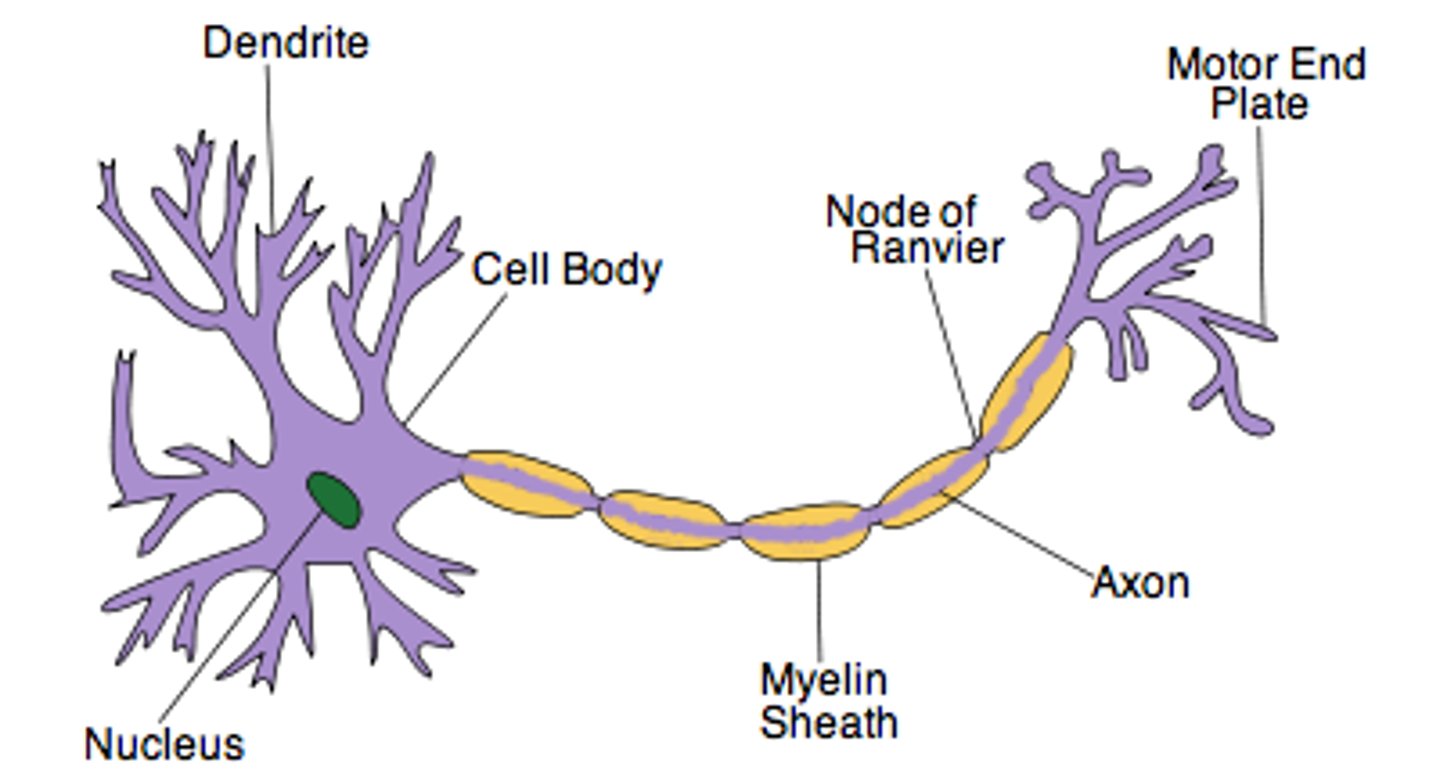
motor neurone
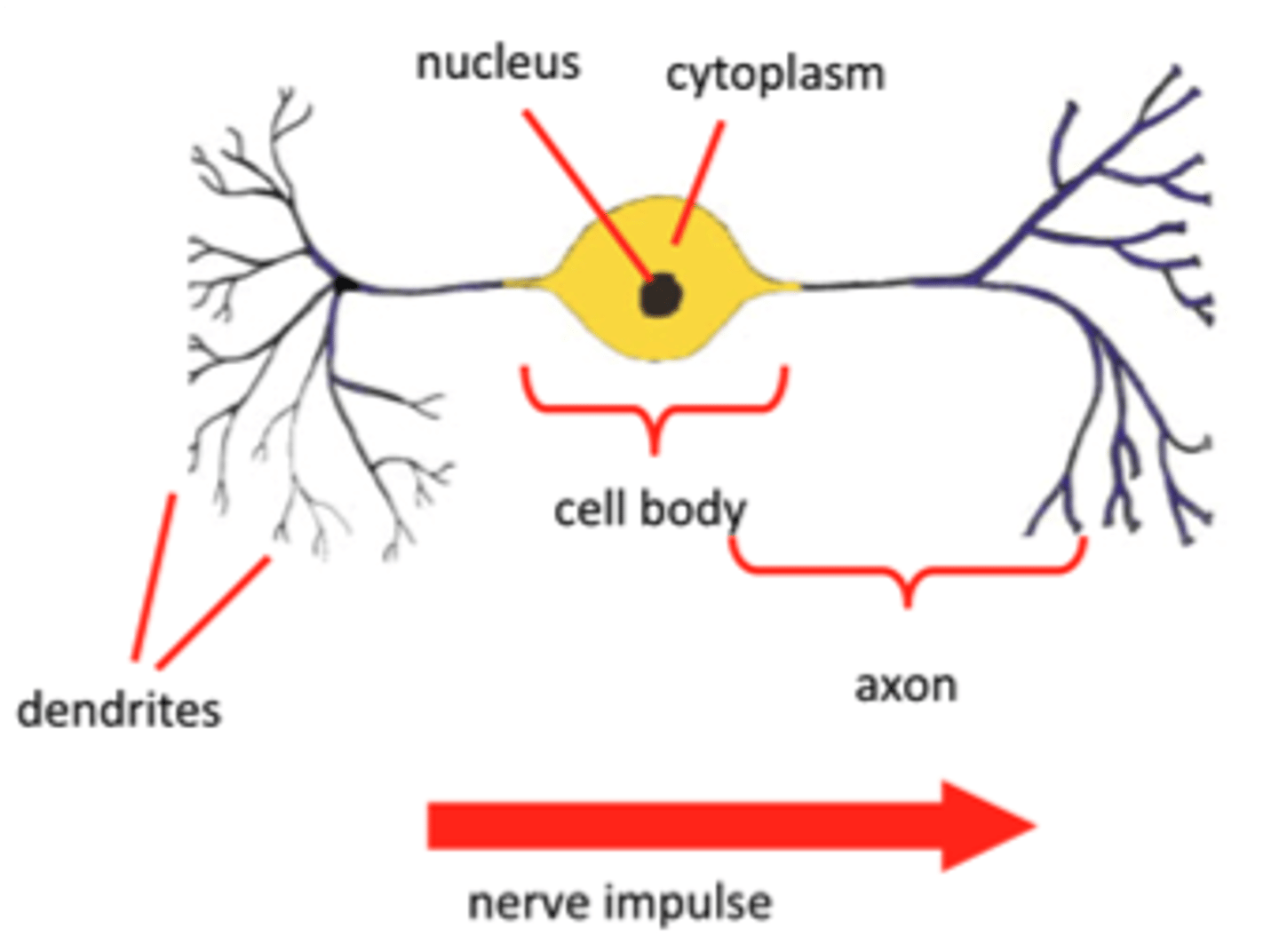
relay neurone
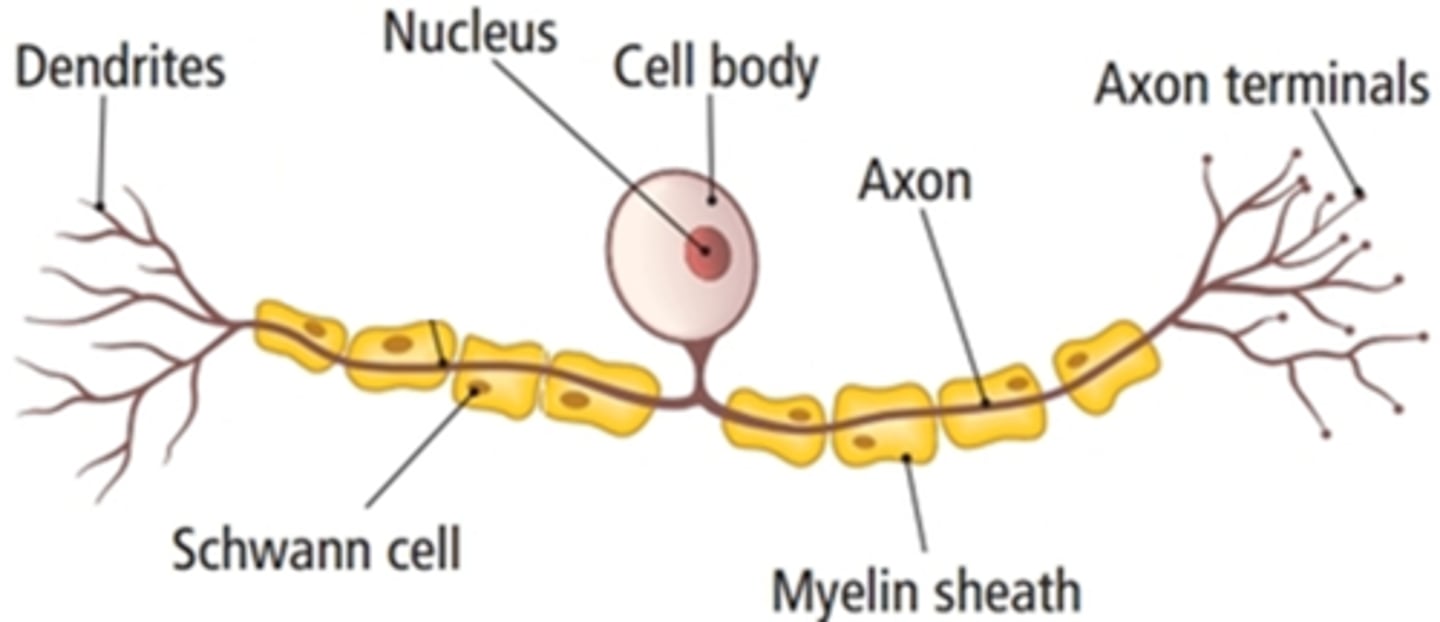
sensory neurone
receptors
groups of specialised cells that detect a change in environment and stimulate electrical impulses in response
effectors
produce a specific response to a detected stimulus (a muscle contracting or a gland releasing a hormone)
a coordinated response sequence
stimulus -> receptor cell -> sensory neurone -> relay neurone -> motor neurone -> effector -> response
synapses
Tiny spaces between neurones. A signal is sent across the synapse by a chemical transmitter
reflex arc
receptor in the skin detects a stimulus. impulses from the receptor pass along a sensory neurone to the relay neurone/CNS. A chemical crosses the synapse between a sensory and relay neurone. Then a chemical crosses the synapse between the relay and motor neurone. The relay neurone sends electrical impulses to an effector. effector produces a response
function of the cornea
refracts light into the eye
what are the two cells found in the retina
rods (light) and cones (colour)
accomodation
the process of changing the shape of the lens to focus on near or distant objects
how is short sightedness treated?
concave lens
what does the medulla control
unconscious activities like heart rate and breathing rate
what does the cerebellum control
posture, balance, coordination of movement and muscular activity, involuntary movements
Explain how thyroxine works
low thyroxine levels in blood = hypothalamus releases TRH
causes the pituitary gland to release TSH
causes the thyroid gland to release more thyroxine
TRH is inhibited
Role of FSH
causes an egg to mature in the ovary, secreted from the pituitary gland, stimulate oestrogen production
Role of Oestrogen
stimulates the uterus lining to repair itself and grow after menstruation, produced in ovaries, inhibits FSH production, stimulates release of LH
What are the two methods of contraception?
hormonal and non-hormonal
Name the hormonal methods of contraception
Combined oral contraceptive pill, progesterone only pill, contraceptive patch (releases oestrogen and progesterone), contraceptive injection of progesterone, plastic iud
How does the combined oral contraceptive pill work?
Oestrogen (at high doses) and progesterone inhibit the production of FSH, and eggs can't mature
How does the progesterone only pill work?
Progesterone inhibits FSH, so eggs can't mature
Name the non hormonal methods of contraception
barrier methods (condom, female condom, diaphragm), sterilisation, IUD/coil, Natural methods like family planning
What is the most reliable (100% pregnancies prevented) method of contraception?
Surgery
What are the 5 stages of IVF?
Woman is given FSH and LH to mature and release eggs
Eggs collected from woman's ovaries
Eggs are fertilised with father's sperm in a lap
Fertilised eggs left to develop into an embryo for 3-5 days
1 or 2 embryos are then inserted into the mother's uterus
5 things that determine if IVF is likely to be successful
Young
Low alcohol intake
Doesn't smoke
'Normal' body weight
Has been pregnant before (not actual NHS criteria)