Small Animal Parasitology
 Call Kai
 Learn
Learn Practice Test
 Spaced Repetition
 Match
Match Flashcards
 Knowt Play
 Podcast
1/107

There's no tags or description
Looks like no tags are added yet.
Name | Mastery | Learn | Test | Matching | Spaced | Call with Kai | Chat |
|---|
No analytics yet
Send a link to your students to track their progress
108 Terms
Cytoisospora
The modern name for the tiny oocysts formerly known as Isospora.
Paratenic hosts
Organisms such as fleas, cockroaches, and some vertebrates that harbor coccidia and can infect dogs and cats upon ingestion.
Small intestinal epithelial cells
The specific location in the body where coccidia oocysts live and eventually rupture, causing tissue damage.
Psoas atrophy
A condition mentioned as a result of epithelial cell damage and erosions, particularly in young males.
4 weeks old
An example age given for a neonate experiencing severe clinical signs of a coccidia infection.
Yellow foul pasty diarrhea
The characteristic type of stool associated with coccidiosis in symptomatic animals.
Fecal float
A diagnostic test used to find oocysts, though it may yield false negatives if performed before shedding or if the tiny oocysts are mistaken for other objects.
1 and 2 celled oocysts
The two forms of coccidia oocysts that may be observed in the feces of an infected cat.
Hypoproteinemia and Hypoglycemia
Two conditions that may appear on the chemistry panels of very young, compromised patients who are failing to absorb nutrients.
PCR on feces
A diagnostic method used to identify coccidia when a fecal float is negative but the parasite is still highly suspected.
Parvo ELISA
A test recommended for animals with dehydration, vomiting, and diarrhea to rule out viral diseases like parvovirus or panleukopenia.
Sulfamethodiazine
A medication used for treating coccidia, though it is currently experiencing some issues with parasite resistance.
Benazolol
An off-label, often compounded medication preferred for its effectiveness and lack of resistance when treating coccidia in kittens.
Probiotic supplementation
A treatment aid shown in studies to shorten the course of diarrhea and reduce the shedding of oocysts.
Bathing
An environmental management step taken to prevent cross-contamination by removing oocysts that stick to a patient's fur.
Species specific
A characteristic of coccidia indicating that it is not zoonotic and there is no crossover between the species that infect dogs and those that infect cats.
Self limiting disease
A term describing coccidia meaning the infection will often resolve on its own, although treatment is still used to reduce clinical signs and environmental spread.
Filus atrophy
The specific intestinal change mentioned in the quiz portion of the lecture where the rupture of small intestinal cells leads to decreased absorption and inflammation.
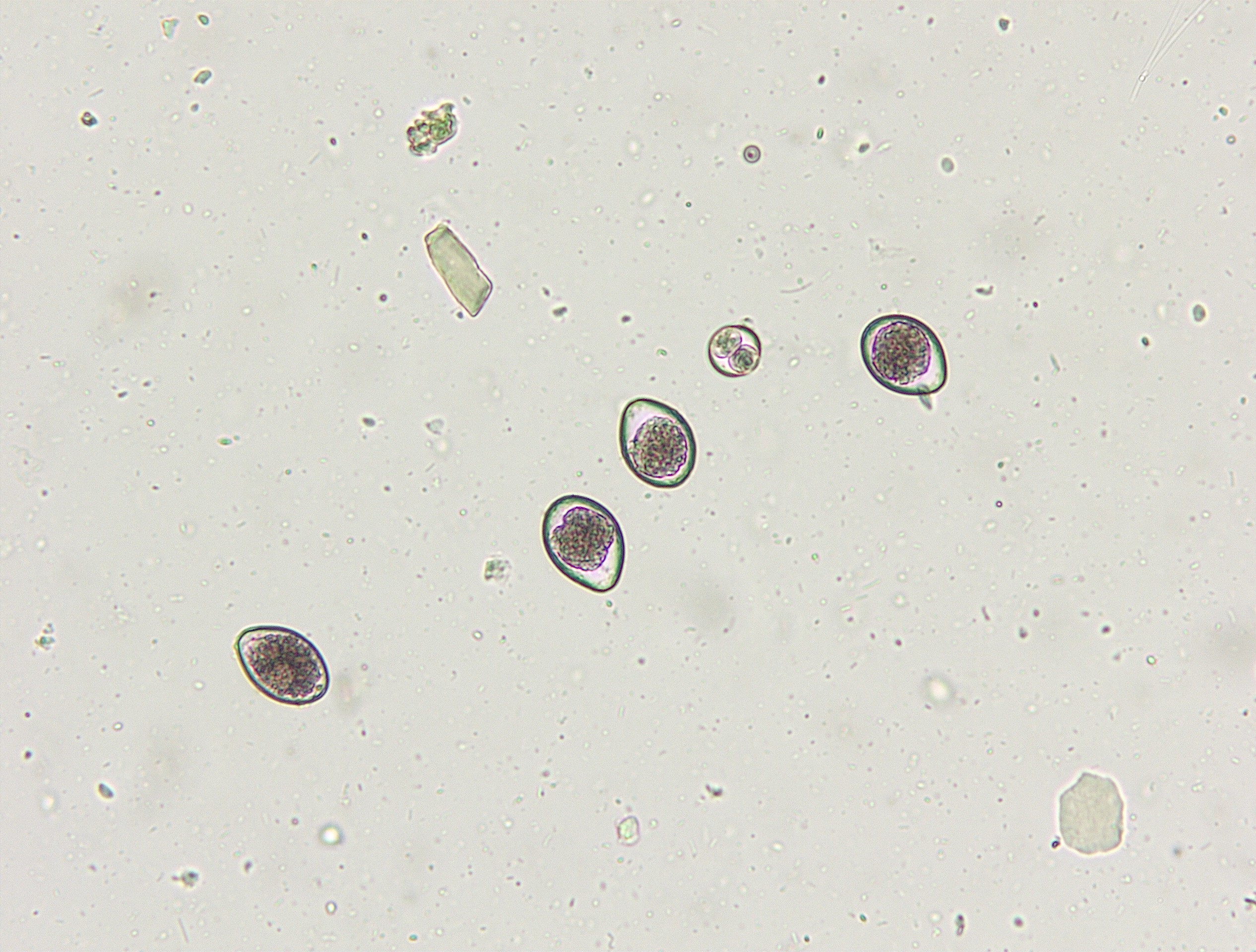
Coccidia in Dogs - Cystoisospora
C. Canis, C. Ohionesis,C. Burrowsi, and C. Neorivolta
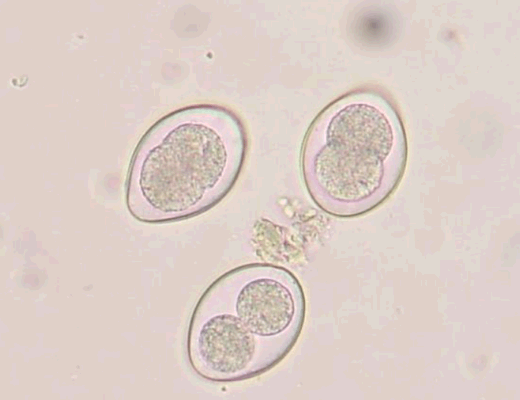
Coccidia in Cats - Cystoisospora
C. Felis, C. Rivolta
Explain Coccidia Life Cycle
Ingestion of Oocysts → Release Sporozoites into intestines → Form Schizonts: Multinucleated cells that reproduce asexually → Release Merozoites into intestines → Merozoites invade new intestinal cells
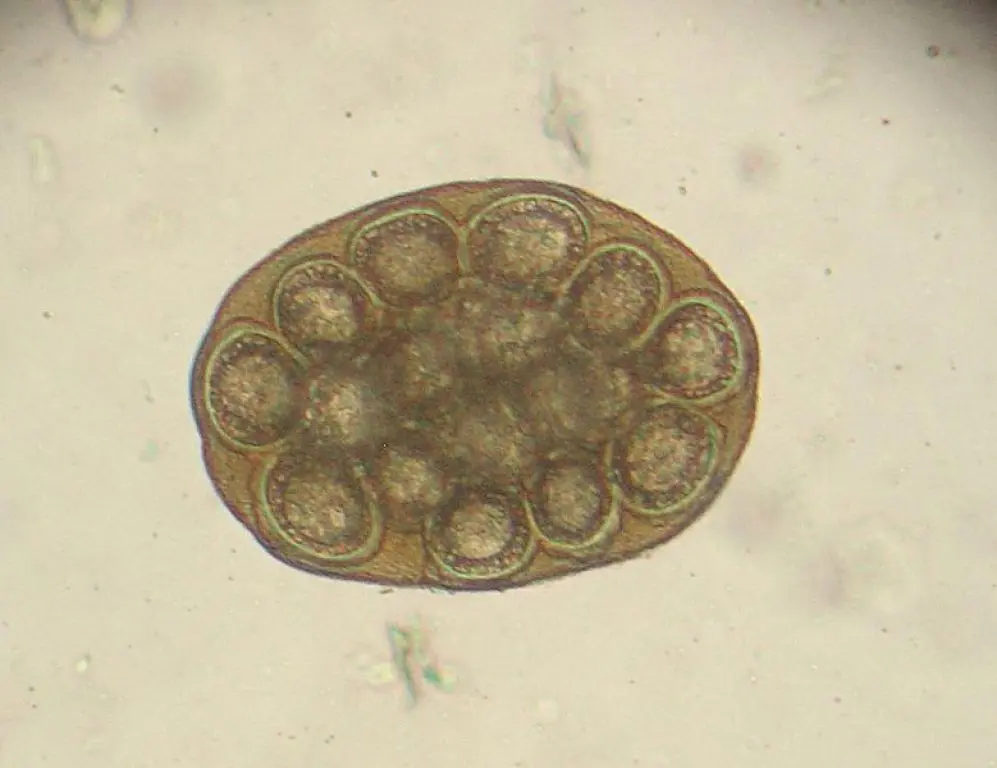
Dipylidium caninum
The most common tapeworm found in dogs and cats, which is transmitted by the ingestion of fleas.
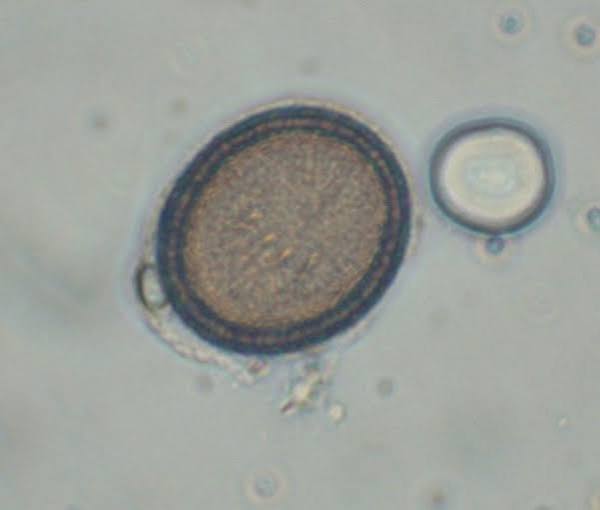
Taeniidae
A family of tapeworms, including Taenia species, that are commonly transmitted to cats when they ingest mice or rats.
Intermediate host
An organism, such as a flea or a small mammal (mice/rats), that carries tapeworm larvae until it is ingested by a definitive host like a cat or dog.
Metacestode
The larval stage of a tapeworm that resides within the intermediate host.
Zoonotic
A term describing diseases that can be transmitted from animals to humans, such as certain tapeworm species.
Subclinical
A type of infection where the patient (dog or cat) often shows no obvious clinical signs or the signs are very mild.
Segments - Proglottids
The small pieces of tapeworms that are shed intermittently and are often visible in an animal's stool or near the rectum.
Egg packets
A characteristic microscopic feature of Dipylidium caninum where multiple eggs are clustered together in a single casing.
Praziquantel
One of the primary medication choices used to treat tapeworm infections in dogs and cats.
Flea control
A critical strategy for preventing tapeworm infections, particularly for species like Dipylidium caninum.
Hydatid cyst disease
A serious condition that can occur in humans acting as intermediate hosts when zoonotic tapeworm larvae develop into cysts within organs.
Cyclophyllidans
A classification or family of true tapeworms discussed in the context of common veterinary parasites.
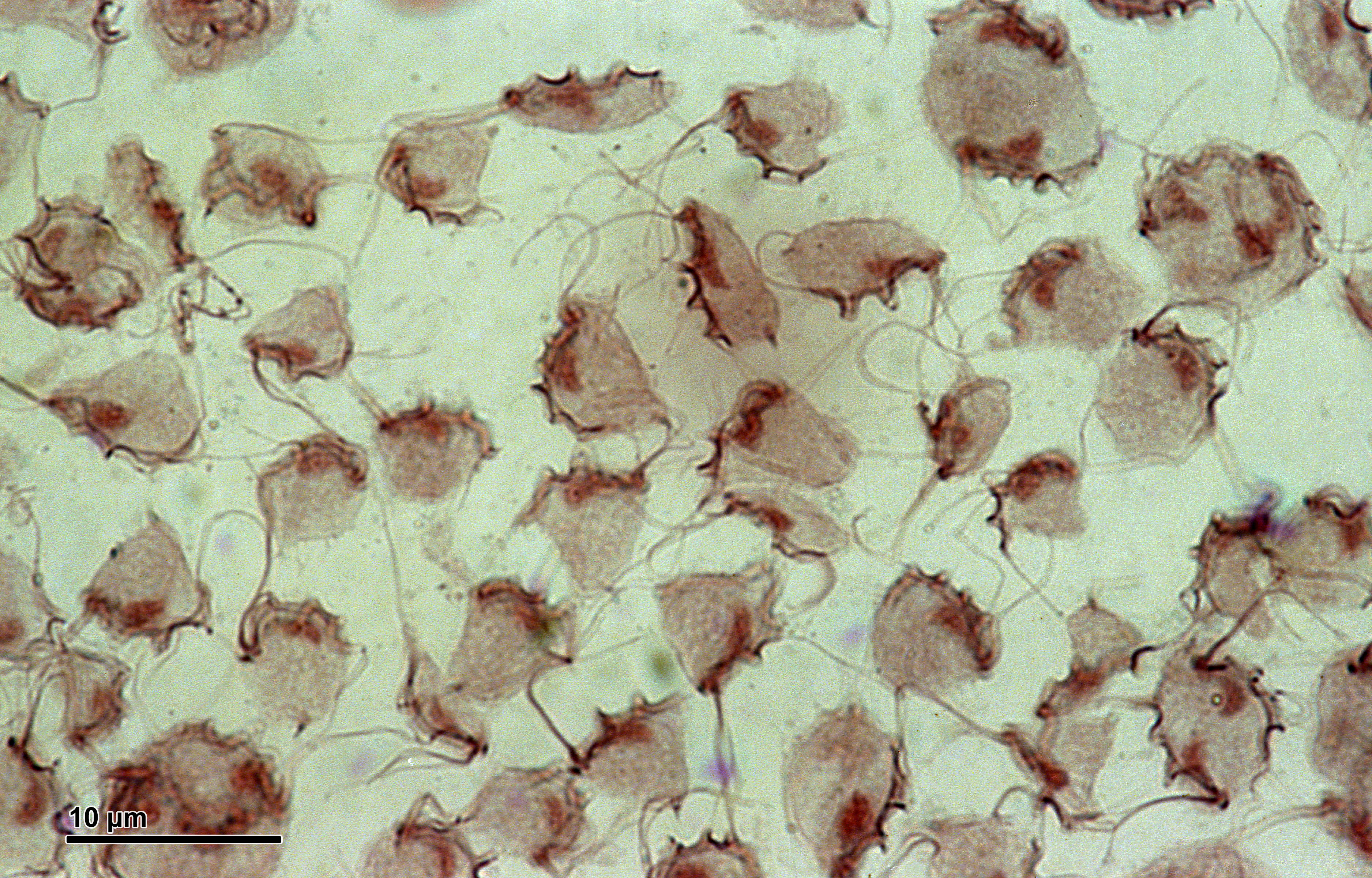
Tritrichomonas (foetus)
A cat-only protozoal disease that colonizes the lower GI tract and is often described as having a pretty, leaf-falling movement.
Protozoa
The biological classification of the Tritrichomonas organism, which notably does not have a cyst stage.
Trophozoites
The mobile forms of Tritrichomonas that are passed in the feces and colonize the large intestine, cecum, and colon.
Colitis
The condition induced by Tritrichomonas in cats, primarily affecting the large bowel.
Crowded conditions
The factor in catteries and purebred populations that leads to an increased prevalence of Tritrichomonas, rather than the specific breed of the cat.
Large bowel diarrhea signs
Clinical presentations including mucus, flatulence, increased frequency of defecation, and occasionally perianal swelling or rectal prolapse.
Direct fecal smear
A specific but insensitive diagnostic test that requires a fresh fecal mount to see pear-shaped organisms with jerky movements; it is not the same as a fecal float.
PCR
A diagnostic test for Tritrichomonas that is more sensitive than a direct fecal smear or colon flush for identifying the disease in fresh samples.
Relubicin
The specific medication used to treat Tritrichomonas daily for 2 weeks, though it has a narrow therapeutic range.
Neurohepatic toxicity
Serious risks associated with Relubicin treatment, making it not recommended for kittens or asymptomatic cats.
Drug resistance
A growing concern regarding the treatment of Tritrichomonas, leading to recommendations for thoughtful patient selection.
Self-cure
The process by which most cases of Tritrichomonas resolve without treatment, occurring in 88% of cases by 2 years of age.
Neurotoxicity signs
Potential side effects of medication (like seizures) that typically resolve in 1 to 4 weeks after stopping the treatment.
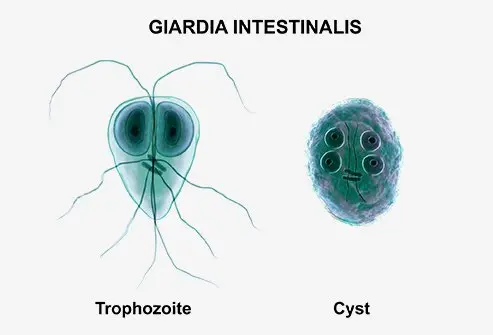
Giardia Genotypes A and B
The specific genotypes of Giardia that infect humans, making zoonotic transmission from dogs or cats rare.
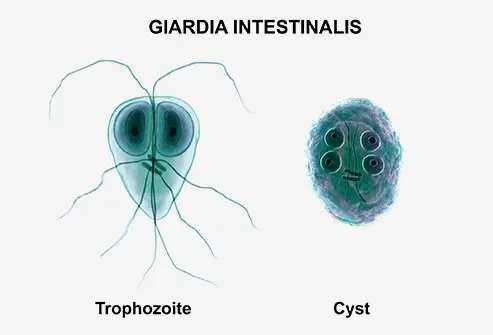
Giardia Genotypes C and D
The genotypes of Giardia specific to dogs.
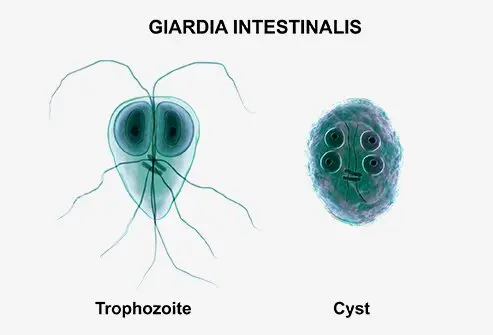
Giardia Genotype F
The genotype of Giardia specific to cats.
Cysts
The infective stage of Giardia that is ingested via fecal-oral transmission and shed immediately in the feces.
Trophozoites
The mobile form of Giardia that replicates in the small intestine, possesses flagellae and two nuclei, and attaches to the intestinal mucosa.
Enterocyte Damage
The result of trophozoite attachment to the small intestine mucosa, leading to sloughing and blunting of the villi.
Maldigestion and Malabsorption
The physiological consequences of villi blunting and enterocyte damage caused by a Giardia infection.
Zinc Sulfate Fecal Flotation
The initial diagnostic test of choice for Giardia; however, it can yield false negatives due to intermittent shedding of cysts.
Direct Saline Fecal Mount
A diagnostic method used to identify mobile trophozoites in a fecal sample.
ELISA
A point-of-care diagnostic kit (such as the IDEXX version) used to detect Giardia in clinical patients.
Fenbendazole
A major drug used for treating clinical Giardia infections in veterinary medicine.
Metronidazole and Febantel
Additional medications mentioned as options for the treatment of Giardia.
Fiber Supplementation
A supportive treatment used to reduce bacterial overgrowth and potentially speed the removal of Giardia by reducing its attachment to the intestine.
Transfaunation
A fecal transplant procedure where feces from a healthy donor is used to reestablish a healthy biome in a sick patient.
Giardia Vaccine
A preventative measure that was discontinued in 2009 due to a lack of interest and use.
Nematodes
The classification group to which roundworms belong.
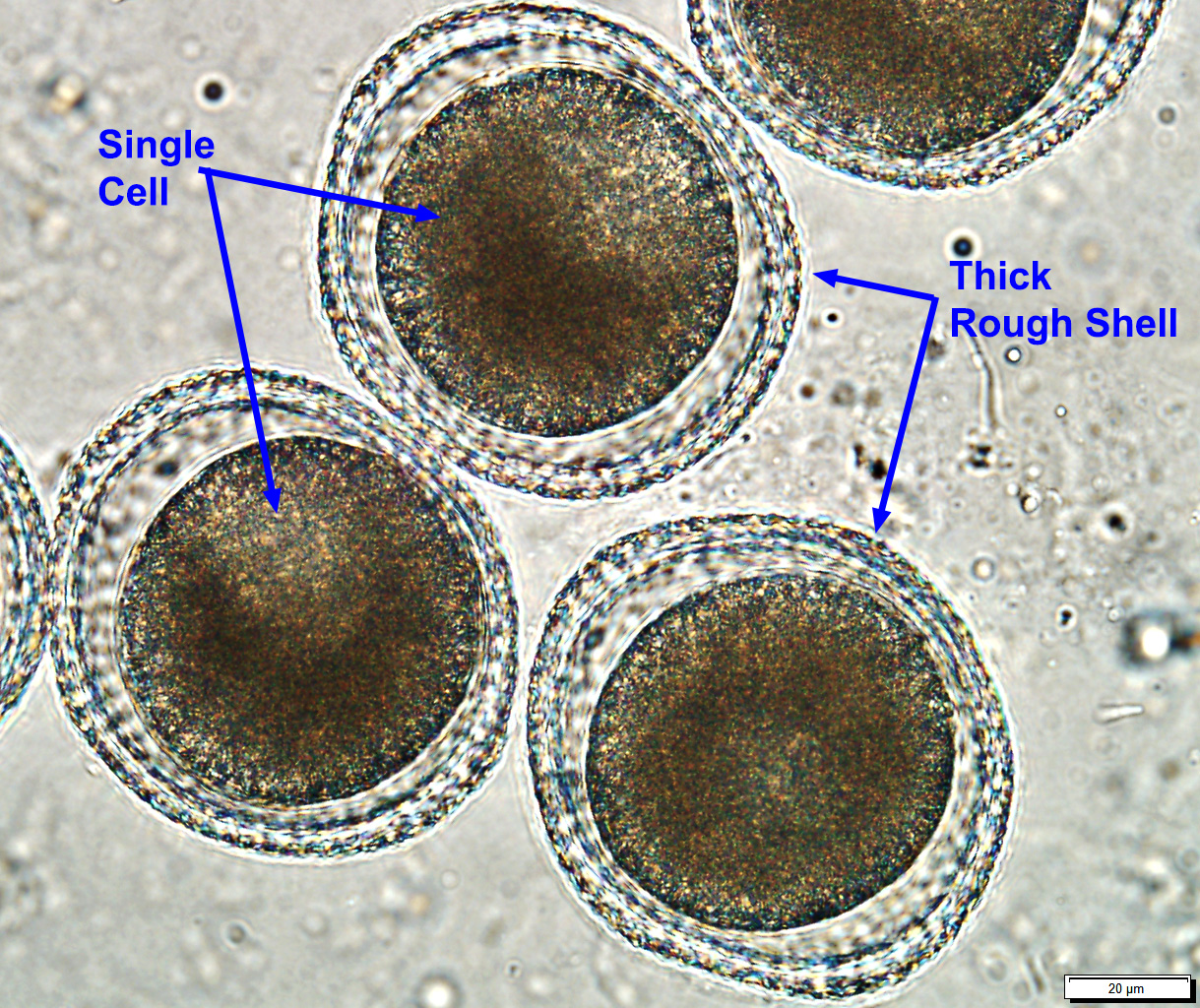
Toxocara canis
The most common species of roundworm found in dogs.
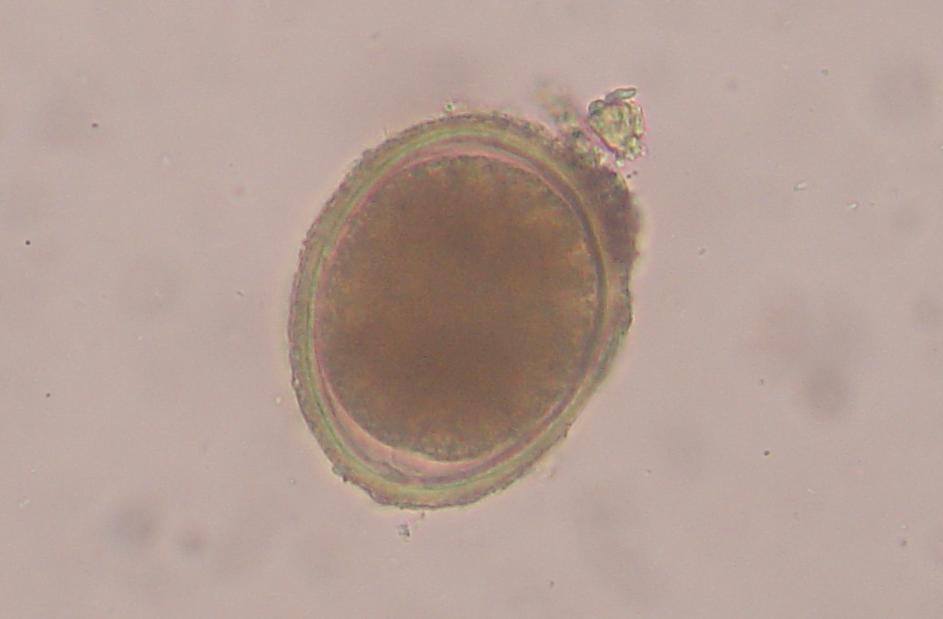
Toxocara cati
The most common species of roundworm found in cats.
Toxascaris leonina
A species of roundworm that can be zoonotic to humans.
Peritenic host
A host where a parasite can be infected but does not mature; it must be transmitted to another host, typically by a cat or dog ingesting a small mammal.
Horizontal transmission
Transmission occurring through fecal contamination ingestion or indirectly through a peritenic host.
Vertical transmission
Transmission of parasites from the female (queen or bitch) to the offspring (kittens or puppies).
Transplacental transmission
The primary vertical transmission route for roundworms occurring in dogs only, triggered by decreased immunity near parturition.
Transmammary transmission
The primary vertical transmission route for roundworms in cats, though it also occurs in dogs.
Lung migration
The process where larvae migrate from the intestine to the lungs to be coughed up and swallowed; this does not occur when roundworms are ingested via a peritenic host.
Pneumonitis
A potential respiratory complication from roundworm lung migration, typically seen in younger patients.
Pot belly
A classic clinical appearance in puppies with high roundworm burdens.
Fecal float
The primary diagnostic test used for roundworms, which identifies single-celled, spherical eggs.
Fecal ELISA
A sensitive diagnostic test used to detect roundworms when a fecal float result is negative.
Pyrantel
A common treatment for puppies and kittens started at 2 weeks of age and repeated every 2 weeks until 12 weeks old.
Fenbendazole
A treatment option for roundworms that can be administered to breeding dogs starting at 40 days of gestation.
Visceral larval migrans
A zoonotic condition in humans caused by the migration of roundworm larvae through internal organs after ingesting contaminated feces.
Ocular larval migrans
A zoonotic condition where roundworm larvae migrate to the human eye, which can be a serious issue especially in children.
Companion Animal Parasite Council (CAPC)
A referenced group that provides guidelines and information on animal parasites.
Spot on Selamectin
A treatment option for roundworms that can be administered to breeding Queens
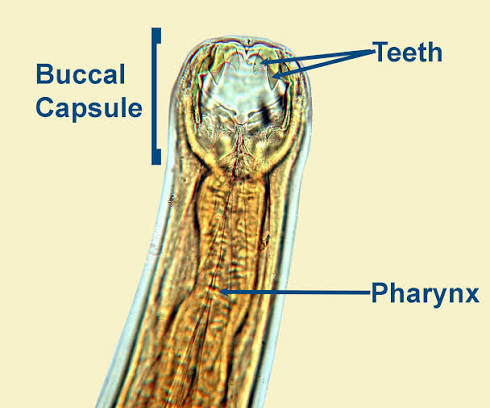
Nematode
The classification of hookworms, such as Ancylostoma caninum and Ancylostoma tubiforme.
Ancylostoma caninum
The common hookworm species found in dogs that can consume up to 0.1ml of blood every 24 hours.
Ancylostoma tubiforme
The hookworm species found in cats.
Transmammary transmission
A form of vertical transmission that serves as a major infection route for puppies with hookworms.
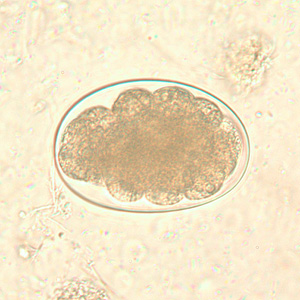
8-cell morulae
The unique, distinct appearance of hookworm eggs in a fecal flotation, appearing as round bubbles.
Prepatent period
The timeframe from ingestion to the production of oocytes, which takes approximately 12 to 28 days in hookworms.
Buccal mouths
The anatomical structures hookworms use to attach to the villi of the small intestine.
Anticoagulants
Substances secreted by hookworms, along with platelet inhibitors, to facilitate feeding on blood and mucosal secretions.
Hypoproteinemia
A condition resulting from protein leakage around hookworm attachment sites, often seen in species other than Ancylostoma caninum.
Iron deficiency anemia
A chronic condition resulting from hookworm infection that leads to nonregenerative, microcytic hypochromic blood changes.
Fecal antigen test
A highly sensitive diagnostic test for hookworms that may identify the presence of worms before they begin shedding eggs.
Cutaneous larval migrans
A zoonotic condition in humans caused by hookworm larvae penetrating the skin.
Pyrantel
An anthelmintic drug used to treat hookworm infections, sometimes used in combination with others if resistance is documented.
Gastroprotectants
Medications used during the stabilization of hookworm patients to treat ulcerations caused by the parasites' attachment.
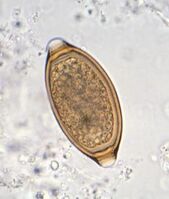
Trichuris vulpis
The species of whipworm specifically found in dogs.
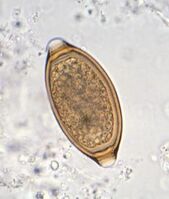
Trichuris campanula or serrate
The species of whipworm specifically found in cats.
Whipworm habitat
Adult whipworms reside and mature in the colon and cecum (large intestine).
Prepatent period
The time from ingestion of whipworm eggs to the shedding of eggs in feces, which is approximately 3 months.
Pseudohypoadrenocorticism (Pseudo-Addison's)
A condition caused by whipworms that mimics the biochemical changes of Addison's disease, such as hyponatremia and hyperkalemia.