Chapter 3 Medical Terminology
 Call Kai
 Learn
Learn Practice Test
 Spaced Repetition
 Match
Match Flashcards
 Knowt Play
1/299

There's no tags or description
Looks like no tags are added yet.
Name | Mastery | Learn | Test | Matching | Spaced | Call with Kai | Chat |
|---|
No analytics yet
Send a link to your students to track their progress
300 Terms
Musculoskeletal system consist of 3 parts:
bones
joints (articulations)
muscles
ligaments
(LIH gah ments)
fibrous bands of tissue that connect bones to one another
tendons
(TEN duns)
bands of tissue that attach muscles to bones
fascia
(FASH ee ah)
tough fibrous covering of the muscles (and some nerves and blood vessels)
Cartilage
(KAR tih lij)
flexible form of connective tissue that covers the ends of many bones
gives form to the external ear and tip of the nose, and provides support and protection to many other sites in the body
How does the musculoskeletal system meet our needs?
Acting as a framework for the organ systems
Protecting many of the body’s organs
Providing the organism with the ability to move
Hematopoiesis
(hee mah toh poh EE sis)
responsible for storage of minerals (calcium [Ca] and phosphorus [p]) and process of continual formation of blood in the bone marrow
muscle
my/o
muscul/o
myos/o
bone
oste/o
oss/i
osse/o
joint
arthr/o
articul/o
ligament
ligament/o
syndesm/o
tendon
tendin/o
tend/o
ten/o
fascia
fasci/o
cartilage
chondr/o
cartilag/o
-poiesis
formation
orthopedics
healthcare specialty that deals with majority of of musculoskeletal disorders
Rheumatology
specialty that deals with disorders of connective tissue , including bone and cartilage
physiatry “physical medicine”
concerns diagnosis and treatment of diesease or injury with the use of physical agents, such as excersice, heat, massage and light
orthopedist/ orthopod
someone who specializes in orthopedics
rheumatologist
someone who specializes in rheumatology
physiatrist
someone who specializes in physiatry
orth/o
straight
rheumat/o
watery flow
physi/o
nature
axial skeleton
(ACK see ul)
consist of the skull, rib cage, and spine
appendicular skeleton
(ap pen DICK yoo lur)
consists of shoulder blades, collarbones, pelvic bones, arms, and legs
long bones
ex: humerus (upper arm bone)
femur (thigh bone)
short bones
ex: carpal (wrist bone)
tarsal (ankle bone)
flat bones
ex: sternum (breast bone)
scapula (shoulder blade)
irregular bones
ex: vertebra (backbone)
stapes (a bone of the ear)
sesamoid bones
(SEH sah moyd)
ex: patella (knee cap)
osteocytes
(OS tee oh sytes)
mature bone cells, which all bones are composed of
matrix
material between the cells
stores calcium and phosphorus for the body to use as needed in the form of mineral salts
-cyte
cell
osteoblasts
cells that build bones
-blast
embryonic
osteoclasts
cells that breakdown bone cells to transform them as needed
-clast
breaking down
compact bone
hard, outer layer of bone
osteocytes and matrix together make up compact bone
spongy / cancellous bone
(KAN sel lus)
second layer of bone tissue within the compact bony tissue
composed of the same osteocytes and matrix but is less dense
bone marrow
produces all the blood cells needed by the body

diaphysis
(dye AFF ih sis)
long shaft that each long bone is mainly composed of
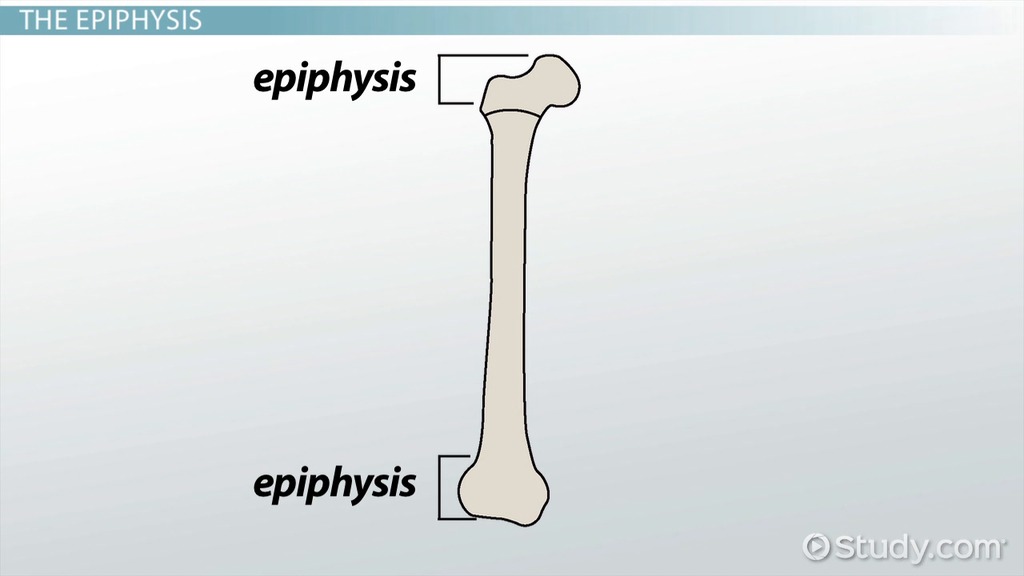
epiphysis
(eh PIFF ih sis)
each end of the bone
myel/o
bone marrow
dia-
through, complete
epi-
above, upon
-physis
growth, nature
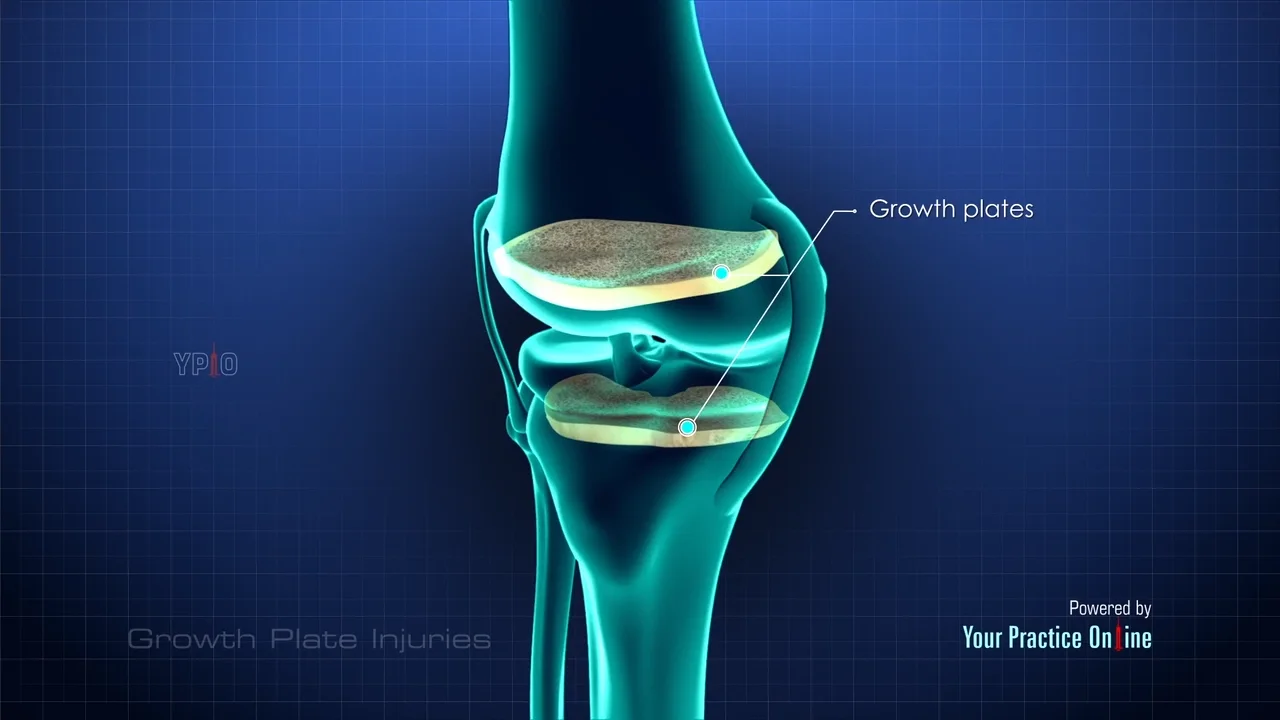
epiphyseal plates
(eh pee FIZZ ee ul)
areas where bone growth normally occurs
underneath epiphyses
around the ages of 16-25 the plates close and bone growth usually stops
metaphysis
(meh TAFF ih sis)
formed by the epiphysis and the epiphyseal plates together

periosteum
(pair ee OS tee um)
outer covering of the bone

endosteum
(en DOS tee um)
inner lining of the bone
These two coverings hold the cell responsible for bone remodeling
osteoblasts and osteoclasts
depression
any groove, opening, or hollow space
provides an entrance and exit for vessels and protection for the organs they hold
processes
raised or projected areas
often areas of attachment for ligaments or tendons
foramen (bone depression)
(foh RAY men)
an opening or hole
Ex- foramen magnum, mental foramina
foramin/o
foramen
fossa (bone depression)
(FAH sah)
a hollow or depression, especially on the surface of the end of a bone
ex- olecranal fossa
foss/o
fossa
sinus (bone depression)
(SYE nus)
A cavity or channel lined with a membrane (also called an antrum)
ex- paranasal sinuses
sin/o
sinus/o
sinus

condyle (bone process)
(KON dyle)
a smooth, rounded projection at the end of a bone that articulates with adjacent bones
ex- medial condyle of femur
condyl/o
condyle
crest (bone process)
a narrow elongated elevation
ex- iliac crest
-um
structure, membrane

epicondyle (bone process)
(eh pee KON dyle)
a rough projection on the surface of the bone above the condyle to attach tendons and ligaments
ex- lateral epicondyle of the humerus
epicondyl/o
epicondyle
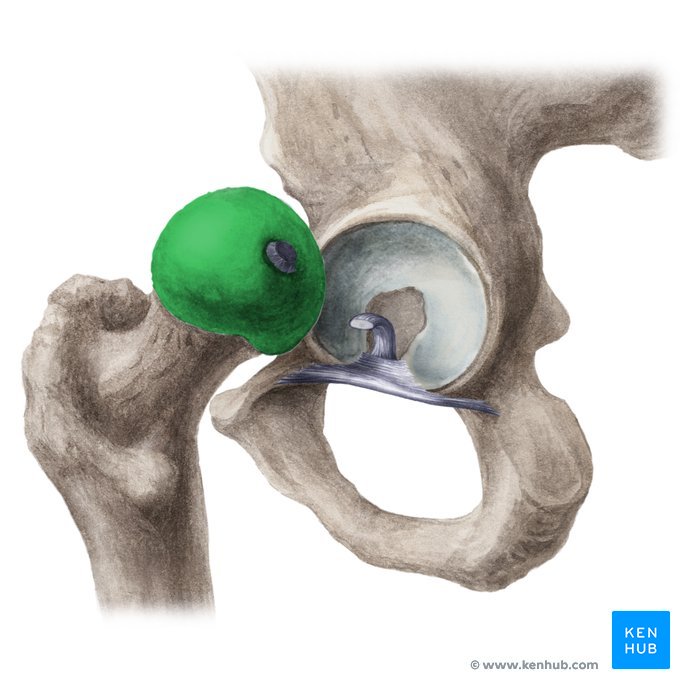
head (bone process)
a rounded, usually proximal portion of some long bones
ex- femoral head, humerus head

spine (bone process)
a thornlike projection
ex- spinous process of a vertebra
spin/o
vertebr/o
rachi/o
spine, spinal column

trochanter (bone process)
(troh KAN tur)
one of two bony projections on the proximal ends of the femurs that serve as points of attachment for muscles
ex- greater trochanter
trochanter/o
trochanter
tubercle (bone process)
(TOO bur kuhl)
a nodule or small raised area
ex- costal tubercle
tubercul/o
tubercle
tuberosity (bone process)
(too bur OSS ih tee)
an elevation or protuberance, larger than a tubercle
ex- ischial tuberosity
skull
made up of two parts: the cranium that encloses and protects the brain and the facial bones

frontal bone (cranium)
forms the anterior part of the skull and forehead
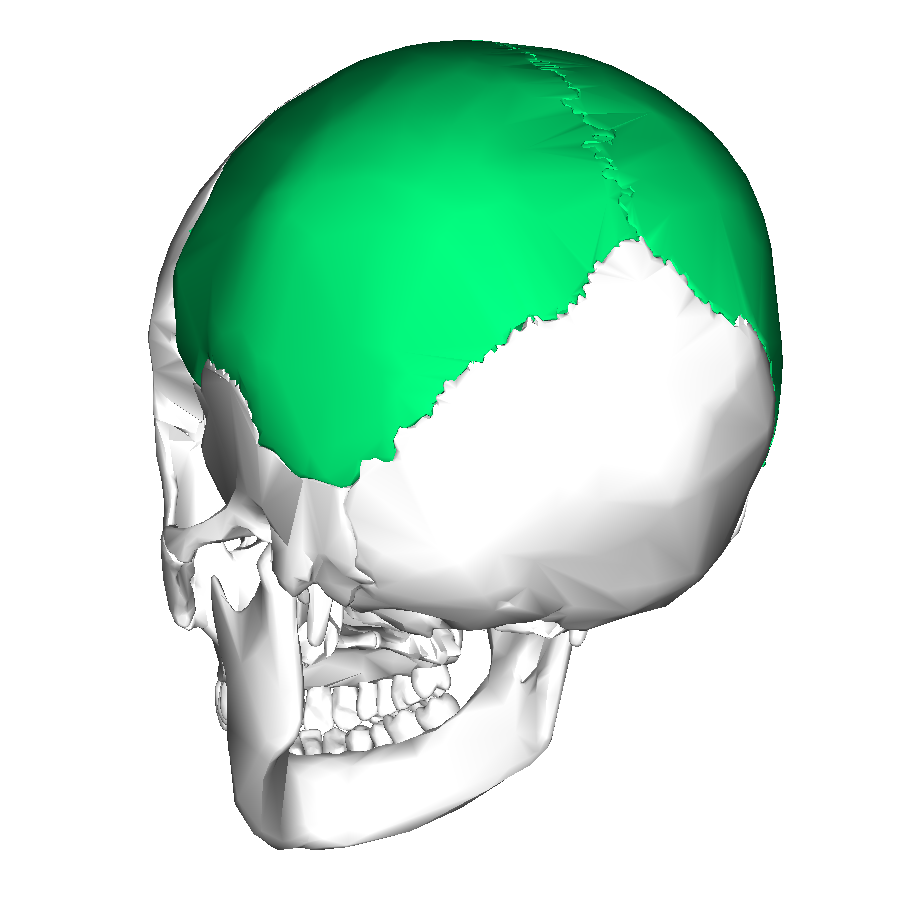
Parietal bones (cranium)
(puh RYE uh tul)
forms the sides of the cranium

occipital bones (cranium)
(ock SIP ih tul)
forms the back of the skull
a large hole at the ventral surface in this bone, the foramen magnum (meaning large), which allows brain communication with the spinal cord

temporal bones (cranium)
(TEM poor ul)
forms the lower two sides of the cranium

mastoid process (cranium)
posterior part of the bone behind the ear
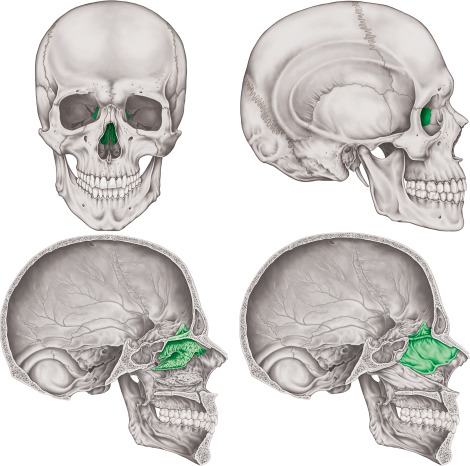
ethmoid bone (cranium)
(EHTH moyd)
forms the roof and walls of the naval cavity

sphenoid bone (cranium)
(SFEE noyd)
anterior to the temporal bones and the basilar part of the occipital bone

Paranasal sinuses (cranium)
air filled cavities that are named for the bones in which they are located
each is lined with a mucous membrane
crani/o
skull, cranium
front/o
frontal
pariet/o
parietal
occipit/o
occipital
tempor/o
temporal
mastoid/o
mastoid
ethmoid/o
ethmoid
sphenoid/o
sphenoid
nas/o
nose
para-
near, abnormal

Zygoma (facial bones)
(zye GOH mah)
cheekbone
also called the zygomatic bone
(zye goh MAT tick)

Lacrimal bones (facial bones)
(LACK rih mul)
paired bones at the corner of each eye that cradle tear ducts

Maxilla (facial bones)
(MACK sill ah)
upper jaw bone
also called maxillary bone

Mandible (facial bones)
(MAN dih bul)
lower jaw bone
also called the mandibular bone

Vomer (facial bones)
(VOH mur)
bone that forms posterior/inferior part of the nasal septal wall between the nostrils
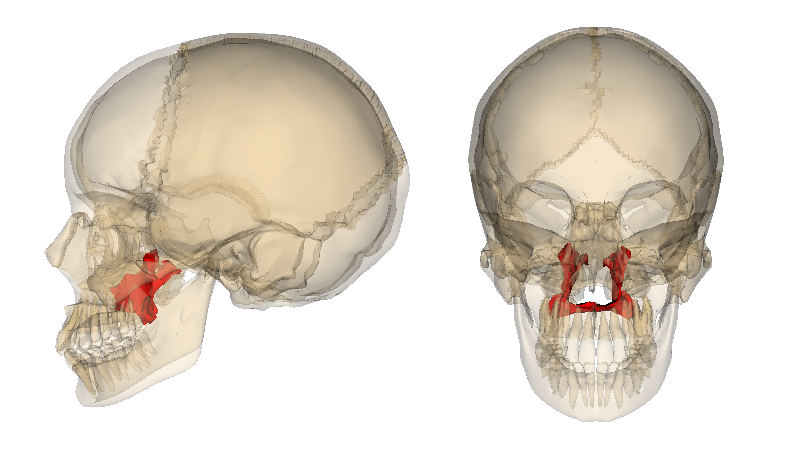
Palatine bones (facial bones)
(PAL eh tyne)
shell shaped structures that make up part of the roof of the mouth
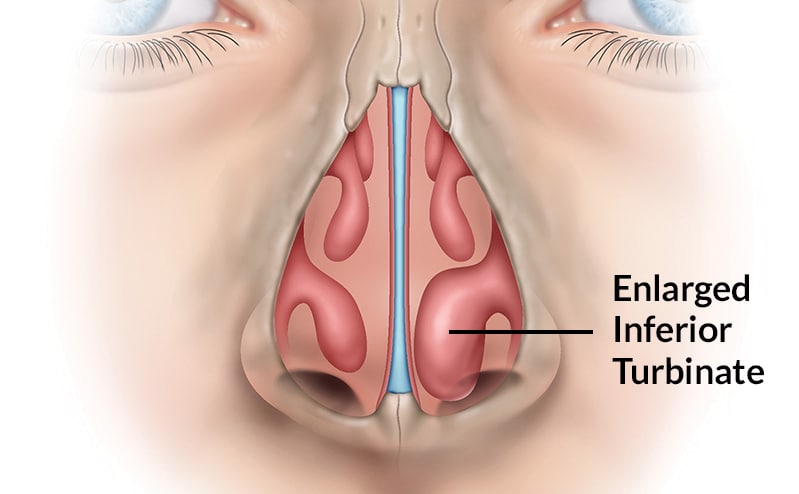
Nasal turbinates (conchae) (facial bones)
(KON kee)
make up part of the interior of the nose