Pediatric Rheumatology
 Studied by 6 people
 Call Kai
 Learn
Learn Practice Test
 Spaced Repetition
 Match
Match Flashcards
 Knowt Play
1/17

There's no tags or description
Looks like no tags are added yet.
Name | Mastery | Learn | Test | Matching | Spaced |
|---|
No study sessions yet.
18 Terms
Juvenile idiopathic arthritis (JIA)
What is the most common rheumatological disease of childhood?
synovitis, lymphocytes, thickened, proteases, destruction, >, 1, 8
Juvenile Idiopathic Arthritis: Background
-Most common rheumatological disease of childhood
-Etiology → autoimmune disease
-Pathophysiology → Chronic __________
Synovium infiltrated by ____________ and inflammatory cytokines → becomes ___________ and hypervascular → production/release of tissue __________/collagenases → tissue/bone ____________
-Epidemiology
Females _ males
Peak at _-3 and _-12 years old (but can occur at any age)
swelling, edema, ROM, uveitis
Juvenile Idiopathic Arthritis: General Symptoms
-Joint _________, pain, stiffness
The joint swelling is often more acute and triggered by some sort of event
-Physical exam may reveal joint ______/effusion, erythema, limited ___, tenderness to palpation
-__________ is a potential ocular manifestation, as it is associated with other rheumatologic disorders
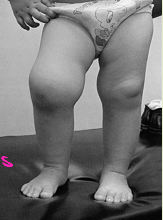
<, medium, knee, ankle, not
Oligoarticular Juvenile Idiopathic Arthritis
-Most common form of JIA
-Defined as arthritis in _5 joints within 6 months of diagnosis
-________-large joints are affected → _______ is most common, followed by ______ and wrist
-Systemic symptoms are ___ common
>, symmetric, small, feet, systemic
Polyarticular Juvenile Idiopathic Arthritis
-Arthritis in _ 5 joints
-__________ arthritis is common
-Can affect any sized joint, but _______ joints are the most common
Classically seen in the hands, _______, and c-spine
-________ symptoms are more common, such as fever and malaise
systemic, fever, pericarditis, 6, sacroiliac, ankylosing, psoriatic, IBD
Systemic JIA and Spondyloarthropathies
-Systemic JIA (uncommon)
_________ symptoms first → ______ sometimes with rash, failure to thrive, organ inflammation (pleuritic, ____________, hepatosplenomegaly)
Arthritis starts later (_ weeks to 6 months after systemic symptoms)
-Spondyloarthropathies
Axial skeleton, __________ joints, tendinous insertions
Subgroups → _________ spondylitis, _________ arthritis, arthritis of ___
normal, leukemia, elevated, CRP, oligoarticular, uveitis, erosions, septic arthritis, negative
Juvenile Idiopathic Arthritis: Diagnosis
-Patients with oligoarticular JIA often have _______ labs
-CBC → exclude ____________
WBCs more likely to be _________ in polyarticular and systemic disease
-ESR and ___ → inflammatory markers
Elevated in polyarticular and systemic disease
-ANA
More likely to be positive in ____________ or polyarticular
If positive, more likely to develop _______
-Rheumatoid factor and anti-CCP
Can be positive in polyarticular
-Xrays → usually normal early on
May show periarticular osteopenia or _________ of the articular surface if disease progresses
-Arthrocentesis → rule out _______ __________
JIA has lower WBCs with predominance in lymphocytes and ________ culture
NSAIDs, organ, arthritis, Methotrexate, polyarticular, unresponsive, PT
Juvenile Idiopathic Arthritis: Treatment
-______ (1st line) → Naproxen, ibuprofen, indomethacin
-Systemic corticosteroids → reserved for extreme cases
Severe systemic JIA with ______ involvement or severe _________
-___________, Hydroxychloroquine, Sulfasalazine (2nd line)
Methotrexate is drug of choice for ___________ and systemic JIA ____________ to NSAIDs/corticosteroids
-TNF Inhibitors → Etanercept, infliximab, adalimumab
-__ and OT → improve joint function/mobility
destruction, systemic, remission
Juvenile Idiopathic Arthritis: Complications and Prognosis
-Complications → ____________ of joints, blindness (uveitis), polyarticular and _______ JIA more likely to have complications
-Prognosis → 85% complete __________ rate
Henoch-Schonlein Purpura (IgA Vasculitis)
What is the most common systemic vasculitis in childhood?
inflammation, hemorrhage, hypersensitivity, IgA, >, winter
Henoch-Schonlein Purpura: Background
-Most common systemic vasculitis in childhood
-Characterized by ____________ of small blood vessels with leukocytic infiltration of tissue, ___________, and ischemia
-Etiology → unknown, possible ____________ process that involves immune complexes (mostly ___)
-Epidemiology → 3-15 y/o, males _ females, more common in ________
purpura, waist, macules, calves, lower, knee, painful, pain, diarrhea
Henoch-Schonlein Purpura: Symptoms
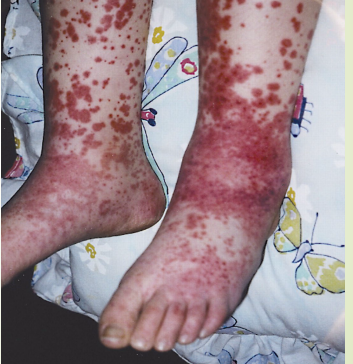
-Palpable ________ (hallmark)
Most often below the ______, found on the buttocks and lower extremities
May start as _________ or urticarial lesions then progress to purpura
Non-blanching, non-thrombocytopenic
-Edema
Mostly of _______, dorsum of feet, scalp, scrotum, and/or labia
-Arthritis
Mostly in ______ extremity, with the ankle and ______ being the most common sites
Acute and very _________ (often won’t bear weight)
-GI Symptoms
Mild-moderate crampy abdominal _____
Bloody _______, distention, and perforation are possible but rare
-Renal disease
Glomerulonephritis → hematuria, HTN, acute renal failure
-Rarely associated with encephalopathy, pancreatitis, and orchitis
elevated, normal, creatinine, 3-4, NSAIDs, corticosteroids, ischemia
Henoch-Schonlein Purpura: Diagnosis, Treatment, Complications
-Diagnosis
ESR and CRP are _______
CBC shows an elevated white count, but platelets are _________
Renal function (BUN/___________)
UA (look for hematuria)
-Treatment
Most cases resolve within __-__ weeks without complications
Supportive therapy → ________ for pain, systemic ____________ (GI or renal issues)
-Complications
Rare, but bowel ________, perforation, intussusception, HTN, and renal disease are possible
inflammation, arteries, aneurysm, acquired, Asian, 5
Kawasaki Disease: Background
-Second most common vasculitis in children
-Multisystem involvement and ____________ of small to medium sized _______ with resulting _________ formation, particularly of coronary arteries
-Leading cause of _________ heart disease in US children
-Etiology → unknown
-Epidemiology → more common in individuals of _______ descent, and those younger than _ years old (peak 2-3 y/o)
fever, conjunctivitis, dry, strawberry, swelling, rash, desquamation, coronary, Beau
Kawasaki Disease: Symptoms
-Acute Phase (1-2 weeks)
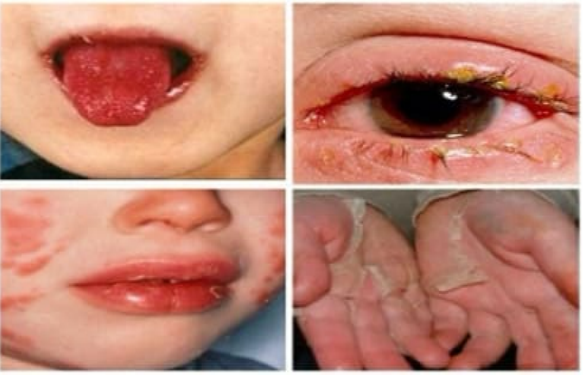
High _____, bilateral ____________, mucosal changes with ____ cracked lips and _________ tongue, cervical LAD, __________ of hands and feet, and ____ on the chest and inguinal area
-Subacute Phase (until 4th week)
Gradual resolution of fever and other symptoms, ___________ of skin (fingers/toes MC), and ________ artery aneurysms
-Convalescent Phase (until 6-8 weeks)
Disappearance of symptoms, _____ lines of fingernails
elevated, WBC, cultures, ECHO, 2-3, 6-8
Kawasaki Disease: Workup
-CRP and ESR are _________
-CBC → ___ elevated, platelets are normal to low in acute phase and elevated in subacute phase
-CMP → abnormal hepatobiliary functions are common
-Blood/urine _________ → assess for other potential causes
-CXR
-LP → depending on symptoms and to assess for other causes
-Monitor for development of coronary artery aneurysms with _____, which are usually performed at __-__ weeks and __-__ weeks post-diagnosis. This frequency increases if aneurysms are found
5, conjunctivitis, mucus, dry, strawberry, erythema, desquamation, rash
Kawasaki Disease: Diagnostic Criteria
-Fever > _ days duration associated with 4 out of the 5 of the following:
Bilateral nonsuppurative __________
One or more changes of the ____ membranes of the upper respiratory tract, including pharyngeal injection, ____ fissured lips, injected lips, and “__________” tongue
One or more changes of the extremities, including peripheral __________, peripheral edema, periungual ___________, and generalized desquamation
Polymorphous ____, primarily truncal
Posterior cervical LAD > 1.5 cm in diameter
Disease cannot be explained by some other known disease process
IVIG, ASA, acute, subacute, complications
Kawasaki Disease: Treatment
-____ → single dose of 2g/kg over 12 hours
Helps with symptoms and decreases incidence of aneurysms
-___
Anti-inflammatory dose: 80-100 mg/kg/day Q6H (_____ phase)
Anti-thrombotic dose: 3-5 mg/kg/day (________ and convalescent phase)
-Most cases resolve without _____________ but the complications can be serious