Bioprinc - Exam 1
 Call Kai
 Learn
Learn Practice Test
 Spaced Repetition
 Match
Match Flashcards
 Knowt Play
1/123

There's no tags or description
Looks like no tags are added yet.
Name | Mastery | Learn | Test | Matching | Spaced | Call with Kai | Chat |
|---|
No analytics yet
Send a link to your students to track their progress
124 Terms
What are the defining characteristics of life?
Organized structure, heritable information (DNA/RNA), energy use, growth, reproduction, and response to the environment.
What is the smallest unit of life?
The cell.
Why is a virus not considered alive?
It is not made of cells and cannot carry out life processes on its own.
What carries heritable information?
DNA or RNA.
Where do animals get their energy?
From food.
What does 'structure and function' mean in biology?
A structure's shape is related to what it does.
What is the correct hierarchy of biological organization (smallest → largest)?
Atoms → Molecules → Organelles → Cells → Tissues → Organs → Organ Systems.
Give an example of a biological molecule.
DNA.
What are prokaryotic cells?
Small cells without a nucleus (e.g., bacteria).
What are eukaryotic cells?
Cells with a nucleus and membrane-bound organelles.
What bases differ between DNA and RNA?
DNA uses thymine (T); RNA uses uracil (U).
What are the steps of the scientific method?
Observation → Question → Hypothesis → Prediction → Test (experiment/observation).
What makes a hypothesis scientific?
It must be testable and falsifiable.
What is a scientific theory?
A well-supported explanation based on repeated testing and evidence.
Name two major biological theories.
Cell Theory and Evolution Theory.
What is matter?
Anything that takes up space and has mass.
What is mass?
The amount of matter in an object.
What is weight?
The force of gravity acting on mass.
What is an element?
A substance that cannot be broken down into other substances.
How many naturally occurring elements exist?
92.
Which four elements make up ~96% of living matter?
Carbon (C), Hydrogen (H), Oxygen (O), Nitrogen (N).
What elements are common in living organisms besides CHON?
Phosphorus (P) and Sulfur (S).
Why is calcium important?
Bone structure.
What happens with iodine deficiency?
Thyroid enlargement (goiter).
What happens with nitrogen deficiency in plants?
Poor growth.
What is the smallest unit of matter that retains element properties?
An atom.
What particles are found in the nucleus?
Protons and neutrons.
Where are electrons located?
Outside the nucleus in an electron cloud.
What is the charge, mass, and location of a proton?
+1 charge, 1 amu, nucleus.
What is the charge, mass, and location of a neutron?
0 charge, 1 amu, nucleus.
What is the charge, mass, and location of an electron?
−1 charge, negligible mass, outside nucleus.
What does 1 amu equal?
1.7 × 10⁻²⁴ grams.
What is the atomic mass formula?
Protons + neutrons.
How do you calculate neutrons?
Atomic mass − number of protons.
How many neutrons does hydrogen have?
0.
What is an isotope?
An atom with the same protons but different numbers of neutrons.
What is radioactivity used for in biology/medicine?
Dating fossils and medical imaging (PET scans).
What is the Bohr model?
A model showing electrons in energy shells around the nucleus.
What happens to electrons as they move farther from the nucleus?
They have higher energy.
What happens if electrons absorb enough energy?
They can leave the atom.
How many electrons fit in each shell?
1st: 2, 2nd: 8, 3rd: 8.
What is an orbital?
A 3D region where an electron is found 90% of the time.
How do electrons prefer to exist in orbitals?
In pairs.
What is the valence shell?
The outermost electron shell.
Why are valence electrons important?
They determine bonding behavior.
What determines chemical bonding?
Valence electrons.
Acid
a substance that INCREASES the hydrogen ion concentration in a solution; GIVE protons; PRODUCE H+ ions
Base
a substance that DECREASES the hydrogen ion concentration in a solution; pH above 7; ACCEPTS protons; PRODUCES OH- ions
Covalent Bond
A bond formed by atoms sharing electrons
Strongest of all the bonds
Covalent Bond
Polarity
The separation of electrical charge in a molecule; positive and negative
Polar covalent bond
uneven electronegativities; uneven share of electrons; causes separation of charges
Nonpolar covalent bond
even electronegativity; even share of electrons; causes equal charges
How many electrons are involved in a covalent bond?
Two
Octect rule
Determines how many covalent bonds an atom can form
Hydrogen Bond
Bond between molecules where one is hydrogen and other is electronegative
Ionic bond
Bond formed by transfer of electrons; between positive ion and negative ion; non-metal and metal
Electronegativity
The ability of an atom to attract shared electrons; higher electronegativity=higher attraction
Cation
Positive ion
Anion
Negative ion
How many electrons are involved in a double covalent bond?
4
Oxidation
losing electrons
Reduction
gaining electrons
Molecules
2 or more atoms held together; Ex: H2, O2, H2O
Compound
A new substance formed when 2 or more elements combine; Ex: H2O, Na+ Cl-, C6H12O6
NaCl
Sodium chloride; table salt; ionic compound composed of sodium and chloride ions
Buffer
Used to correct pH
What is the human body’s natural buffer?
blood
Isomer
molecules with the same chemical formula but different arrangements
Enatiomers
Molecules that are mirror images of each other
pH
Measures how acidic or basic a solution is
pH has a log of?
10
Functional Groups
Attachments that replace hydrogens bonded to compound
What are function groups responsible for?
Molecules chemical reactivity
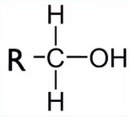
Hydroxyl Group
Alcohol (-OH)
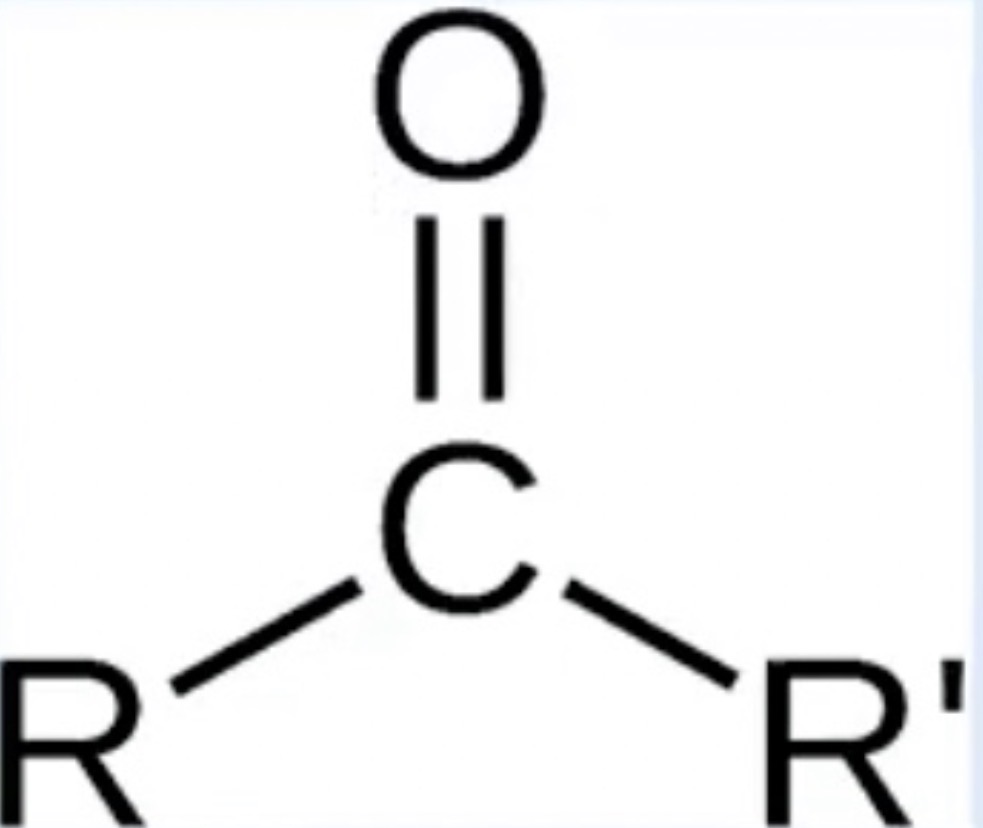
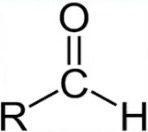
Carbonyl Group
Aldehydes / Ketones; carbon double bonded to oxygen
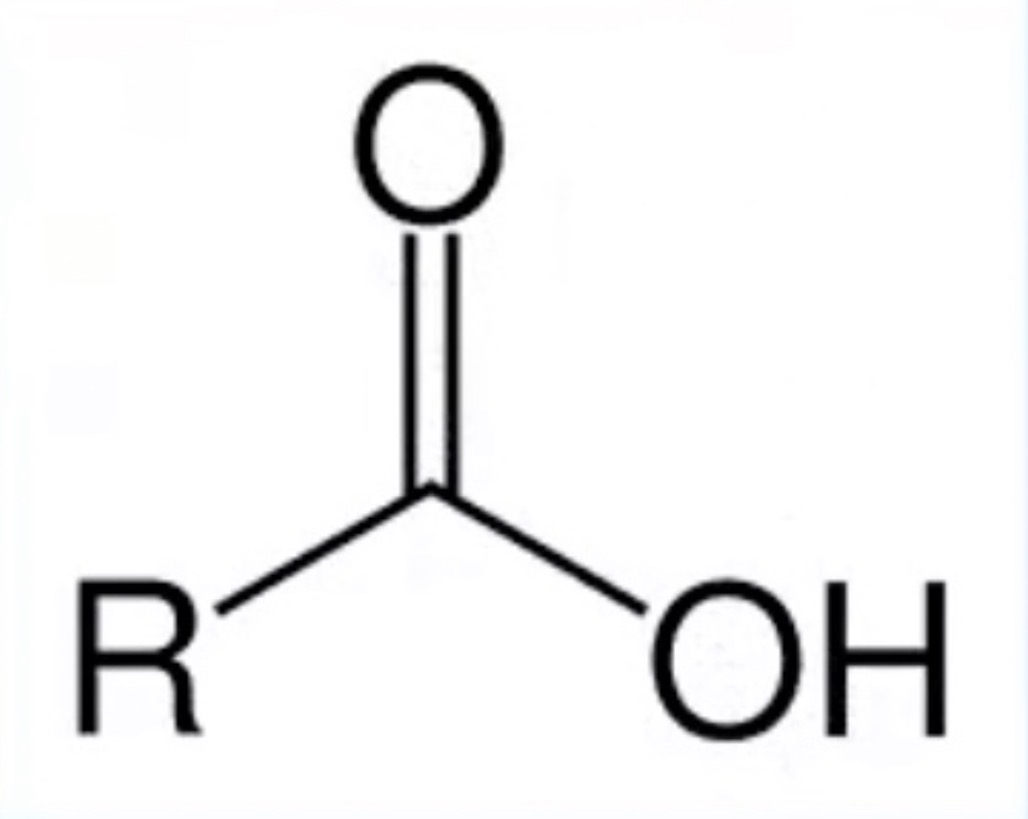
Carboxyl Group
Carboxylic Acid; hydroxyl and carbonyl bonded to SAME carbon atom
Amines Group
Amino; Nitrogen bonded to two hydrogen
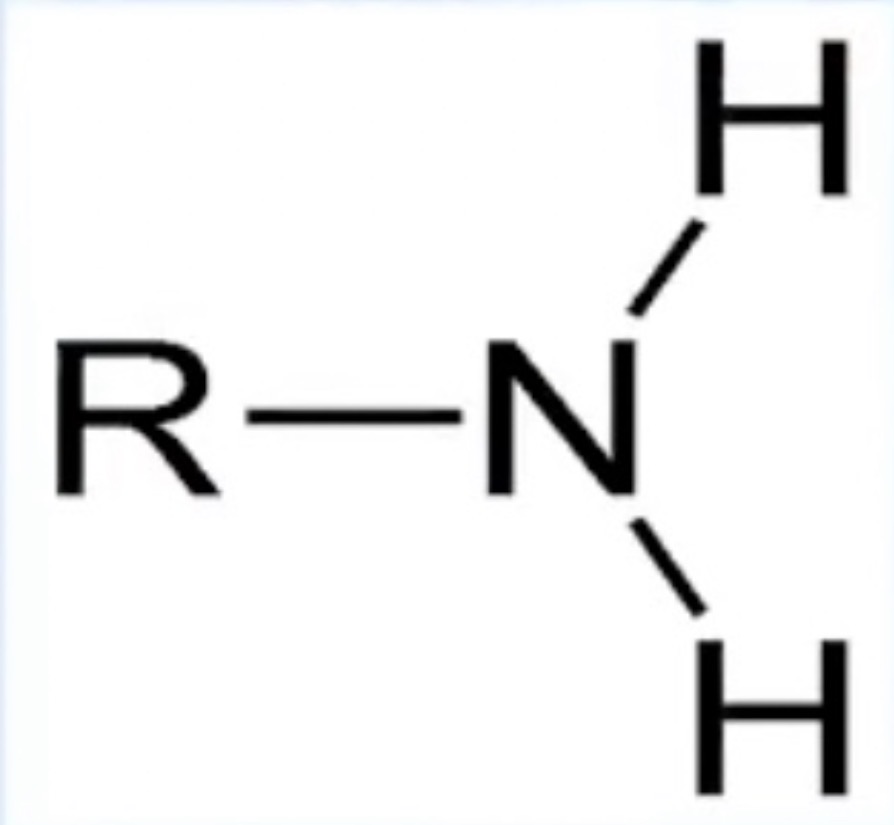
Phosphate Group
Phosphate; Phosphate surrounded by oxygen
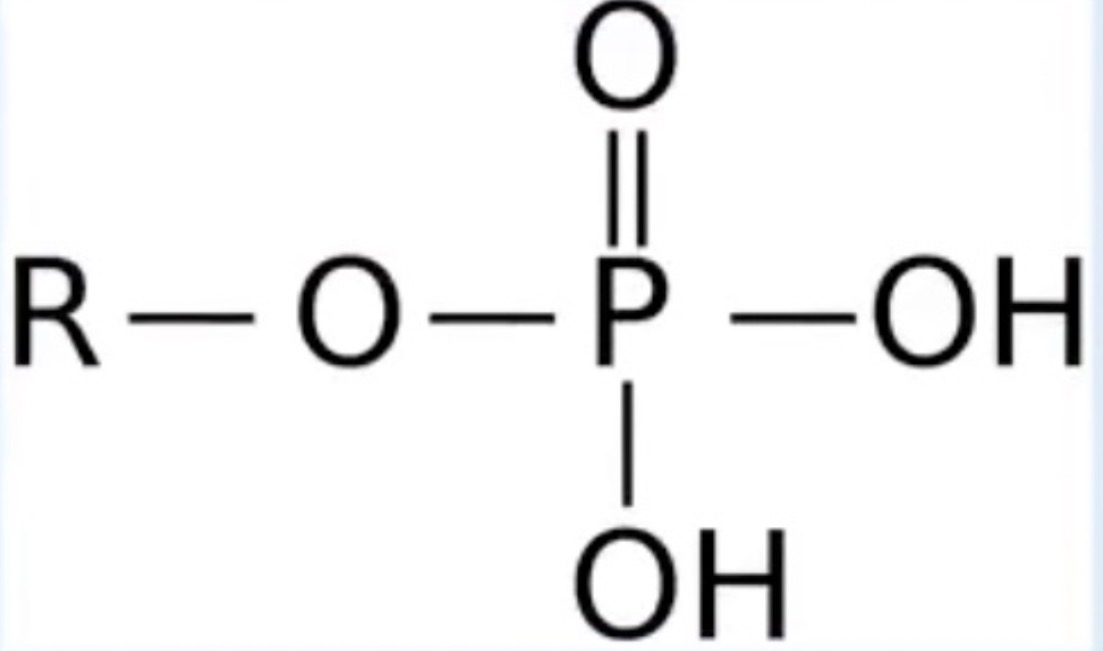
What is the importance of Phosphates?
Energy production (ATP); Genetic material (DNA)
ATP
Adenosine-Tri-Phosphate
ATP’s purpose
Energy source for cells
DNA
Deoxyribo-Nucleic-Acid
DNA’s purpose
Stores genetic information / instructions
RNA
Ribo-Nucleic-Acid
RNA’s purpose
Converts genetic information from DNA into proteins
Hydrocarbons
Chain of carbon and hydrogen molecules
Nomenclature (1-6)
Number of carbon atoms in a molecule are designated by prefixes
1 Carbon
Meth-
2 Carbons
Eth-
3 Carbons
Prop-
4 Carbons
But-
5 Carbons
Pent-
6 Carbons
Hex-
Single bonds
-ane
Double bonds
-ene
Macromolecules (1-4)
Large organic molecules; grouped by chemical properties
Carbohydrates
PROVIDE energy; formed by glucose
Lipids
STORE energy; insulation; hormones; makes up cell membrane
Protiens
3D polymers of amino acids; includes enzymes