Cellular & Molecular Biology - Chapter 1
 Call Kai
 Learn
Learn Practice Test
 Spaced Repetition
 Match
Match Flashcards
 Knowt Play
1/96

There's no tags or description
Looks like no tags are added yet.
Name | Mastery | Learn | Test | Matching | Spaced | Call with Kai | Chat |
|---|
No analytics yet
Send a link to your students to track their progress
97 Terms
____ are the building blocks of all living tissues.
Cells
____ are generated only from pre-existing cells and inherit their characteristics.
Cells
What do all cells have in common?
the central dogma of molecular biology
What is the central dogma?
the flow of genetic material
Explain the central dogma sequence.
In all living cells, genetic information flows from DNA to RNA (transcription) and from RNA to protein (translation).
The sequence of nucleotides in a particular segment of ____ (a gene) is transcribed into an ____ molecule, which can then be translated into the linear sequence of amino acids of a _____. Only a small part of the gene, RNA, and protein are shown.
DNA, RNA, Protein

Explain the first part of the central dogma.
information storage “the hard drive”

Explain the second part of the central dogma.
temporary message “the cache”

Explain the third part of the central dogma.
functional units “the programs”
What does completing the central dogma mean?
Means you’re alive!
What is an exception to the central dogma?
Viruses
What do viruses have in common?
they can’t replicate without a host cell
Our genes hold the code, but it’s their ______ that determines function!
Expression
How big are cells?
Tiny!
What are cells measured in?
Micrometers (µm)
How does a light microscope work?
uses a light source
Can you see a lot with a light microscope?
no, can’t see much
What do phase-contrast optics mean?
cells glow!
a specialized type of fluorescence microscope that builds up an image by scanning the specimen with a laser beam
Confocal microscope
What is one of the most common microscopes used?
Confocal microscope
How does a confocal microscope work?
the beam is focused onto a single point at a specific depth in the specimen, and a pinhole aperture in the detector allows only fluorescence emitted from this same point to be included in the image
The transmission electron microscope is measured in?
Nanometers (nm)
What is the transmission electron microscope used for?
to see organelles
What microscope is so small, so uses electrons?
Transmission electron microscopy
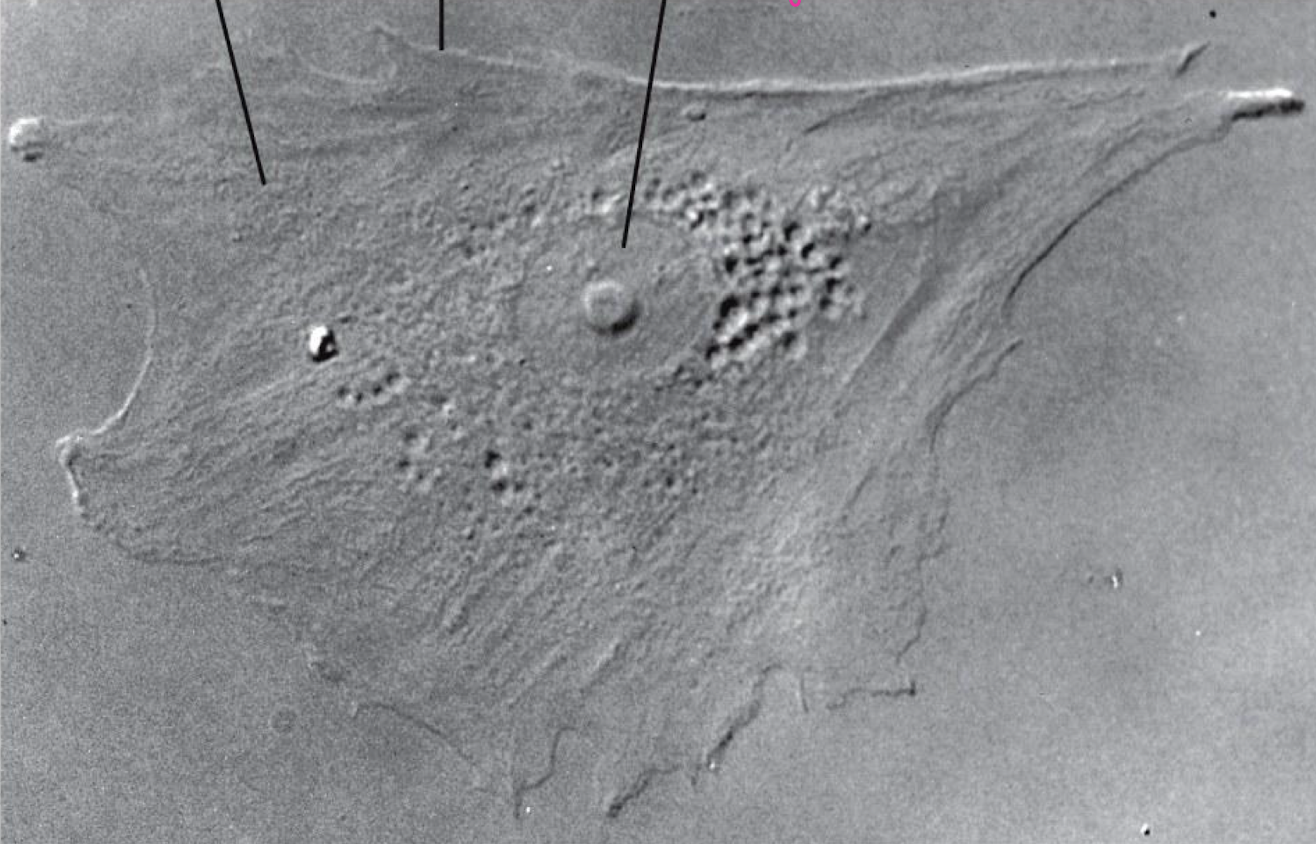
Light microscope
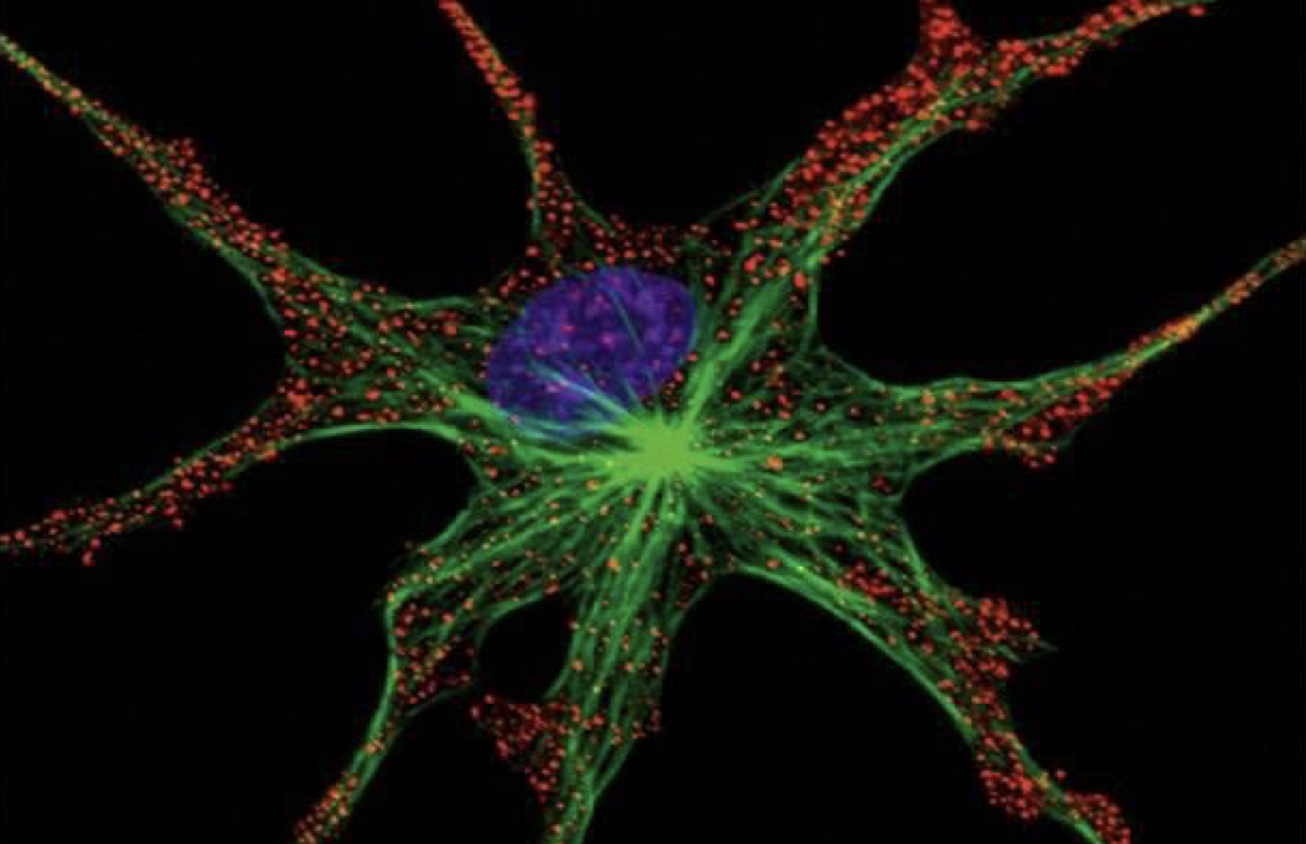
Confocal microscope
Small single cellular organisms
Most diverse of all cells
Can adapt to extreme environments
Two domains: Bacteria or Archaea
Many different sources of “food”
Prokaryote
Smaller
(Prokaryote or Eukaryote?)
Prokaryote
Don’t have organelles
(Prokaryote or Eukaryote?)
Prokaryote
Original cell
(Prokaryote or Eukaryote?)
Prokaryote
Most diverse, been around longer!
(Prokaryote or Eukaryote?)
Prokaryote
Bigger, more elaborate organisms
Can be:
Single cell organisms (yeast, amoebae)
Multi-Cellular (plants, animals, fungi)
Always have a nucleus, organized, compartmentalized (membrane bound)
Organelles conserved in most Eukaryotes
Eukaryote
Has full set of organelles
(Prokaryote or Eukaryote?)
Eukaryote
Anything multicellular is?
(Prokaryote or Eukaryote?)
Eukaryote
What is the most simple eukaryote?
Yeast
What allows eukaryotes to carry out big reactions?
Membrane
The plasma membrane is?
the fence
Where is DNA located?
inside of nucleus
Why do we have a nuclear membrane?
protects our DNA
What do ribosomes do?
turns messenger RNA (mRNA) into protein (factories!)
What oxidises food molecules to generate ATP: ‘cellular respiration’?
Mitochondria
Contain their own DNA and reproduce themselves (like bacteria!)
Mitochondria
Mitochondria evolved from _____ and looks exactly like it.
Bacteria
Mitochondria are ______.
Symbiotes

Explain this photo regarding mitochondria evolved from bacteria.
It is virtually certain that mitochondria originated from bacteria that were engulfed by an ancestral pre-eukaryotic cell and survived inside it, living in symbiosis with their host. Note that the double membrane of present day mitochondria is thought to have been derived from the plasma membrane and outer membrane of the engulfed bacterium.
It is virtually certain that mitochondria originated from bacteria that were engulfed by an _________ and survived inside it, living in symbiosis with their host. Note that the double membrane of present day mitochondria is thought to have been derived from the plasma membrane and outer membrane of the engulfed bacterium.
Ancestral pre-eukaryotic cell
It is virtually certain that mitochondria originated from bacteria that were engulfed by an ancestral pre-eukaryotic cell and survived inside it, living in symbiosis with their host. Note that the double membrane of present day mitochondria is thought to have been derived from the __________ and ________ of the engulfed _______.
Plasma membrane, outer membrane, bacterium
Eukaryotes likely evolved as a ______!
Predator
_______ _______ was the major breakthrough for eukaryotes!
Molecular cooperation
Eukaryotes have large flexible membrane and _______ for movement.
Cytoskeleton
Green organelles found in plants and algae.
Chloroplasts
converts sunlight into chemical energy (sugar)
Photosynthesis (happens in chloroplasts!)
Chloroplasts are ______.
endosymbiotic
Chloroplasts are found in…
eukaryotes that can synthesize
Chloroplasts are only found in ______.
Plants
Plants have both a _______ and a ______.
Mitochondria and chloroplast
Plants have a second endosymbiont that is chloroplast. What does this mean?
Chloroplasts are second to evolve.
All plants get mitochondria, then they get ______, which is the second endosymbiosis.
Chloroplasts
Did chloroplasts evolve from bacteria?
Yes
What is the highway of the cell?
Endoplasmic Reticulum
Ribosome coated ER which makes proteins to be secreted
Rough ER (RER)
What is the smooth ER involved in?
Lipid synthesis
What does the golgi body do?
sorts proteins
Waste disposal system
Lysosomes
Small irregular shaped
Membrane bound
House intracellular degradation
break down food and release back to cell
break down waste for recycling or excretion
Lysosomes
Stomachs of the cell —> breaking things down!
Lysosomes
Chemical plant
Peroxisomes
small membrane enclosed vesicles
Contained environment for H2O2 reactions
H2O2 generated and degraded inside
Peroxisomes
Where is hydrogen peroxide located?
Peroxisomes
Keeps things organized and allows directed movement
Cytoskeleton
The organism that scientists have chosen as the ones that we’re all going to study, what we compare every organism to
Model organism
What model organism do we understand more thoroughly than any other organism?
Escherichia Coli (E. Coli)
What model organism has no nucleus and prokaryotic?
Escherichia Coli (E. Coli)
If you wanted to know how the drug you’re using affects the nucleus, could you use Escherichia Coli (E. Coli)?
No! No nucleus!
What model organism is a single cell eukaryote?
Saccharomyces cerevisiae
If you wanted to see the drug’s effects in the nucleus but you want to study it rapidly dividing single cell model — then what model organism would be the best pick?
Saccharomyces cerevisiae
What model organism is a common wall cress and plant?
Arabidopsis thaliana
What model organism has fruit flies?
Drosophila melanogaster
What model organism is associated with genetics and is famous for how genes interact?
Drosophila melanogaster
What model organism is the only organism where we completely mapped the brain?
Caenorhabditis elegans (C. elegans)
What model organism do we know where every neuron is, which is very rare?
Caenorhabditis elegans (C. elegans)
What model organism is good if you have complex questions about the brain?
Caenorhabditis elegans (C. elegans)
What model organism is related to fetal alcohol syndrome?
Caenorhabditis elegans (C. elegans)
What model organism is great for developmental studies?
Danio rerio
What model organism has zebrafish?
Danio rerio
When these are model organisms are babies, you can see right through them.
Danio rerio
You use this model organism to answer this question: “How does giving this drug affect a developing liver, spine, heart…”
Danio rerio
What is the most important model organism?
Homo sapiens
What two model organisms can have the same disease?
Homo sapiens and mus musculus
100% of prescribed drugs have been tested in ________.
Humans (Homo sapiens)
What model organism would we use for this question: “How does this drug affect how they interact with their friends?”
Mus musculus
Why are mice like humans?
relationships, same diseases, excellent study model
Do things that normal cells do.
(Primary cell culture or immortalized cell line?)
Primary cell culture
Mortal and harvest cells periodically.
(Primary cell culture or immortalized cell line?)
Primary cell culture
What is the first kind?
(Primary cell culture or immortalized cell line?)
Immortalized cell line
Not normal cells, can use forever.
(Primary cell culture or immortalized cell line?)
Immortalized cell line
ALL CANCER CELLS!
(Primary cell culture or immortalized cell line?)
Immortalized cell line