(D) Unit 3: Reformation and Religious Wars
 Studied by 1 person
 Call with Kai
 Learn
Learn Practice Test
 Spaced Repetition
 Match
Match Flashcards
 Knowt Play
1/34

There's no tags or description
Looks like no tags are added yet.
Name | Mastery | Learn | Test | Matching | Spaced | Call with Kai |
|---|
No study sessions yet.
35 Terms
1453
The printing press is being developed, and the famous city of Constantinople falls to the Ottoman Empire.
1492
Columbus lands in the New World, and Spain completes the Reconquista and kicks out the Jews and Moors
1513
Machiavelli wrote The Prince (compare to Christian Humanist Erasmus and secular Castiglione)
1517
Martin Luther posts the 95 Theses in Wittenberg Germany
1534
King Henry VIII passes the Act of Supremacy; Jesuits created
(Formal creation of the Anglican Church)
1545
Council of Trent begins; John Calvin preaches in Geneva
1555
HRE Charles V Habsburg agrees to the Peace of Augsburg
1588
Elizabeth I Tudor (politique) defeats Philip II of Spain's (Habsburg) Spanish Armada
1598
Henry IV Bourbon (politique) issues the Edict of Nantes; (Louis XIV revokes in 1685)
Thus ending the religious wars in France.
1627
Cardinal Richelieu sieges La Rochelle, Dutch Golden Age; Baroque art flourishes
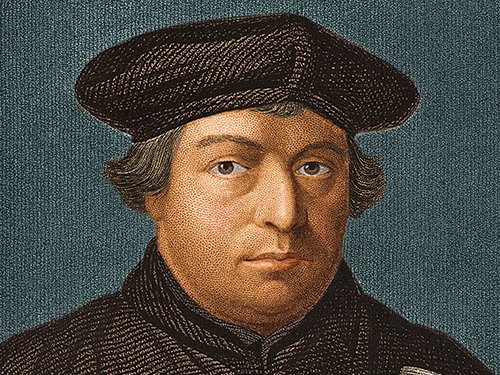
Martin Luther
The first successful Western reformer, he suggested that salvation is by faith alone, and not faith and works. He was an Augustinian Monk and a priest. (1483-1546)
95 Theses
The 95 Theses, written by Martin Luther in 1517, are a list of propositions that ignited the Protestant Reformation. The theses primarily condemn the selling of indulgences by the Catholic Church and argue that true repentance and faith are the only path to salvation. They were nailed to a church in Wittenberg.
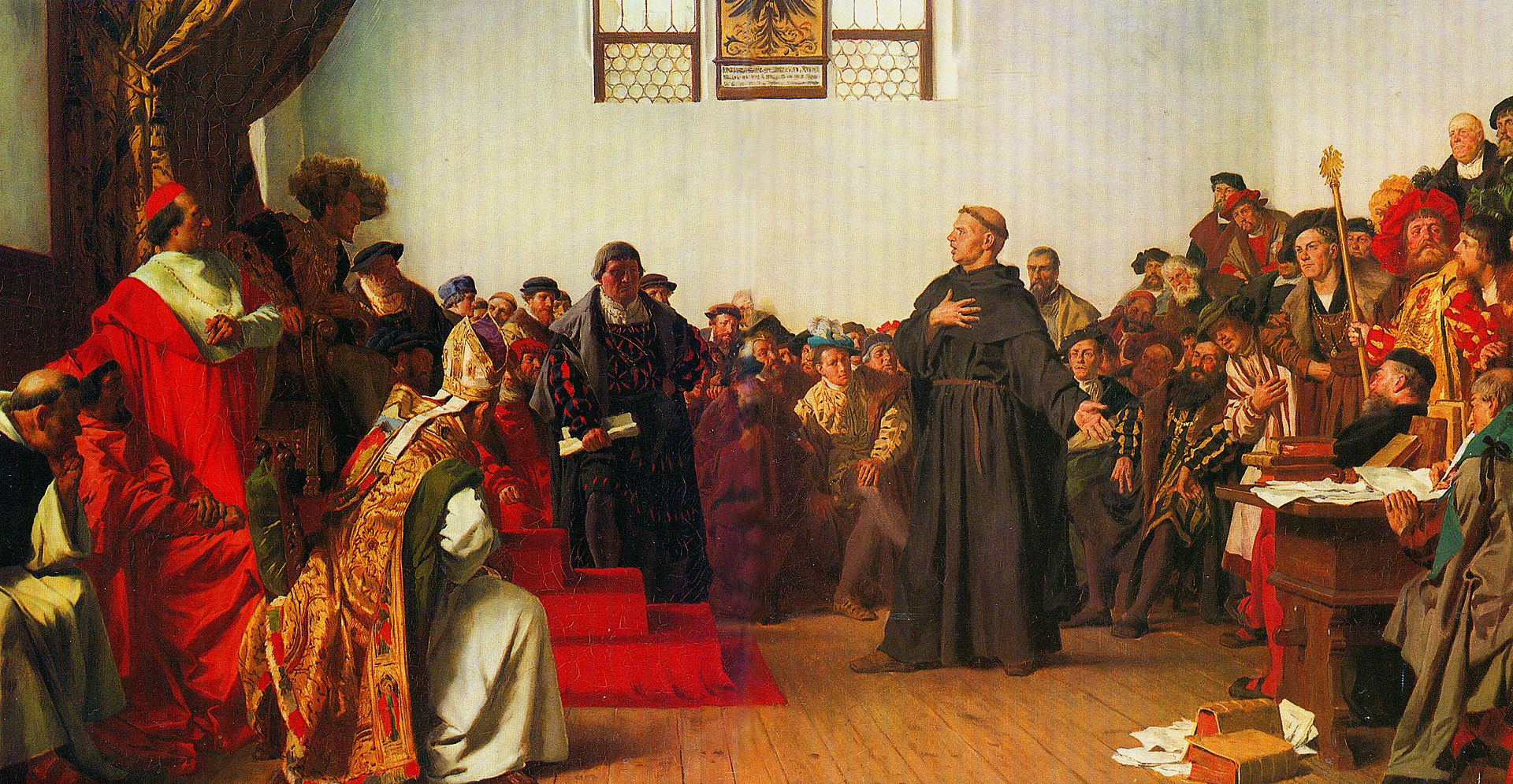
Diet of Worms (1521)
An imperial diet (a formal deliberative assembly) of the Holy Roman Empire called by Emperor Charles V and conducted in the Imperial Free City of Worms. Martin Luther was summoned to the diet in order to renounce or reaffirm his views in response to a Papal bull of Pope Leo X. Luther upheld his views, In response, was issued the Edict of Worms, a decree which condemned Luther as "a notorious heretic" and banned citizens of the Empire from propagating his ideas. Although the Reformation is usually considered to have begun in 1517, this edict is the first overt schism associated with it.
Protestants appealed to:
Nobles (who wanted to destabilize the HRE’s emperor and the Pope's authority).
Clergy (who had been calling for reform for a long time).
Catholics appealed to:
Existing Catholics
Moderate Protestants who simply wanted minor reform.
Lutheran religious doctrine:
The belief that all go to heaven based on faith alone, the belief of Sola Scriptura, the real presence, and free will.
Charles V Habsburg HRE (1500-1558)
The Holy Roman Emperor in charge during the Protestant Reformation.
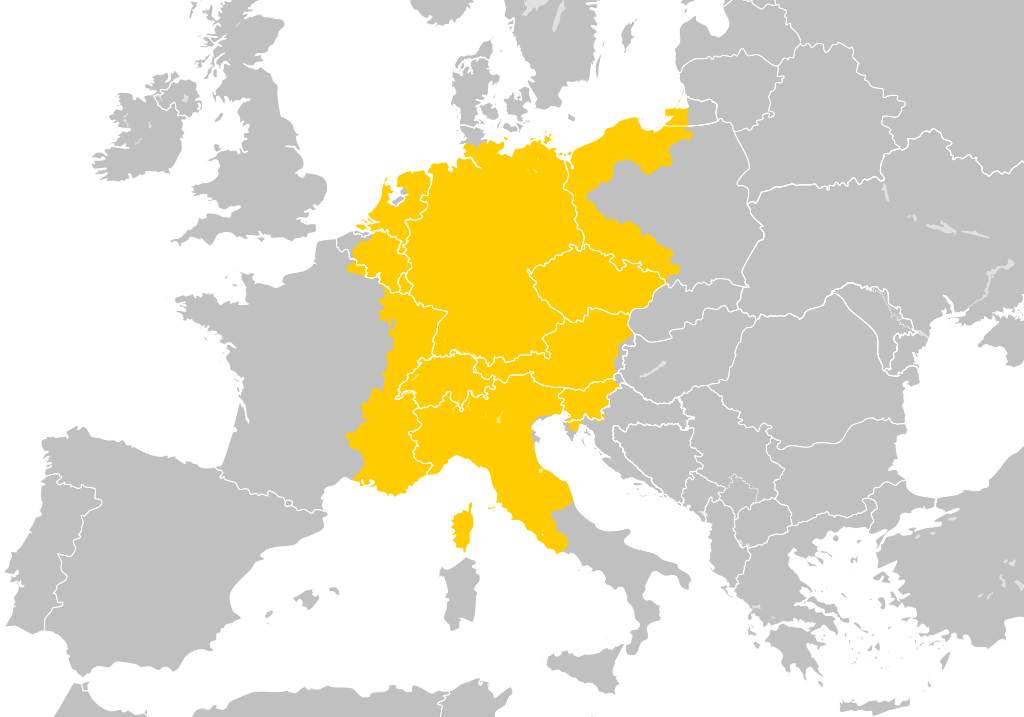
Holy Roman Empire
The political state that encompassed much of central and southern Europe. It was decentralized with a monarch and many individual princes. It lasted from 800 to 1806.
German Peasants War/Revolt
A widespread popular revolt in some German-speaking areas in Central Europe from 1524 to 1525. It was Europe's largest and most widespread popular uprising before the French Revolution of 1789. The revolt failed because of intense opposition from the aristocracy, who slaughtered up to 100,000 of the 300,000 poorly armed peasants and farmers.
Tetzel and indulgences
A Dominican friar and preacher in the early 16th century who became famous for his aggressive selling of indulgences, which contributed significantly to the start of the Protestant Reformation. His most infamous slogan, "As soon as the coin in the coffer rings, the soul from purgatory springs," encapsulated the practice of purchasing indulgences to reduce time in purgatory, a practice he used to fund projects like the rebuilding of St.Peter's Basilica. Tetzel's extreme sales tactics and claims for the effect of indulgences drew strong criticism from reformers like Martin Luther.
St. Bartholomew's Day Massacre
A massacre that was targeted assassination of Huguenot (French Protestant) leaders in Paris that spiraled into a wave of mob violence against Protestants across France in 1572. Traditionally instigated by Queen Catherine de' Medici, the event exacerbated the French Wars of Religion and profoundly impacted the political and religious landscape of Europe.
Anglican religious doctrine
The doctrine which remained mainly similar to the catholic doctrine, except with widespread bibles in English, Sola Fide, Prima Scriptura, and priests being able to marry.
Edict of Nantes
A decree issued in France in 1598 by King Henry IV that granted religious and civil liberties to Protestants (Huguenots) in a predominantly Catholic country. Its main purpose was to end decades of religious warfare and promote peace and civil unity.
War of Three Henry's (Henry III Valois vs. Henry IV of Navarre)
The "War of the Three Henrys" refers to a conflict during the French Wars of Religion (1587–1589) fought between King Henry III of France, Henry I, Duke of Guise (leader of the Catholic League), and Henry of Navarre (leader of the Huguenots and heir presumptive to the French throne). It was a struggle for power that ended when King Henry III was assassinated, and Henry of Navarre ultimately became King Henry IV after converting to Catholicism.
Act of Supremacy
The degree issued by Henry the 8th of England which declared the king of England to be the leader of the Anglican church.
Peace of Augsburg
A treaty that ended religious conflict between Catholics and Lutherans in the Holy Roman Empire by establishing the principle of cuius regio, eius religio ("whose realm, his religion"), which allowed princes to choose either Catholicism or Lutheranism as the official faith of their territory. It granted residents who disagreed with the official religion the right to leave and resettle elsewhere, though it did not recognize other Protestant denominations like Calvinism
Military Revolution
The Military Revolution in Europe was a period of major military, technological, and tactical changes from the 16th to 18th centuries, characterized by the rise of gunpowder, professional standing armies, and new tactics like linear formations. These changes significantly altered warfare, increased the power of centralized states, and contributed to Europe's global dominance. Key innovations included the use of mass-produced artillery, improved fortifications, naval advancements, and sophisticated infantry drill for volley fire.
Simony
The buying and selling of church offices.
Consubstantiation
The Lutheran belief that at the Eucharist, the bread and body retain their forms, while also undertaking the position of being the Body and Blood of Christ.
Fredrick of Saxony
The German prince who gave protection to Martin Luther.
The Union of Utrecht
A 1579 treaty forming the foundation of the Dutch Republic, The 1579 treaty was a military and political alliance of northern Dutch provinces against Spanish rule under Philip II, which led to the formation of the independent Dutch Republic.
raison d'etat
Machiavellian idea that everything should be done to serve the stability of the state
Peace of Westphalia
A series of treaties signed in 1648 that ended the Thirty Years' War and established the principle of state sovereignty. It created a new framework for international relations by recognizing the right of rulers to govern their territories without external interference, granting princes within the Holy Roman Empire the right to decide their state's religion, and establishing a balance of power among states.
Habsurb-Valios Wars.
A series of conflicts from the 16th to mid-16th centuries between the Habsburg dynasty and the Valois dynasty, primarily over control of Italy and dominance in Europe.
Battle of Lepanto
The Battle of Lepanto was a decisive naval battle on October 7, 1571, where the Christian Holy League defeated the Ottoman Empire in a major clash in the Gulf of Patras, near Lepanto, Greece. The victory, marked by superior Christian firepower and tactics, effectively ended Ottoman naval supremacy in the Mediterranean and halted their expansion into Europe, though the Ottomans rebuilt their fleet and retained Cyprus.