Lecture 8 - Blood
 Call Kai
 Learn
Learn Practice Test
 Spaced Repetition
 Match
Match Flashcards
 Knowt Play
1/93

There's no tags or description
Looks like no tags are added yet.
Name | Mastery | Learn | Test | Matching | Spaced | Call with Kai | Chat |
|---|
No analytics yet
Send a link to your students to track their progress
94 Terms
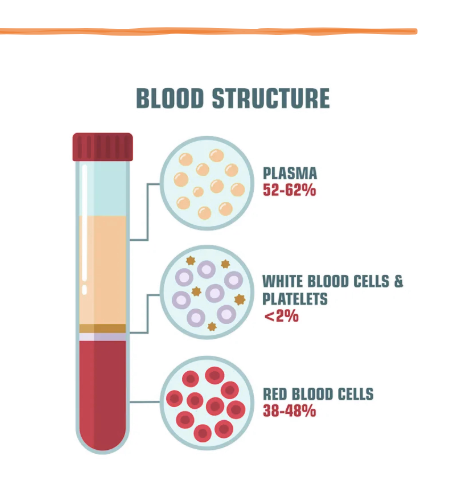
What are the 4 basic components blood is made up of?
Plasma (at the top),
erythrocytes RBCs (most dense)
leukocytes = WBCs (small layer)
platelets = thrombocytes.
What are the 6 functions of blood?
Transporting gases, delivery of nutrients/hormones, waste removal, temperature regulation, clotting, immune function (defense).
What is the average blood volume for women and men?
Women = 5.0 L; Men = 5.5 L.
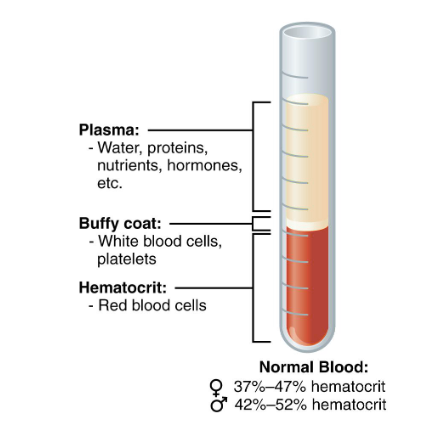
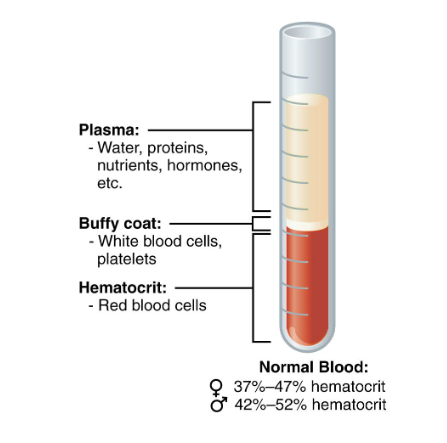
What is hematocrit?
How is hematocrit measured?
The proportion of red blood cells in your blood (a %).
A sample is centrifuged, which separates the components of blood.
What is the hematocrit range for women and men?
Why is the male hematocrit range higher?
Women = 37-47%; Men = 42-52%.
Testosterone stimulates erythropoiesis (RBC production).
What does altitude affect?
What happens at higher altitudes in terms of oxygen?
Hemocrit
Less oxygen is available.
What is exhaled vs inhaled oxygen percentage during normal breathing?
Inhale 21% oxygen, exhale 16% (4-5% absorption of oxygen).
How does the body respond to less oxygen at high altitudes?
It triggers the body to make more RBCs to increase oxygen absorption amount, causing a person to have more RBCs than normal.
What is the normal hematocrit for a male living at high altitudes?
60%.
Why do athletes train at high altitudes?
Because the increased RBC production improves oxygen absorption.
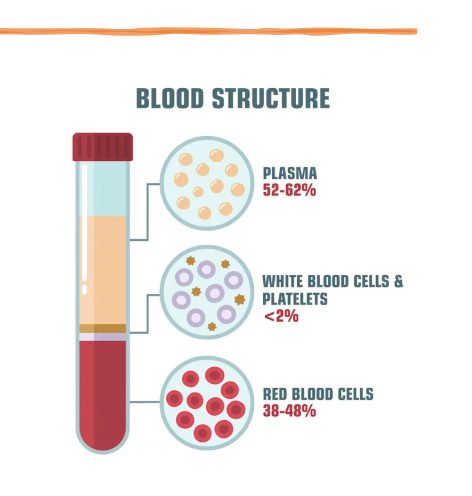
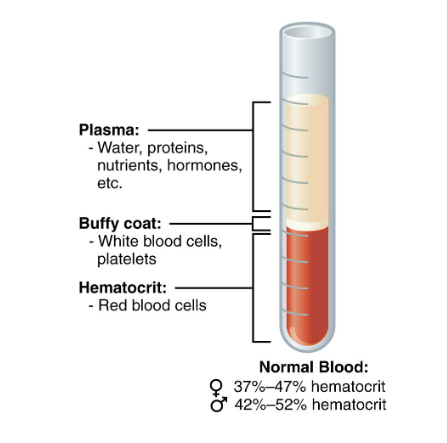
What percentage of whole blood volume does plasma make up, and what does centrifuging a blood sample reveal (top to bottom)?
Plasma (55% of whole blood volume) on top, buffy coat (leukocytes and platelets; <1%) in the middle, erythrocytes (45% of whole blood volume) at the bottom.
What is the composition of plasma by water and protein percentage?
90% water, 8% proteins.
What are the three types of plasma proteins, and what percentage does each make up?
Albumins (60%), globulins (36%), fibrinogen (the remainder).
What is significant about albumins?
What is significant about globulins?
What is significant about fibrinogen?
They make up 60% of plasma proteins and are mostly synthesized by the liver.
They make up 36% of plasma proteins and help with plasma osmotic pressure.
Important for blood clot formation
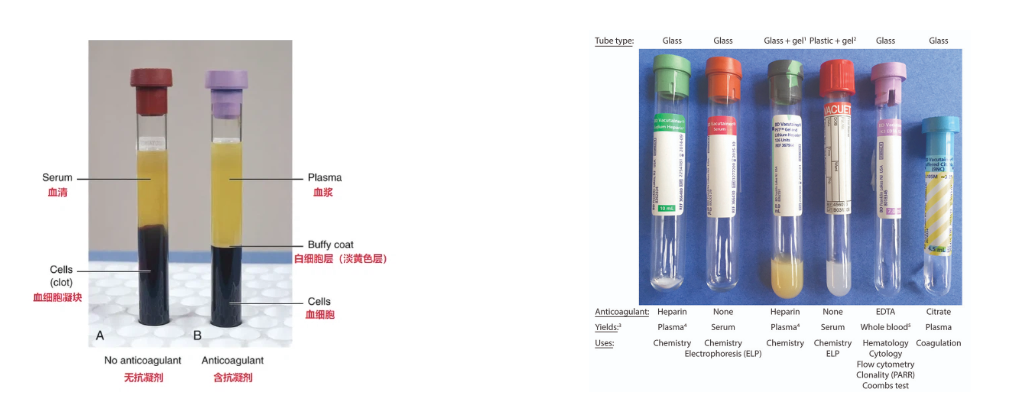
What is serum?
How is it obtained?
What is serum used for?
Plasma without (removed) fibrinogen and other clotting proteins.
Collect blood and let it clot before centrifuging.
Most common blood tests — e.g., CMP, BMP, TSH.
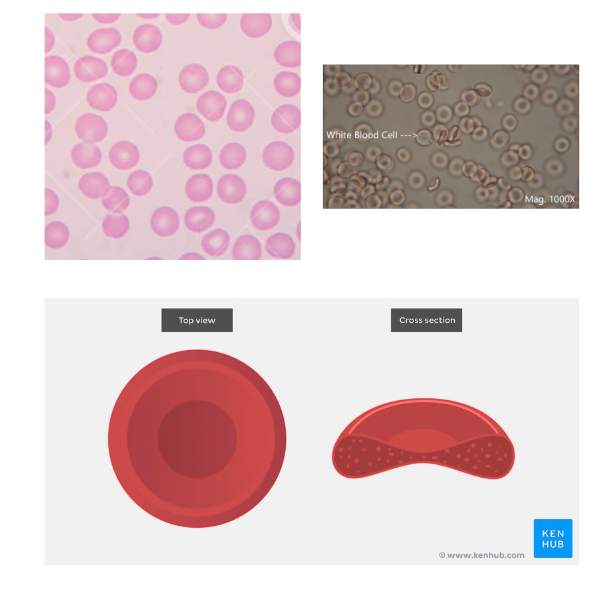
What are erythrocytes?
How abundant are erythrocytes
what's the total number in the body?
RBCs
Most abundant cell in blood
~5 million per mm³; 20-30 trillion cells in the body.
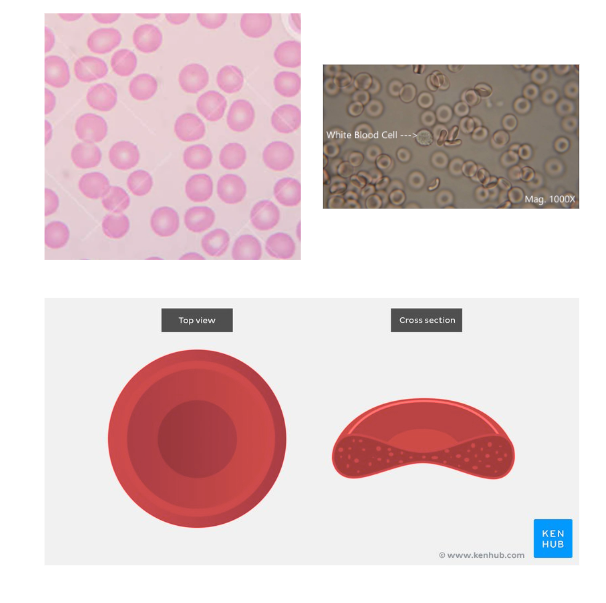
What are the dimensions of an erythrocyte?
7 μm in diameter and 2 μm thick.
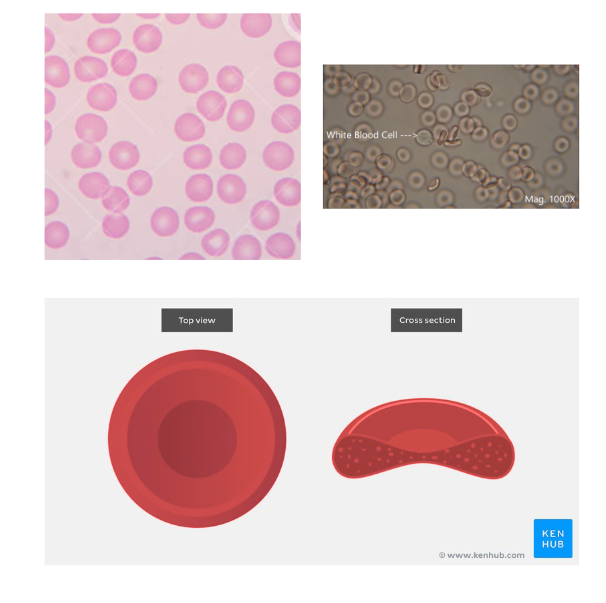
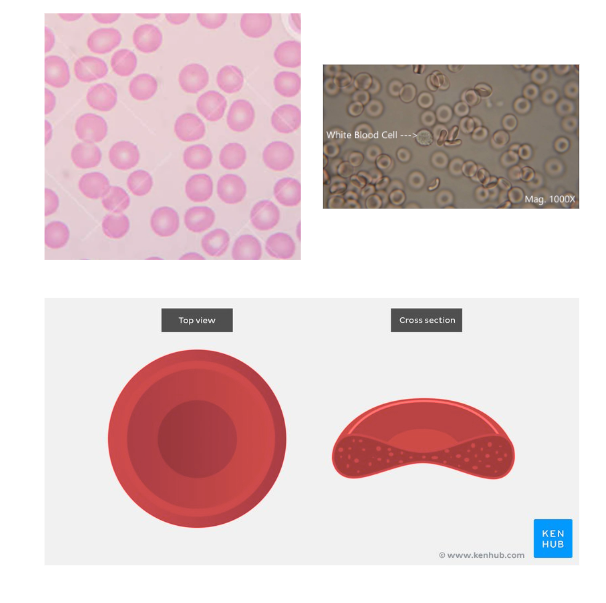
What shape are erythrocytes, and what does this allow?
Biconcave disk (both sides indented), which allows flexibility and large surface area.
What is the function of erythrocytes?
Transport O₂ and CO₂.
How do erythrocytes achieve high binding to O₂ and CO₂?
Via hemoglobin and carbonic anhydrase.
What does hemoglobin bind with, and how abundant is it?
Binds with O₂; it's the most abundant protein, with 250 million hemoglobin molecules per erythrocyte.
What is hemoglobin made of?
4 peptide chains that have iron-containing rings (heme groups).
What are heme groups, and how many O₂ can each hemoglobin bind?
Rings where O₂ binds to; each hemoglobin can bind with 4 O₂.
Can CO₂ bind to hemoglobin?
Yes, it can bind reversibly with amino acids in the hemoglobin, but it's not the main transport method for CO₂.
What is carbonic anhydrase critical for?
Transport of gases, specifically CO₂.
What does carbonic anhydrase do?
An enzyme that catalyzes the conversion of CO₂ and water into carbonic acid, which then breaks into H⁺ and bicarbonate ion.
How long do erythrocytes live?
~120 days.
What do erythrocytes lack, and what does this mean?
No nucleus or organelles; no DNA or cell division.
How many erythrocytes are produced per day, and what process is responsible?
200 billion per day, because of erythropoiesis.
What breaks down old erythrocytes?
The spleen.
What is erythropoiesis?
Production of new RBCs.
Where does prenatal erythropoiesis happen?
Where does postnatal erythropoiesis happen?
Yolk sac, liver, spleen, and bone marrow.
Bone marrow.
What are precursor cells for erythrocytes called?
Hematopoietic stem cells (the original stem cell at the top of the lineage).
What protein does the kidney release to promote RBC production, and when?
Erythropoietin, in response to low oxygen levels in blood.
What three nutrients are needed for RBC production?
Iron, folic acid, and vitamin B₁₂.
What is iron needed for?
Hemoglobin.
What are folic acid and vitamin B₁₂ needed for?
Synthesis of DNA.
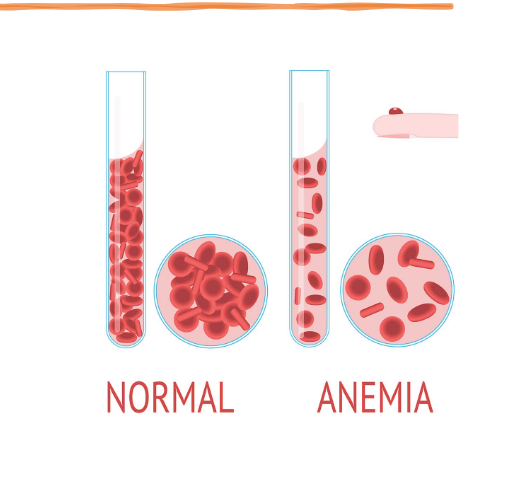
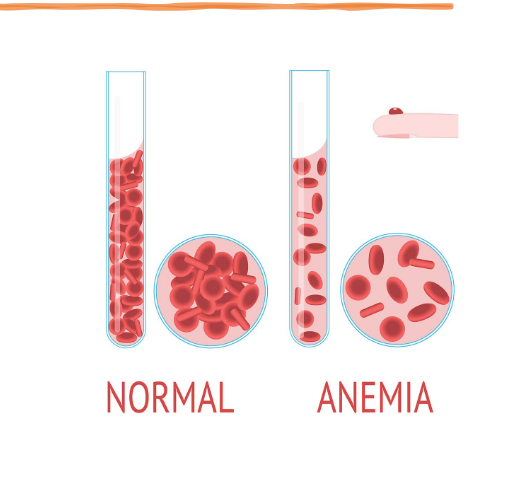
What is anemia?
A reduction in the oxygen carrying capacity, due to a reduction in hemoglobin production or RBC production.
What are the two main types of anemia?
Iron-deficiency anemia and pernicious anemia.
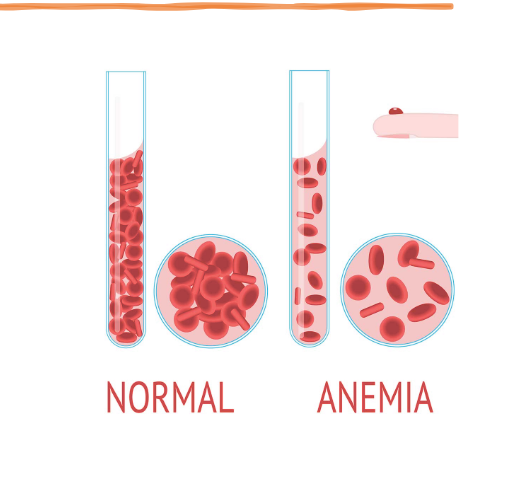
What causes iron-deficiency anemia, and what characterizes it?
Caused by lack of iron; results in less hemoglobin on each RBC.
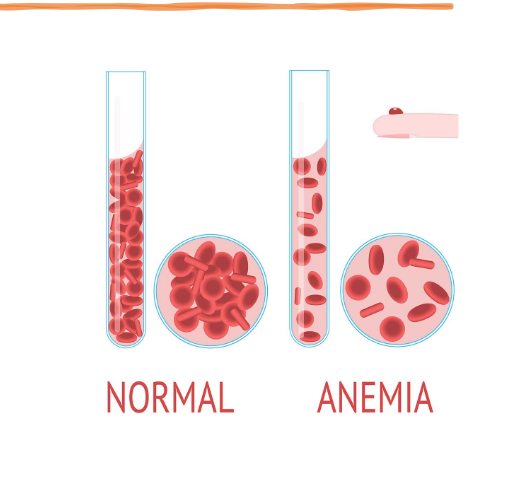
What causes pernicious anemia, and what characterizes it?
Caused by lack of vitamin B12; characterized by larger, fewer RBCs.
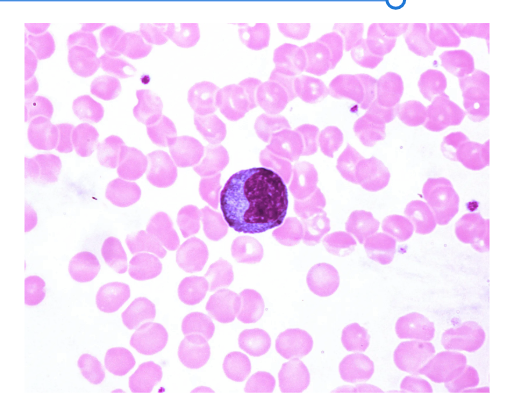
What are Luekocytes?
white blood cells
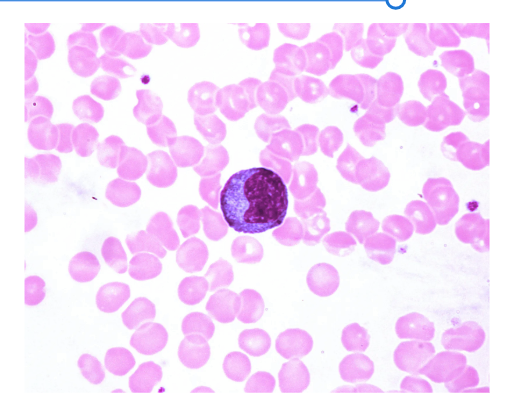
What is the normal concentration of leukocytes?
~4,000-10,000 cells/mm³.
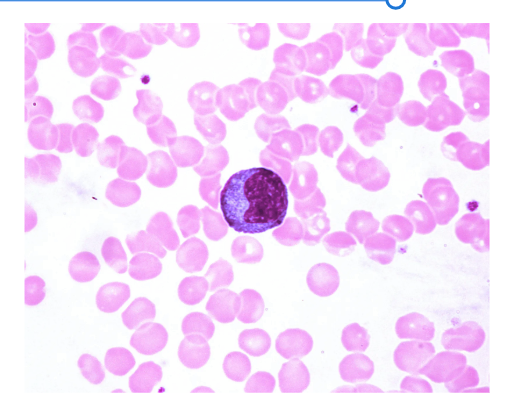
What cellular structures do leukocytes have?
A nucleus and normal cell machinery.
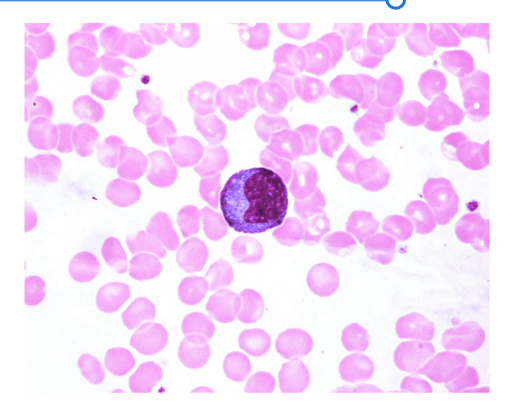
Where are leukocytes found?
Blood and tissues.
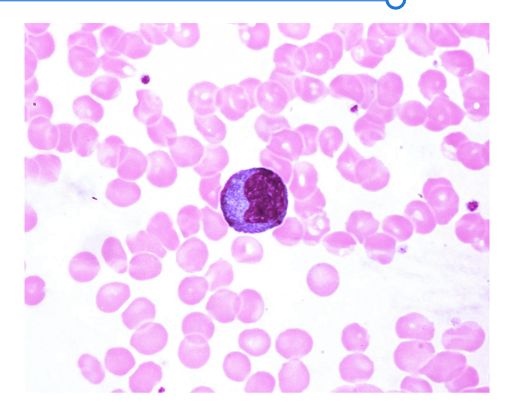
What is the function of leukocytes?
Defends body against invading microorganisms and other foreign materials.
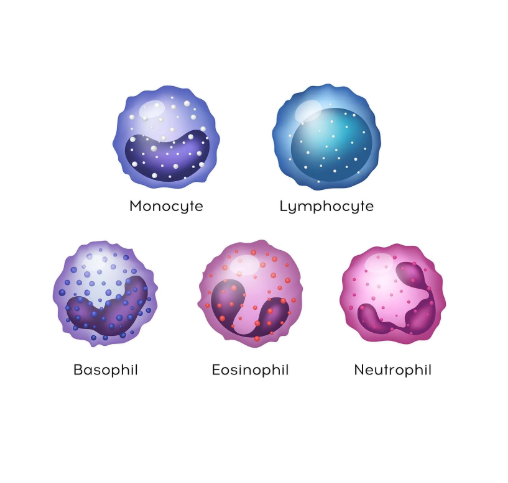
Leukocytes — Types
What are the 5 major types of leukocytes, grouped into 2 categories?
Granulocytes: neutrophils, eosinophils, basophils.
Agranulocytes: monocytes, lymphocytes.
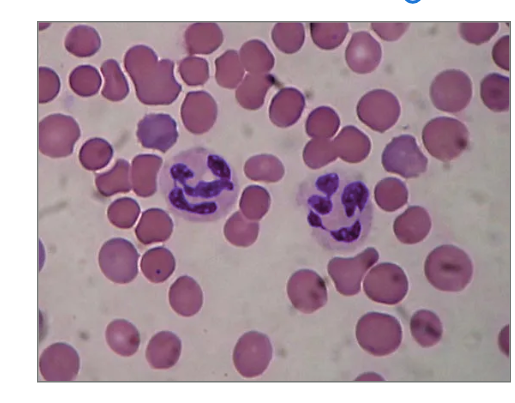
What percentage of all leukocytes do neutrophils make up?
How are neutrophils identified?
50-80%.
Having 3-6 lobe nuclei.
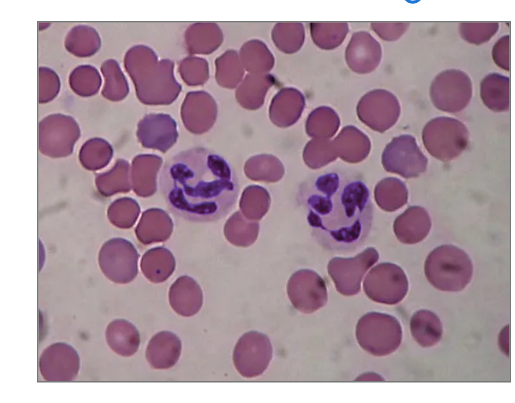
What are neutrophils capable of?
Phagocytosis — engulfing and digesting microorganisms, abnormal cells, and foreign particles.
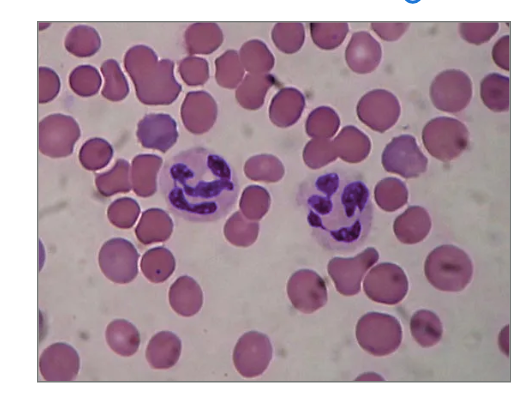
What happens to neutrophils during an infection?
The number of circulating neutrophils increases, and neutrophils stored in the bone marrow are released.
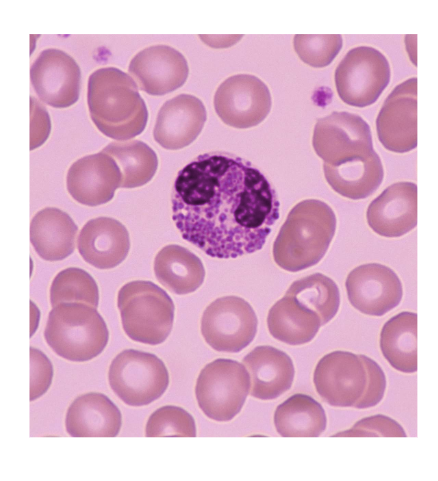
What percentage of all leukocytes do eosinophils make up?
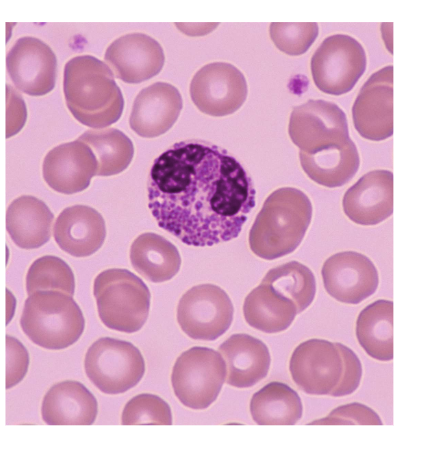
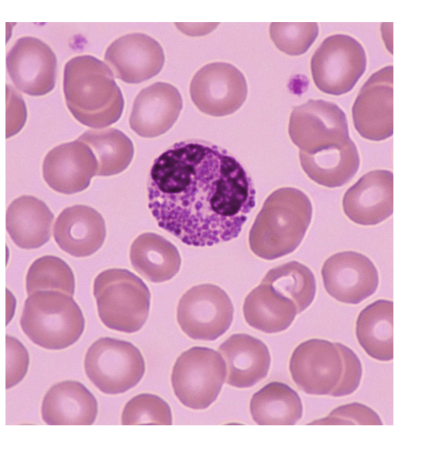
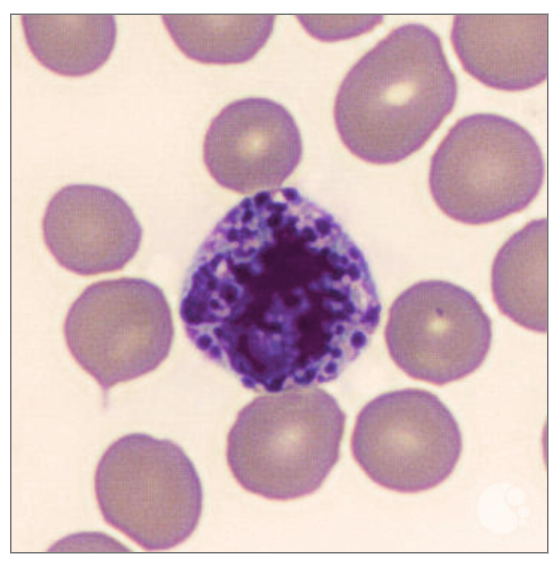
How are eosinophils identified?
~1-4%.
Having a two/bi-lobed/horseshoe nuclei.
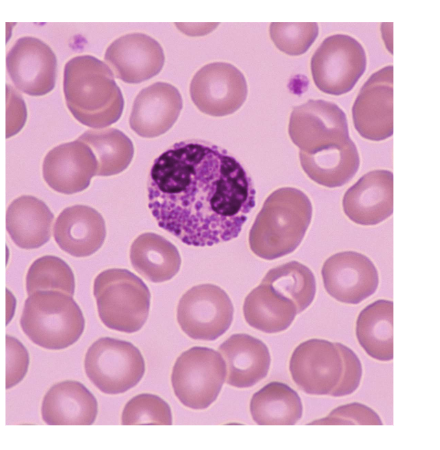
What are the functions of eosinophils?
Capable of phagocytosis; attacking parasitic invaders that are too large to be engulfed.
How do eosinophils attack large parasites?
Attach to the body of the parasite and discharge toxic molecules.
What can these toxic molecules cause?
Tissue damage and allergic reactions.
What percentage of all leukocytes do basophils make up?
Are basophils phagocytic?
<1%.
No, nonphagocytic.
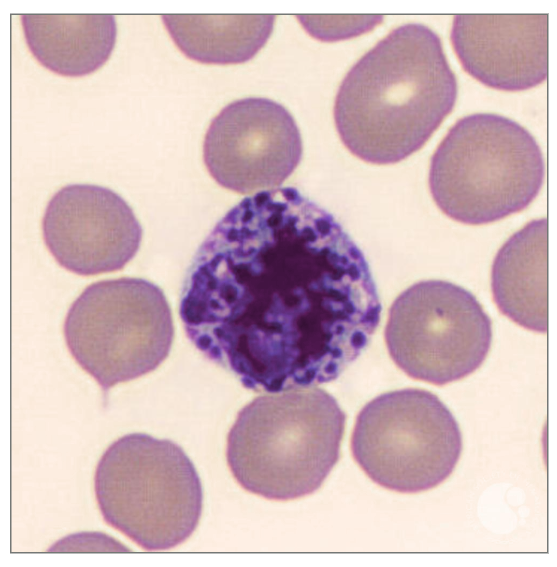
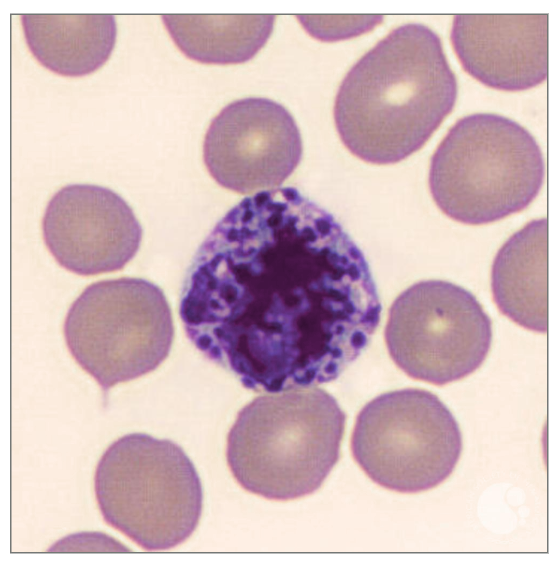
What are basophils responsible for releasing?
Histamine, heparin, and other chemicals that contribute to allergic reactions.
What does histamine cause blood vessels to do?
Vasodilate.
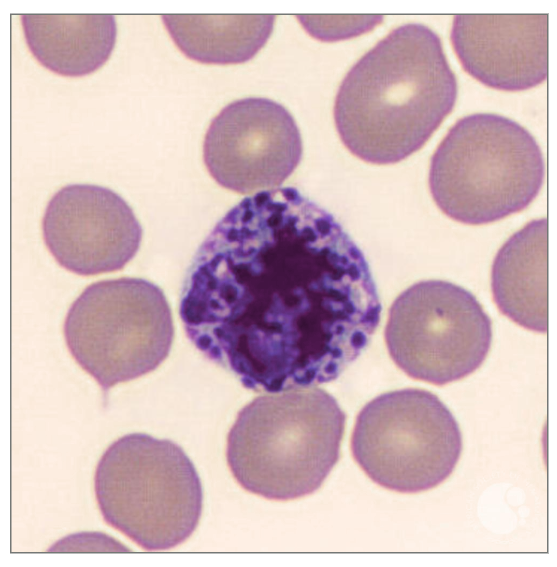
How does histamine make blood vessels "leaky," and why does this matter?
Allows WBCs and protective substances to move into the tissue.
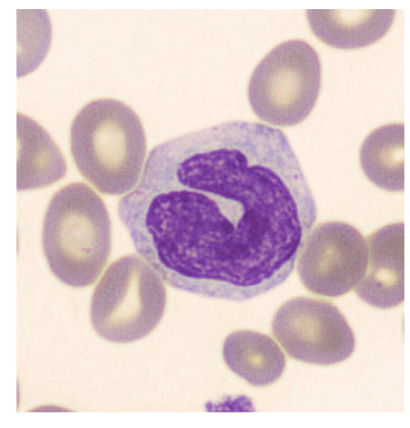
What percentage of all leukocytes do monocytes make up?
~2-8%.
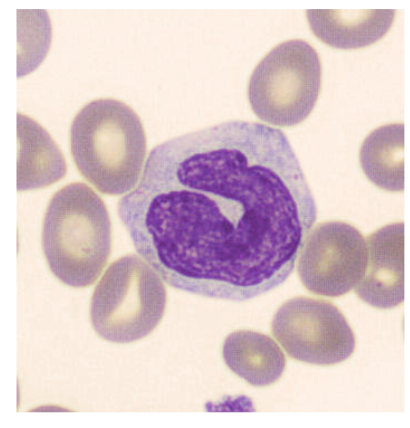
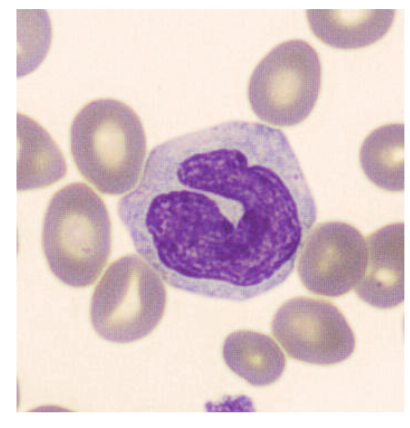
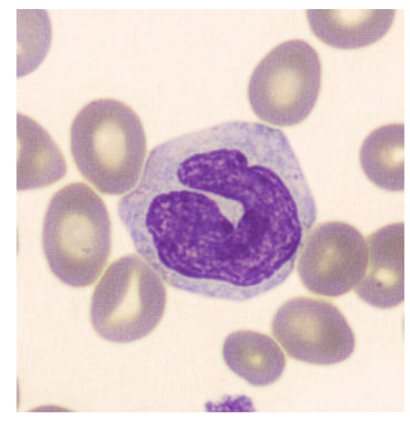
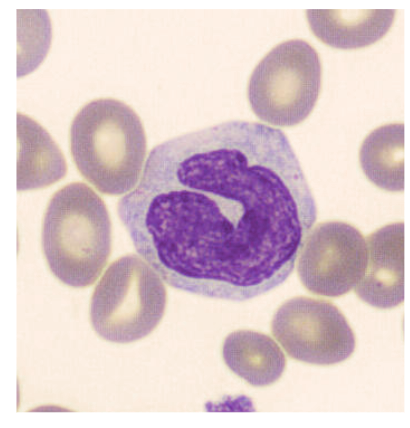
How is the monocyte nucleus shaped?
Large "U" shaped nucleus that fills most of the cell's interior.
What are monocytes capable of?
Phagocytosis — eating abnormal, dead, and dying erythrocytes when in the spleen and liver.
What do monocytes develop into?
Macrophages
Where are monocytes found abundantly?
Connective tissues, gastrointestinal tract, lungs, liver, lymph nodes, and spleen.
What percentage of all leukocytes do lymphocytes make up, and where are most found?
~20-40%; ~99% of them are in the interstitial fluid.
How are lymphocytes identified?
A nucleus that takes up almost the entire cell.
What are the 3 major types of lymphocytes?
B lymphocytes (B cells), T lymphocytes (T cells), null cells.
What do B lymphocytes do?
What do T lymphocytes do?
Secrete antibodies that mark invaders for destruction
Directly damage foreign cells.
What characterizes null cells?
Lack the components that B and T cells have; nicknamed natural killer cells; important against viral infections; fast acting — early immune response.
What are leukocytes derived from?
The same hematopoietic stem cells as erythrocytes.
Where are leukocytes produced and where do they develop?
Produced by bone marrow but develop in lymphatic tissue.
Where do T cells migrate to mature fully?
The thymus gland.
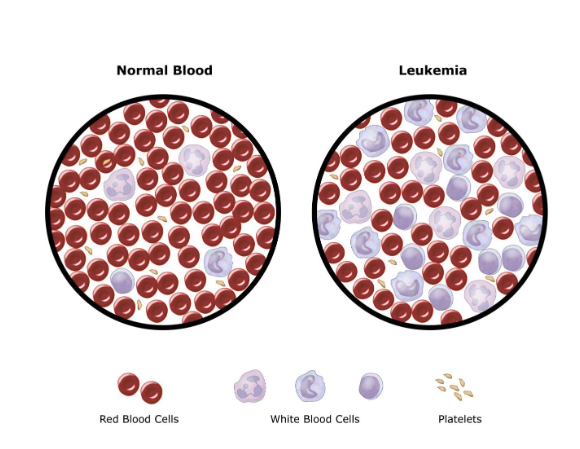
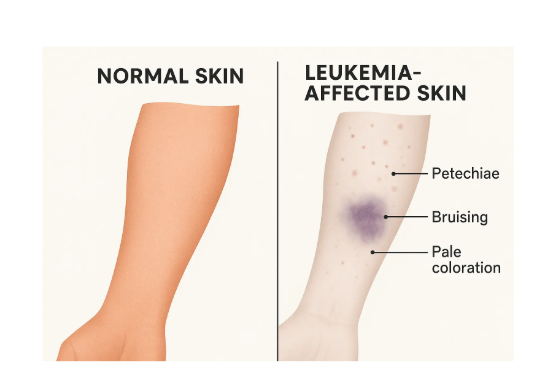
What is leukemia?
Cancer of the bone marrow.
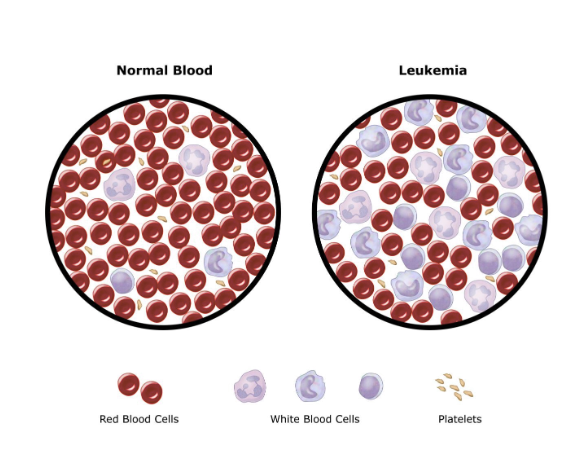
What is the state of WBCs in leukemia?
Immature and poorly functional.
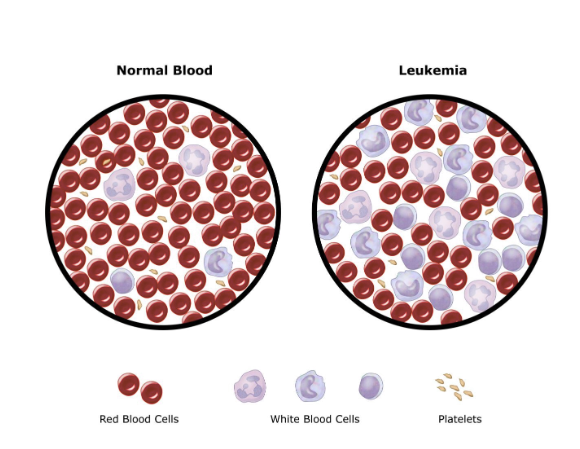
What happens as a result of leukemia?
WBCs crowd out healthy blood cells.
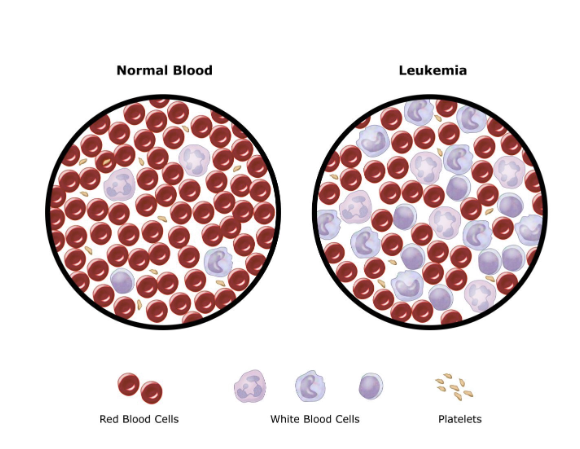
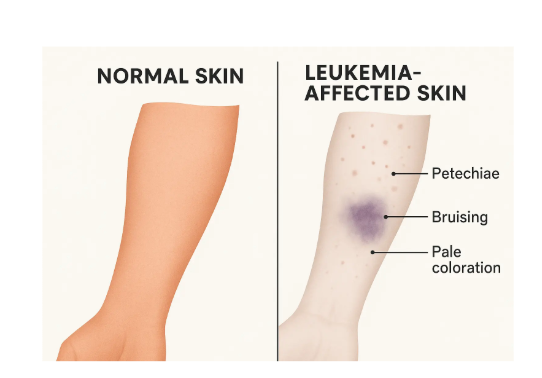
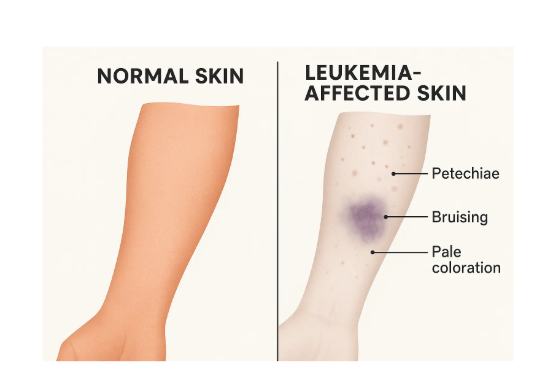
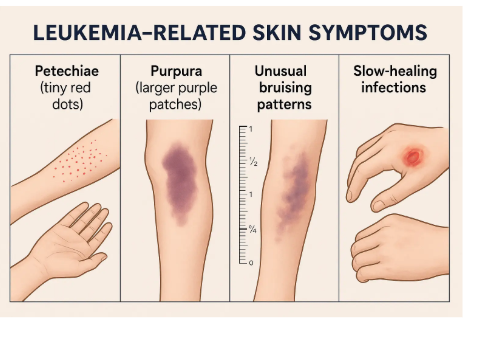
What are the 3 key symptoms of leukemia?
Anemia, hemorrhaging, poor immune system.
What are the 2 first classifications of leukemia, based on what?
Acute and chronic, based on how fast the leukemia progresses.
What characterizes acute leukemia?
Abnormal cells are immature blood cells (blasts); they can't carry out their normal functions; they multiply rapidly.
What characterizes chronic leukemia?
Either produces too many or too few cells; more mature blood cells that can still function normally; sometimes no early symptoms and can go unnoticed for years.
What are the 2 second classifications of leukemia, based on what?
Lymphocytic and myelogenous, based on what type of WBCs are affected.
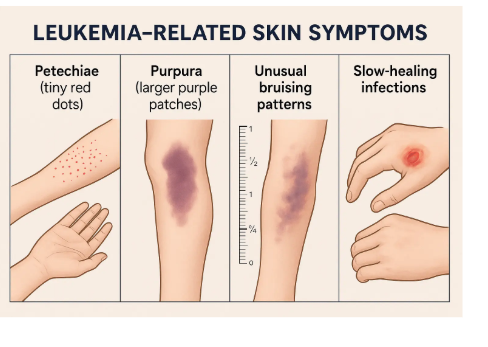
What does lymphocytic leukemia affect?
Lymphoid cells, which form lymphoid or lymphatic tissue.
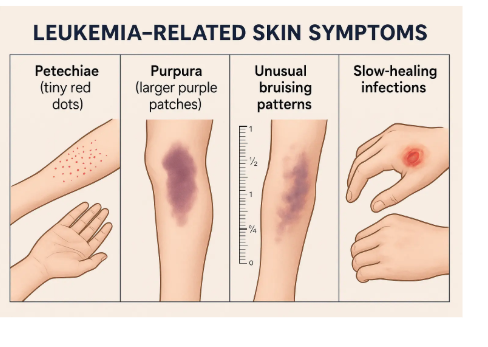
What does myelogenous leukemia affect?
Myeloid cells, which normally give rise to RBCs, WBCs, and platelet-producing cells.
Leukocytes: Leukemia (cont.) — 4 Types
What is acute lymphocytic leukemia (ALL)?
What is acute myelogenous leukemia (AML)?
What is chronic lymphocytic leukemia (CLL)?
What is chronic myelogenous leukemia (CML)?
Most common type in young children, but can also occur in adults.
Most common type of acute leukemia in adults, but does also occur in children.
Most common chronic adult leukemia.
Mainly affects adults.
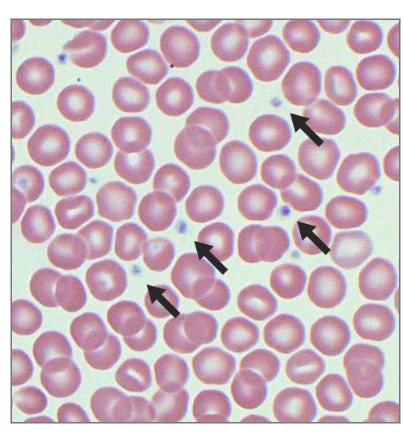
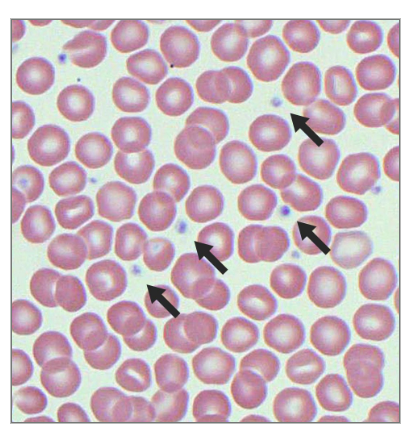
What are platelets also called, and what are they fragments of?
Thrombocytes; small fragments of megakaryocytes, smaller than erythrocytes.
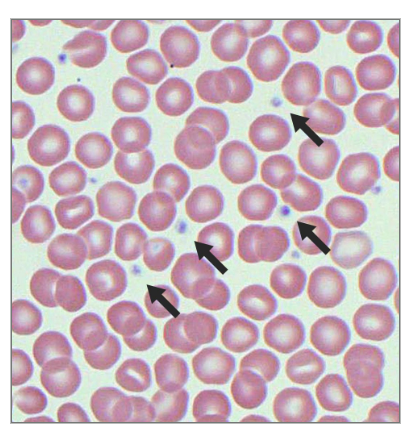
What do platelets contain, and what do they lack?
Mitochondria, smooth ER, and cytoplasmic granules; no nucleus.
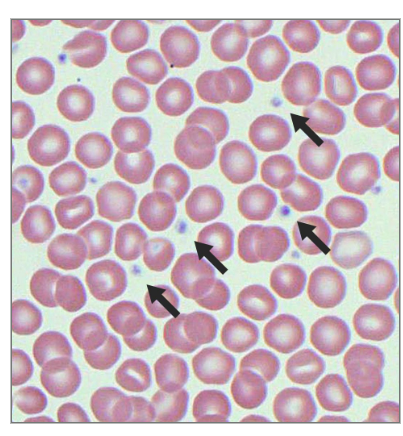
What is the normal platelet concentration?
~100,000-500,000 platelets/mm³.
What are the 4 functions of platelets?
Secrete clotting factors and growth factors for vessel repair;
initiate formation of a "plug" to stop bleeding;
phagocytize bacteria
chemically attract neutrophils and monocytes to sites of inflammation.
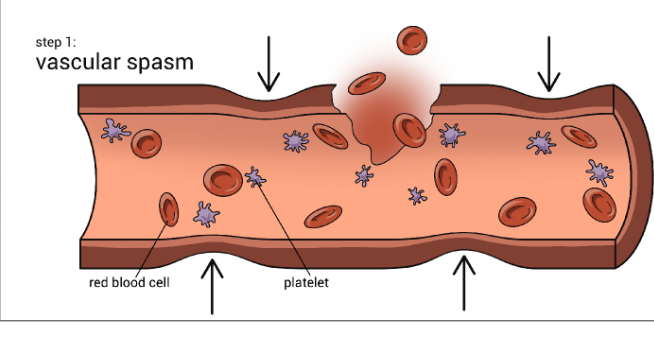
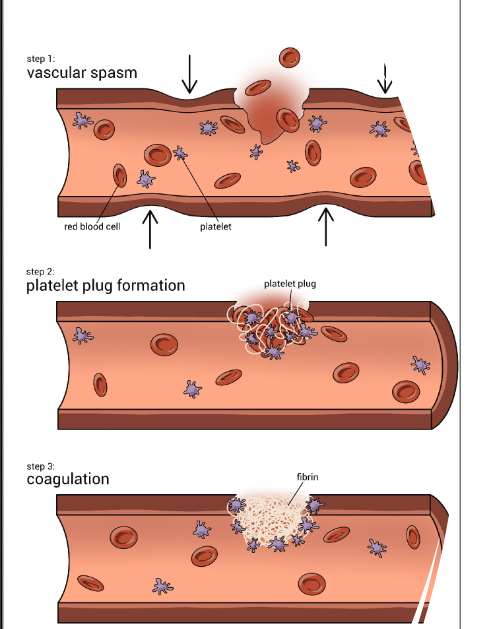
What is hemostasis?
Mechanism to stop bleeding; a 3-step process.
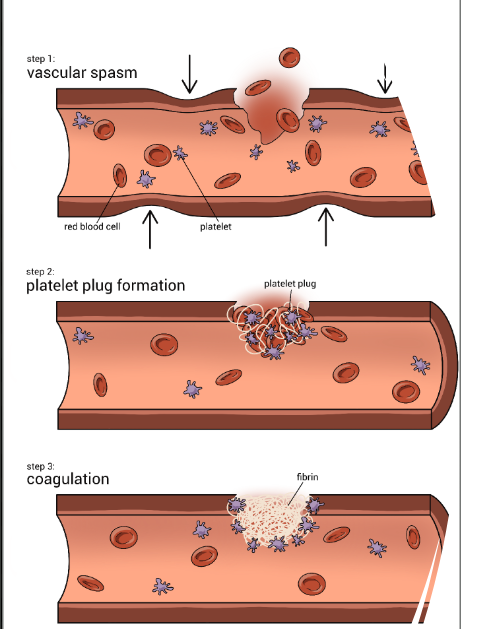
Steps of Hemostasis
3-step process
Step 1: vascular spasm
Damage triggers vasoconstriction
Also activates the sympathetic NS
Step 2: platelet plug
Sticky thrombocytes release various proteins and chemicals to form a clot
They also adhere to the damaged blood vessel
Occurs in a few steps
Von Willebrand factor (vWF) in blood binds to collagen fibers
Platelets bind to the vWF
Platelets release serotonin and epi, which causes vasoconstriction, and chemicals to facilitate blood coagulation
This whole process is a positive feedback loop
Step 3: Blood clot formation
Blood is converted into a solid gel called a clot or thrombus
Occurs around the platelet plug
Coagulation factors converts fibrinogen into fibrin
Forms a lattice for clot formation
Fibrin is key for the cessation of blood loss
Blood Typing
What determines whether RBCs have certain proteins on them?
What does ABO type refer to?
What is the Rh factor?
Genetics.
Presence or absence of A and/or B antigens.
A cell surface protein that you either have or don't (+ or -).
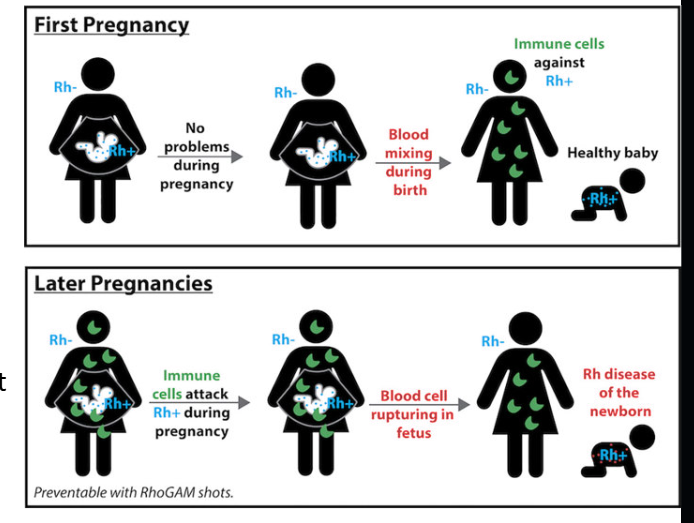
Blood Typing (cont.) — Pregnancy & Rh
When does mother and fetus blood mix?
During birth.
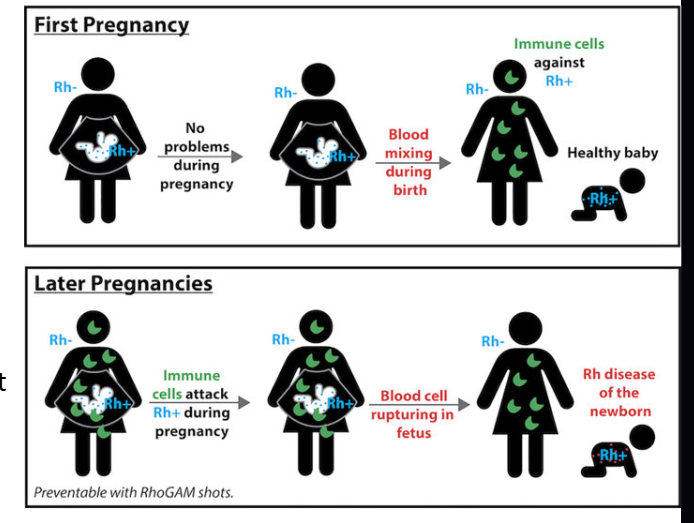
Blood Typing (cont.) — Pregnancy & Rh
What happens if the mother is Rh-negative and the baby is Rh-positive?
What happens if this is left untreated?
The mother will need Rh immunoglobulin (RhIg).
The mother's immune system will attack the baby's blood.
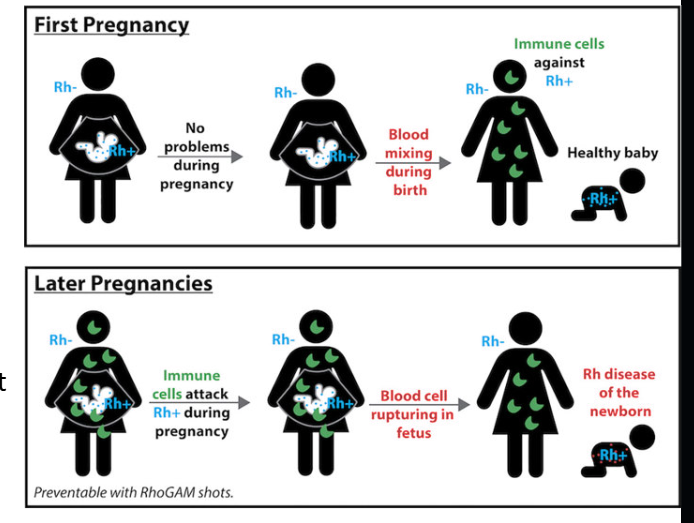
Blood Typing (cont.) — Pregnancy & Rh
Is this usually an issue during the first pregnancy?
What happens if the baby has an antigen that the mother doesn't?
No, usually not an issue the first pregnancy.
The baby may need treatment after birth.