2nd Order Quiz 1
 Call Kai
 Learn
Learn Practice Test
 Spaced Repetition
 Match
Match Flashcards
 Knowt Play
1/60

Earn XP
Description and Tags
function (what the muscle does - its action) • innervation (what nerve makes the muscle work) • Two different boney attachments (sometimes more than two bones) - usually when a muscle functions, the muscle attachment at one bone is stationary and the boney attachment at the other bone is on the bone that is moving
Name | Mastery | Learn | Test | Matching | Spaced | Call with Kai | Chat |
|---|
No analytics yet
Send a link to your students to track their progress
61 Terms
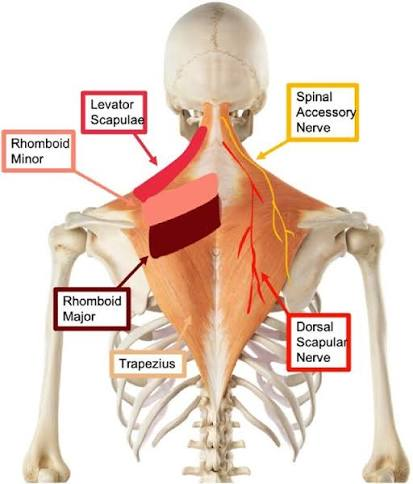
Superficial muscle of the back
Trapezius M
function (what the muscle does - its action)
Superior Fibers: Elevate scapula; superiorly rotate scapula
Middle Fibers: Retract scapula
Inferior Fibers: Depress Scapula
innervation (what nerve makes the muscle work)
Accessory Nerve (CN XI)
Latissimus Dorsi M
function (what the muscle does - its action)
Agonist of arm extension; adducts arm
medially rotates arm
innervation (what nerve makes the muscle work)
Thoracodorsal nerve (C6-C8)

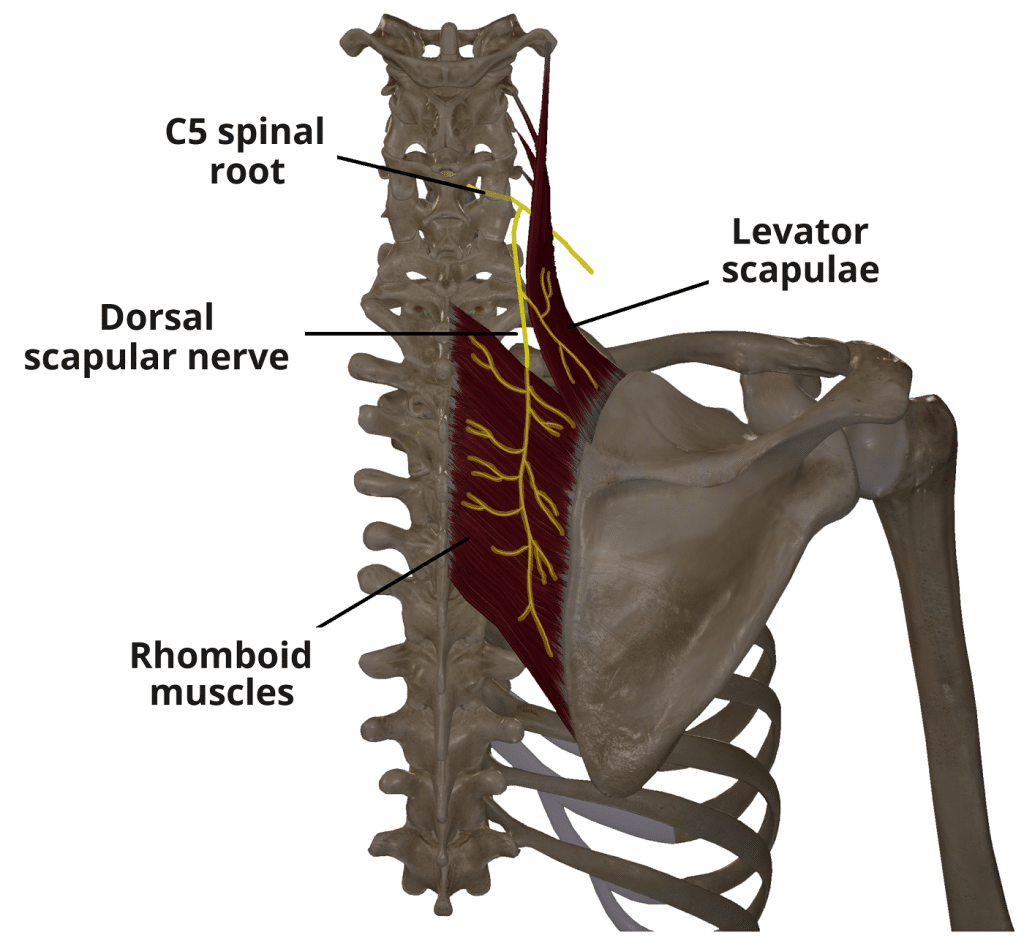
Rhomboid Major M
function (what the muscle does - its action)
Elevates scapula
Retracts (adducts) scapula
Inferiorly rotates scapula
• innervation (what nerve makes the muscle work)
Dorsal Scapular Nerve (C5)
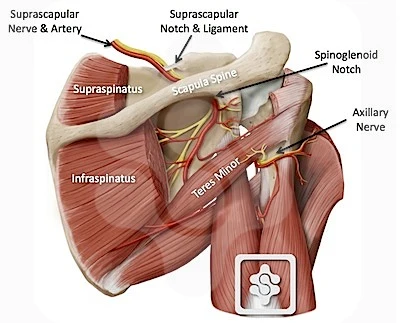
Teres Minor M
function (what the muscle does - its action)
Laterally rotates arm (agonist)
Adduction of arm
innervation (what nerve makes the muscle work)
Axillary Nerve (C5-C6)

Supraspinatus M
function (what the muscle does - its action)
Abducts Arm
• innervation (what nerve makes the muscle work)
Suprascapular Nerve (C5-C6)
Serratus Anterior M
function (what the muscle does - its action)
Agonist in scapula protraction
Superiorly rotates scapula
Stabilizes scapula
• innervation (what nerve makes the muscle work)
Long Thoracic Nerve (C5-C7)

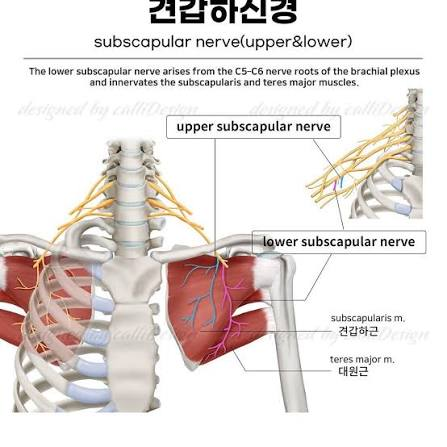
Subscapularis M
function (what the muscle does - its action)
Medially rotates arm
• innervation (what nerve makes the muscle work)
Upper and Lower Subscapular nerves (C5-C6)
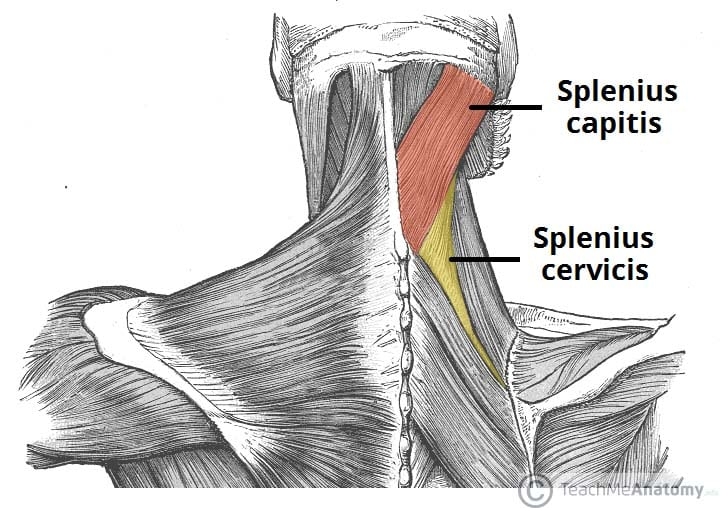
Splenius Capitis M
function (what the muscle does - its action)
Rotation of head to same side (unilateral action)
Extension of neck (bilateral contraction)
• innervation (what nerve makes the muscle work)
Cervical spinal nerves
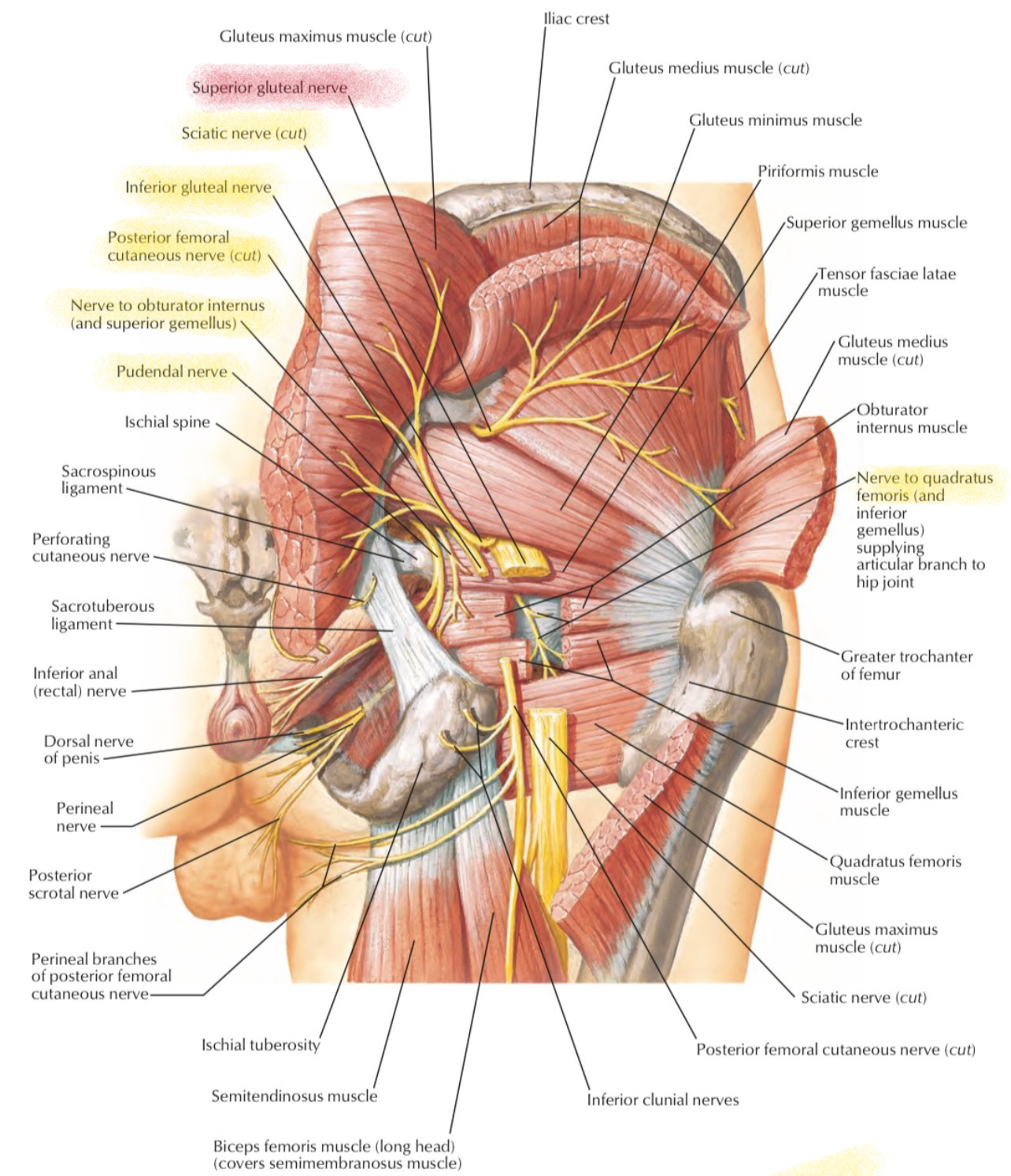
Gluteus Medius M
function (what the muscle does - its action)
Abduction of thigh
Medially rotates thigh
• innervation (what nerve makes the muscle work)
Superior Gluteal Nerve (L4-S1)
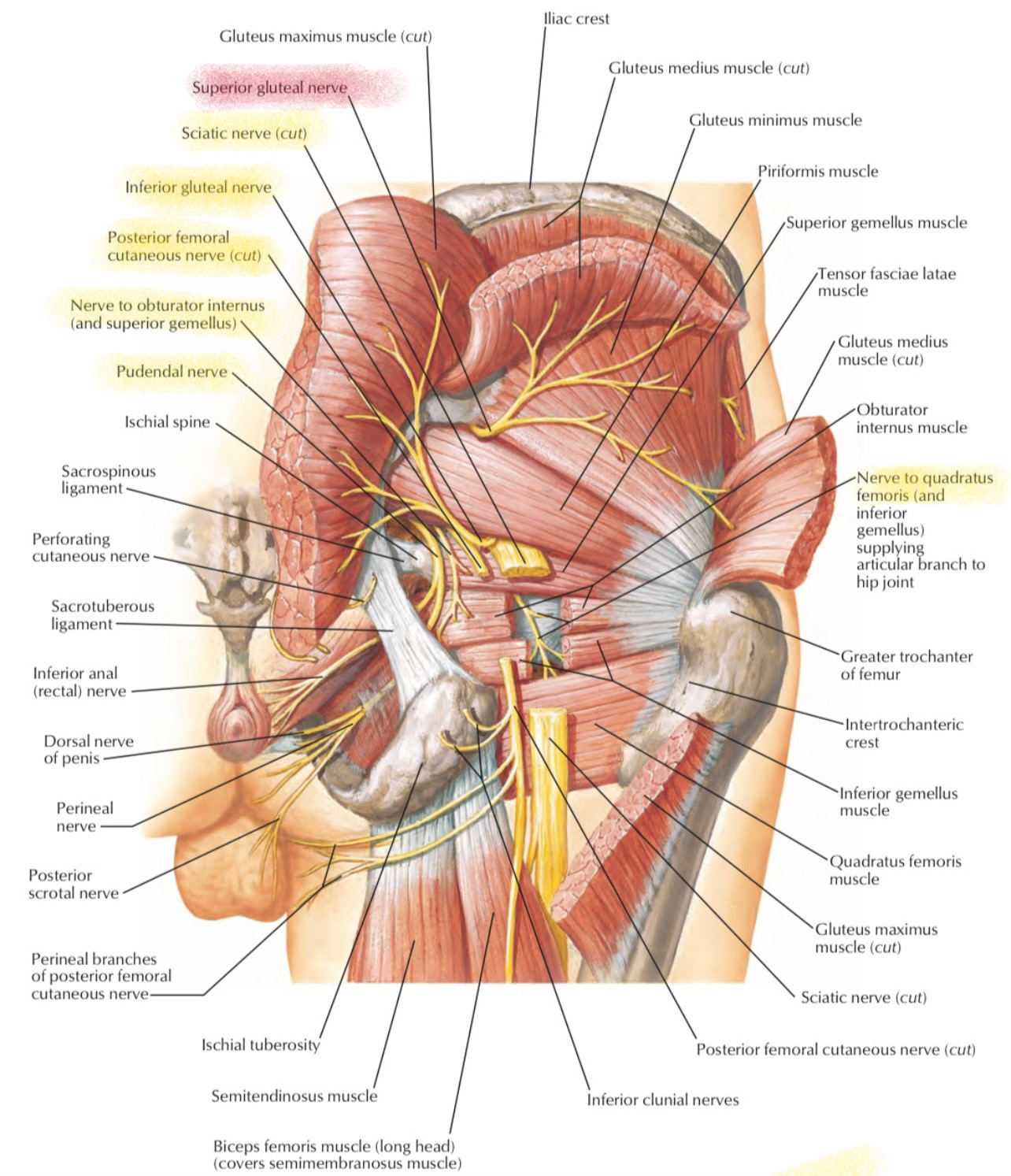
Gluteus Maximus M
function (what the muscle does - its action)
Extension of thigh
Laterally rotates thigh
• innervation (what nerve makes the muscle work)
Inferior Gluteal Nerve (L5-S2)
Rhomboid Minor M
structure
Levator Scapulae M
structure
Deltoid M
structure
define posterior border
Teres Major M
structure
Infraspinatus M
structure
Intermediate back muscles
Serratus Posterior Superior M
structure
Serratus Posterior Interior M
structure
Deep Muscles of the Back
Splenius Cervicis M
Iliocostalis M
iliocostalis lumborum M
thoracis M
cervicis M
Longissimus M
Longissimus thoracis M
cervicis M
capitis M
Spinalis M
Spinalis Thoracis M
cervicis M
capitis M
Semispinalis MM
Semispinalis thoracis M
cervicis M
Capitis M
Multifidus MM
Rotatores MM
Other Muscles of the Back
Interspinales M
Intertransversarii M
Levator Costarum M
Suboccipital Region
Oblique capitis superior M
Oblique Capitis Inferior M
Rectus Capitis Posterior Major M
Rectus Capitis Posterior Minor M
Greater Occipital N
Occipital A
Accessory N
The Spinal Cord
Ligamentum Flavum
Dura Mater
Arachnoid Membranes
Denticulate Ligaments
Spinal Ganglion/ Dorsal Root Ganglion
Spinal N
Dorsal Roots
Ventral Roots
Conus Medullaris
Cauda Equina
Filum Terminale
Gluteal Region
Piriformis M
Superior gluteal AA, VV, and NN
Gluteus Minimus M
Sciatic N
Inferior Gluteal AA, VV, and NN
Superior Gemellus M
Obturator Internus M
Inferior Gemellus M
Quadratus Femoris M