Honors Biology Semester 1 Study Guide
 Studied by 14 people
 Call Kai
 Learn
Learn Practice Test
 Spaced Repetition
 Match
Match Flashcards
 Knowt Play
 Podcast
1/290

There's no tags or description
Looks like no tags are added yet.
Name | Mastery | Learn | Test | Matching | Spaced |
|---|
No study sessions yet.
291 Terms
The Cell Theory:
All living things are composed of cells.
Cells are the smallest living unit in all organisms
New cells are produced from pre-existing cells
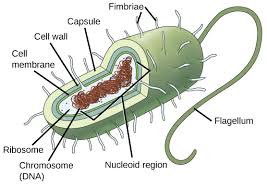
Prokaryotes don’t…
have a nucleus and don’t contain membrane bound organelles.
Prokaryotes…
Have genetic material(DNA or RNA), are smaller and simpler that eukaryotes and carry out every activity of living things.
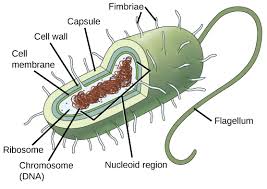
Example of Prokaryotes…
bacteria and archaea.
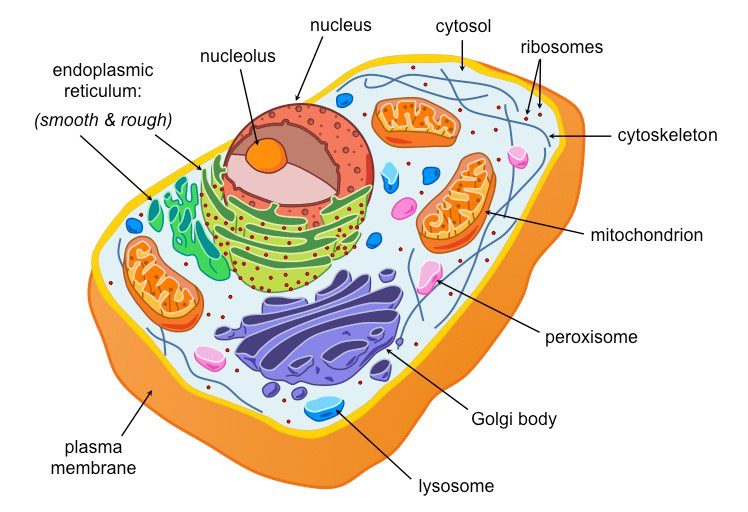
Eukaryotes contain…
a nucleus where genetic material is enclosed.
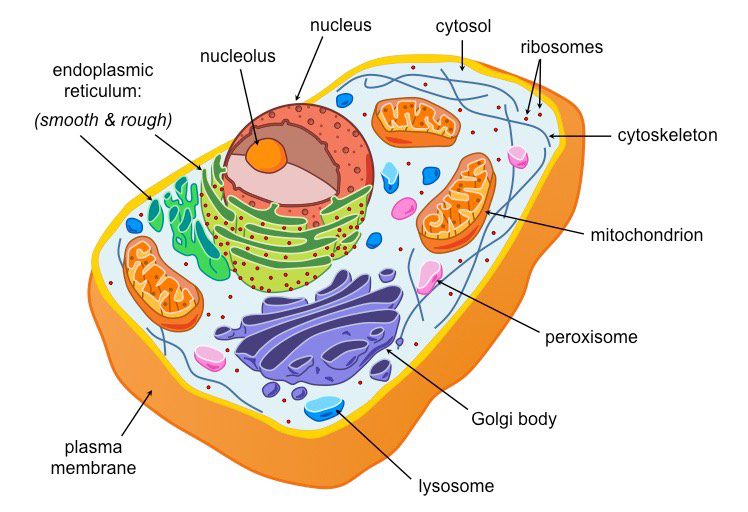
Eukaryotes
Generally larger than Prokaryotes and are more complex
Contain many specialized structures and internal membranes.
Display great variety, have membrane bound organelles.
single celled organisms to multicellular.
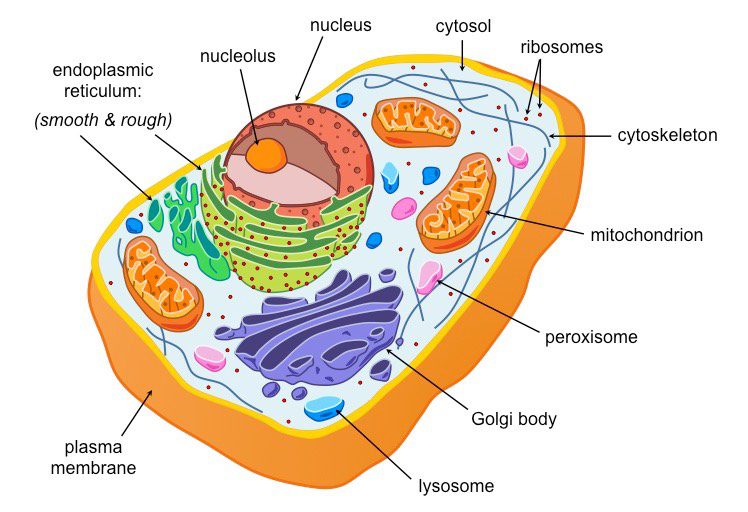
Examples of Eukaryotes
Plants, animals, fungi, protists.
Organelles are…
“little organs” within a cell that perform specific functions, they’re specialized just like your organs.
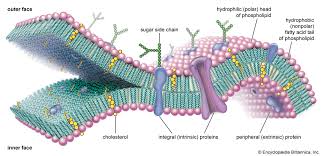
Cell(or Plasma) Membrane
A phospholipid bilayer that surrounds and protects the cell, regulating what enters and exits. (BOTH Eukaryotes and Prokaryotes and BOTH Plant and Animal)
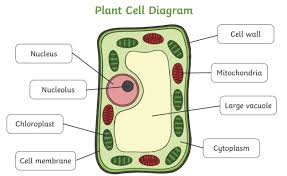
Cell Wall
Provides structure and support for plant cells, it does NOT replace the cell membrane.(BOTH Prokaryotes and Eukaryotes, Plant cells only)
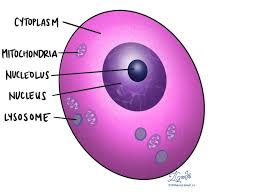
Cytoplasm
the jelly-like fluid that fills a cell from the nuclear membrane to the cell membrane. (BOTH Eukaryotes and Prokaryotes and BOTH Plant and Animal)
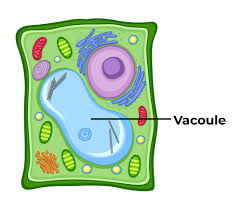
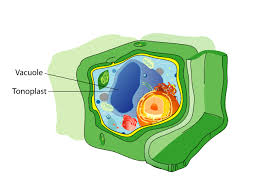
Vacoule
stores nutrients, waste products, and helps maintain pressure in plant cells to help support plant structures. (Eukaryotes only, Plant cells typically larger, Animals cells may contain smaller ones. )
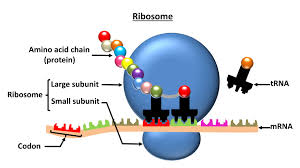
Ribosome
Site of protein synthesis( the cellular structure where amino acids are assembled into proteins. BOTH Eukaryotes and Prokaryotes and BOTH plant and Animal cells.)
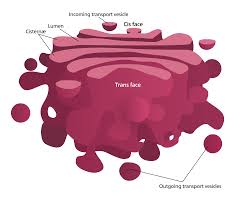
Golgi Apparatus
A series of stacked membranes that modify, package, and distribute proteins and lipids from the ER. (**Eukaryotes only, found in both plant and animal cells.)
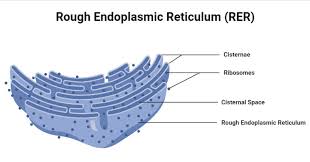
Rough Endoplasmic Reticulum(ER)
Processes and synthesizes proteins, studded with ribosomes on its surface. Eukaryotes only, play a critical role in the production of proteins destined for export or for use within the cell. (Plant and Animal)
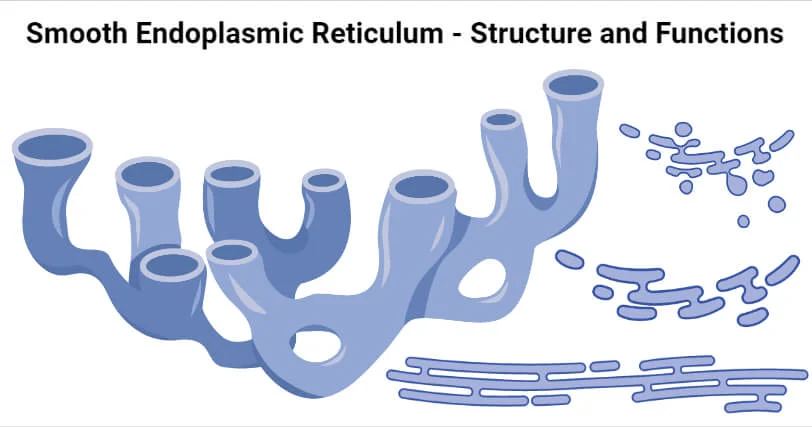
Smooth ER
Processes lipids and carbohydrates, are involved in detoxification. Eukaryotes only, present in both plant and animal cells.
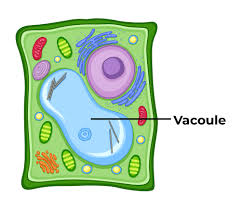
Central Vacuole
A large organelle that stores water, nutrients, and waste products in plant cells. It helps maintain pressure and plays a role in cell growth. (BOTH Prokaryotes and Eukaryotes and ONLY plant cells)
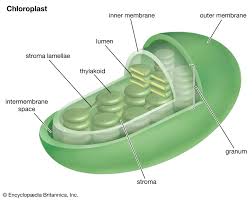
Chloroplast
Organelles that capture sunlight and convert it into chemical energy(photosynthesis), They contain chlorophyll, which is essential for this process and gives plants their green color. (ONLY Eukaryotes and ONLY Plant cells )
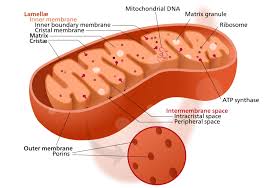
Mitochondria
Known as the powerhouse of the cell, they produce ATP through cellular respiration. (ONLY Eukaryotes and BOTH plant and animal cells)
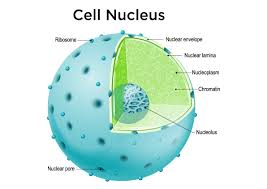
Nucleus
The control center of the cell, containing genetic material (DNA) and controls the cells activities. (ONLY Eukaryotes and BOTH plant and animal cells)
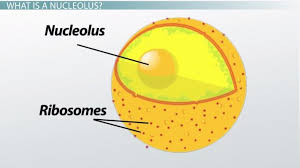
Nucleolus
Assembly and production of ribosomes(ONLY Eukaryotes and BOTH plant and animal cells).
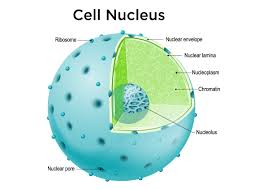
Nuclear Membrane(envelope)
The membrane that surrounds the nucleus of a EUKARYOTIC cell(BOTH plant and animal)
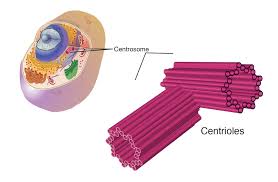
Centrioles
Located near the nucleus, have paired bundles of cylinders called microtubules that help organize the movement of chromosomes during cell division(ONLY eukaryotic animal cells)
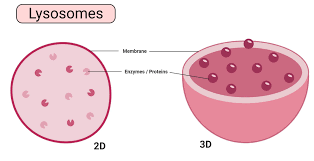
Lysosomes
Organelles that contain digestive enzymes to break down waste materials and cellular debris, found in eukaryotic cells(animal).
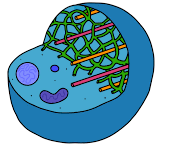
Cytoskeleton (microtubules)
Tubules and filaments that give the cell its shape.They provide structural support and movement.(BOTH plant and animal cells, eukaryotic).
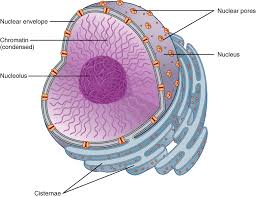
Nuclear Pores
Small openings in the nuclear envelope that allow the passage of molecules in and out of the nucleus. (Found in eukaryotic cells, animal cells).
Vesicle
The package created by the Golgi Apparatus
What kind of molecules can diffuse(go through) the cell membrane directly?
Small uncharged molecules such as oxygen and carbon dioxide.
How can some large molecules and charged ions get through the cell membrane?
They use transport proteins or channels in the membrane.
How is the nuclear pore similar to the cell membrane?
Molecules and ions enter and exit.
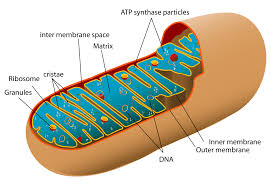
What happens inside of the mitochondria?
Small molecules and oxygen are converted into carbon dioxide and a form of energy the cell can use(ATP).
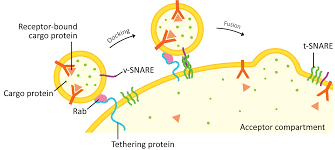
How do vesicles move through the cell?
They are pulled a long the cytoskeleton by a protein called kinsen.
What structures are present in an animal cell but not a plant cell?
lysosomes and centriols.
What structures are present in a plant cell but not an animal cell?
Cell wall, chloroplasts, and plastids.
What three structures help support the plant cell and maintain its shape?
Cytoskeleton, cell wall, and central vacoule
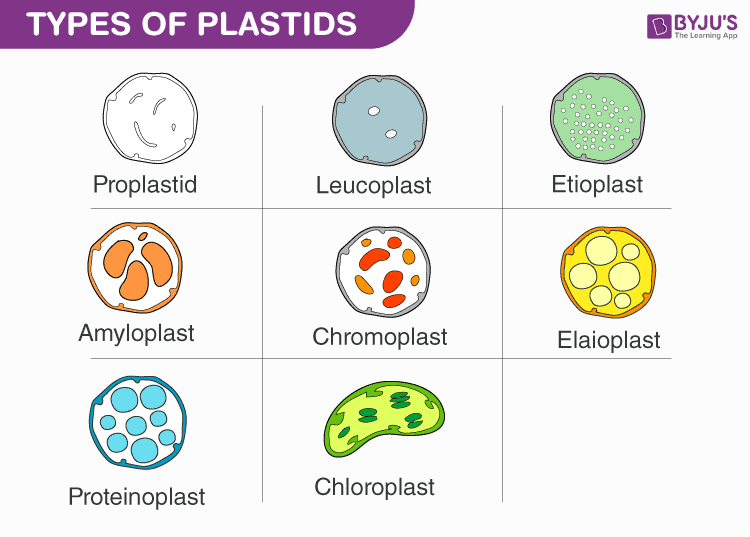
Plastids
store food or pigments
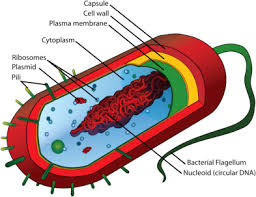
Capsule
Outermost layer of the cell that provides protection(Prokaryotes)
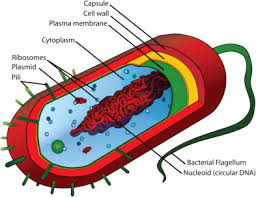
Nucleoid
Region inside the cell that contains genetic material but is not surrounded by a nuclear membrane.(Prokaryotes)
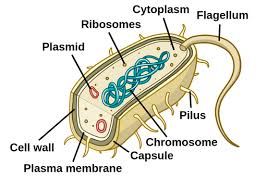
Plasmid
Circular piece of genetic material(Prokaryotes)
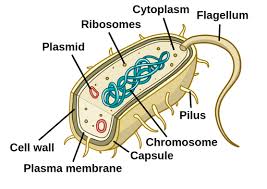
Flagellum
A long, whip/hair-like structure that the cell uses for movement.(Prokaryotes)
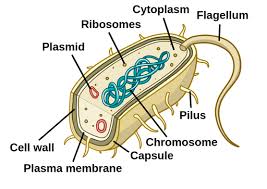
Pilius(pili)
Hair-like structure that attaches to a surface and can transfer genetic material from one cell to another.(Prokaryotes)
What structures are present in plant and animal cells, but not in a bacteria cell?
Nucleus, ER, golgi, and mitochondria.
What structures are present in a bacteria cell but not in a plant or animal cell?
Nucleoid, capsule, and plasmid
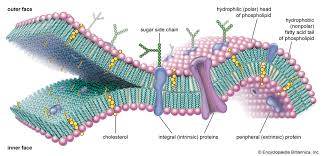
The Plasma/Cell Membrane
The thin, flexible boundary between the cell and its watery environment. It regulates the movement of the molecules into and out of the cell. It also is used for protection and support.
The plasma membrane allows…
nutrients into the cell AND waste to leave the cell
The plasma membrane helps maintain…
homeostasis
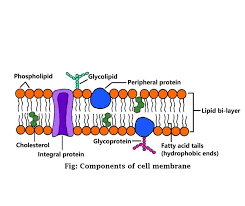
Function of the plasma membrane
Selectively permeable-
Allows some substances to pass through while keeping others out.
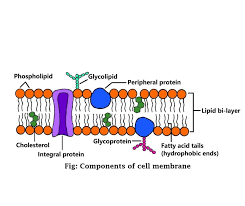
Phospholipid Bilayer
Two layers of phospholipids are arranged tail to tail.
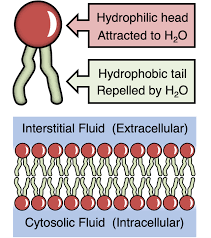
Phospholipid
Glycerol backbone; two fatty acid chains, and a phosphate group.
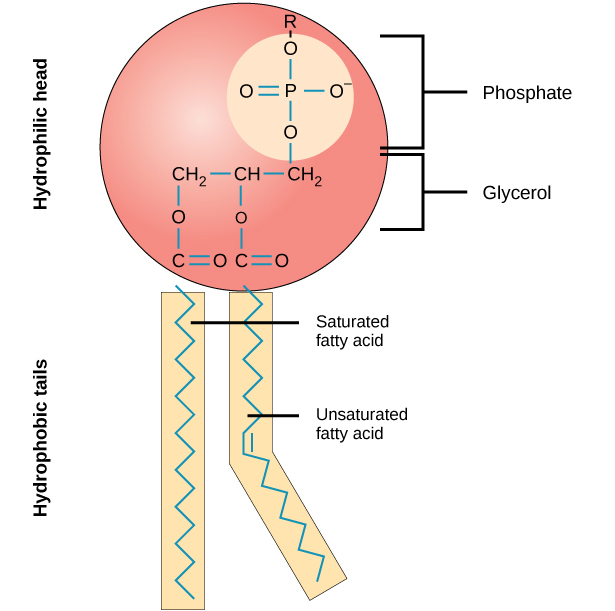
Phospholipid hydrophilic head
water loving(polar)
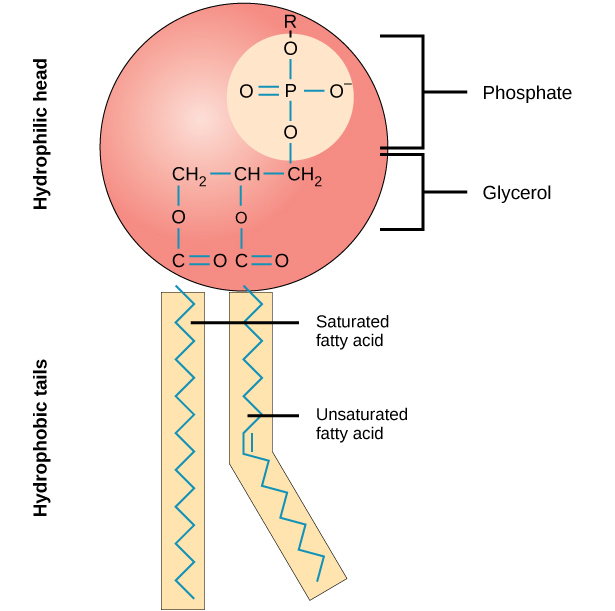
Phospholipid hydrophobic tails
water fearing(non polar)
Why can’t water soluble substances pass through the Phopholipid Bilayer?
They are stopped by the middle section(non polar tails)
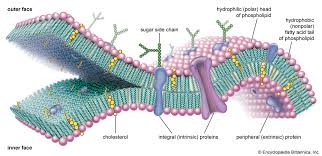
Phospholipid Bilayer protiens
transmit signals inside the cell, act as a support stucture, and provide pathways through the membrane for substances to enter and leave(transport protiens/protein channels)
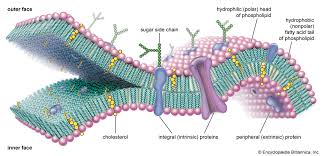
Phospholipid Bilayer cholesterol
Non polar; contributes to fluidity of membrane by preventing fatty acid chains/tails from sticking together.
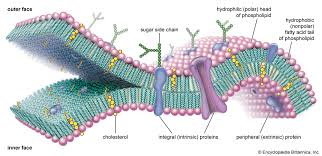
Phospholipid Bilayer carbohydrates
Identify chemical signals from other cells(communication)
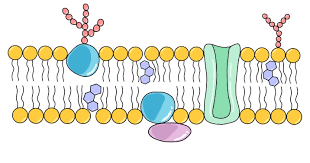
Fluid mosaic model
a fluid structure with various proteins and other molecules embedded in a phospholipid bilayer, like a mosaic
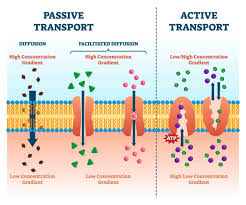
Cellular Transport
Process by which materials enter and leave the cell.
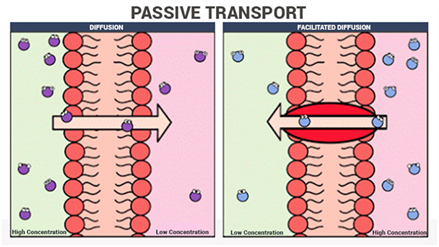
Passive transport
No cellular energy used.

Diffusion (Passive transport)
The movement of molecules from an area of high concentration to a low concentration.
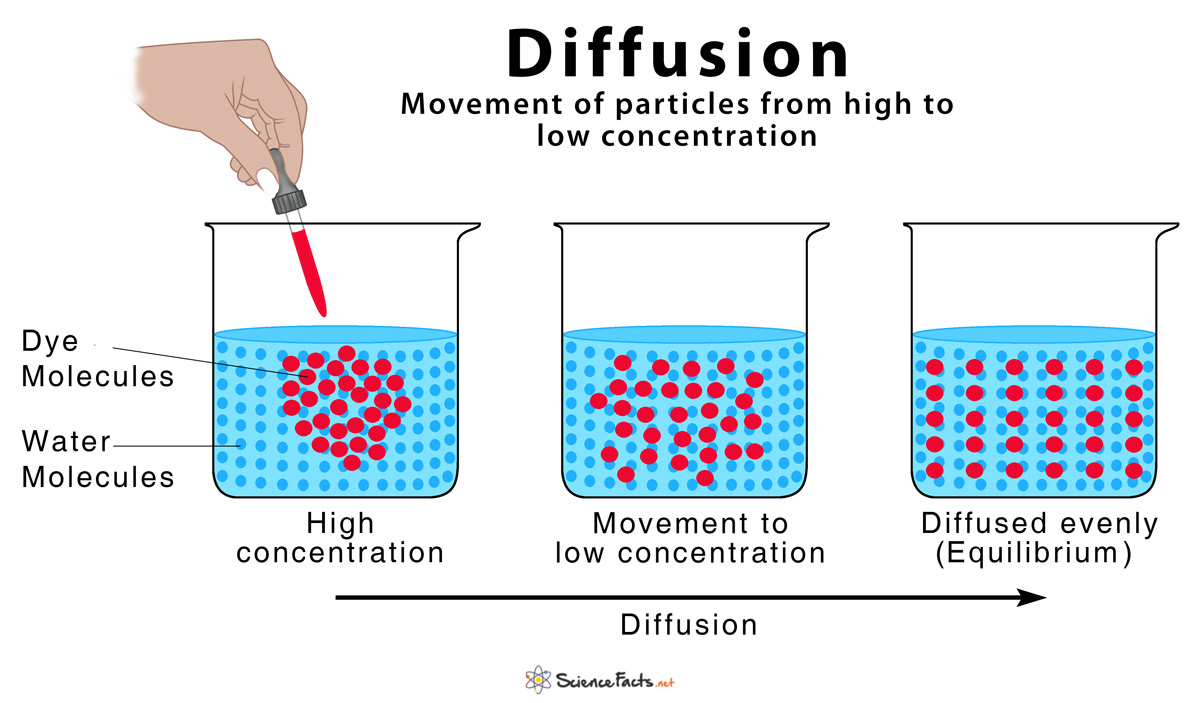
Concentration(diffusion)
The number of molecules in a solution.
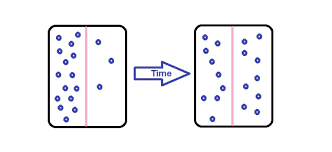
Diffusion is due to the..
random movement of particles.
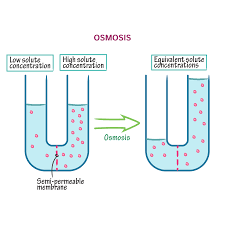
Osmosis(Passive transport)
The diffusion of water across a selectively permeable membrane.

Selectively permeable
Some substances can pass across them and others cannot.
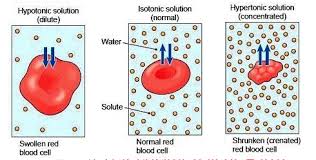
Hypertonic solution(osmosis)
A high solute concentration outside of the cell causes water to diffuse out of the cell.
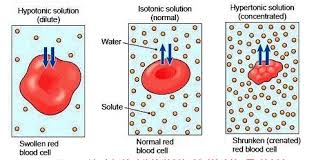
Hypotonic solution(osmosis)
A high solute concentration inside of the cell causes water to diffuse into the cell.
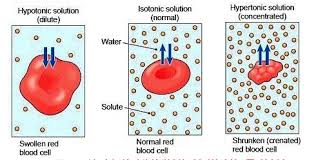
Isotonic solution(osmosis)
The concentration of solute is the same on both sides of the membrane.
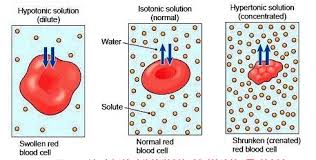
If the solution is hypertonic…
The cell is hypotonic. Water will leave the cell, and the cell will shrink.
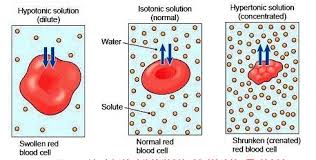
If the solution is hypotonic…
The cell is hypertonic. The water enter the cell, and the cell will swell.
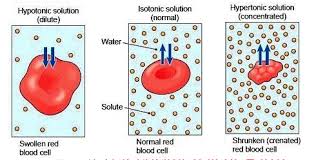
If the solution is isotonic…
The cell is isotonic. Water will enter and leave the cell, the cell will stay the same.
“Hyper” means…
over, excessive, more than normal
“Hypo” means…
under, beneath, less than normal
“Iso” means…
equal, the same ratio of solutes to solvent.
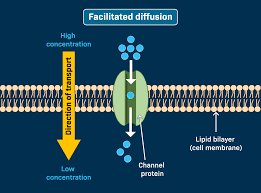
Faciliated diffussion(Passive transport)
Uses carrier protein to move materials across the cell membrane.

Active transport
Uses cellular energy to move materials across the cell membrane against the concentration gradient(goes from Low to High concentration)

Protein pump(Active transport)
Protiens embedded in the cell membrane help to move ions(has a charge) and small molecules
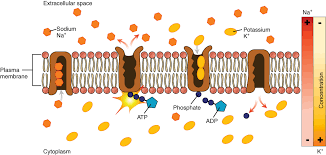
Na+ / K+ AtPase pump
An enzyme that uses energy(ATP). Moves 3 Na+ ions out of the cell and 2 K+ ions into the cell.
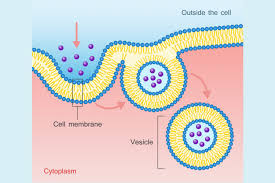
Endocytosis(Active Transport)
Movement of substances into the cell by vacuoles.
Phagocytosis(Endocytosis)
taking in large particles of food; blood cells consuming bacteria.
Pinocytosis(Endocytosis)
taking in water by using vacuoles
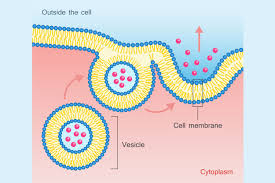
Exocytosis(Active Transport)
Movement of substances out of the cell by vacuoles.
“Endo” means…
inside
“Exo” means…
outside
Biome
a large geographic region on Earth defined by its specific climate, landscape, plants, and animals.
Ecosystem
a community of living organisms interacting with their environment, including both biotic and abiotic components.
Community
All of the living organisms in one area
Population
A group consisting of one species that lives in a particular area.
Habitat
All of the abiotic and biotic factors an organism needs to live.
Niche
The role an organism fills within the habitat.
Autotroph
a producer(an organism that makes its own food)
Heterotroph
An organism that can’t make its own food to get energy(consumer)
Chemoautotroph
An organism that obtains energy by oxidizing inorganic substances, using this energy to produce organic compounds.(producer)
Biotic and abiotic factors that affect land and aquatic biomes:
Biotic: organisms such as animals and plants, Abiotic:non-living components like water, soil, and climate.

Beneficial bacteria in terms of mutualism:
Ecoli in your intestines helps break down food and synthesize vitamins, providing nutrients to the host.
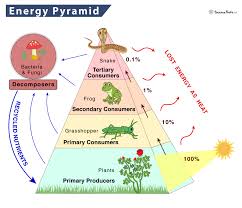
How does energy flow through ecosystems in one direction?
Energy flows from producers to consumers and decomposers, with each trophic level receiving only a fraction of the energy from the level below.
Competition
When two organisms require the same resource, they’ll compete.
Predator-Prey relationships
One organism preys(feeds) on another.
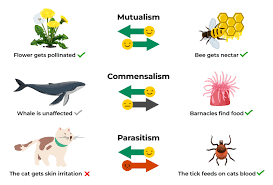
Symbiotic relationships
Relationships characterized by the close living of two organisms, specifically one living in or on another.
How does competition, predator-prey, and symbiotic relationships help provide a stable ecosystem?
These relationships maintain balance by regulating population sizes, encouraging biodiversity, and promoting healthy interactions between species.
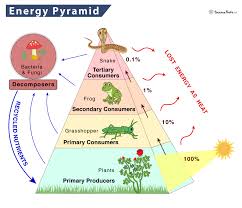
How does energy flow?
About 10% of energy is available starting from the producers going from one trophic level to the next.
Biomass is…
the “weight” of an organism or a group of organisms.