Topic 1.3 - Developments in South & Southeast Asia (1200-1450)
 Call Kai
 Learn
Learn Practice Test
 Spaced Repetition
 Match
Match Flashcards
 Knowt Play
1/13

There's no tags or description
Looks like no tags are added yet.
Name | Mastery | Learn | Test | Matching | Spaced | Call with Kai | Chat |
|---|
No analytics yet
Send a link to your students to track their progress
14 Terms
Sufis
mystical Muslim group that believed they could draw closer to God through prayer, fasting, & simple life

Bhakti Movement
Indian movement that attempted to transcend the differences between Hinduism and Islam.

Syncretic
A religion that combines several traditions
Guru Kabir
(1440-1518) a blind weaver, who was one of the most famous bhakti teachers, went so far to teach that Shiva, Vishnu, and Allah were all manifestations of single, universal deity.

Rajput Kingdoms
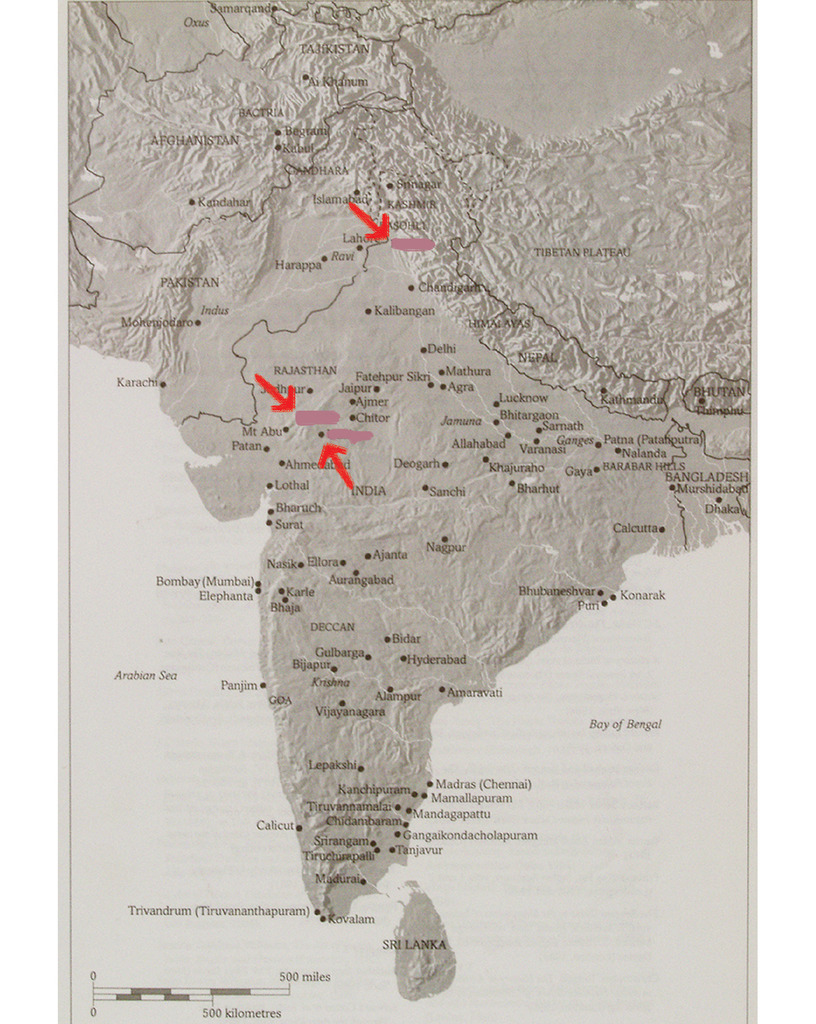
set of kingdoms in India that arose after the fall of the Gupta dynasty were hundreds of kingdoms ruled by land owning Kshatriyas. wealthy due to trade and a good economy. Hindu beliefs and this is when the practice of sati began, as well as purdah (the separation of women from society).
Rajputs
Members of a mainly Hindu warrior caste from northwest India. The Mughal emperors drew most of their Hindu officials from this caste, and Akbar I married a Rajput princess.

Sultanate of Delhi
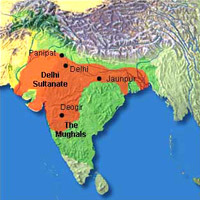
Islamic state in northern India established by Mahmud's successors in 1206 C.E. that began to establish the presence of Islam on the Indian subcontinent.
Vijayanagara Empire
established by two brothers, Harihara I and Bukka, from the Delhi Sultanate which wanted to extend trad further south. Established trade, built temples and re- established Hinduism as major influence in South Asia.

Sinhala Dynasties
The dynasty lasted for 2,300 years until 1815 CE. Has roots in Buddhist merchants in 3rd Century Became a center for Buddhist studies and devotion Government oversaw public works projects such as irrigation systems. Attacks from India and internal conflicts weakened the Kingdom.

Khemer Empire
an empire that included much of present day Cambodia, Thailand, Malaysia and part of Laos. Did not depend on maritime prowess for power Complex irrigation and drainage systems led to economic prosperity. Built temples with a variety of Hindu influence but later converted to Buddhism, but preserved Hindu architecture.

Sukhothai
Sukhothai was a kingdom in modern-day Thailand from 1238 - 1438. Replaced the Khmers.Structures of Angkor Thom and Wat was not destroyed. United the kingdom through Theravada Buddhism.
Ramkhamhaeng
Sukhothai's greatest monarch. Promoter of trade, diplomacy and the arts. Under his rule he devised the Thai written language helping develop the Siamese culture.
Srivijaya Empire
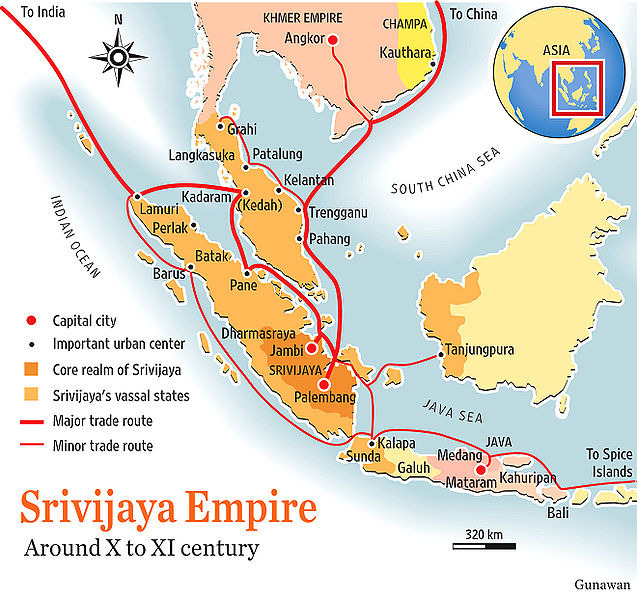
A maritime empire that controlled the Sunda strait the strait of Malacca between India and China. Control strengthened trade routes to China, India, and even Arabia. Srivijaya ended up being an important connecting point for trade from Song China, the Islamic Caliphate, and India.
Majapahit Empire
Southeast Asian kingdom (1293-1520) centered on the island of Java. Controlled sea trade and at its height had 98 tributary states under its control.
