Geometry Vocab
 Call Kai
 Learn
Learn Practice Test
 Spaced Repetition
 Match
Match Flashcards
 Knowt Play
1/20

There's no tags or description
Looks like no tags are added yet.
Name | Mastery | Learn | Test | Matching | Spaced | Call with Kai | Chat |
|---|
No analytics yet
Send a link to your students to track their progress
21 Terms
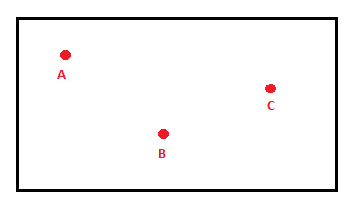
Point
a representation of a location that has no size and is marked with a circle and a capital letter.
Segment
a part of a line consisting of two endpoints and all the points in between them.

Line
A series of points that extend in two opposite directions without end. Symbolically a line is represented by the two points making the line with a line above them.
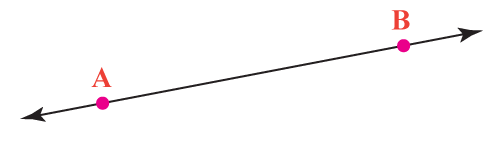
Collinear points
points that lie on the same line

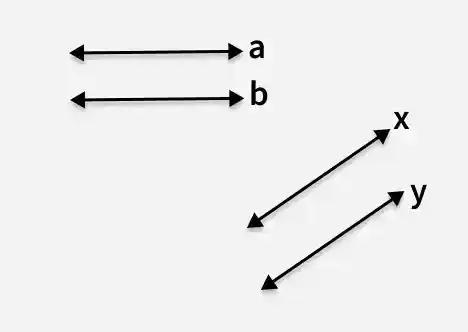
Parallel lines
Coplanar lines that do not intersect. Parallel lines create a plane.
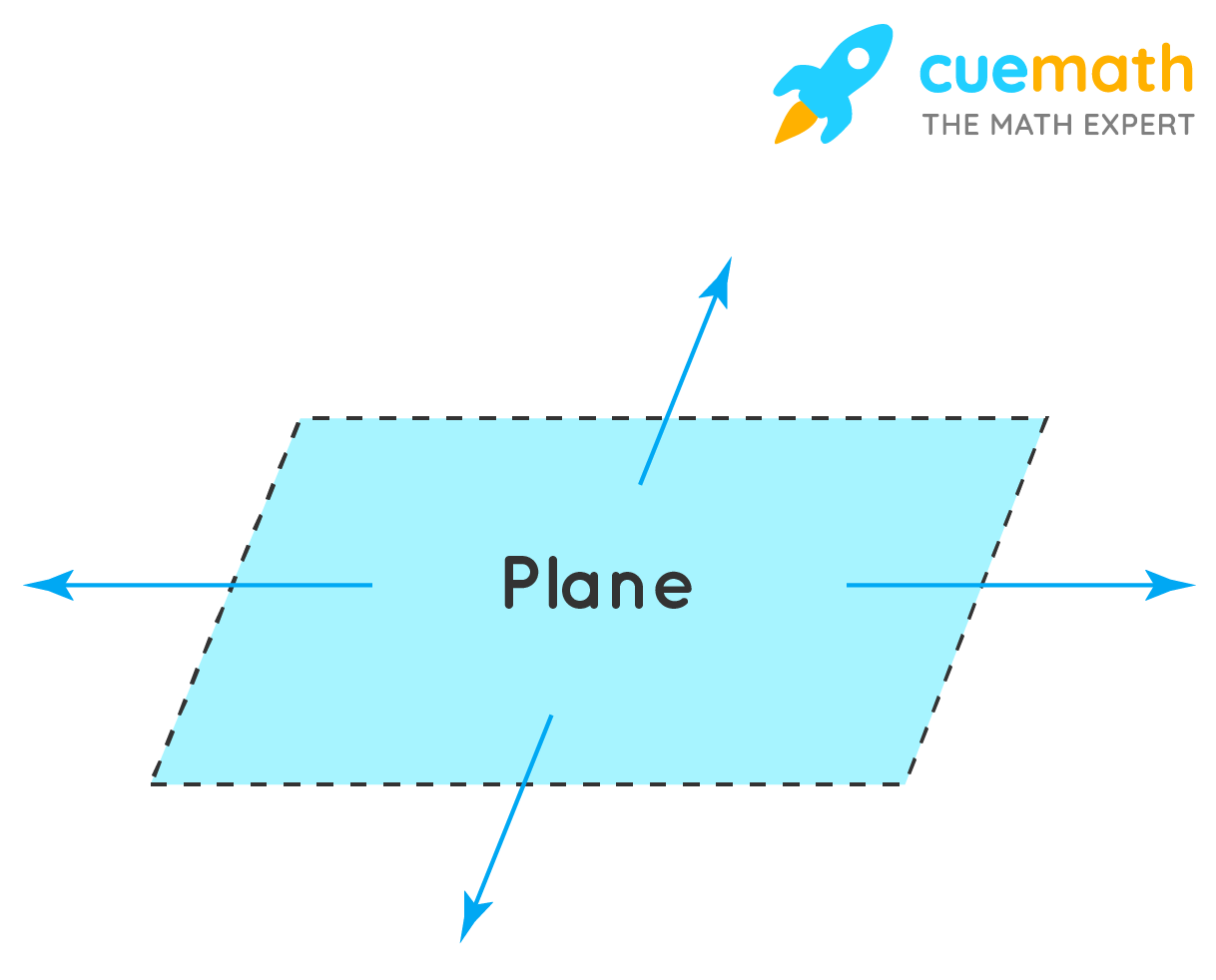
Plane
A flat surface that has no thickness. Any 3 non-collinear points can make a plane.
Coplanar
Points and lines that lie on the same plane.

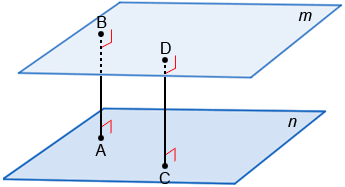
Parallel planes
planes that do not intersect. A line and a plane that do not intersect are also parallel.
Skew lines
non-coplanar lines; therefore, they are not parallel and do not intersect.

Ray
a part of a line where one side contains an endpoint. When writing the symbol of the ray, the endpoint is placed first.

Opposite Rays
two collinear rays with the same endpoint. Opposite rays always form a line.

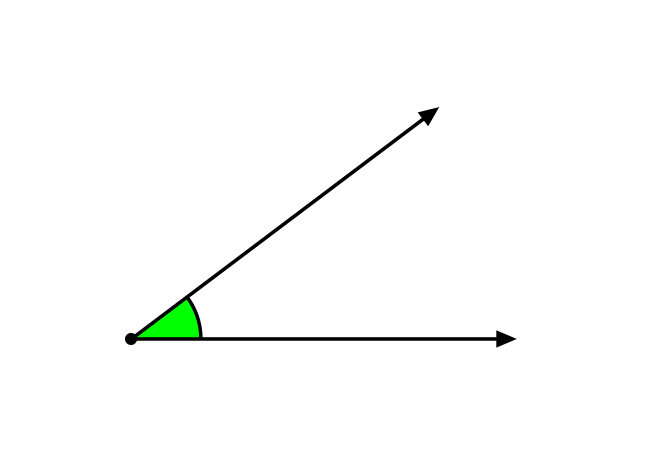
Angles
formed by two rays with the same endpoint. The rays are the legs of the angle. The endpoints are the vertex of the angle.
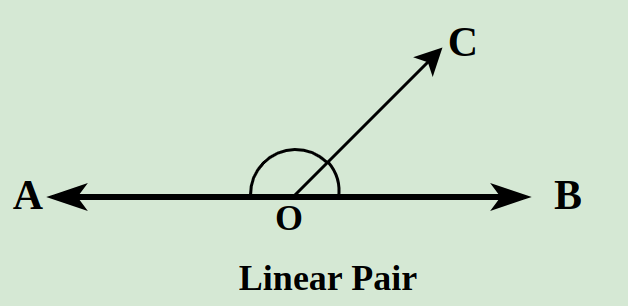
Linear pair
two adjacent angles that create a straight line.
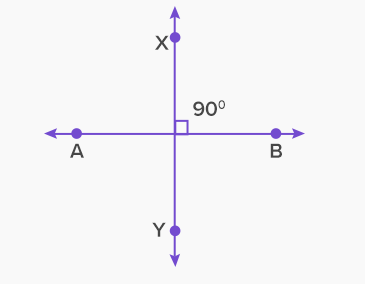
Perpendicular Lines
two lines that intersect that for 90 degree angles.
Obtuse angle
an angle greater than 90 degrees but less than 180 degrees.

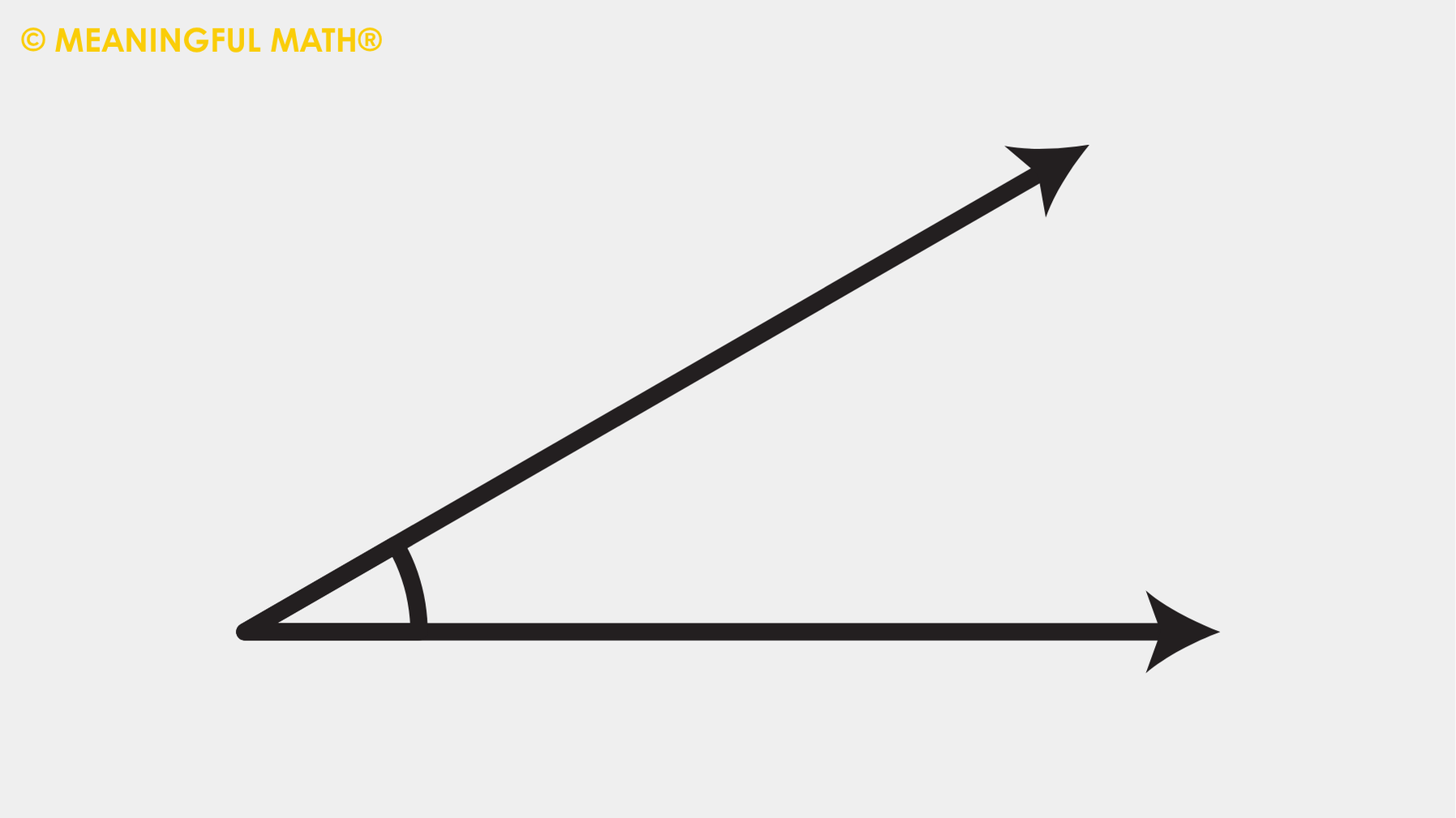
acute angle
an angle greater than 0 degrees but less than 90.
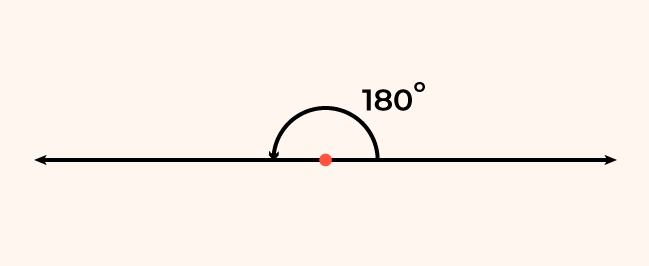
Straight angle
an angle that equals 180 degrees. A straight angle is the same as a line.
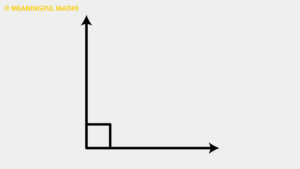
Right angle
an angle that equals 90 degrees
Vertical angles
angles that are made by two intersecting lines. Opposite angles are congruent and adjacent angles are supplementary.

Supplementary angles
two angles whose sum is 180 degrees

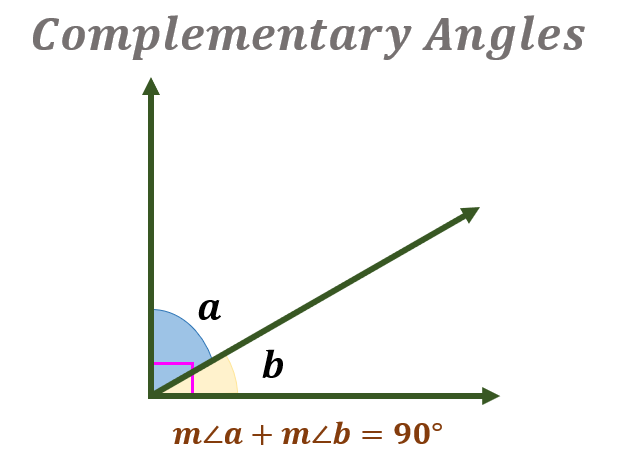
Complimentary angles
two angles whose sum is 90 degrees