L3 Transition Metal Carbonyls - Synthesis and Structures
 Call Kai
 Learn
Learn Practice Test
 Spaced Repetition
 Match
Match Flashcards
 Knowt Play
1/16

There's no tags or description
Looks like no tags are added yet.
Name | Mastery | Learn | Test | Matching | Spaced | Call with Kai | Chat |
|---|
No analytics yet
Send a link to your students to track their progress
17 Terms
Features of Transition metal carbonyls
Carbonyls bond incredibly strongly thanks to backbonding and are unreactive without catalysts.
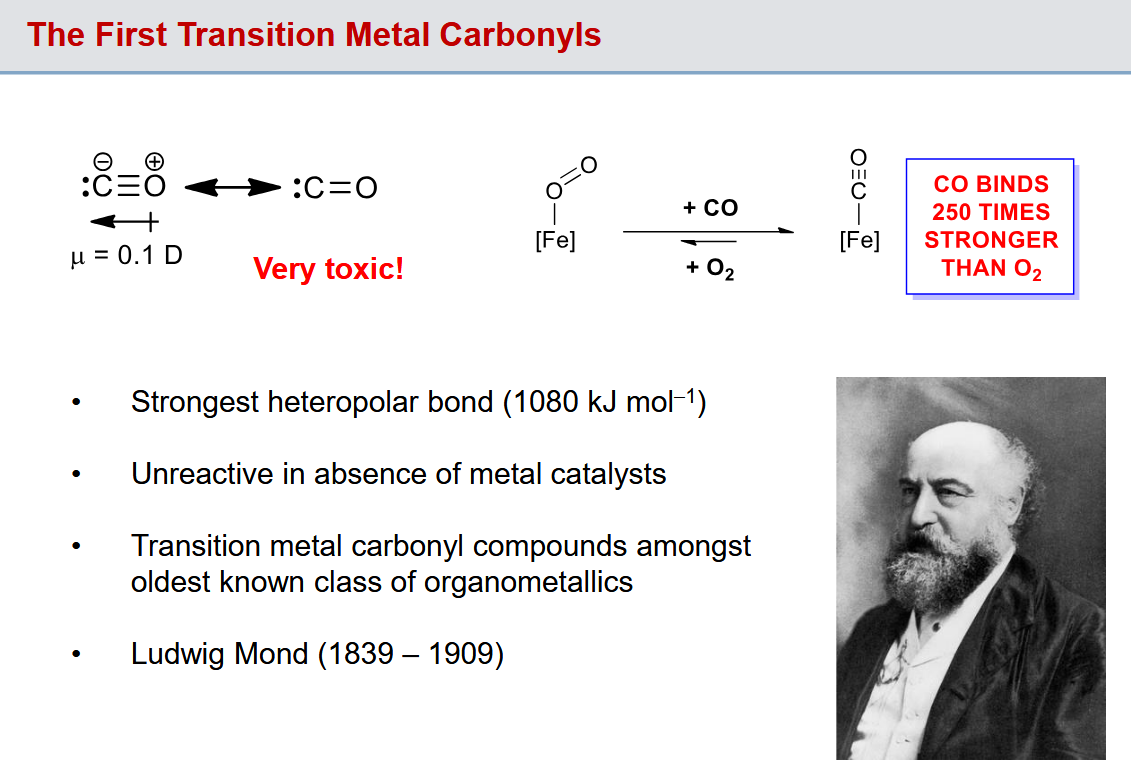
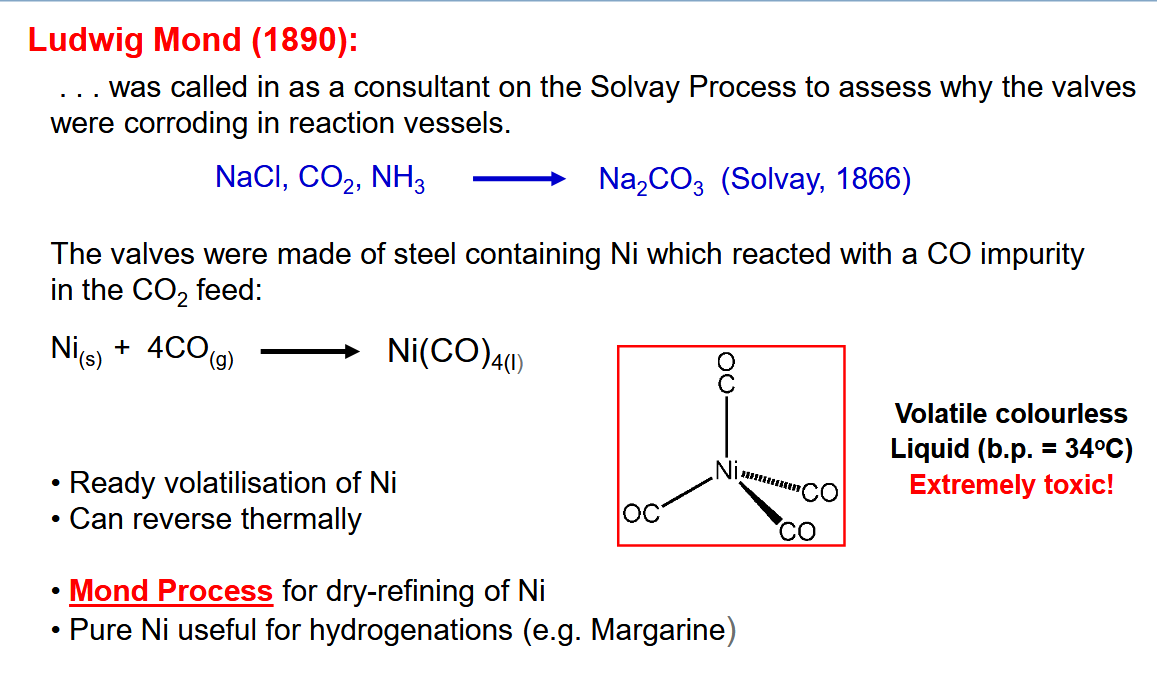
Formation of the first transition metal carbonyls
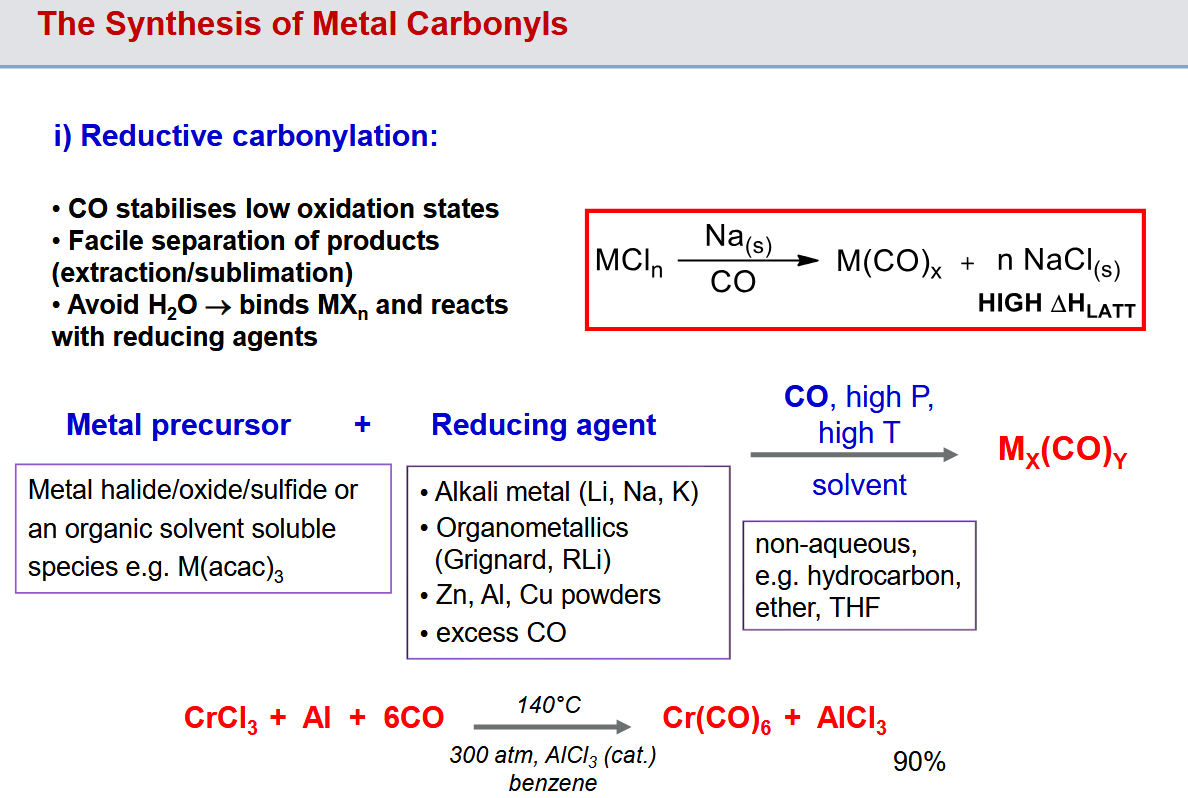
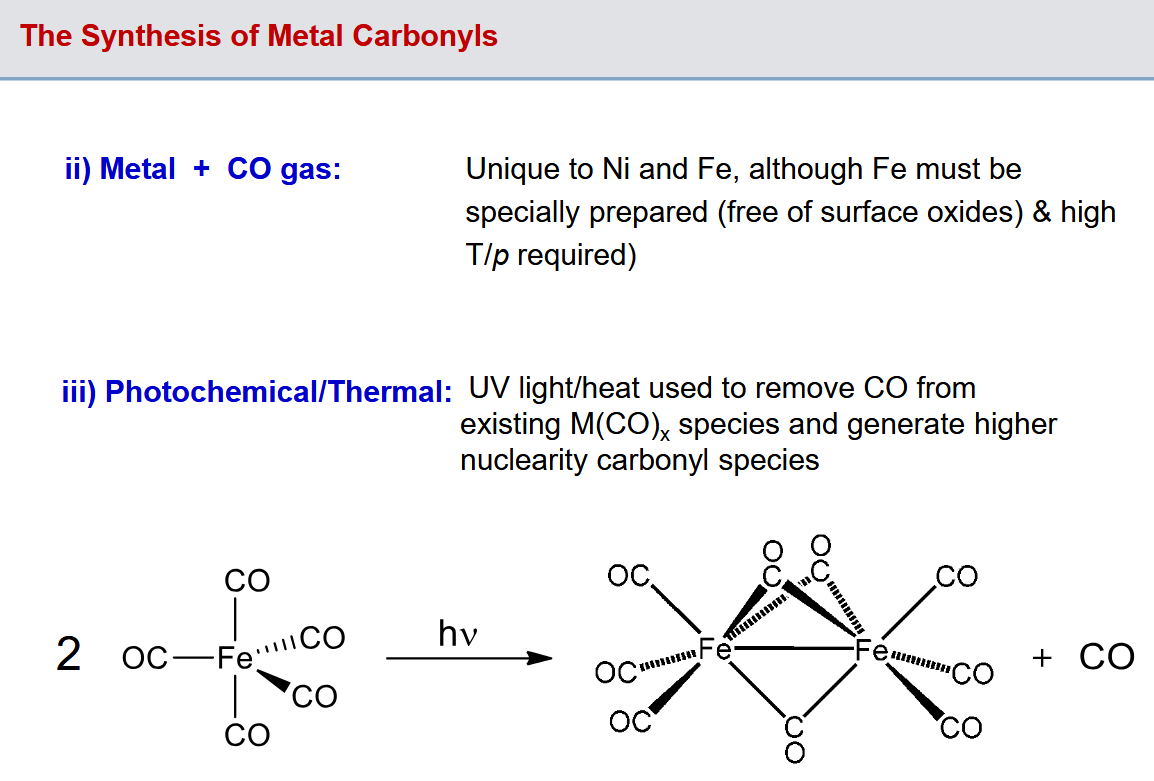
Synthesis of metal carbonyls - reductive carbonylation
Synthesis of metal carbonyls - CO gas or photochemical/thermal
The reductive method is more useful than Co gas generally
Binuclear and up complexes
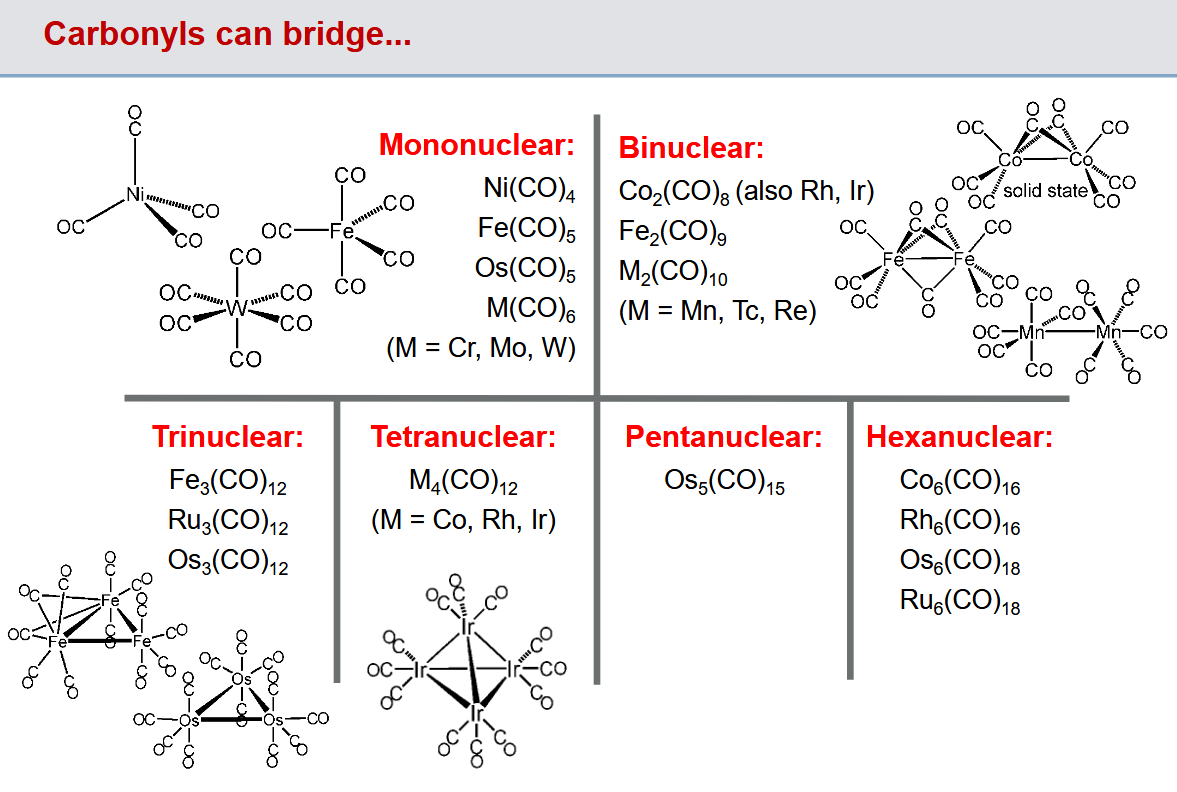
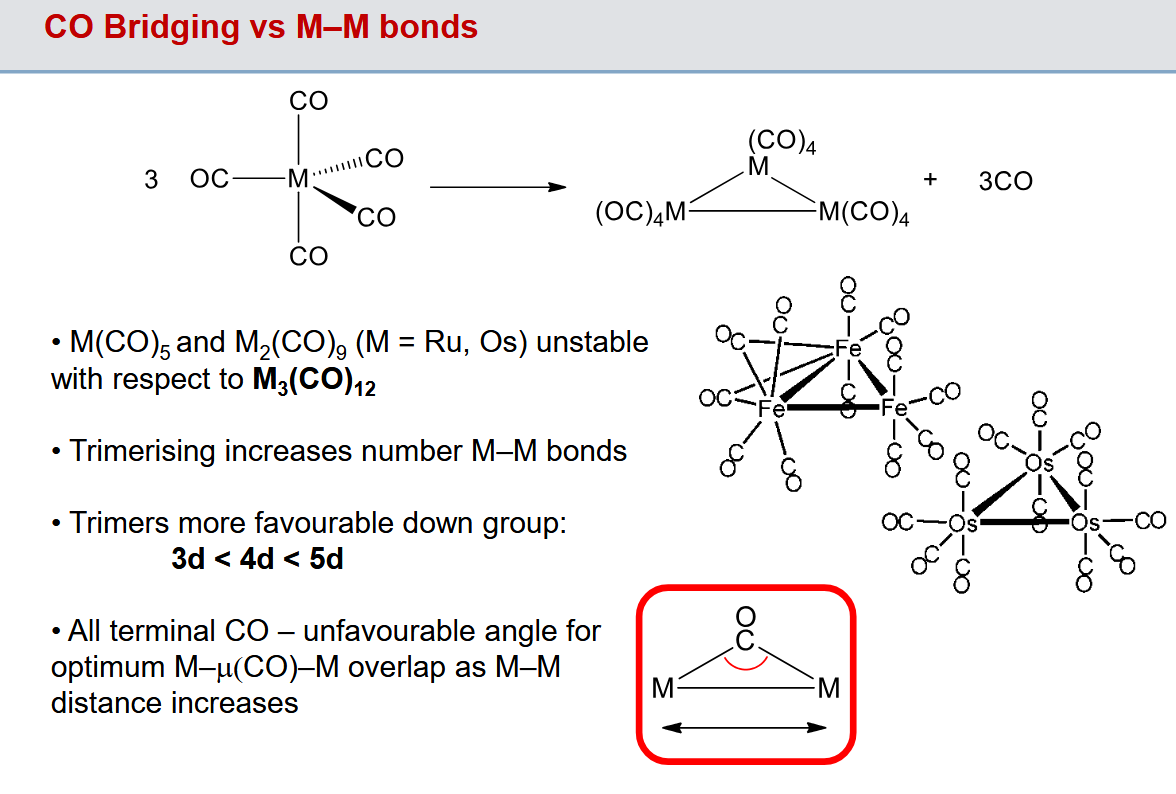
When do CO bridges vs M-M bonds form
M-M bonds become more favoured as you increase orbital size
Structures of Mono and binuclear metal carbonyls
There may be multiple logical binuclear structures - any sensible one will get credit
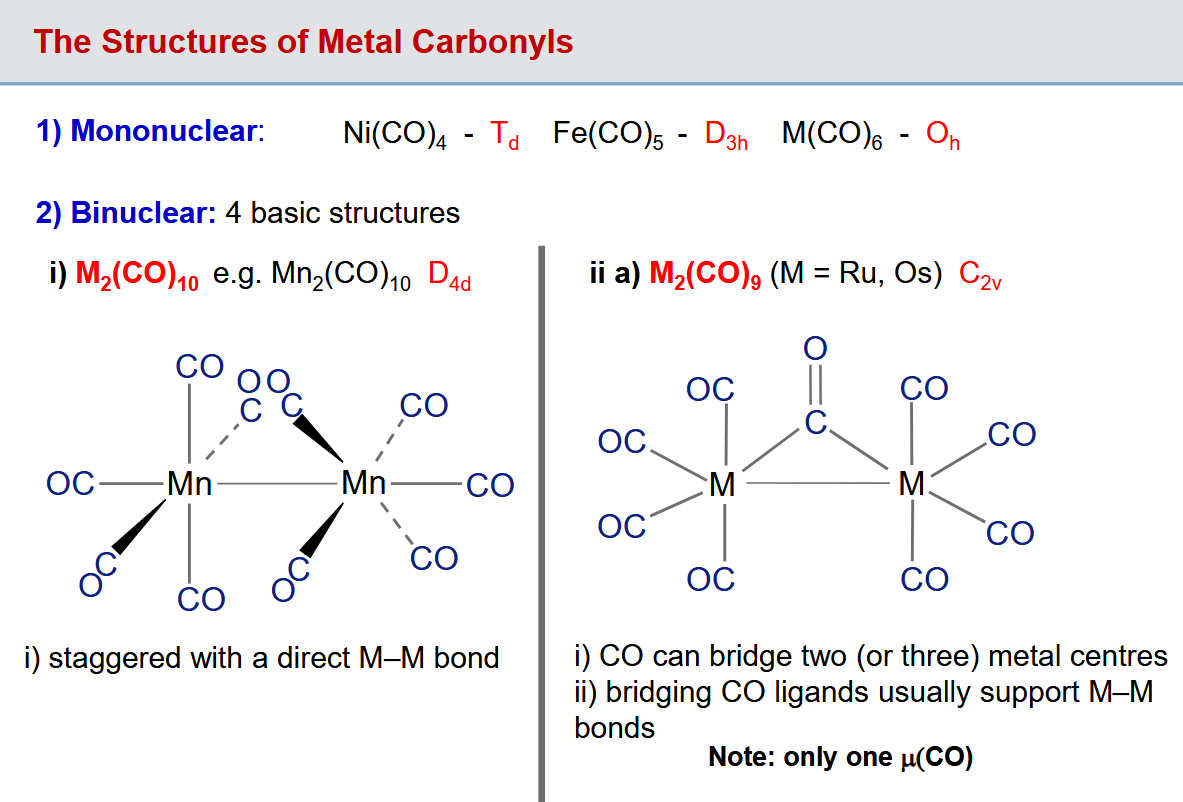
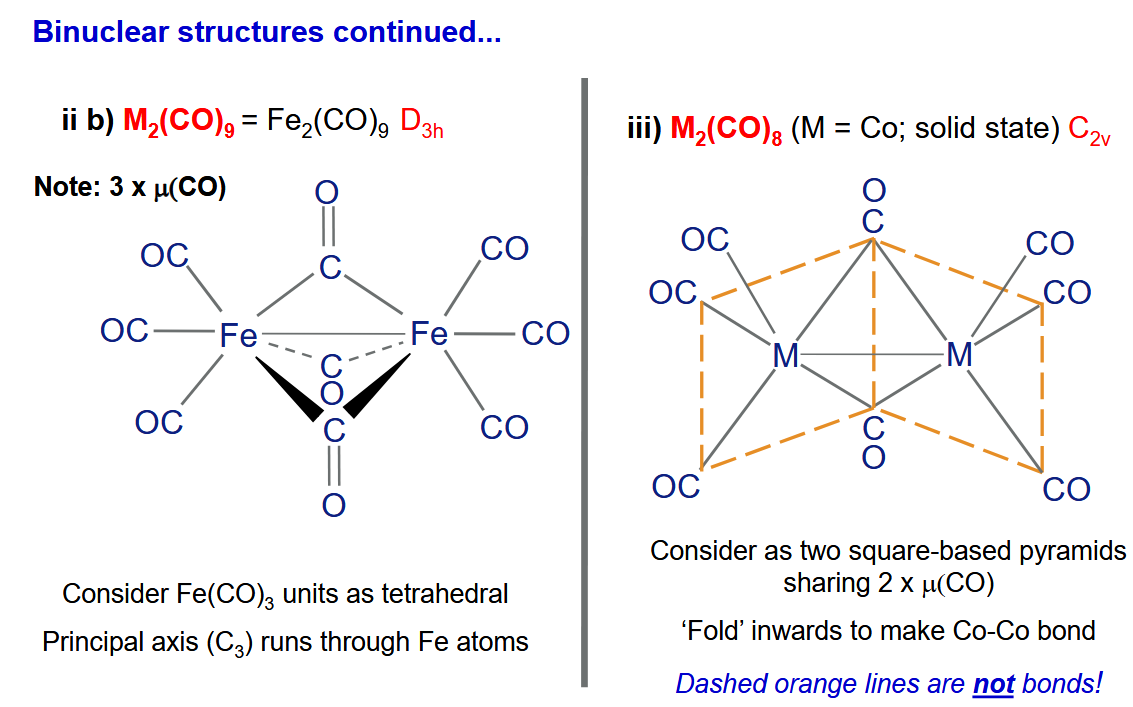
More Binuclear structures (dont need to memorise)
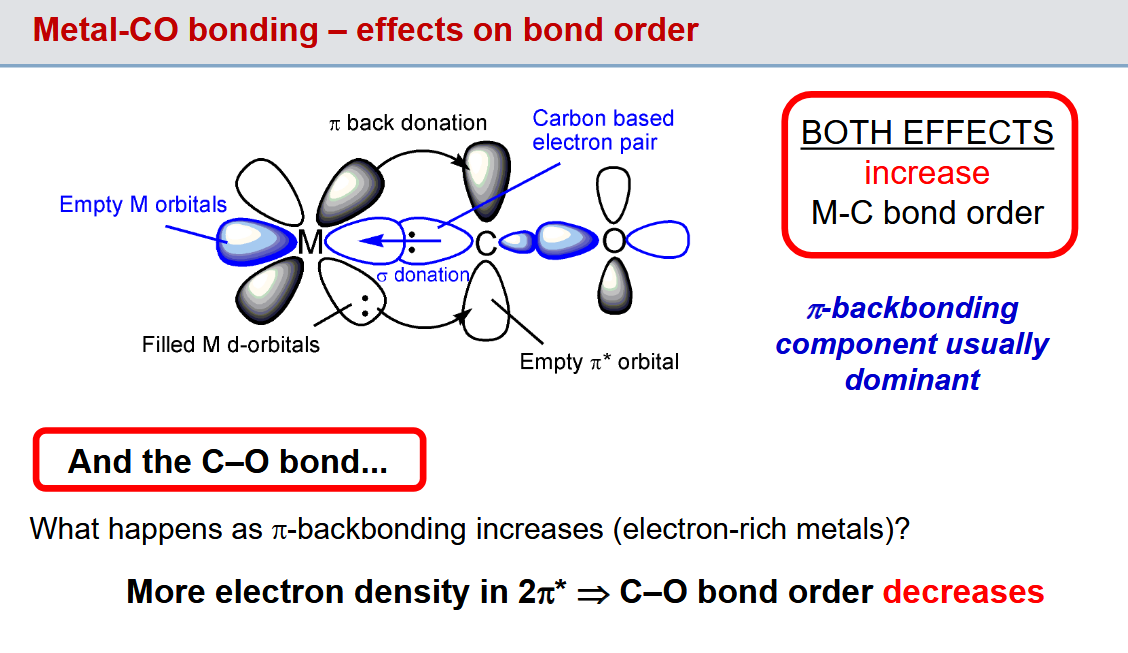
Metal-CO bonding - effects on bond order
Pi backdonation into the empty pi star orbitals of the C-O bond weakens the C-O bond and is the predominant factor in strengthening the M-C bond.
There is also sigma donation from the carbon based electron pair.
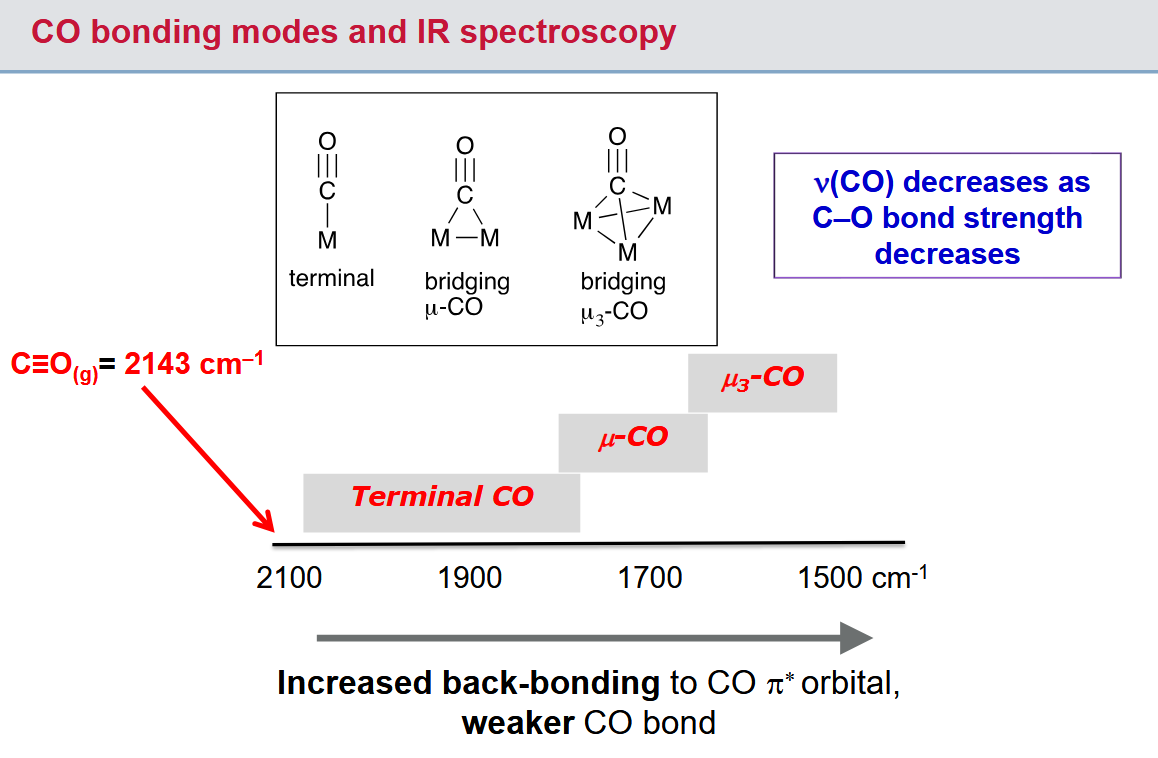
How can IR spec distinguish different bonding modes
weakening bonds affects the IR frequency
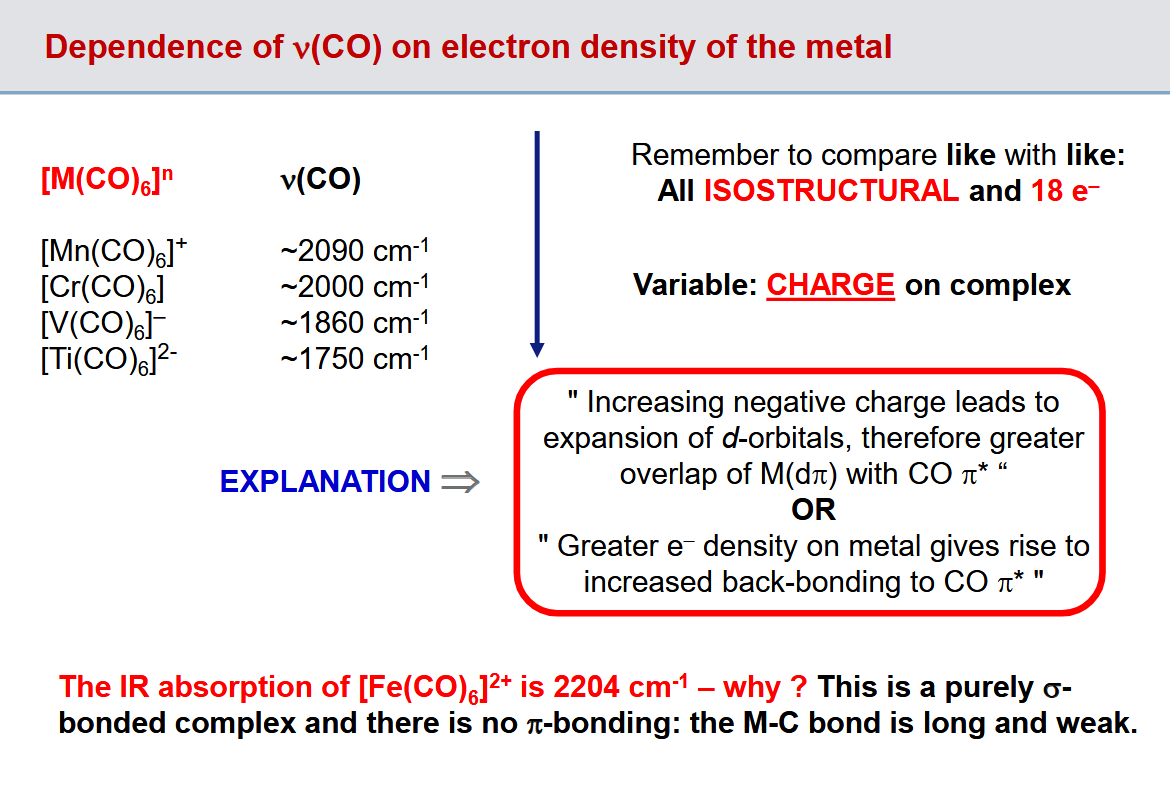
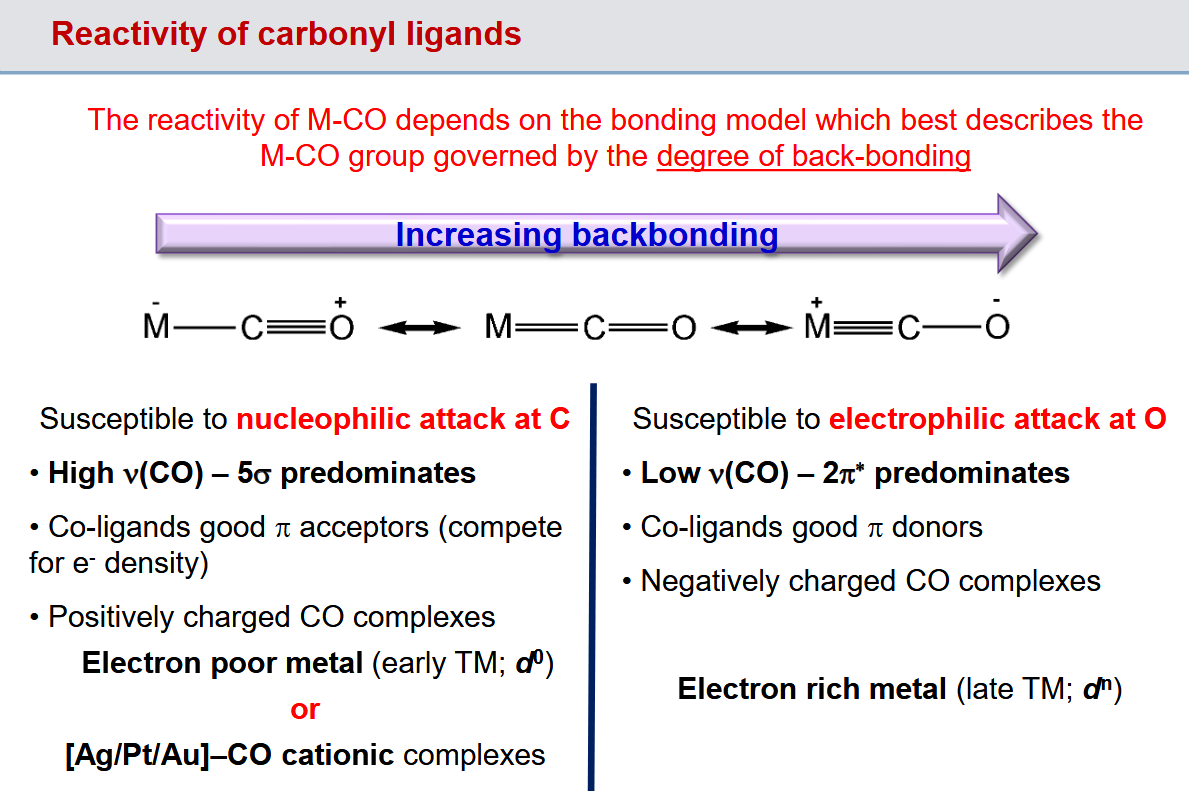
Dependence on the C-O bond strength on electron density on the metal - charges on the complex
Metals don’t want a bunch of electrons so they will engage in more backbonding when they are more elctron rich - such as in -ve complexes.
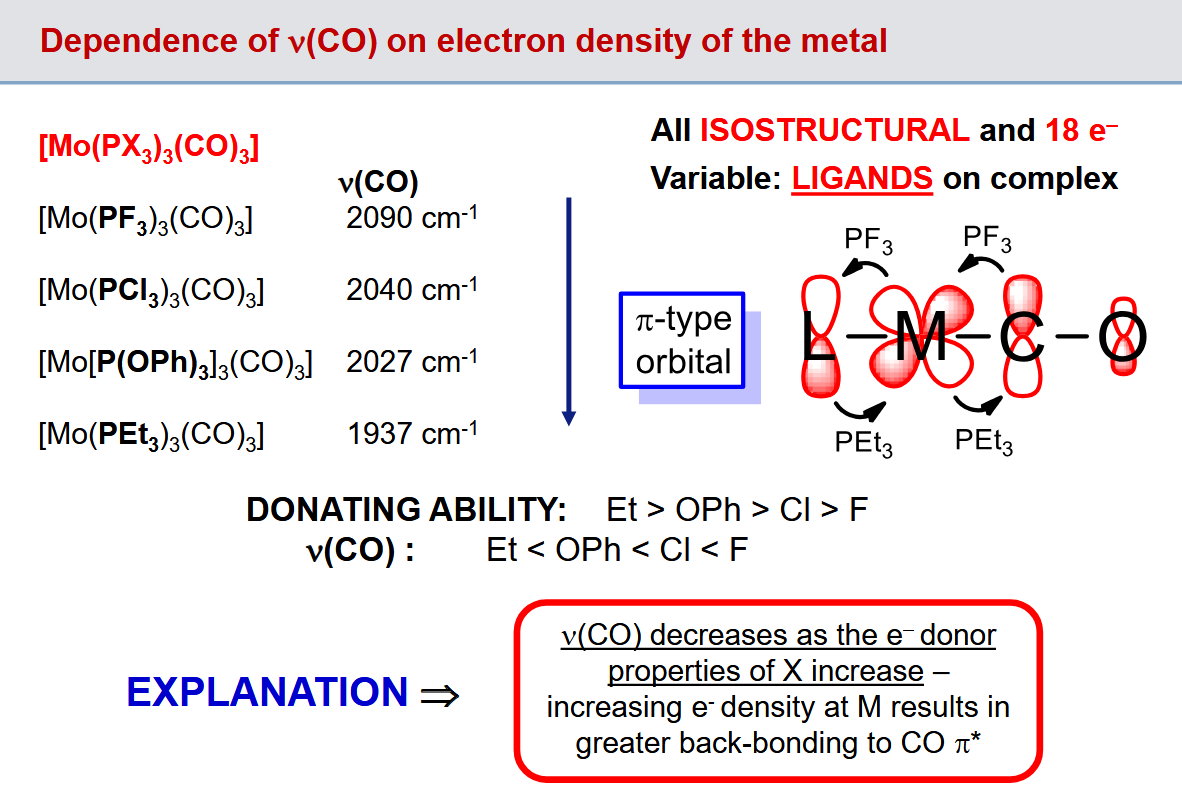
Dependence on the C-O bond strength on electron density on the metal - other ligands
Ligands which donate more electrons to the metal will make it want to get rid of more electrons.
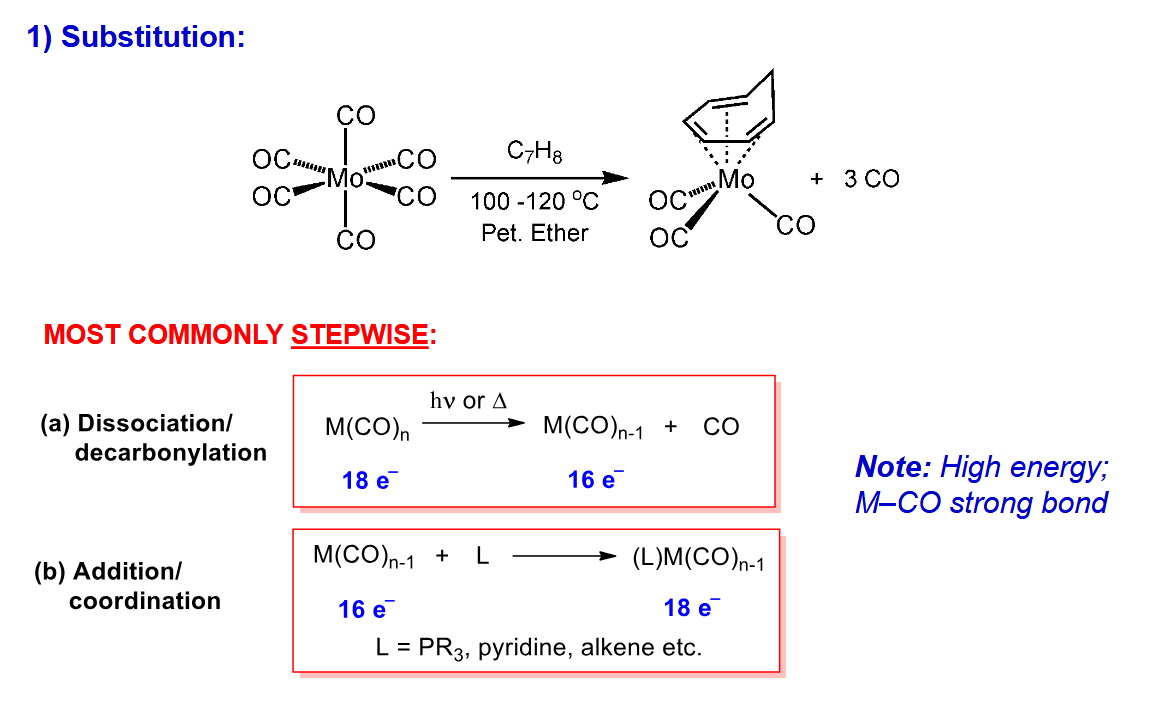
Reactions of metal carbonyls - substitution
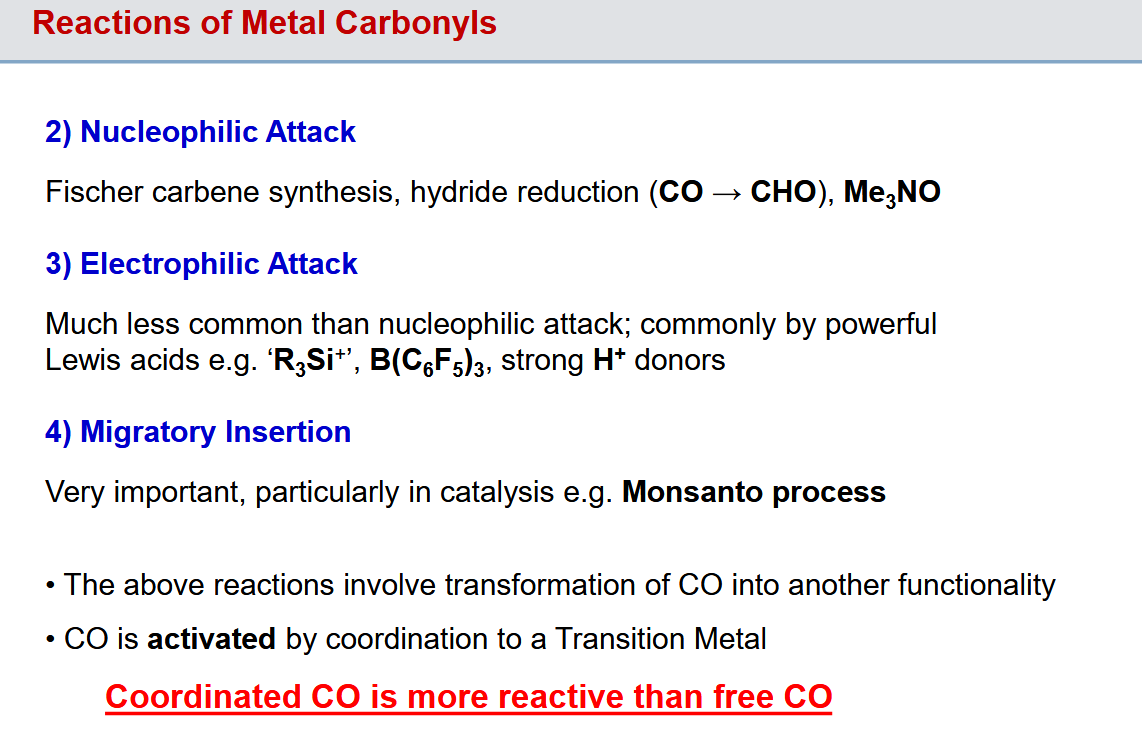
Other reactions of metal carbonyls (3)
Reactivity of carbonyl ligands
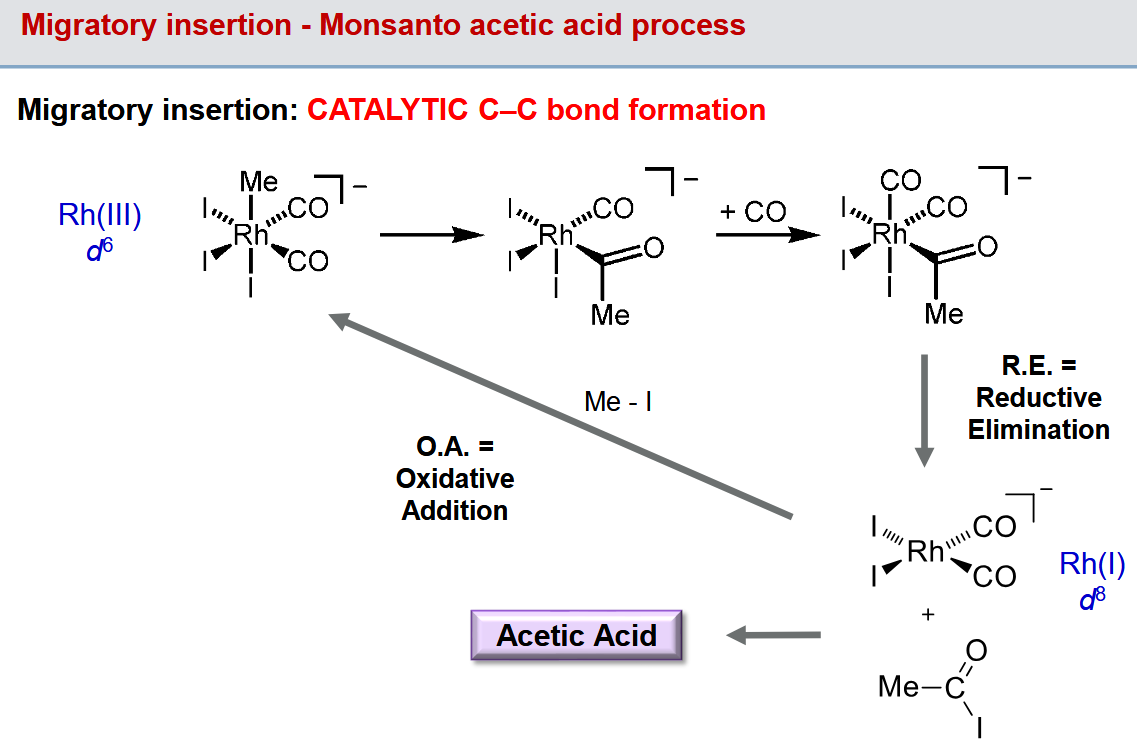
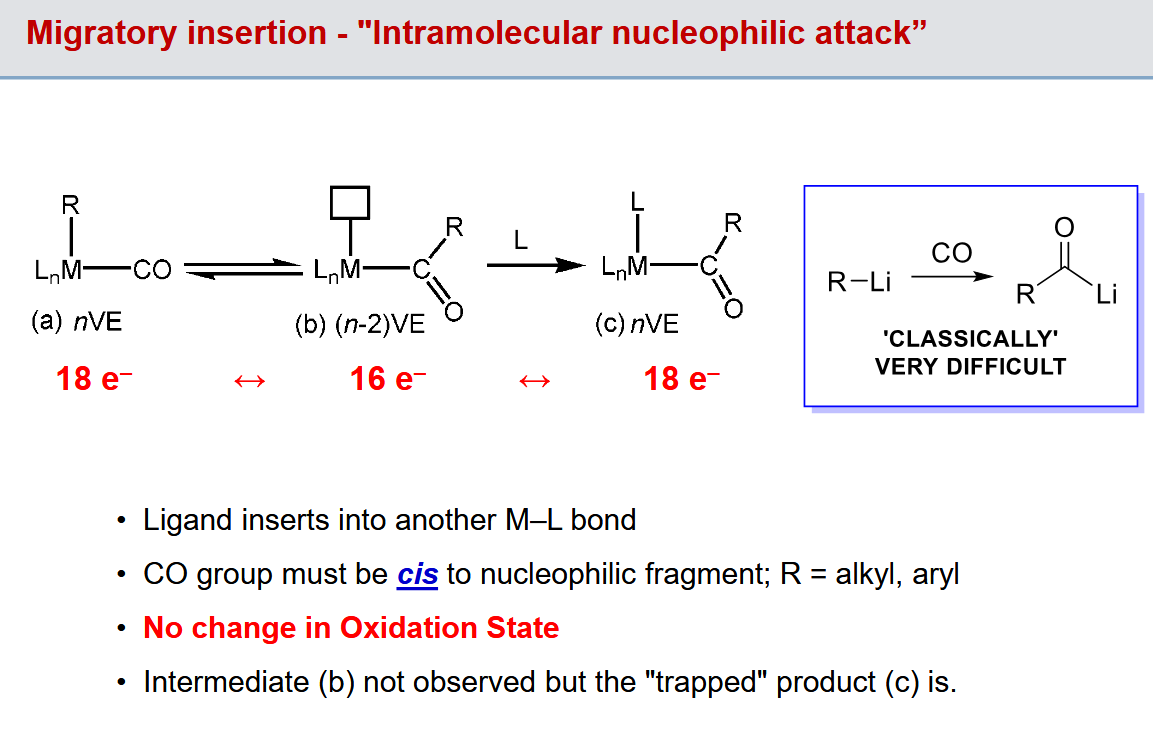
Migratory insertion
Important to consider whether the 16e- complex is stable enough
Monsanto process - using migratory insertion to form acetic acid