MW: L6 - restorative sleep
 Call Kai
 Learn
Learn Practice Test
 Spaced Repetition
 Match
Match Flashcards
 Knowt Play
1/129

There's no tags or description
Looks like no tags are added yet.
Name | Mastery | Learn | Test | Matching | Spaced | Call with Kai | Chat |
|---|
No analytics yet
Send a link to your students to track their progress
130 Terms
What is sleep?
a complex physiological process that is essential for the restoration and renewal of the body
key characteristics of sleep
- loss of wakefulness and awareness of surroundings
- typical body posture
- dreaming
- brain activity changes
- physiological shifts
- sleep cycles
where are the arousal centers in the brain located?
brainstem and hypothalamus (head/brain)
how are the arousal centers stimulated?
neurons produce neurotransmitter orexin/hypocretin which stimulates the arousal centers
What is the function of the ventrolateral preoptic area (VLPO) in the anterior hypothalamus?
promotes sleep by inhibiting activity in the arousal regions (viper does not want you to have fun)
what is considered the "body's master clock" and where is it located?
suprachiasmatic nucleus (SCN) in the hypothalamus
what describes the SCN and regulation of circadian rhythm?
24 hour cycle, involves physiological and behavioral rhythms
What is melatonin?
hormone that regulates sleep/wake cycle
What is the role of sunlight?
stimulates retinal cells, which signals daytime to SCN. Also inhibits pineal gland production of melatonin
When the retinal cells signal daytime to the SCN, what does the SCN do in response?
relays information to superior cervical ganglion which sends a signal to the pineal gland
What inhibits pineal gland production of melatonin?
Sunlight
What stimulates pineal gland to produce melatonin that encourages sleep?
darkness
What describes adenosine and the homeostatic drive for sleep?
- use of ATP releases adenosine through the day. adenosine builds up
- adenosine is an important factor in the sleep drive
- it is a NT that signals the need for sleep when it accumulates
what are the characteristics of caffeine?
- binds to the same receptor as adenosine and provides opposite effect. pituitary gland responds by producing adrenalin.
- has a 1/2 life of 6 hours, metabolism varies
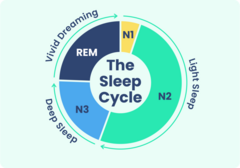
What are the stages of the sleep cycle?
1. N1
2. N2
3. N3
4. REM
What EEG pattern is seen when awake?
beta waves
What EEG pattern is seen when drowsy, relaxed?
alpha waves
what is stage N1 duration?
onset of sleep, lasts about 1-7 min

What are the characteristics of stage N1?
body not fully relaxed, body/brain activities start to slow

What describes the type of sleep stage N1 is?
ight sleep, easily arousable
What EEG pattern is seen during stage N1 sleep?
theta waves

what % of sleep is stage N1?
~5%
What is the duration of stage N2?
lasts about 10-25 minutes in initial cycle and lengthens each cycle

What are the characteristics of stage N2?
- further slowing of brain activity, muscles relax
- RR, HR, and temp all decrease

What describes the type of sleep stage N2 is?
light sleep, need more stimulus to awaken then stage N1

What is stage N2 involved in?
memory consolidation (facts/knowledge) and sensory processing

What EEG pattern is seen during stage N2 sleep?
sleep spindles

what % of sleep is stage N2?
~45%
What is the duration of stage N3?
20-40 min
What type of sleep is stage N3?
slow-wave sleep or delta sleep; deep sleep
What are the characteristics of stage N3?
- muscle activity significantly reduced
- BP, RR, HR decrease further
- difficult to be awakened
What is stage N3 critical for?
critical to restorative sleep - release of growth hormone and cellular repair
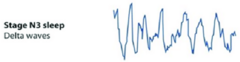
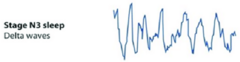
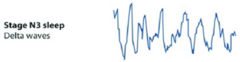
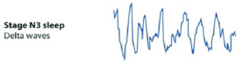
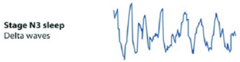
What EEG pattern is seen during stage N3 sleep?
delta waves
what % of sleep is stage N3?
~25%
What is the duration of REM sleep?
- enter this stage about 90min after falling asleep
- multiple episodes totaling 1.5-2 hours

What is the defining feature of REM sleep?
rapid eye movements (REM)

What is REM sleep associated with?
dreaming

What are the characteristics of REM sleep?
- BP, HR, RR all increase
- skeletal muscle atonia

What is REM sleep involved in?
emotional regulation and long-term memory storage

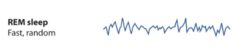
What EEG pattern is seen during REM sleep?
fast, random
what % of sleep is REM sleep?
~25%
how long does a complete sleep cycle take?
90-110 minutes
What affects sleep stages?
- recent sleep patterns
- alcohol
- sleep disorders
How to recent sleep patterns affect sleep stages?
irregular or insufficient sleep over a period of days or more can cause an abnormal sleep cycle
How does alcohol affect the sleep cycle?
- mild sedative - only temporary
- decreases REM sleep early in the night
- once metabolized - rise in N1 sleep
- leads to frequent awakenings and low quality sleep
What describes sleep characteristics of newborns (0-3mo)?
sleep 16-18 hours/day but discontinuous. spend far more time in REM sleep
What describes sleep of children?
sleep amounts decrease as child gets older.
What manifests at age 6?
manifests tendency as "night owl" or "morning bird"
what describes sleep in adults?
tendency toward earlier bedtimes and wake times
What describes sleep in older adults?
spend less time in REM sleep, increase in disturbed sleep
what is the recommended sleep time for infants (4-12 mo)?
12-15 hours (including naps)
What is the recommended sleep time for toddlers (1-2 years)?
11-14 hours (including naps)
what is the recommended sleep time for preschool age (3-5 years)?
10-13 hours (including naps)
What is the recommended sleep time for school-age (6-12 years)?
9-12 hours
What is the recommended sleep time for teens (13-18)?
8-10 hours
What is the recommended sleep time for adults (18+)?
7 hours or more
why is sleep important?
- vital for body & brain health
- strengthens brain connections
- boosts daily performance
- impact of sleep deprivation
How does sleep strengthen brain connections?
- brain consolidates memories
- reinforces neural pathways that support learning & emotional regulation
How does sleep boost daily performance?
improves focus, decision-making, mood and energy levels
What is the impact of sleep deprivation?
- slower reaction times
- poor short-term memory
- reduced motivation & task performance
- suppressed immune funciton
What are psychological and behavioral barriers to sleep?
- stress, anxiety, or racing thoughts
- lack of consistent sleep routine & poor sleep hygiene
- watching the clock
What are examples of environmental & lifestyle disruptions that are barriers to sleep?
- noise, light, temp, noise
- daytime naps longer than 1.5 hours
- going to bed too hungry or too full
- excess caffeine or alcohol
What are medical and biological influences that are barriers to sleep?
- meds or supplements that interfere with sleep
- undiagnosed or untreated sleep disorders
- excessively high blood sugar levels, thyroid disorders, menopause sx
what is the MC sleep disorder
insomnia
what is insomnia?
difficulty falling or staying asleep for 3+ months
What does insomnia impact?
work, relations, and daily functioning
what are sx of insomnia?
- fatigue
- poor concentration or memory
- low motivation
- anxiety or depression
what is short-term insomnia?
lasts less than 3 mo
What is short-term insomnia often triggered by?
acute condition: poor sleep env, pain, stress
What is chronic insomnia?
lasts 3+ months, 3+ nights/week
What is chronic insomnia linked to?
medical illness, mental health, meds, caffeine or alcohol
what are treatment options for insomnia?
- cognitive behavioral therapy
- lifestyle modifications
- pharm options
What are the components of cognitive behavioral therapy for insomnia treatment?
- stimulus control
- sleep restriction
- cognitive restructuring
- relaxation techniques
What stimulus control can be used for insomnia treatment?
use the bed only for sleep
What sleep restriction can be used for insomnia treatment?
limit time in bed to increase sleep efficiency
What cognitive restructuring can be used for insomnia treatment?
challenge unhelpful beliefs about sleep
What relaxation techniques can be used for insomnia treatment?
deep breathing, progressive muscle relaxation, mindfulness
what lifestyle modifications can be used to treat insomnia?
- regular PA
- limit caffeine, alcohol, and screen time before bed
- maintain a calming bedtime routine
What pharm options can be used to tx insomnia?
short-term use of pharm aids (sedative hypontics, melatonin agonists)
What is sleep apnea?
sleep disorder marked by repeated pauses in breathing. causes drops in oxygen levels and frequent awakenings. leads to poor sleep quality and daytime fatigue
What is OSA?
upper airway muscles relax and obstruct airway. loud snoring (classic)
What is central sleep apnea (CSA)?
caused by the brain failing to signal the muscles to breathe, airway is OPEN
what are the key indicators to evaluate for sleep apnea?
- excessive daytime sleepiness
- obesity or large neck circumference
- refractory HTN (uncontrolled despite tx)
- type 2 DM
- loud snoring or observed pauses in breathing
- morning HA or dry mouth
What does untreated sleep apnea lead to an increased risk of?
- HTN
- stroke
- MI
- impaired glucose tolerance
- insulin resistance
- motor vehicle accidents
- cognitive impairment
What PE tools are used to make a clinical dx of sleep apnea?
STOP bang, epworth sleepiness scale
What is the gold standard test for sleep apnea?
polysomnography
What is polysomnography?
- measures brain waves, eye movements, muscle activity, heart rhythm, airflow, O2 saturation
- determines an apnea-hypopnea index. measures the number of apnea and hypopnea per hour of sleep
what are the lifestyle measures to tx sleep apnea?
weight loss, regular PA, maintain healthy sleep habits, avoid alcohol and smoking
What is a CPAP
- continues positive airway pressure
- delivers steady airflow to keep airways open
- most effective tx for moderate to severe OSA
What is restless legs syndrome?
- neurological disorder causing uncontrollable urge to move legs
- delays and disrupts sleep - leads to daytime fatigue
What are the dx criteria for restless legs syndrome?
- urge to move legs
- sx begin or worsen during periods of rest or inactivity
- sx partially or totally relieved by movement
- sx worse in evening or at night
- sx are not solely accounted for by another medical or behavioral condition
what are the lifestyle tx for restless legs syndrome?
- limit or avoid alcohol, caffeine, tobacco
- maintain a consistent sleep schedule
- try moderate leg stretches or massage before bed
What is narcolepsy?
chronic neurologic disorder that affects sleep-wake regulation. enter REM directly, bypassing normal NREM stages
What is the classic tetra of narcolepsy?
- sudden sleep attacks
- cataplexy - a sudden, brief loss of voluntary muscle control or tone while a person stays fully awake and aware
- hypnagogic hallucinations (vivid dream like sensory hallucinations)
- sleep paralysis
what are the sudden sleep attacks seen with narcolepsy?
uncontrolled episodes of falling asleep during the day
What is cataplexy?
loss of muscle tone in emotional situations
what are hypnagogic hallucinatiosn?
vivid dreams while falling asleep
what are the non-pharm tx for narcolepsy?
- Sleep hygiene - maintain consistent and adequate sleep schedule
- Scheduled daytime naps - mainstay of nonpharmacologic treatmen
what is the pharm tx for narcoplepsy?
- No cure or disease-modifying therapies currently available
- Stimulants: Amphetamines or non-amphetamine agents
what is shift work sleep disorder?
- Circadian rhythm sleep disorder - work schedule conflicts with their natural sleep-wake cycle
- Common in night shift, rotating shift, or early morning workers