Oral Pathology
 Call Kai
 Learn
Learn Practice Test
 Spaced Repetition
 Match
Match Flashcards
 Knowt Play
1/50

Earn XP
Description and Tags
Lectures 8 and 9
Name | Mastery | Learn | Test | Matching | Spaced | Call with Kai | Chat |
|---|
No analytics yet
Send a link to your students to track their progress
51 Terms
What is defined as inflammation of alveolar mucosa (i.e., mucosa overlying the alveolar process and extending from the mucogingival junction without obvious demarcation to the vestibulr sulcus and to the floor of the mouth)?
alveolar mucositis
What is defined as inflammation of mucosa on the floor of the mouth?
sublingual mucositis
What is defined as inflammation of lip/cheek mucosa?
labial/buccal mucositis
What is defined as inflammation of mucosa of the caudal oral cavity, bordered medially by the palatoglossal folds and fauces, dorsally by the hard and soft palate, and rostrally by alveolar and buccal mucosa?
caudal mucositis
What is defined as a condition in the cat characterized by inflammation of the oral mucosa, often affecting the area immediately lateral to the palatoglossal folds with or without inflammation of other oral mucosa; it commonly presents during the chronic stage, with or without inflammation extending into mucosa of the oropharynx?
Feline stomatitis
What is defined as lesions in susceptible individuals that are secondary to mucosal contact with a tooth surface bearing the responsible irritant, allergen, or antigen?
Contact mucositis and contact mucosal ulceration
What is defined as inflammation of mucosa covering the hard and/or soft palate?
Palatitis
What is defined as inflammation of mucosa of the dorsal and/or ventral tongue surface?
Glossitis
What is defined as inflammation of the lip?
Cheilitis
What is defined as inflammation of the palatine tonsil?
Tonsilitis
What is defined as inflammation of the pharynx?
Pharyngitis
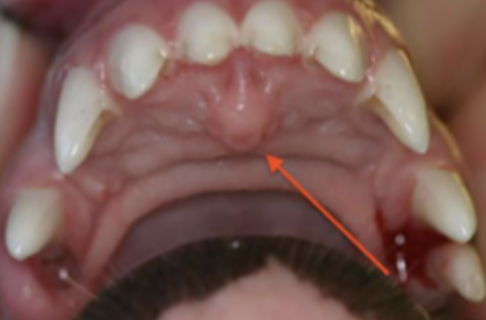
What is the elevation of mucosa at the rostral end of the median line of junction of the halves of the palate, concealing the orifices of the incisive ducts?
incisive papilla
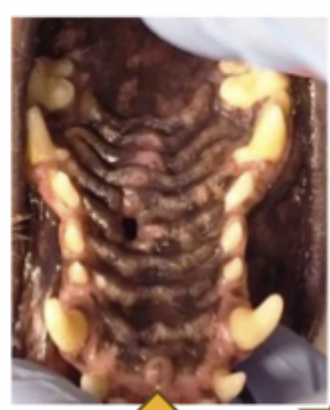
What are the transverse ridges of mucosa on the hard palate?
palatine rugae
List localized inflammatory diseases.
Feline Chronic Gingivostomatitis (FCGS)
Juvenile Periodontitis (Cats)
Canine Chronic Ulcerative Stomatitis (CCUS)
The term ____ is generally reserved for widespread oral inflammation that is beyond gingivitis and periodontal disease and may extend into submucosal tissues?
stomatitis
_____ is inflammation of the caudal oral mucosa lateral to the palatoglossal folds.
Caudal stomatitis
What is the etiology of feline chronic gingivostomatitis?
unknown but thought to be mutlifactorial involving viruses (Calicivirus), bacteria, individual immune response, and living conditions
List symptoms/exam findings of feline chronic gingivostomatitis.
dysphagia and pain —>will not eat
extensive oral inflammation and ulceration of the soft tissues
sublingual mucositis and contact mucositis can be present
severe, proliferative inflammation of the caudal oral mucosa, including the palatoglossal arches, is the most consistently affected region
vocalization when opening the mouth
hypersalivation
halitosis
How can we diagnose feline chronic gingivostomatitis?
awake oral exam findings partnered with dysphagia, anorexia, pain
hyperglobulinemia on chemistry profile
What is the treatment for feline chronic gingivostomatitis?
medical treatment in combination with or after surgical treatment including full or partial mouth dental extractions
recheck at 3-4 weeks then every month until improvement of lesions —> may take up to 6 months for lesions to resolve after surgery
What are the goals of medical management therapy for feline chronic gingivostomatitis for refractory cases or those unable to have anesthesia?
module inflammatory response and reduce pain
What is included in medical management of feline chronic gingivostomatitis?
glucocorticoids (or cyclosporine)
NSAIDs
adjunctive pain management (gabapentin, buprenorphine)
What is the role of antimicrobial therapy in feline chronic gingivostomatitis cases?
to control secondary infection and subsequent worsening or oral inflammatory lesions
typically Clavamox, Clindamycin, and Metronidazole
What is an alternative therapy that can be used in reffractory cases of feline chronic gingivostomatitis that cannot have glucocorticoids or under go anesthesia?
recombinant feline interferon-omega
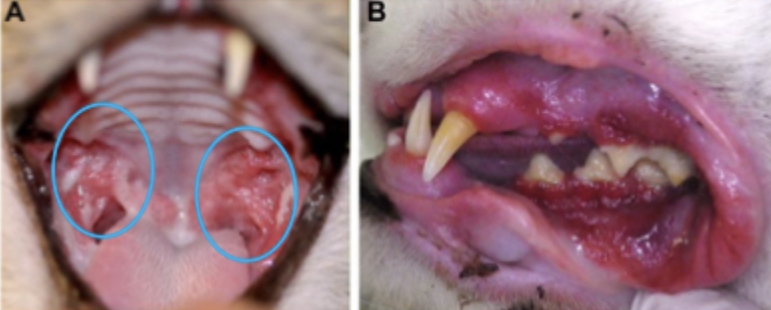
What is seen in this image?
feline chronic gingivostomatitis
What age is juveline periodontitis typically seen in cats?
<9 months
List findings associated with juvenile periodontitis in cats.
rapid accumulation of plaque and calculus, with subsequent gingivitis
significantly early bone loss, periodontal pocket formation, gum recession, and furcation exposure
halitosis at time of adult dental eruption
NO caudal mucositis
non-painful
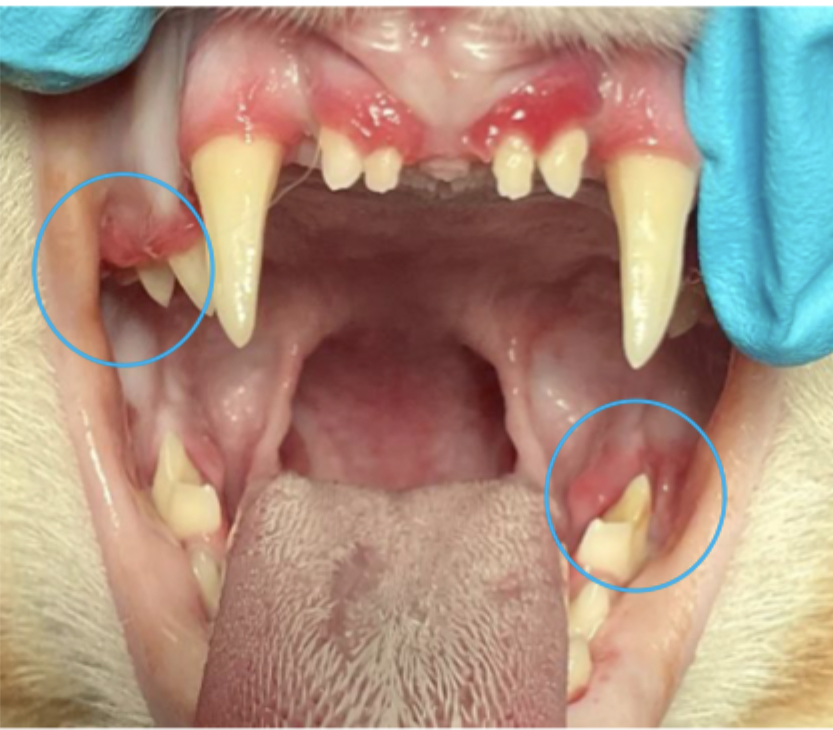
What is seen in this image?
juvenile periodontitis
What is the treatment for juvenile periodontitis?
extraction of significantly diseased teeth
daily homecare: 1-TDC capsule applied daily to gums
What is the severe inflammatory condition affecting the gingival and mucosa of the oral cavity characterized by contact mucositis consisting of inflammation and ulceration of the mucsosa in contact with the surface of the teeth; localized vestibular ulcers may also be present?
canine chronic ulcerative stomatitis
List symptoms of canine chronic ulcerative stomatitis.
depression
anorexia
inability to fully open mouth
restricted yawning
pain
drooling
severe halitosis
head shy
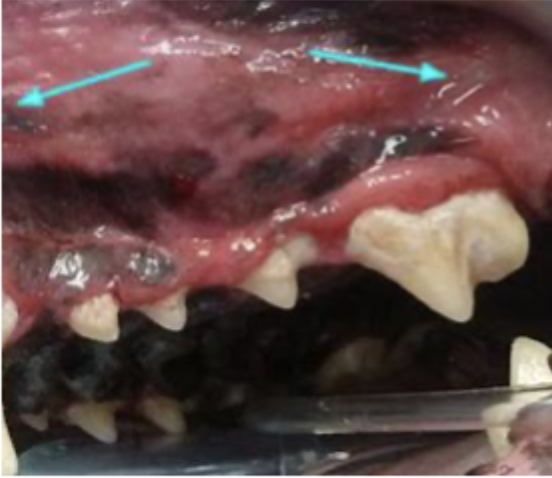
What is seen in this image?
canine chronic ulcerative stomatitis
What physical exam findings are associated with canine chronic ulcerative stomatitis?
severe streaking erythema on attached and unattached mucosal surfaces
uclerations on the labial and buccal mucosa
kissing lesions (localized vastibular contact ulcers)
intertrigo and dermatitis of the lower lip due to drooling
scarring of mucosal tissues at the lip commissures in chronic cases
How can we diagnose canine chronic ulcerative stomatitis?
clinical history and excluding other causes
histopathology of lesions can support diagnosis
What differential diagnoses must be considered in suspected canine chronic ulcerative stomatitis cases?
uremic ulcers
ulcers secondary to lepto
mucositis secondary to contact with irritants
adverse drug interactions
stomatitis secondary to chemo or radiation treatment
autoimmune disease
epitheliotropic lymphoma
eosinophilic granuloma
traumatic mucositis
thermal burn
What is the treatment for chronic canine ulcerative stomatitis?
diligent homecare
multimodal pain management (NSAID+gabapentin±opioid)
conservative: COHAT, application of plaque reducing agent. strategic extraction of teeth causing contact mucositis/kissing, repeat cleanings every 6mo
aggressive: extraction of all teeth
List differential diagnoses for ulceroproliferative diseases in dogs.
generalized gingivostomatitis / CCUS
autoimmune skin diseases (lupus, pemphigus vulgaris)
uremia
eosinophilic granuloma complex
mucosal drug reaction
chemical or thermal injury
infection
neoplasia (lymphoma, melanoma)
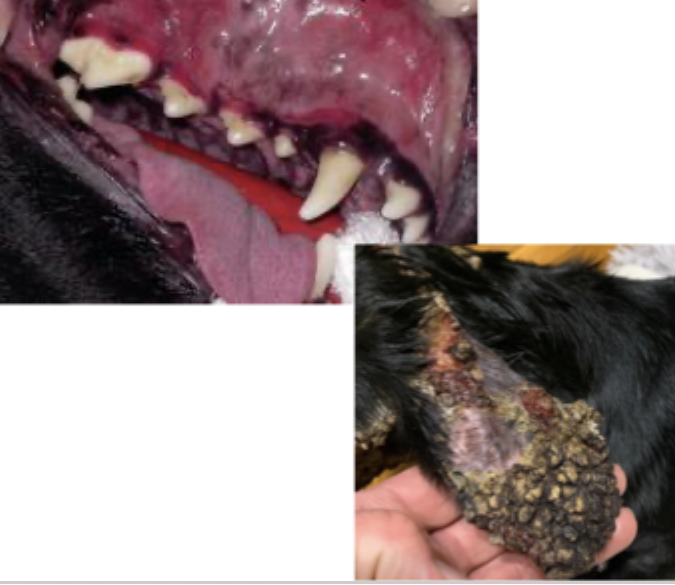
What is the vesiculobullous and.or ulcerative skin disease with uncommon oral involvement, but affected areas inlude intraoral and extraoral sites including the ventrum of the trunk, mucocutaneous junctions, footpads, pinnae, ulcerative stomatitis, and glossitis; nonspecific gingivitis and stomatitis can mimic this disease?
Erythema multiforme
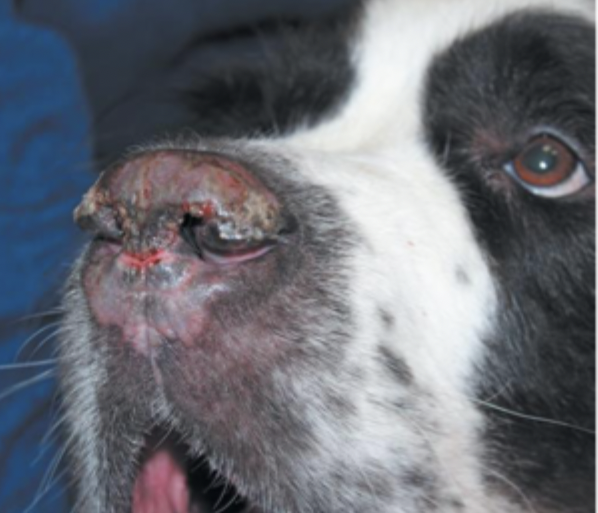
What is the autoimmune disease characterized by autoantibodies against various cellular antigens that affects epithelial cells of the skin and mucosa?
Lupus erythematosus
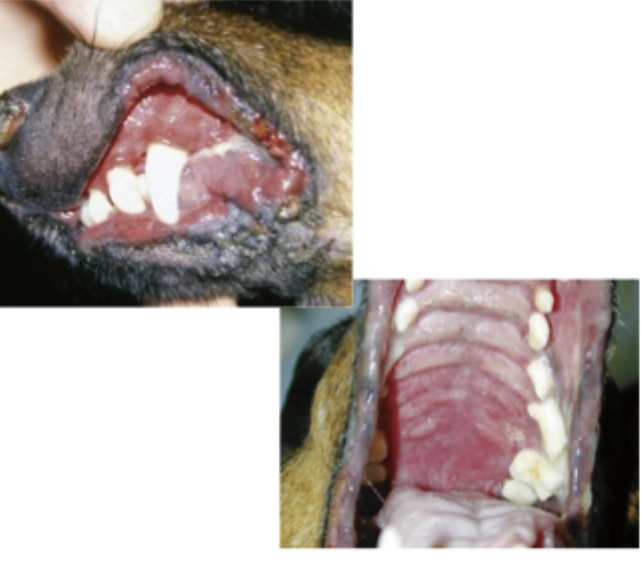
What disease is seen in middle aged dogs, is caused by autoantibodies directed against desmoglein-3 in the basal cell layers of the epidermis and oral mucosa, and affects keratinized oral epithelium of the hard palate, gingiva, and dorsal tongue?
Pemphigus vulgaris
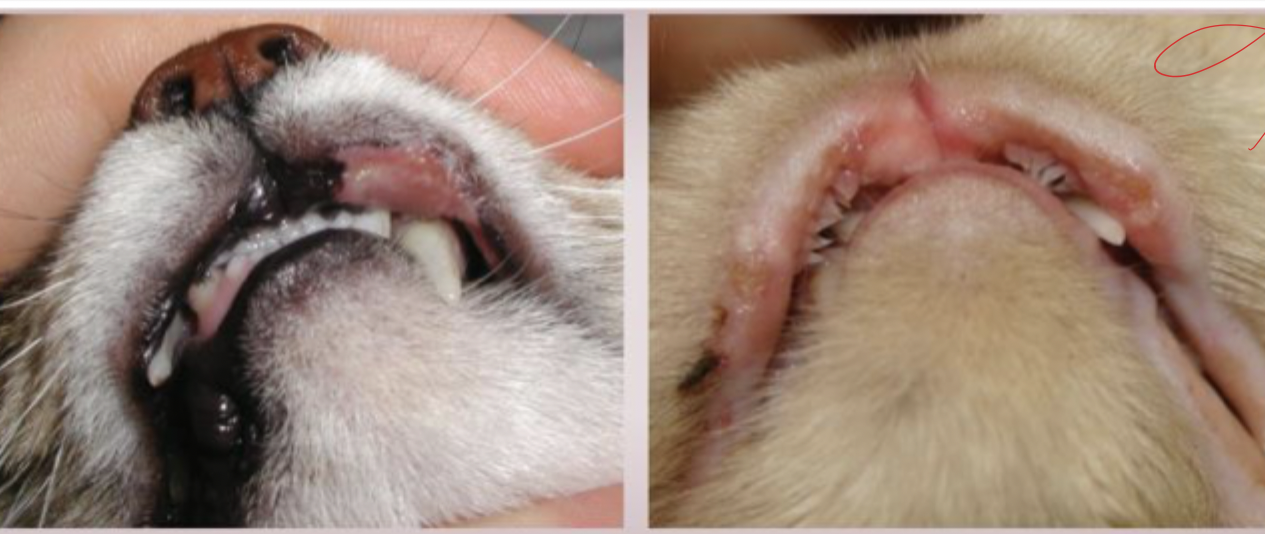
What disease is more commonly found in young animals 2-6 years old, lesions are typically linear, well circumscribed, raised, yellowish pink in color on the skin, paws, cheek, lip commissure, pinna of the ear, or oral cavity, and can be associated with insect bite allergies, food allergy, atopy, immunosuppression, and bacerial and viral (calicivirus) infections?
Eosinophilic granuloma complex (cats)
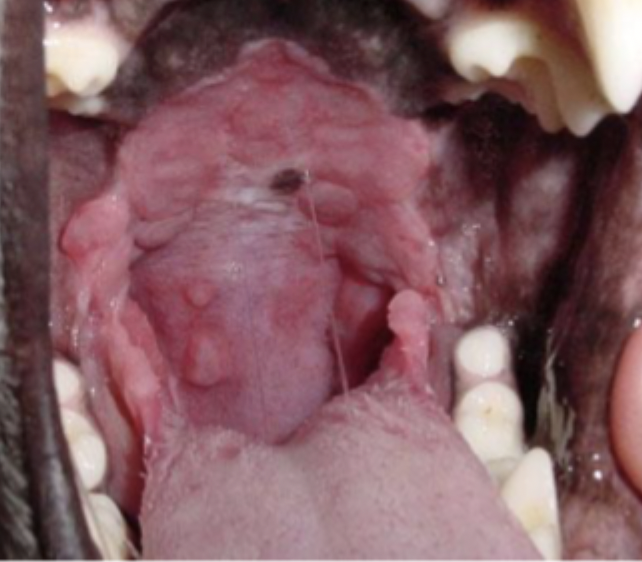
What disease is seen in young animals 1-7 years of age and is typically palatal lesions with no clinical signs?
Eosinophilic stomatitis (dogs)
How does oral eosinophilic granuloma typically present in Siberian Huskies?
hereditary or familial
usually on the tongue, can also be seen on palatal mucosa
lingual lesions = halitosis and oral discomfort
How does eosinophilic stomatitis present in Cavalier King Charles Spaniels?
presented for dysphagia, paroxysmal coughing, or anorexia
mucosal ulceration, plaque formation, and granulomatous lesions
familial
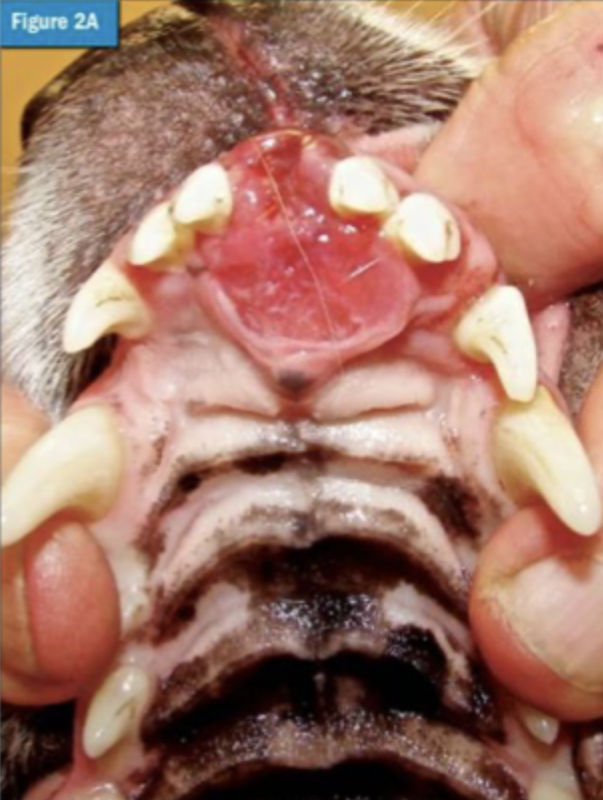
What is an uncommon canine autoimmune inflammatory disorder affecting the gingival, oral mucosa, and underlying alveolar bone that includes the complement system inhibition with C5a as important in pathogenesis, and clinically has gingival lesions that can be multifocal, bruised, and erythematous in appearance, expansile, and friable?
Wegner’s Granulomatosis
List differential diagnoses for suspected cases of Wegner’s granulomatosis.
traumatic granuloma
necrotizing ulcerative stomatitis
pyogenic granuloma
neoplasia
immune mediated conditions
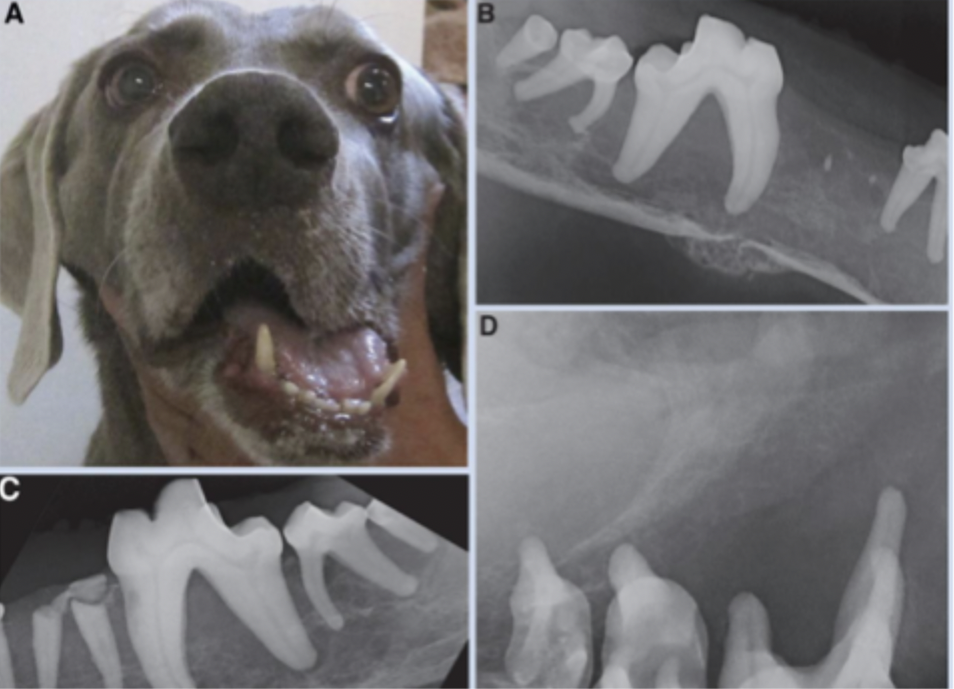
What disease is caused by a low phosphorous or low calcium:phosphorous ratio, and can be caused by functional adenoma, chronic renal insufficiency or nutritional deficiency, or as a result of diets with low calcium to phosphorous ratio such as all meat?
hyperparathyroidism (rubber jaw, renal osteodystrophy)
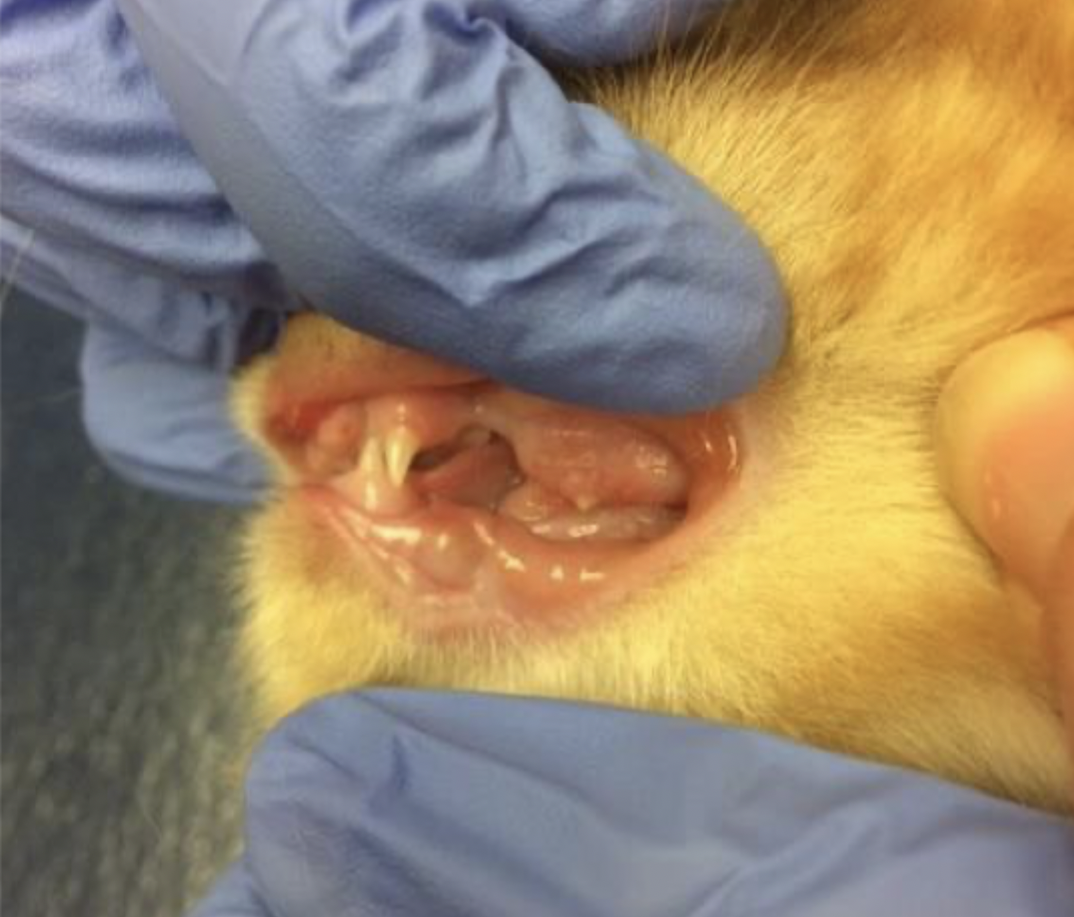
What rare condition is related to dwarfism, with obstipation, megacolon, and delated dental eruption being primary presenting complaints leading to diagnosis, and treatment consisting of levothyroxine supplementation and gingivectomy?
Congenital hypothyroidism (cats)
What condition occurs in dogs and cats as a result of chronic renal disease causing multifocal oral ulceration, fibrinoid necrosis of aerterioles withint he oral mucosa, and necrotic (foul smelling) lesions along the ventral aspect of the tongue and buccal mucosa?
uremic ulcers
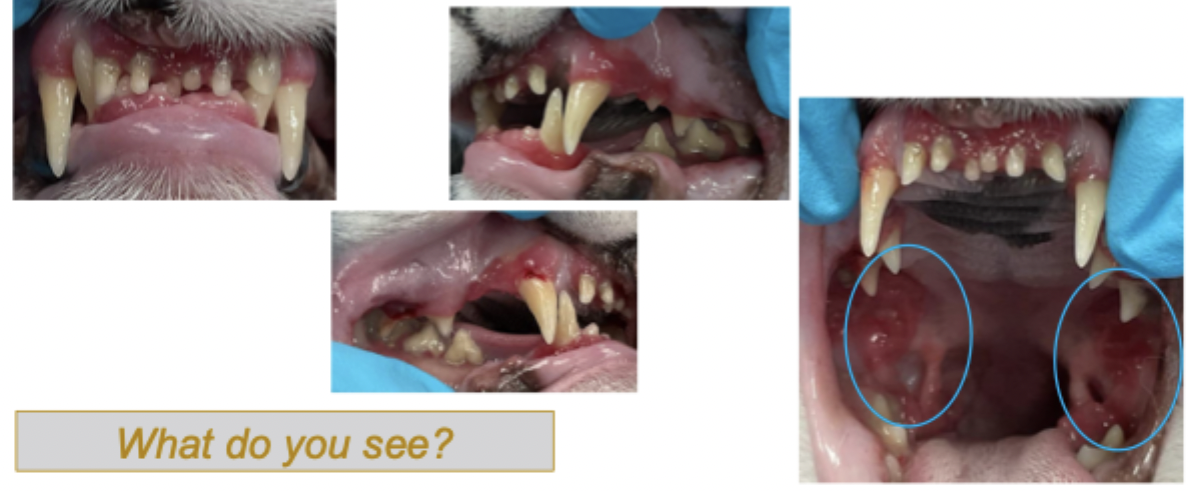
A 4yo FS DSH cat presents for oral pain and inflammation. FIV/FeLV negative, UTD on vaccines and preventative care. Pain when eating observed by the owner. No weight loss at time of presentation. Slower eating but not anorexic.
What do you see?
issues throughout the mouth, not just in one location
caudal mucositis
moderate to severe gingivitis
moderate calculus
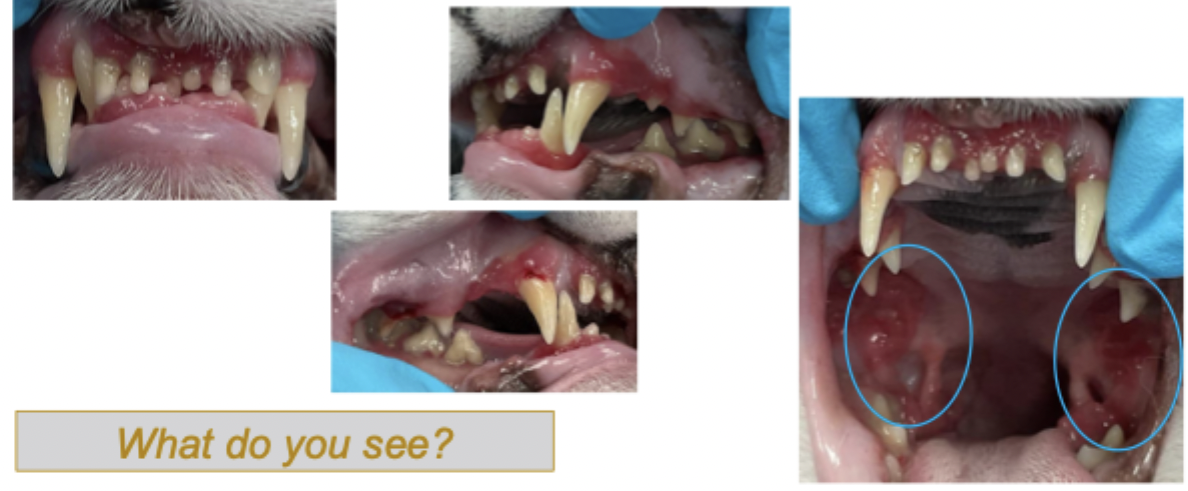
A 4yo FS DSH cat presents for oral pain and inflammation. FIV/FeLV negative, UTD on vaccines and preventative care. Pain when eating observed by the owner. No weight loss at time of presentation. Slower eating but not anorexic. The patient was painful on awake oral exam.
You see the folllowing on oral exam:
issues throughout the mouth, not just in one location
caudal mucositis
moderate to severe gingivitis
moderate calculus
What is your diagnosis and how would you treat?
feline chronic gingivostomatitis (FCGS)
extract all remaining teeth