Portfolio Management Ch 1 Formulas and Terms
 Call Kai
 Learn
Learn Practice Test
 Spaced Repetition
 Match
Match Flashcards
 Knowt Play
1/32

There's no tags or description
Looks like no tags are added yet.
Name | Mastery | Learn | Test | Matching | Spaced | Call with Kai | Chat |
|---|
No analytics yet
Send a link to your students to track their progress
33 Terms
Required Rate of Return (RRR)
the minimum return an investor will accept; RRR = Time Value of Money + Inflation + Risk Premium
Holding Period Return (HPR)
shows how much your investment grew over the whole investment period; formula when there’s income: HPR = Ending Value + Income / Beginning Value

Holding Period Yield (HPY)
the percentage return earned over the holding period

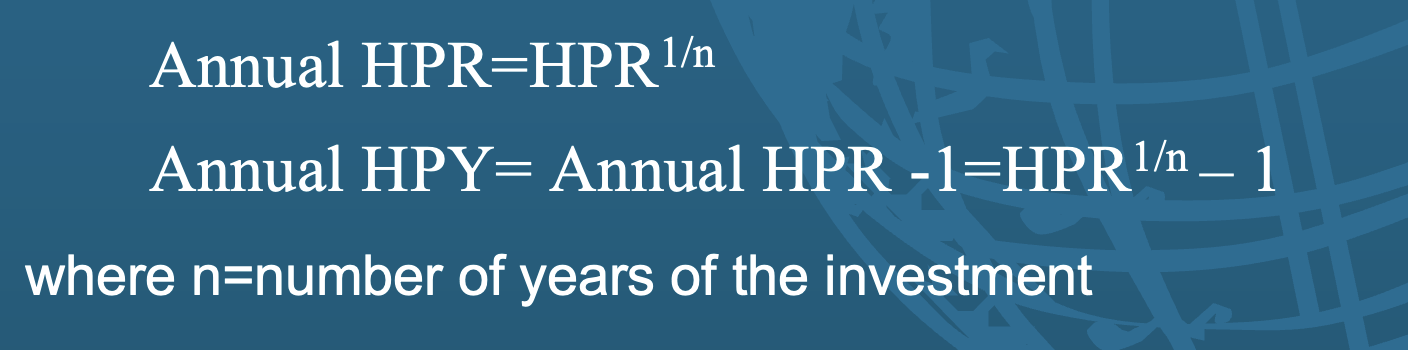
Annual Returns Formulas
Annual HPR converts HPR into a 1-year return. Annual HPY shows the annual percentage return
Arithmetic Mean (AM)
average yearly return (results in %);ΣHPY = Sum of all Holding Period Yields
n = Number of years

Geometric Mean Return (GM)
the true average annual return over multiple years

Portfolio HPY
the average return of the whole portfolio; Portfolio Return = Σ (Weigh x Return)
Expected Return
The average return you expect to earn in the future.

Variance (σ²)
Measures how spread out the possible returns are from the expected return. σ² = ΣProbability (Possible return - Expected return)²
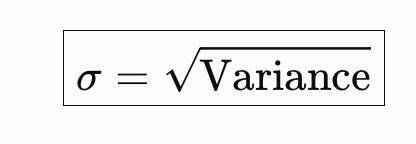
Standard deviation (σ)
The square root of variance. Measures the total risk.
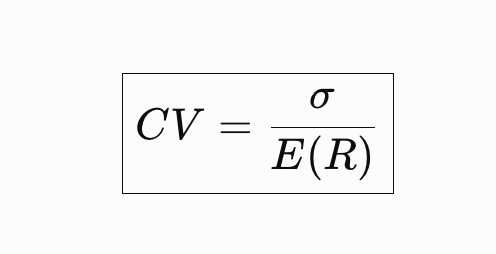
Coefficient of Variation (CV)
Measures risk per unit of expected return.
Risk of Historical Returns
Measures the risk of past returns (HPYs).
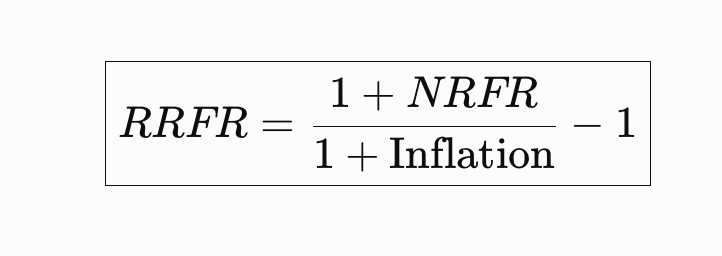
The Real Risk Free Rate (RRFR)
The risk-free return with no inflation and no risk. It’s affected by time preference and investment opportunities. Real = no inflation
Nominal Risk-Free Rate (NRFR)
The risk-free return, including expected inflation. Nominal = real +inflation

Security Market Line (SML)
A graph showing the relationship between risk and expected return.The slope shows how much extra return investors require for taking more risk.
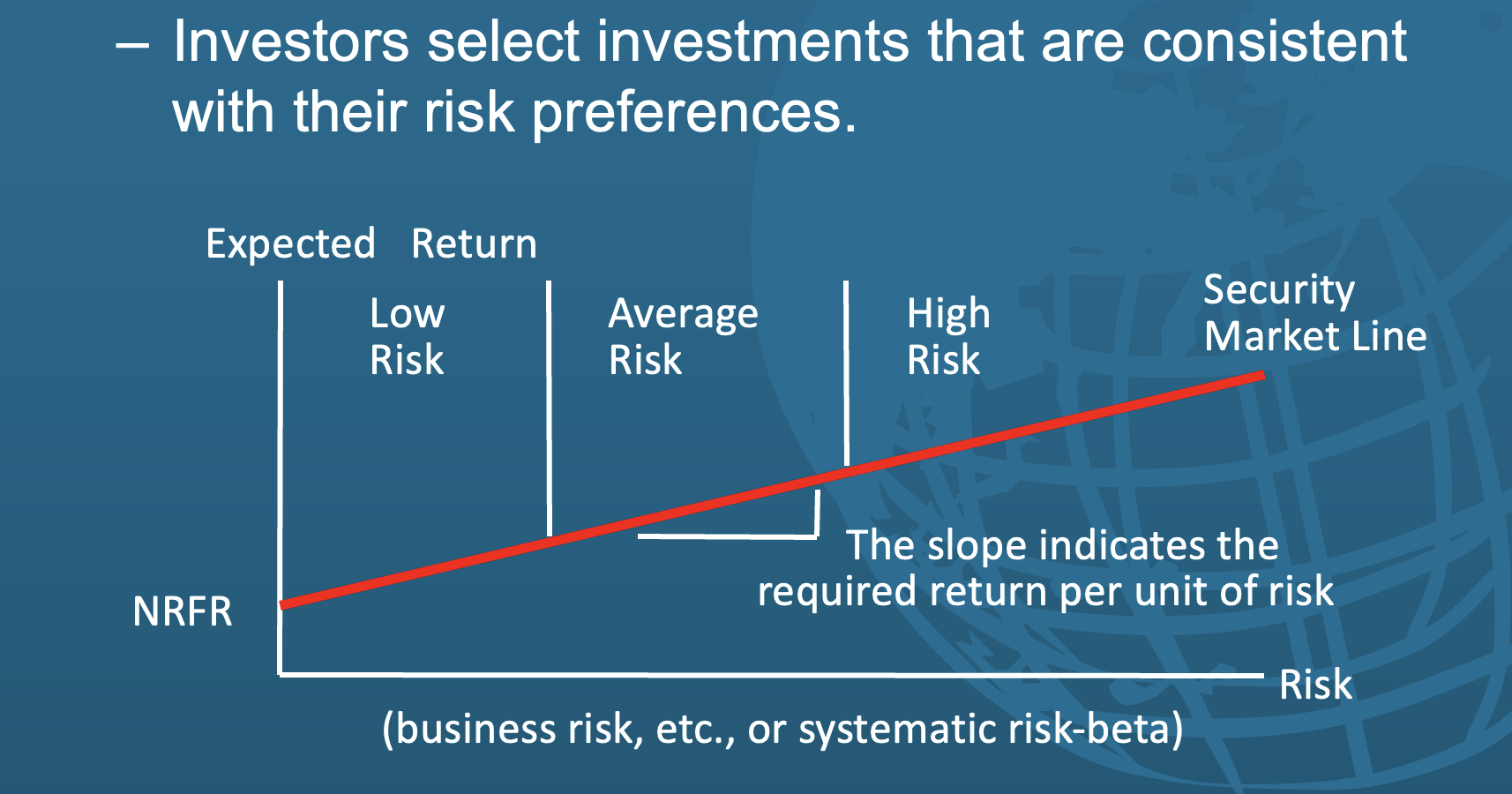
Movement Along the SML
When the risk of one investment changes, its expected return also changes. → The investment moves along the same SML.; More risk → Move up/right. Less risk → Move down/left.
What does nominal mean?
It means “market” (Nominal risk free rate = market risk free rate
Investment
putting money in now to earn money later
Pure rate of interest
the return of waiting only (assumes no inflation and no risk)
Pure time value of money
money today is worth more than money tomorrow
Inflation
Money loses its value over time (→ investors want higher returns)
Uncertainty (Risk)
more risk → investors require extra return (risk premium)
Risk premium
extra return for taking risk
What does pure mean?
Time only
Market Risk Premium (MRP)
extra return expected above the risk-free rate for taking a bigger risk
Systematic risk
= Market risk; cannot diversify, affects all securities
Unsystematic risk
can diversify; UNsystematic = UNique company
Business risk
uncertainty of operating income (sales & operation)
Financial risk
uncertainty caused by debt/borrowing
Liquidity risk
not being able to sell quickly at a fair price
Exchange rate risk
risk from currency exchange rate changes
Country risk
risk from political/economic instability
Total risk
measured by standard deviation (for variance)