to memorize - bioc
 Call Kai
 Learn
Learn Practice Test
 Spaced Repetition
 Match
Match Flashcards
 Knowt Play
1/91

There's no tags or description
Looks like no tags are added yet.
Name | Mastery | Learn | Test | Matching | Spaced | Call with Kai | Chat |
|---|
No analytics yet
Send a link to your students to track their progress
92 Terms
What is the net reaction for one molecule of glucose through glycolysis?
Glucose + 2ADP + 2Pi + 2NAD+ → 2 pyruvate + 2ATP + 2NADH + 2H+ + 2H2O
What is the net reaction for one molecule of Acetyl CoA through TCA?
Acetyl CoA + 3NAD+ + FAD + GDP + Pi + 2H2O → 2CO2 + 3NADH + 2H+ + FADH2 + GTP + CoASH
How would you classify the reaction catalyzed by citrate synthase?
Condensation
How would you classify the reaction catalyzed by aconitase?
Dehydration/hydration
How would you classify the reaction catalyzed by isocitrate dehydrogenase?
Oxidation/decarboxylation
How would you classify the reaction catalyzed by a-ketoglutarate dehydrogenase complex?
Oxidation/decarboxylation
How would you classify the reaction catalyzed by succinyl-CoA synthetase?
Substrate level phosphorylation
How would you classify the reaction catalyzed by succinate dehydrogenase?
Oxidation
How would you classify the reaction catalyzed by fumarase?
Hydration
How would you classify the reaction catalyzed by malate dehydrogenase?
Oxidation
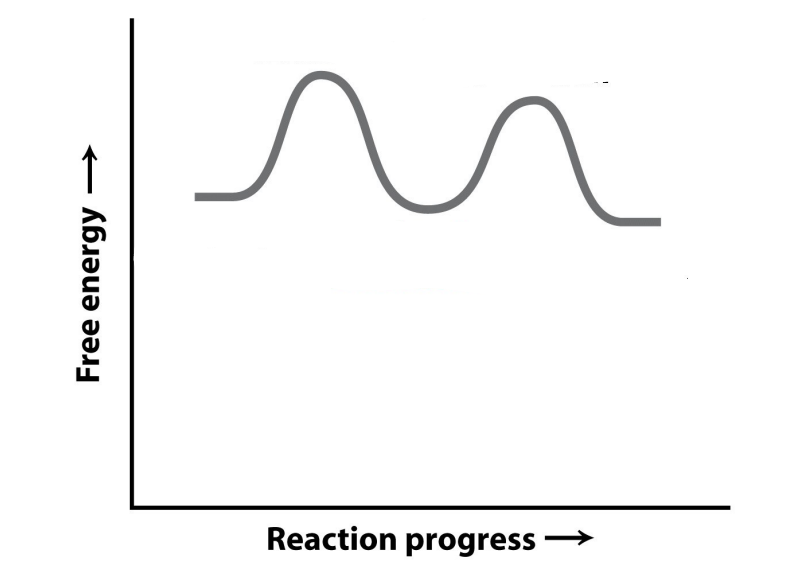
Label this diagram for the reaction catalyzed by glyceraldehyde-3-phosphate dehydrogenase
Enzyme reactants
Oxidation
Thioester intermediate
Acyl phosphate formation
Enzyme products
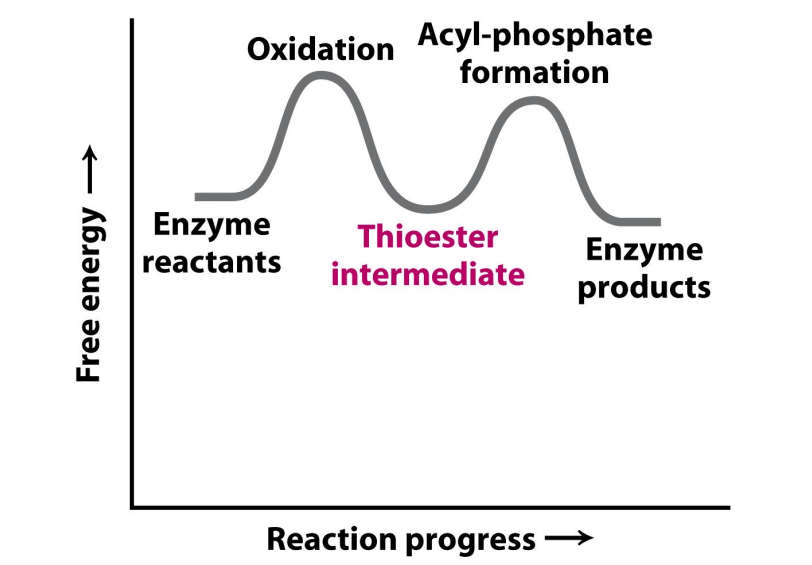
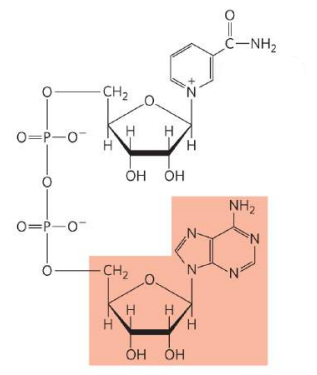
What is this molecule?
Nicotinamide adenine dinucleotide, NAD+
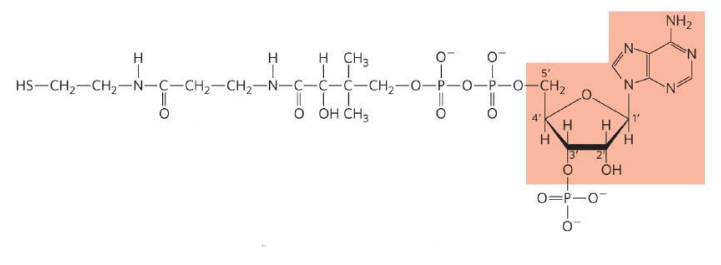
What is this molecule?
Coenzyme A
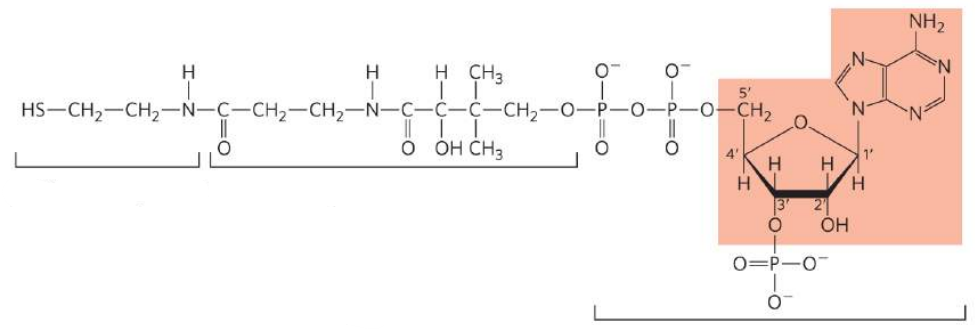
What are the three components of this molecule?
B-mercaptoethylamine, pantothenic acid, 3PADP
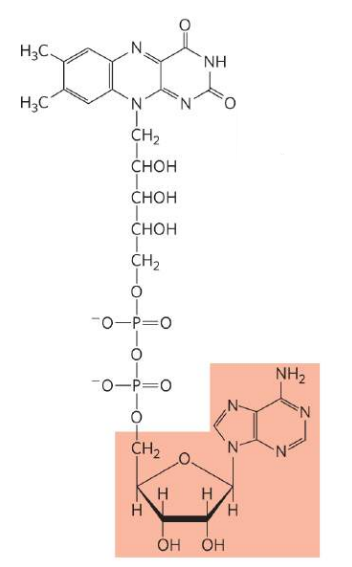
What is this molecule?
Flavin adenine dinucleotide, FAD
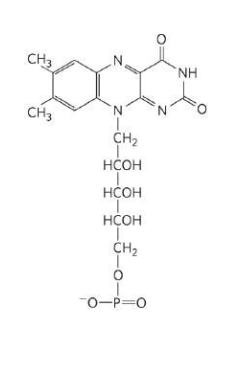
What is this molecule?
Flavin mononucleotide, FMN
What happens to glycolysis under anaerobic conditions?
Glycolysis stops so fermentation can regenerate NAD+
How is NAD+ regenerated under aerobic conditions?
Mitochondrial electron transf
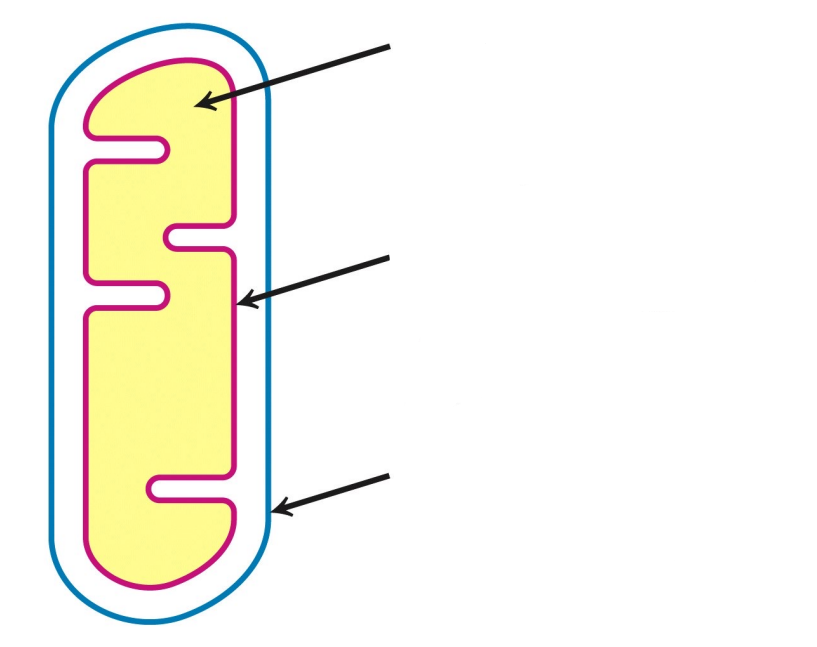
Label the following arrows
Matrix
Inner Mitochondrial Membrane
Outer Mitochondrial Membrane
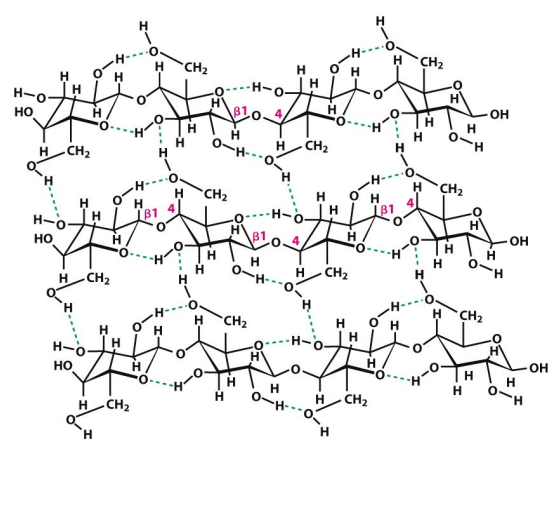
What is this structure?
Cellulose
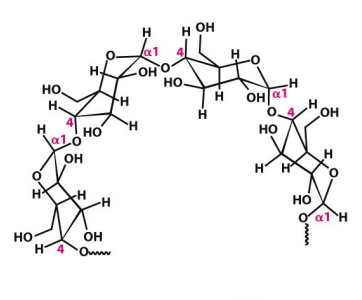
What is this structure?
Starch and glycogen
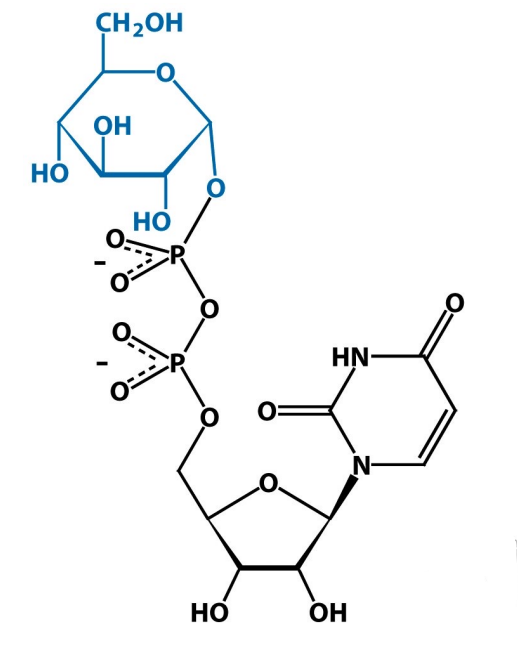
What is this structure?
Uridine Diphosphate Glucose, UDP-glucose
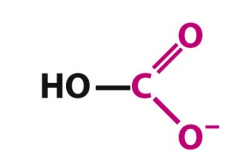
What is this structure?
Bicarbonate
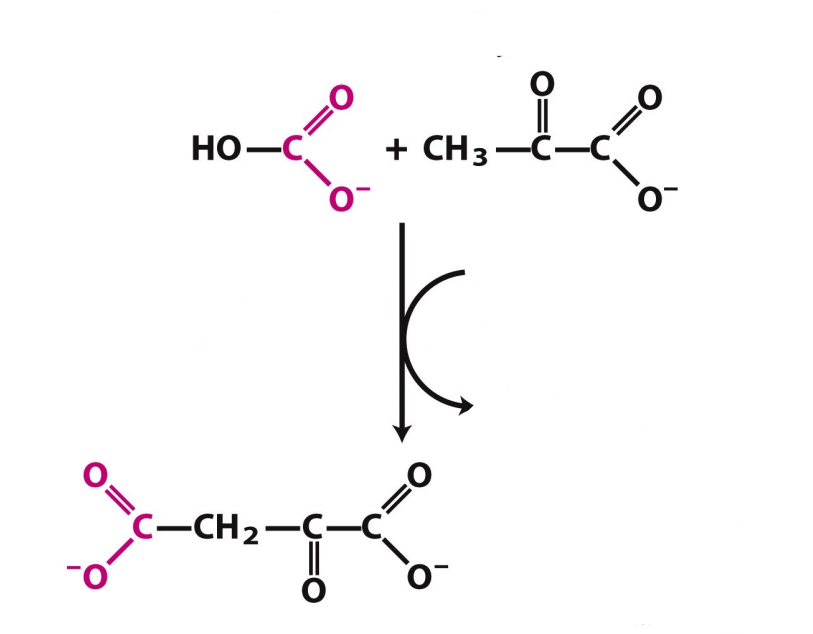
What enzyme catalyzes this reaction? What are the intermediates, if any?
Pyruvate carboxylase. ATP in. ADP, Pi, H+ out. Biotin needed.
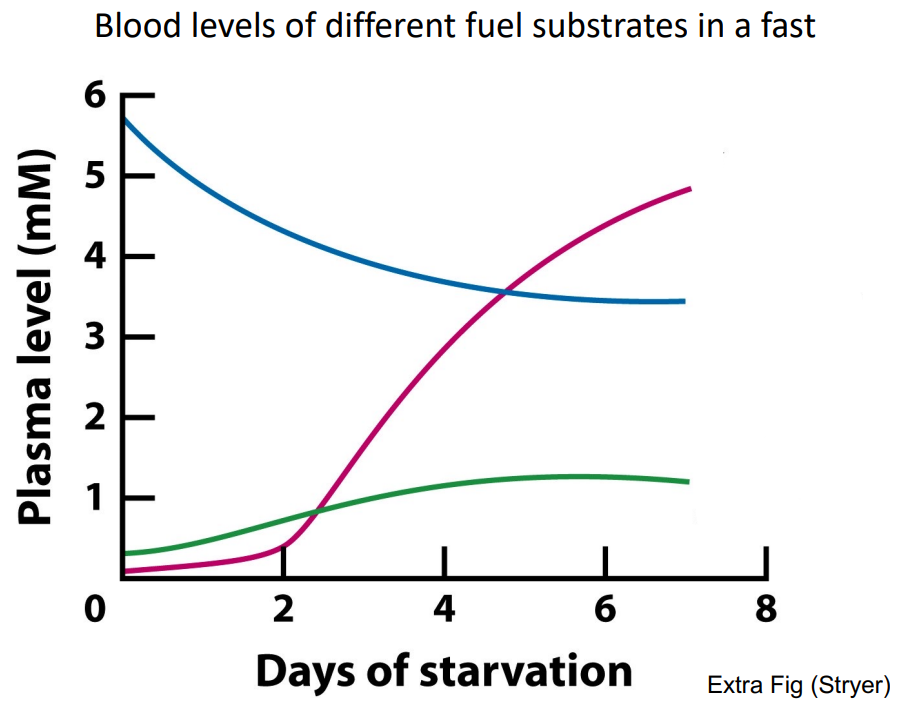
Label the following three lines
Ketone bodies
Glucose
Fatty Acids
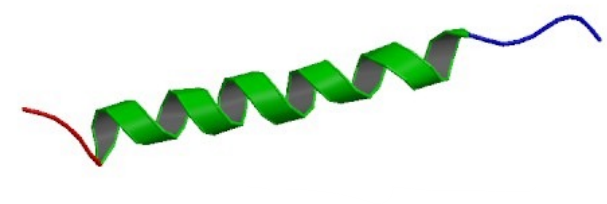
What is this structure?
Glucagon
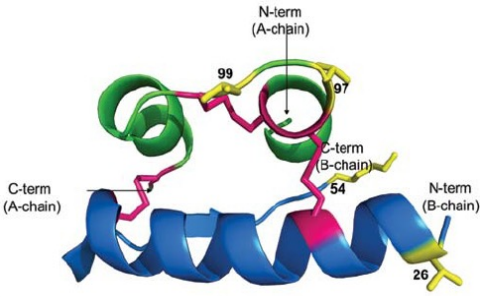
What is this structure?
Insulin
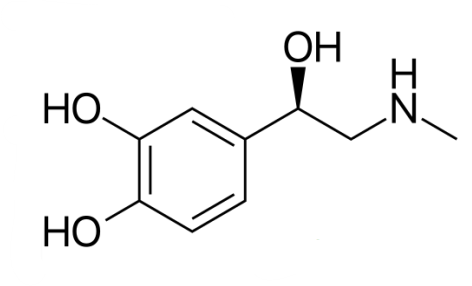
What is this structure?
Epinephrine
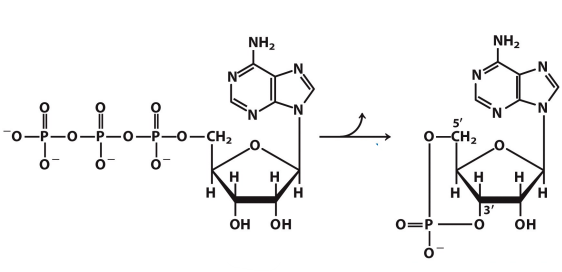
What enzyme catalyzes this reaction? What are the intermediates, if any?
Adenylyl cyclase. Inorganic pyrophosphate out
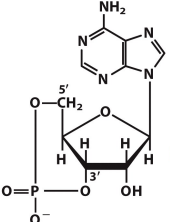
What is this structure
Adenosine-cyclic monophosphate, cAMP
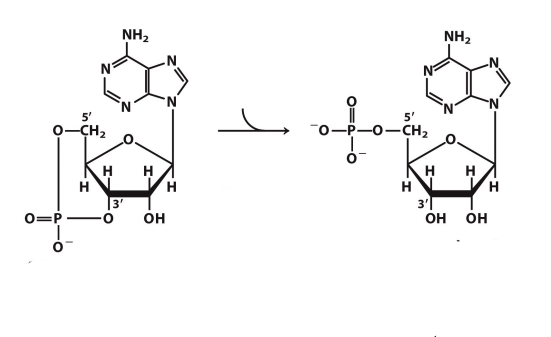
What enzyme catalyzes this reaction? What are the intermediates, if any?
Cyclic nucleotide phosphodiesterase. H2O in
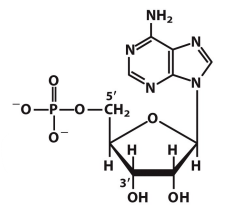
What is this structure?
Adenosine monophosphate, AMP
What is oxidative phosphorylation?
The formation of ATP as a resultof the transfer of electrons from either NADH or FADH2 to O2 by electron carriers
What is the PMF?
The proton motive force is formed by an electrochemical gradient. The PMF can be used by ATP synthase to generate ATP
What is the name of complex I?
NADH: Q oxidoreductase
What occurs in complex I?
Accepts 2 electrons from NADH
Electrons are transferred to FMN - Fe-S clusters - coenzyme Q
2 electrons go through, 4 are pumped into the IMS
What is the name of complex II?
Succinate dehydrogenase
What occurs in complex II?
Reaction 6 of the TCA cycle
electrons from succinate - FAD - succinate Q reductase (contains 2Fe-S clusters) - Q
Succinate is oxidized to fumarate, FAD is reduced to FADH2, Q is reduced to QH2
Electrons from NADH do not pass through this complex
What is coenzyme Q?
Ubiquinone or ubiquinol. Acts as a shuttle that moves electrons from complex i or II to complex III
What is the name of complex III?
Cytochrome bc, complex
What occurs in complex III?
2 electrons from QH2 are transferred one at a time to a 2Fe-S cluster - CytB - HemeC - CytC
QH2 is oxidized back to Q, 4H+ are moved into the IMS
What is Cytochrome C?
Electron shuttle. Water soluble protein that carries one electron from CIII to C1V
What is the name of complex IV?
Cytochrome oxidase
What occurs in complex IV?
CytC - CuA - CytA - Cyt A3 - CuB - O2
For 2 electrons to move through complex IV, 2H+ are moved into the IMS
Which molecules can inhibit the ETC? How do they do this?
Cyanide, azide, and carbon monoxide can bind to the heme in CytA3 in complex IV. This prevents electron transfer to O2
What are the components of ATP synthase?
F0 is embedded in the IMM and contains half of the channels that protons flow through. F1 extends into the matrix and synthesizes ATP when coupled to proton flow in F0
Describe F0’s components.
C subunits: 8-15 arranged in a cylinder. each unit has 2 alpha helices that span the membrane and contain an aspartic acid residue. stationary.
A subunits: covers 2 C units. has 2 half channels. one is open to the IMS, one is open to the matrix can move.
How does F0 work?
1. A charged ‘c’ subunit is in the IMS half-channel. A charged ‘c’ subunit is in the matrix half channel
2. The H+ diffuses from the IMS through the IMS half-channel and protonates the aspartate residue to aspartic acid. (-COOH is uncharged)
3. The c-ring can rotate by one ‘c’ subunit. The uncharged ‘c’ subunit enters the membrane
4. This brings another ‘c’ subunit into the IMS half-channel and another uncharged ‘c’ subunit into the matrix half-channel
5. A proton diffuses off the aspartic acid residue down the matrix half-channel and into the matrix. The ‘c’ subunit is now charged again
Describe F1’s components.
Contains 3 alpha-beta subunits arranged in a ball. in the center is the spinning gamma shaft
What are the three conformations of F1?
loose (L) site: ADP and Pi can bind and become trapped
tight (T) site: ATP generation but ATP is tightly bound in the site
open (O) site: low affinity for ATP (i.e. product release)
By what mechanism is oxidative phosphorylation regulated?
Acceptor control: the regulation of cellular respiration by the availability of ADP as a Pi acceptor. ATP is only formed as fast as it is consumed.
What is an example of a H+ gradient uncoupler?
2,4-Dinitrophenol: can uncouple the ETC and ATP synthase by carrying proteins across the IMM and destroying the protein gradient
Thermogenin (UCP-1):
In both, ETC continues but ATP synthase stops, producing heat.
How do we get electrons on NADH in the cytosol to the ETC?
Glycerol-3-phosphate shuttle: skeletal muscle and brain
Malate-aspartate shuttle: heart muscle, liver, and kidneys
ATP/ADP/Phosphate Translocase
Pyruvate translocase
How does the glycerol-3-phosphate shuttle work?
glycerol-3-phosphate dehydrogenase in the cytosol reduces DHAP to glycerol-3-phosphate, oxidizing NADH to NAD+
glycerol-3-phosphate dehydrogenase bound to the IMM oxidizes glycerol-3-phosphate back to DHAP, in the process tranferring 2 electrons to FAD, forming FADH2
FADH2 passes 2 electrons and reduces Q to QH2
How does the malate-aspartate shuttle work?
1. Oxaloacetate in the cytosol is reduced with NADH to make malate by malate dehydrogenase)
2. Malate (carrying two electrons) is transported into the matrix by the malate/alpha-ketoglutarate transport
3. Malate is oxidized back to oxaloacetate, reducing NAD+ in the matrix to NADH
4. Oxaloacetate is transaminated by glutamate forming aspartate and alpha-ketoglutarate in the matrix.
5. Aspartate and alpha-ketoglutarate are transported into the cytosol
6. Reverse of step 4. Aspartate transaminates alpha ketoglutarate reforming oxaloacetate and glutamate.
What is the total ATP yield for the complete oxidation of glucose?
30 or 32
Why do we need to store polymerized glucose?
As a polymer, glycogen has low osmotic strength. It can quickly be broken down into glucose during times of high activity
What are the steps to glycogen synthesis?
Glucose-6-phosphate is converted to glucose-1-phosphate by phosphoglucomutase
An activated form of glucose is made by activating glucose-1-phosphate with uridine triphosphate forming uridine diphosphate-glucose and pyrophosphate. Catalyzed by UDP-glucose pyrophosphorylase
Glycogen synthase transfers glucose from UDP glucose to the non-reducing end of a growing glycogen chain, forming a new a1-4 glycosidic bond
How does a branching enzyme function?
Transfers a 7 glucose residue segment from the non-reducing end of an outer chain of at least 11 residues and forms an a1-6 linkage internally to the same chain or to a neighbouring chain
What are the steps to glycogen breakdown?
Glycogen phosphorylase removes a glucose molecule from the non-reducing end of glycogen by addition of orthophosphate. Yields glucose-1-phosphate
Glycogen phosphorylase stops 4 terminal residues from a branch point
How does debranching occur?
Debranching enzyme shifts 3 residues from one branch to the other
The remaining a1-6 linked glucose residue is then cleaved by the a1-6 glucosidase, using H2O and yielding glucose
Phosphoglucomutase converts glucose-1-phosphate to glucose-6-phosphate
What are the fates of glucose-6-phosphate?
Muscles perform glycolysis
In the liver, dephosphorylation by glucose-6-phosphatase without H2O, generating glucose and Pi. Glucose is then released into blood
Pentose phosphate pathway to generate ribose and NADPH
What is gluconeogenesis?
The process of generating glucose from non-carbohydrate precursors. Occurs mainly in liver to maintain blood glucose levels
What molecules can be used to make glucose?
Lactate and pyruvate during high muscle activity
Some amino acids or krebs cycle intermediates during times of starvation
Glycerol can be converted to DHAP
What are the 3 bypass reactions of gluconeogenesis?
Making phosphoenolpyruvate
Converting pyruvate to oxaloacetate
Making fructose-6-phosphate
How do we convert pyruvate into oxaloacetate?
In the matrix, pyruvate carboxylase catalyzes. Costs ATP. requires biotin.
How is phosphoenolpyruvate generated?
PEP carboxykinase catalyzes, requires a GTP, consists of a dacarboxylation driving phosphorylation
How is frucotse-6-phosphate generated?
FBPase-1 catalyzes. no generation of ATP
How is gluconeogenesis regulated?
Fructose-1,6-bisphosphase-1
- AMP
- F-2,6-BP
+ Citrate
PEPCk
- ADP
Pyruvate Carboxylase
- ADP
+ Acetyl CoA
What happens when glycogen stores run out?
Gluconeogenesis in the liver
Fat stores
Ketone bodies
How are ketone bodies formed?
Two acetyl units are joined by thiolase to form acetoacetyl CoA
HMG-CoA Synthase adds another acetyl CoA to form B-hydroxy-B-methylglutaryl CoA (HMGCoA)
Acetyl CoA is then cleaved in an irreversible reaction by the HMG-CoA lyase, yielding acetoacetate
Acetoacetate can be decarboxylated spontaneously to acetone
Acetoacetate can be reduced into D-B-hydrocybutyrate (which is more stable) by D-B-hydroxybutyrate dehydrogenase
How do ketone bodies break down?
B-hydroxybutyrate is oxidized back to acetoacetate by B-hydroxybutyrate dehydrogenase. NAD+ in, NADH and H+ out
Acetoacetate is converted to acetoacetyl CoA through the transfer of a CoA group from succinyl CoA. Catalyzed by B-ketoacetyl CoA transferase
Thiolase catalyzes the thiolysis of acetoacetyl CoA into 2 acetyl CoA
How does insulin work?
A peptide hormone released when glucose levels are high.
+ glycogen, fats, and protein synthesis
- gluconeogenesis
+ glucose uptake
How does glucagon work?
peptide hormone secreted when glucose levels are low
+ glycogen breakdown, gluconeogenesis, lipolysis, protein catabolism
How does epinephrine work?
catecholamine hormone derived from phenylalanine that is secreted when glucose is needed
similar to glucagon, targets primarily muscle
What is GLUT2?
Found in the pancreas and liver
High Km=15-20mM
Only moves glucose when concentration spikes or is high after a meal
In the process, the uptake of glucose results in signal transduction and insulin release in the pancreas
In the liver, this ensures that glucose is only taken up + metabolized when it is abundant
What is GLUT3?
Found in the brain at high levels
Low Km = 1mM
Since blood glucose is 5 the transporter is working near saturation (83%)
Functions to continuously bring glucose into the brain
What is GLUT4?
Found in many cells including skeletal muscle and adipocytes
km=5mM
Found in intracellular vesicles during fasting
Cells stimulated with insulin move GLUT4 to the surface (plasma membrane)
Therefore cells only take up glucose when insulin is abundant
In the absence of insulin, GLUT4 returns to vesicles
How are glycolysis and gluconeogenesis reciprocally regulated?
f26bp
Stimulates pfk1 and thus glycolysis
Inhibits f16bp and thus gluconeogensis
This occurs in the liver
How do we control phosphorylation on PFK2 and PBPase2
High glucagon. Cyclic AMP cascade is triggered which activates protein kinase A. PKA phosphorylates PFK2/FBPase2
High insulin and blood glucose. Insulin triggers another signaling cascade leading to increased glucose uptake, increased hexokinase activity, activation of a phosphoprotein phosphatase
How does glucagon and the cAMP cascade work?
Glucagon can bind to its receptor present in the plasma membrane. This causes a conformational change in the receptor, activating it.
Receptor activation causes the bound heterotrimeric Gs-protein complex (composed of a, b and gamma subunits) to exchange GDP for GTP in the Gsalpha subunit. This activates Gsalpha
Gsalpha dissociates from GsBetaGamma and binds adenylate cyclase, activating it
Adenylate cyclase converts ATP to cAMP
cAMP binds allosterically to protein kinase A (PKA) leading to its activation
PKA then phosphorylates and either activates or inactivates its targets
How do we shut down the cAMP signaling pathway?
Hormone level drops t1/2=5min
Some proteins can bind to the Gs-protein coupled receptor and block heterotrimeric gs-protein binding
Gsalpha has slow intrinsic GTPase activity. It will hydrolyze GTP back to GDP Gsalpha becomes inactive and rebinds to GsBetaGamma
Inhibit the adenylate cyclase
cAMP is degraded by cyclic nucleotide phosphodiester generating AMP
Phosphatases dephosphorylate the target molecules
How is glycogen metabolism regulated?
Glycogen synthase
Glycogen phosphorylase
What is the difference between Phosphorylase A and Phoshphorylase B?
All isoforms exist in two activity states.
A: phosphorylated, usually active.
B: dephosphorylated, usually inactive
How is glycogen metabolism hormonally regulated?
Epinephrine and glycogen can activate the cAMP cascade and PKA which can:
Phosphorylate phosphorylase kinase which converts phosphorylase A to phosphorylase B
Phosphorylate glycogen synthase, inactivating it
How does phosphoprotein phosphatase-1 function?
PP1 must bind to a scaffolding protein called Gm in the muscle or Gl in the liver to work effectively
Gm (Gl) can bind
PP1 (enzyme)
phosphorylase kinase
Glycogen phosphorylase
Glycogen synthase
Glycogen
Gm is thus a cofactor that bridges PP1 to its phosphorylated substrates
If PP1 doesn’t bind Gm, it is less active because it can NOT bind its substrates efficiently
How can you promote PP1 binding to Gm?
Insulin
Can lead to phosphorylation of Gm and thus promotes PP1 by binding to Gm
Glucagon or epinephrine
Signaling can also lead to phosphorylation via PKA of Gm at a different second site. Phosphorylation at the 2nd site prevents PP1 from binding Gm. PKA can also phsophorylate the PP1 inhibitor protein (PP1I)
When PP1 is phosphorylated, it can bind to PP1 and inhibit it
What is lipoloysis?
breakdown of fat into fatty acids and glycerol
What catalyzes the breakdown of TAG?
Triacylglycerol lipase
What is diabetes?
disease characterized by the over production of glucose by the liver and underutilization of glucose by other organs
What occurs in type 1 diabetes?
B islet cells are destroyed by host immune system
Body is in fasting mode, most cells can not take up glucose. Glycogen breakdown occurs, gluconeogenesis is high. Fat breakdown is high. No insulin for uptake
What occurs in type 2 diabetes?
Insulin receptors or GLUT4 expression is low
Glucose uptake is low, pancrease secretes more insulin and ability to regulate insulin and glucose is lost