Lecture 5: Archaeplastida: Red Algae, Green Algae, Plants
 Call Kai
 Learn
Learn Practice Test
 Spaced Repetition
 Match
Match Flashcards
 Knowt Play
1/44

There's no tags or description
Looks like no tags are added yet.
Name | Mastery | Learn | Test | Matching | Spaced | Call with Kai | Chat |
|---|
No analytics yet
Send a link to your students to track their progress
45 Terms
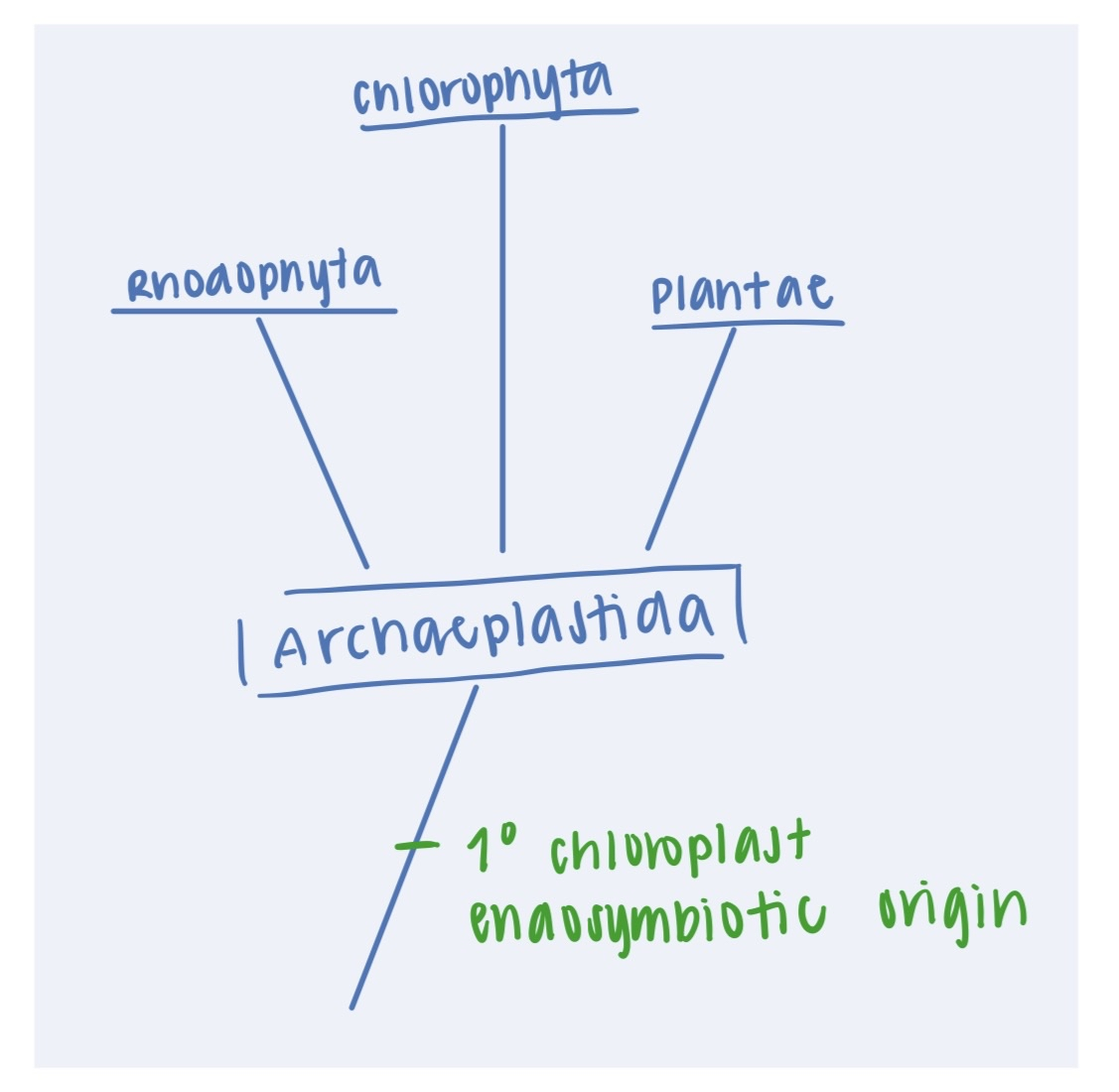
Supergroup Archaeplastida (1: synapomorphies, characteristics, and clades)
**chloroplasts with 1° endosymbiotic origin
chloroplasts have 2 p.l bilayers
inner = plasma membrane
outer = lipid polysaccharide membrane
clade (3)
Rhodophyta
Chlorophyta
Plantae
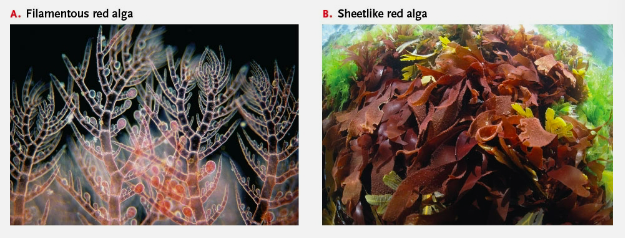
Archaeplastida: Rhodophyta (1: characteristics)
red algae/ multicellular seaweeds
body is the thallus (any multicellular alga)
chloroplasts have 2 membranes
A and C
stores food as a floridean starch
due to phycoerythrin, can exist in deep water
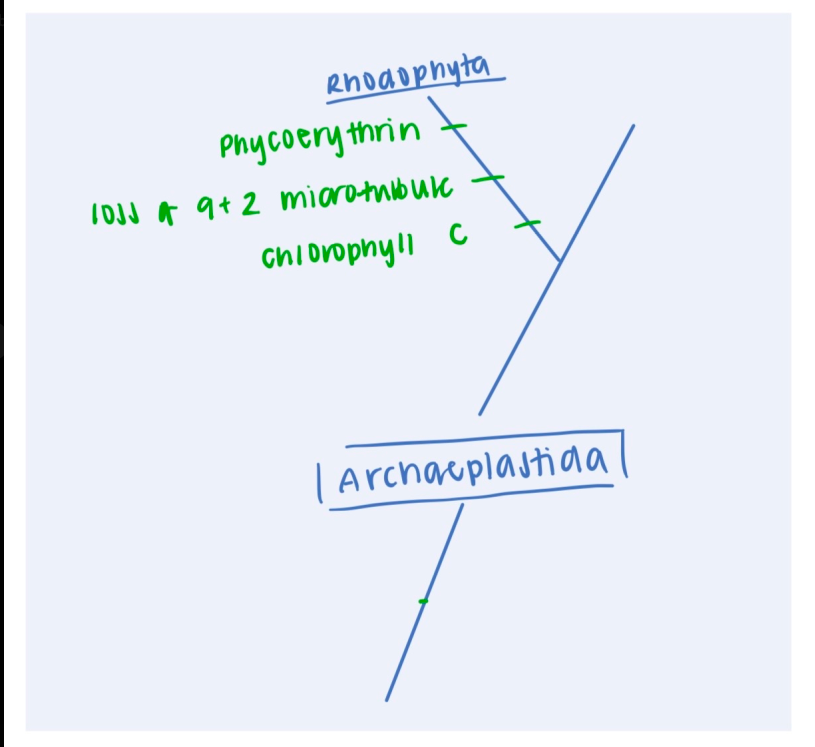
Archaeplastida: Rhodophyta (1: synapomorphies)
**(Phycobilisomes) phycoerythrin → absorbs the blue light (in cyanobacteria)
** loss of 9+2 microtubular structures
** chlorophyll c (ancient multicellular form
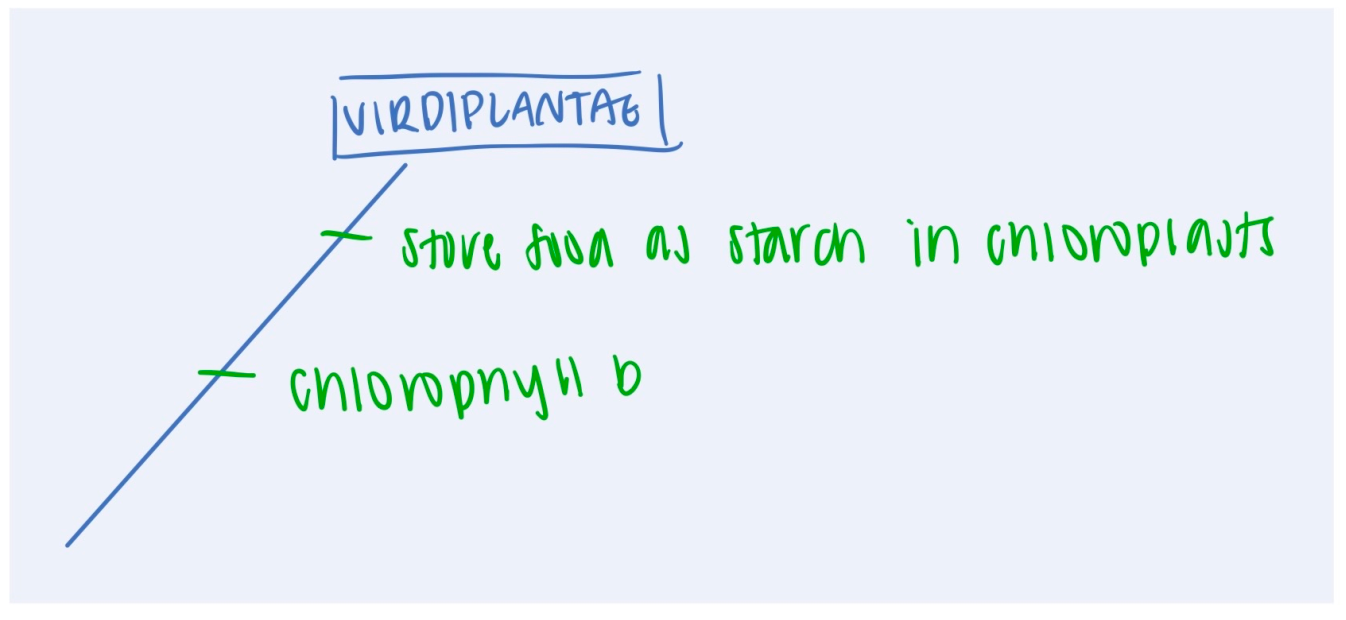
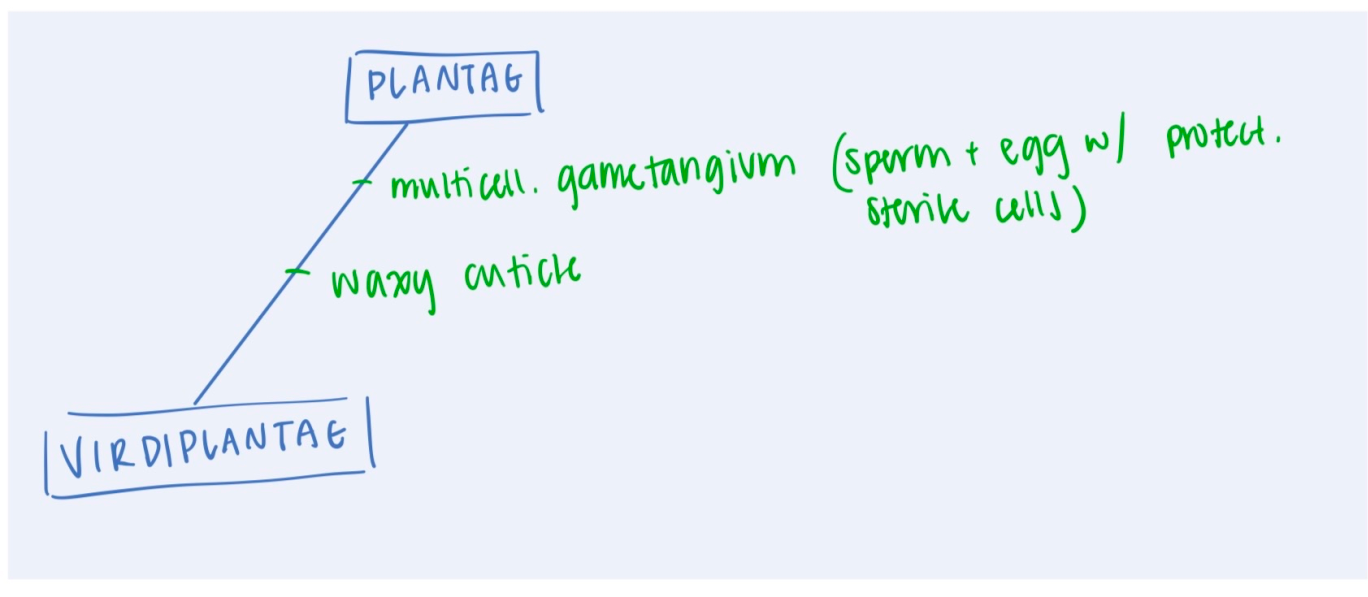
Archaeplastida: Viridiplantae (1: synapomorphies and characteristic
all green algae + plants
chlorophyll a and **b
**storing food as starch in chloroplast
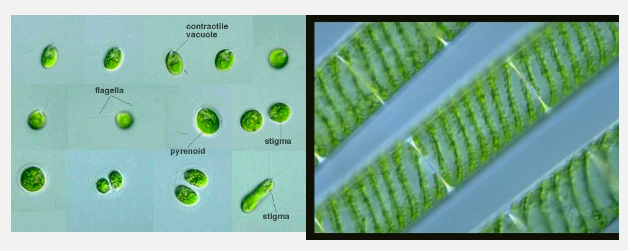
Archaeplastida: Viridiplantae: Chlorophyta (1: characteristics)
green algae
chlorophyll a and b
cell walls of cellulose
freshwater
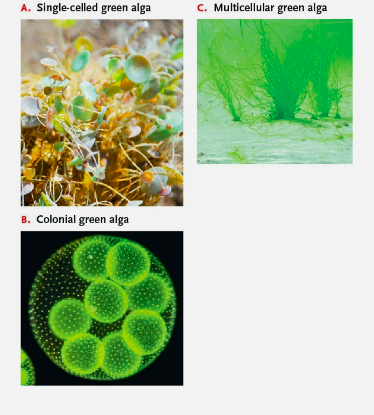
unicellular biflagellates
colonial
filaments
multicellular
Archaeplastida: Viridiplantae: Plantae (1: plant evolution)
plants appear 475 MYA
plant evolution
multicellular
photoautotrophic
chlorophyll a and b
Archaeplastida: Viridiplantae: Plantae (2: general characteristics)
cell walls of cellulose
store food reserves as starch
opening for gas exchange → stomata
spores with cell walls of sporopollenin (a protective shell of plant spores and pollen grains)
Archaeplastida: Viridiplantae: Plantae (3: synapomorphies/fertilization)
**waxy cuticle
** multicellular gametangia (produces sperm/eggs w. protective sterile cells
after fertilization → zygote is retained and develops into embryo in female gametangium
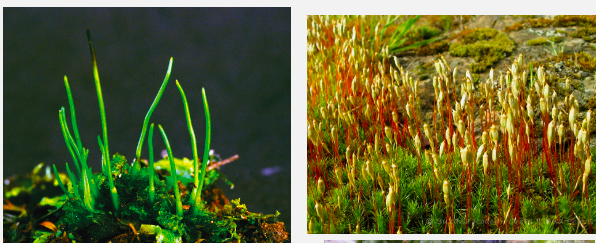
Archaeplastida: Viridiplantae: Plantae: Bryophyta (1: characteristics
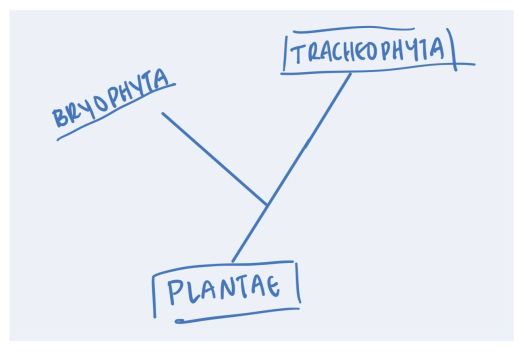
system of non-vascular plants
three phyla: moss, hornworts, liverworts
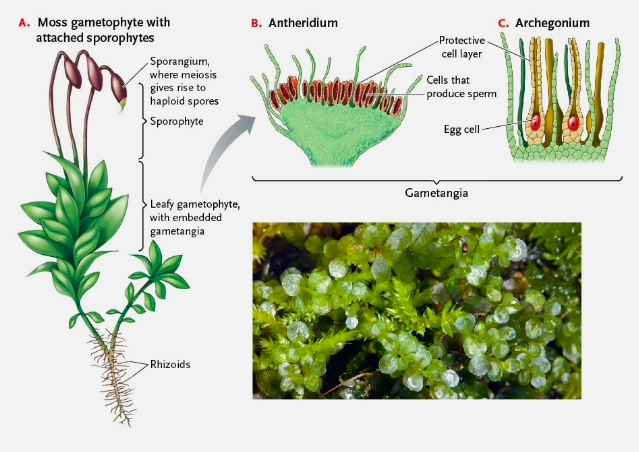
no true roots (anchors) (rhizoids), stems (caulidium), leaves (phyllidium)
needs moisture for reproduction
gametophyte generation dominant
Archaeplastida: Viridiplantae: Plantae: Bryophyta
(2: gametangia)
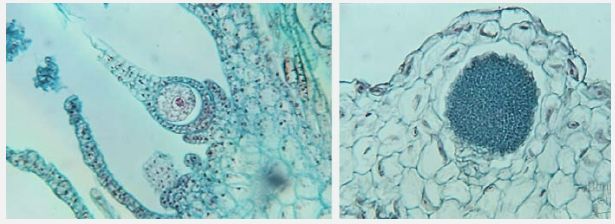
gametangia
antheridium (male)
archegonium (female)
Archaeplastida: Viridiplantae: Plantae: Bryophyta (3: moss: life cycle )
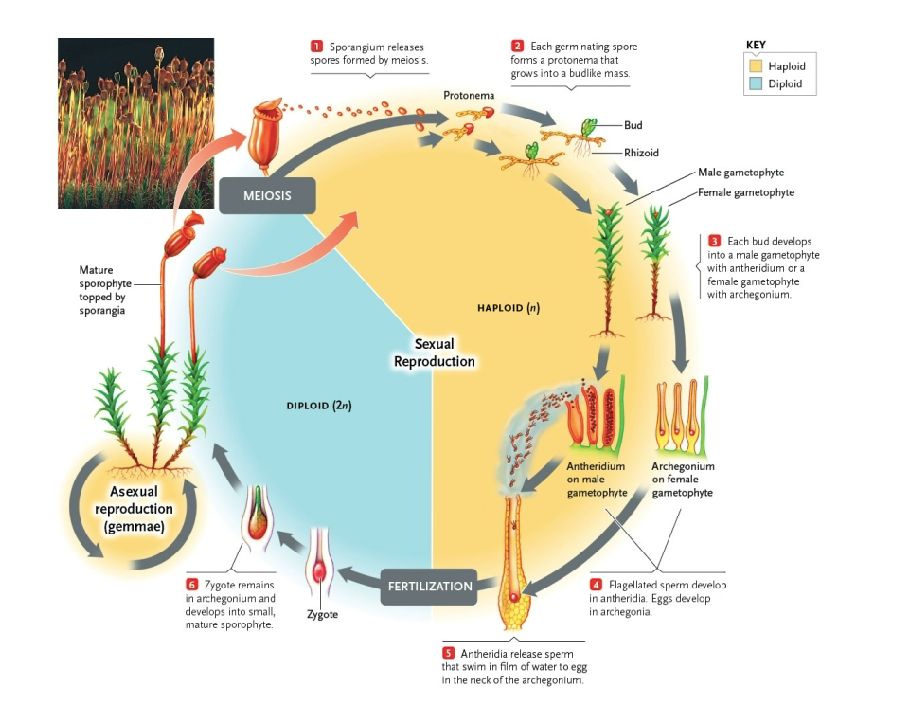
sporangium releases spores (n) from meiosis
germinating spore produces a protonema (initial filamental green photosynthetic stage)
bud can form a male or female gametophyte
sperm and egg forms in respective gametangium
fertilization → zygote remains in archegonium and develops to a sporophyte (2n)
Archaeplastida: Viridiplantae: Plantae: Tracheophyta (1: characteristics)
vascular plants (phloem/xylem)
xylem = tracheids (in the xylem), which are dead cells in plants
thick cell wall = mechanical strength
basal group = lycophytes (not discussed)
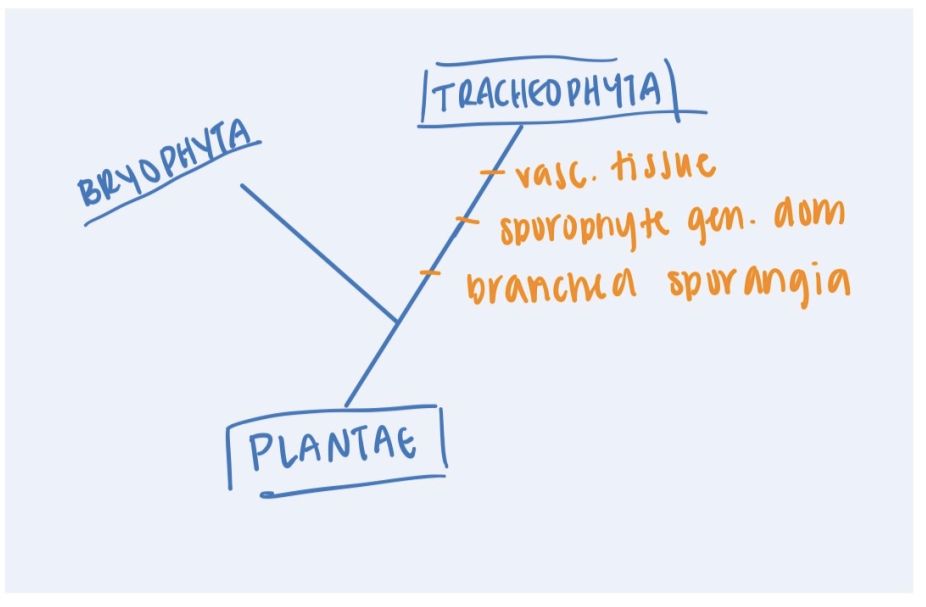
Archaeplastida: Viridiplantae: Plantae: Tracheophyta (2: synapomorphies)
** vascular tissues (xylem and phloem)
** branched sporangia
**sporophyte generation dominant
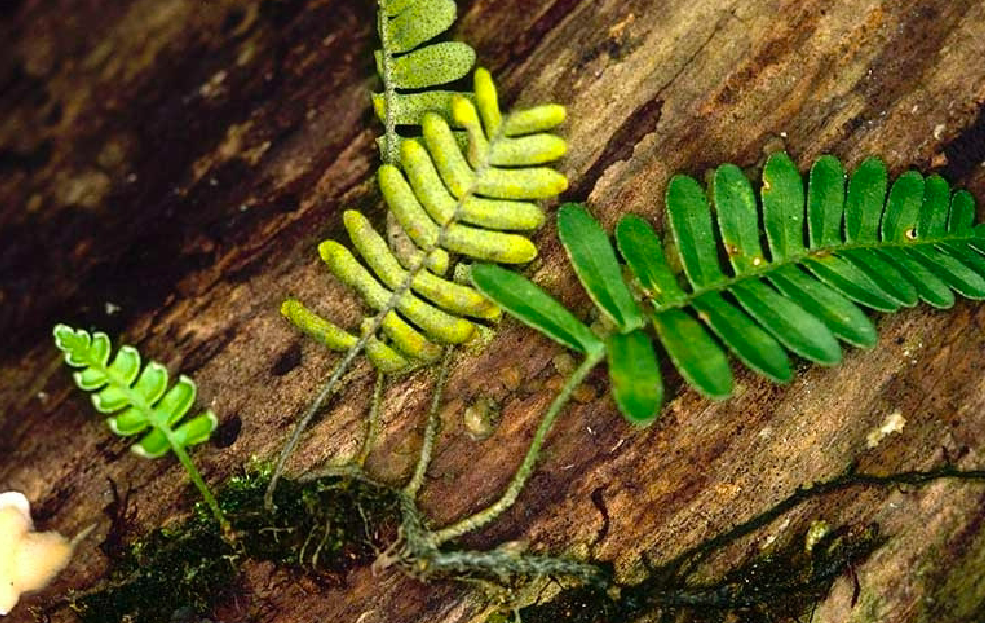
Archaeplastida: Viridiplantae: Plantae: Tracheophyta: Monilophyta (1: characteristics)
mainly ferns and horsetails
apomorphies are technical
monophyly
roots - adventitious (developing from stem)
leaves - fronds
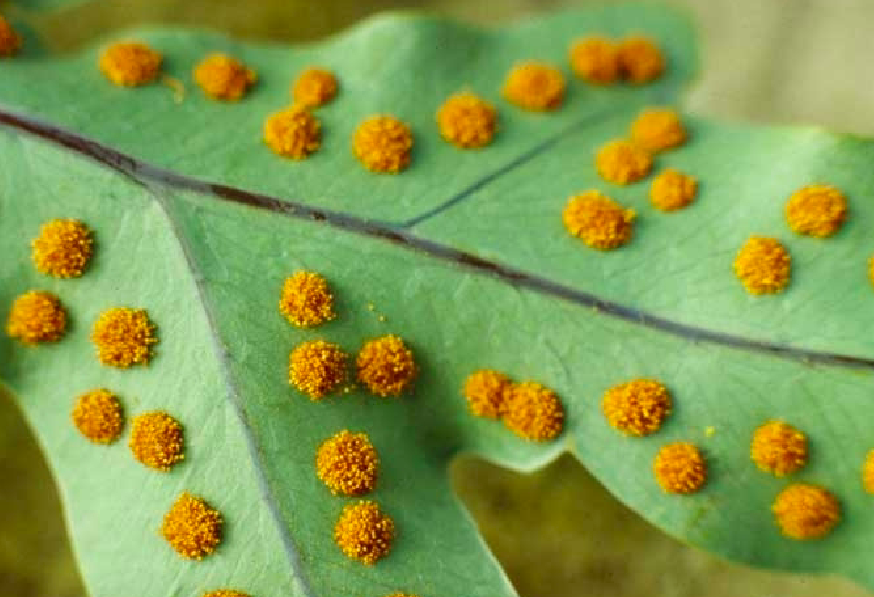
Archaeplastida: Viridiplantae: Plantae: Tracheophyta: Monilophyta (2:ferns: lifecycle-sori)
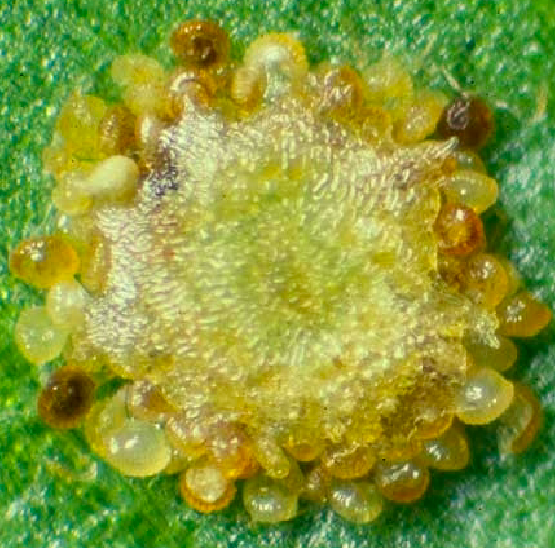
underside of leaf in sporophyte - sori (contains groups of sporangia)
sporangia is covered and protected by the - indisium
image
center = sterile sheath
darker spheres = sporangia
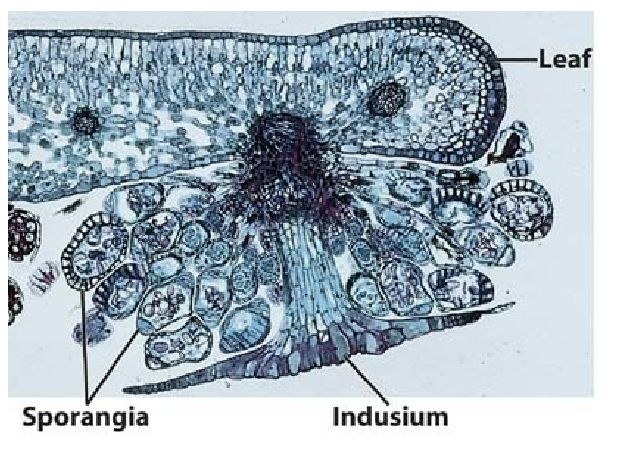
Archaeplastida: Viridiplantae: Plantae: Tracheophyta: Monilophyta (2.1:ferns: lifecycle-sporangium)
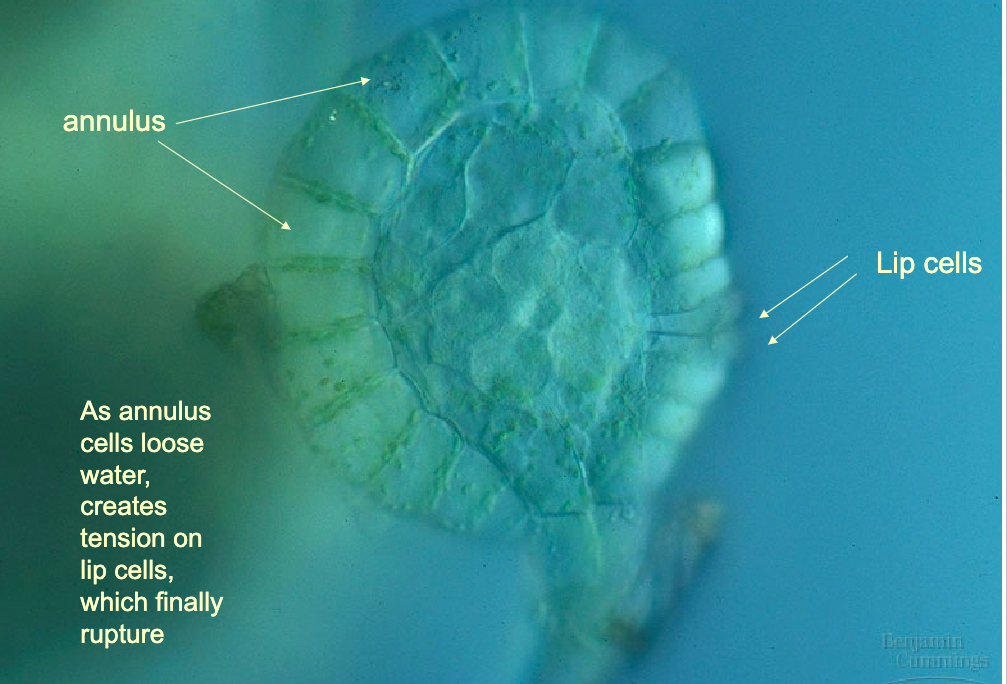
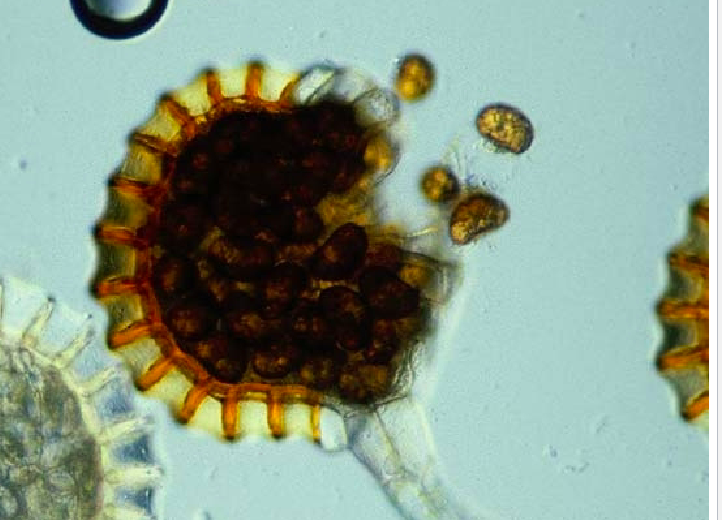
the cell walls are not strong
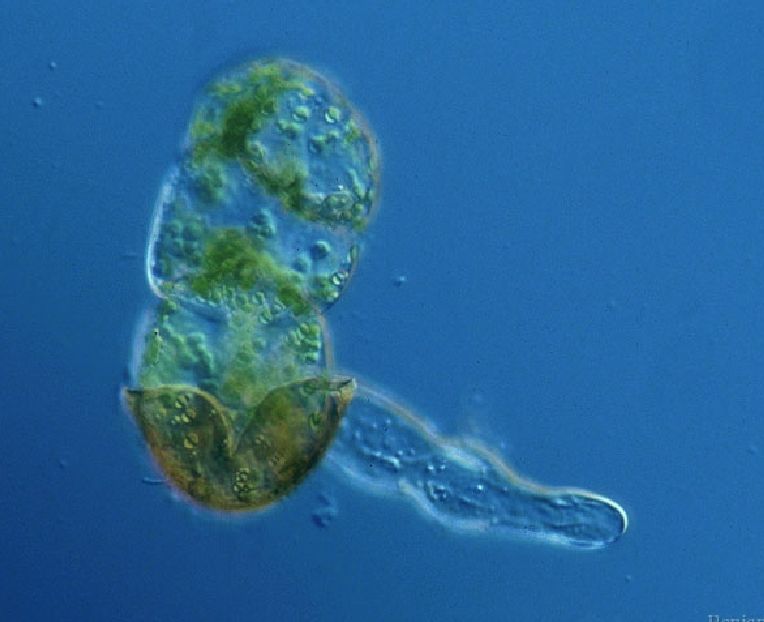
when lip cells rupture = spores are shed
Archaeplastida: Viridiplantae: Plantae: Tracheophyta: Monilophyta (2.2:ferns: full life cycle)
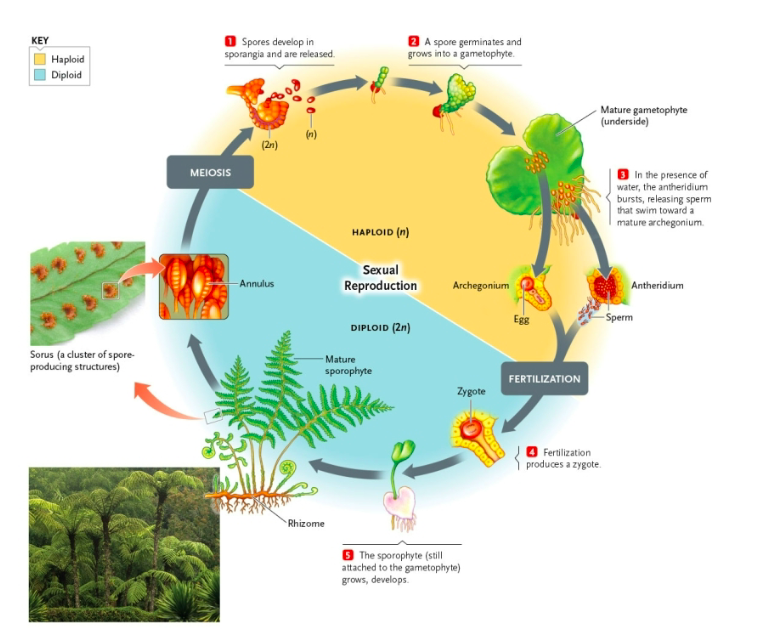
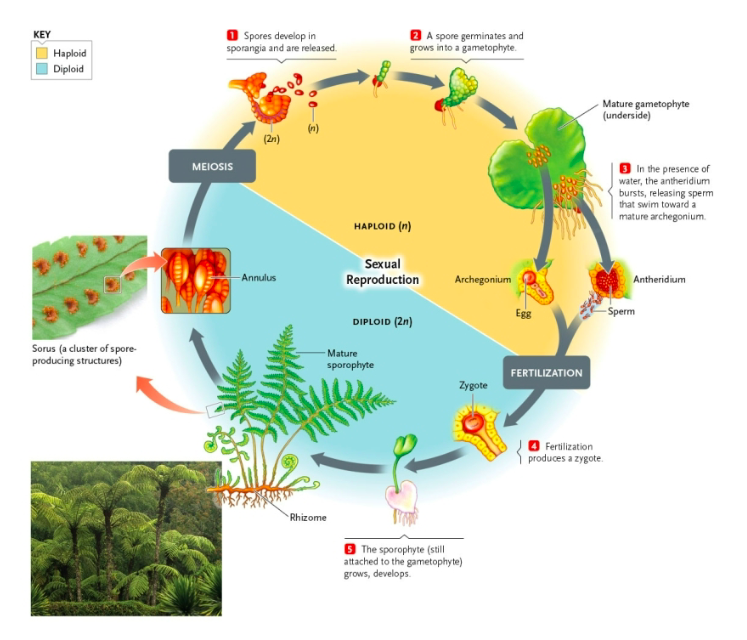
spores (n) develop in sporangia (2n) and released
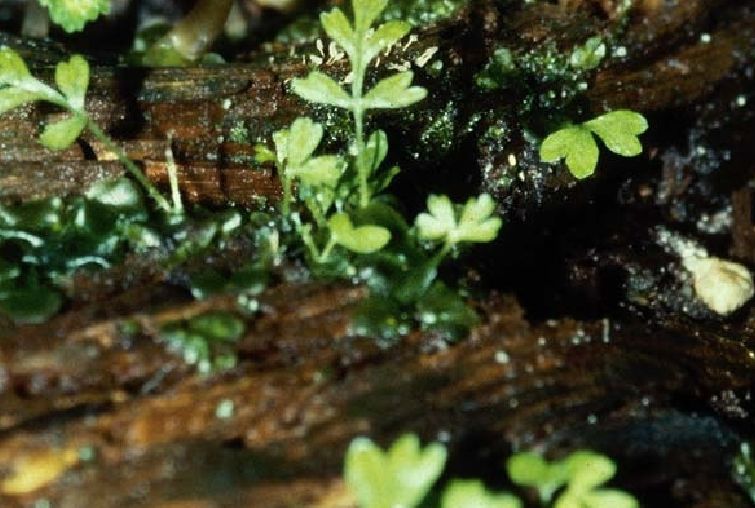
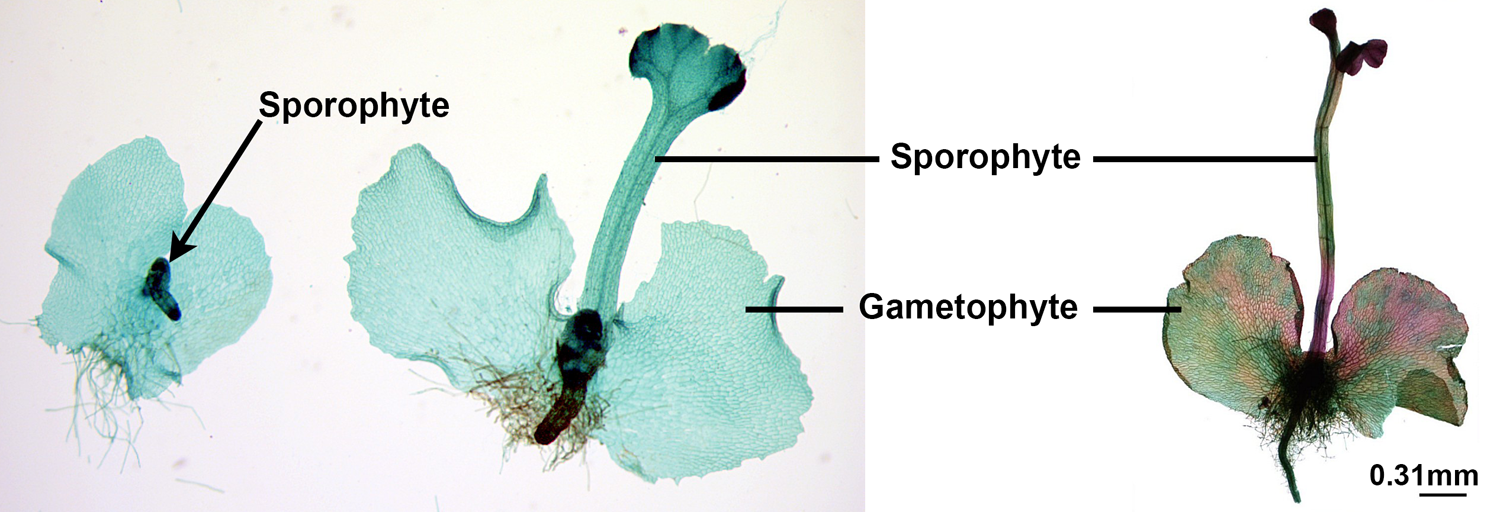
spore → turns into gametophyte (1 cell layer thick)
in water the antheridium bursts and (biflagellate) sperm is released → going towards archegonium (antheridium & archegonium not matured at the same time)
fertilization → zygote (2n)
sporophyte still attached to gametophyte growth
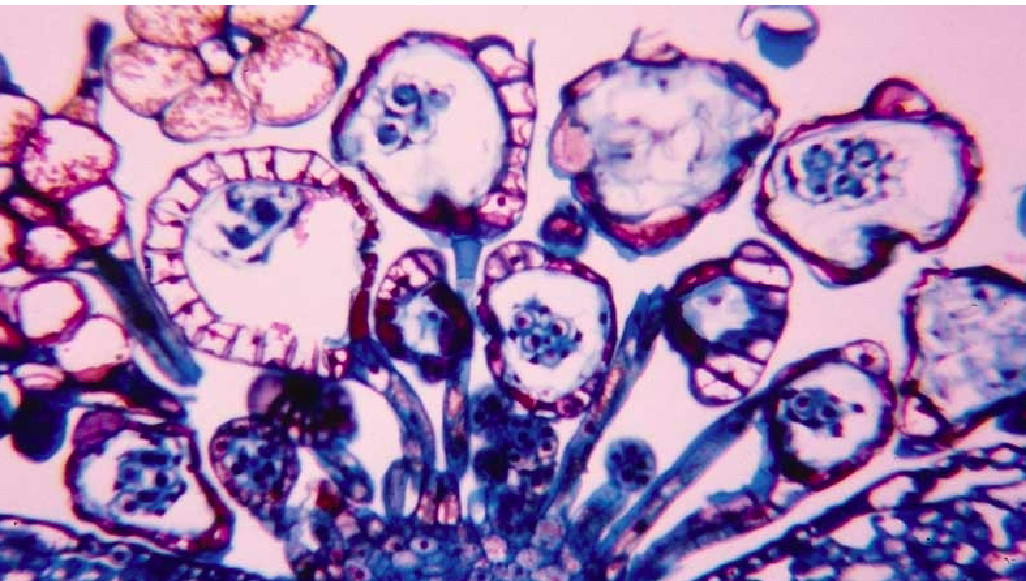
fern sporophyll
leaf specialized for spore production; contains the sporangia
Archaeplastida: Viridiplantae: Plantae: Tracheophyta: Spermatophyta (1: characteristics)
contains gymnospermae (seed plants) and angiospermae (flowering plants)
gymnospermae → cycads, gingkos, conifers
when seed germinates food is being broken down for growth of sporophyte until photosynthetic properties are developed
Archaeplastida: Viridiplantae: Plantae: Tracheophyta: Spermatophyta (1: synapomorphies/adaptations)
adaptations include
**reduction of gametophyte (retained in sporophyte)
** pollination to deliver sperm to egg
**development of seed (embryo packed with food reserves) aiding in dispersal
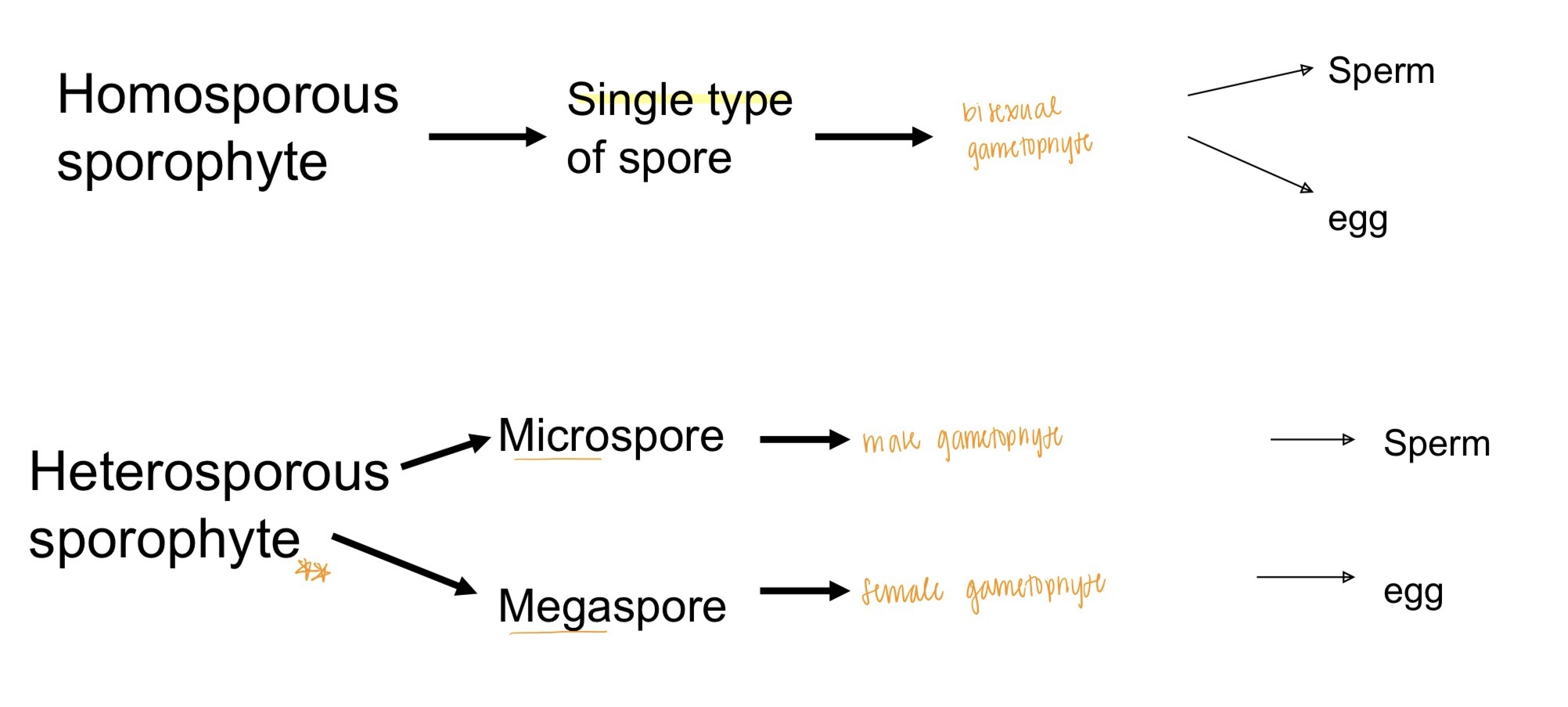
Homosporous vs Heterosporous (life cycle)
Archaeplastida: Plantae: Tracheophyta: Spermatophyta: Gymnospermae (1: characteristic/organisms, synapomorphy)
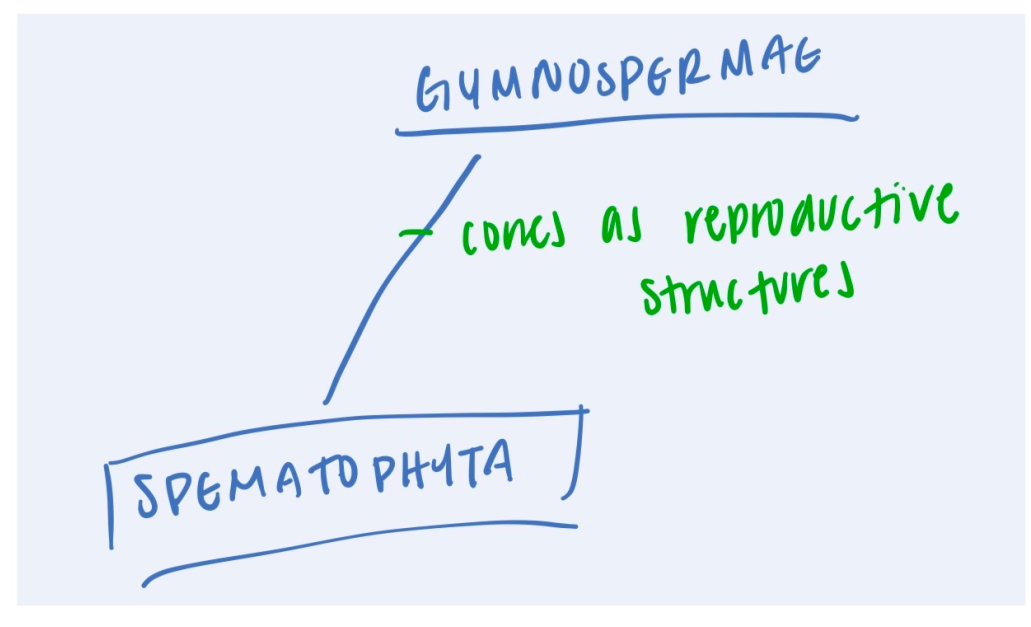
reproductive structures are **cones (sporophyte structure)
sporophyte generation dominant
includes ginkgo, cycads, conifers
Archaeplastida: Plantae: Tracheophyta: Spermatophyta: Gymnospermae (1: characteristic/organisms, synapomorphy)
Archaeplastida: Plantae: Tracheophyta: Spermatophyta: Gymnospermae: Coniferophyta (1: characteristics, organisms, synapomorphies)
pine, spruce, redwood, larch, fir, junipers, cedars - most are evergreen trees
**needle-shaped leaves
vascular → tracheids
H2O transport and mechanical strength
Bristlecone pine → 4600 years (oldest living tree
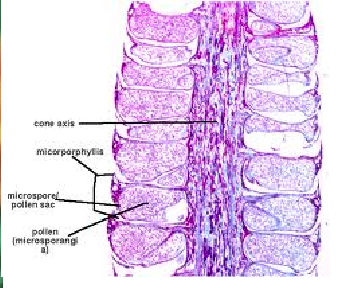
Archaeplastida: Plantae: Tracheophyta: Spermatophyta: Gymnospermae: Coniferophyta (2.1: Conifer life cycle: staminate cones)
heterosporous cycles
staminate cone → male cone that produces a sporangia that makes microspores
cone → modified leaves (scales)→ are microsporophyll
part of microsporophyll → microsporangium
process
microsporocytes (2n) in the microsporangium → meiosis = 4 microspores (n)
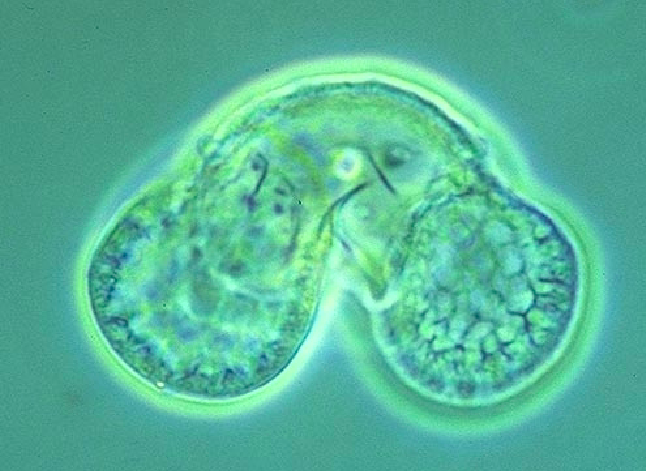
Archaeplastida: Plantae: Tracheophyta: Spermatophyta: Gymnospermae: Coniferophyta (2.2: Conifer life cycle: pollen)
microspores germinate in cone produce 4-6 celled structure → pollen grain (male gametophytes)
pollen grain has wings → aids in wind dispersal
spores kept inside the sporangium until maturity
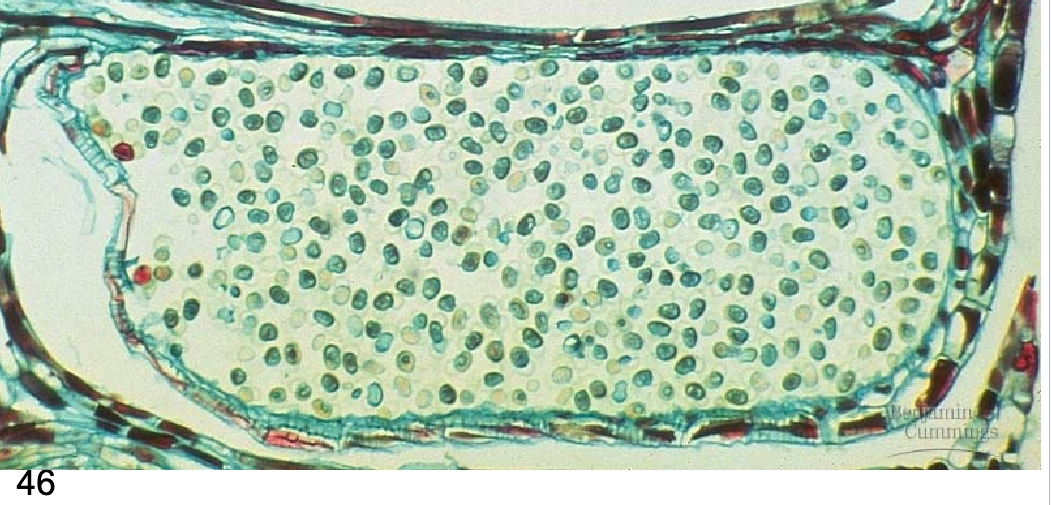
Archaeplastida: Plantae: Tracheophyta: Spermatophyta: Gymnospermae: Coniferophyta (2.3: Conifer life cycle: pollen continued)
mature pollen contains
tube cell
generative cell
slit develops in microsporangium → releases pollen
lots of pollen released but only some reach female cone
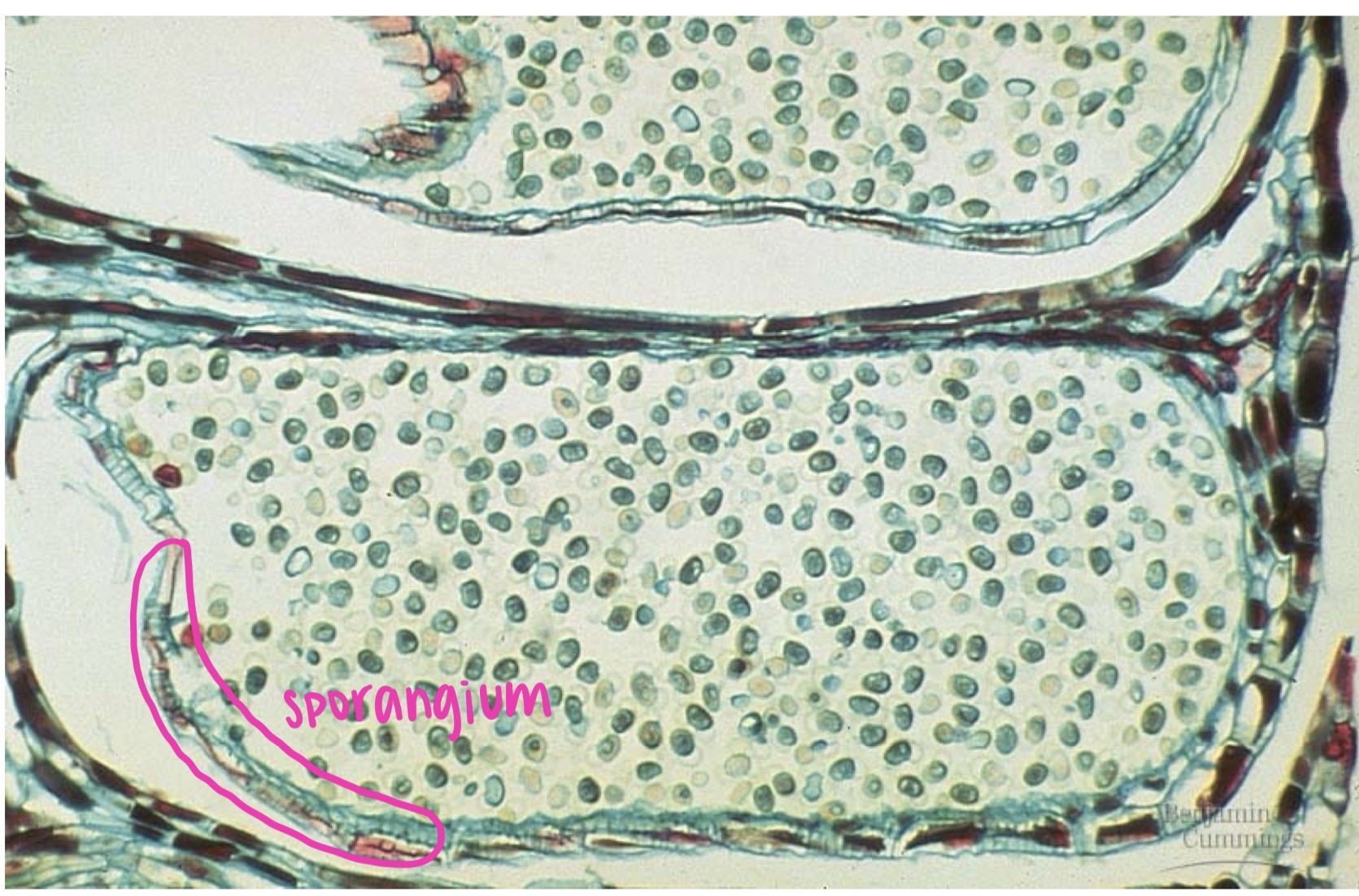
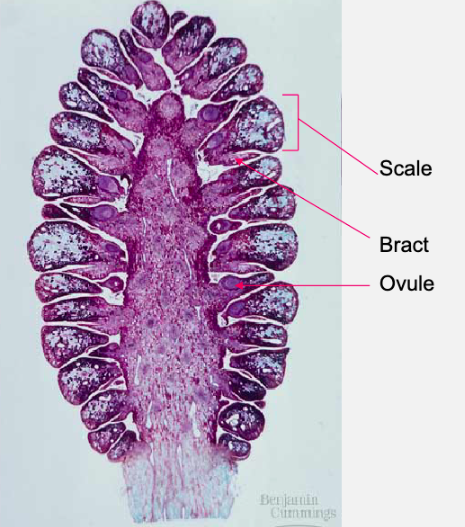
Archaeplastida: Plantae: Tracheophyta: Spermatophyta: Gymnospermae: Coniferophyta (3.1: Ovulate cones structure)
each scale has a bract and ovuliferous scale
receives pollen
ovule → proximal part of the scale, a single megasporocyte (2n)
each scale has two ovules (L/R)
micropyle → thin area of the integument
facing central stem of cone
where archegonia is located
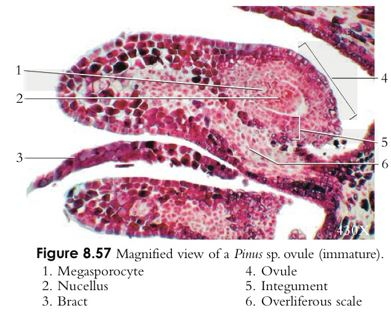
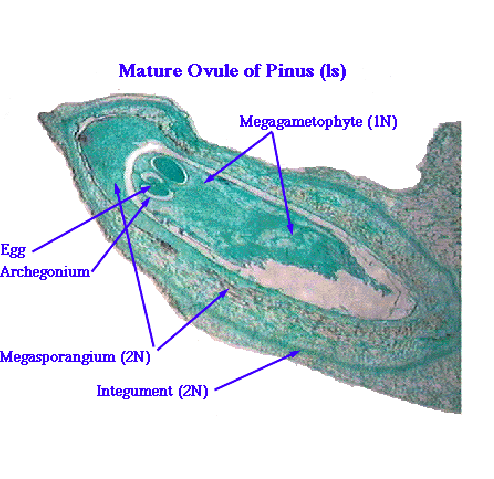
Archaeplastida: Plantae: Tracheophyta: Spermatophyta: Gymnospermae: Coniferophyta (3.2: Ovulate cones - first summer)
megasporocyte (2n) = megaspore mother cell → meiosis → 4 megaspores (n) (only 1 survives) → 2,000 cell structure = mature female gametophyte with 2/3 archegonia each with an egg
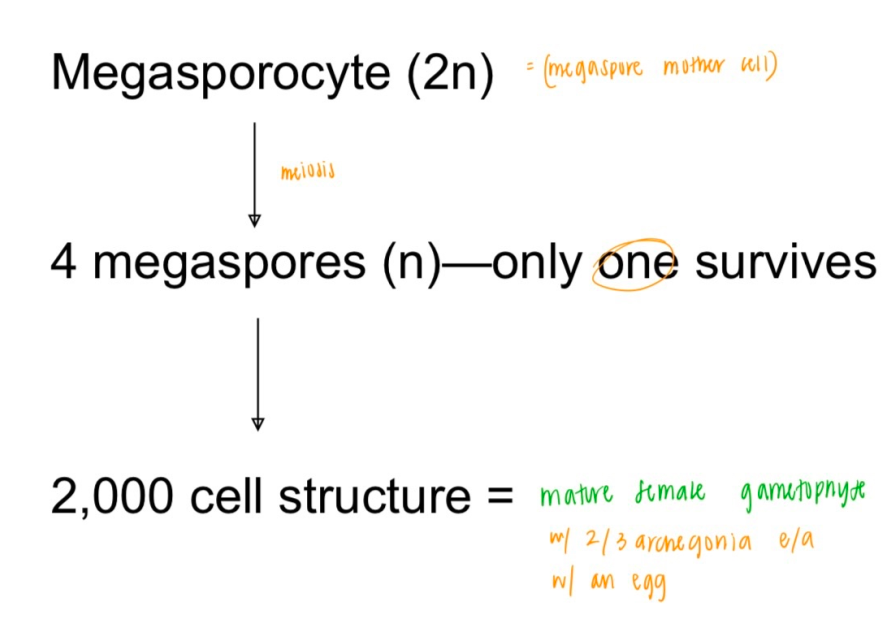
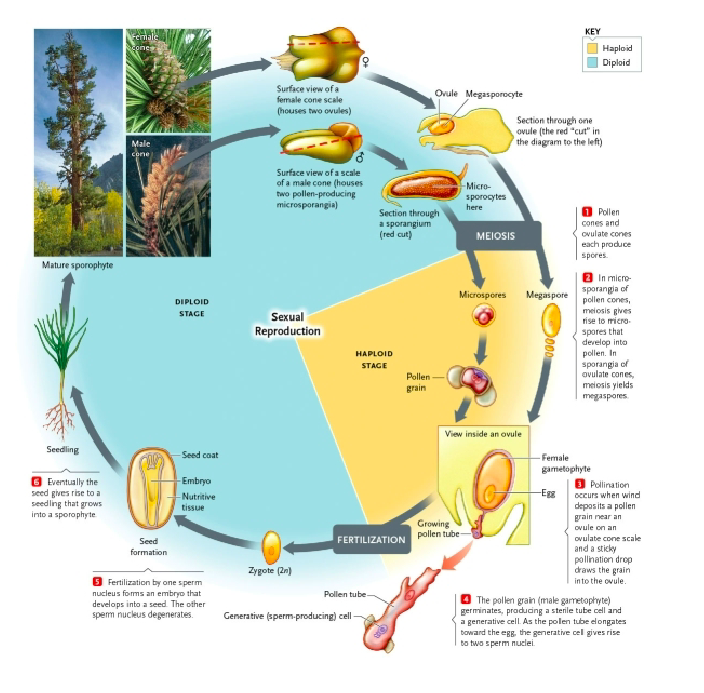
Archaeplastida: Plantae: Tracheophyta: Spermatophyta: Gymnospermae: Coniferophyta (4: life cycle of a pine)
pollen cones and ovulate cones produces spores
in microsporangia of pollen cones → meiosis → microspores → pollen; ovulate cones = megaspores
pollination → pollen grain hits nar ovule on ovulate cone scale, penetrates through micropyle into 1 archegonia
pollen grain germinates → sterile tube and generative cell produced → generative cell makes 2 sperm nuclei
fertilization (2n) → 1 sperm nucleus makes an embryo → seeds
seed produced seedling → sporophyte
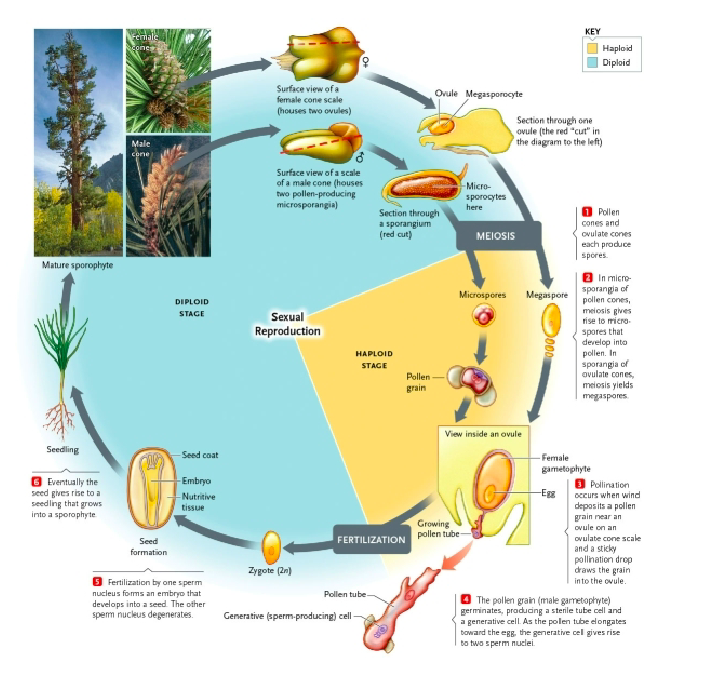
Archaeplastida: Plantae: Tracheophyta: Spermatophyta: Gymnospermae: Coniferophyta (5: pollination and fertilization: tube and generative cells)
pollen lands near micropyle of ovulate cone
generative cell → divides and 1 cell is sperm nucleus
tube cell grows a pollen tube (digesting path through thin integument at the micropyle)
reaches female gametophyte and sperm nucleus moves tube to archegonium = fertilization
Archaeplastida: Plantae: Tracheophyta: Spermatophyta: Gymnospermae: Coniferophyta (6: seed structure)
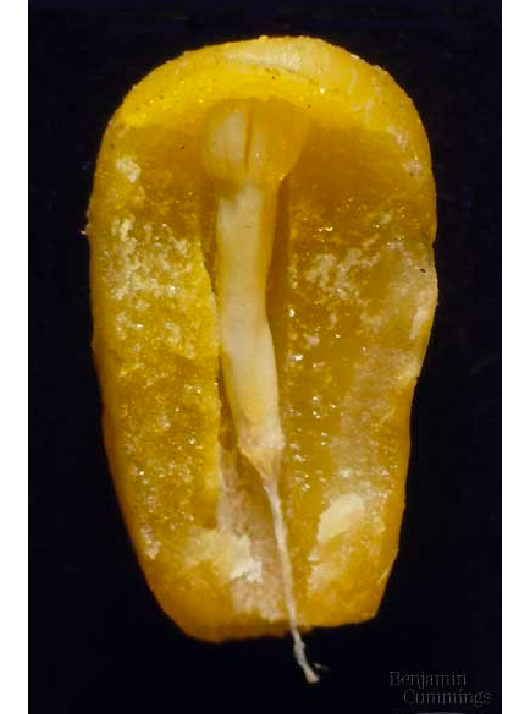
zygote (2n sporophyte) → grows to embryo
contains radicle (future root)
3-12 cotyledons (contain enzymes that breaks down food reserves for seed to grow
embedded in the tissue of female gametophyte (food) and food reserves from 1st gen. sporophyte
seed = embryo + food + coat
Archaeplastida: Plantae: Tracheophyta: Spermatophyta: Angiospermae (1: characteristics)
flowering plants
adapted to dry conditions
pollination using insects and other animals
male gametophytes are reduced
vascular tissues are more refined
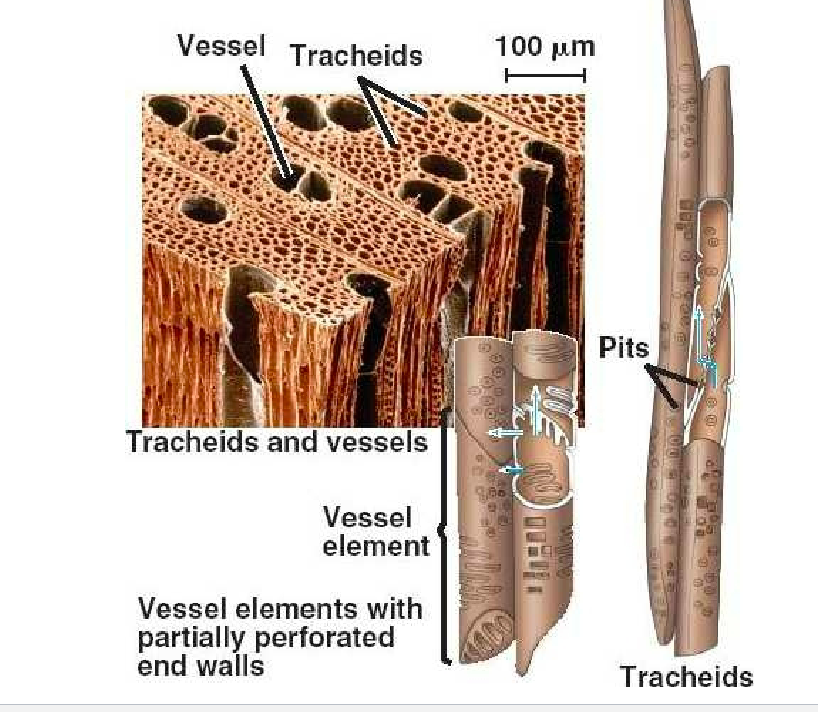
tracheids and vessel elements
Archaeplastida: Plantae: Tracheophyta: Spermatophyta: Angiospermae (2: synapomorphies)
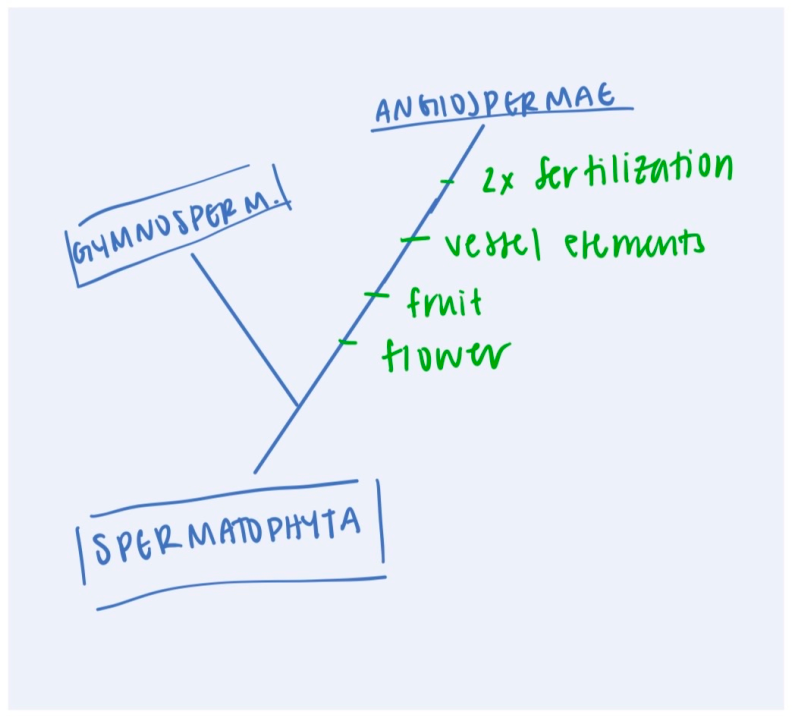
**vessel elements - end to end cells forming tube
xylem; dead at maturity
evolved from tracheids
**flowers (seeds enclosed in ovary)
**fruit (matury ovary) - dispersal
embryo sporophyte with food reserves
**double fertilization
Archaeplastida: Plantae: Tracheophyta: Spermatophyta: Angiospermae (3: life cycle: stamen & carpel )
heterosporous
flowers → sporophytes
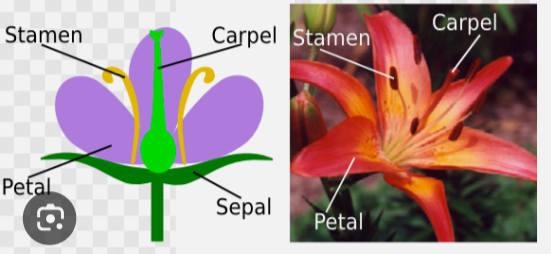
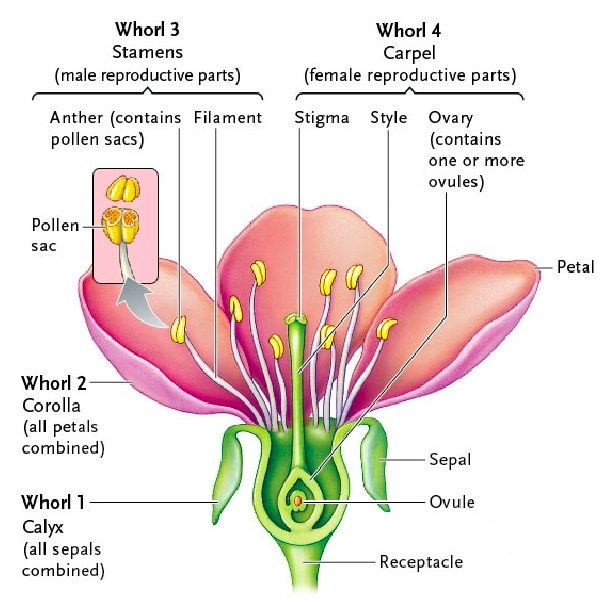
stamens - highly modified leaf that contains microsporangia (pollen sacs)
carpel - female part of the flower that contains the megasporangium
anther - pollen producing club-shaped tips of stamen
Archaeplastida: Plantae: Tracheophyta: Spermatophyta: Angiospermae (4: structure of a flower: perfect, imperfect, complete, incomplete )
perfect → both stamens and carpels
imperfect
staminate flower → stamen only
carpellate flower → carpels only
complete
all four parts → sepals, petals, stamens, pistil
incomplete
missing one part of the flower
Archaeplastida: Plantae: Tracheophyta: Spermatophyta: Angiospermae (5: microspore production)
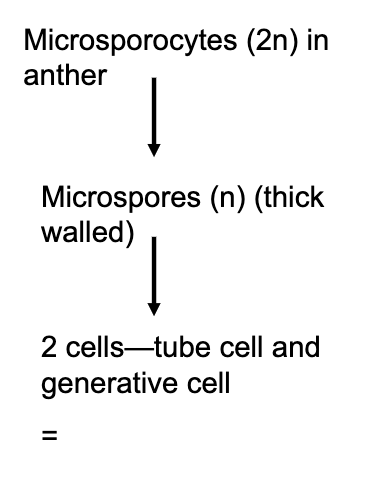
microsporocyte (2n) in anther → meiosis → microspores (in grps. of 4 and thick walled) (n) → mitosis (1 time) = 2 cells (tube and generative cell = pollen (male gametophyte)
Archaeplastida: Plantae: Tracheophyta: Spermatophyta: Angiospermae (6.1: pollination: pollen types )
pollen shed through slit on anther
brightly colored flowers (heavier pollen)
pollinators seeking nectar (at the base of the flower: nectuaries)
pick up pollen and carry to second flower
inconspicuous small/green flowers (light pollen)
windblown pollen
hay fever & allergies
large quantities are released
Archaeplastida: Plantae: Tracheophyta: Spermatophyta: Angiospermae (6.2: pollination: cont.)
pollen lands on stigma - tube cell thats growing
adds mass → female producing material for the tube cell
tube nucleus starts growing pollen tube
generative nucleus → divides and no flagellated sperm nuclei (2)
male gametophyte reduced to 2 sperm nuclei and 1 tube nucleus
Archaeplastida: Plantae: Tracheophyta: Spermatophyta: Angiospermae (7.1: development of angiosperm gametophytes (pollen and embryo sacs)
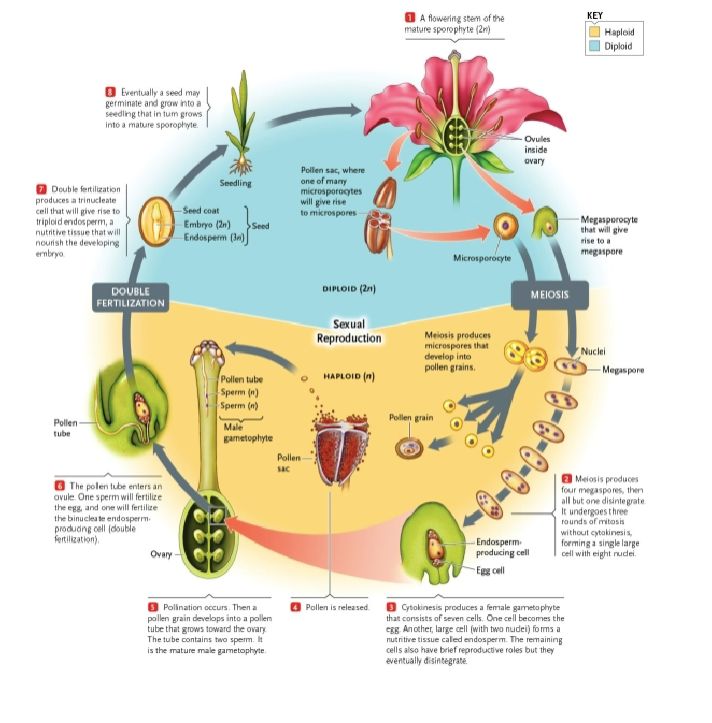
flowering stem of mature sporophyte (2n)
meiosis → 4 megaspores and 3 undergoes mitotic division = 1 nuclei
cytokinesis produces a female gametophyte with 7 cells and one becomes an egg and the other (lage cell with 2 nuclei) forms endosperm
pollen released
pollination occurs → pollen grain develops to pollen tube (2 sperm) growing towards ovary
pollen tube enters ovule and one sperm will fertilize egg and one will fertilize binucleate endosperm = double fertilization
double fertilization = trinucleus cell = 3n endosperm → the seed
Archaeplastida: Plantae: Tracheophyta: Spermatophyta: Angiospermae (7.2: growth of pollen tube and 2x fertilization)
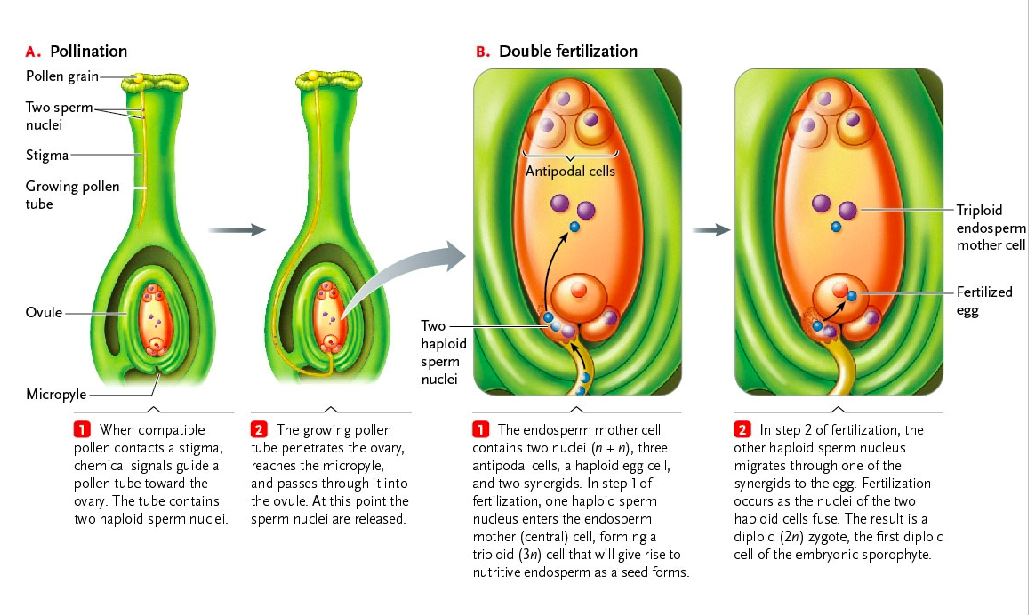
pollen tube penetrates near egg
2 sperm nuclei
1 with egg
2 nuclei of polar cell = 3n structure (endosperm)
Archaeplastida: Plantae: Tracheophyta: Spermatophyta: Angiospermae (8: development of dicot plant embryo)
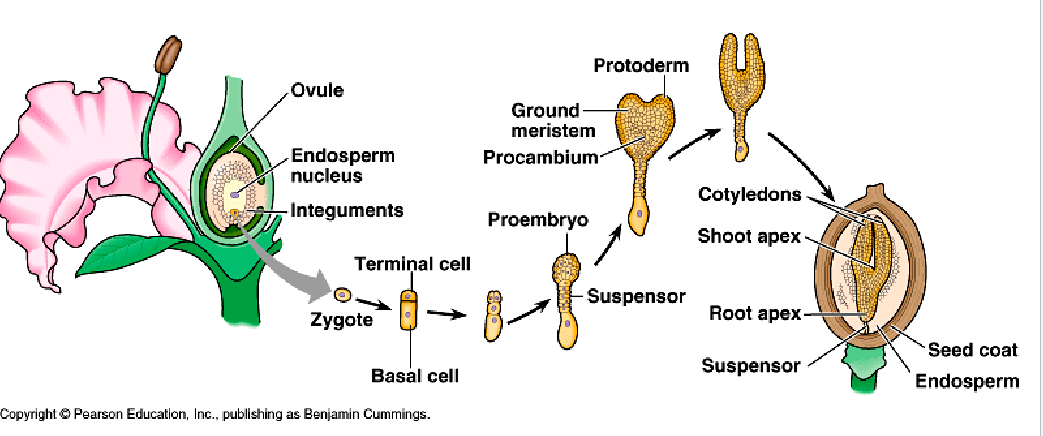
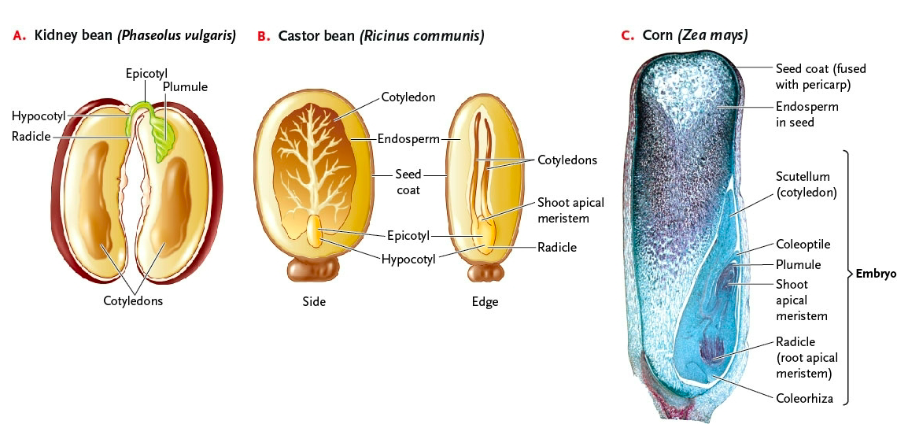
dicot - characterized by seeds that produces cotyledons upon germination
cotyledons - as seed germinates it will break down food storage for growth of embryo
can have 1 or 2
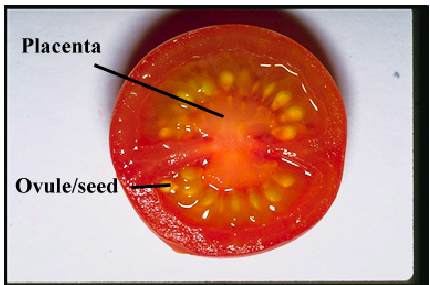
Archaeplastida: Plantae: Tracheophyta: Spermatophyta: Angiospermae (9: Fruits: ovule, ovary )
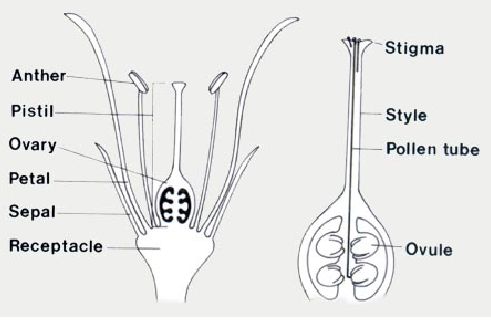
ovule → develops into seed
ovary → develops into fruit
aids in dispersal
derived from tissues of first generation sporophyte
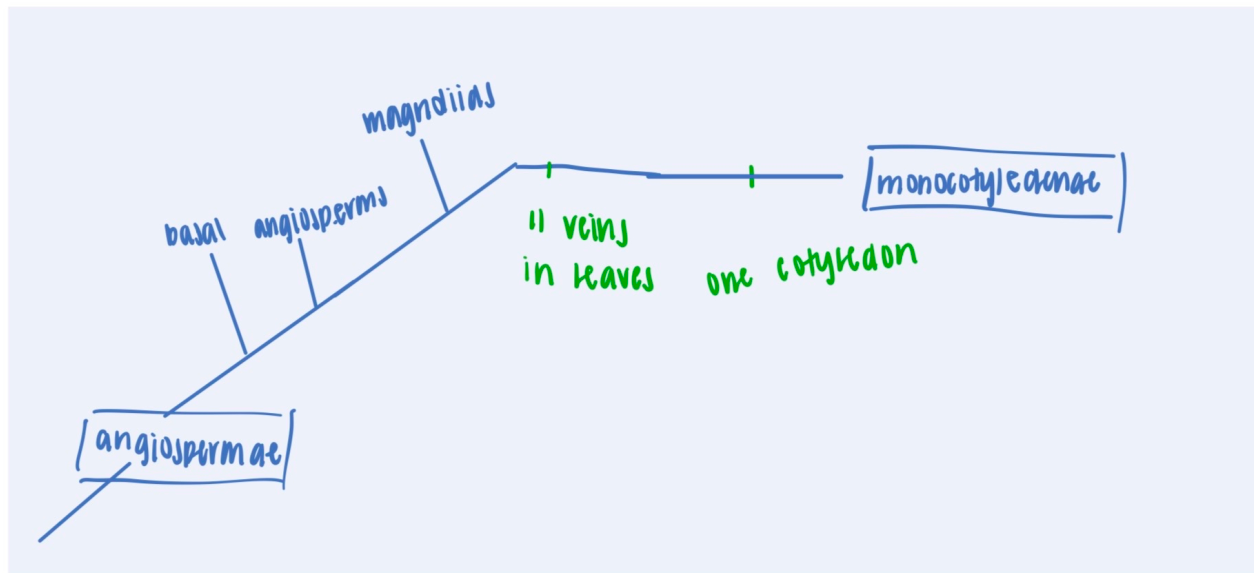
Archaeplastida: Plantae: Tracheophyta: Spermatophyta: Angiospermae (10.1:Classes: Monocotyledonae-synapomorphies, characteristics )
** veins in leaf that are parallel no minor veins
**only one cotyledon in seed
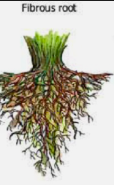
roots → fibrous
e.g)grass, palm, lilly
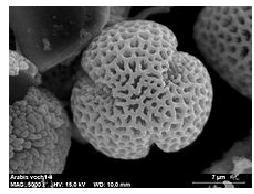
Archaeplastida: Plantae: Tracheophyta: Spermatophyta: Angiospermae (10.2:Classes: Eudicotyledonae -synapomorphies, characteristics )
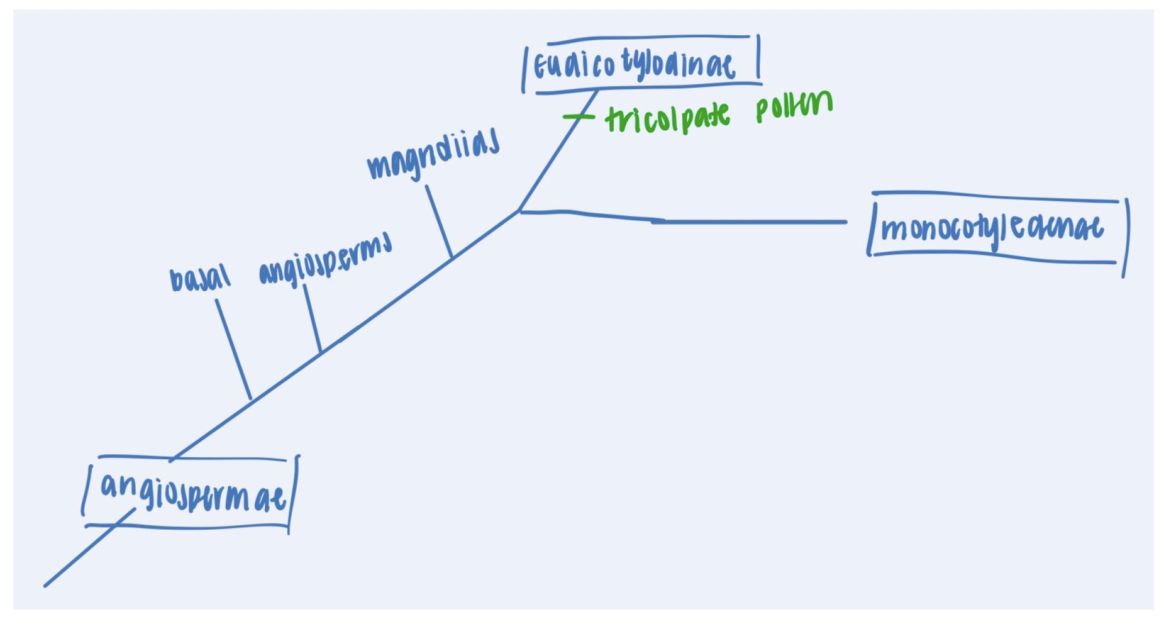
**tricolpate pollen - three points in pollen grain
roots → tap roots
veins in leaf → netlike, branching