all pc str. 1
 Call Kai
 Learn
Learn Practice Test
 Spaced Repetition
 Match
Match Flashcards
 Knowt Play
1/288

There's no tags or description
Looks like no tags are added yet.
Name | Mastery | Learn | Test | Matching | Spaced | Call with Kai | Chat |
|---|
No analytics yet
Send a link to your students to track their progress
289 Terms
Quinine
Natural 4-substituted quinoline (levo isomer) from Cinchona; blood schizontocide.
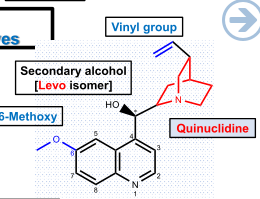
Quinidine
Dextro isomer of quinine; used as an antimalarial and antiarrhythmic.
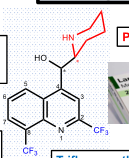
Mefloquine (Lariam)
4-substituted quinoline-methanol with two trifluoromethyl groups; targets 80S ribosome.
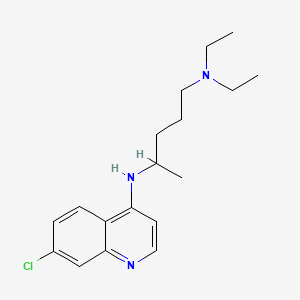
Chloroquine (Avloclor)
7-chloro-4-aminoquinoline; prevents toxic heme polymerization into non-toxic hemozoin.
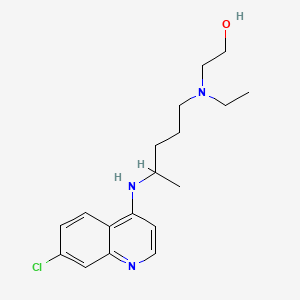
Hydroxychloroquine (Plaquenil)
Active metabolite of chloroquine; used for malaria and auto-immune diseases (e.g., RA).
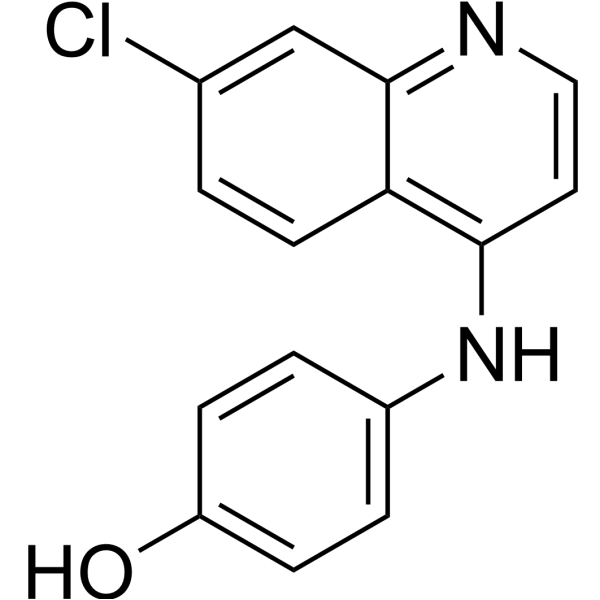
Amodiaquine
7-chloro-4-arylaminoquinoline with para-amino phenol; produces hepatotoxic quinonimine.
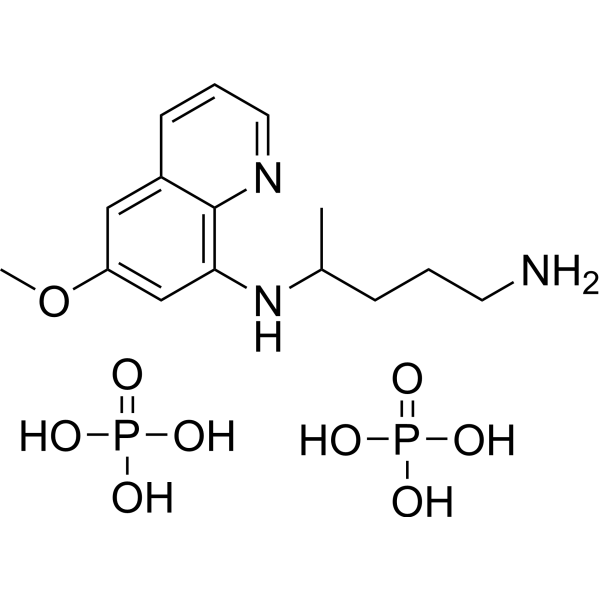
Primaquine
8-amino quinoline primary amine; drug of choice for "radical cure" (eradicates hypnozoites).
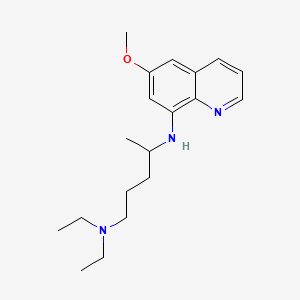
Pamaquine
1st synthetic antimalarial; 8-amino quinoline tertiary amine; more toxic than primaquine.
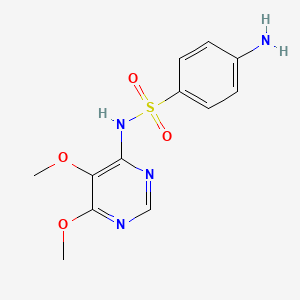
Sulfadoxine
Long-acting sulfonamide Type I antifolate; combined with Pyrimethamine in Fansidar.
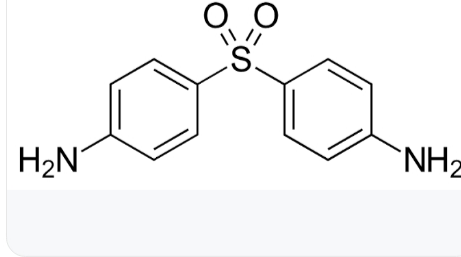
Dapsone (DDS)
Bis-para-aminophenylsulphone; Type I antifolate schizontocide; used in leprosy.
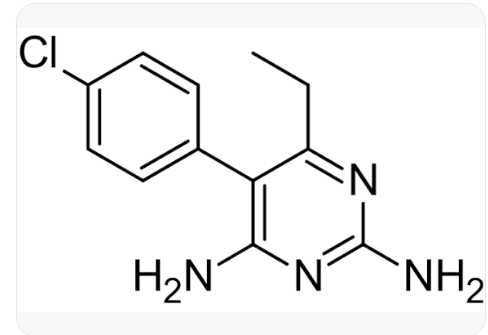
Pyrimethamine
Type II antifolate diaminopyrimidine with ethyl/chloro-phenyl groups; inhibits DHFR.
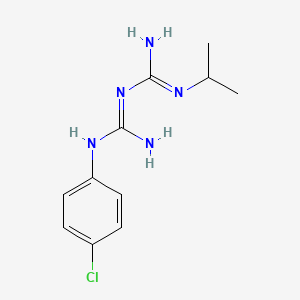
Proguanil
Biguanide prodrug for cycloguanil; part of Malarone combination.
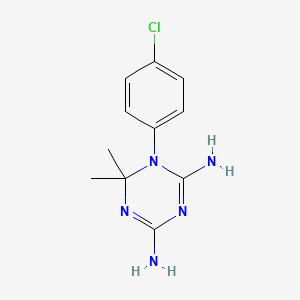
Cycloguanil
Active metabolite of proguanil; selective DHFR inhibitor in parasites.
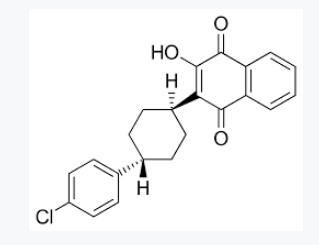
Atovaquone
Naphthoquinone; disrupts mitochondrial electron transfer; part of Malarone.
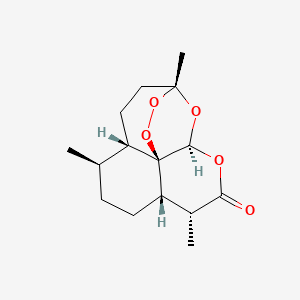
Artemisinin
Natural tricyclic lactone endoperoxide from sweet wormwood; generates free radicals.
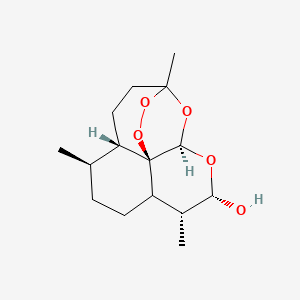
Dihydroartemisinin
Semi-synthetic artemisinin; better metabolic stability than the natural form.
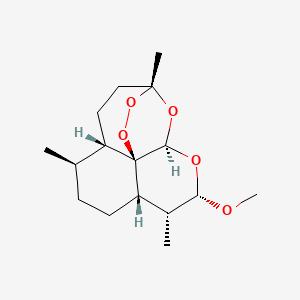
Artemether
Lipophilic artemisinin derivative; part of Coartem combination therapy.
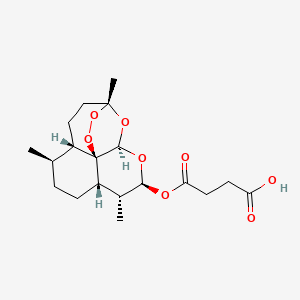
Artesunate
Water-soluble artemisinin hemi-succinate; sodium salt used by injection for severe malaria.
Lumefantrine
Blood schizontocide combined with artemether in the ACT Coartem.
Pyronaridine
Blood schizontocide inhibiting haemozoin pigment; part of Pyramax.
Sulphonamides & Antifolates
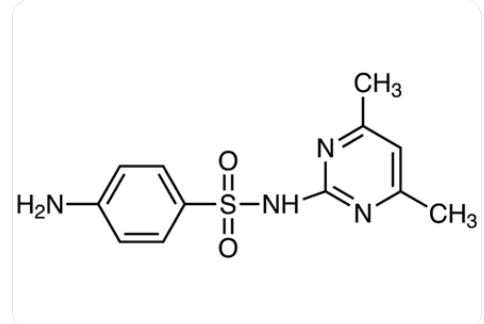
Sulfamethazine
Short-acting sulphonamide with a dimethyl-substituted pyrimidine ring.
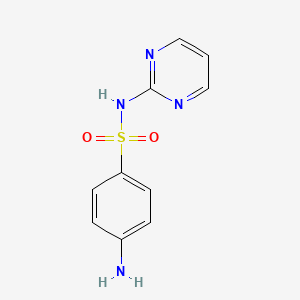
Sulfadiazine
Intermediate-acting sulphonamide with an unsubstituted pyrimidine ring.
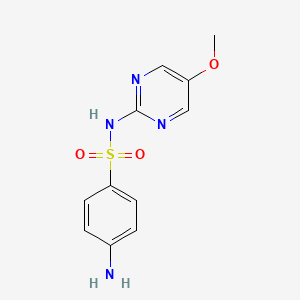
Sulfameter
Long-acting sulphonamide with a methoxy-substituted pyrimidine ring.
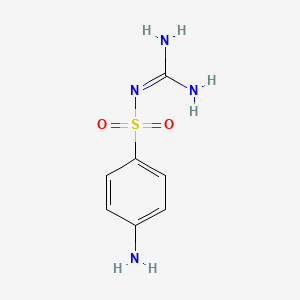
Sulfaguanidine
Highly polar intestinal agent identified by its N1-amidino group.
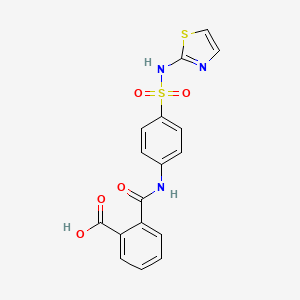
Phthalyl Sulphathiazole
Intestinal prodrug with an N4-phthalyl group; cleaved by intestinal amidases.
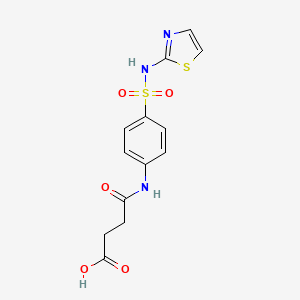
Succinyl Sulphathiazole
Intestinal prodrug with an N4-succinyl group.
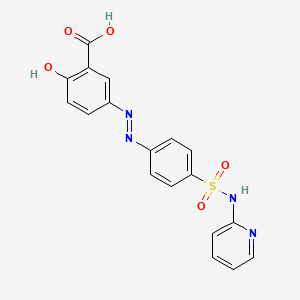
Sulphasalazine
Features an azo bond (-N=N-); cleaved to release 5-ASA for ulcerative colitis.
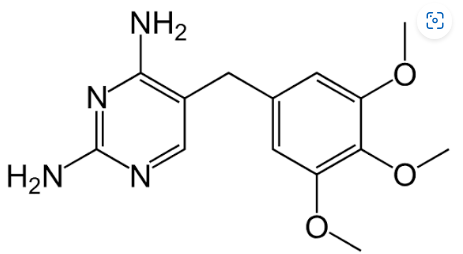
Trimethoprim
Type II antifolate; 3,4,5-trimethoxybenzyl group and a 2,4-diaminopyrimidine ring.
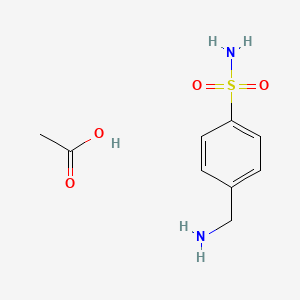
Mafenide acetate
Topical agent with an aminomethyl group instead of aniline amine; for burns.
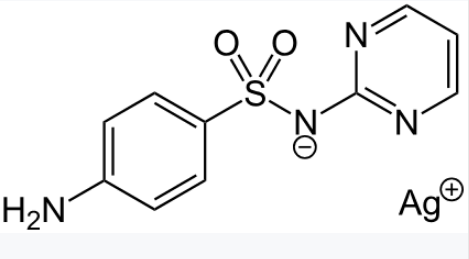
Silver sulphadiazine
Topical agent specifically active against Pseudomonas in burn patients.
Beta-Lactams
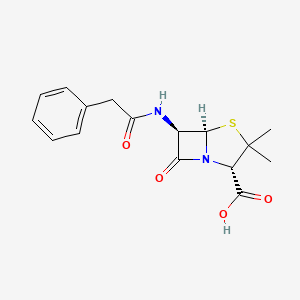
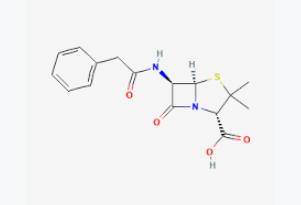
Penicillin G
Natural penicillin with a benzyl side chain; narrow spectrum.
Penicillin V
Phenoxymethyl penicillin; acid-stable due to electron-withdrawing oxygen; oral use.
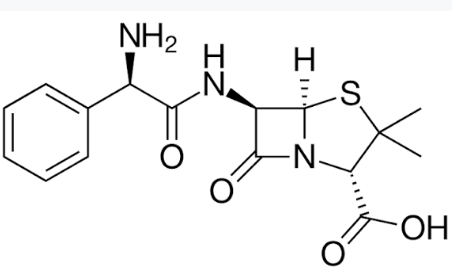
Ampicillin
Broad-spectrum Class 1 penicillin with an alpha-amino group on the side chain.
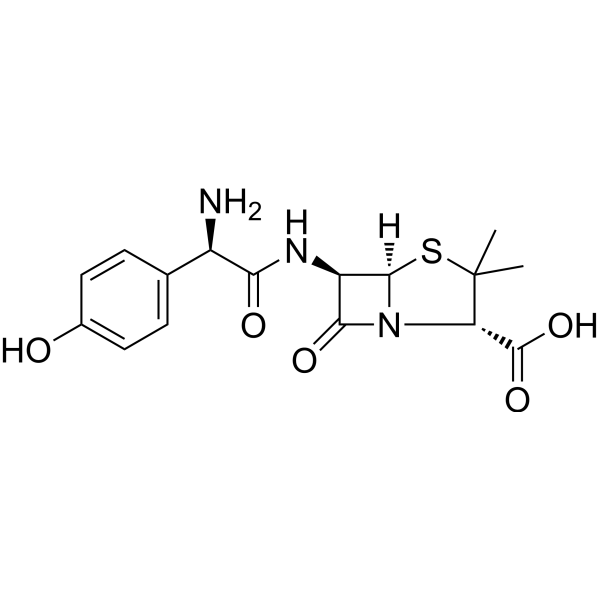
Amoxycillin
Class 1 penicillin; alpha-amino and para-hydroxy groups provide acid stability.
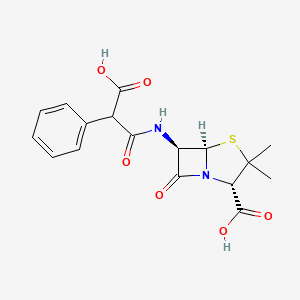
Carbenicillin
Broad-spectrum Class 2 penicillin with an alpha-carboxy group; targets Pseudomonas.
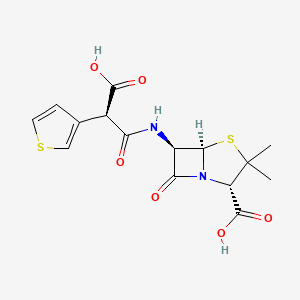
Ticarcillin
Thienyl isostere of carbenicillin; Class 2 antipseudomonal.
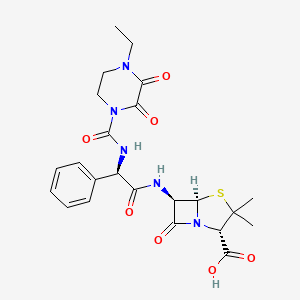
Pipracillin
Acylureido penicillin featuring a piperazine moiety; broad spectrum.
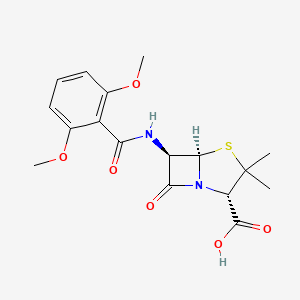
Methicillin
Bulky 2,6-dimethoxyphenyl group provides steric hindrance; beta-lactamase resistant.
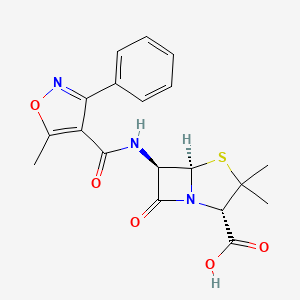
Oxacillin
Isoxazolyl side chain; beta-lactamase resistant penicillin.
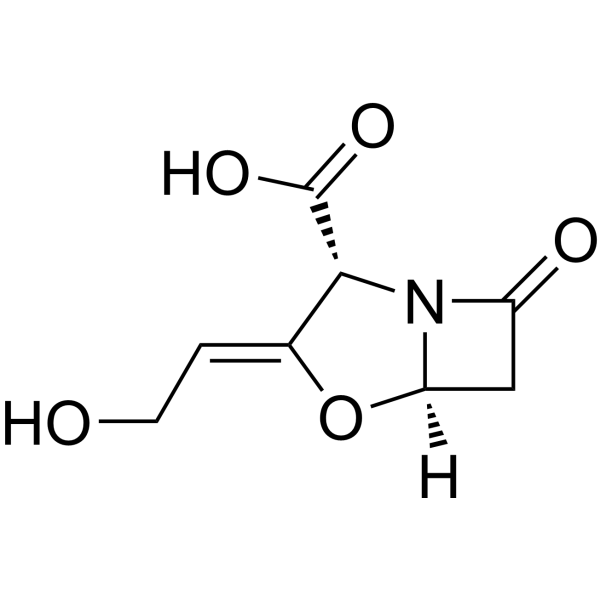
Clavulanic acid
Beta-lactamase inhibitor with an oxapenam ring system (O replaces S).
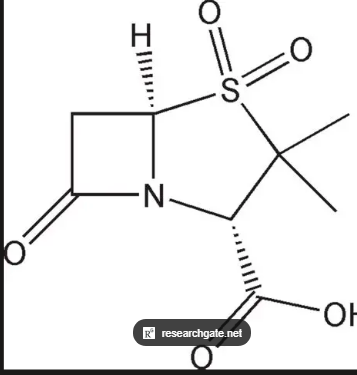
Sulbactam
Beta-lactamase inhibitor; penicillanic acid sulfone (SO2).
Thienamycin
Broad-spectrum carbapenem parent structure.
Imipenem
Carbapenem always co-administered with cilastatin to prevent renal degradation.
Meropenem
Broad-spectrum carbapenem resistant to renal dehydropeptidase.
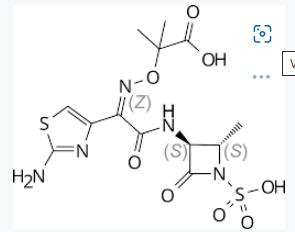
Aztreonam
Monobactam containing a standalone, non-fused beta-lactam ring.
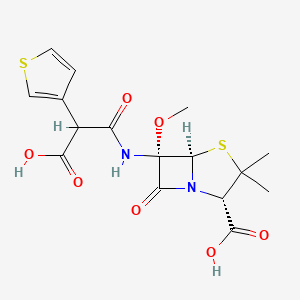
Timocillin
6-methoxy derivative of ticarcillin; resists some beta-lactamases.
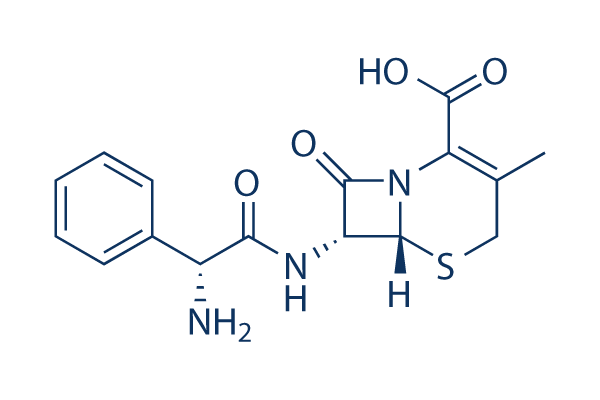
Cephalexin
1st generation oral cephalosporin.
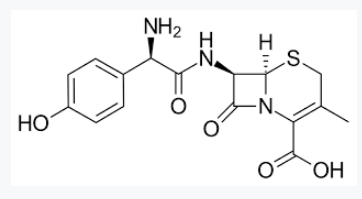
Cefadroxil
1st generation cephalosporin; orally active.
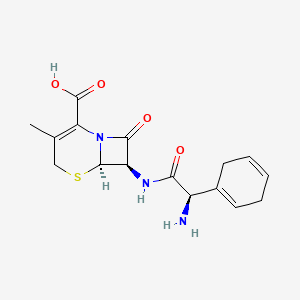
Cephradine
1st generation cephalosporin.
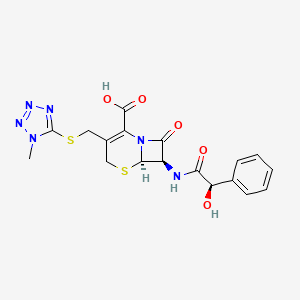
Cefamandole
2nd generation cephalosporin with an N-methylthiotetrazole (NMTT) group.
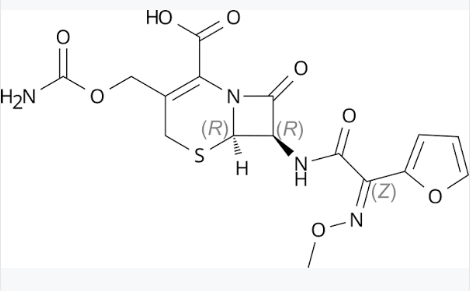
Cefuroxime
2nd generation cephalosporin with a methoxyimino group for stability.
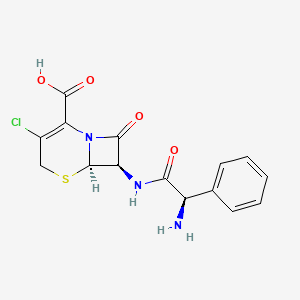
Cefaclor
2nd generation cephalosporin with a chlorine at C3.
Loracarbef
Carbacephem related to cefaclor; S replaced by C in the ring.

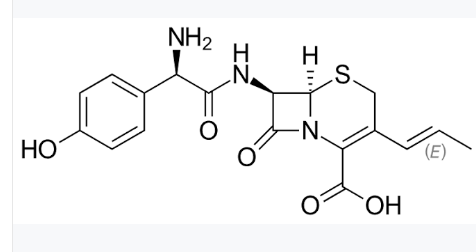
Cefprozil
2nd generation cephalosporin.
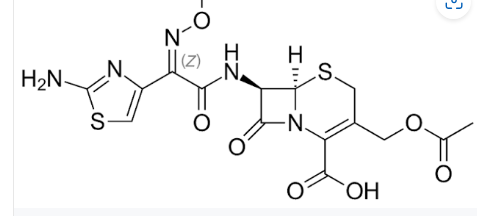
Cefotaxime
3rd generation; metabolized by esterases to active desacetylcefotaxime.
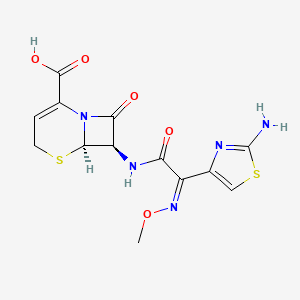
Ceftizoxime
3rd generation cephalosporin.
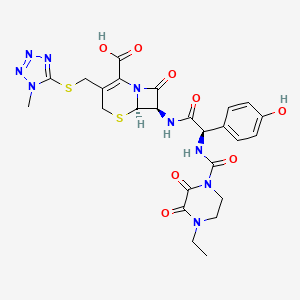
Cefoperazone
3rd generation with NMTT group and piperazine side chain.
Cefixime
3rd generation with high activity against Pseudomonas aeruginosa.
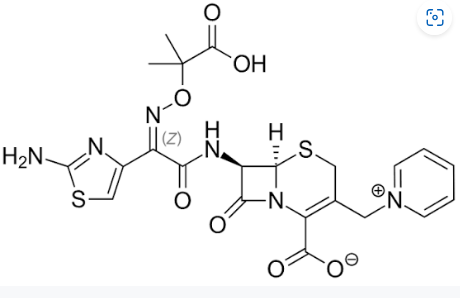
Ceftriaxone
3rd generation; very long half-life due to high protein binding.
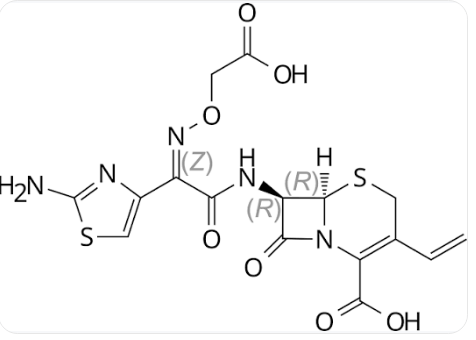
Cefixime
Orally active 3rd generation cephalosporin.
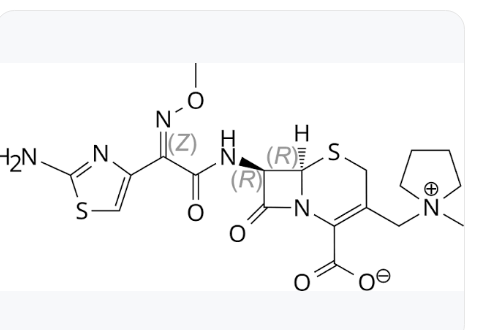
Cefepime
4th generation cephalosporin with broad spectrum.
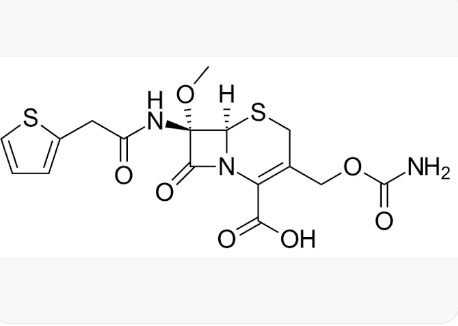
Cefoxitin
Cephamycin with a C7-methoxy group; provides extreme beta-lactamase resistance.
Tetracyclines, Macrolides & Aminoglycosides
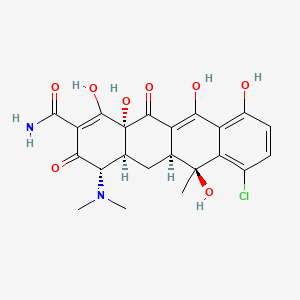
Chlortetracycline
Tetracycline with a chlorine at position 7 (Aureomycin).
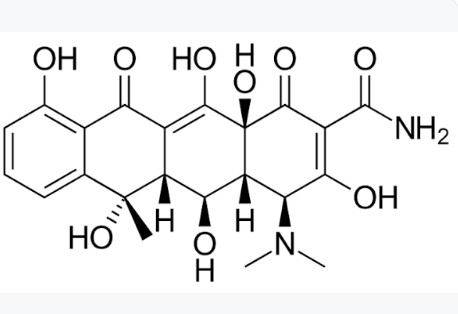
Oxytetracycline
Tetracycline with an extra hydroxyl group at position 5 (Terramycin).
Tetracycline
Standard fused four-ring naphthacene nucleus.
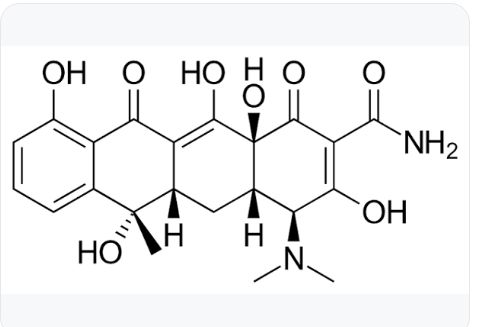
Demeclocycline
7-chloro tetracycline lacking the 6-methyl group.
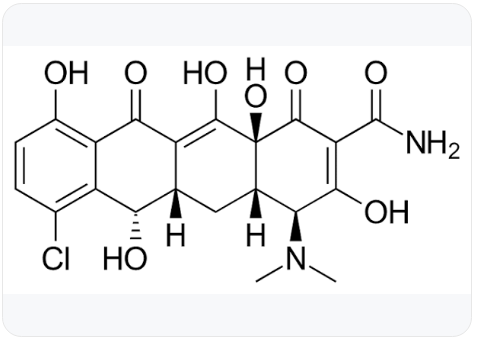
Doxycycline
6-deoxy tetracycline; stable in acids and bases because it lacks the 6-OH group.
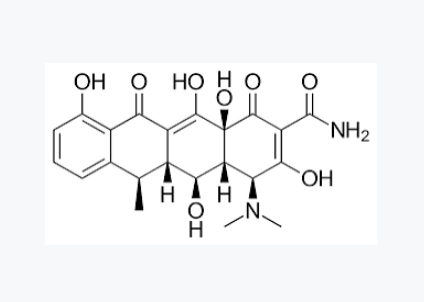
Minocycline
Tetracycline with a 7-dimethylamino group.
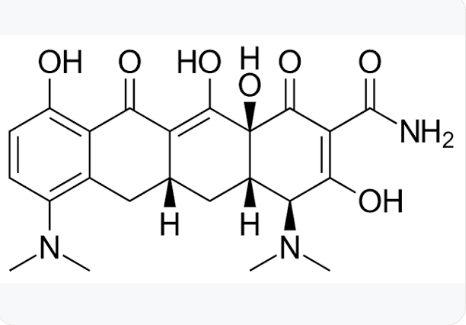
Sancycline
Simplest active member of the tetracycline family.
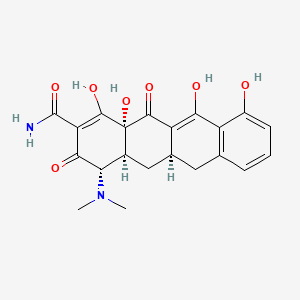
Rolitetracycline
Tetracycline prodrug
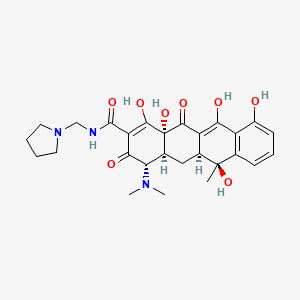
Erythromycin
14-membered lactone ring; prevents translocation at the 50S subunit.
Clarithromycin
Erythromycin with a C6-methyl ether substitution for increased acid stability.
Azithromycin
15-membered macrolide with an inserted N-methyl group; prolonged duration.
Spiramycin
Macrolide primarily used for toxoplasmosis.
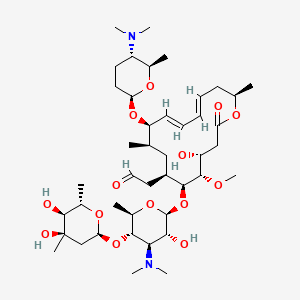
Streptomycin
Aminoglycoside; streptidine, streptose, and N-methyl-glucosamine linked.
Neomycin
Potent aminoglycoside used topically or for bowel preparation before surgery.
Paromomycin
Aminoglycoside used for intestinal amebiasis.
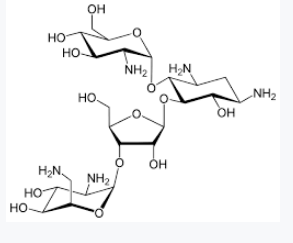
Gentamycin
Common broad-spectrum bactericidal aminoglycoside.
Tobramycin
Aminoglycoside often preferred for Pseudomonas infections.
Kanamycin
Early aminoglycoside antibiotic.
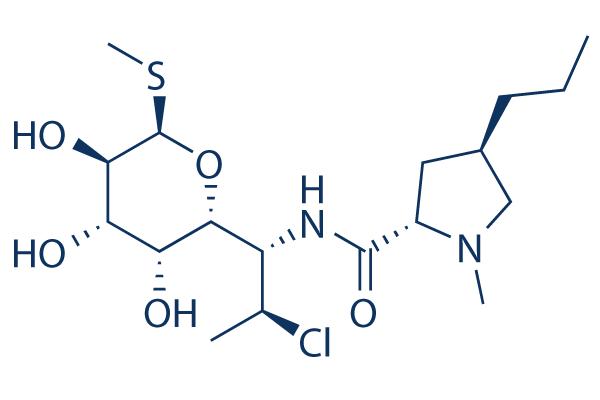
Clindamycin
Lincomycin derivative; sulfur-containing antibiotic active against anaerobes.
Antimycobacterials & Antiprotozoals
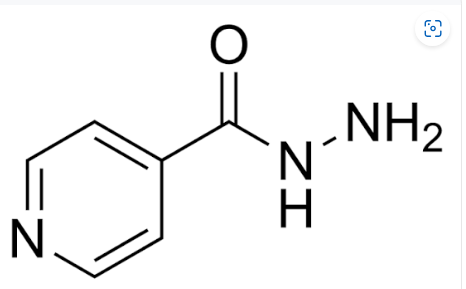
Isoniazid (INH)
inhibits mycolic acid synthesis in TB.
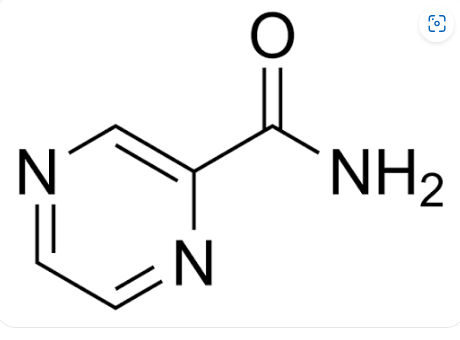
Pyrazinamide
Pyrazine ring with carboxamide; essential 1st line TB drug.
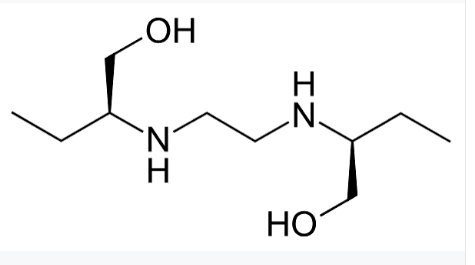
Ethambutol
Ethylenediamino-dibutanol; d-isomer is active against TB.
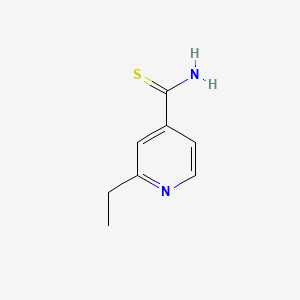
Ethionamide
2nd line TB drug featuring a thioamide group.
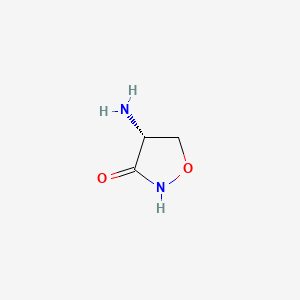
Cycloserine
D-4-amino-3-isoxazolidone; prevents bacterial cell wall synthesis.
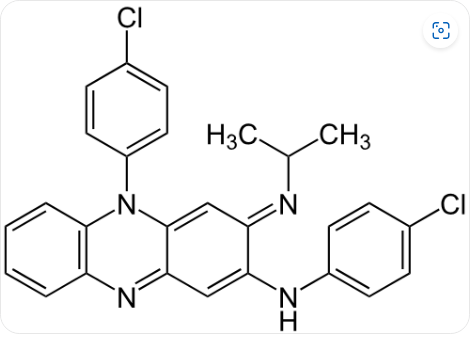
Clofazimine
Tricyclic phenazine dye used for leprosy.
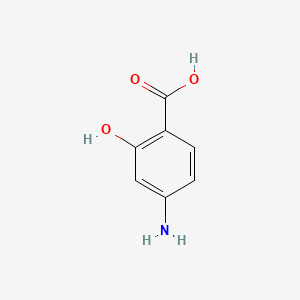
PAS (Para-Amino Salicylic Acid)
Competitive inhibitor of PABA specific for TB.
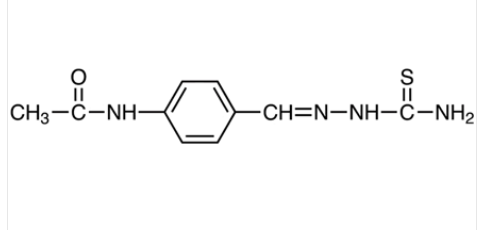
Thiacetazone
TB drug featuring a thiosemicarbazone group.
Metronidazole
5-nitroimidazole; reduced to reactive intermediates that alkylate anaerobic DNA.
Tinidazole
5-nitroimidazole with ethylsulphonylethyl side chain; longer half-life than metronidazole.
Nitazoxanide
Thiazolyl-benzamide inhibiting PFOR enzyme in protozoa and anaerobes.
Diloxanide Furoate
Luminal amebicide prodrug; structurally related to chloramphenicol.
Iodoquinol
8-hydroxyquinoline with two iodines (positions 5, 7); luminal amebicide.