ANP Ch 4
 Call Kai
 Learn
Learn Practice Test
 Spaced Repetition
 Match
Match Flashcards
 Knowt Play
1/314

There's no tags or description
Looks like no tags are added yet.
Name | Mastery | Learn | Test | Matching | Spaced | Call with Kai | Chat |
|---|
No analytics yet
Send a link to your students to track their progress
315 Terms
What does cell theory state?
1) Cells are the structural and functional units of life. 2) All organisms are made of cells. 3) Cells arise only from preexisting cells.

What is the basic structural and functional unit of life?
The cell.
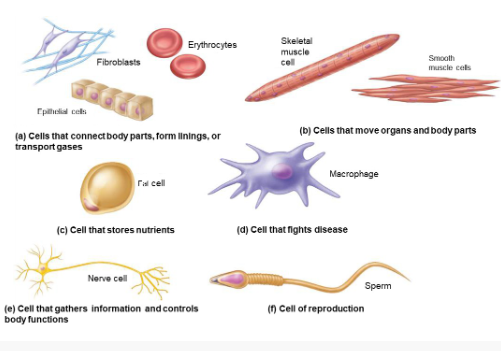
How many different types of human cells are there?
Over 250.

Why do different types of cells have different functions?
They differ in size, shape, and subcellular componSents.

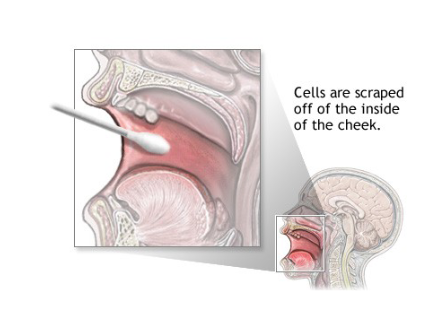
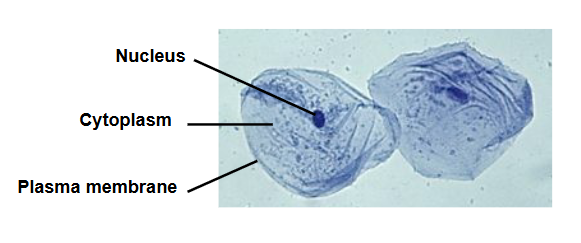
Where is a buccal smear collected from?
The inside of the cheek.
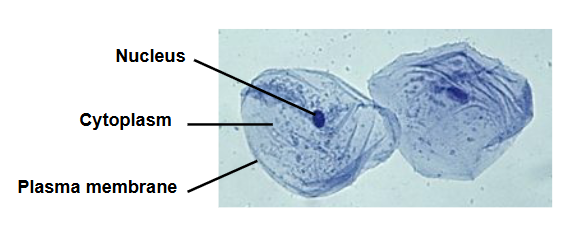
What are the 3 basic parts of a generalized human cell?
Plasma membrane, cytoplasm, and nucleus.

Plasma membrane
Flexible outer boundary of a cell that separates intracellular fluid from extracellular fluid.
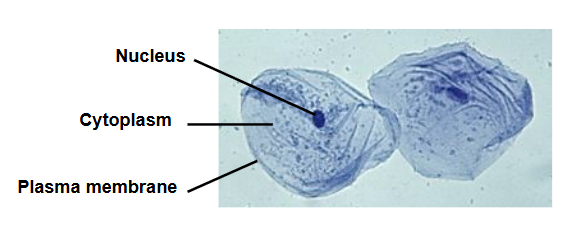
Cytoplasm
All cellular material located between the plasma membrane and nucleus.
Nucleus
DNA-containing control center of the cell.
What are the main functions of the plasma membrane?
Physical barrier, selective permeability, communication, and cell recognition.

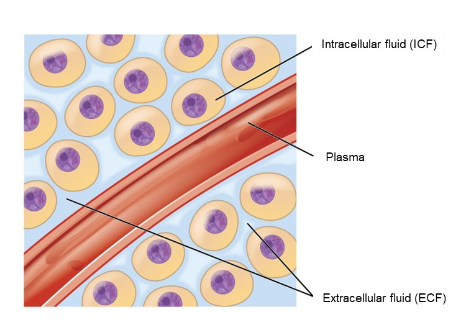
Intracellular fluid (ICF)
Fluid located inside cells.
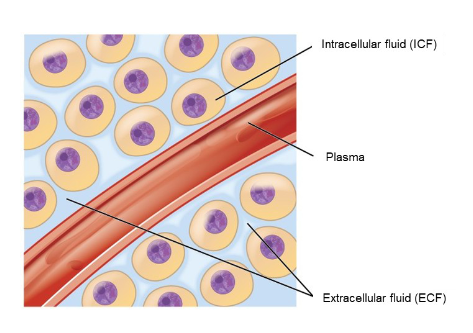
Extracellular fluid (ECF)
Fluid located outside cells.
Selective permeability
The plasma membrane determines which substances can enter or leave the cell.
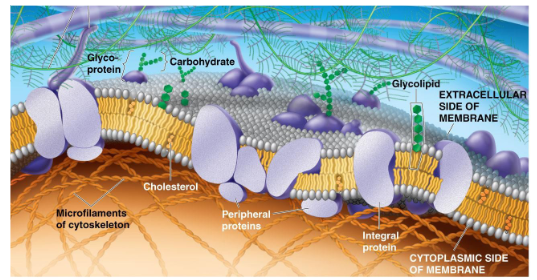
Fluid mosaic model
The membrane is a flexible lipid bilayer containing proteins that can move or "float" within it.

What are the major components of the plasma membrane?
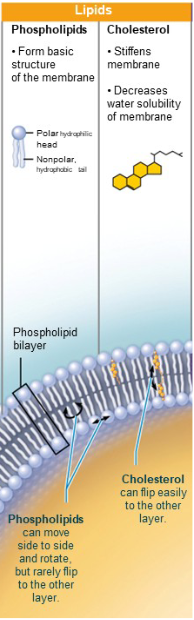
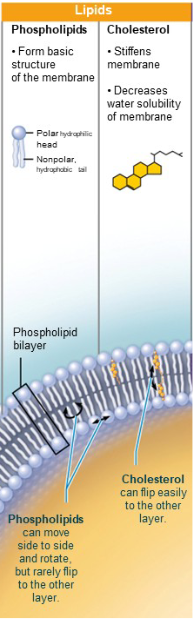
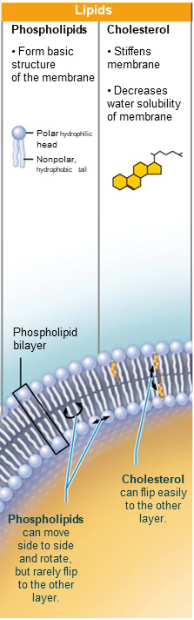
Phospholipids, cholesterol, proteins, and carbohydrates.

What percentage of membrane lipids are phospholipids according to the presentation?
About 75%.

Phospholipid head
Polar, charged, and hydrophilic.
Phospholipid tails
Nonpolar, uncharged, and hydrophobic.
How are phospholipids arranged in the membrane?
Hydrophilic heads face the intracellular and extracellular fluids while hydrophobic tails face inward toward each other.
What does cholesterol do in the plasma membrane?
Increases membrane stability, stiffens the membrane, and decreases permeability.

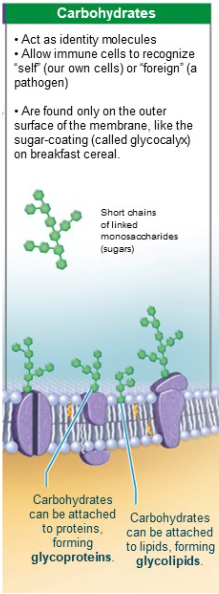
Glycocalyx
A carbohydrate-rich "sugar coating" on the outside of the cell membrane.

What makes up the glycocalyx?
Carbohydrates attached to lipids and proteins.

Glycolipid
A membrane lipid with an attached carbohydrate.

Glycoprotein
A membrane protein with an attached carbohydrate.
What is an important function of the glycocalyx?
Acts as a marker for cell-to-cell recognition.
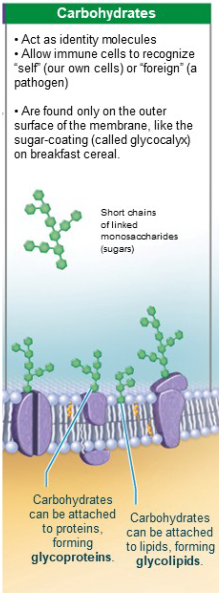
Why does each cell type have a different glycocalyx?
Different cell types have different patterns of surface carbohydrates used for recognition.

What are the 2 main types of membrane proteins?
Integral proteins and peripheral proteins.
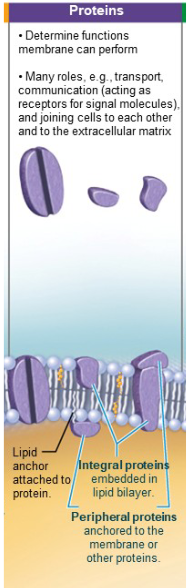
Integral protein
A protein firmly inserted into the membrane; many span the entire membrane.

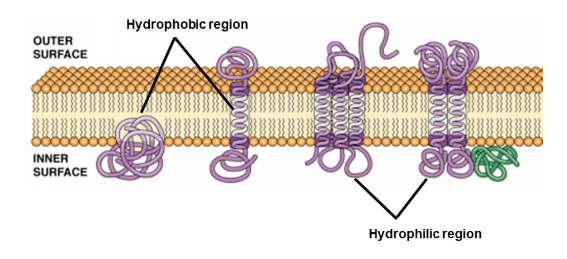
Transmembrane protein
An integral protein that spans the entire plasma membrane.

Why do transmembrane proteins have hydrophobic and hydrophilic regions?
Hydrophobic regions interact with the lipid interior while hydrophilic regions interact with water on either side.
Peripheral protein
A protein loosely attached to membrane lipids or other proteins.
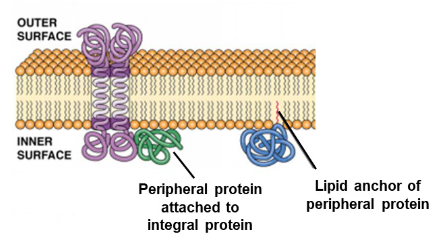
What can peripheral proteins do?
Provide membrane support and interact with intracellular structures.

Membrane protein function: enzymatic activity
Membrane protein acts as an enzyme with its active site exposed to substances.

Membrane protein function: cell recognition
Membrane proteins act as identification tags.

Membrane protein function: attachment to ECM
Helps maintain cell shape, fixes proteins in place, and assists cell movement.

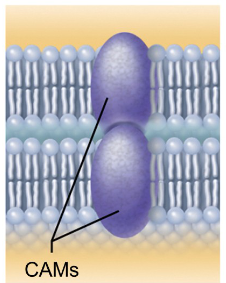
Membrane protein function: cell-to-cell joining
Membrane proteins connect neighboring cells at cellular junctions.
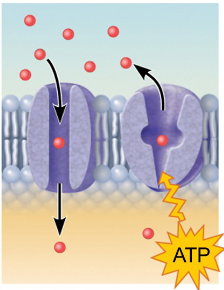
Membrane protein function: transport
Proteins provide channels or carriers that move substances across the membrane.
Membrane protein function: receptors
Proteins bind chemical messengers and trigger cellular responses.

Cytosol
Gel-like fluid portion of the cytoplasm containing water and soluble molecules.
What substances are found in cytosol?
Water, proteins, salts, sugars, and other soluble molecules.
Inclusions
Insoluble cytoplasmic materials that vary by cell type, such as pigments, lipid droplets, and crystals.
Organelle
A specialized cellular structure that performs a particular function.
What are the membranous organelles listed in the presentation?
Mitochondria, endoplasmic reticulum, Golgi apparatus, peroxisomes, and lysosomes.
What are the nonmembranous organelles listed in the presentation?
Ribosomes, cytoskeleton, and centrioles.
Why is cellular compartmentalization important?
Membranes separate different cellular processes so they can occur efficiently.
Mitochondria
Organelles that produce most of the cell's ATP through cellular respiration.
Why are mitochondria called the "power plants" of cells?
They generate most cellular ATP.
What type of membrane surrounds mitochondria?
A double membrane.
Cristae
Folds of the inner mitochondrial membrane.
What is important about the cristae?
They contain membrane proteins needed for cellular respiration.
What makes mitochondria resemble bacteria?
They have their own DNA, RNA, ribosomes, and can divide by binary fission.
Which cells would have many mitochondria?
Cells requiring large amounts of energy, such as skeletal muscle cells.
Ribosome
Site of protein synthesis; composed of proteins and ribosomal RNA (rRNA).
What are the 2 forms of ribosomes?
Free ribosomes and membrane-bound ribosomes.
Free ribosomes
Produce soluble proteins that function in the cytosol or other organelles.
Membrane-bound ribosomes
Attached to the ER and produce membrane proteins, lysosomal proteins, and proteins that will be secreted.
Endoplasmic reticulum (ER)
A system of interconnected membranous cisterns continuous with the outer nuclear membrane.
Cisterns
Flattened membranous tubes or sacs enclosing fluid-filled interiors.
What are the 2 forms of ER?
Rough ER and smooth ER.
Rough ER (RER)
ER covered with ribosomes that synthesizes proteins for secretion, membranes, and lysosomes.
Why does rough ER appear rough?
Ribosomes are attached to its surface.
What happens to proteins inside the rough ER?
They enter the cisterns, are modified, placed into vesicles, and sent to the Golgi apparatus.
Smooth ER (SER)
ER without ribosomes involved in lipid metabolism, calcium storage, detoxification, and carbohydrate metabolism.
What are the major functions of smooth ER?
Lipid metabolism; absorption, synthesis, and transport of fats; Ca2+ storage/release; detoxification; conversion of glycogen to free glucose.
Golgi apparatus
Stacks of flattened membranous sacs that modify, concentrate, sort, and package proteins and lipids.
Cis face of Golgi
The receiving side where transport vesicles from the ER arrive.
Trans face of Golgi
The shipping side where transport vesicles leave.
What happens to proteins and lipids in the Golgi?
They are further modified, tagged, sorted, and packaged.
What are the 3 possible destinations of Golgi transport vesicles?
1) Secreted from the cell. 2) Incorporated into cell membranes. 3) Become lysosomes.
Lysosome
Acidic membranous organelle containing digestive enzymes called acid hydrolases.
What is the main role of lysosomes?
Intracellular digestion.
Why are lysosomal enzymes isolated inside lysosomes?
They could damage cellular components if released into the rest of the cell.
What can lysosomes digest?
Ingested bacteria and viruses, nonfunctional organelles, and glycogen.
Autolysis
Self-digestion of a cell caused by release of lysosomal enzymes.
Tay-Sachs disease
A disorder caused by lack of a lysosomal enzyme needed to break down glycolipids in brain cells.
What happens in Tay-Sachs disease?
Glycolipids accumulate in bulging lysosomes and interfere with nervous system function.
Peroxisome
Organelle containing enzymes that neutralize free radicals and detoxify harmful substances.
Free radical
Highly reactive molecule produced as a natural by-product of cellular metabolism.
Oxidase
Peroxisomal enzyme that uses oxygen to convert toxins such as alcohol into hydrogen peroxide.
Catalase
Peroxisomal enzyme that converts toxic H2O2 into harmless water.
Cytoskeleton
Network of protein rods throughout the cytosol that supports the cell and assists movement.
What are the 3 components of the cytoskeleton?
Microfilaments, intermediate filaments, and microtubules.
Microfilaments
The thinnest cytoskeletal elements; semiflexible strands made of actin.
What protein forms microfilaments?
Actin.
What do microfilaments do?
Strengthen the cell surface, resist compression, contribute to motility, and allow changes in cell shape.
Intermediate filaments
Tough, insoluble, ropelike fibers that help cells resist pulling forces.
What force do intermediate filaments mainly resist?
Tension or pulling forces.
Microtubules
The largest cytoskeletal elements; hollow tubes made of tubulin.
What protein forms microtubules?
Tubulin.
What are functions of microtubules?
Determine cell shape, hold organelles in place, and provide tracks for motor proteins.
Motor proteins
ATP-powered proteins that move organelles and other substances along cytoskeletal tracks.
Centrosome
Microtubule-organizing center located near the nucleus.
Centrioles
A pair of microtubular organelles in the centrosome positioned at right angles to each other.
What do centrosomes and centrioles do?
Organize microtubules, help form the mitotic spindle during cell division, and establish cytoskeletal tracks.
What are the 3 important cellular extensions?
Cilia, flagella, and microvilli.
Cilia
Short, whiplike motile extensions made of microtubules that move substances across cell surfaces.
Example function of cilia
Moving mucus across the respiratory epithelium.
Flagellum
A long microtubule-containing extension that propels an entire cell.
What human cell has a flagellum?
Sperm.
Microvilli
Fingerlike extensions of the plasma membrane that increase surface area for absorption.