life span development
 Call Kai
 Learn
Learn Practice Test
 Spaced Repetition
 Match
Match Flashcards
 Knowt Play
1/153

There's no tags or description
Looks like no tags are added yet.
Name | Mastery | Learn | Test | Matching | Spaced | Call with Kai |
|---|
No analytics yet
Send a link to your students to track their progress
154 Terms
types of development
physical, cognitive, social/emotional
continuity
development proceeds gradually and smoothly over time
discontinuity
development changes more abruptly from one stage to the next
universal development
age-related behaviors found across entire human species
ecological development
ask questions about the impact of culture and environemtn on development
zygote
developing organism in first 2 gestational weeks
in 1st week, zygote differentiates into ectoderm, mesoderm, and endoderm
in 2nd week, zygote completes journey through fallopian tube to uterus, then implants in lining
gestation
process of development inside the uterus
embryo
gestational weeks 3 - 8
fetus
term for organism in gestational period after 8 weeks
ability to hear develops by 28 gestational weeks
3 layers on zygote
ectoderm, mesoderm, endoderm
ectoderm
develops into nerve tissue and skin
mesoderm
develops into muscle and bone
endoderm
develops insource of body’s soft tissue (i.g, organs of digestive tract)
gestation week 1
zygote differentiates into ectoderm, mesoderm, and endoderm
gestation week 4
CNS differentiates into forebrain, midbrain, hindbrain, and spinal cord
gestation week 7
cells that will form cerebral cortex begin journey from the lining of the neural tube (later ventricles of brain) to ultimate destinations
what develops during the embryonic stage?
heart, stomach, liver, and other organs
gestation week 6
expression of a gene on Y chromosome initiates differentiation of generic gonads into tester in males; other genes develop gonads in ovaries in females
gonads
produce gametes in reproductive organs
gestation month 3
internal reproductive organs differentiate into uterus, fallopian tubes, upper portion of vagia in females; seminal vesicles, vas deferens, prostate in males
new neurons born in large numbers, begin forming connections
what develops in females in gestation month 3?
uterus, fallopian tubes, upper portion of vagina
what develops in males in gestation month 3?
seminal vesicles, vas deferens, prostate
gestation month 6
myelination of nervous system
allows neurons to communicate faster, more efficiently
gestation month 7
most of neuron you will ever have are in place
brain waves can be recorded through mother’s abdomen
when are babies born?
between weeks 37 - 42
in the US, about 10% of infants are born prior to 37 weeks
down syndrome
trisomy 21
child receives 3rd full/partial copy of 21st chromosome
intellectual disability
1 in 2,000 chance of being born at mother’s age 20
chances rise to 1 in 30 when mother is 45
what does placenta do during pregnancy?
protects developing fetus from toxins and disease-causing agents (not perfectly efficient)
placenta
organ attached to wall of mother’s uterus that provides fetus with nutrients and oxygen
teratogen
any agent that can produce harmful effects in the zygote, embryo, or fetus
common teratogens
alcohol, tobacco (nicotine), cannabis, phenytoin (dilantin), selective serotonin reuptake inhibitors, varicella (chickenpox), zika, aspirin, acetaminophen
effects of alcohol
small structure
facial abnormalities
hyperactivity
intellectual disability
effects of tobacco
low birth weight
premature birth
cleft lip
risk of SIDS
lung/brain damage
possible link to ADHD
effects of cannabis
autism
intellectual/learning disability
effects of phenytoin (medication for epilepsy)
heart defects
intellectual disability
cleft palate
slow growth
effects of selective serotonin reuptake inhibitors (antidepressants)
premature birth
heart/other physical defects
possibly autism
effects of varicella (viral infection)
scars
small head
blindness
seizures
malformed and paralyzed limbs
effects of zika (viral infection)
microencephaly (significantly small infant head)
effects of aspirin (OTC pain meds)
heart defects
intellectual disability
slow growth
effects of acetaminophen (OTC pain meds)
ADHD
autism
fetal alcohol syndrome (FAS)
condition resulting from alcohol consumption during pregnancy
produces physical abnormalities and cognitive and behavioral problems in child
prenatal exposure to opioids
produces long-lasting cognitive and motor deficits
gray matter and teratogens
mother’s use of alcohol, tobacco, marijuana, or cocaine —> reduces gray matter in child’s brain
gray matter is populated areas of neural cell bodies, thicknes correlated with intelligence
when do kids exposed to multiple drugs prenatally show reduced gray matter thickness and head circumference?
10 - 13 years of age
when do physical abilities appear in human infants?
about 1 year
how long does newborn stage of life last?
birth to 28 days
newborn reflexes
babinski, blink, moro, palmar, rooting, stepping, sucking
babinski
stroking baby’s foot causes toes to spread
blink
eyes close in response to strong stimuli
moro
if head falls back, arms first spread out, then “hug”
palmar
placing object in hand —> reflexive grasping
rooting
stroking baby’s cheek results in baby turning toward touch and opening mouth
stepping
placing baby’s feet in flat surfance initiates stepping
sucking
baby sucks anything that touches roof of mouth
how long do newborns sleep?
16 - 18 hours (large portion in REM sleep)
how long do newborns spend a day crying?
2 - 3 hours
sex
physiological characteristics (XX/XY genotype)
gender
psychosocial aspects of maleness-femaleness continuum
intersex
presence of male and female features in one individual
androgen insensitivity syndrome (AIS)
genetic males (XY) who do not respond to circulating male hormones in utero (period inside uterus before birth)
female external appearance
turner sydrome
individuals have a single X chromosome, phenotypically female
klinefelter syndrome
two X chromosomes and one Y chromosomes, phenotypically male
Jacob syndrome
one x chromosome and two Y chromosomes, phenotypically male
high rates of autism
5-alpha-reductase syndrome
results in ambiguous genitalia at birth with later masculinization at puberty
congenital adrenal hyperplasia (CAH)
exposes fetus to excess male hormones
little effect on male sexual development
might masculinize external genitalia and behavior of genetic females
habituation
we reduce responding to repeated stimuli
this is why babies gaze longer at new stimuli than ones they have seen before
newborn senses
sensitive to smell (especially mother’s)
quite sensitive to taste (sweet, sour, bitter, salty)
infant prefer sounds with higher frequencies (why parents use “motherese”
prefer more contrast in visual stimuli (large, high-contrast, colorful objects preferred)
brain in first 18 months of life
human brain shows rapid grwoth in gray matter (collections of neural cell bodies)
brain between birth and end of infant’s 3rd month
brain grows 64%, goes less than ¼ to abour ½ of adult brain size
brain by age of three
about 80% of eventual adult size brain
“use it or lose it” principle
nervous system wires brain
children in stimulating environment with many things to explore —> best outcomes
children in intellectually impoverished circumstances —> retain few connections, mild forms of intellectual disability
when do children begin to prefer sex-typed toys?
between ages of 12 and 18 months, but cannot differentiate between toys with male and female voices specifically
ovotesticular syndrome
true hermaphrodite (both male and female genitalia)
possess gonad that contains both testicular tubular structures and ovarian follicles
half of the newborns in this category are assigned to male, other half female
causes them in later life to experience gender dysphoria
jean piaget’s theory of cognitive development
discontinuity (stages)
cognitive abilities develop through regular stages
cognition matures as child increasingly uses concepts and schemas to think
sensorimotor stage, preoperational stage, concrete operational stage, formal operational stage
two types of adjustments to schema
assimilation, accommodation
assimilation
incorporation of new learning into existing schema without need to revise schema
accommodation
schema must be adapted to fit new information, requires revision of the schema
sensorimotor stage
birth to age 2
emphasizes present over past and future
exploration through moving/sensing
object permanence
preoperational stage
2-6 years
language acquisition
egocentrism
illogical reasoning
theory of mind begins to develop (more than one perspective)
concrete operational stage
6-12 years
logical reasoning
mastery of conservation problems
learning by doing
theory of mind (more than one perspective)
unable to distinguish fantasy from reality
formal operational stage
12 years +
abstract reasoning
idealism (reality is mental/spiritual, not physical; ideas, mind, consciousness are primary reality)
improved problem solving
conservation
changing form/appearance of an object does not change its quantity
egocentrism
limited abilities to understand points of view other than their own
flaw with piaget’s theory
one major part of his theories was based entirely on observing his own three children
piaget vs vygotsky means of gaining knowledge of the world
piaget - understand world by actively exploring it
vygotsky - interact socially with parents, teachers, other members of community; emphasis on language to communicate; inner speech (self-talk)
zone of proximal development
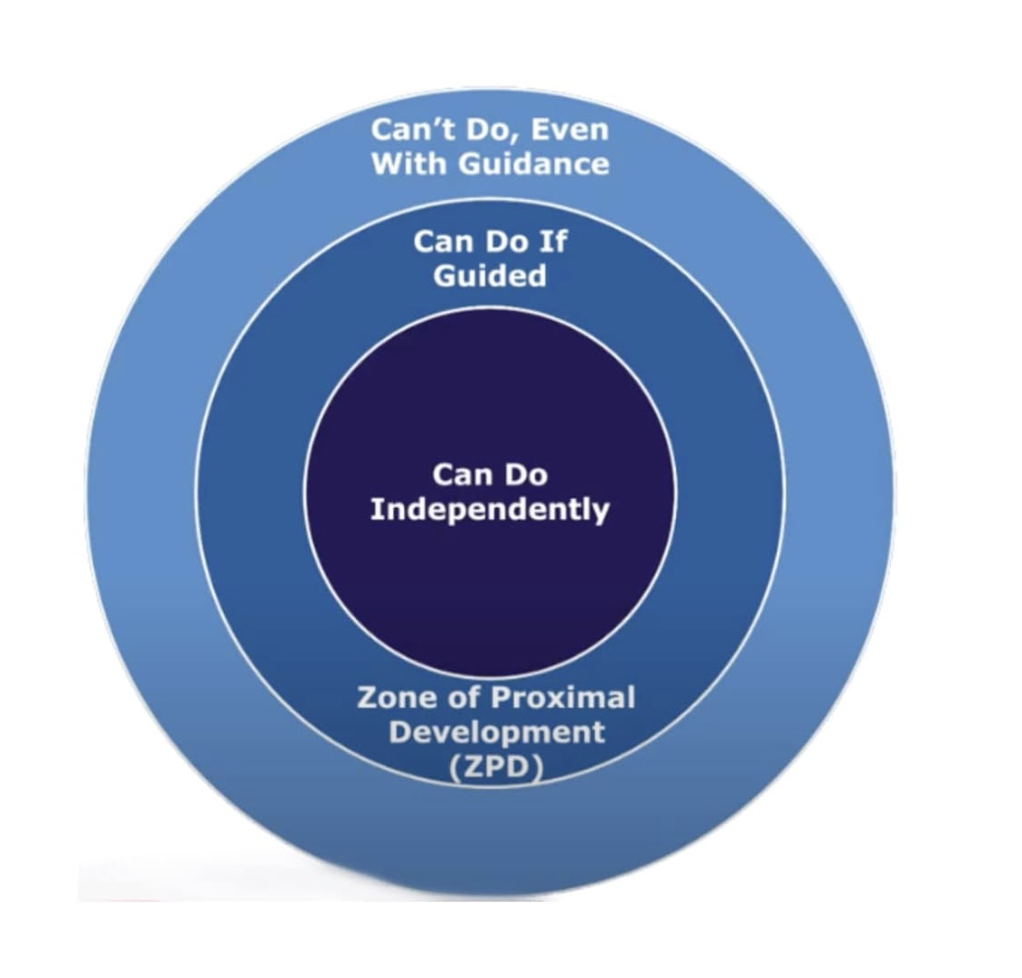
till what age does attention span remain limited?
11 years of age
attention span significantly lengthens each year until adulthood after
when do humans first begin producing autobiographical memories?
between ages 3-5
improved memory + growing sense of self = autobiographical mems
theory of mind (TOM)
people understand that others have beliefs, desires, intentions different from their own
emerges around 3-4 years (earlier than piaget's theory)
joint attention
distinction between living/non-living
distinction between intentional/unintentional behaviors
failure to develop linked to autism
“sally-anne” task
a doll, sally, places her ball in basket, then leaves room
another doll, anne, enters room and moves ball from basket to box, then leaves
if sally comes back, where will she look?
kids who developed TOM understand that just because they saw the ball was moved, sally will not know the ball was moved, so she will look in the basket
joint attention
shared focus of two individuals on one object
emerges in first year of life
temperament
prevailing patterns of mood, activity, and emotional responsiveness
differences predict adult personality
surgency or extroversion, negative affect or mood, effortful control
three categories of temperament
surgency or extroversion
negative affect or mood
effortful control
surgency or extroversion
happy, active, vocal, social
negative affect or mood
angry, fearful, shy, frustrated
effortful control
ability to pay attention and inhibit behavior
MAOA and aggression
variations in MAOA → aggressive behavior in rhesus monkeys
low activity → more aggressive, more dominant when raised by mothers
high activity → more aggressive when raised by peers
harlow’s rhesus monkey experiment
studied infant attachment
removed baby rhesus monkeys from mothers at birth and provided wire mother and carpet mother
regardless of which one provided food, infant monkeys spent more time with cloth mother
conclusion → contact comfort is more important to attachment than food
attachment
emotional bond linking infant to parent/caregiver
mobility predicts timing of attachment
human infants are mobile around first half/second year of life, more time to bond
what does touch enhance?
immune, endocrine, nervous system development
reduces stress, promotes infant social behavior toward caregivers
secure attachment
children explore confidently and return to parent/caregiver for reassurance
when parent left room, child responded by searching, crying
efforts to calm down by stranger were rejected
caregiver greeted warmly when returned

