6. Archaic period: painting (part 2)
 Studied by 0 people
 Call with Kai
 Learn
Learn Practice Test
 Spaced Repetition
 Match
Match Flashcards
 Knowt Play
1/15

There's no tags or description
Looks like no tags are added yet.
Name | Mastery | Learn | Test | Matching | Spaced | Call with Kai |
|---|
No study sessions yet.
16 Terms
red-figure vase painting
540-400 BC
best works from 525 - 480 B.C
technical reversal of black figure
the background is painted in slip which turns black in firing, while the figures are left in the natural color of the clay
details are added by incising and brushwork
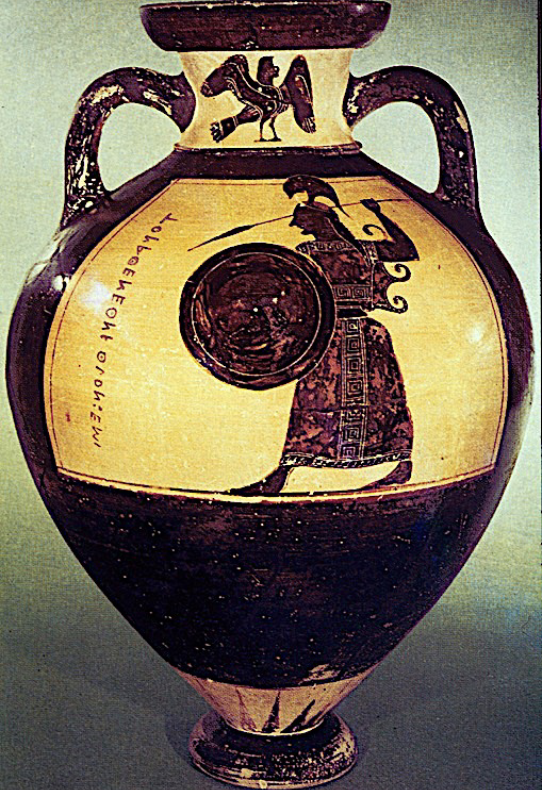
Panathenaic Amphora (566 BC)
panathenaic games reorganized in 566
eponymous archon: on of the chief magistrates after whom a given year was names
painted inscription on Panathenaxi amphorae :ton Athenethen athlon = the athletic prizes from athens
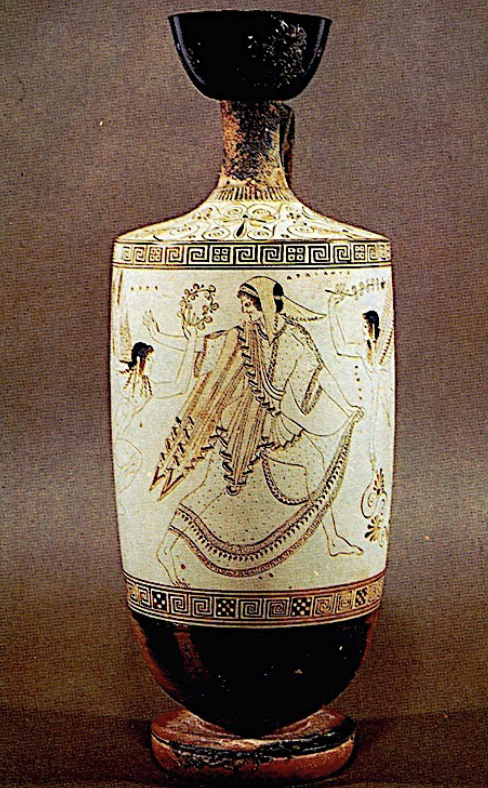
white ground pottery
rare in the archaic but common in the classical period
red figure technique employed over a white glaze background

bilingual amphora by the Andokides painter (510 BC)
Bilinggual vessel decorated in black figyre on one side and red figure on the other side
Lysippises painter: the artist who may have painted the black figure side, but probably the same person as andokides painter
on red figure side: herakles chaining the 3 headed dog cerberus, who guarded the way to the underworld
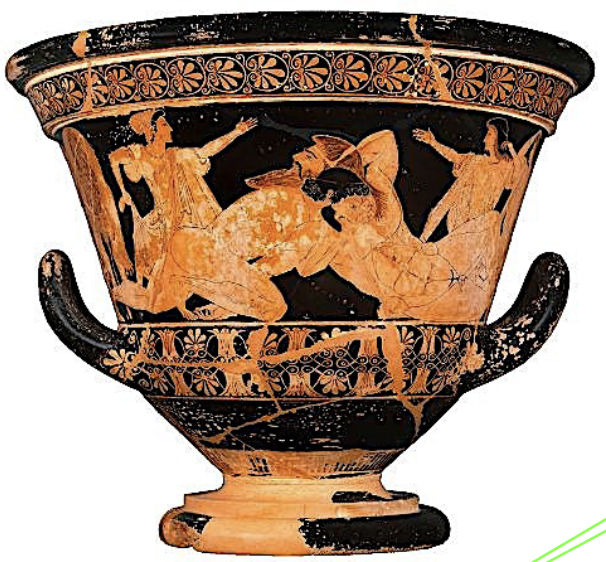
Calyx krater by Euphronios (515 BC) : developed red figure
Euphronios: one of the greatest Attic painters working in the developed red- figure technique
calyx: the bell of a flower, hence a bell-shaped krater
herakles wrestling with the giant Antaios with nymphs fleeing on either side
Chiastic effect: from the greek letter ch, composition emphasizing crossed diagonals like an X
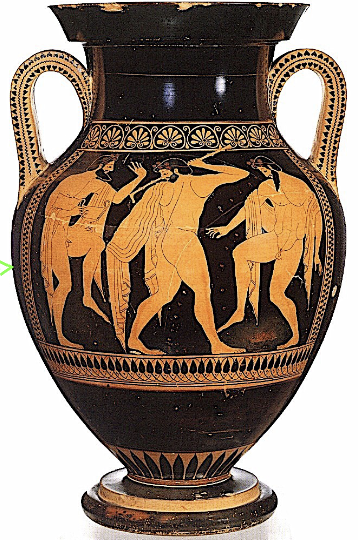
Amphora by Euthymides (510 BC) : developed red figure
foreshortening: the depiction of objects in such a way that they appear to recede into the distance
scene of 3 dancing drinking companions on amphora by Euthymides, with inscription “as never Euphronios” (510 BC) - friendly rivalry
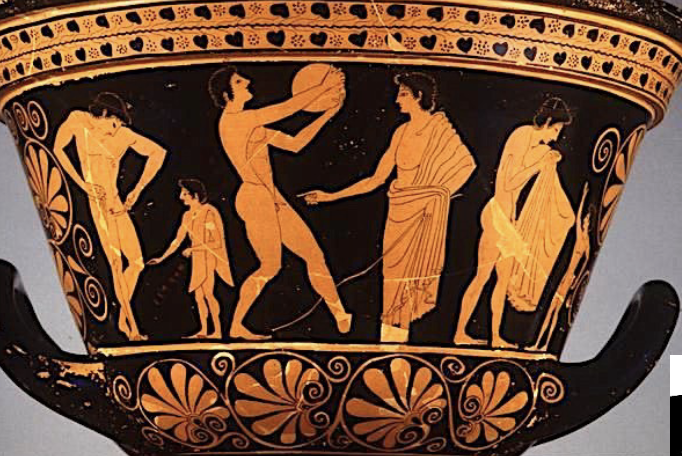
Berlin Krater by Euphronios (515 BC)
Scene of athletes: foreshortened leg and foot
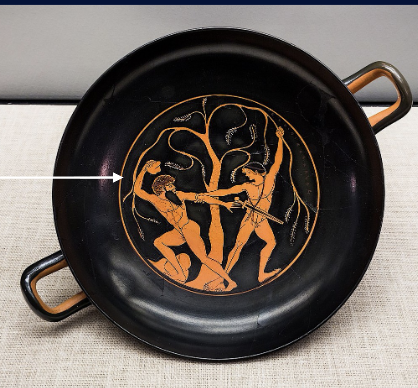
tondo scene Theseus and Sinus on kylix by Elpinikos painter (500 BC)
earliest known chiastic composition involving two contesting figured
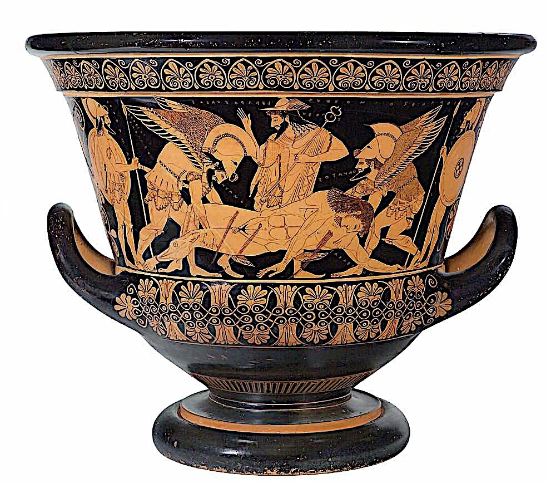
Calyx Krater by Euphronios (515 BC)
the fallen giant Sarpedon carried from battle by twin brothers Hypnos and Thanatos
Looking on is Hermes psychopompos (conductor of souls)
psychopompos: the epithet of hermes as the god who guides souls of the deal to the underworld
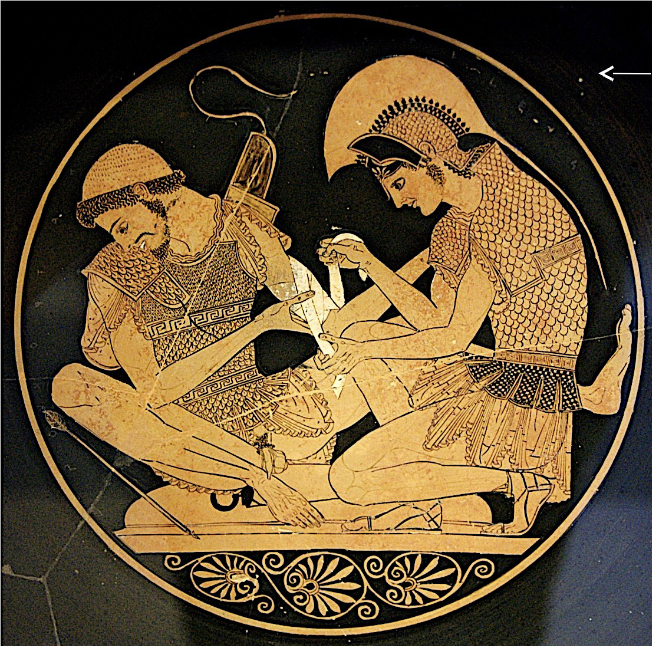
Kylix by Sosias Painter (500 BC)
tondo scene showing Achilles dressing the wound of his friend Patroclus
Sosias painter: red-figure painter to whom is attibuted the first rendering of the human eye in profile
developed red-figure painters
Euphronios, Sosias painter, Kleophrades Painter, Berlin Painter
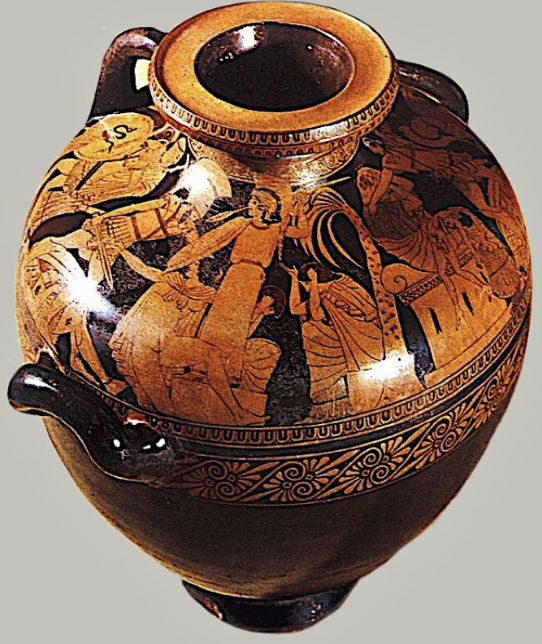
Hydria (water carrying vessel) with scenes from Sack of Troy (480 BC) by Klophrades
pyramidal composition
slaying of Priam by Neoptolemos, son of Achilles
rape of Cassandra, daughter of Priam
palladion: ancient cult statue of Athena
rescue of Aithra by her grandsons
escape of Trojan Aeneas from Troy with Father Achises and son Askanios
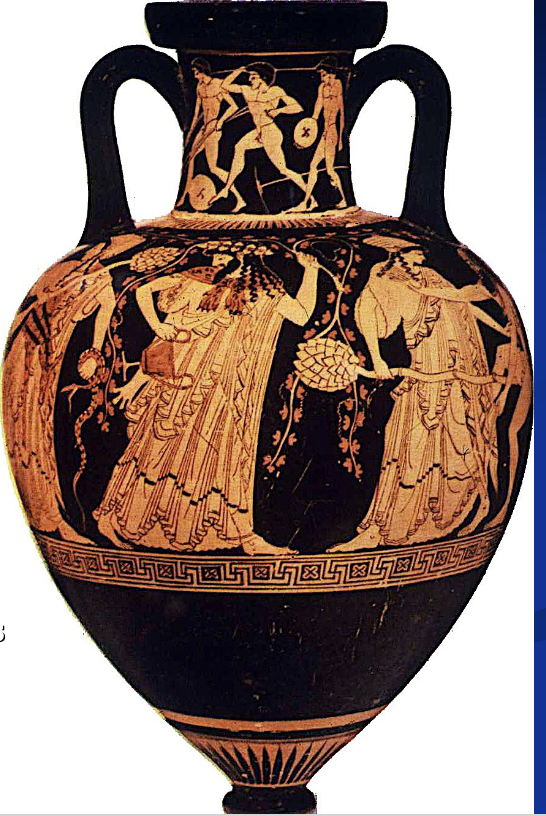
amphora by Kleophrades painter (490 BC)
scenes of bacchic revelry involving Dionysos, maenads and satyrs
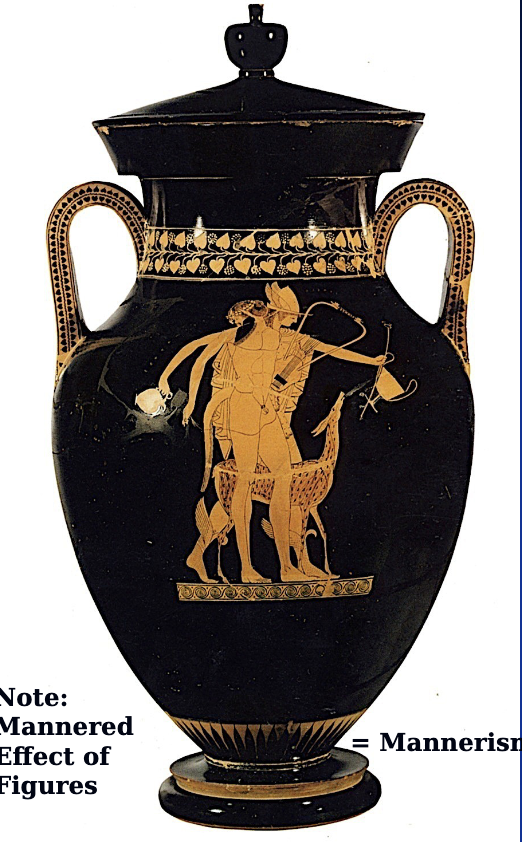
Amphora by Berlin Painter (490 BC) now in Berlin
Berlin Painter: contemporary and rival of the Kleopharades painter
satyr drinking from wine cup on one side of the amphora
Hermes accompanied by satyr and fawn on the other side
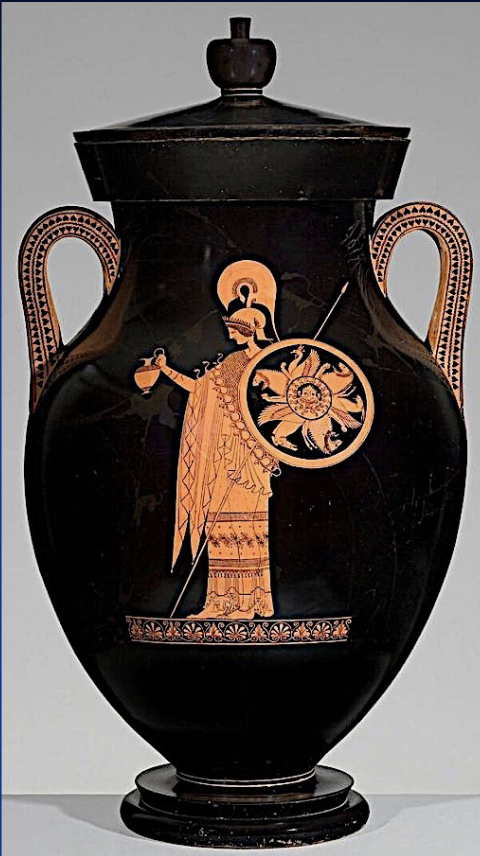
Amphora by Berlin Painter (490 BC), now in Basel
Athena in full panoply on one side
Herakles holding wine cup on opposite side
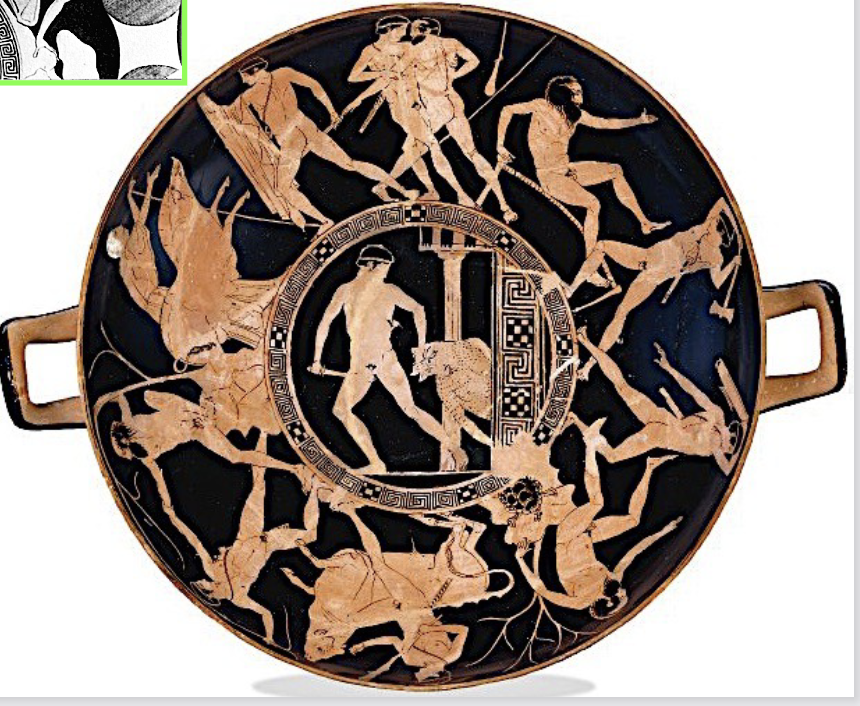
Theseus cycles in red-figure painting after 510: adventures on road between Troizen and Athens
Hippias, son of Peisistratos, exiles in 510, after which time democract established at Athens. so theseus becomes popular
Painters that did it: Onesimos, Douris Kodros
continuous narrative: the representation of the same principal figures repeatedly in some sort of continuous seeting