Biology Essentials: Characteristics of Life, Taxonomy, Viruses, and Scientific Literacy
 Note
Note Call Kai
 Learn
Learn Practice Test
 Spaced Repetition
 Match
Match Flashcards
 Knowt Play
1/29

Earn XP
Description and Tags
Vocabulary flashcards generated from lecture materials on the characteristics of life, biological classification, viral structure, vaccine function, and evaluation of scientific claims versus pseudoscience.
Name | Mastery | Learn | Test | Matching | Spaced | Call with Kai | Chat |
|---|
No analytics yet
Send a link to your students to track their progress
30 Terms
Biosphere
Regions of the Earth's crust, waters, and atmosphere inhabited by living organisms.
Ecosystem
A biological community plus its physical environment.
Community
Interacting populations of different species in a particular area.
Population
Organisms of the same species living in a given area.
Genome
The complete set of genetic material and genes present in an organism.
Genes
Units of information contained within DNA that are passed on to offspring during reproduction.
Homeostasis
The ability of an organism to maintain a relatively constant internal physical and chemical environment.
Adaptation
Features or modifications that make an individual organism better suited to survive in its environment.
Natural Selection
The process by which organisms better adapted to their environment tend to survive and produce more offspring carrying those favorable traits.
Evolution
The change in frequency of traits in populations and species over time.
Taxonomy
The branch of science concerned with classifying and grouping organisms.
Systematics
The study of the evolutionary relationships among organisms.
Prokaryotes
Single-celled organisms that lack a membrane-bound nucleus and contain circular DNA loose within the cell.

Eukaryotes
Organisms composed of cells containing a distinct nucleus enclosing linear DNA, along with specialized membrane-bound organelles.
Extremophiles
Organisms, typically within Domain Archaea, that thrive in extreme conditions such as high temperatures, high salinity, or oxygen-deprived environments.
Autotroph
An organism that produces its own organic nutrients, such as through photosynthesis.
Heterotroph
An organism that must acquire nutrients by consuming other organisms or organic material.
Binomial Nomenclature
The two-part scientific naming system for species consisting of a capitalized Genus name followed by a lowercase specific epithet, both italicized.
Capsid
The protein shell surrounding the genetic material (DNA or RNA) inside a virus.
Host Cell
A cell infected by a virus that provides the metabolic mechanisms needed for the virus to replicate.
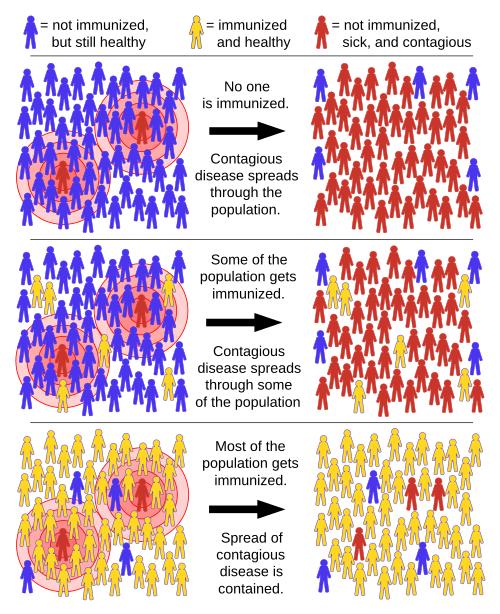
Herd Immunity
Indirect protection from contagious disease that occurs when a large portion of a population (typically 80% to 100%) is vaccinated.
Scientific Claim
A statement about how the natural world works that can be tested using the scientific method.
Scientific Literacy
An understanding of basic scientific concepts and processes required to make informed decisions through critical thinking.
Bias
A prejudice or preference for or against a particular idea that can influence scientific objectivity.
Basic Research
Scientific research intended to expand fundamental knowledge, largely funded by taxpayer dollars through government institutions.
Applied Research
Scientific investigation directed toward solving practical problems or creating commercial products and medical therapies.
Primary Literature
Original scientific research publications featuring actual data with experimental controls that undergo peer review prior to publication.

Secondary Literature
Publications that summarize, review, or synthesize primary literature, such as textbooks, review articles, and reputable science news.
Pseudoscience
Statements, beliefs, or practices that sound scientific but do not follow the scientific method or produce testable, replicable results.
Vaccine Adverse Event Reporting System (VAERS)
A post-approval monitoring system where patients, parents, and healthcare providers can submit reports on adverse reactions to vaccines.