Physiology of Exercise
 Call Kai
 Learn
Learn Practice Test
 Spaced Repetition
 Match
Match Flashcards
 Knowt Play
1/137

There's no tags or description
Looks like no tags are added yet.
Name | Mastery | Learn | Test | Matching | Spaced | Call with Kai | Chat |
|---|
No analytics yet
Send a link to your students to track their progress
138 Terms

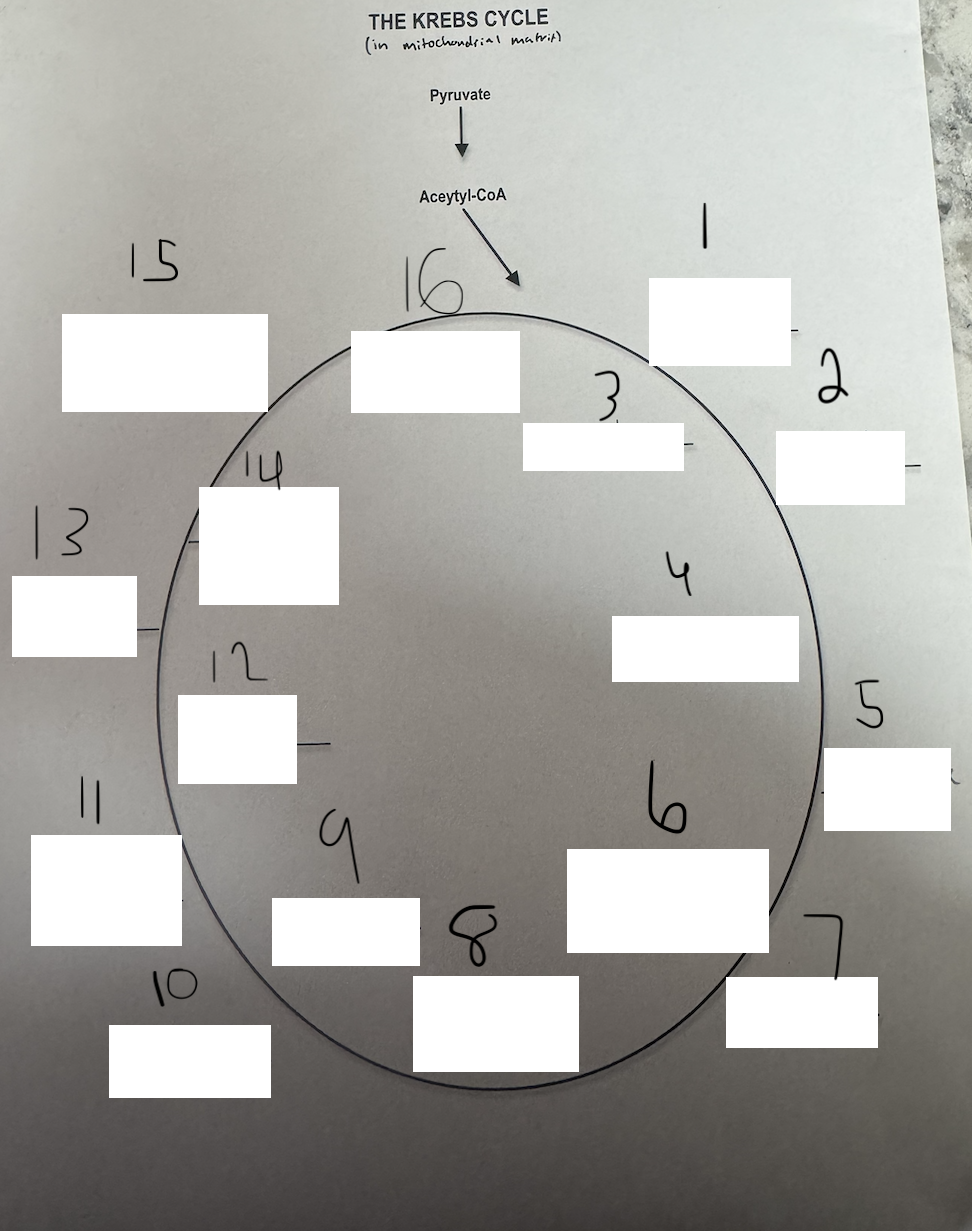
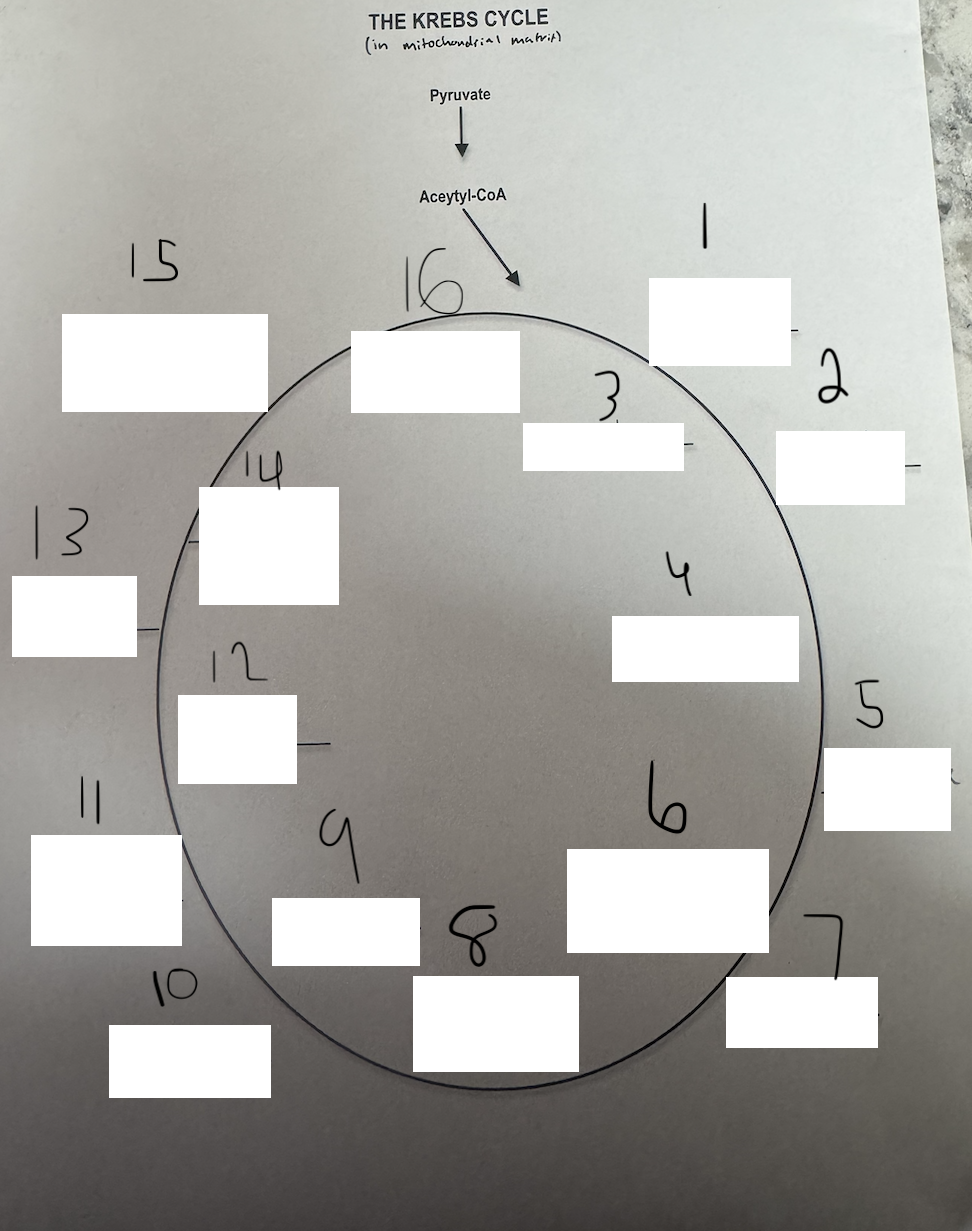
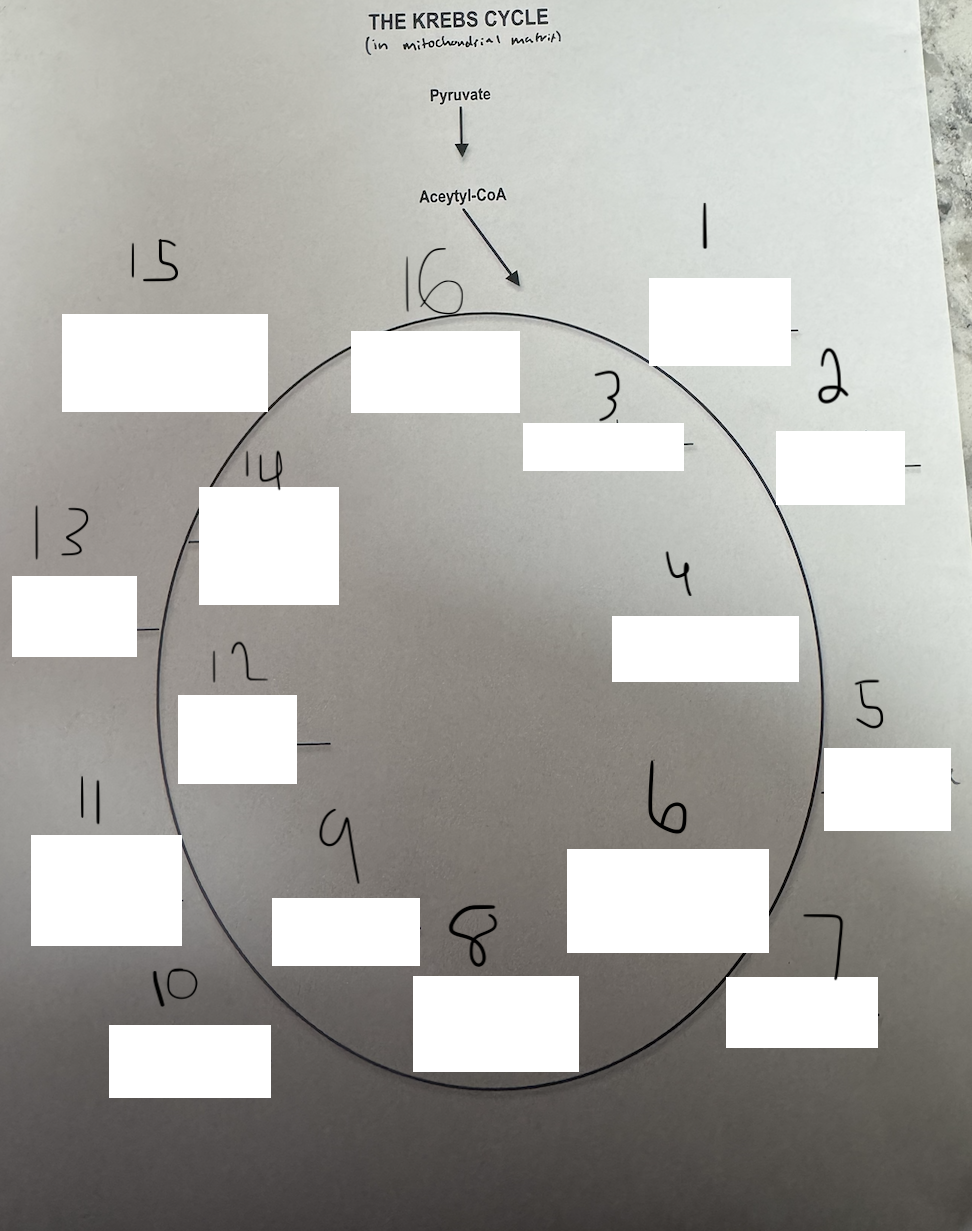
1
citrate

2
Isocitrate

3
aconitase

4
isocitrate dehydrogenase
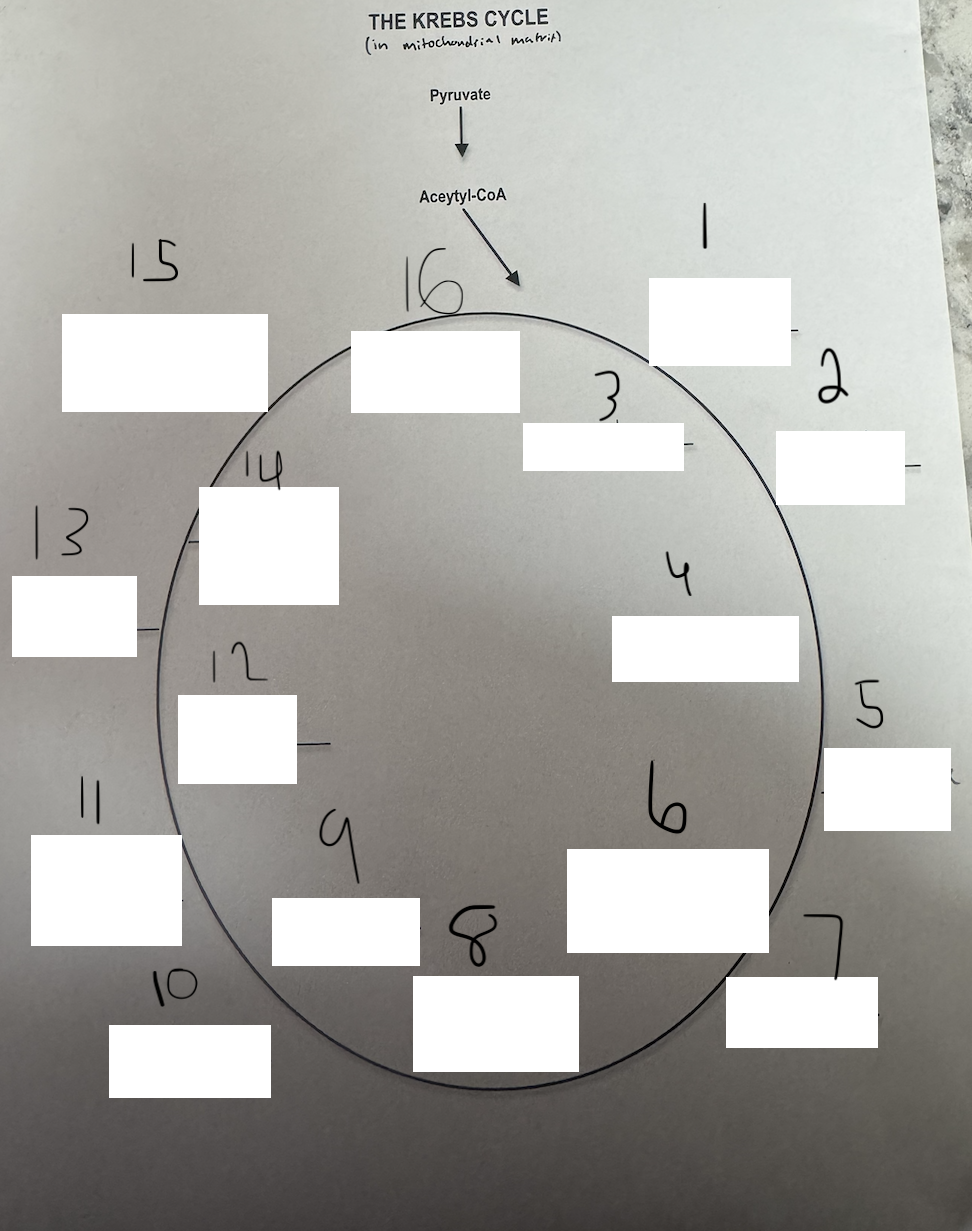
5
ketogluterate
6
ketogluterate dehydrogenase

7
Succinyl - CoA

8
Succinyl - CoA Synthetase
9
Succinate Dehydrogenase

10
Succinate

11
Fumorate

12
fumarase

13
malate
14
malate dehyrdrogenase
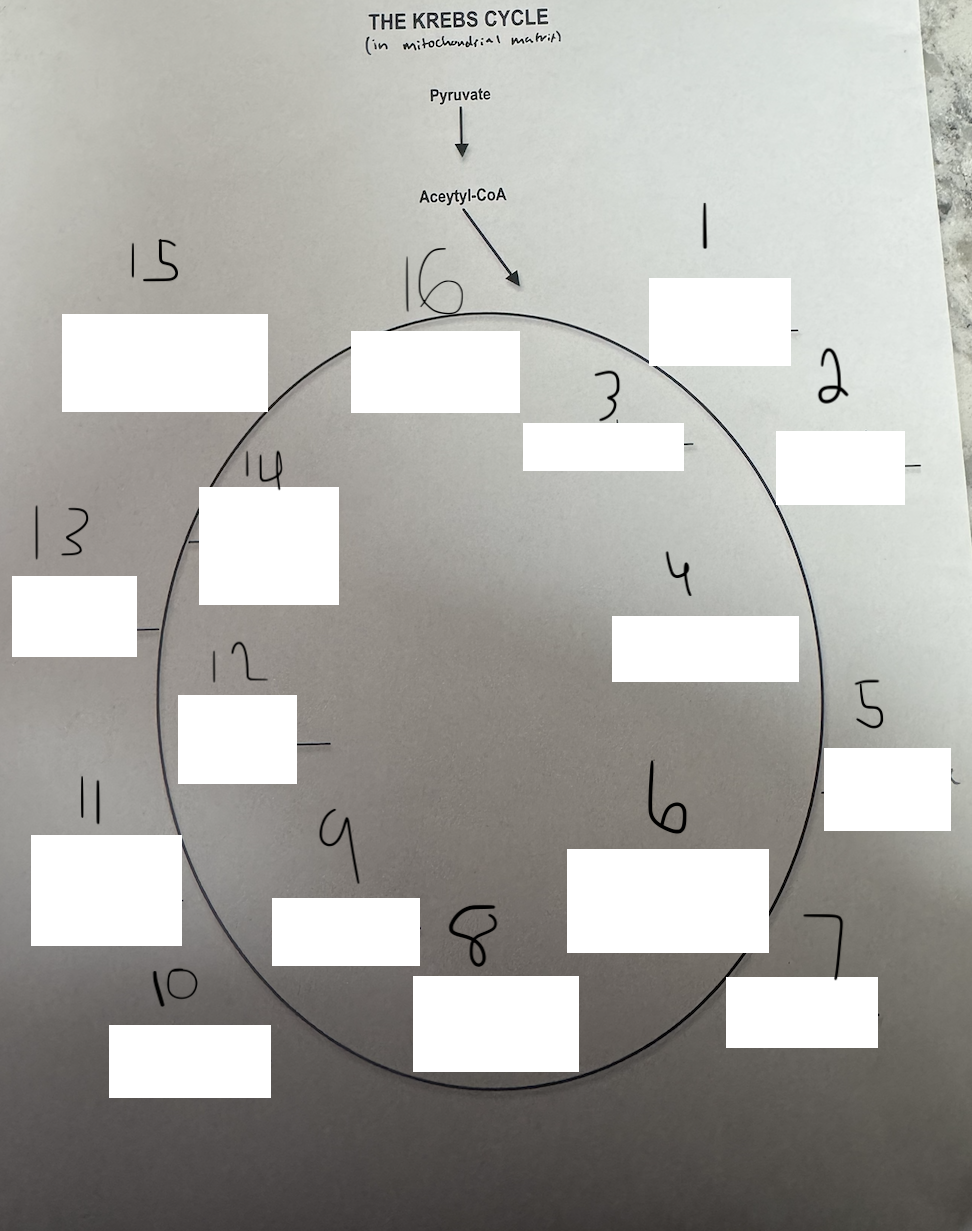
15
oxaloacetate

16
citrate Synthesis

1
-1
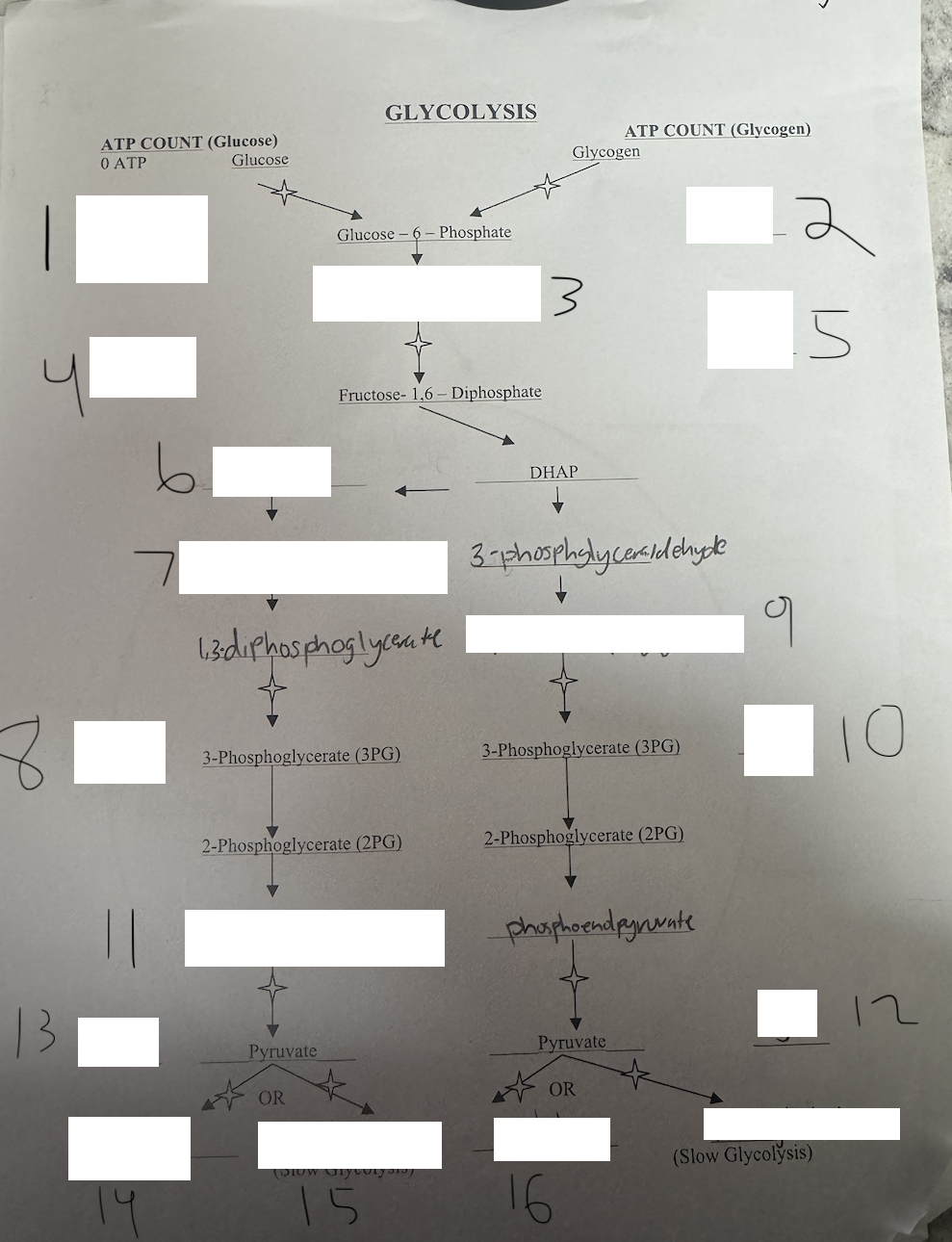
2
0
3
Fructose 6 - Phosphate

4
-2

5
-1
6
DHAP

7
3 - Phosphoglyceraldehyde
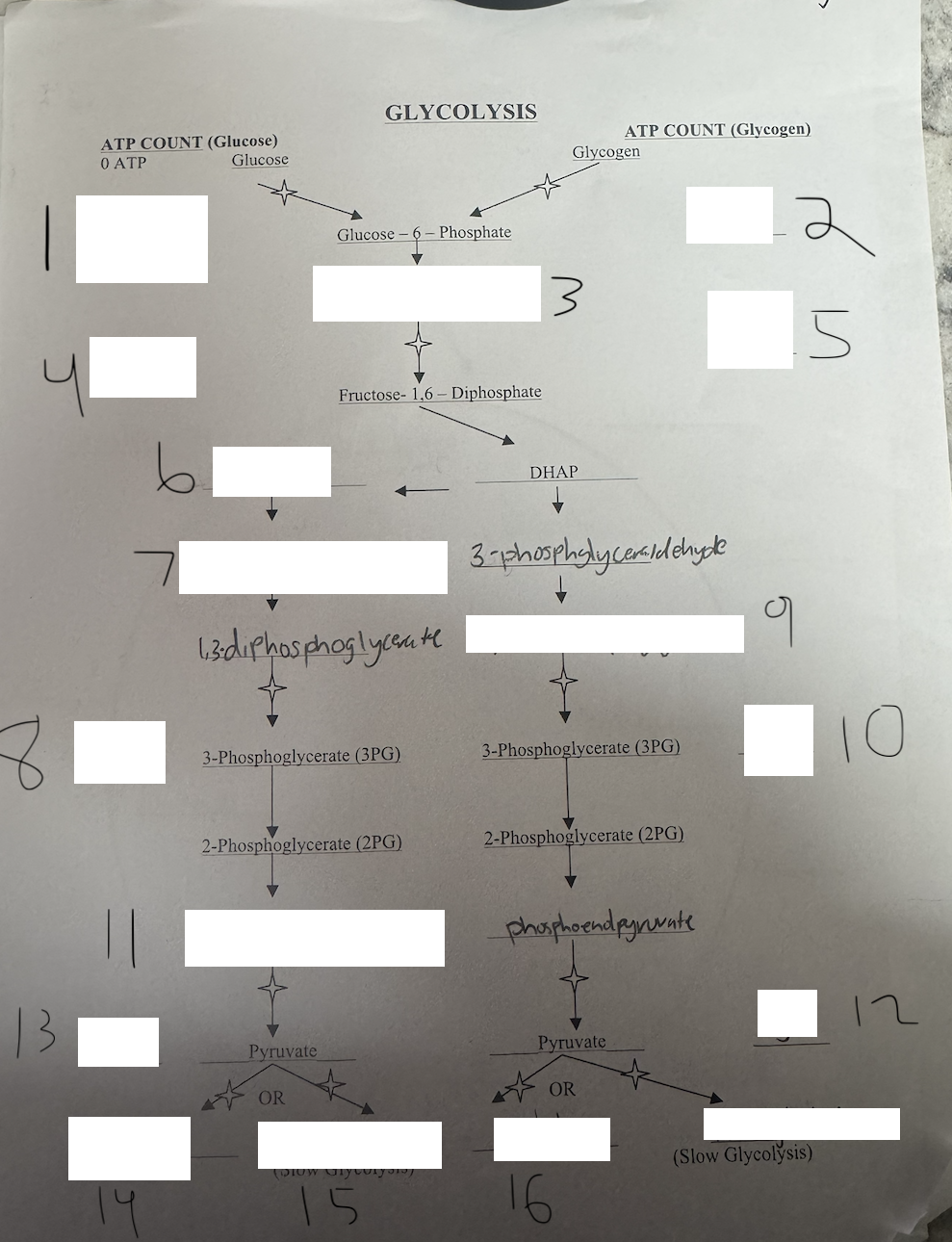
8
0

9
1,3 - diphosphoglycerate

10
1

11
Phosphoenolpyruvate

12
3

13
2

14
lactate

15
Acetyl - CoA

16
Lactate

17
Acetyl - CoA
What is Atp?
immediate energy source used by muscles for contraction.
What happens when ATP is broken down?
breaks down into ADP, phosphate (Pi), and energy.
Why must ATP be continually regenerated during exercise?
Muscles store only a small amount of ATP, so it must constantly be regenerated to continue muscle contractions.
What are the three major energy systems?
ATP-PCr (phosphagen) system
Glycolytic system
Oxidative (aerobic) system
Do the three energy systems work separately?
No
Which energy system provides energy the fastest?
The ATP-PCr system.
Which energy system is most important during long-duration exercise?
The oxidative (aerobic) system.
What determines which energy system is used most?
Exercise intensity, exercise duration, and the amount of energy needed.
What is the main purpose of the ATP-PCr system?
It quickly regenerates ATP during short, high-intensity activities.
How does phosphocreatine help regenerate ATP?
Phosphocreatine donates a phosphate group to ADP to form ATP.
What enzyme helps with the ATP-PCr reaction?
Creatine kinase
What is the ATP-PCr reaction?
Phosphocreatine + ADP → ATP + creatine.
When is the ATP-PCr system most important?
During short, powerful activities lasting about 0–10 seconds.
Give examples of activities that use the ATP-PCr system.
Tennis serves, jumping, sprinting, and heavy lifting.
Does the ATP-PCr system require oxygen directly?
No. It can produce energy without directly using oxygen.
What is a limitation of the ATP-PCr system?
Low ATP + PCr = short energy supply.
What is glycolysis?
breakdown of glucose or glycogen to produce energy.
Where does glycolysis occur?
cytoplasm of the cell.
Does glycolysis require oxygen?
No
What is the main fuel used during glycolysis?
Glucose or muscle glycogen.
What are the products of glycolysis?
ATP, NADH, and pyruvate.
How much net ATP is produced from one molecule of glucose during glycolysis?
Two net ATP.
How much ATP can be produced from muscle glycogen during glycolysis?
3
What is the role of NAD+ in glycolysis?
NAD+ accepts electrons and hydrogen to form NADH, allowing glycolysis to continue.
What happens to pyruvate when oxygen is available?
enters the mitochondria and is converted into acetyl-CoA for aerobic metabolism.
What happens to pyruvate when energy is needed quickly?
Pyruvate can be converted into lactate.
Which enzyme starts glycolysis by adding phosphate to glucose?
Hexokinase.
What is the rate-limiting enzyme of glycolysis?
Phosphofructokinase (PFK).
Why is PFK important?
controls an important rate-limiting step in glycolysis.
What enzyme converts pyruvate into lactate?
Lactate dehydrogenase
What is lactate?
substance produced when pyruvate is converted during high rates of glycolysis.
Does lactate directly cause muscle fatigue?
No.
What is the role of LDH during intense exercise?
LDH converts pyruvate to lactate and helps regenerate NAD+ so glycolysis can continue.
What happens when H+ builds up in the muscles?
Muscle pH decreases, making the muscles more acidic and potentially reducing performance.
What is acidosis?
condition in which acidity increases because H+ concentration rises and pH decreases.
What causes H+ accumulation during intense exercise?
Rapid ATP breakdown.
What is the role of buffers?
resist sudden changes in pH by accepting or releasing H+.
Why does blood pH not immediately drop to a dangerous level during exercise?
Buffers, breathing, and other body systems
What is the relationship between CO₂ and H+?
CO₂ combines with water to form carbonic acid, which can release H+.
What happens to H+ when CO₂ increases?
H+ generally increases, causing pH to decrease
How does breathing help control pH?
Breathing removes CO₂, which helps reduce the amount of carbonic acid and regulate H+ levels.
Does lactate formation always increase acidity?
No.
What are Type I muscle fibers?
slow-twitch fibers that resist fatigue and are suited for endurance activities.
What activities mainly use Type I fibers?
Distance running, walking, and long-duration activities.
What are Type IIa muscle fibers?
fast-twitch fibers that produce more force and have moderate fatigue resistance.
What activities use Type IIa fibers?
Repeated sprints, tennis, and activities requiring power and endurance.
What are Type IIx fibers?
fibers are fast-twitch fibers that produce high force and power but fatigue quickly.
What activities mainly use Type IIx fibers?
Short sprints, jumping, and maximal power movements.
Which muscle fiber type is most resistant to fatigue?
Type I
Which muscle fiber type produces the most power?
Type IIx.
Can muscle fibers adapt to training?
Yes.
What is the oxidative energy system?
uses oxygen to produce ATP for longer-duration activities.
Where does most aerobic ATP production occur?
Inside the mitochondria.
What are the main stages of aerobic metabolism?
Glycolysis
Pyruvate processing
Krebs cycle
Electron transport chain
What happens during pyruvate processing?
converted into acetyl-CoA, which enters the Krebs cycle.
Where does pyruvate processing occur?
mitochondrial matrix.
What is the Krebs cycle?
series of reactions that produces NADH, FADH₂, and a small amount of ATP.
What is the main purpose of NADH and FADH₂?
carry high-energy electrons to the electron transport chain.
Where does the Krebs cycle occur?
mitochondrial matrix.
What is the electron transport chain (ETC)?
series of proteins that transfer electrons and help create a hydrogen ion gradient.
Where is the electron transport chain located?
In the inner mitochondrial membrane
What is the final electron acceptor in aerobic metabolism?
Oxygen.
What happens when oxygen accepts electrons?
Oxygen combines with electrons and hydrogen ions to form water.
What is ATP synthase?
an enzyme that uses the H+ gradient to produce ATP.
Why is the oxidative system useful during long-duration exercise?
It can produce ATP for a long time as long as oxygen and fuel are available.
What is a limitation of the oxidative system?
produces ATP more slowly than the ATP-PCr and glycolytic systems.
What are mitochondria?
structures inside cells where most aerobic ATP production occurs.