Adv. Therex Final
 Call Kai
 Learn
Learn Practice Test
 Spaced Repetition
 Match
Match Flashcards
 Knowt Play
1/59

Earn XP
Description and Tags
Are you sure
Name | Mastery | Learn | Test | Matching | Spaced | Call with Kai | Chat |
|---|
No analytics yet
Send a link to your students to track their progress
60 Terms
Power
What is the equation for power?
Measured in?
What is power?
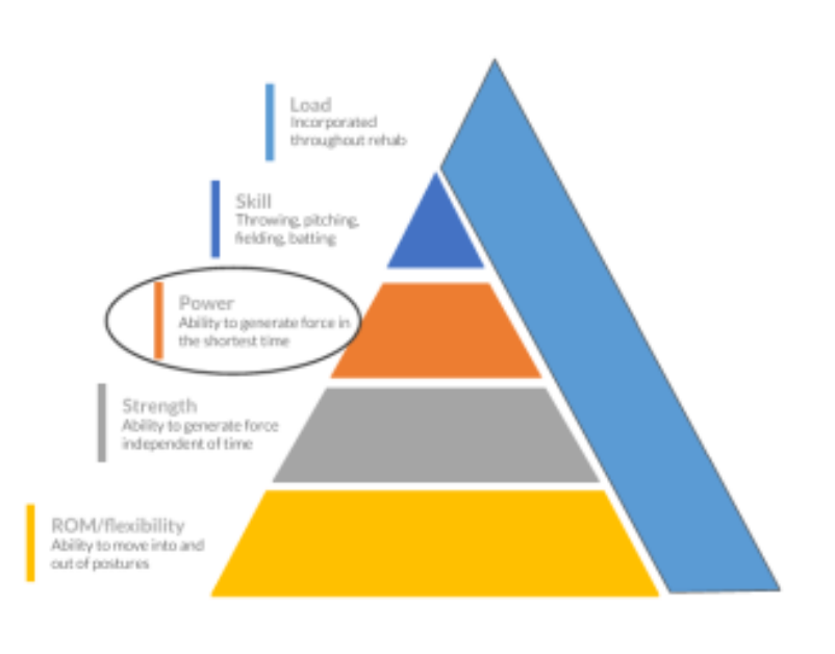
Treatment pyramid
What is the load throughout (The order of what to do first in a session)
Power:
Power = Force × Velocity OR Power = Work / Time
Measured in Watts.
Ability to exert force at a high velocity or any exercise incorporating velocity TREATMENT PYRAMID Load throughout: ROM/Flexibility → Strength → Power → Skill
Treatment pyramid:
Load throughout: ROM/Flexibility → Strength → Power → Skill
Plyometrics:
Coined by who and in what year?
Plyo means?
Metric means?
Plyometrics mimic what activities?
Which system is activated more: Nervous or Muscular?
What are some benefits to plyometrics? (4)
PLYOMETRICS
Coined by Fred Wilt in 1975.
Plyo = to increase.
Metric = measure.
Mimics sport activities.
Greater nervous system activation than muscular activation.
BENEFITS
Increased jump height
Reduced sprint time
Improved running economy (the energy measured via oxygen consumption (VO₂) required to maintain a specific submaximal running speed)
Injury prevention
Stretch-shortening cycle SSC
Mechanical model
SEC: What does it stand for and what does it do?
PEC: What does it stand for and what does it do?
What elements are active during concentric phase?
Neurophysiological model
Stretch reflex increases what?
What are the three phases the SSC?
Mechanical Model:
SEC (series elastic component) stores energy like a spring (think of tendon)
PEC (parallel elastic component) provides structural support
Contractile elements active during concentric phase.
Neurophysiological Model:
Stretch reflex increases muscle contraction.
Phases:
Eccentric – energy stored in SEC, muscle spindle activation as muscle lengthens
Amortization – transition phase; shorter duration improves performance.
Concentric – resultant power; SEC recoil + alpha motor neuron activation + voluntary contraction
Plyometric variables
What are the three variables MRD? For one of the variables, why do we want to keep it quick?
Muscle fiber recruitment
How can muscle fiber types be biased? Value for each 3 types?
Plyometric variables:
Magnitude of stretch
Rate of stretch
Duration of stretch
Excessive duration causes heat loss and reduced stored energy.
Muscle fiber recruitment: Muscle fiber type may be biased based on level of intensity:
<30% = Type I; slow twitch
30–70% = Type IIa; fast twitch
>70% = Type IIb/x; fast twitch
Plyo Programming:
Frequency: What factors may influence frequency (give some examples)? How many sessions a week? How many hours between session?
Recovery: Dependent on what two things? If training fast twitch fibers, what is the work:rest ration? What is important to avoid excessive? How long is the program length?
Plyometric volume: Volume is dependent on?
Plyometric foot contact recommendations based on intensity: Values for low, moderate, high, and very high?
Foot contact recommendations based on experience: Values for beginner, intermediate, and advance?
Programming
Frequency:
Environmental factors may influence frequency (air pollution, heat, etc.)
2–3 sessions/week
48–72 hours between sessions
Recovery:
Dependent on type and volume
If training fast twitch fibers (> 30% intensity) → Work:Rest ratio 1:5–1:10
Important to avoid excessive increase in respiratory rate
Program length 6–10 weeks
Plyometric volume: Volume is dependent on intensity → The lower the intensity, the higher the volume
Low: 400
Moderate: 350
High: 300
Very High: 200
Foot contact recommendations: Volume is dependent on experience →
Beginner: 80–100 contacts
Intermediate: 100–120 contacts
Advanced: 120–140 contacts
Quantifying plyometric volume
For LE and UE
Lower extremity plyometrics may be expressed as total number of foot contacts or distance
E.g. 3x10 reps = 30 hops
Upper extremity plyometrics may be expressed as total number of hand contacts or distance
E.g. 3x15 reps = 45 ball bounces
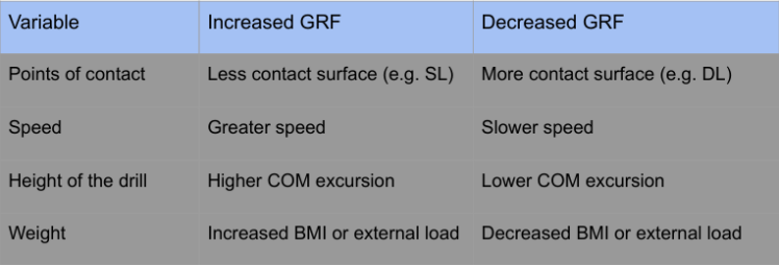
Ground force reaction chart: For each of the following state what would cause increased GRF and decrease GRF
Points of contact
Speed
Height of drill
Weight
Variable | Increased GRF | Decreased GRF |
|---|---|---|
Points of contact | Less contact surface (e.g., SL) | More contact surface (e.g., DL) |
Speed | Greater speed | Slower speed |
Height of the drill | Higher COM excursion | Lower COM excursion |
Weight | Increased BMI or external load | Decreased BMI or external load |
Lower Extremity Plyometric Nuances: Extensive vs intensive plyometrics
Extensive vs Intensive:
Longer or shorter contact time?
Low or high intent?
Less or more neural demand?
Better for what phase of rehab?
Higher or lower GRF?
Extensive vs intensive plyometrics
Extensive:
Longer contact time
Low to High intent
Less neural demand
Better for earlier phases of rehab
Lower GRF
Intensive:
Short contact time
High intent
High neural demand
Better for later stages of rehab
Higher GRF
Sub-grouping plyometrics based on segments utilized
Jumping and hooping will be defined by?
Jumping: What joint-biased? Single or double leg? Distance? A combination of a ________ with use of _____ yield a greater jump height (And give example for forward and one for backward jump)
Hopping: What joint-biased? Single or double leg?
Bounding: Describe the movement. What are the two patterns?
Sub-grouping plyometrics based on segments utilized: Jumping and hopping will be defined by the body segment doing the primary force
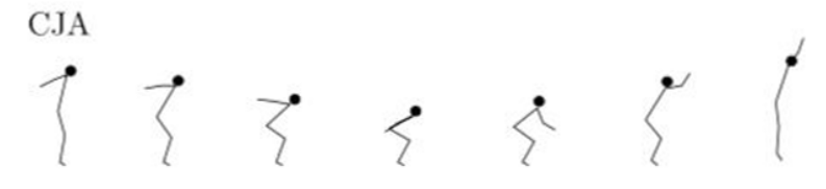
Jumping
Knee-biased
Single-leg or double-leg
Greater distances
A combination of a countermovement with use of arms yields greater jump height
Forward arm swing during forward jump
Backward arm swing during backward jump
Hopping
Ankle-biased
Single-leg or double-leg
Bounding
Alternating single-leg movement
Sequential (alternate leg bound) or staggered patterns (skipping)
Ballistic drills
Primarily eccentric or concentric? Give examples
Velocity occurs in?
Helpful to introduce before what training?
What phase is omitted in ballistic drills?
Primarily eccentric OR concentric
Ex: Concentric – Hang muscle clean, seated shot put
Eccentric – SL depth drop, falling push-up from knees
Velocity occurs in one direction
Helpful to introduce before plyometric training
NO amortization phase
Speed
What is speed? How is it different to velocity?
What are the two sprint components?
Determinants of speed is tied to what?
Impulse: What is the equation? Referred to as area under?
Speed
Distance covered per unit time (miles/hour; meters/second)
Does not include direction (unlike velocity)
Sprint Components
Acceleration
Ability to maintain max speed
Determinants of speed:
Rate of Force Development (RFD)
Slope at which the force is generated
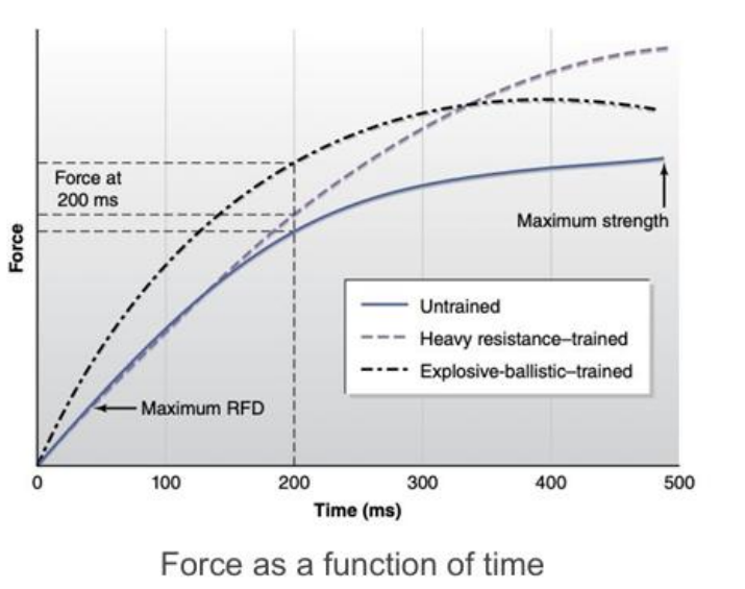
Impulse
Force × Time
Referred to as area under the force-time curve
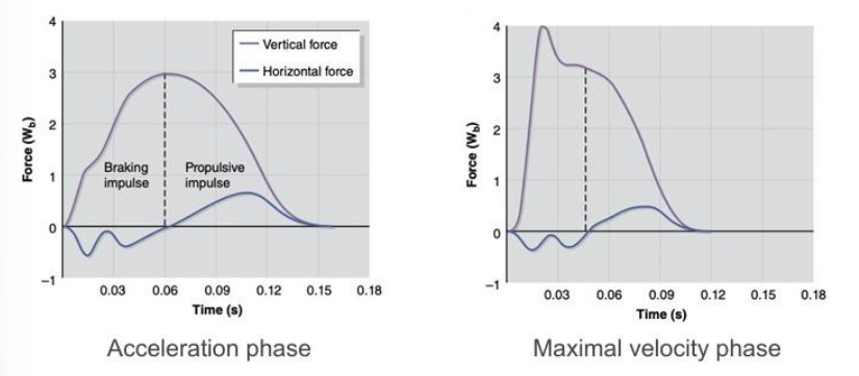
At the beginning of ground contact, the horizontal force is negative. That is the braking impulse because the force is acting backward against forward motion.
After that, the horizontal force becomes positive. That is the propulsive impulse because the athlete is pushing backward into the ground to move forward.
Starting techniques:
Hard starts (2)
Soft starts (2)
Starting techniques
Hard Starts:
Off blocks (Blocks you place your feet on before sprinting
3-point stance (Stance you take before braking into a sprint)
Soft Starts:
Falling start (Falling forward using the momentum to help you start sprinting)
Flying start (Starting at a light jog and working into the sprint)
Running as plyometrics
How does it use the SSC? (Due to what motion of the body)
What model?
Jogging is considered low or high intensity plyo?
Methods for improving speed
______ practice
______ training (This is the precursor to?)
What type of squats may be more specific to running
What direction exercises may have better carryover?
Use of what type of movements may have better carryover?
Mobility in what three muscle groups may lead to improved performance?
Uses SSC due to vertical motion of body
Spring-mass model
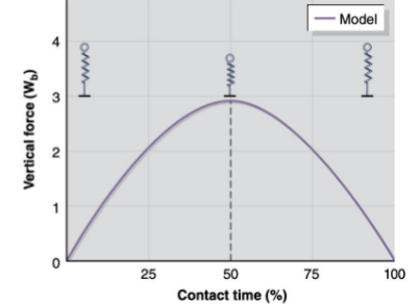
Jogging = low-intensity plyometric
Methods for improving speed
Sprinting practice
Strength training
Precursor to force
Partial depth squats may be more specific to running
Horizontally driven exercises may have better carryover
Use of explosive movements may have better carryover
Mobility (hip flexors, quads, plantar flexor flexibility) → may lead to improved performance
Agility and COD
COD
what does this stand for a mean?
Can be separated into what two subtypes?
Agility
_______ change of direction in response to a stimulus
Requires what three things?
Methods for improving agility:
______ training (similar to speed training with greater emphasis on _______ training)
What drills? (2)
Change of direction (COD)
Changing direction, velocity, or body segment position.
Can be separated into 2 subtypes: Cutting sports (court sports like basketball or tennis and field sports like soccer or football) or Other (gymnastics, wrestling, breakdancing, etc.)
Agility
Reactive change of direction in response to a stimulus
Requires: Perception, Cognition, Reaction
COD = planned
Agility = reactive (Barry Sanders)
Methods for improving agility:
Strength training (similar to speed training with greater emphasis on eccentric training)
COD drills
`Perceptual-cognitive drills
Addition of cognitive tasks to COD drills
Ex) Whistles, verbal commands, hand signals
Exercise Testing Study Guide
What is it? What does it determine?
Reasons for testing:
Assessment of?
Identifying what two things?
_____ setting
Evaluation of?
Testing terminology
What is measurement?
What is units?
What are some types?
What are the three timing of testing?
Reliability vs validity?
Test selection consideration
What energy system
Biomechanical movement ______
______ and ______ status
What two basic things to consider? (on like every survey or forum lol)
What factors?
What is Exercise Testing: Any test/measure used to assess physical capacity. Determines starting point and readiness for exercise progression
Reasons for Testing:
Assessment of athletic talent
Identify physical abilities and areas for improvement
Goal setting
Evaluation of progress
Testing Terminology
Measurement = collecting data; seeks to quantify or describe an atttribute
Units: lbs, meters, seconds
Types: Laboratory tests, Field tests
Timing: Pre (Evaluation), Mid (Formative Evaluation), Post
Reliability vs Validity
Reliability = Repeatability (regardless of accuracy)
Validity = Accuracy (bullseye)
Test Selection Considerations
Metabolic energy system
Biomechanical movement specificity
Experience and training status
Age and sex
Environmental factors
Parameters of Athletic Performance
Low speed strength: Example?
High speed strength: What does it train and give an example.
Anaerobic capacity: What is it (and lasting how many seconds) and give an example.
Local muscular endurance: What is it? Approach failure without? Example?
Aerobic capacity: Give some examples that test aerobic capacity (4)
Change of direction: What are some examples that test COD? (3)
Speed: Includes what two things? Assessed using what?
Flexibility: Quadruped with ______ ______. What is a test that can be used to assess flexibility?
Balance and stability
Balance = maintain what over what? Balance can be what two things?
Stability is? What system can be used to assess stability?
Body composition: What tool can be used to measure this? Where should it be used? What are some other ways to assess body composition? (4)
Anthropometry: What is it? Includes what three things?
Low-speed strength
Sumo deadlift
High-speed strength (power)
Ex) Vertical jump
Anaerobic capacity
Max effort activity lasting 30-90 seconds
Ex) 300-yrd shuttle
Local muscular endurance
Endurance test for selected muscle group, can last several seconds or minutes
Approach failure without loss of form or rest
Ex) Curl-up, push-up on knees, etc.
Aerobic capacity
1.5-mile run
12-minute run
Yo-Yo Test
Maximal Aerobic Speed Test
Change of direction
T-Test
5-0-5 Agility Test
5-10-5 Agility Test
Speed
Includes acceleration and maximal speed
Assessed using a stopwatch
Flexibility
Quadruped with thoracic rotation
Table-to-acromion test
Balance and stability
Balance = maintain COM over BOS
Static and Dynamic balance
Y balance test for LE and UE
Stability = regain balance after disturbance
Balance Error Scoring System (BESS)
Body composition
Skinfold caliper
Suprailium skinfold
Bioelectrical Impedance Analysis (BIA)
DEXA
Hydrostatic weighing
Air displacement plethysmography (BodPod)
Anthropometry
Science of measurement
Includes: Height, Weight, + Body girth
Order of testing
What are the 7 in order?
1. Non-fatiguing tests (anthropometric, flexibility, etc.)
2. Change-of-direction tests
3. Maximum power and strength tests
4. Sprint tests
5. Local muscular endurance tests
6. Anaerobic capacity tests
7. Aerobic capacity tests
Nothing Chases Me Sprinting Like An Arrow
CPT codes
Timed (2)
Untimed (2)
Timed:
97110 Therapeutic Exercise
97750 Physical Performance Test or Measurement
Untimed:
97161 PT Evaluation Level 1
97164 PT Re-evaluation
Defining Age
What is biological age vs chronological vs training?
Sex and Gender
What is Sex vs Gender?
Peak height velocity PHV
What is it and when does it occur for females and males?
Male peak muscle mass occurs how many years after PHV?
Females peak muscle mass occur with more (and how is body fat affected after puberty)
Puberty
Prepuberty: What are the training differences between males and females? What about height weight and body size?
Post puberty females:
More _____ _____ less ______
How much relative strength compared to males (what fraction)
Less upper or lower body strength?
Less _____ (__% of males)
Defining Age
Biological age: sexual maturation, pubertal development, skeletal age, muscular and hormonal development.
Chronological age: age based on date of birth (children grow at constant rate, substantial variability)
Training age: years participating in formal training.
Sex vs Gender
Sex: biological classification (male or female) according to physical/physiological characteristics
Gender: socially constructed roles and self-identification
Peak Height Velocity (PHV)
Age of maximum growth rate
Females ~12 years, males ~14 years.
Male peak muscle mass ~1.2 years after PHV.
Females peak muscle mass occurs with more variability (↑ body fat after puberty)
Puberty
Pre-puberty: no major training differences biologically between males and females
No difference in height, weight, or body size
Post-puberty females:
More body fat and less muscle
2/3 the relative strength compared to males
Less upper body strength
Less power (63% of males)
Sex-Based Training Considerations
Strength (Pre to post puberty)
Males show
Significant increase in what joint and what motion?
Observed increase in what joint and what motion?
Observed increase in what joint (bilaterally) and what motion? What about for females?
Females show lower normalized _____ and ______ peak torque. Compared to males: Quadriceps had a significant decrease of __-__% of peak torque. Hamstring had a significant decrease of __-__% of peak torque
Strength (pre- to post-puberty)
Males showed:
Significant increases in R knee extensor strength
Observed increase in L knee extensor strength
Observed increase in B knee flexor strength
Females show lower normalized quadriceps and hamstring peak torque.
Compared to the males:
Quadriceps had a significant decrease of 12-13% of peak torque.
Hamstring had a significant decrease of 13-16% of peak torque.
Neuromotor control
What sex benefits greatly from neuromuscular training
Females landed with increased what and decreased what? (This was for unexpected SL drop tests)
Moderate negative correlation (2)
Moderate positive correlation (2)
Females benefit greatly from neuromuscular training.
Females landed with increased forward pelvic tilt and decreased forward trunk flexion
Moderate negative correlation:
Hip extension strength
Forward pelvic tilt
More anterior pelvic tilt → decreased hip extensor strength
Moderate positive correlation:
Hip extension strength
Forward trunk flexion
More forward trunk flexion/lean → greater hip extensor strength
Training Considerations for Females
Increase _____ body strength
Use what sort of lifts (and this maintains appropriate what)?
Just after PHV, there is a decline in what? This means increased benefits of what training?
Higher what is generally tolerated?
Training otherwise mirrors what?
“Young girls are not encouraged to _____ train at a young age” What are the two reasons this is not a good idea to have?
Gendered environment: Explain what this is and how it impacts females
Increase upper-body strengthening
Use large multi-joint lifts (maintains appropriate body composition)
Just after PHV, there is a decline in neuromuscular control
Increased benefits of neuromuscular training
Higher training loads/frequency generally tolerated (Overall stimulus and damage from training is less)
Training otherwise mirrors males
“Young girls are not encouraged to resistance train at young ages”
Do not build enough strength reserves prior to age related declines
May set them up for increased injury risk later in life
Gendered environment: risk factors previously considered to only be intrinsic to the athlete (eg, muscle strength, body composition, skill level) conceivably contain some degree of extrinsic influence. For example, female athletes have lower muscle strength, this might be due to those “gendered” decisions when it came to when to resistance train them that cause that decrease in strength.
Gender-Based Considerations
Assess what two things?
Increase female ______ representation
Reduce gym what? (More females stare their goal was to do what vs males whose goal was to do what)
Growth and development
What increase with growth, this therefore means an increase in what?
Peak muscle mass occur at what age range for females and for males?
Resistance training safe and beneficial: What are some benefits? (5)
Gender-Based Considerations
Assess readiness and confidence.
Increase female coaching representation → few strength coaches are women
Reduce gym stereotypes → more females state their goal was to lose weight compared to males whose goal was to build muscle
Growth and Development
Muscle mass increases with growth; therefore, increase in strength
Peak muscle mass: females 16–20, males 18–25.
Resistance training is safe and beneficial.
Benefits: strength, power, BMD, body composition, injury reduction.
Dispelling Myths: For the following explain why they are wrong
“Kids can’t gain strength until after puberty”
“Resistance training may injure the growth plate”
“Resistance Training is Unsafe for Kids”
Youth resistance training benefits
Increased muscular what?
Improved body what?
Increased what density?
Decreased the risk of what? How much % reduction?
Positive changes in physical what?
Improved performance in what 3 things?
Young children are more ______
Grey matter in the brain starts decreasing at age what?
Grey matter is responsible for?
Dispelling Myths:
“Kids can’t gain strength until after puberty”
Increases in strength prior to puberty occur as a result of neural adaptations (Granacher et al 2011)
“Resistance training may injure the growth plate”
Mechanical stress placed on developing growth plates from weightlifting is beneficial to bone formation and growth (Burt et al 2013)
9–10-year-old females engaged in 10-month S&C program, 6.2% increase in BMD compared to only 1.4% in the control group (Morris et al 1997)
“Resistance Training is Unsafe for Kids”
Youth resistance training can reduce the risk of sports-related injuries (Zwolski et al 2017)
Youth resistance training benefits:
Increased muscular fitness (strength, endurance and power)
Improved body composition
Increased bone mineral density
Decreased the risk of injuries (up to 66% reduction)
Positive changes in physical self-concept
Improved performance: running velocity, COD speed, power production
Young children are more neuroplastic
Grey matter in the brain starts decreasing at age 20
Grey matter is responsible for motor learning
Considerations for Youth Resistance Training
Focus on what gains before puberty?
Add what focus after puberty along with what?
Both children and adolescents can make meaningful improvements in what?
Rumpf et al:
Pre-puberty benefits most from training that requires high levels of what? Examples?
Post-puberty responds more favorably to training that targets _____ + ______ development. Examples?
Current State
Hulteen et al 2017:
Adolescents aged __-__ years had a very low prevalence of participation (___ to ___%) in what training activities?
Few athletes participate in what programs?
Lubans et al 2015:
N = what? (___ + ___ years)
_________ training skill competency is low in adolescents (approximately __-__% demonstrated competency
Weaker youth are more likely to be what and have poorer what?
Considerations for Youth Resistance Training
Focus on neural strength gains before puberty.
Add hypertrophy focus after puberty → along with strength
Both children and adolescents can make meaningful improvements in muscular power
Rumpf et al
Pre-puberty benefits most from training that requires high levels of neural activation
(sprint training, plyos, multijoint compound movement)
Post-puberty responds more favorably to training that targets neural + structural development
(basic strength, hypertophy, and plyos)
Current State
Hulteen et al 2017
Adolescents aged 13-17 years had a very low prevalence of participation (0.3 to 12.4%) in resistance training activities
Few athletes participate in year-round S&C programs
Lubans et al 2015
N=548 (14.1 + .05 years)
Resistance training skill competency is low in adolescents
Approximately 3-28% demonstrated competency
Weaker youth are more likely to be injured & have poorer performance
When to start
What minimum age? Start early when appropriate (especially with what gender)?
Consider what age?
How do we start
Use what two types of feedback to identify deficits?
How many sets, how many reps, how much % of 1RM, how many exercises?
Prioritize what mastery before what?
Safety
Proper what (5)
Programming considerations for youth
Children do better with high reps/mod load or low reps/high load?
Between these two programming differences, what is the difference in strength and endurance gains comparing these two?
Body weight maybe be too what relative to what? This mean careful _____ tolerance
Increase intensity how?
Train how many nonconsecutive days/weeks
When to Start
No minimum age; start early when appropriate (esp. girls!)
Consider training age
How do we Start
Use verbal and visual feedback to identify deficits
2–3 sets, 8–15 reps, 60–80% 1RM, 6–8 exercises.
Prioritize bodyweight mastery before external load.
Safety
Proper instruction, spotting, loading, verbal and visual feedback, and recovery.
Programming Considerations for Youth
Children to better w high reps/mod load than low reps/high load
No difference in strength and endurance gains comparing these two
Body weight may be too high relative to strength in some cases = carefully monitor tolerance
Increase intensity gradually (5–10%).
Train 2–3 nonconsecutive days/week.
Older adults
After age 30: decrease in what two things?
Increase in what fat?
Decreased in what two things?
Impaired control of what two things?
Increased risk of what 3 things?
Benefits of Resistance Training for Older Adults
Improvements from progressive ______ training
Increased muscular _____ and _____
Increase muscle what?
Increased what density?
Increase in what?
Considerations for exercise programming in older adults
What two training components are important
Pay close attention to what three histories?
All should be what?
Alter what two things to prevent overtraining?
Consider extended what and added what work?
Don’t do what to them?
Safety Recs for Resistance Training Older Adults
What to do before session? Extended what? Avoid excessive what? Avoid what maneuver? Allow for how many hours of recovery? Preform within what ROM?
Motor learning
_____change in _______ through practice
Concepts include (5)? Example?
Older adults:
After age of 30:
Decreased bone density
Decreased muscle CSA
Increased intramuscular fat
Decreased power, reaction time
Impaired balance and postural control
Increased risk of falls, fractures and long-term disability
Benefits of Resistance Training for Older Adults:
Improvements from progressive resistance training
Increased muscular strength and power
Increased muscle mass
Increased bone mineral density
Increased function
Considerations for Exercise Programming in Older Adults
Aerobic and resistance training components are important
Pay close attention to medical history, prior training history & injury history
All should be prescreened
Alter volume and intensity to prevent overtraining
Consider extended warm up and added mobility work
Don’t overwork them (longer to recover)
Safety Recs for Resistance Training Older Adults
Prescreen, extend warm-up, avoid excessive fatigue, allow 48–72 hr recovery, + perform w/in pain free ROM
Motor Learning
Permanent change in performance through practice.
Concepts: task breakdown, exercise selection, instructions, feedback, differential and self-controlled learning
Ex) Power Clean
Task Breakdown
What are the 6 types of part practice training?
Take a whole skill and break it down into pieces
Segmentation
Fractionalization
Simplification
Taking parts of a skill and building them back into the whole skill
Pure part
Progressive part
Repetitive part
Segmental Fractions Simplify Pure Progressive Repetition
Task breakdown: For each type of part practice training
Segmentation: What is it? Example?
Fractionalization: What is it? Example?
Simplification: What is it? Example?
Pure part: What is it? Example?
Progressive part: What is it? Example?
Repetitive part: What is it? Example?
1- Segmentation: Taking a skill and breaking it down to its subcomponents
Ex) Power clean (3 phases, 1st pull, 2nd catch)
Breaking power clean into each individual phase
2- Fractionalization: Look at multiple subcomponents that are occurring simultaneously
Ex) 2nd pull of power clean involves triple extension of the LE while we are performing an upright row motion with the UE
Breaking this down into the triple extension piece and the upright row piece
Essentially taking a sub component and breaking that down into more components to practice
3- Simplification: Changing the equipment and/or speed
Ex) Power clean with empty barbell at slower speed
4- Pure Part: Practice each subcomponent of the skill individually, then practice the whole skill. Example:
Set 1: 5 reps first pull
Set 2: 5 reps of second pull
Set 3: 5 reps of Catch
Set 4: 5 reps of power clean
5- Progressive Part: Practice 1st 2 parts in isolation before you practice them together, then you practice 3rd part on its own, then practice whole skill. Example:
Set 1: 5 reps first pull
Set 2: 5 reps second pull
Set 3: 5 reps first and second pull
Set 4: 5 reps of catch
Set 5: 5 reps of power clean
6- Repetitive Part: Practice first part in isolation and add each subsequent component until you have reached the whole skill. Example:
Set 1: 5 reps of first pull
Set 2: 5 reps of first pull and second pull
Set 3: 5 reps of power clean
Exercise Selection
What is random practice?
What is variable practice?
What is observational learning?
Exercise selection:
Random practice - Perform multiple skills in random order
Variable practice - Variations of the same skill w/in single session (Back squat, front squat, goblet squat, single leg squat)
Observational learning - Learning through watching video or demonstration
Instructions & Feedback
Instructions
Explicit instructions: Instructions have an external or internal focus? Speeds up learning by? Improved performance compared to? Example?
Implicit instructions: Use of an ______ to describe an action. Allows patients to connect to the? Examples?
Guided discovery: Provide instructions about what, but do not explicitly tell them what? Explore the ______.
Feedback
What is intrinsic feedback? Example?
What is augmented/external feedback? Example?
Timing of feedback? (4)
Instructions
Explicit Instruction:
Instructions have an external focus
Speeds up learning by automatically facilitating movement
Improved performance compared to internal focus
Example: Keep the stick level (external focus), keep your hips level (internal focus)
Focus on the stick/item not themselves
Implicit Instruction:
Use of an analogy to describe an action
Allows patients to connect to the image of a movement and feel it
“Land like a spring”, “pretend the chair is made of glass”
Guided discovery
Provide instructions about overall movement goal but do not explicitly tell them how to accomplish the task
Explore the movement
Feedback
Intrinsic Feedback:
Feedback provided to the athlete by their senses
“Keep your knees from coming together”
Augmented/External:
Feedback provided by an external observer, video, or equipment
“Keep your knees in line with the cones”
Timing of Feedback
Immediate (maybe after every rep), Delayed (maybe at end of set), Consistent (every single rep we give feedback), Inconsistent (feedback every few reps)
Differential and Self-controlled learning
Differential learning
Variety in _____ patterns allows for what?
More ____ athlete
Variability in what three things?
Self controlled learning
_____ patient
Allows them to make choices regarding what two things?
Improves intrinsic what? (2)
Differential learning
Variety in movement patterns allows for experimentation
More flexible athlete
Variability in: environment, task, athlete
Self-controlled learning
Active patient
Allow them to make choices regarding exercise selection and feedback - Improves intrinsic motivation and enjoyment
Lets say i want to work squats today with the patient, i give them the option of picking what squat type to do such as back squat front squat goblet etc.
Neurocognition
Decreased neurocognition directly increases?
Deficits:
Altered ________ brain connectivity in high school athletes who went on to suffer and ACL injury
ACL injured athletes exhibit increased activation of what three things? This mean?
Decreased connectivity between what two regions may result in slower what? (2)
Neurocognitive training
Training the brain to?
Exercises designed to accelerate what?
Neuromuscular training that incorporates what two processing?
____ tracking
____ making
____ load
What is dual tasking?
Results in more what and slower what?
Delays in what processing may contribute to inability to correct movement errors?
Dual tasking during a single leg hop resulted in?
Adding a ball task to a side step cut resulted in? (What is seen at the trunk in sagittal and frontal plane?)
Neurocognition
Decreased neurocognition directly increases injury risk
Deficits:
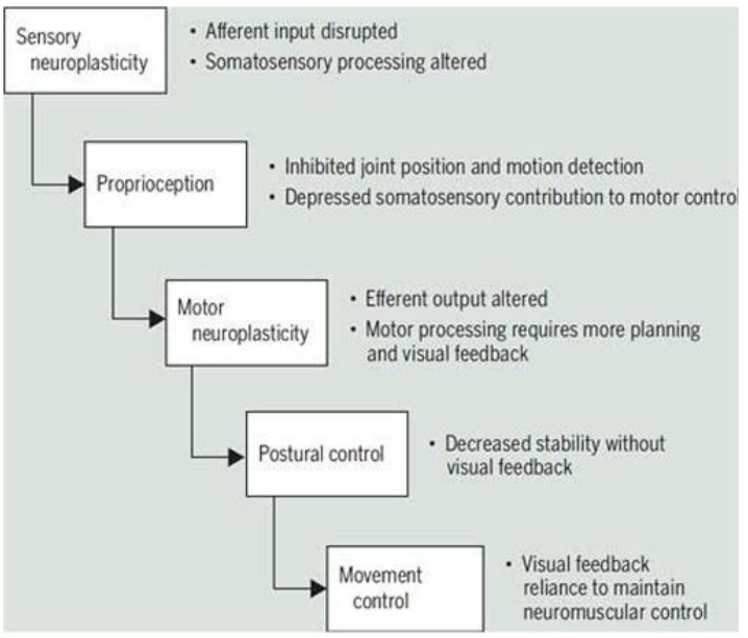
Altered sensorimotor brain connectivity in high school athletes who went on to suffer and ACL injury
ACL injured athletes exhibit increased activation of motor planning, sensory processing and visual motor control areas compared to controls. This means they had a greater reliance on these things, meaning their movements were less automated and required more focus to control movement.
Decreased connectivity between cortical sensory and motor regions may result in slower processing speeds and reaction to environmental stimuli during sport
Neurocognitive Training:
Training the brain to restore normal connectivity
Exercises designed to accelerate neurocognitive processing of visual & sensory input
Neuromuscular training that incorporates visual or neurocognitive processing
Ball tracking
Decision making
Cognitive load (dual tasking)
Dual tasking- performing two or more tasks simultaneously
Results in more mistakes + Slower performance
Delays in attentional processing may contribute to inability to correct movement errors
Dual tasking during a single leg hop resulted in greater deficits
Adding a ball task to a side step cut resulted in poorer cutting technique (more trunk extension and less lateral trunk flexion toward the direction of the cut)
History of adapted sports
Who is the Father of the Paralympic Movement Neurologist?
When did the movement start and where? First sport clubs for the?
Began to rehab who?
What was the Stroke Mandeville and who organized it? It later became what?
History of Adapted Sports:
Dr. Ludwig Guttmann = Father of the Paralympic Movement Neurologist
Paralympics movement started in Berlin (1888) = first sport clubs for the deaf
Began to rehab veterans from World War II, Korea, and the Vietnam War
(1939-1945) WWII → most significant and influential event of the twentieth century
(1942) → US established the Army Air Forces Convalescent Training Program –
Dr. Howard A Rusk “Father of comprehensive rehabilitation”
Dr. Guttmann organized the first competition for wheelchair athletes which he named the Stoke Mandeville Games and later became the Paralympic Games
(1948) → Olympics London's opening ceremony
16 injured servicemen and women who took part in archery
(1960) → 1st Paralympic games took place in Rome, Italy
400 athletes from 23 countries
(1976) → First Winter Games in Paralympics held in Sweden
Now → Present Paralympic Games the Olympics will be hosted in Paris
4,400 athletes will compete / 549 medal events
Multidisciplinary Team Approach
What is it and what does it consist of?
Medical clearance
Problem solving
Preventative care
Whole health approach
Creating this village will bring more awareness
Phone a friend for help
Decreases errors
Physical Therapy Role in Adapted Sports
Evaluate and treat: _____ assessment/______ skills. What specific training and what needs?
Seating and positioning: Facilitate proper what? _____ and _____.
Preventative care: What are somethings that are focused on for preventative care? (4)
Classify for? Advocate for?
Evaluate and treat
Mat assessment/Wheelchair skills
Sport specific training
Equipment needs
Seating and positioning
1- Facilitate proper seating and positioning
2- Modify and adapt
Preventative care
Muscular skeletal injury’s
Skin integrity/ wound care
Diagnosis dependent (example: MS cooling vest)
Education on AD
Classify for athletes' participation of sport
Advocate for Adapted Sports awareness
Initial Evaluation
What would be in an initial evaluation?
Obtaining a baseline - objective measures
What sort of measures could be taken?
Initial Evaluation
Diagnosis
Mat assessment
General AROM/PROM available
What are we working with? Do we have to facilitate or inhibit movement? MMT strength? What are you working with?
History of pressure injuries
Location, stage, last occurrence, any surgeries (FLAPS)
Any tone/spasticity present
Bladder/ bowel management
Assess seating and positioning
Backrest, Cushion, Power assist, Manual/power
Assess transfers (what level of transfer?)
Obtaining a Baseline- Objective Measures
Vital signs
Weight (caliper score)
Caloric intake form
Nutritional assessment
FIM score
General Physical Exam
Psychosocial forms (GAD-7,PHQ-9)
GRECC scale
Pain scale (PCS-EN, Visual Analogue Scale, Faces PAIN Rating Scale)
Seating and Positioning
Evaluate current seating device:
When a patient arrives to clinic, what should you observe? (6)
Good seated will:
Decrease risk of what injury?
Load areas that can tolerate loading? (2)
Offload areas include? Keep an eye on common areas that are prone to? (Ex for handcycles (3), Ex for sports wheelchairs (2))
Seating and Positioning
Evaluate current seating device = Patient arrives to clinic, what to observe:
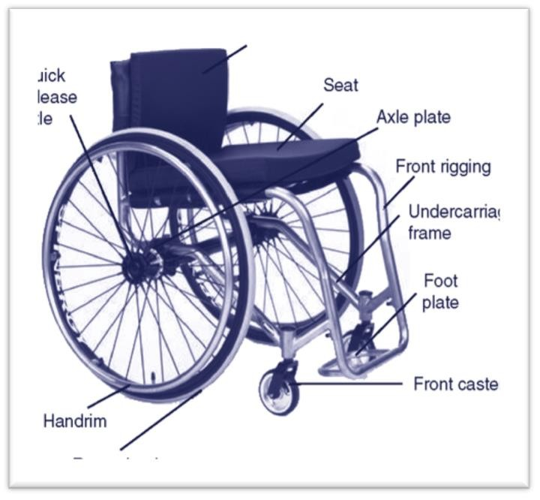
Wheelchair (solid frame/folding frame)
Dump angle if any
Backrest (sling or after-market)
Cushion type Camber (camber meaning WC with angle)
Power assist
Can be static or dynamically tested
Good seating will:
Decrease risk of pressure injury
Load areas than can tolerate loading = Femur and Glutes
Off load areas that are at risk for pressure injury
Ischial Tuberosity
Any bony prominences
Keep an eye on common areas that are prone to tissue injury
Ex) Handcycles, keep and eye on: Leg rests, Crank (transfers), Sharp areas
Ex) Sports wheelchair, keep an eye on: Seating and positioning, Backrest
SCI injury:
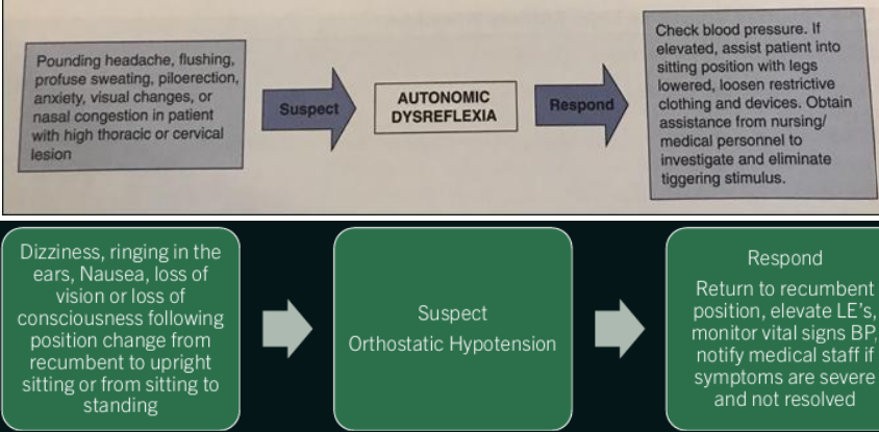
Autonomic dysreflexia: Occurs with an SCI above what level? What is boosting? S/S (4)? Can be?
SCI Injury
Autonomic Dysreflexia: Occurs with an SCI injury above T5-T6
Boosting (Is the method used in adapted sports to enhance performance)
S/S: High BP, Change of HR, Skin color change (paleness, redness, blue grey skin color), Excessive sweating
CAN BE LIFE THREATENING!
Transfers
Baseline review - Evaluation
Observe what?
General eval consists of? (3)
Subjective should ask? (3)
Objective should look at? (2)
Transfers
Baseline review - Evaluation
Observe equipment
General eval:
MMT strength
Available ROM
Tone
Subjective:
What do they use at home?
Floor to wheelchair?
Any recent sx?
Objective:
Functional mobility testing
Observe transfer
Skin integrity
What patients are at increased risk? What can a poor transfer lead to? (6)
Preventative care tips
Important safety checks:
Use proper body what?
Using the appropriate what?
Make sure to be aware of what you are?
Check what?
postural check via what inspection?
Protective ______ if necessary
Skin Integrity
↑ risks (patients with abnormal sensation)
Poor transfer can lead to:
Pressure Injury
Deep tissue injury
“Dragulation” shearing tissue injury
Skin tears
Inpatient admission for wound care
Risk of becoming septic and death
Preventative Care Tips
Important safety checks
Using proper body mechanic
Using the appropriate AT equipment
Make sure to be aware of what your seating on
Catheter check
Posture check -visual inspection
Protective dressing if necessary
Types of Transfers
Transfers independently or with assistance
In and out of a wheel chair:
What two pivots can be used? Which one has a technique and item that can be implemented to make it easier (and what are both of those things)
What could be classified as “high tech” transfers? Examples? (4)
What is the last type of transfer?
Perfect transfers
Level of current transfer from where to where?
Practice what?
Have what equipment available? (3)
Types of Transfers
Transfers independently or with assistance
In and out of wheelchair
Sitting pivot
Head and hip technique
Sliding board
Standing pivot
High tech. Mechanical lifts
Hoyer lift
Sure-hands lift
Car jack
Hydraulic lifts
Low tech
Perfect Transfers
Level of current transfer from w/c to mat
Practice floor to w/c
Have equipment available
Boxes (for step system)
Gait belt
Other therapist assistance
Adapted Sports Therapeutic Exercises
Explain “Modify and adapt”
What wheelchair skills? (4)
CrossFit would include? (4)
Candidates for adaptive fitness
Appropriate candidates would include? (5)
Risk factors/contraindications
This would include what three things?
Adapted Sports Therapeutic Exercises
Modify and adapt
Don’t get stuck, just improvise
Same exercises just with a little modifications
Wheelchair Skills
Propulsion, Wheelies, Cone drills, Figure-8
CrossFit
Split ropes, Burpees, Dips, Deadlifts
Candidates for adaptive fitness
Appropriate: Motivated, Medically cleared, Compliant, Access to WIFI and smart device, Time management skills
Risk Factors/Contraindications:
Poor compliance
Active tissue injury
Medically unstable
Equipment required to begin a successful adapted fitness program
Equipment alternatives for the following:
Medicine ball
Split ropes
Kettle bell
Space
High-tech and low-tech equipment
Low-tech alternatives for the following high tech:
Sur-grips
Protective lap pad
All sports wheelchair
Equipment required to begin a successful adapted fitness program
Medicine ball → Gallon of milk, sports ball
Split ropes → DIY: Regular Jump rope, scissors, duct tape
Kettle bell → Dumb bell, ankle weights, water bottle
Space → Inside or outside
High-tech and low-tech equipment
Sur-grips → Coban, Velcro, straps
Protective lap pad → Towel, roll, pillow
All sports wheelchair → Manual wheelchair
3 Movement exercises
Split ropes
Requirements: What equipment? What modify and adapt equipment? (4)
Actions: Hold hands where? Biomechanics include slight GH ______, elbow ______, wrist ______.
Goals: Good what workout? Transitions to?
Wall ball
Requirements: What equipment? What modify and adapt equipment? (3)
Actions: How does it work? If unable to preform safely, modify to? (2)
Goals: Amount of what completed correctly in how many seconds to win?
Burpees
Requirements: What equipment? What modify and adapt equipment? (3)
How does it work? If unable to preform safely, modify to? (4)
Goals: Amount of what completed correctly in how many seconds to win?
3 Movement Exercises
1- “Split Ropes”
Requirements:
Equipment: split ropes
Modify and Adapt equipment:
Sure-grips, Velcro, coban
DIY jump ropes
Action:
Hold hands slightly to the front
Biomechanics: Slight GH Abduction, eblow flexion, wrist Adduction
Goal:
Good cardio workout
Transition to next movement
2- Wall Ball
Requirements:
Equipment: Medicine ball/Slam ball, Lap Board
Modify and Adapt equipment:
Body point strap for posture stability
Lap board protection alternatives → towel, pillow
Action:
Lift slam ball (or alternative) to full extension of arms
Throw ball to the floor in front
Catch on the rebound
If unable to perform safely, modify to:
Lift slam ball (or alternative) to forward arms straight out
Restart from lap
Goal:
Amount of reps completed correctly in 60 sec to WIN
3- Burpees
Requirements:
Equipment: Optional → Medicine ball/Slam ball, Dumbbell, Kettlebell
Modify and Adapt equipment
Body point strap for posture stability
Lap board protection alternatives → towel, pillow
Action:
Lift ball (or alternative) to full extension of arms
Reach ball to the floor in front and lift over head
Repeat
If unable to perform safely, modify to:
Lift slam ball (or alternative) to overhead or shoulder height if there are shoulder issues
Restart from lap
Remove weight from exercise
Reach for toes if unable, go to knees and push off
Goal:
Amount of reps completed correctly in 60 sec to WIN
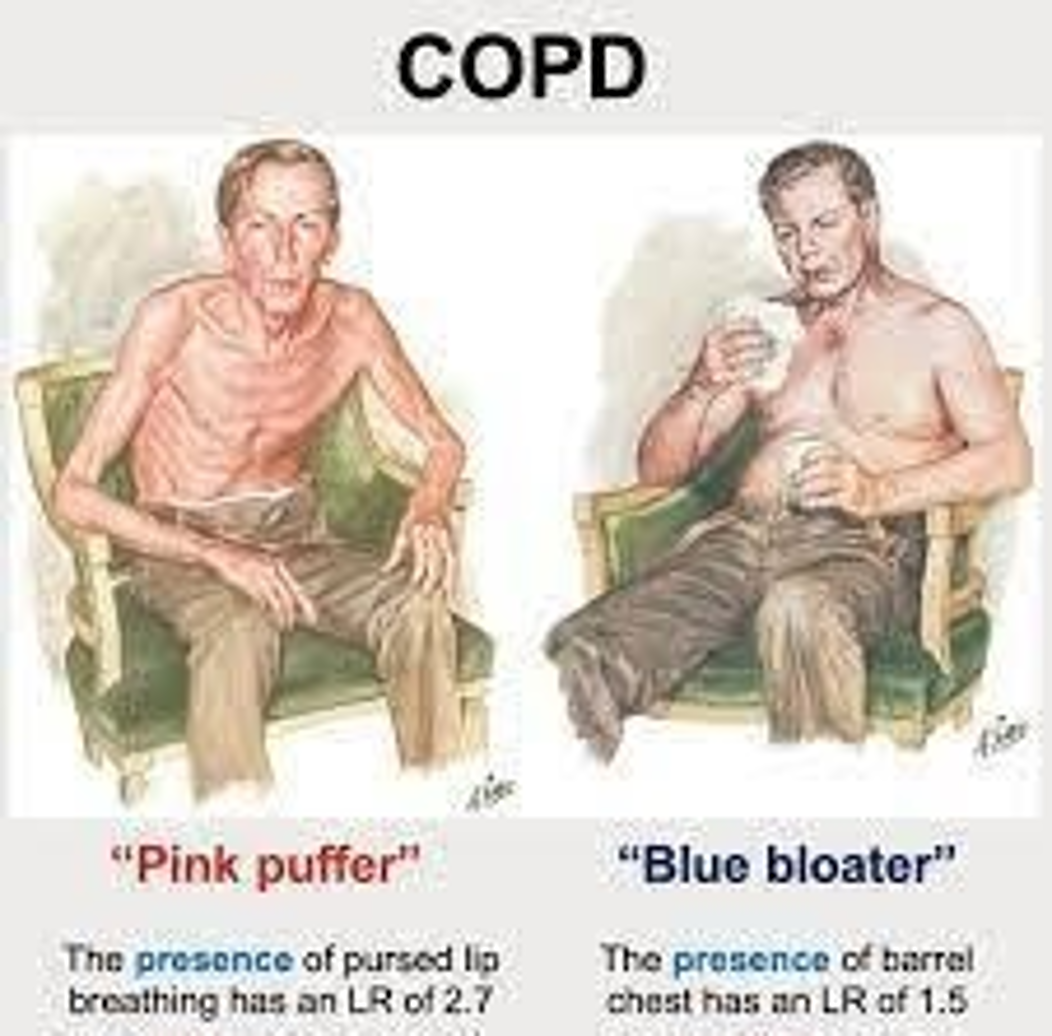
What is Pink Puffer?
Presence of what breathing?
What is Blue bloater?
Presence of what structural abnormality?
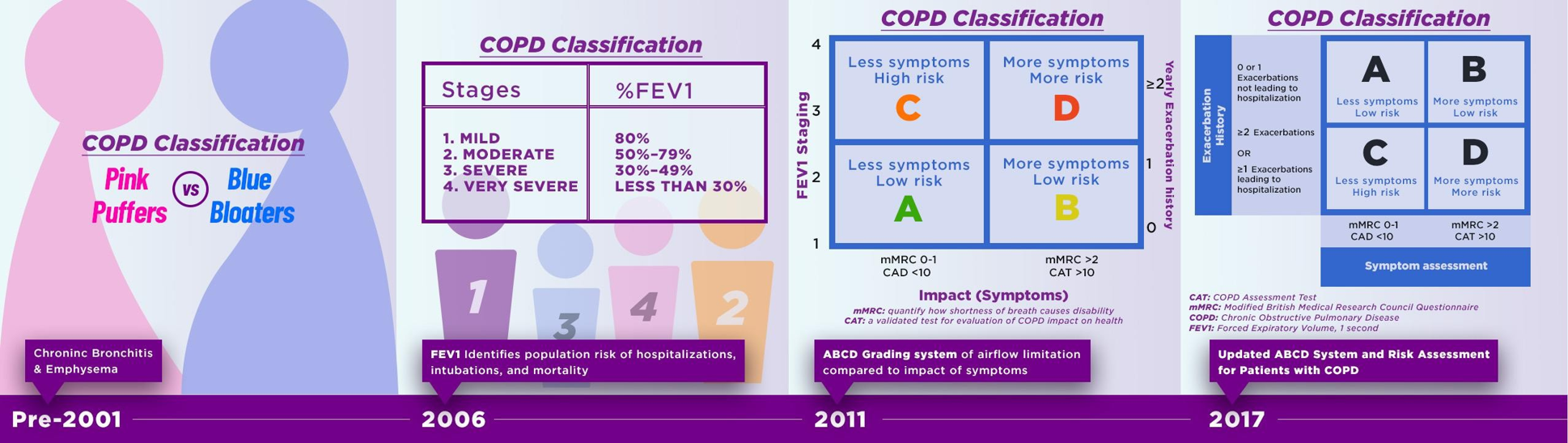
Pink puffer: Emphysema (Presence of purse lipped breathing)
Blue bloater: Chronic bronchitis (Presence of barrel chest)
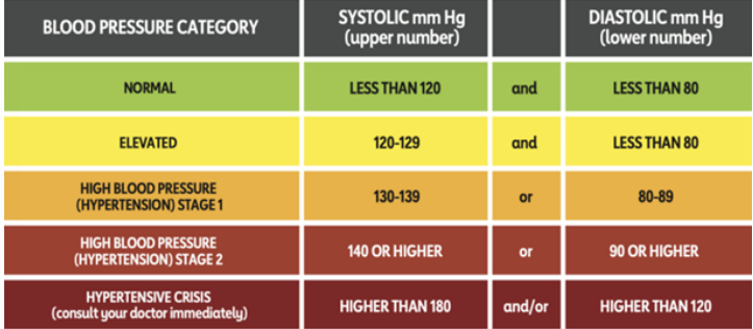
Blood pressure categories: For the following state the systolic (then either and, or, and/or) as well as the diastolic
Normal
Elevated
High blood pressure Stage 1
High blood pressure Stage 2
Hypertensive crisis
Normal
Systolic: Less than 120
AND
Diastolic: Less than 80
Elevated
Systolic: 120 - 129
AND
Diastolic: Less than 80
High blood pressure Stage 1
Systolic: 130 - 139
OR
Diastolic: 80 - 89
High blood pressure Stage 2
Systolic: 140 or higher
OR
Diastolic: 90 or higher
Hypertensive crisis
Systolic: Higher than 180
AND/OR
Diastolic: Higher than 120
Blood pressure response to exercise
What would be an abnormal response? (For BP, SBP (by how much), and DBP (by how much)
Stop if SBP exceeds what and/or DBP exceeds what?
SBP increases or decreases with hypervolemia?
Normal exercise response: How does SBP change? By how much per increase in MET? Monitor what post PT until?
Abnormal:
BP fails to increase or SBP drop of 15-20mmHG during activity.
If DBP increase suddenly by 20mmH
Stop if SBP exceeds 225 -230mmHg and/or if diastolic BP exceeds 130mmH
SBP increases with hypervolemia and decreases with hypovolemia
Normal Exercise Response:
SBP ↑ linearly; 10 mmHg per MET until physiologic maximum
Monitor BP post-PT until returns to baseline BP
Risk Stratification for Cardiac AACVPR (American Association of CV and Pulmonary Rehab)
Pt is high risk if ANY ONE or MORE of the following factors are present:
L ventricular fraction of?
Survivor of?
Complex ventricular what? Examples?
What sort of surgeries, complicated by
Abnormal hemodynamics with?
Significant silent what? ST depression of how much? S/S? (5)
Clinically significant what?
Pt is at LOW risk if ALL of the following factors are present:
L ventricular fraction of?
No resting or exercise induced what?
Uncomplicated what? (5)
Normal hemodynamic and ECG responses to?
Asymptomatic with _____ or in ______, including absence of?
Maximal functional capacity of at least how many METS?
Absence of clinical what?
Pt is at MODERATE risk if they meet neither High risk nor Low risk standards:
L ventricular fraction of?
S/S?
Mild to moderate silent what with exercise or in recovery? ST depression of?
1- Pt is at High risk if ANY ONE OR MORE of the following factors are present:
L Ventricular ejection fraction <40%
Survivor of cardiac arrest or sudden death
Complex ventricular dysrhythmias (V-Tach, frequent (>6/min) multiform PVCs) at rest or with exercise
MI or cardiac surgery complicated by cardiogenic shock, CHF, or s/s of post-procedure ischemia
Abnormal hemodynamics w/ exercise
Especially flat or decreasing SBP or chronotropic incompetence with increasing workload
Significant silent ischemia (ST depression 2mm or greater w/o s/s)with exercise or in recovery
S/S:
Angina pectoris
Dizziness
Lightheadedness
Dyspnea at low levels of exercise (<5.0 METs) or in recovery
Max functional capacity < 5.0 METs
Clinically significant depression or depressive s/s
2- Pt is at Low risk if ALL of the following factors are present:
L ventricular ejection fraction >50%
No resting or exercise-induced complex dysrhythmia
Uncomplicated MI, CABG, angioplasty, atherectomy, or stent:
Absence of CHF or s/s indicating post-event ischemia
Normal hemodynamic and ECG responses w/ exercise and in recovery
Asymptomatic with exercise or in recovery, including absence of angina
Maximal functional capacity at least 7.0 METs
Absence of clinical depression or depressive s/s
3- Pt is at Moderate risk if they meet neither High risk nor Low risk standards:
L ventricular ejection fraction =40-50%
S/S:
Angina at “moderate” levels or exercise (60-75% of maximal functional capacity) or in recovery
Mild to moderate silent ischemia (ST depression <2mm) with exercise or in recovery
Hypertension:
What is it? Found in what populations?
Prolonged high BP = can damage and cause what?
Body sends what?
Over time, substances such as ______ and _____ may also build up a these spots, forming what?
As plaque slowly builds, a process called ________, it can make the inside of the arteries what? This can cause what?
Management:
What sort of things can be done to help with this condition?
People with HTN may take what? This may impact what?
HTN:
Essentially high blood pressure
Found in all age groups
Prolonged High BP = can damage the walls of blood vessels, causing them to develop tiny tears.
Body sends special cells that stick to the site.
Over time, substances such as cholesterol and fats may also build up at these damaged spots, forming plaque.
As plaque slowly builds, a process called atherosclerosis, it can make the inside of the arteries narrower.
This narrowing can block the flow of blood, increasing the risk for serious conditions such as a heart attack or stroke
Management:
Proper exercise techniques, weight loss, and diet changes. Need lifestyle modifications
People with hypertension may take medications that impact normal heart rhythms
Impact of Medications for HTN
Beta blockers: Effect on HR? How does this occur? Clinical implications?
Calcium channel blockers: Effects on HR? How does this occur? Clinical implications?
Impact of Medications for HTN:
Beta-Blockers:
Effect on Heart Rate: Decrease heart rate (negative chronotropic effect) by slowing down the electrical impulses that cause the heart to beat.
Clinical Implications: Patients on beta-blockers may have reduced exercise tolerance due to lower heart rate response. Exercise intensity may need to be adjusted accordingly.
Calcium Channel Blockers:
Effect on Heart Rate: Some calcium channel blockers (e.g., verapamil, diltiazem) can decrease heart rate by reducing the rate of sinoatrial (SA) node firing.
Clinical Implications: Like beta-blockers, these medications can affect exercise capacity and heart rate response during physical activity.
Considerations with HTN:
Good training results at __ - __% max oxygen uptake when working out
Exercises that are contraindicated include activities that increase ______ pressure
Decreased blood flow to? Thus decreases what?
Safe things include?
Exercise with HTN:
Goal to increase what two things?
The advised intensity level to begin the program is __ - __% VO2 max
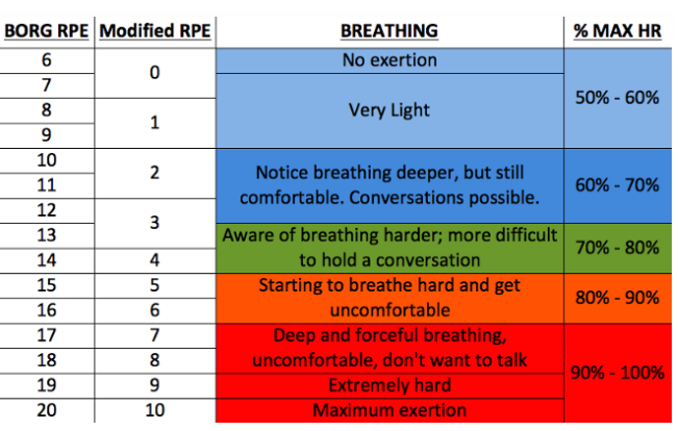
The RPE should be from what range on a 20 point scale? Eventual goal range?
Rep range should consistently be at? This will have them working at __ - __% of 1RM on exercise
Rest intervals will all be how many minutes or longer?
Will be working toward moving into __ - __ reps per set and a duration of __ - __ minutes per session
Considerations with HTN:
Good training results at a 40 – 50% max oxygen uptake when working out.
Exercises that are contradicted include activities that increase thoracic pressure.
Decreased blood flow to the heart thus decreases cardiac output.
Safe things include free weights, weight machines, body weights, or elastic bands. Aerobic exercise and circuit weight training are also allowed
Exercise with HTN:
Goal: Increase the VO2 max and ventilatory threshold.
The advised intensity level to begin the program is 40 – 50% VO2 max.
The RPE should be from an 8 – 10 on the 20-point scale with an eventual goal of 11 – 13.
Rep ranges should consistently be at 16 – 20. This will have them working at 50 – 60% of 1RM on the exercises.
Rest intervals will all be 2 – 3 minutes or longer
Will be working toward moving into 8 – 12 reps per set and a duration of 30 – 60 minutes per session
Myocardial Infarction (MI)
What happens to cardiac muscles?
Will need what referral and follow up?
Repair typically done by what 2 things?
Exercise with MI:
Goals:
Increase in what capacity and decrease what?
Reduce risk of?
Increase ability to preform what activities?
Increase muscle _____ and _____
Clients who have had a MI should not do what maneuver? Why?
MI post op considerations
Promote early what?
Use what tool? It helps promote?
What precautions?
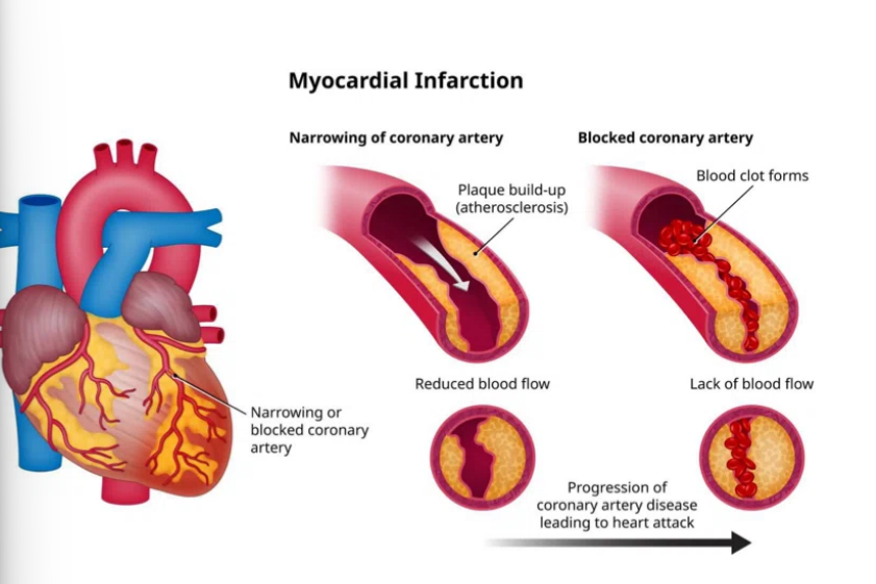
Myocardial Infarction (MI)
Cardiac muscles will potentially die during a myocardial infarction
Will need cardiology referrals and follow up
Repair typically done by percutaneous cardiac intervention (PCI) or coronary artery bypass graft (CABG)
Exercise with MI Goals:
Increase aerobic capacity and decrease BP
Reduce the risk of coronary artery disease.
Increase ability to perform leisure, occupational, and daily living activities.
Increase muscle strength and endurance.
Clients who have had a myocardial infarction should not do the Valsalva maneuver.
Patients with heart failure show an abnormal blood pressure overshoot in response to the Valsalva maneuver due to impaired ventricular function
MI post-op considerations:
Promote early mobility
Incentive spirometry
Promotes deep breathing, prevents atelectasis, and improves pulmonary function
Sternal precautions “Keep your move in the tube”
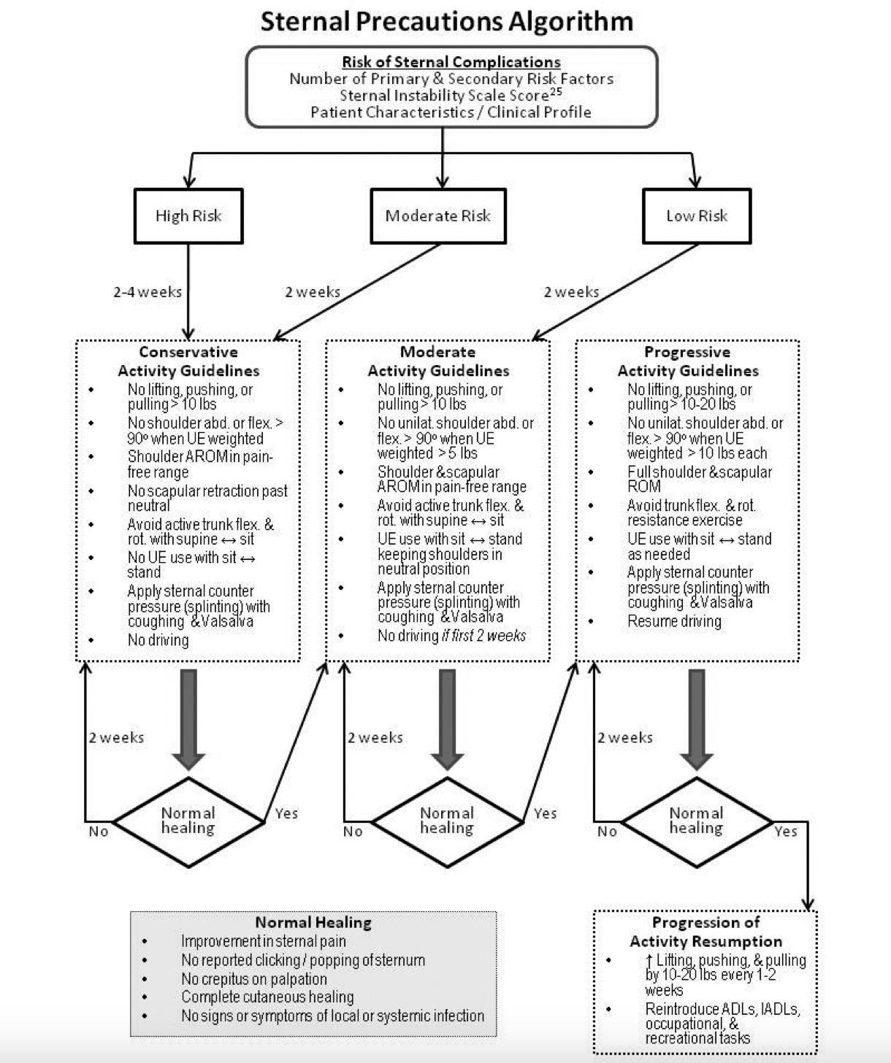
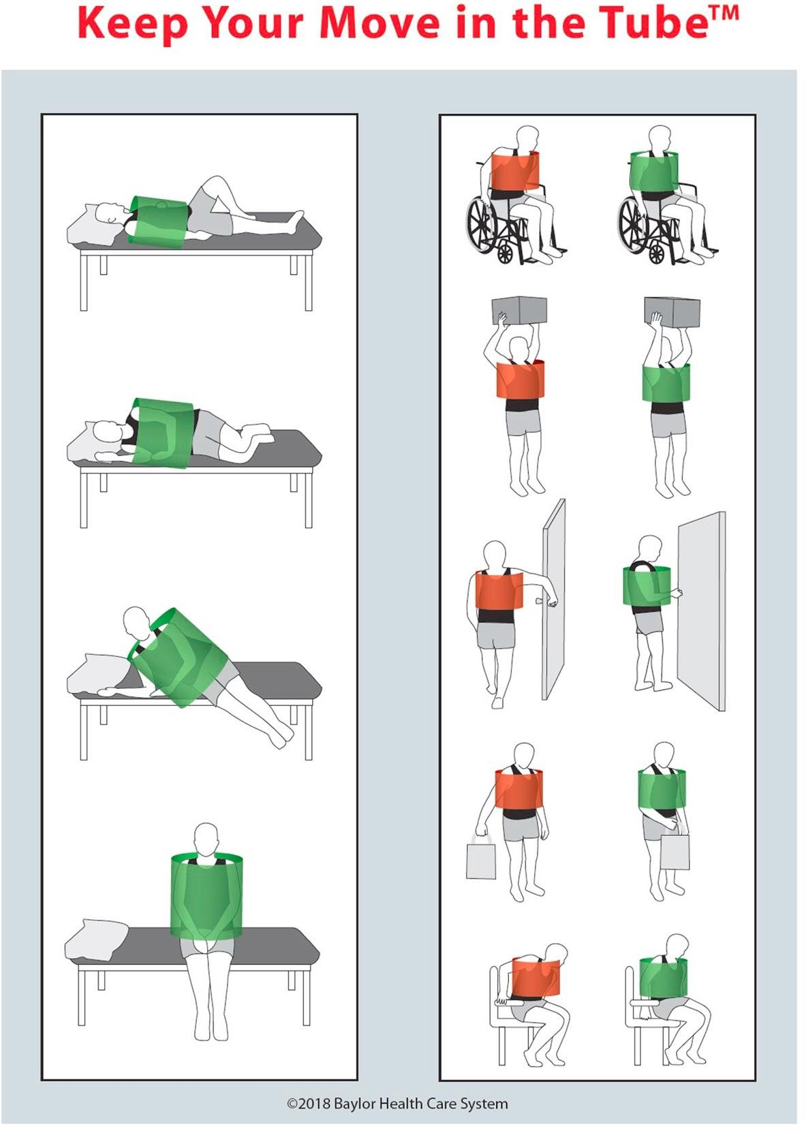
CVA (Cerebrovascular Accident)
Need to consider what about the brain?
May be easier to start with?
Exercise may begin as low at __% of VO2 max, but they may eventually reach __-__%
Sessions will be how long? What is emphasized in the program? When will the exercise be done?
What could also be another key component to consider/treat depending on what involvement?
Exercise with CVA:
Goals:
Increase what activities?
Increase strength for both what?
Increase what on the involved side?
Prevent joint ______.
CVA (Cerebrovascular Accident)
Need to consider which area of the brain was involved first!
May be easier to start with cycle ergometers
Exercise may begin as low as 30% of VO2 max, but they may eventually reach 40 – 70%
Sessions will be 5 – 60 minutes. Range of motion is emphasized in the program, and the exercise for it will be done before and after the training sessions
Pending on brain involvement coordination and balance may be other key components of intervention
Exercise with CVA:
Goals:
Increase daily living activities
Increase strength for both involved and uninvolved limbs
Increase the range of motion of the involved side
Preventing joint contractures
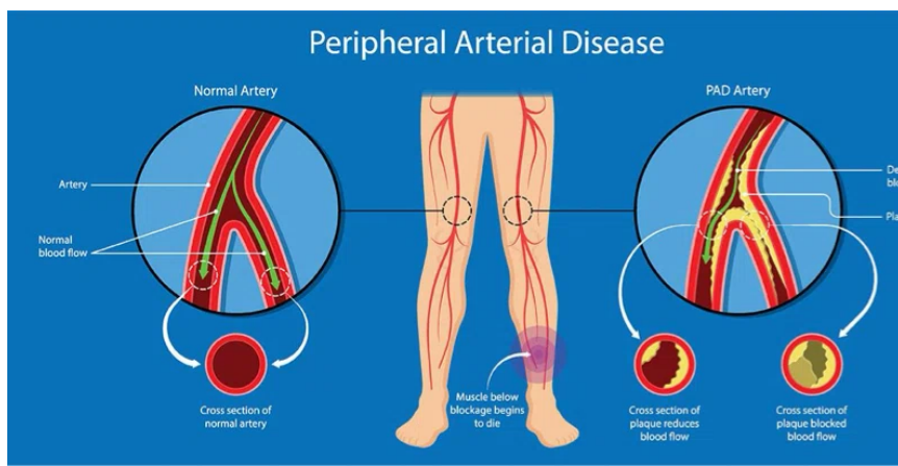
Peripheral Arterial Disease:
These patient cannot typically walk for more than how many minutes without stopping to rest due to?
At risk for?
Goals:
Improve what response?
Reduce the risk of?
Improve what?
Increase what activities?
Increase work _____ and improve quality of?
Exercise prescription:
Aerobic how many days a week? How many days of resistance training?
Should work at what intensity? __-__% of VO2
Resistance training should be __-__% of 1RM
Considerations:
Encourage patients to address all what?
What type of environment can aggravate s/s? May need longer what?
These patients cannot typically walk for more than 2 - 5 mins without stopping and resting due to intermittent claudication!
At risk for myocardial infarctions!
Goals:
Improve pain response; be active for increasingly longer periods
Reduce the risk of coronary artery disease
Improve gait
Increase daily living activities
Increase work potential and improve the quality of life
Exercise prescription:
Aerobic 3-5 days a week at least 2 days of resistance training
Should work at moderate intensity 40-60% VO2
Resistance training should be 60-80% of one rep max
Considerations:
Encourage patients to address all CV disease risk factors
Cold environments can aggravate s/s, may need longer warm-ups
Heart Failure
How many Americans have HF?
Two most common causes of HF in the U.S are?
Considerations:
Important to ____ _____ patients and know stages of HF
Important to monitor?
Start with what exercise, progressive what?
PT must prescribe _______ exercise training for pts with stable HF using the following parameters:
How many minutes a session?
__-__% peak V02 or peak work
Frequency?
How many weeks?
Mode? (3)
PT should prescribe what muscle training with what devices? For outpatients in home and clinic setting w stable HF using the following parameters:
How many minutes a day? __% maximal inspiratory pressure
How many days a week?
How many weeks?
Heart Failure
About 6 million Americans have heart failure
Two most common causes of heart failure in the U.S. are:
high blood pressure and coronary artery disease
Considerations:
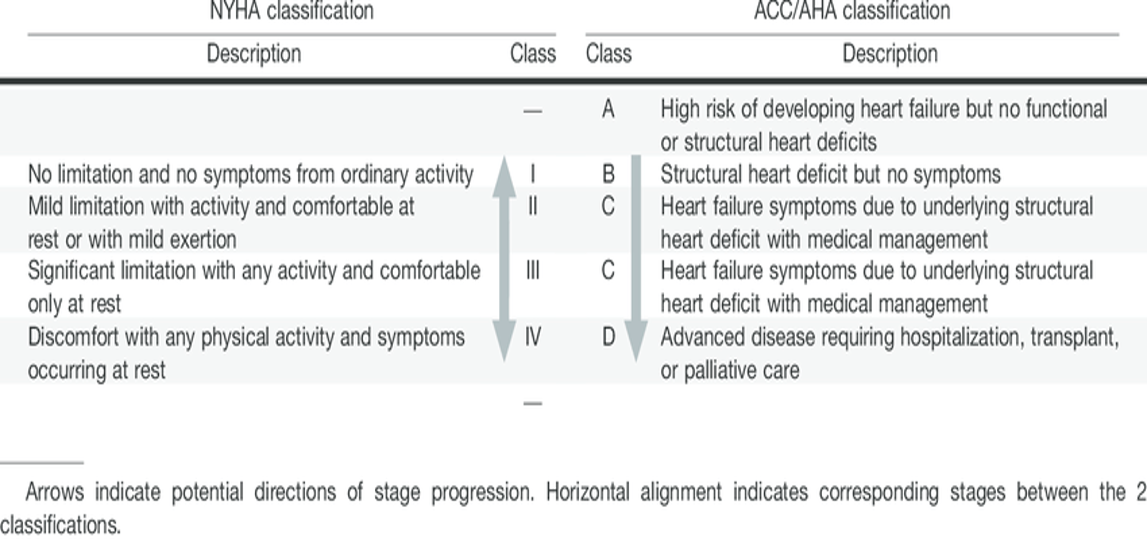
Important to risk stratify patient and know stage of heart failure
Important to monitor tolerance to interventions
Start with submaximal exercise; progressive resistance training
PTs must prescribe aerobic exercise training for pts with stable HF using the following parameters:
20-60 min
50-90% peak VO2 or peak Work
3-5x/week
8-12 wks
Mode: treadmill or cycle erg or DANCING
PTs should prescribe inspiratory muscle training with threshold devices for outpatients in home and clinic setting w stable HF using the following parameters:
30 mins/day at >30% maximal inspiratory pressure
5-7 days/week
8-12 weeks
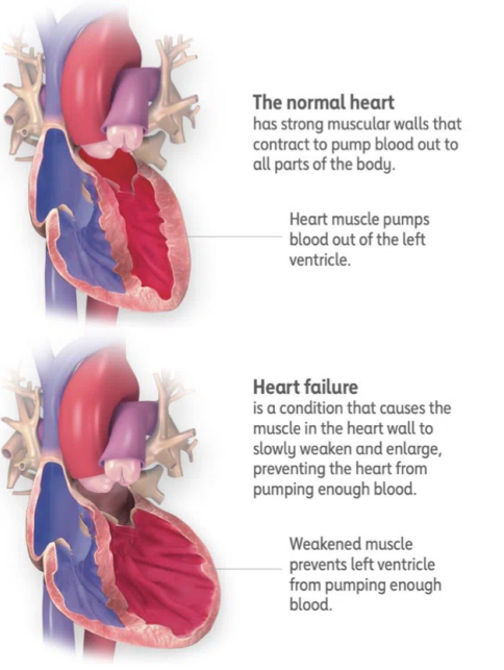
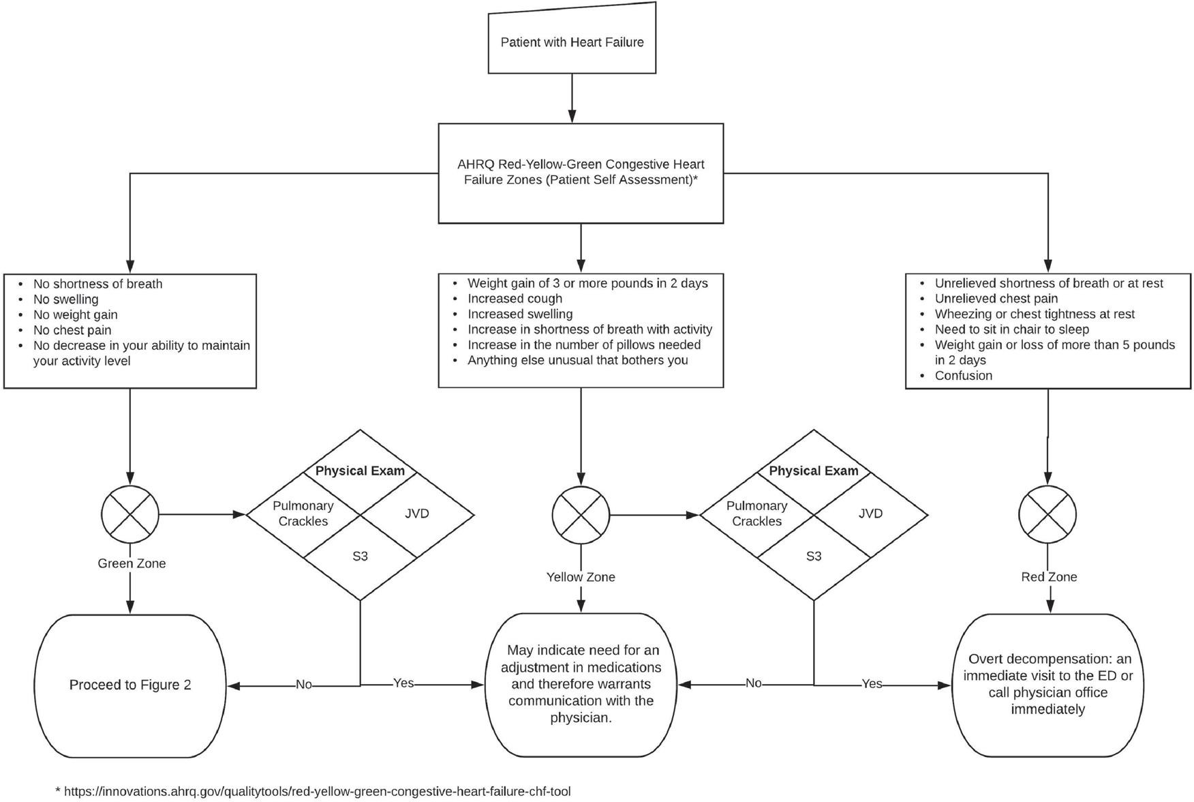
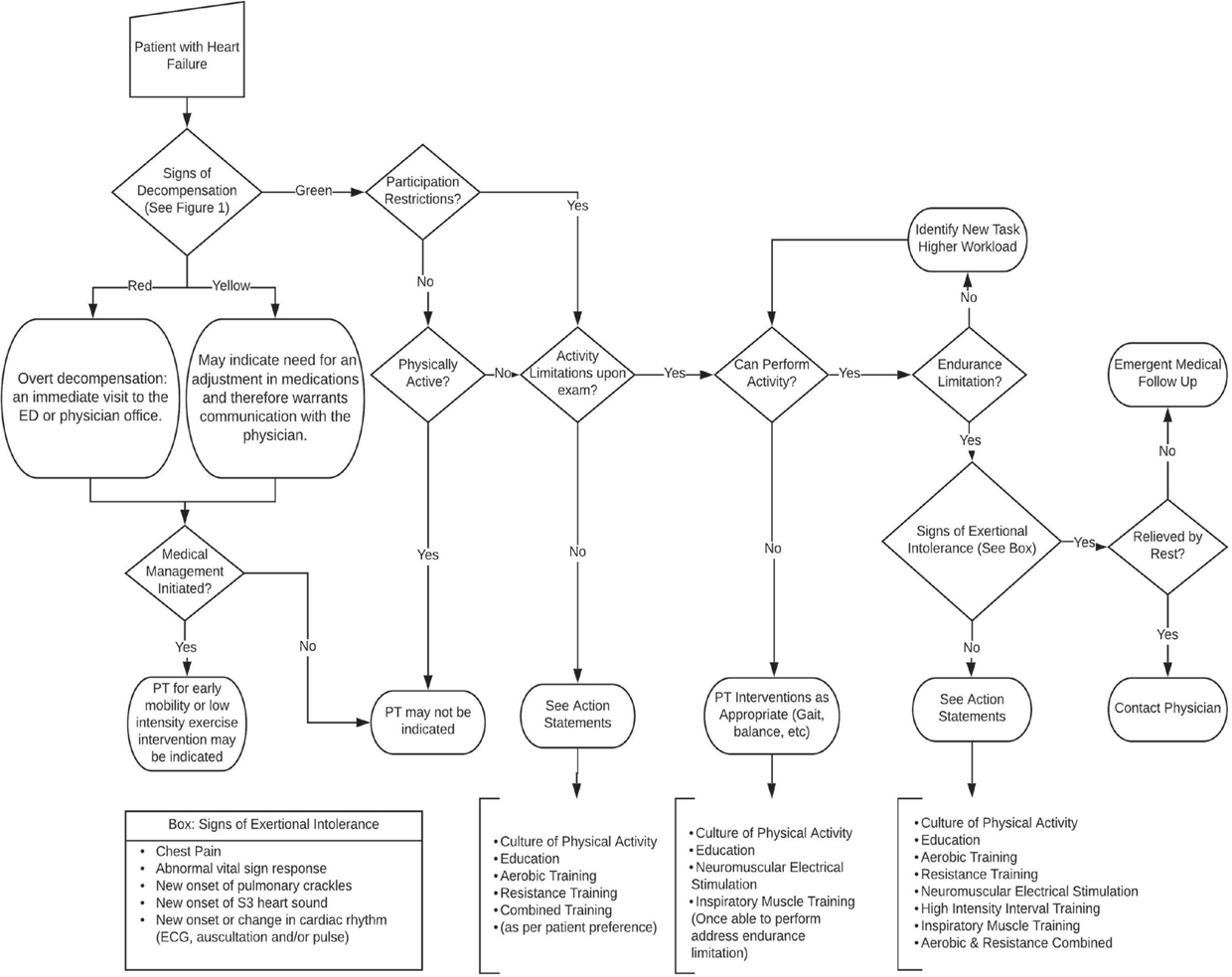
Heart failure charts
For classifications and flow charts
COPD
What is it? S/S? (4)
Considerations
After careful screening, it is safe for COPD patients with comorbidities to obtain significant and clinically relevant what?
What are some breathing considerations for treatment? (3 in total. Which one is for inspiratory muscle training and which one is for segmental breathing)
Exercise parameters
Aerobic: at least how many days a week? __-__% of VO2? For moderate to severe COPD, __% is a better start
Resistance training: Strength __-__% 1 RM max for beginners. __% for experienced. <__% for endurance
Start training around how many minutes and build to a goal of how many minutes?
Additional considerations
What other impairments might this patient have besides pulmonary involvement? (3)
For each one what could help?
What if your patient is on supplemental oxygen?
Goal is to enhance what efficiency?
Use what exercises and why?
Important to monitor what?
COPD
Chronic inflammatory lung disease that causes obstructs airflow from the lungs
Symptoms include:
Breathing difficulty, cough, mucus (sputum) production and wheezing
Considerations:
After careful screening, it is safe for COPD patients with comorbidities to obtain significant and clinically relevant improvements in functional exercise capacity and health status after an exercise-based pulmonary rehabilitation program.
Breathing considerations for treatment:
Pursed lip breathing
Deep breathing exercises
Diaphragmatic breathing
Inspiratory muscle training
Segmental breathing
Exercise parameters:
Aerobic at least 3-5 days a week
50-80% of VO2
For moderate to severe COPD, >60% better start
Resistance
Strength: 60-70% 1 RM max for beginners
80% for experienced
<50% for endurance
Start training around 20 minutes and build to goal of 60 mins
Additional Considerations:
What other impairments might this patient have:
Cognition
Adherence to HEP
Visual changes
Home environment
Fall risk
Tai chi
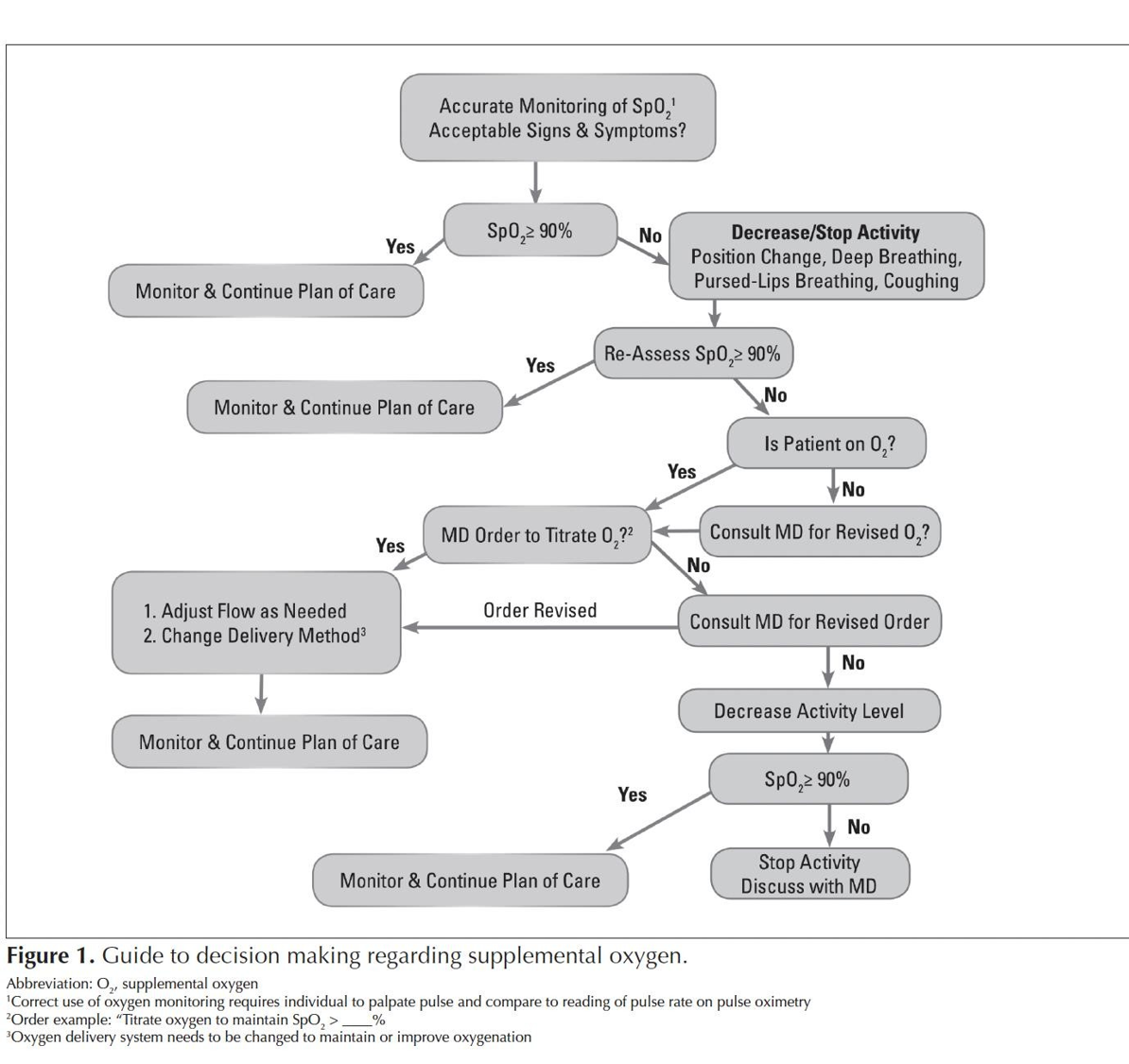
What if your patient is on supplemental oxygen?
Goal is to enhance oxygen efficiency
Use breathing exercises to improve overall respiratory function and reducing dyspnea
Important to monitor tolerance to interventions!
Cystic fibrosis
Defect in the gene that impede the ability of _____ to move to the cell surface? This mean it cannot do what to the surface? This leads to mucus in the organs to?
__% of CF death are cause by?
Obstructive or restrictive of pulmonary system?
______ involvement
Treatment goal: decrease _____ _____ due to abnormal ______ secretions and progressive inflammation secondary to chronic _____ ______.
What leads to chronic persistent infection? Which is the most common and which has worse prognosis?
What medication?
Airway clearance via what techniques?
What muscle training?
In childhood: What breathing technique? What two devices? What drainage? Active cycles of?
For the device, what are two contraindications?
Higher activity levels associated with slower decline rate of?
In adolescence: Focus on airway ____, Exercise participation monitor for? Higher incidence of? Balance issue due to?
What are some S/S of CF? (5)
CF:
Defects in the gene impede the ability of chloride to move to the cell surface à chloride cannot attract water to the surface à mucus in organs thick and sticky
90% of CF deaths are caused by pulmonary compromise
Obstructive (?)
Multisystem involvement
Treatment:
Tx Goal: Decrease airway obstruction due to abnormal mucus secretions and progressive inflammation secondary to chronic bacterial infections.
Antibiotic resistance leads to chronic, persistent infection.
Most common pathogens:
P. aeruginosa
B. cepacia (worst prognosis)Medications: Trikafta
Airway clearance (chest physiotherapy techniques)
Inspiratory muscle training and exercise
In childhood: Huffing, PEP, oscillating PEP (Flutter or Acapella), autogenic drainage, active cycles of breathing
Contraindication for PEP: undrained pneumothorax & frank hemoptysis
Higher activity levels associated with slower decline rate of FEV1
In Adolescence: Airway clearance, exercise participation monitor for pulmonary decline
High incidence of urinary incontinence
Balance issues due to ototoxcity
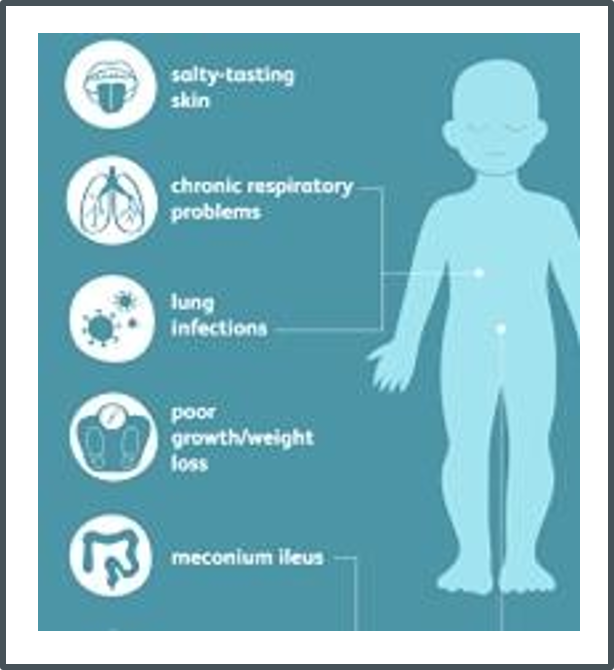
S/S: Salty tasting skin, chronic respiratory problems, lung infections, poor growth/weight loss, meconium ileus (bowel obstruction in newborns caused by abnormally thick and sticky meconium (the baby’s first stool) blocking the small intestine)
Asthma
Disease of _____ and ______ airways. Defined by three characteristics:
Airway ____ that is reversible in what two ways?
Airway ____
Airway hypersensitivity to ______ or ______ stimuli
Explain both stimuli and give some examples
_____ component however does not account for all types and severity of asthma
This reversible airway disease is associated with hyperactivity and is characterized by ease of developing what two things (or both)?
Intensity needs to be monitored using what and what sense?
Important to use breathing techniques such as? This is to optimize what and reducing what?
What type of aerobics helps, and it improves what two things? We want this so they have a decrease in what and an increase in what?
Should maintain and RPE of what value, and they are monitored the whole time for?
What resistance program are recommended?
_____ loads and _____ reps, and take place how many days a week?
Medical management: Short term
goal is to manage what? What drug is used to do that (relaxes what in the airways providing immediate relief for 5 minutes?
What are some adverse effects from this medication (4)?
If used more than 2 times a week, focus on what management?
Severe asthma attack that does not respond to this drug may develop what? Why is this significant?
Medical management: Long term
Goal is to address what?
What is the drug of choice to manage long term?
What are some adverse effects of this medication?
Asthma
Disease of large and small airways that is defined by 3 characteristics
Airway obstruction that is reversible spontaneously or with pharmacological intervention
Airway inflammation
Airway hypersensitivity to intrinsic or extrinsic stimuli
Intrinsic: Non allergic. Viral infections, exercise, inhaling irritants, emotional stress, weather and climate changes
Extrinsic: Allergic. Pollen, mold, dust, animal dander, smoke, drugs, foods
Genetic component however does not account for all types and severity of asthma
This reversible airway disease is associated with hyperactivity and characterized by ease of developing bronchospasm, constriction, or both.
Intensity needs to be monitored with the RPE scales and the sense of having shortness of breath.
Important to use breathing techniques such as diaphragmatic breathing to optimize breathing mechanics and reducing respiratory muscle fatigue.
Large muscle aerobics helps to improve the VO2 max endurance. This will help decrease in shortness of breath and an increase in daily living activities.
Should maintain an RPE of 11 – 13 and they will be monitored the whole time for dyspnea.
General resistance programs are recommended.
Lighter loads and more reps and take place 2 – 3 days per week.
Medical Management
Short Term Management: goal is to manage bronchoconstriction
Bronchodilators are the drug of choice - relax the smooth ms of the airway providing immediate relief within 5 minutes
AEs: tachycardia, HA, nausea, anxiety
If used > 2x/wk, focus on long term management
Severe asthma attack that does not respond to bronchodilator may develop status asthmaticus, a life-threatening emergency
Long Term Management: goal is to address the triggers that cause the bronchial hyperresponsiveness and underlying inflammatory response
Inhaled corticosteroids are the drug of choice
AEs: nervousness, HA, dizziness, trembling, mouth dryness, heartburn, nausea, restlessness, insomnia, difficulty concentrating