ch 4 integument dissection
 Call Kai
 Learn
Learn Practice Test
 Spaced Repetition
 Match
Match Flashcards
 Knowt Play
1/9

There's no tags or description
Looks like no tags are added yet.
Name | Mastery | Learn | Test | Matching | Spaced | Call with Kai | Chat |
|---|
No analytics yet
Send a link to your students to track their progress
10 Terms

Dermis
Location:
Skin (between epidermis and hypodermis)
Description:
Two layers: papillary (superficial), composed of areolar connective tissue; and reticular (deep), composed of dense irregular connective tissue
Contains appendages of skin: hair follicles and glands (sweat and sebaceous)
Contains sensory nerve endings and dense network of blood and lymphatic vessels
Includes part of hair follicle (which develops as invagination from epidermis)
Function:
Supports epidermis
Dense concentration of collagen and elastin gives skin strength
Receives general sensory stimuli (pain, touch, and temperature) via nerve endings and specialized receptors
Regulates body temperature
Comment:
Muscles of facial expression insert on dermis

Epidermis
Location:
Skin (superficial to dermis)
Description:
Keratinized stratified squamous epithelium of variable thickness
Avascular
Major cell type is keratinocyte
Thick skin has five layers (superficial to deep): stratum corneum, stratum lucidum, stratum granulosum, stratum spinosum, and stratum basale
Thin skin has four layers (stratum lucidum is missing)
Cells of stratum lucidum and stratum corneum lack nuclei
Function:
Physical barrier
Protection of underlying structures
Comment:
Also contains stem cells, melanocytes, Merkel cells, and dendritic cells
Depends on underlying dermis for nutrients (i.e., vascular supply)
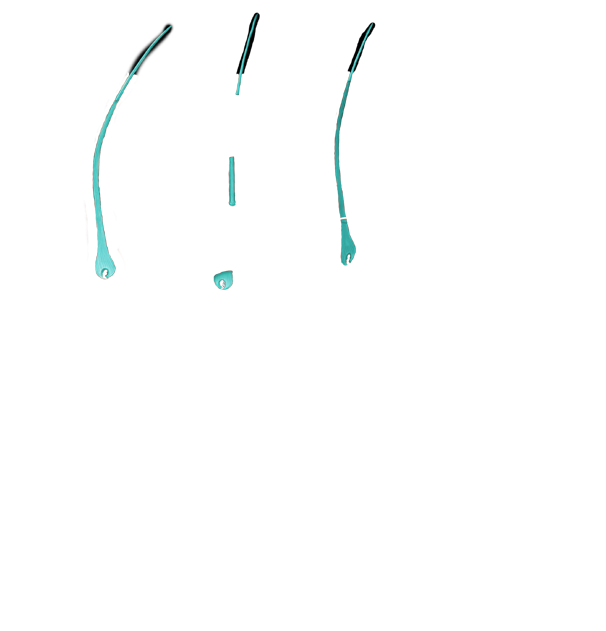
Hair
Location:
Thin skin
Description:
Accessory organ of skin
Fine, keratinized filament
Grows from oblique tube in skin called hair follicle
Each hair has three zones: bulb, root, and shaft
Projects from epidermal surface (length varies by body region)
Usually pigmented (hair color due to melanin pigment granules in hair cortex)
Function:
Protection (e.g., from sunburn)
Heat retention (esp. on scalp)
Cutaneous sensation
Dispersion of chemical signals
Facial recognition/visual identification
Comment:
Hair not found in thick skin of palms (hands) or soles (feet)
Genetic and hormonal factors determine body hair distribution
Single hair also known as pilus (plural, pili)

Hypodermis
Location:
Deep to skin
Description:
Layer of loose areolar connective and adipose tissue
Contains cutaneous nerves and blood vessels, and glands (sweat and sebaceous)
Contains lamellated (Pacinian) corpuscle (pressure receptor)
Contains portions of hair follicles associated with thin skin
Function:
Fat storage
Thermal regulation
Permits movement of skin
Also known as:
Subcutaneous tissue or superficial fascia
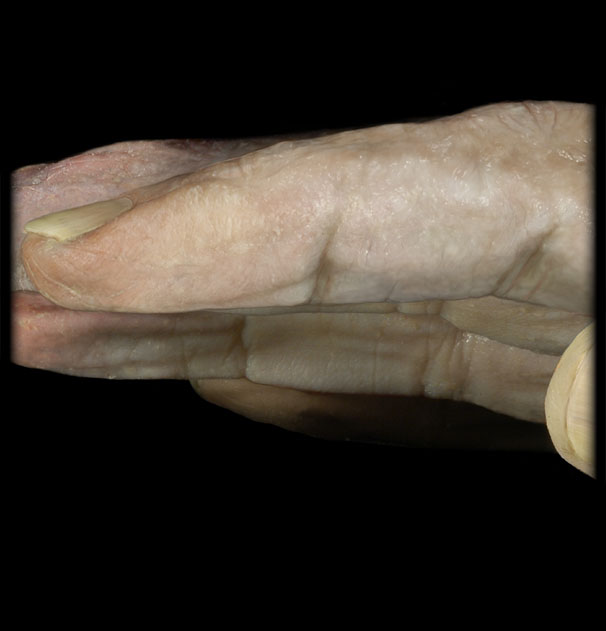
Dermis
Location:
Skin (between epidermis and hypodermis)
Description:
Two layers: papillary (superficial), composed of areolar connective tissue; and reticular (deep), composed of dense irregular connective tissue
Contains appendages of skin: hair follicles and glands (sweat and sebaceous)
Contains sensory nerve endings and dense network of blood and lymphatic vessels
Includes part of hair follicle (which develops as invagination from epidermis)
Function:
Supports epidermis
Dense concentration of collagen and elastin gives skin strength
Receives general sensory stimuli (pain, touch, and temperature) via nerve endings and specialized receptors
Regulates body temperature

Epidermis
Location:
Skin (superficial to dermis)
Description:
Keratinized stratified squamous epithelium of variable thickness
Avascular
Major cell type is keratinocyte
Thick skin has five layers (superficial to deep): stratum corneum, stratum lucidum, stratum granulosum, stratum spinosum, and stratum basale
Thin skin has four layers (stratum lucidum is missing)
Cells of stratum lucidum and stratum corneum lack nuclei
Function:
Physical barrier
Protection of underlying structures
Comment:
Also contains stem cells, melanocytes, Merkel cells, and dendritic cells
Depends on underlying dermis for nutrients (i.e., vascular supply)

Eponychium
Location:
Fingers and toes
Dorsal aspect of distal phalanx
Overlies nail root
Description:
Stratum corneum of proximal nail fold
Also known as:
Cuticle

Nail bed
Location:
Fingers and toes
Dorsal aspect of distal phalanx
Description:
Epidermal layers deep to nail plate

Nail body
Location:
Fingers and toes
Nail plate
Description:
Part of nail plate
Layers of compacted, highly keratinized epithelial cells
Corresponds to stratum corneum of epidermis
Function:
Protection for tip of finger and toe
Aids in grasping function of finger
Comment:
Nails are scale-like modifications of epidermis
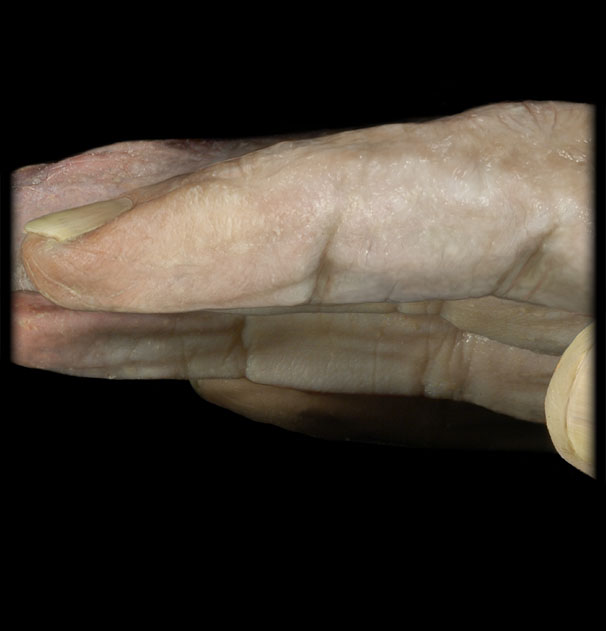
Nail root
Location:
Fingers and toes
Nail plate
Deep to eponychium
Description:
Proximal part of nail plate
Contains cells of nail matrix
Function:
Growth of nail
Comment:
Nails are scale-like modifications of epidermis