Chemistry test
 Call Kai
 Learn
Learn Practice Test
 Spaced Repetition
 Match
Match Flashcards
 Knowt Play
1/13

There's no tags or description
Looks like no tags are added yet.
Name | Mastery | Learn | Test | Matching | Spaced | Call with Kai | Chat |
|---|
No analytics yet
Send a link to your students to track their progress
14 Terms
Percent error
|experimental - theoretical | / theoretical multiplied by 100
accuracy vs precision
correctness vs consistency
solution and its two parts
Solution: uniform mixture consists of solute and solvent
Solute: substance that gets dissolved
Solvent: liquid / substance that does the dissolving
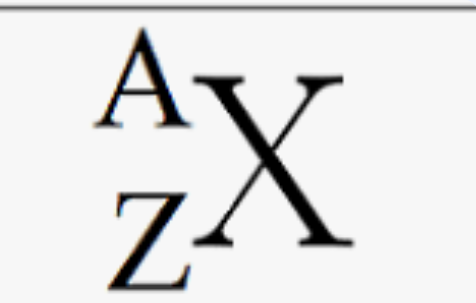
isotopic notation
top # = mass # aka # of protons + neutrons
bottom # = atomic # aka # of protons (number on the periodic table)
Sig-figs
Zeros only sig fig if: sandwich or right-right (right of a decimal and sigfig)
Addition/Subtraction: round to least amount of decimal places
Multiply/Divide: round to least amount of sigfigs
Scientific notation 10^ doesn’t count for sigfigs
intensive vs. extensive properties
intensive: do not change no matter how much of the substance you have; ex. color, temperature
extensive: change depending on size/quantity of sample; ex. volume, weight, length
physical vs chemical properties
Physical properties: observed and measured w/o changing chemical identity of sample; ex. color, length, volume
Chemical properties: observed and measured as sample changes chemical identity; ex. flammability, reactivity
how to calculate weighted average atomic mass
Multiply the relative percentage of each isotope by its molar mass then add all the masses up
how to calculate percent abundance
one isotope percentage = x, other isotope percentage = 1-x
X (Molar mass of Isotope A) + 1 -x (Molar mass of Isotope B) = WAAM (periodic table mass)
solve for x and multiply by 100
how to calculate empirical formula
turn percentages into mass unless actual masses are given
find molar masses of elements
convert #1 masses to moles using molar masses
divide all elements by smallest # of moles
check answer w/ percent composition
how to calculate molecular formula
find empirical formula
find molar mass of empirical formula
find whole # multiple by dividing empirical formula molar mass / molecular formula molar mass (given)
multiply empirical formula by whole # multiple → molecular formula
deliquesce
when the dry chemical absorbs moisture from the air and begins to look ‘liquidy’
efflorescence
when hydrates lose water to the atmosphere

periodic table families
Leftmost: alkali
Second most left: alkaline earth metals
Second most right: halogens
Most right: noble gases