Off the wakeup
 Call Kai
 Learn
Learn Practice Test
 Spaced Repetition
 Match
Match Flashcards
 Knowt Play
1/316

There's no tags or description
Looks like no tags are added yet.
Name | Mastery | Learn | Test | Matching | Spaced | Call with Kai |
|---|
No analytics yet
Send a link to your students to track their progress
317 Terms
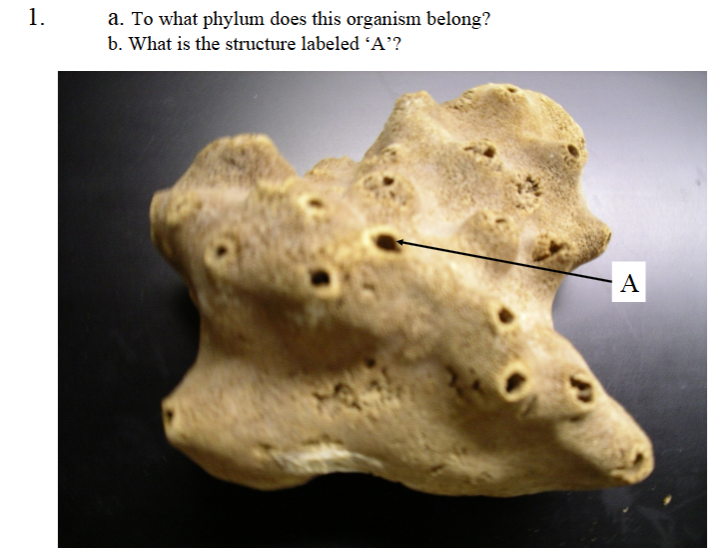
porifera
pores (ostium
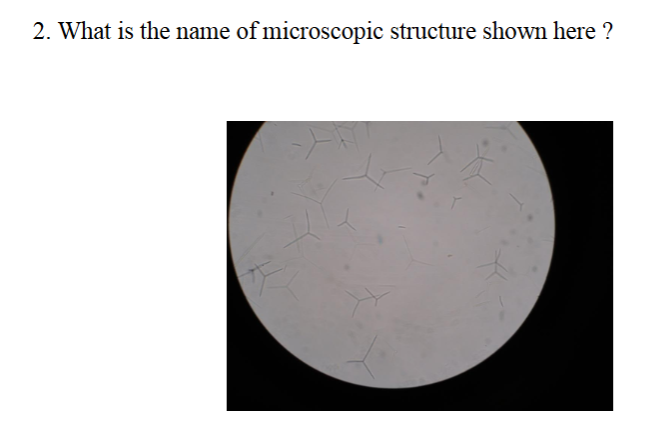
spicules of calcium carbonate skeleton
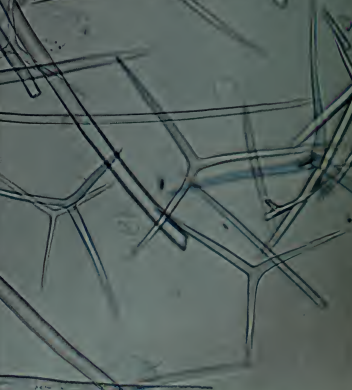
spicules of calcium carbonate skeleton/
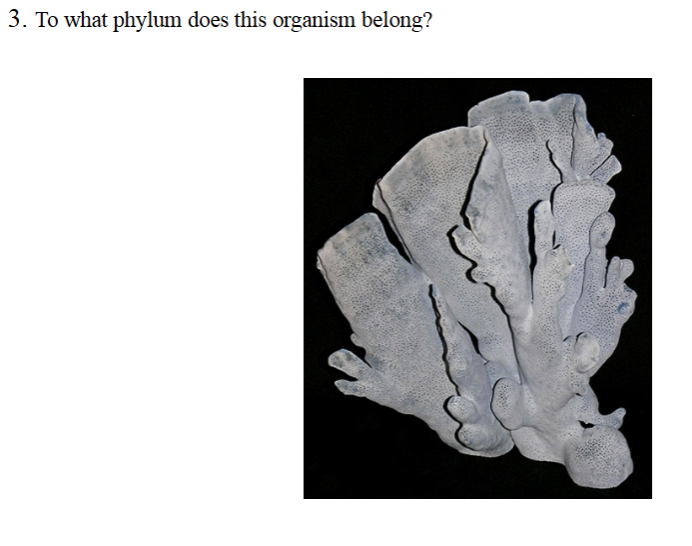
porifera
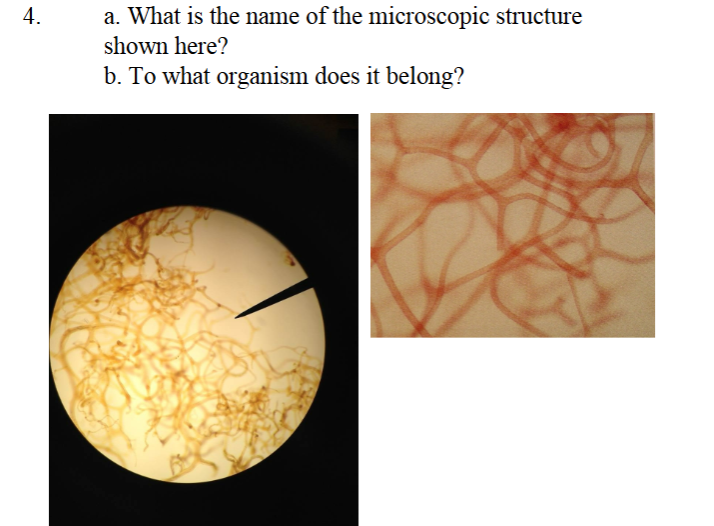
spongin fibers
sponge of porifera
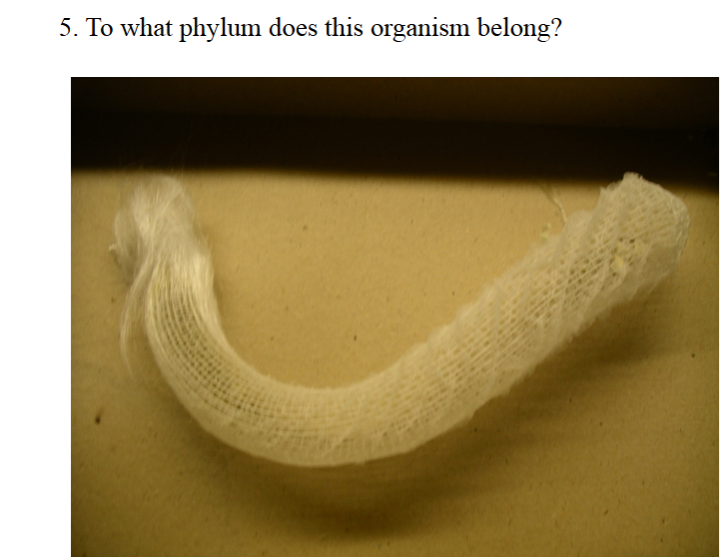
sponge skeleton of phylum porifera
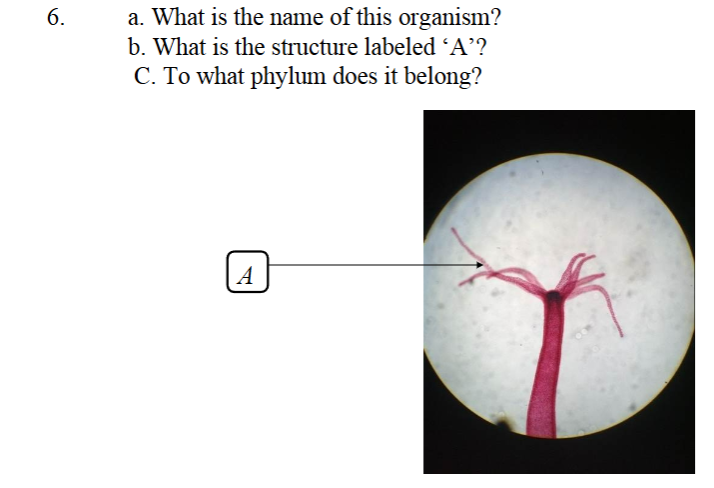
hydra
tentacle
cnidaria
what is it
what phylum
what a
what b
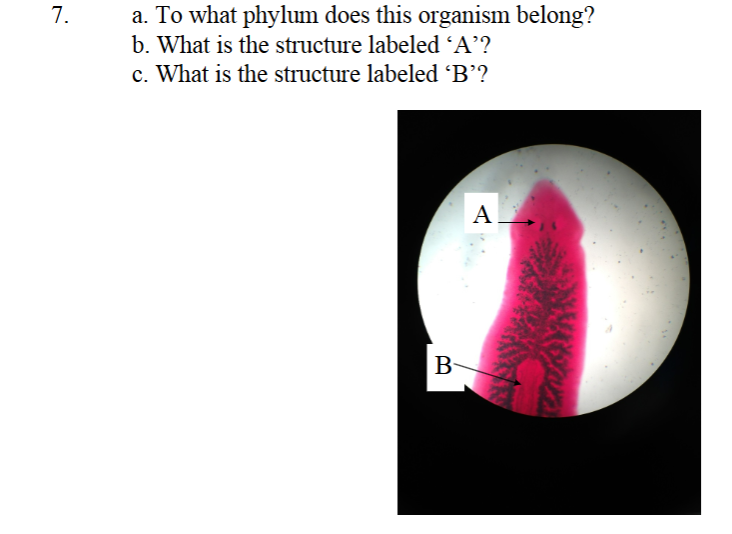
flatworm
platyhelminate
eyespot
pharynx
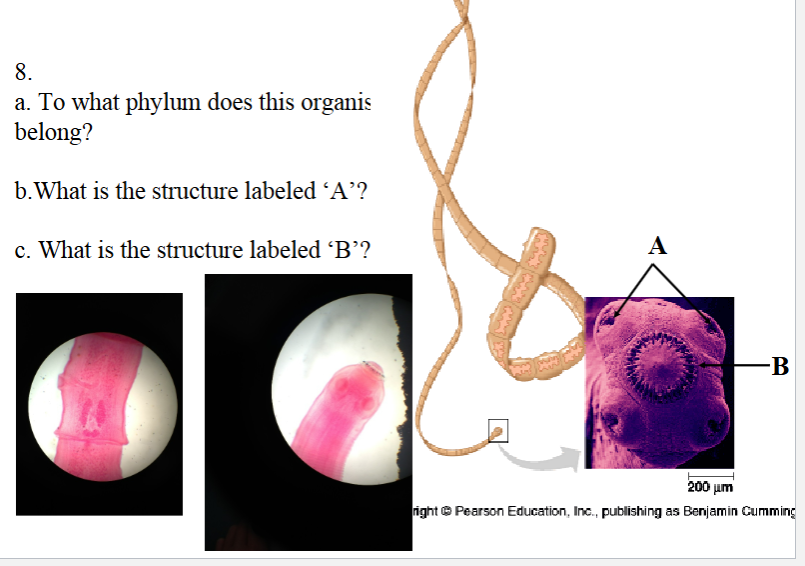
phylum Platyhelminthes
suckers
rostellum with hooks
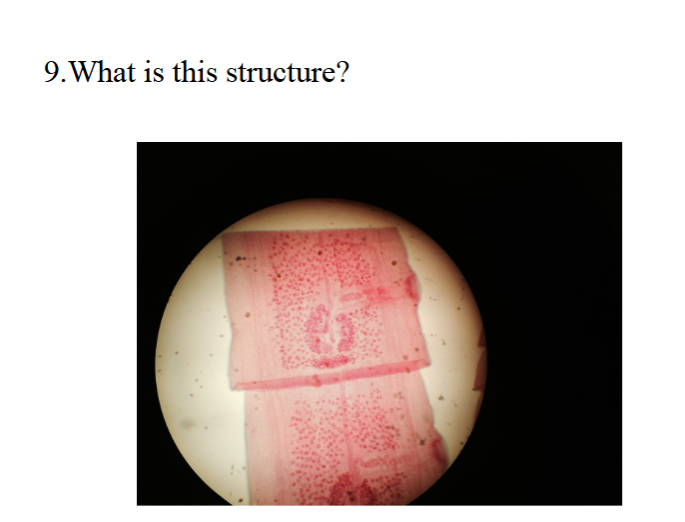
gravid proglottid
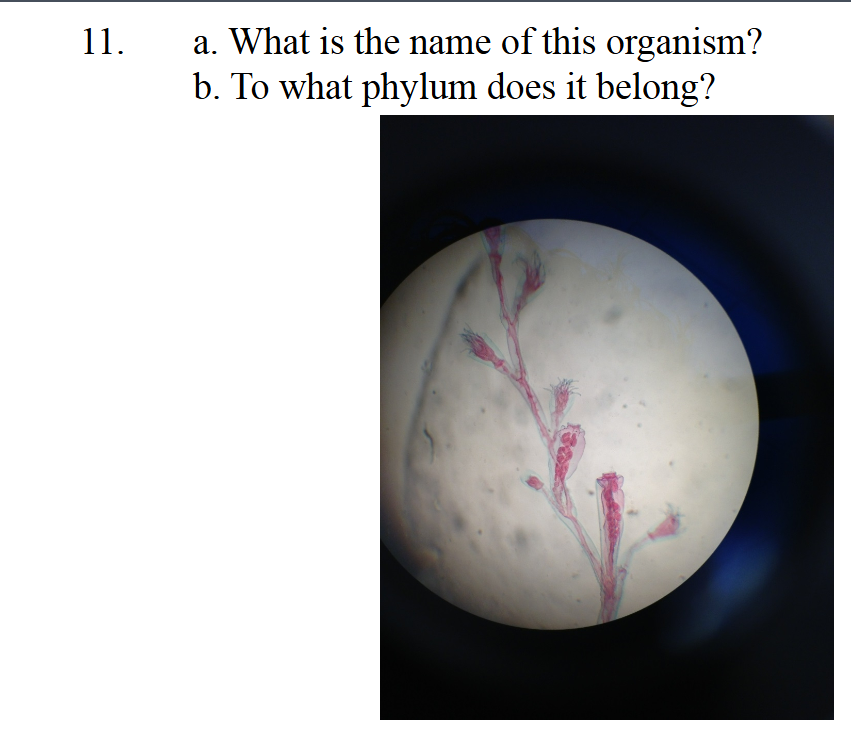
obelia
cnidaria
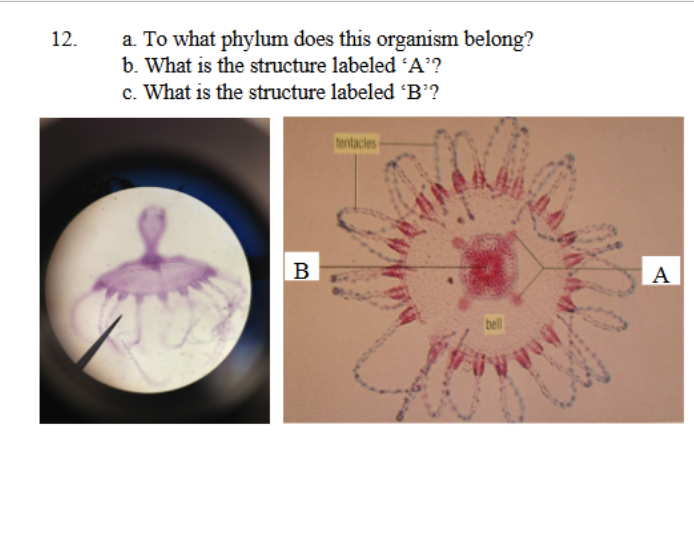
what is it
phylum
a
b
obelia medusa
cnidaria
gonads
mouth (manubrim)
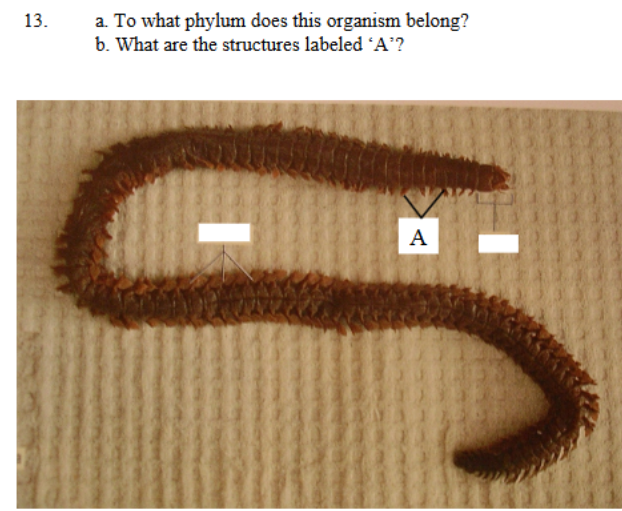
annelida
parapodia
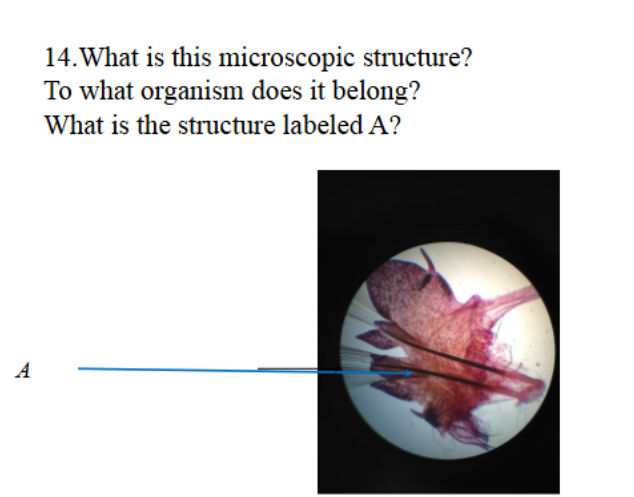
parapodium
polychaeta worm of phylum annelida
setae
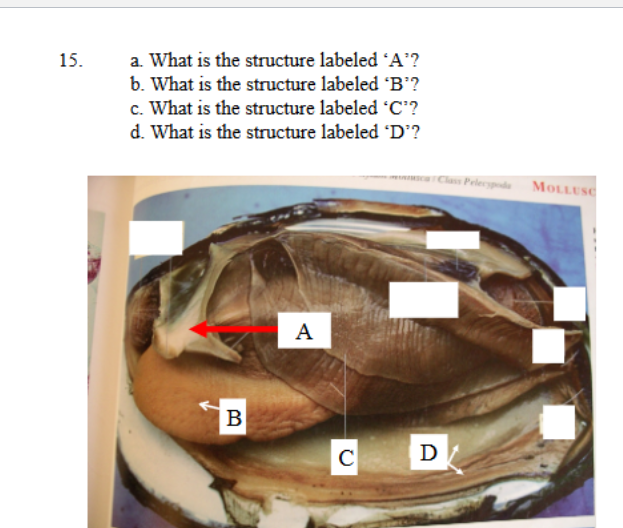
identify and define function
anterior retractor muscle=pulls body forward
muscular foot=movement
gills=gas exchange
right mantle=secrete shell material
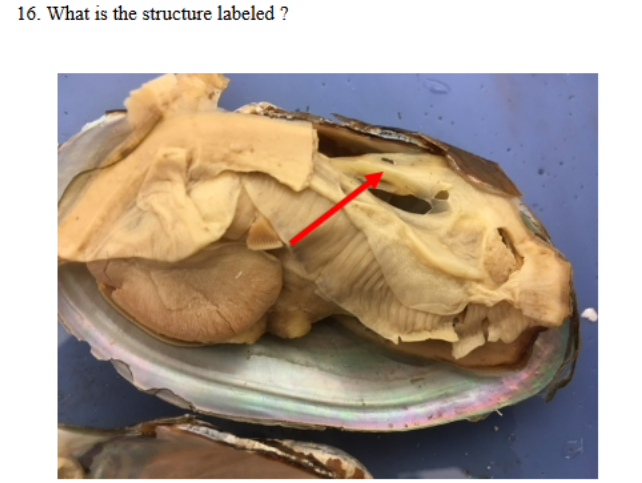
maybe pericardial sac
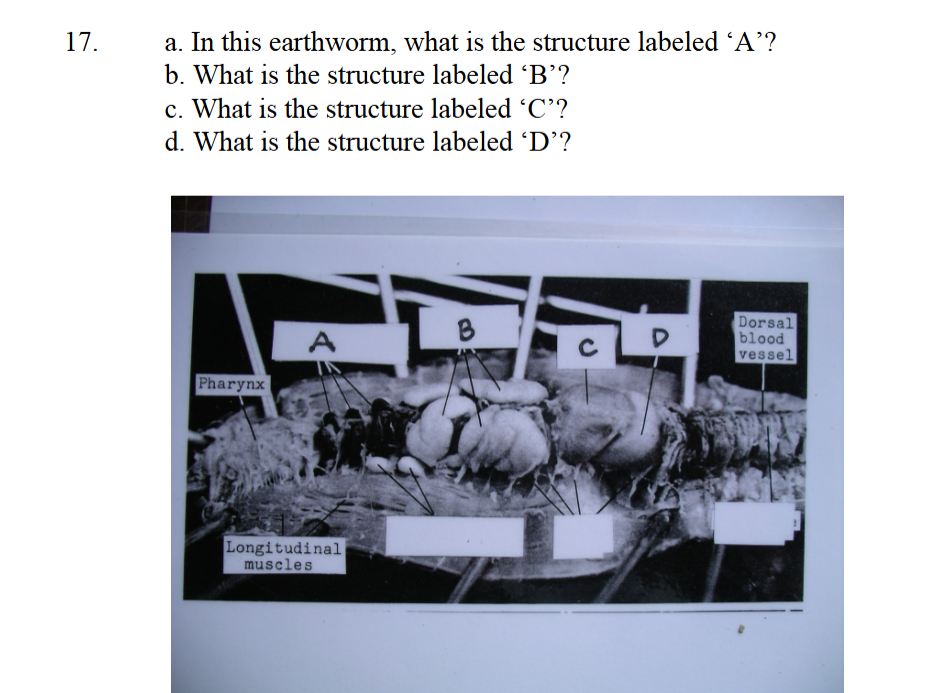
maybe
aortic arche
seminal vesicles
crop
gizzard
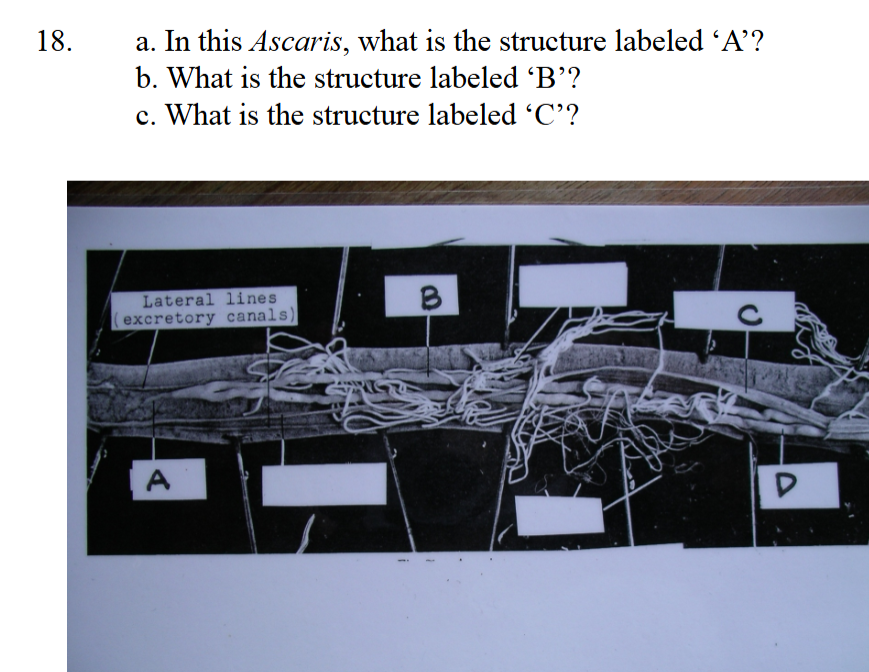
maybe
vagina
uterus
intestine
uterus
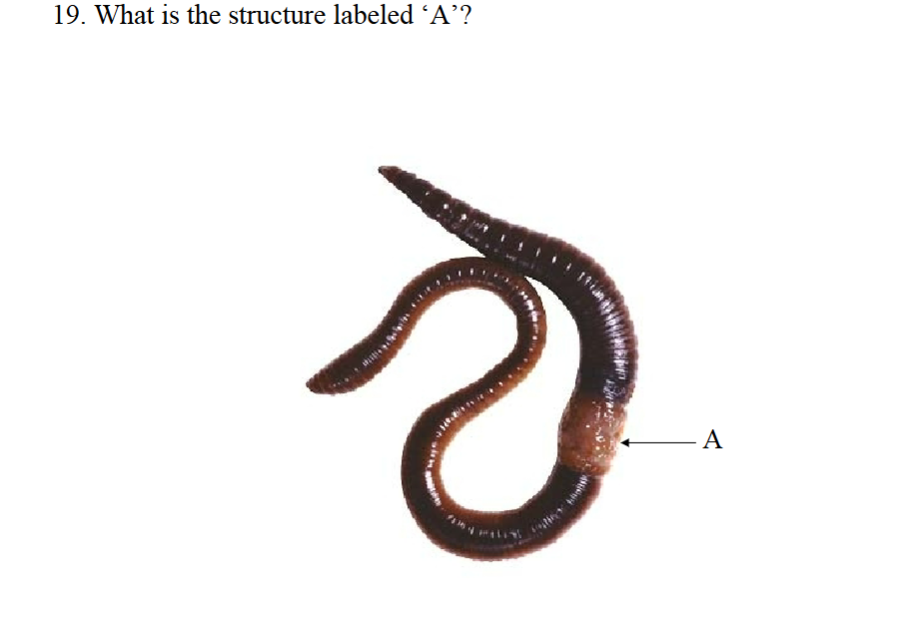
clitellum
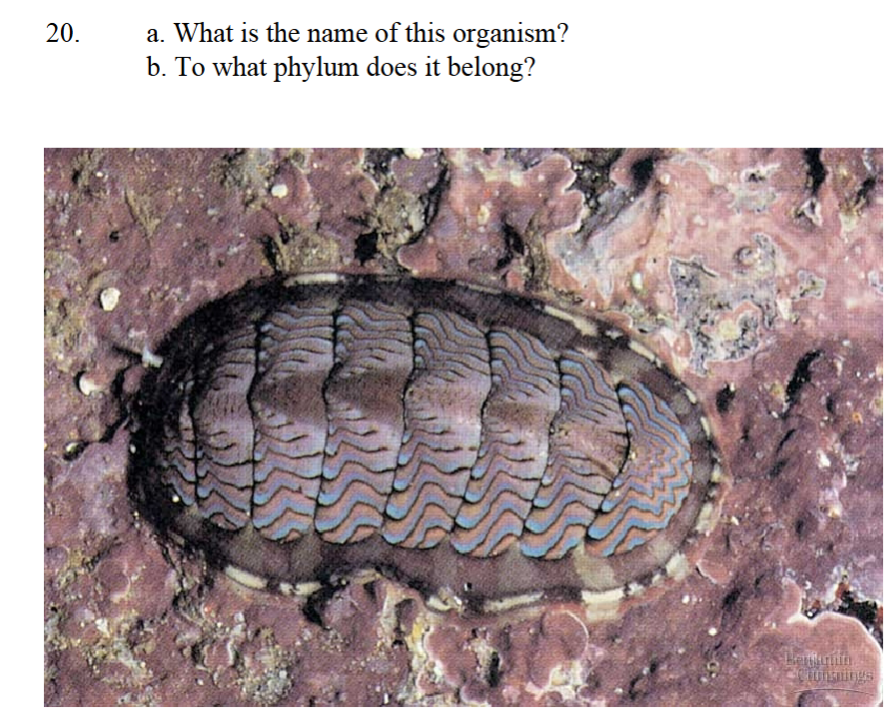
chiton
mollusca
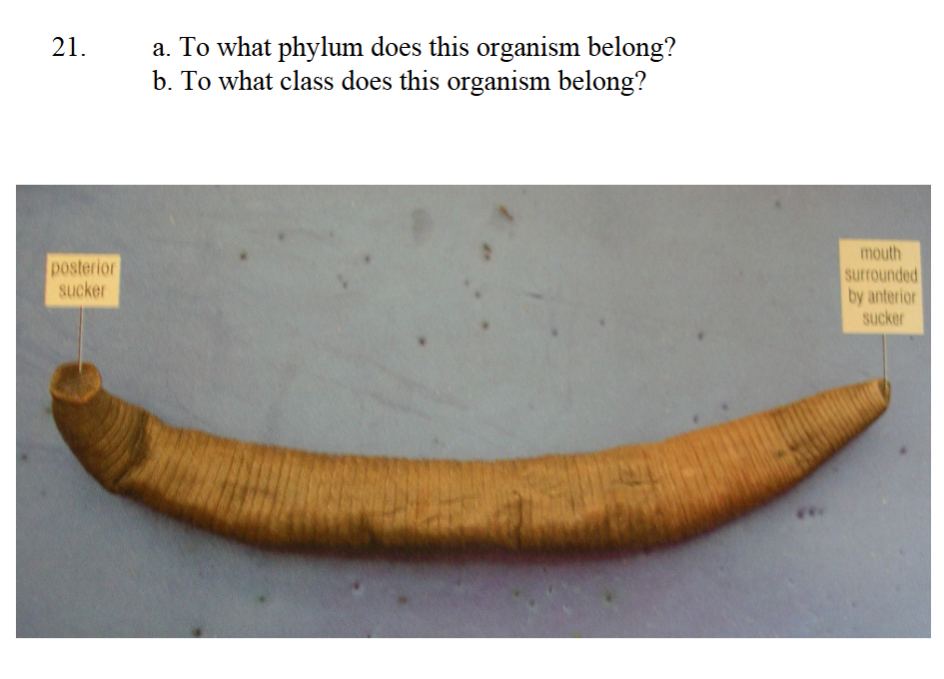
Annelida
Hirudinea
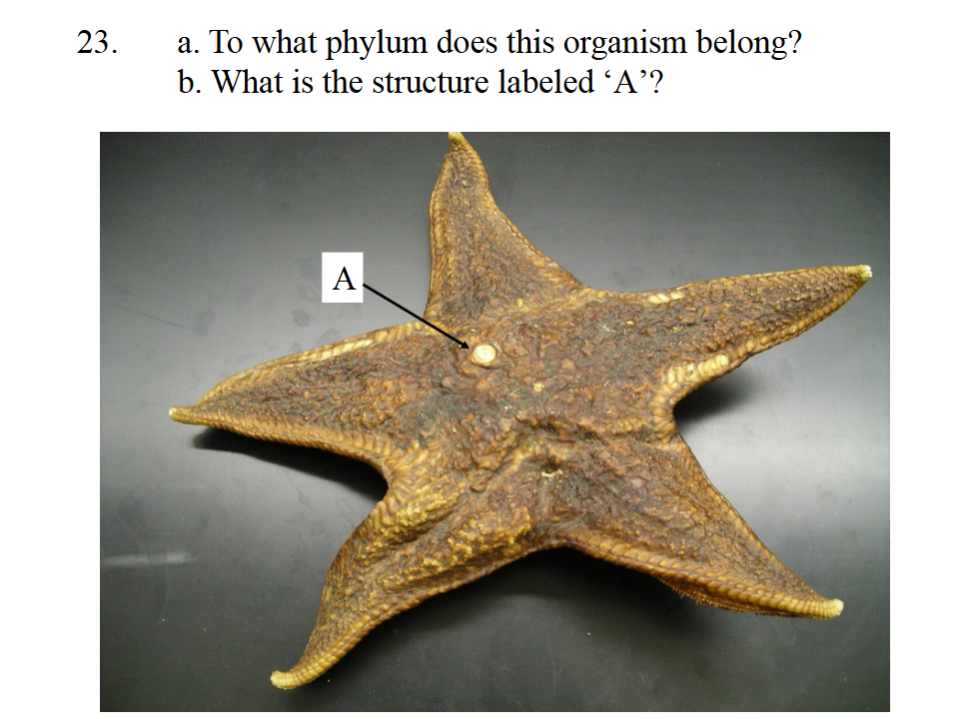
echinodermata
madreporite
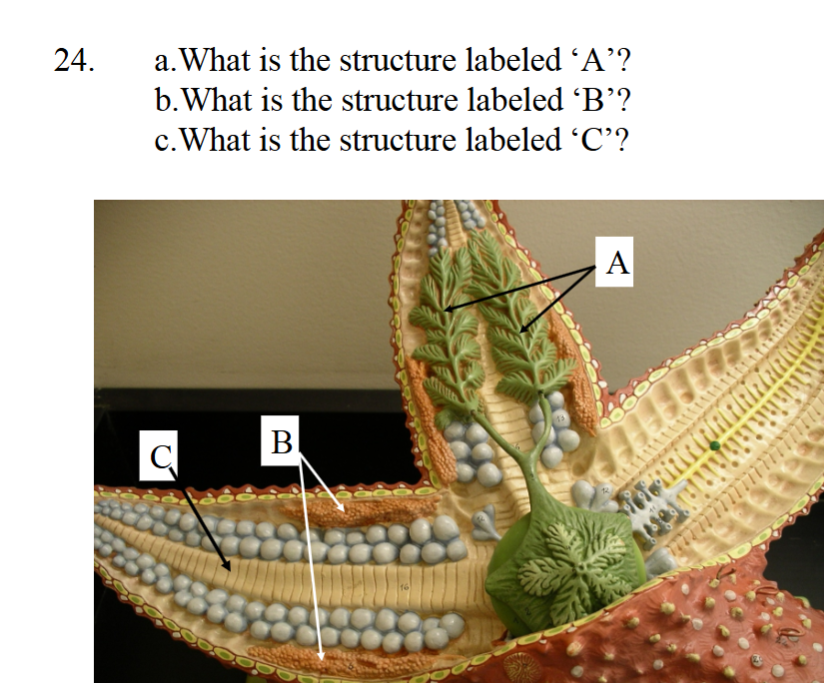
maybe
digestive glands
gonads
radial canal
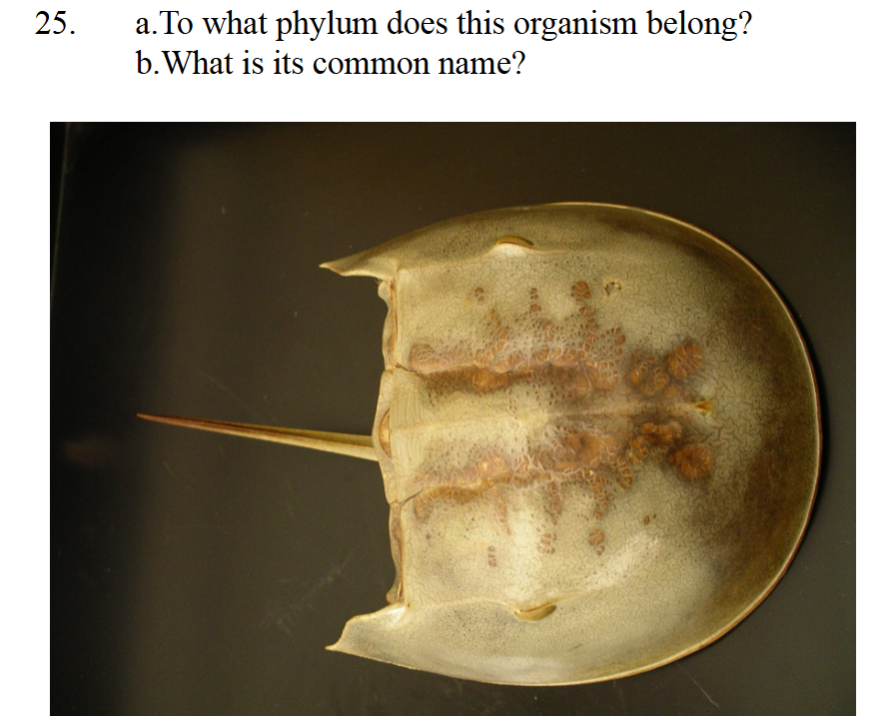
arthropoda
horseshoe crab
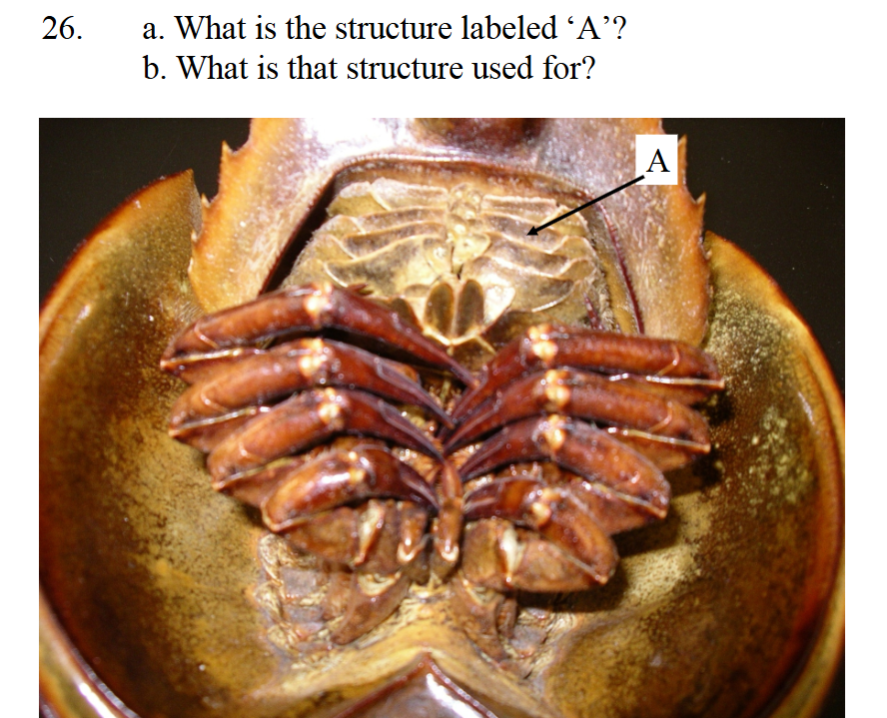
book gills
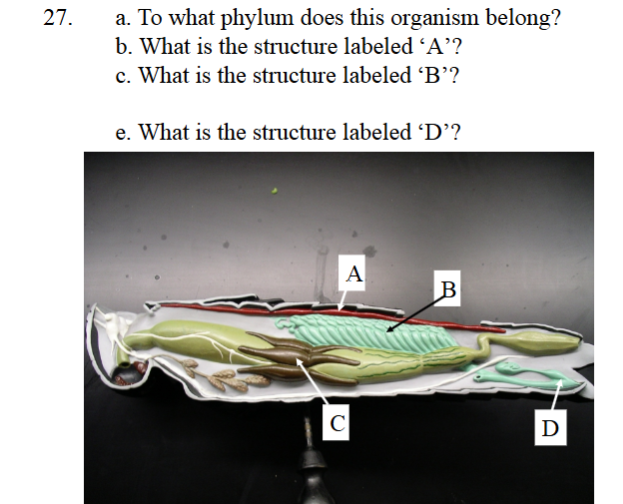
arthropoda
dorsal blood vessel
ovary
gastric cecum
spermatheca
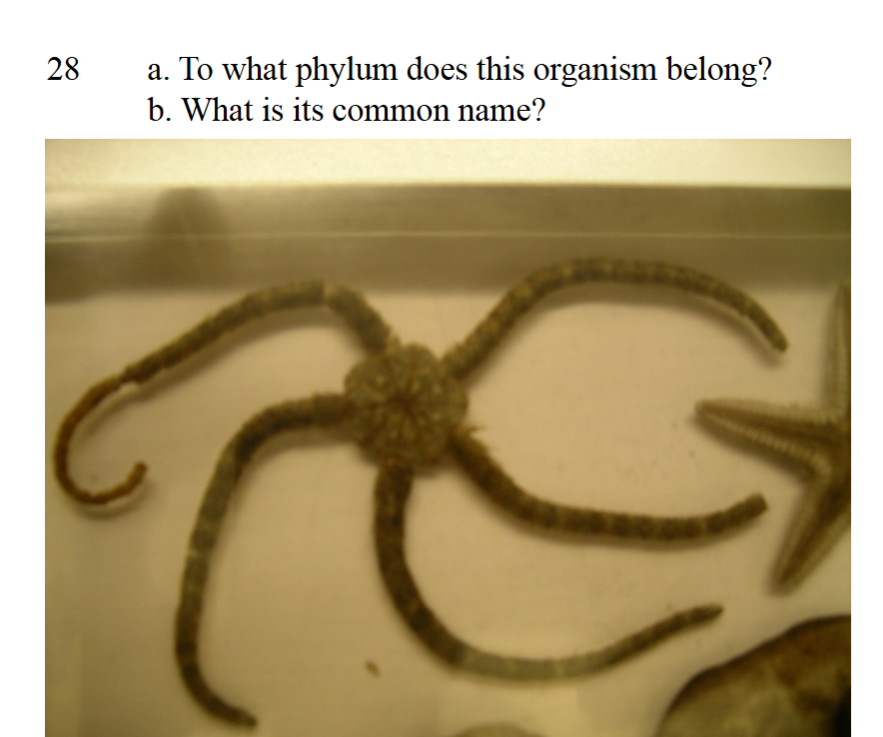
echinodermata
brittle star
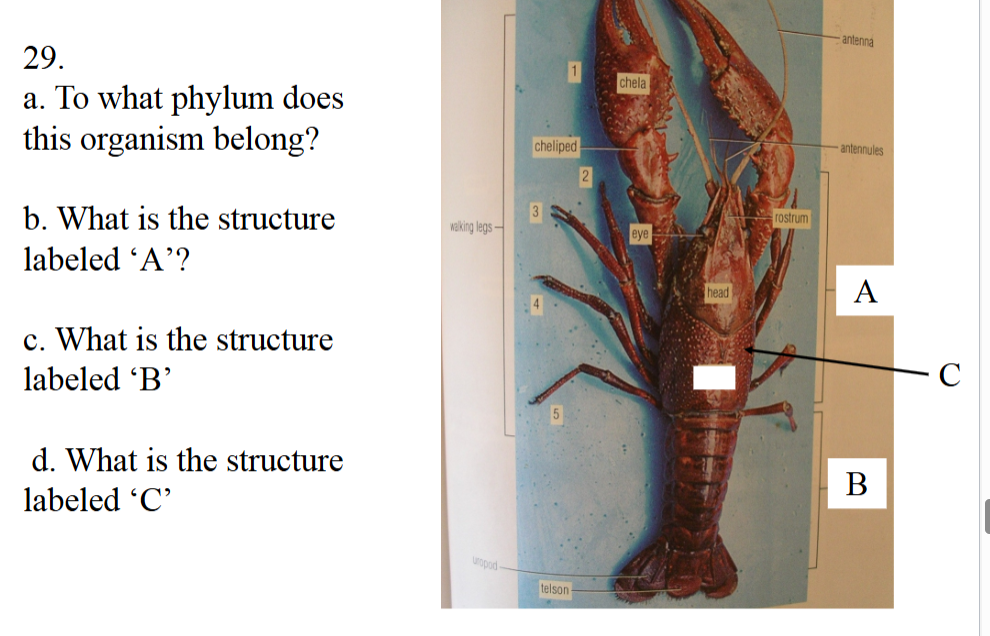
arthropoda
cephalothorax
abdomen
thorax
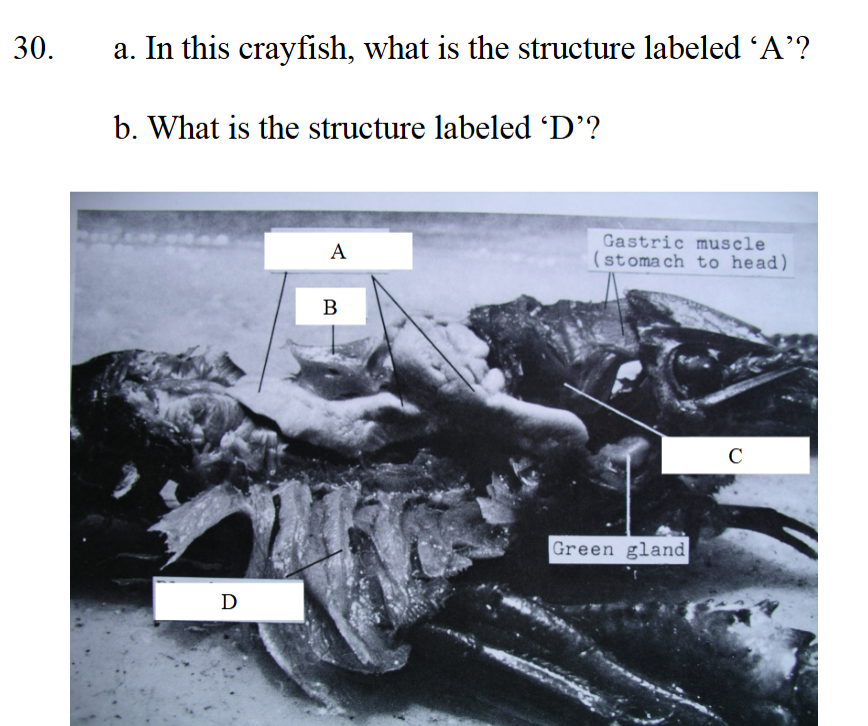
abcd
digestive gland
heart
stomach
blood vessel in gill
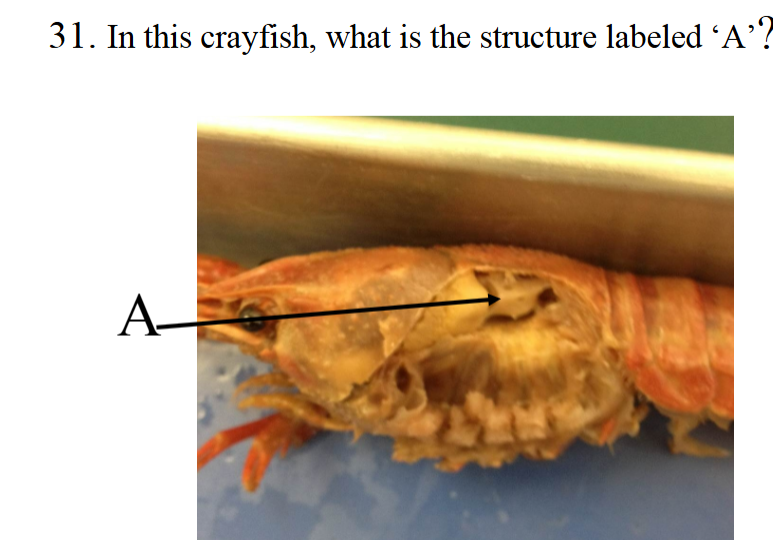
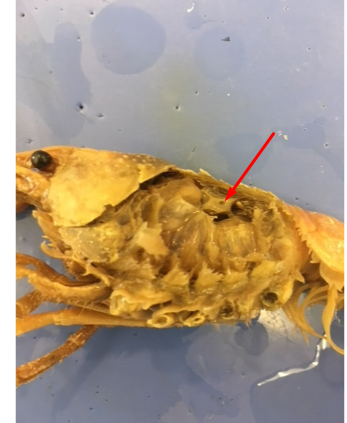
heart
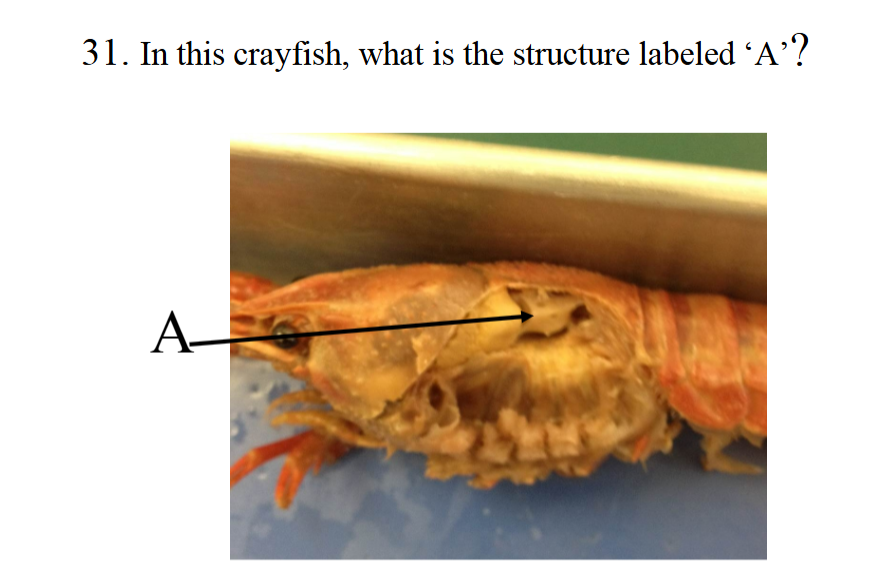
heart
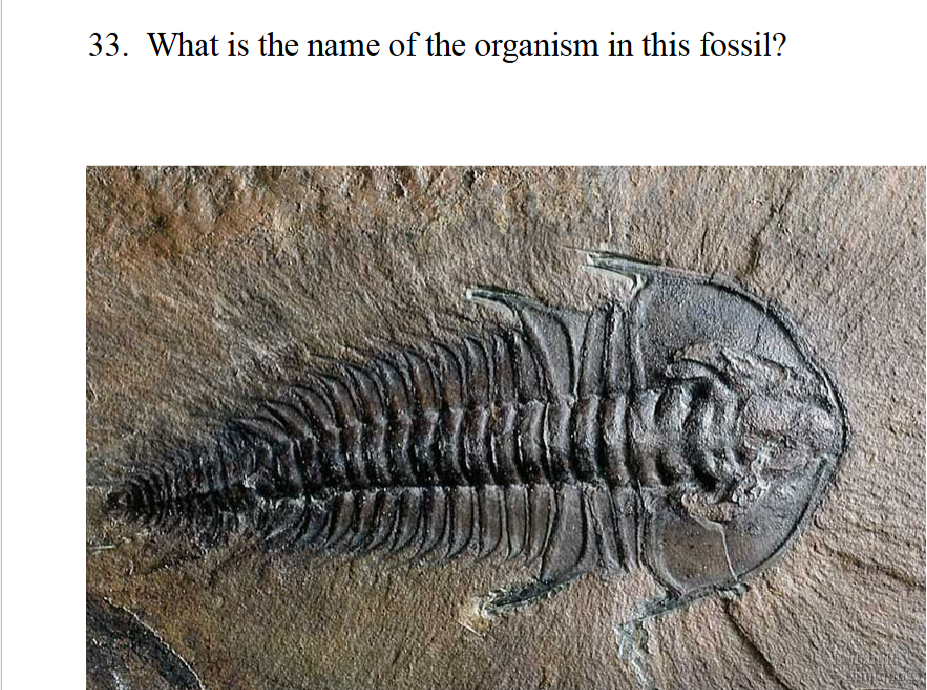
trilobite
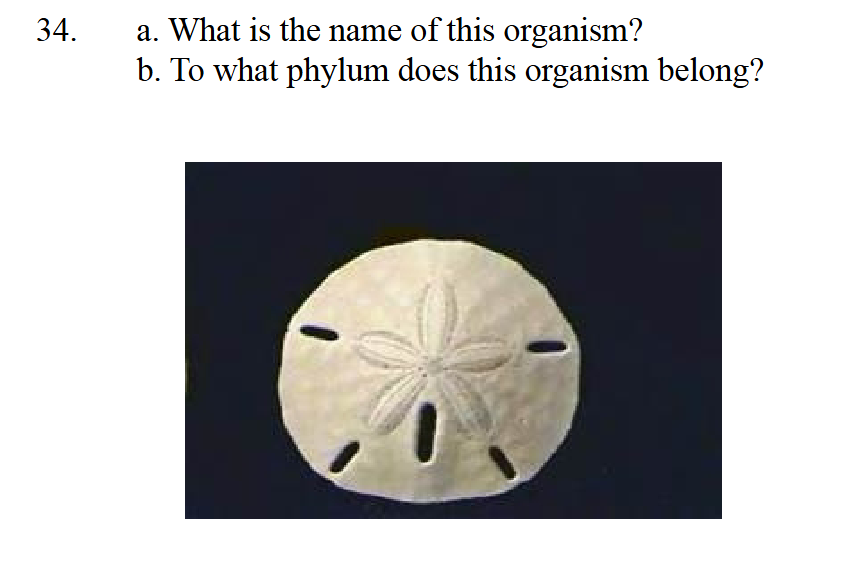
sand dollar
echinodermata
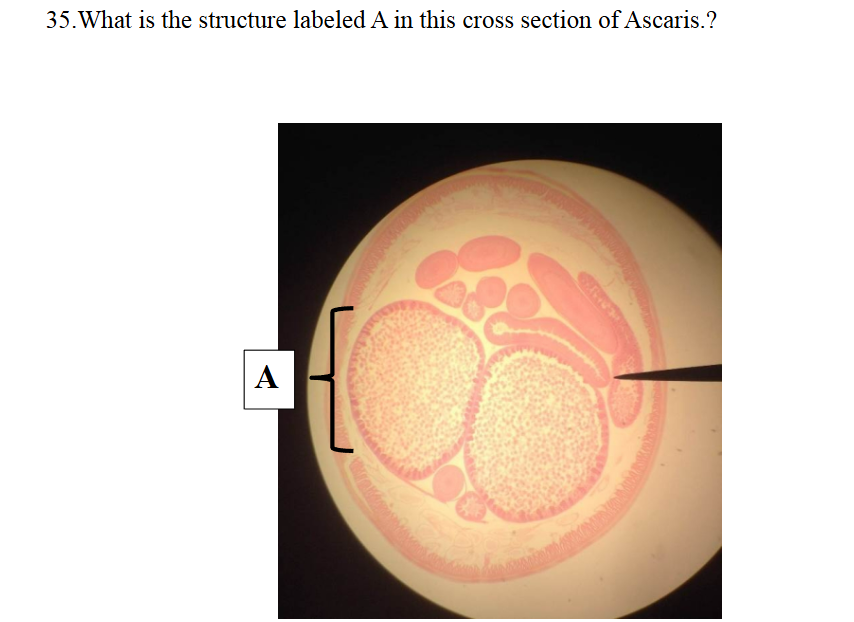
uterus
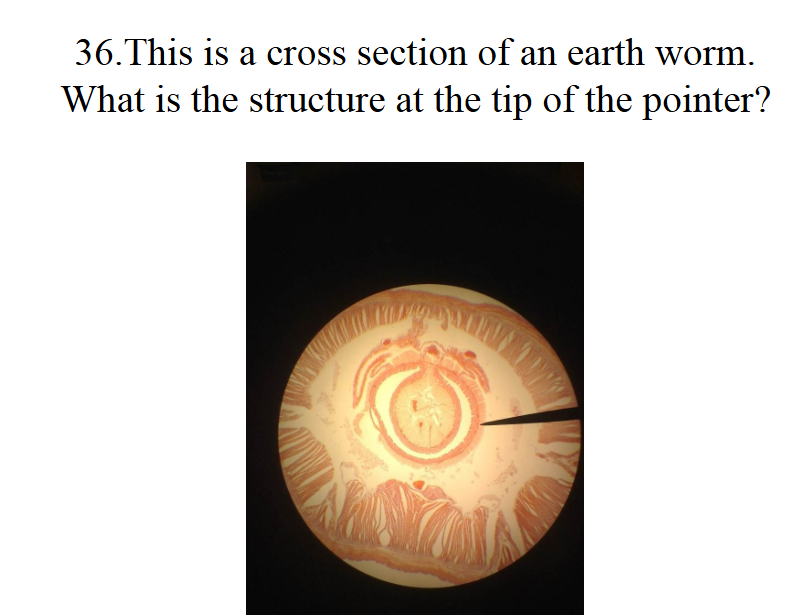
intestine
What are invertebrates?
animals that lack backbones
Sponges are in the phylum _____
porifera
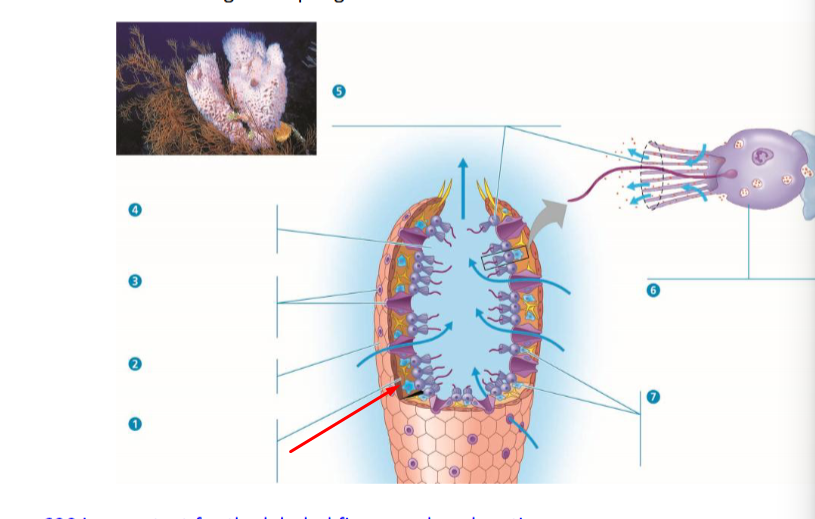
Mesohyl, gel like middle layer between sponge’s outer and inner cell layers
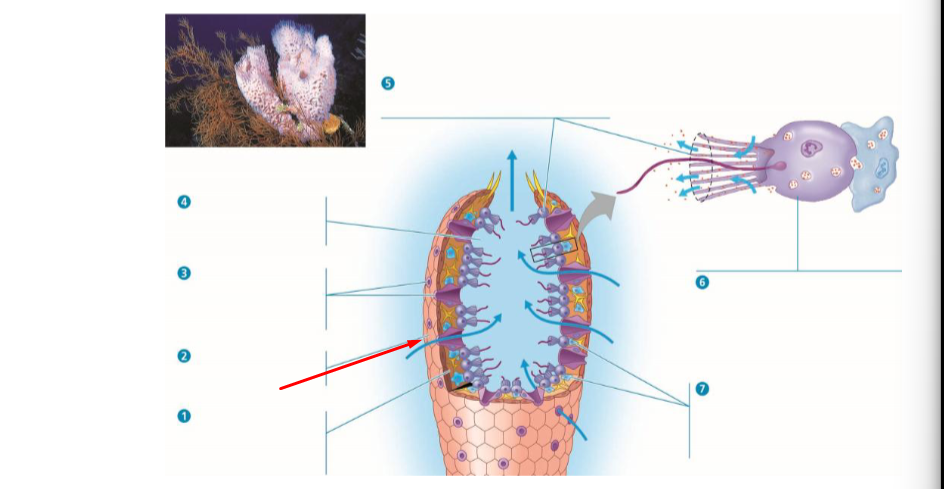
epidermis, outer layer cell of sponge that covers and protects body
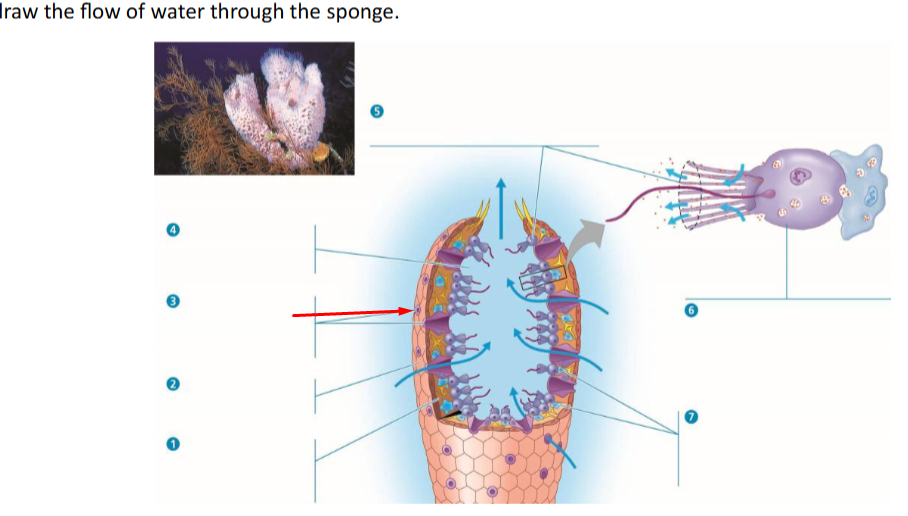
pores (ostia)
small openings that allow water to enter sponge
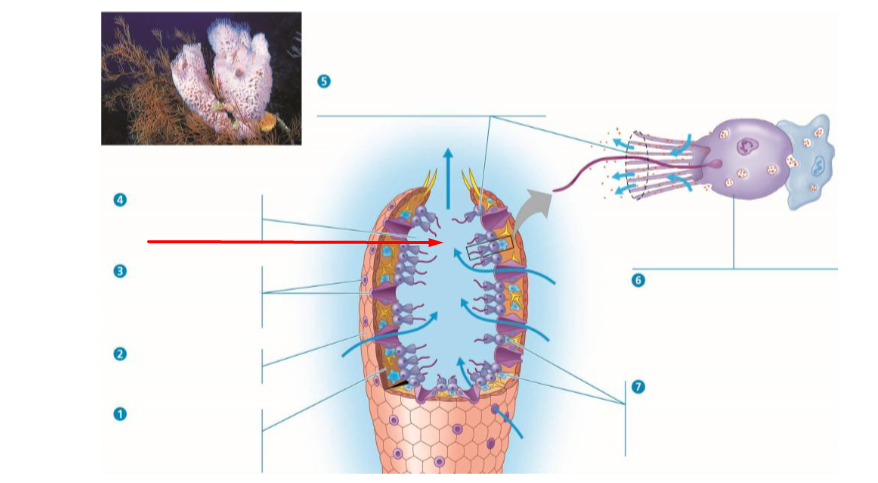
spongocoel
large central cavity inside sponge that receives water moving in from pores
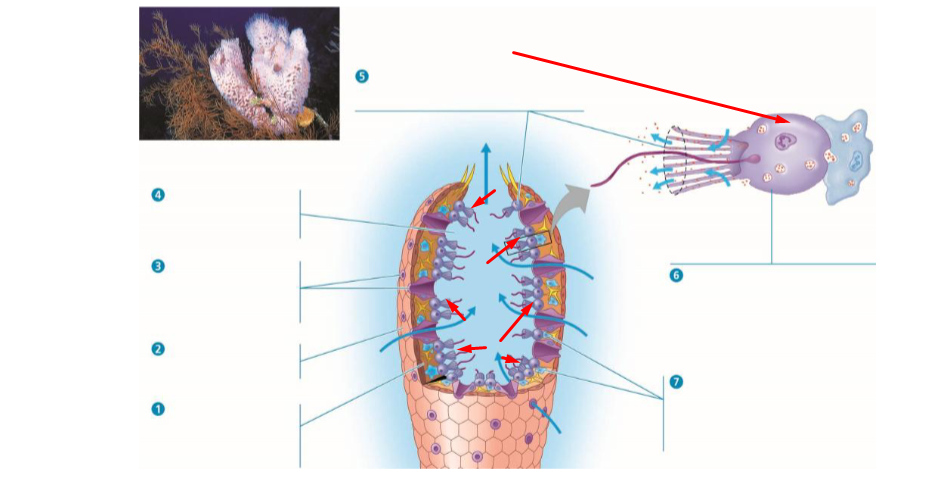
choanocytes (collar cells)
flagellated feeding cells that line inner cavity and create water currents while trapping food
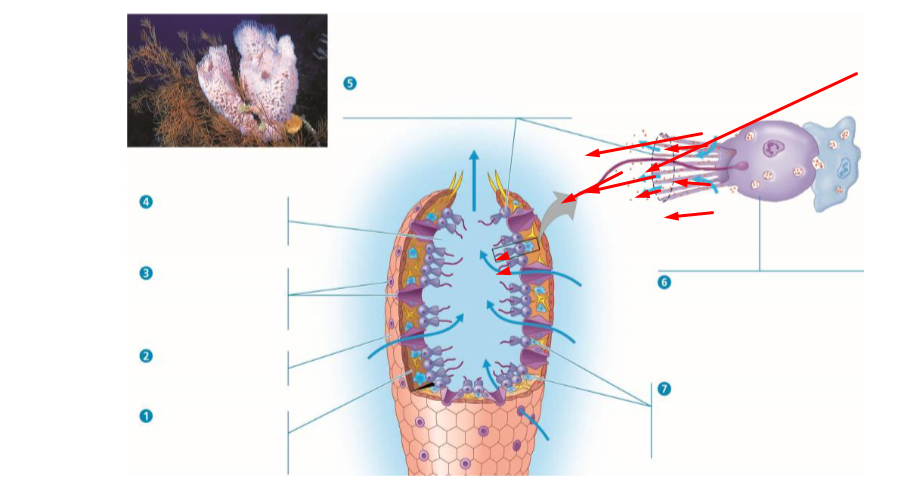
beating of choanocyte flagellum pulls water and food
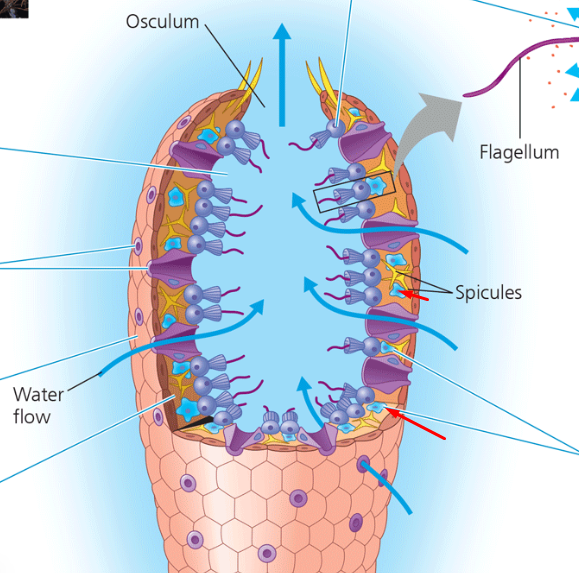
amoebocytes
mobile cells in mesohyl that digest and distribute nutrients
what are spicules
tiny skeletal support structures in sponges. They help the sponge keep its shape and protect it from predators.
three main types of skeletons of sponges
calcium carbonate spicules
silica spicules
spongin fiber
choanocytes function
use their flagella beat to pull water through the sponge
use their collars to trap food particles
amoebocytes function
mobile cells in mesohyl that digest food, carry nutrients to other cells
can produce skeletal parts like spicules or spongin
spongocoel function
central cavity of sponge
water enters through pores - moves into spongocoel - exits osculum
Which type of cell produces the skeletal material?
amoebocytes
What do sponges eat?
sponges-filter feeders
they eat tiny suspended particles such as bacteria plankton organic particles
Sponges do not have a digestive system. How do they digest food?
intracellular digestion
water carrying tiny food particles (plankton, organic stuff, bacteria) is pushed in choanocytes and gets trapped then ingested by phagocytosis, then digested inside food vacuoles within cells
Most sponges are hermaphrodites. What does this mean?
one sponge has both male and female
Do sponges have nerve net
no
what is a nerve net
simple network of interconnected nerve cells spread throughout body allowing animal to sense stimuli and coordinate basic responses without brain or central control
An evolutionary jump is seen in the eumetazoans. Except for sponges, all animals are eumetazoans, meaning they have _________
true tissues
what are eumetazones
animals that have true tissue
An early clade from the eumetazoans is the phylum Cnidaria, which are characterized by a relatively simple, ____, _____ body plan.
diploblastic
radial
polyp vs medusa
polyp=stationary, upright form, vase shaped
medusa=mobile, tentacles hang downward
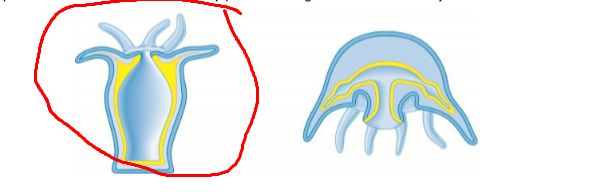
what / example
polyp, one cnidarian body form
mouth/tentacles point upward
examp-hydra
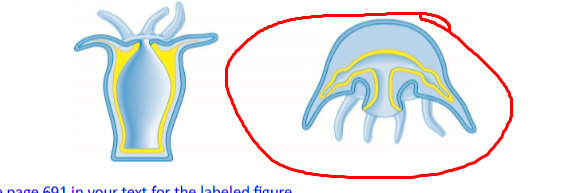
what / example
medusa, one cnidarian body form
bell shaped free swimming
examp-jellyfish
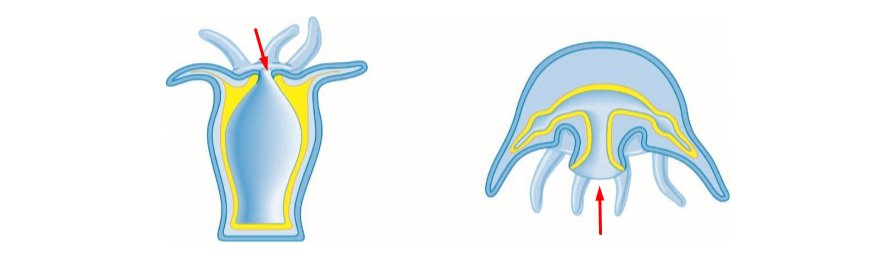
mouth / anus
cnidarians only have one opening that takes in food and expels waste
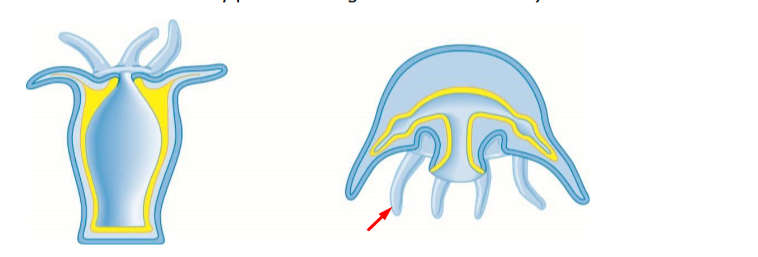
tentacle
flexible structures around the mouth used to
capture prey,
move food toward the mouth,
defend animal,
sense environment
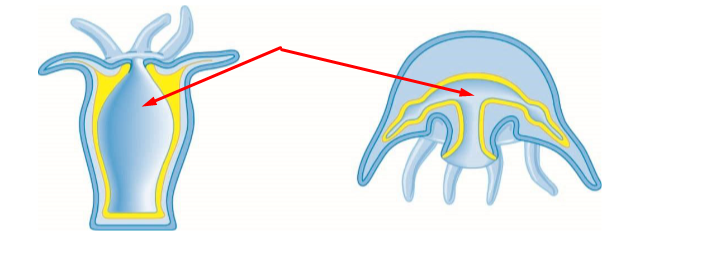
gastrovascular cavity
central cavity where digestion occurs
since cnidarians lack complete digestive tract/circulatory, cavity distributes and digests
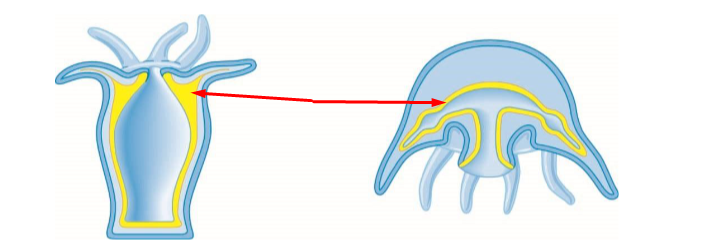
gastrodermis
inner tissue layer that lines gastrovascular cavity aiding in digestion and absorption
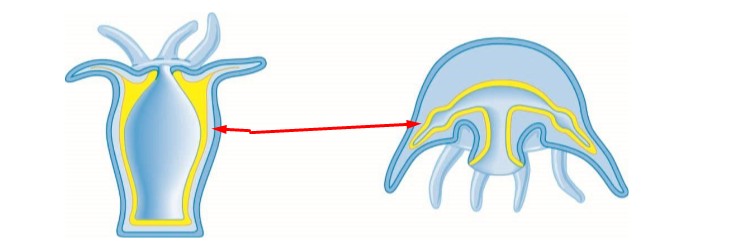
mesoglea
jelly like layer between epidermis and gastrodermis
helps with support, flexibility, buoyancy
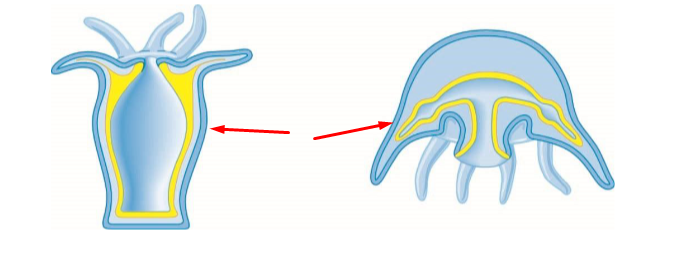
epidermis
outer tissue layer that protects body and contains cells involved in sensation, contraction, and defenes
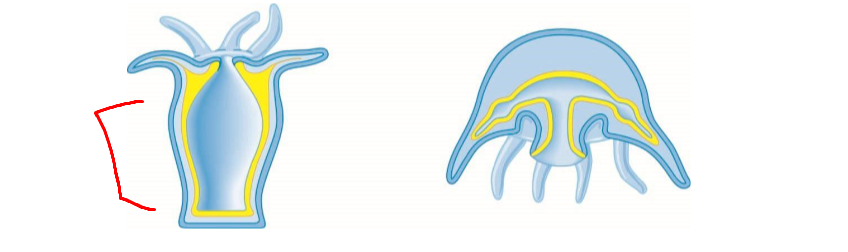
body stalk
elongated main part of body below tentacles functioning in support for animal and help anchorage to surface
What are nematocysts, and how do they help a cnidarian obtain its food?
tiny stinging capsules inside cnidarian cells called cnidocytes that discharge a thread often with barbs or toxin that stuns or paralyzes prey, allowing tentacles to pull prey to mouth
What is the “skeleton” of a cnidarian?
hydrostatic skeleton, fluid in gastrovascular cavity that helps support the body
Although corals are relatively simple animals, their ecological importance to oceans is enormous.
As your text states, “Coral reefs are to tropical seas what rain forest are to tropical land areas.” What
factors are placing coral reefs in danger?
climate change stresses corals, causing them to expel symbiotic algae that live in their tissue
How does hydra reproduce?
budding,
How does the shape of the flatworm body enhance the exchange of
oxygen and carbon dioxide?
thin and flat structure=dorsoventrally flattened
gives high surface area to volume ratio, allowing oxy to diffuse in and carbon out
three groups of flatworms
planarians
flukes (trematodes)
tapeworms
tapeworms, parasitic or free living? Features to note?
parasitic
scolex (head) has suckers that hooks onto host
flukes (trematodes) parasitic or free living? Features to note?
parasitic
leaf shaped body
incomplete digestive system
planarians parasitic or free living? Features to note?
free living
have auricles = ear like flaps that help with chemoreception
more developed nervous system
which is the first group with bilateral symmetry and sense organs concentrated at anterior end
planarians
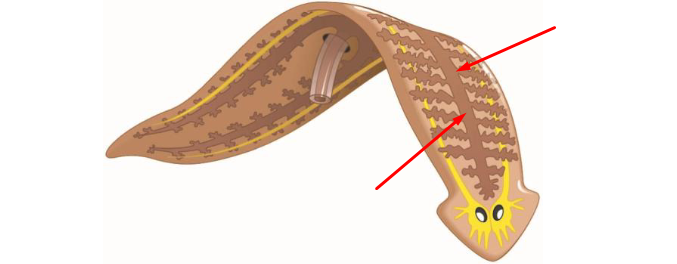
what? define?
gastrovascular cavity, internal digestive chamber where food is broken down and distributed
branches allow spread of nutrients
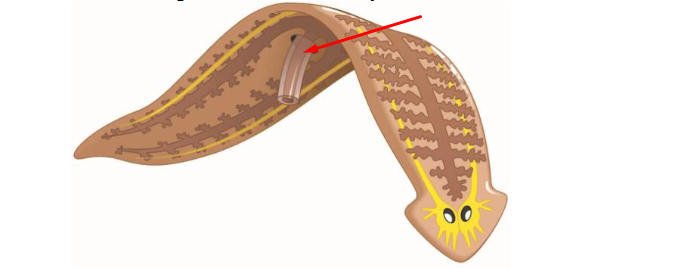
what? define?
pharynx, muscular feeding tube that extends through mouth
functions in releasing digestive enzymes onto food, then sucks food into body
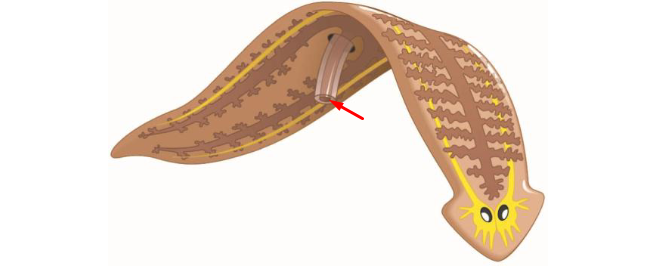
what ? define?
mouth, single opening used to take in food and remove undigested waste
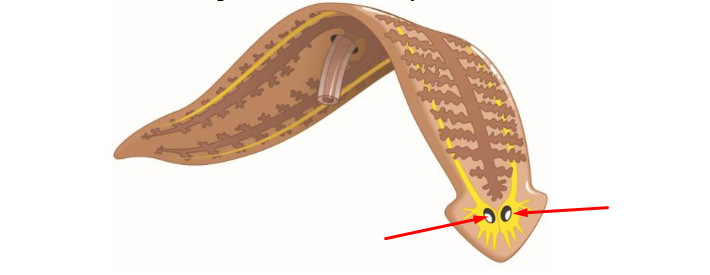
what? define?
eyespots, simple light detecting organs that do not form detailed images but provide a sense of light or dark
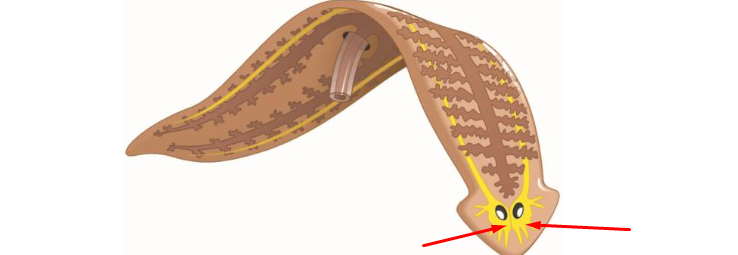
what ? define?
ganglia, clusters of nerve cells at front end of animal that act as a simple brain processing sensroy information and coordinating responses
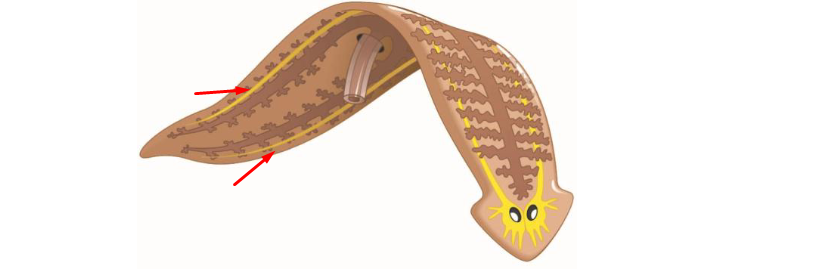
What? Define?
ventral nerve cords, two long nerve cords that run along underside of body, carrying signal to connect to ganglia
where is the mouth located on a planarian? Why is it considered a two way
ventral (underside)
same opening used to eat is used for waste disposal
why do tapeworms have no digestive system? frame answer in terms of surface area and habitat
tapeworms are very thin, allowing them to absorb nutrients across its tegument easily
tapeworms live inside host intestine, food is already digested
how many pieces make up shell of
gastropoda
Bivalvia
Cephalopoda
1
2
0 or 1
How do leeches manage to feed?
attaches to host
cuts skin
use saliva as an anti coagulant to improve blood flow
sucks
how are leeches used in medicine
when tissue has poor blood drainage, leeches are used to remove blood that wouldn’t leave
What important ecological role do earthworms play?
decomposition=breakdown of dead plant material
nutrient cycling = return nutrients to soil in forms plants can use
aeration=allows air to move into soil from digging burrows
what is the group that Trchinella belongs to
nematodes
Why are arthropods (phylum Arthropoda) considered the most successful of all animal
phyla
diverse
multiple habitats
exoskeleton protects
jointed appendages/ segmentation allow for unique specialization
If you were to invite all the arthropods on Earth home for dinner, about how many guests
should you prepare for?
around a mil
Arthropods have an exoskeleton. What molecule is it made of
chitin, a tough polysaccharide
How does an arthropod grow, given the fact that it has an exoskeleton?
molting
since exoskeleton is rigid and cant stretch, arthropod separates from exoskeleton and grows a new soft exoskeleton underneath
arthropod takes in air or water to expand its body
new exoskeleton hardens
Describe the open circulatory system of arthropods. (Note that most molluscs have a
similar type of circulatory system
Arthropods have an open circulatory system = blood like fluid (hemolymph) isnt confined to blood vessels
Dorsal heart pumps hemolymph from vessel to open spaces called HEMOCOEL
organs are bathed directly in hemoplymph
Exchange of materials like nutrients and wastes happens directly between hemolymph and tissues
The hemolymph flows back toward the heart and reenters through openings called ostia
How is respiration different in aquatic versus terrestrial arthropods?
aquatic = uses gills
terrestial = uses tracheal systems or book lungs

