Missouri Permit Test Study Guide, Missouri Permit
 Call Kai
 Learn
Learn Practice Test
 Spaced Repetition
 Match
Match Flashcards
 Knowt Play
1/209

There's no tags or description
Looks like no tags are added yet.
Name | Mastery | Learn | Test | Matching | Spaced | Call with Kai | Chat |
|---|
No analytics yet
Send a link to your students to track their progress
210 Terms
broken lines
may be crossed in a passing maneuver
solid lines
NOT cross in passing maneuver
yellow
divides oncoming traffic
white
divides same-direction traffic
yellow line is on your left
the traffic is moving in the opposite direction
white line is on your left
traffic moving same direction
solid white line
marks right edge of many roads
two solid yellow lines
center marking for roads. Tell you traffic on other side of lines is going the opposite way. Dont cross these to pass.
no passing zone
solid yellow line. (can be on hills, curves)
Dual use lanes
have both a turn and straight arrow.
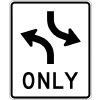
flashing yellow arrow
allowed to drive in that area its pointing to but you have to wait your turn.
green arrow
you can drive in that area but must wait your turn
lane control signs
red "X" means don't drive in the lane. Green arrow means your good to go! :)))
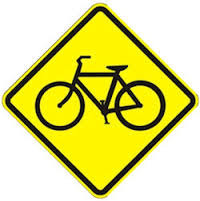
bicycle crossing
be prepared o yield to bikers
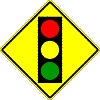
signal ahead
preparing you to be ready to possibly stop
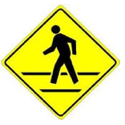
pedestrian crossing
be prepared to slow down and yield to people
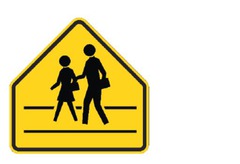
school crossing
slow down (note sign color will soon change tp neon green)
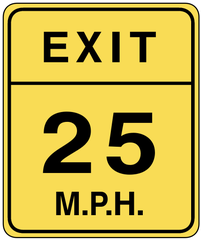
speed advisory- highway ramp
the highway entry/exit has speed advisory
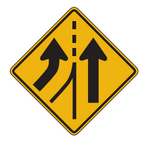
added lane
traffic from another road will be entering the road. No merging needed bcuz lane has been added.
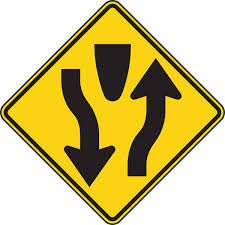
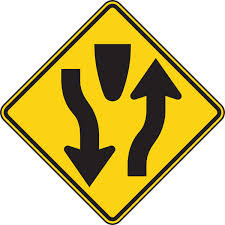
begin divided roadway
road will son bcome 2way traffic divided by a barrier.
end divide roadway
traffic wont be divided by a barrier anymore.
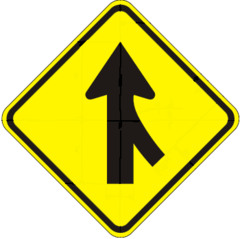
merge
cars from another road will be entering the road.
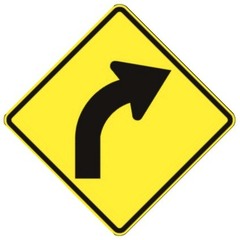
curve sign
warn of a curve where the recommended speed is less than the posted speed limit for highway.
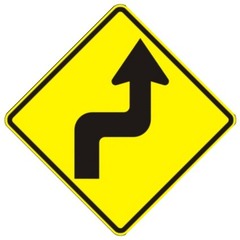
reverse turn
used to warn of two turns in opposite directions. second turn may be sharper than first. 30mph recommended.
lane ends merge left
two lanes of cars will soon become one lane of cars. Right lane must merge to left yielding to traffic driving in the left lane.
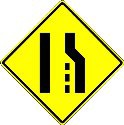
right angle turn
sharp turn ahead use 30 mph
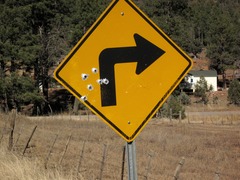
speed advisory
curve and turn signals have an speed advisory plate that shows the recommended speed for curve or turn.

Large Arrow
May be seen on the outside of a
turn. Slow down for sharp change
of direction of travel.
chevron
May be used instead of the large
arrow sign to outline the edge of a
curving road or to supplement the
large arrow sign.

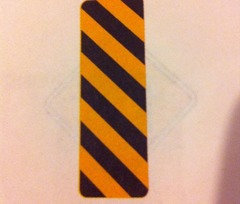
obj marker
notify drivers of objects in the roadway or very
close to the edge of the roadway.
This sign emphasizes the need
to not stray outside of the marked
travel lane.
soft shoulder
shoulder on the side of the
road ahead is soft. Do not drive
off the pavement.

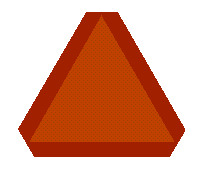
slow moving vehicle
vehicle means it is
traveling less than 25 mph. You
may see this sign on construction
equipment or farm vehicles.
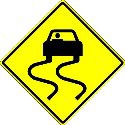
slippery when wet
The road ahead becomes
unusually slippery in wet weather.
Drive carefully in these conditions.
side rail road crossing
A warning of a railway crossing
very close to the intersection.
Use caution when crossing tracks.

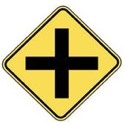
intersection
Another road crosses the road.
Watch carefully for traffic crossing
your path
side road ahead
Side Road Ahead
Another road enters the road from
the direction shown on the sign.

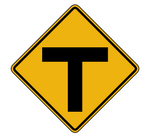
T intersection ahead
The road you are traveling does
not continue. You must turn
either right or left.
round about ahead
A roundabout intersection is
ahead. Slow down as required by
the speed restriction sign and
follow the road rules for
roundabouts.

regulatory signs
Many regulatory signs are square or rectangular-shaped and are white,
with black or red letters or symbols. They give you information about rules
for traffic direction, lane use, turning, speed, parking, and other special situations. Some regulatory signs have a red circle with a red slash over a symbol.
These indicate you cannot do something, for example, no left turn or no
U-turn.
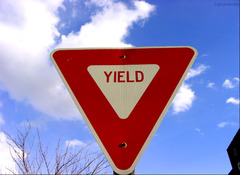
YIELD SIGn
A yield sign is triangular. It is red and white with
red letters. It means you must slow down and
yield the right-of-way to traffic in the intersection
you are crossing or roadway you are entering.
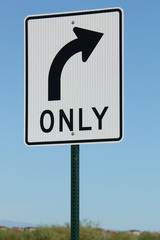
LANE CONTROL SIGNS
says which direction you can go
common speed limits
Rural interstates and freeways 70
Rural expressways 65
Interstate highways, freeways or expressways
within urbanized areas 60
All other roads and highways not located in an urbanized area 60
Lettered roads 55
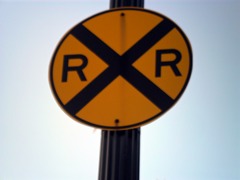
rail road crossing
Many railroad crossings have signs or signals to warn drivers. The round
advance warning sign tells you that you are nearing a railroad crossing.
Never start to cross the tracks
until there is room for your vehicle on the other side of the tracks. It is not
wise to shift gears when crossing railroad tracks, just in case your vehicle
might stall.
guide signs
show directions to various locations
service signs
rest areas or gas stations, hospitals, etc.
right of way
where vehicles or pedestrians likely meet one another, and there are no signals to regulate traffic, their are rules to say who must yield the right-of-way. the law doesn't give any driver the right-of-way. you must do what ever it takes to not hit a person
passing on the right
only if the vehicle is going to make a left turn
on a city street with width for two or more lines in each direction
on a one way street
on a highway city with 4 or more lanes of traffic
passing on left
don't do it on solid yellow line
approaching 100 feet of intersection/ RR crossing, bridge , tunnel
curve with a distance that causes hazard
intersections
drivers must yield to striking people
yield to people on sidewalk, lot, alley,driveway
turn left must yield to upcoming cars
4way stop, driver reaching intersection first may proceed before other drivers
no stop sign yield to vehicles
roundabout yield to traffic in circle
emergency vehicles
yield the right of way to police firemen ambulance
pull over to right of road
proceed with caution, reduce speed of ur car
school bus stop
on 2lane road where both vehicles travel in directions
2lane one way street
school bus don't stop
opposite direction of school bus on a highway divided by a median where cars in one direction than cars in opposite direction.
traveling the opposite direction of a school bus on a highway containing four or more lanes
a school where students
are not permitted to cross the roadway.
After stopping for a school bus that is unloading school children, watch
for school children walking along the side of the road. You must remain
stopped until the bus moves or the bus driver signals for you to proceed.
Proceed with caution.
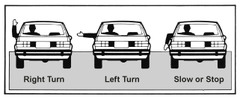
hand vehicle signals
signal 100 feet before
hand out = left
hand out and down= stop
hand out and up= right
always use turn signals before turning lanes
round about intersections
drivers who approach make a slight right turn and go counter clockwise around circular center island
either exit or continue roundabout onto a diff road way
local ordinances
cities and towns have regulations on:
speed limits, one way street, set stop intersections, sound , use turn signals, prohibit commercial vehicles from using certain streets, and control parking.
parking do's
park in a designated area if possible.
• On one-way streets, park on either the right or left side
• Always set your parking brake when you park. Leave the vehicle in gear if it has a manual transmission, or in park if it has an automatic transmission.
Check for bicyclists, who often travel on the
right-hand side of the travel lanes, near parked cars.
• If you must park on a roadway, park your vehicle as far away from traffic
as possible. If there is a curb, park as close to it as you can.
• When you park on a hill, turn your wheels sharply towards the side of the
road.
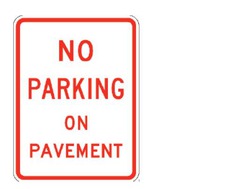
NO-PARKING ZONES
Do not park:
• In an intersection.
• On a crosswalk or sidewalk.
• Across a driveway entrance.
• On the left side of a two-way street.
• Alongside a curb that is painted yellow.
• On a bridge.
• Blocking a fire hydrant.
• Blocking the normal traffic flow or creating a hazard to other drivers.
• With your vehicle facing against traffic.
parking on a hill
Before leaving your parked vehicle:
• Turn your wheels in the proper direction
• Turn off the motor, leaving the vehicle in proper gear;
• Set the emergency/parking brake;
• Remove the keys from the ignition;
• Check your rear view mirror for traffic before stepping out; and Lock it and pocket the keys.
Before you drive away from any parking space, be sure to check for traffic and signal.
parking on hills
down hill with or without curb=turn wheels to right
up hill with curb= turn wheels to left
up hill with OUT curb= turn wheels to right
parallel parking
1. Stop even with the vehicle ahead of the parking space about 1½ feet to the left of that vehicle.
2. Turn wheels sharply to the right, and back slowly into the parking space. Be sure the front of your vehicle does not block passing or oncoming traffic.
3. When clear of the front vehicle, turn wheels sharply to the left and continue backing.
4. Turn wheels sharply to the right and pull forward toward the curb. Park in the center of the parking space.
DRIVE IN THE PROPER LANE
When driving on a highway with a total of two lanes (one lane in each direction), drive in the right hand lane. You may cross the center line for passing when there are no oncoming vehicles and no solid yellow line. On highways with a total of four or more lanes (two or more lanes in each direction), always keep to the right unless you are passing slower traffic, letting another driver have room to enter safely, or getting ready to make a legal left turn.
PASSING ON HIGHWAYS
Use the left lane only to pass another vehicle. You can use the right lane when passing a vehicle that is making a left turn. Never use the shoulder or unpaved part of the highway to pass.
Before you pass a vehicle in front
of you
make sure you are in a safe passing zone. On four-lane
highways, check the left lane for traffic by using your left and inside rearview mirrors and briefly looking over your left shoulder. Looking over your left shoulder is important
because it allows you to check for"blind spots."
"blind spots."
the spaces you cannot see with your rearview mirrors. Do not drive in another vehicle's blind spot.
• turn your head to look instead of using ur mirrors
truck or bus
Never stay alongside, or immediately behind, a large vehicle . These vehicles have large blind spots and it is hard for their drivers to see you. If you cannot see the truck driver's face in the truck's side mirror, the truck driver cannot see you. It takes longer to pass a truck. After you pass, make sure you can see the cab of the truck
in your rearview mirror before reentering the lane. Maintain your speed. Do not slow down once you are in front of the truck.
Give plenty of room to the vehicle you just passed
Do not turn back into the right lane until you see the passed vehicle in your rearview mirror. Remember to
look over your right shoulder to check your blind spot, and be sure to signal.
being passed
If another vehicle begins to pass you, stay in your lane and do not increase your speed. If many vehicles are passing you in the right lane of a multi lane roadway, you are probably going slower than the rest of the traffic. Unless you will be turning left soon, you should move into the right lane when the way is clear
CONTROLLED ACCESS HIGHWAYS
Many highways have controlled access. This means you can enter or
leave the highway only where there are entrance or exit ramps.
ENTERING THE HIGHWAY
Entrance ramps are short, one-way ramps used to get on the highway. At the end of most entrance ramps is an acceleration lane. Use the ramp and acceleration lane to increase your speed to match the speed of the vehicles
on the highway. As you are speeding up, watch for an opening in the highway traffic. Switch on your turn signal, and pull smoothly into the traffic. DO NOT stop
at the end of an acceleration lane unless traffic is very heavy and you have to stop. Drivers already on the highway should give you room to enter, but if they
don't, DO NOT force your way onto the highway. You must yield the rightof-way to them, even if that means stopping at the end of an acceleration lane.
LEAVING THE HIGHWAY
Exit ramps are short, one-way ramps. At the beginning of most exit ramps is a deceleration lane. Make sure you are in the proper lane to leave the highway well in advance of the deceleration lane. Use the deceleration lane and the exit ramp to slow down when leaving the
highway. Be sure you obey the speed advisory sign on the exit ramp. Be ready to stop or yield at the end of the ramp.
If you miss your exit, DO NOT stop, back up, or try to turn around on the highway. You will have to get off the highway at the next exit and come back to the exit you missed.
INTERCHANGES (common:diamond, clover,directional, trumpet)
Where two busy highways meet, there may be interchanges with entrance and exit ramps. An interchange can be confusing if you have not driven on it before. A Diverging Diamond Interchange while driving through a DDI, you will travel on the left side of the roadway for a short
distance. There are directional signs on all interchanges that can help you determine where you need to go.
EMERGENCIES
If your vehicle breaks down on a highway, make sure other drivers can see you and your vehicle.
Many roadways have signs that tell you the CB channel or telephone number to call in an emergency. The cellular number to call in an emergency is *55.
If you are having vehicle trouble and have to stop, consider the following:
• If at all possible, get your vehicle off the road and away from traffic.
• Turn on your emergency flashers to show you are having trouble.
• If you cannot get your vehicle off the roadway, try to stop where other
drivers have a clear view of your vehicle. Do not stop just over a hill or
just around a curve.
• Try to warn other drivers that your vehicle is there. Place emergency
flares behind the vehicle. This alerts other drivers to change lanes if
necessary.
• Never stand in the roadway. Do not try to change a tire if it means
you have to be in a traffic lane. Lift the hood or tie a white cloth to the antenna, side mirror, or door handle to signal an emergency
motorcycle
dont share a lane with them.When you are passing, give motorcycles a full lane width. Do not squeeze past these road users. Wait for a clear stretch of road before passing a cyclist in a lane too narrow to share.
trucks
Do not enter a roadway in front of a large vehicle. Avoid changing lanes in front of a large vehicle if you are turning off the roadway.
A truck or bus has blind spots on each side, in the rear and in the front where an automobile cannot be seen. These blind spots are referred to as the "No-Zone." Do not drive in the No-Zone except when absolutely necessary. You should not drive alongside large vehicles for prolonged periods at any time. Tailgating a truck is also dangerous.
Leave any large vehicle a cushion of safety.
trucks part 2
When traveling up or down steep grades, large vehicles must drive slowly in the right lane. Avoid driving your car in the right lane going up or down hills on divided or multi-lane roadways when interacting with
large trucks. When you are near truck weigh stations, avoid driving in the right lane so slow-moving trucks can easily merge back onto the roadway.
6. Vehicles carrying hazardous materials must stop at all railroad crossings. Be prepared.
7. Because of their size, large trucks may swing out to the left as the first step in making a right turn. When following a tractor-trailer, observe its turn signals before trying to pass.
8. Tractor-trailers take longer to stop than cars traveling at the same speed. The average passenger car traveling at 55 mph can stop in about 130-140 feet, almost half the length of a football field. A fully loaded tractortrailer may take almost 400 feet to come to a complete stop.
10. Never underestimate the size and speed of an approaching tractortrailer.
Because of its large size, a tractor-trailer often appears to be traveling more slowly than its actual speed.
sharing road with people
pedestrians are required by law to yield to vehicles.
In other situations, vehicles are required to yield to pedestrians. Even when you are facing a green light you must yield the right-of-way to all pedestrians in the intersection. Never assume you have the right-ofway.
Do not assume pedestrians see you and will stop for you.
Do not pass a vehicle that has stopped or slowed down for a pedestrian.
You must obey a slower speed limit in a school zone when lights are flashing or children are present. At a school
crossing where there is a traffic patrol, stop and yield if a traffic patrol member signals you to do so.
The following laws or rules also apply:
• Drivers must always yield the right-of-way to persons who are blind. When a pedestrian is crossing a street or highway guided by a dog or carrying a white cane (or a white cane with a red tip), vehicles must come to a complete stop.
• Drivers must yield when a pedestrian is in a marked or unmarked crosswalk on or approaching their side of the road.
• As you prepare for a right turn, especially on a red traffic signal, be cautious of pedestrians (or bicyclists) approaching on your right.
• Drivers should not block the crosswalk when stopped at a red traffic signal. Drivers should not cross a sidewalk or crosswalk without first yielding to pedestrians.
bikers
Scan carefully for bicycles and mopeds before proceeding through a intersection, giving them the same consideration you would any other vehicle.Be sure to look right and check for wrong-way bicyclists on the road or sidewalk before proceeding.
• On residential streets, especially those with parked cars, travel at or
below the speed limit.
59
SHARING THE ROAD WITH MOPEDS AND BICYCLES
• If you are following a bicyclist and need to make a right turn, slow down and remain behind the cyclist until you are able to turn. If you need to make a left turn, yield to oncoming bicyclists unless you are absolutely sure you
can make the turn before the cyclist reaches the intersection. • Bicyclists change speed and lane position when encountering bad road conditions, such as manhole covers, diagonal railroad tracks, drain grates, road debris, or in strong winds. Be ready to react.
• When you are passing, give bicycles and mopeds a full lane width. Do not squeeze past these road users. wait for a clear stretch of road before passing a cyclist in a lane too narrow to share. • A bicycle lane is a portion of a roadway designated by striping to be used by bicycles. You may cross a bicycle lane when turning or when entering or leaving the roadway. You must yield to bicyclists in a bicycle lane.
road ragers
Remain calm and do not react with similar behavior.
• Identify the location (for example: intersection, mile marker, direction the vehicle was traveling, etc.).
• Get a physical description of the driver.
• Get a description of the vehicle (approximate year, make, model, color, license plate number, etc.).
• Report the incident to the nearest local authorities as soon as possible.
• If you have a cellular phone, exit the roadway to a safe area and dial *55
(or 911 if you are in a metropolitan area).
safety tips
seat belt
only kids of certain ages may call shotgun
keep eyes on road(moving)
expect drivers to make mistakes, do not rely on traffic signals
how to sit and drive
back straight, move seat close to reach pedals, keep both feet on floor and hands on wheel
steering wheel lock
DONT Do It it will cause u not to have control of wheel
following cars
keep safe distance...
three second rule
choose obj. near road ahead (ex:sign or cell phone pole.) if car ahead passes it, you count to 3. If you reach obj. before you finish counting.....u are to close to vehicle ahead
space behind
• Try to find a safe place out of traffic to stop and pick up or let off passengers. • If you want to parallel park and there is traffic coming behind you, put on
your turn signal, pull next to the space, and allow vehicles to pass before you park. • When you have to drive so slowly that you slow down other vehicles, pull to the side of the road when it is safe to do so, and let them pass. There
are turnout areas on some two-lane roads you could use. Other twolane roads sometimes have passing lanes.
• If you are followed too closely or "tailgated" by another driver, and there is a right lane, move over to the right. If there is no right lane, wait until the road ahead is clear and then reduce speed slowly. This will encourage
the tailgater to drive around you. Never slow down quickly to discourage a tailgater. This will only increase your risk of being hit from behind.
space to the side
You need space on both sides of your vehicle to have room to turn or
change lanes.
66
• Avoid driving next to other vehicles on multi-lane roads. Someone may
crowd your lane or try to change lanes and pull into you. Move ahead or
drop behind the other vehicle.
• Keep as much space as you can between yourself and oncoming
vehicles. On a two-lane road, this means not crowding the center line.
In general, it is safest to drive in the center of your lane.
• Make room for vehicles entering on a multi-lane roadway. If there is not
a vehicle in the lane next to you, move over a lane.
• Keep extra space between your vehicle and parked vehicles. Someone
could step out from a parked vehicle, from between vehicles, or a parked
vehicle could pull out.
• Give extra space to pedestrians or bicyclists, especially children. They
may move into your path quickly and without warning. Wait until it is
safe to pass.
• When possible, take potential hazards one at a time. For example, if
you are overtaking a bicycle and an oncoming vehicle is approaching,
slow down and let the vehicle pass first so you can give extra room to
the bicycle.
STOPPING DISTANCE
Your stopping distance equals your reaction distance plus your braking distance. If you are driving fast, are very tired, or if your vehicle has bad brakes, you will need more space to stop your vehicle. The following distance equals your reaction distance plus your vehicle's braking distance at different speeds. The reaction distance is the distance
you travel after you see a danger and before you apply your brakes. You have to be alert to react within one and one-half seconds. The braking distance is the distance you travel after you apply your brakes and before your vehicle comes to a stop. In the chart shown below, the braking distance is for a vehicle with good brakes and tires, in good
weather and on a good road.
using your horn
only when you have to. horns can distract and cause crashes. horn shouldnt be used out of anger
slow poke driving
against law to drive lower than speed limit unless in rain snow etc.
carbon monoxide
cars give it off. dont leave motor running in garage
or with windows closed when u park
dont use heater with windows closed in park
night driving
windowa clean, turn head lights on 1/2 hour after sunset and 1/2 till sunrise.
use high beam lights if no upcoming vehicle
use edgeline as a guide
use low bean lights with vehicles in 300 feet
head lights
when weather conditions require use of windsheild whipers
winter driving
clean snow off car headlights tailights. you should have tires that work well in snow
wet pavement
slow ur speed and leave distance between u and other cars
hyrdroplanning
take foot of accelerator and slow down.
anti lock breacking system
keep foot on pedal maintain ferm pressure break. don pump break and dont forget to steer. dont be alarmed by mechanical noises
skidding
Handling a skid is the same for front-wheel and rear-wheel drive vehicles. Take your foot off the accelerator, but DO NOT hit the brakes.
• Gently turn your steering wheel in the direction that your rear wheels are sliding.
• Be careful not to brake or turn sharply. Hitting the brakes or jerking the steering wheel will only make the skid worse.
STEER INTO THE SKID
FOG
It is very dangerous to drive in fog. If you must drive in fog, you should: • Reduce your speed.• Be alert and ready to stop.• Keep your headlights on low beam. In fog, you will see less if your lights are on high beam. • If the fog becomes so thick you cannot see, pull off the road and stop. Leave your lights and emergency flashers ON.
BRAKE FAILURE:
If your brake pedal suddenly sinks to the floor:
1. Pump the brake pedal fast and hard several times. If that does not work...
2. Use your emergency or parking brake, but use it gradually.
3. Shift to a low gear and look for a place to slow to a stop.
4. Make sure your vehicle is off the road.
5. After the vehicle has stopped, call for help. Do not try to drive to a garage.
TIRE BLOWOUT:
If you have a tire blowout, you may hear a loud "bang"
then "thump, thump, thump." The steering wheel may jerk, and you may lose control of your vehicle.
1. Hold the steering wheel tightly.
2. Take your foot off the accelerator, but do not hit the brakes.
3. Let your vehicle slow to a stop completely off the road.
4. Apply the brakes when the vehicle is almost stopped.
5. Turn on your emergency flashers.
6. Change the tire only if you can do so without placing yourself in danger