HS 201 Final Exam Review
 Studied by 2 people
 Call Kai
 Learn
Learn Practice Test
 Spaced Repetition
 Match
Match Flashcards
 Knowt Play
1/406

There's no tags or description
Looks like no tags are added yet.
Name | Mastery | Learn | Test | Matching | Spaced |
|---|
No study sessions yet.
407 Terms
Agronomy
Science and technology of crops
Olericulture
Vegetable growing
Pomology
Fruit growing
Viticulture
Grape growing
Vegetables (botanical)
Stems, roots, and leaves
Vegetables (culinary)
Produce that is the savory part of the meal
Brambles
Fruits that grow on thorny bushes ex. raspberries
Floriculture
Flower growing
Wholesale Growers
Producing commodities on a large scale and selling to retailers
Green Industry
The business of growing and utilizing plants
Balled & Burlapped (B&B)
Shipping and selling plants with the root ball and surrounding soil contained.
Bare Root
Shipping and selling plants with dirt stripped off the roots
Pot-in-Pot
Growing plants in a container placed into another container in the ground
Propagation
Reproducing plants
Interiorscaping
Using plants to decorate indoor spaces
Turfgrass/Sod
Ground cover that comes in rolls or is grown from seed across large areas
Integrated Pest Management (IPM)
Using a combination of sustainable approaches to pest control that minimizes risk to the surroundings
United States Department of Agriculture (USDA)
Organization responsible for regulating and supporting agriculture and food production.
Organic
Grown using a specific criterion, primarily excluding the use chemical additives or pesticides.
Community Supported Agriculture
Farmers are paid in advance for shares of their crop to be sold locally
Evapotranspiration
Arborist
Someone who works with and studies trees
Evapotranspiration
Water being pulled through a plant as water evaporates from the leaves
Carl Von Linne (Carolus Linnaeus)
Historical figure in plant classification and binomial nomenclature
Binomial Nomenclature
Writing the scientific names of plants as ‘Genus species’
Floral morphology
Classifying plants based on the physical structure of their flowers
Domain of plants
Eukaryotes
Kingdom of plants
Plantae
Autotroph
Organism that produces its own food
Phylums of plants
Nonvascular, vascular (seedless), and seeded (angiosperms or gymnosperms)
Nonvascular plants
No roots, reproduce with spores ex. moss
Angiosperms
Flowering plants
Gymnosperms
Non flowering plants, typically use cones to reproduce
Filicinae
Class of ferns
Dicots
Plants that grow with two cotyledons
Cotyledon
First leaf/leaves of a plant
Order
Level of classification that typically ends in “-ales”
Family
Level of classification typically ending in “-aceae”
Genus
First part of binomial nomenclature
Species
Basic unit of biological classification
King Phillip Came Over For Great Soup
Pneumonic device for remembering levels of biological classification
Variety
Differences in morphology within a species that have evolved naturally
Cultivar
Differences in morphology within a species that has been selectively breed
Dichotomous Key
structure used to determine a species morphologically
Herbarium
Collection of pressed plants stored for preservation
Paleobotany
The study of plant fossils
Organelles
Structures within a cell that serve a specific function for the cell
Cell Wall
Organelle that holds structure and is made of cellulose
Cell Membrane
Plasma layer that dictates what travels in and out of a cell
Cytoplasm
Substance that fills the inside of a cell
Chromosomes
Condensed structures of DNA created during cellular division and reproduction
Chloroplasts
Organelle that performs photosynthesis
Carotenoid
Pigment in chloroplasts that reflects red, orange, and yellow light
Chlorophyll
Pigment in plants that reflects green light
Chromoplasts
Responsible for the colors of roots, flowers, and fruits
Mitochondria
Organelle that performs cellular respiration and metabolic processes
Vacuoles
Organelle that holds water and takes up to 90% of space in a plant cell
Cell Sap
Water containing ions and solutes in plant cell vacuoles
Turgor Pressure
The force excerpted on plant cell walls from water inside the cell
Stomata
Pores on leaves that open and close to regulate moisture loss and gas exchange
Oil Bodies
lipid droplets in seeds that give them their energy
Cytoskeleton
Filament and motor proteins that fold and twist to keep parts of cell in place
Meristematic Cells
Cells that divide to form new tissue growth
Apical meristem
Areas of rapid plant growth
Vascular Cambium
Area responsible for growth inside plant stems
Epidermis
Outside layer of plant used to protect from environmental stress
Guard Cells
Cells that surround and open and close stomata
Cuticle
Waxy epidermal cells that control water loss, thicker in plants from arid climates
Periderm
AKA bark, outside layer of woody plants that protects cambial layers
Phloem
Allow for the flow of photosynthetic products through a plant
Xylem
Conduct water and nutrients up from the roots of a plant
Parenchyma
Main tissue of plants
Mesophyll
Inside layer of leaves
Collenchyma
Cells with thickened cell walls around veins of leaves ex. celery
Sclerenchyma
Tissue that provides structure to stems and fruit ex. pears
Taproot System
Root structure with one central root ex. root vegetables
Fibrous Roots
Root structure made of many small roots
Nodes
Spot on the stem where leaves develop
Internodes
Space between spots on stems where leaves grow
Lateral Buds
Buds found along stems
Terminal Buds
Buds found on the ends of stems
Axillary Buds
Buds that grow in corners between stems
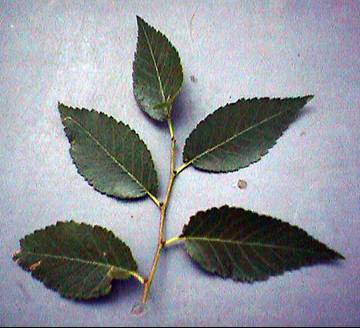
Altnerate Arrangement
Leaves or buds emerging on opposite sides of a stem one at a time
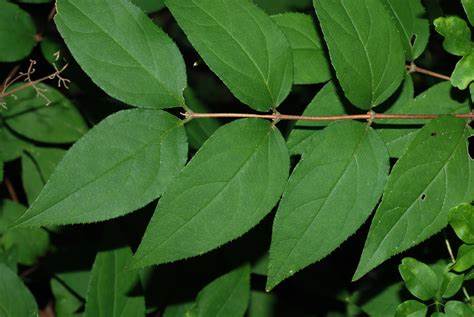
Opposite Arrangement
Leaves or buds emerge from a stem in pairs
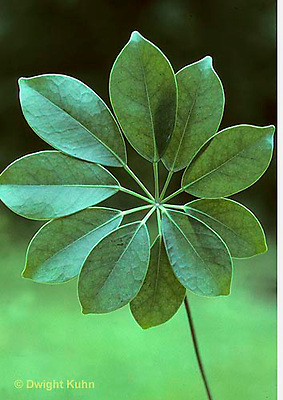
Whorled Arrangement
Leaves or buds emerge in a circular pattern
Corm
Short underground stems that are buds for some flowers ex. gladiolus
Bulb
Large underground buds that can be tunicate (tulips, onions) or scaly (lilies)
Rhizomes
Horizontal underground stems ex. ginger
Stolon
Horizontal stems that run along the ground ex. strawberries
Runner
Stems that form a new plant at the tip ex. spider plants
Crown
The stem area at the soil surface
Spur
woody plant stem with short internodes, develops into fruiting tissue
Sucker
Specialized stem structure of asparagus
Tendril
Flexible stems that curl ex. squash family
Cladophyll
Flattened stem for photosynthesis ex. prickly pear cactus
Blade
Flat part of a leaf
Petiole
Base of leaf that connects it to the stem
Leaflet
Subset of a leaf that make up a complex leaf arrangement
Pinnate Venation
Veins that grow out from a central vein along the center of a leaf
Palmate Venation
Veins that grow branching from a central point