CHAPTER 6 - PSYCHOSOCIAL DEVELOPMENT DURING THE FIRST THREE YEARSDEV PSYCHOLOGY

0.0(0)
Studied by 0 people
call kaiCall Kai
Locked
learnLearn
examPractice Test
spaced repetitionSpaced Repetition
heart puzzleMatch
flashcardsFlashcards
GameKnowt Play
Card Sorting

1/43

encourage image

There's no tags or description

Looks like no tags are added yet.

Last updated 6:47 AM on 8/31/26
Name
Mastery
Learn
Test
Matching
Spaced
Call with Kai
Chat

No analytics yet

Send a link to your students to track their progress

44 Terms

1
New cards

personality

- the relatively consistent blend of emotions, temperament, thought, and behavior that makes each person unique.

<p>- the <u><mark data-color="#dffce4" style="background-color: rgb(223, 252, 228); color: inherit;">relatively consistent blend of emotions</mark></u>, temperament, thought, and behavior that makes each person unique.</p>
2
New cards

Emotions

- Such as fear, are subjective reactions to experience that are associated with physiological and behavioral changes.
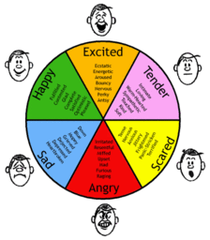
<p>- Such as fear, are<u><mark data-color="red" style="background-color: red; color: inherit;"> subjective reactions to experience that are associated with physiological and behavioral changes</mark></u>.</p>
3
New cards

Social smiling

- Around 6-8 weeks of age, the smile typically first appear

- when newborn infants gaze and smile at their parents, develops in the 2nd month of life

<p>- Around <strong>6-8 weeks of age</strong>, the smile typically first appear</p><p>- when <u><mark data-color="green" style="background-color: green; color: inherit;">newborn infants gaze and smile at their parents</mark></u>, develops in the 2nd month of life</p>
4
New cards

Anticipatory smiling

- In which infants smile at an object and then gaze at an adult while continuing to smile—rises sharply between 8 and 10 months and seems to be among the first types of communication in which the infant refers to an object or experience.
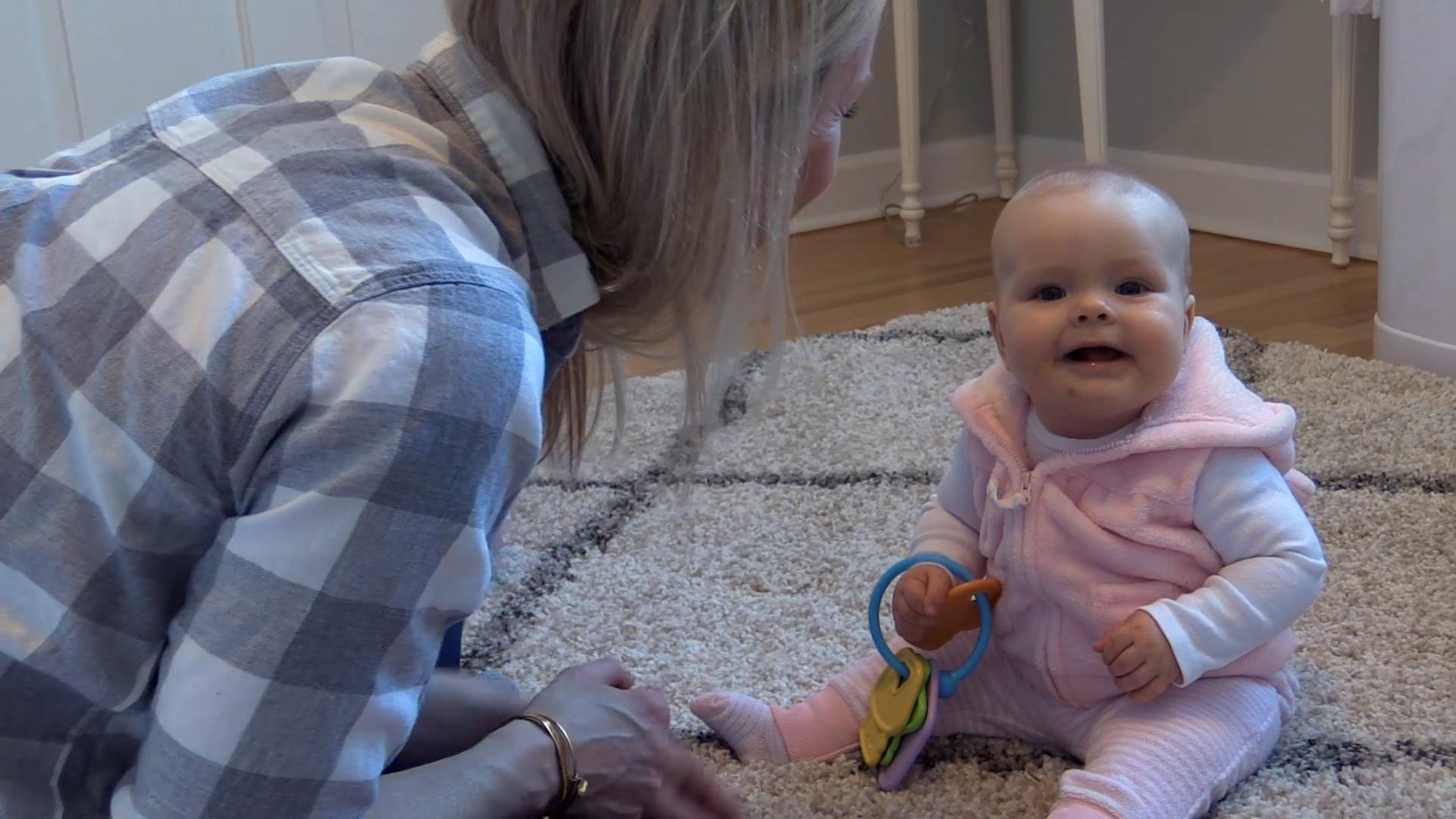
<p>- In which <u><mark data-color="#f7f2d4" style="background-color: rgb(247, 242, 212); color: inherit;">infants smile at an object and then gaze at an adult while continuing to smile</mark></u>—rises sharply between <strong>8 and 10 months</strong> and seems to be among the first types of communication in which the infant refers to an object or experience.</p>
5
New cards

Self-conscious emotions

- such as embarrassment, empathy, and envy, arise only after children have developed self-awareness

<p>- such as <strong>embarrassment, empathy, and envy</strong>, arise only <u><mark data-color="green" style="background-color: green; color: inherit;">after children have developed self-awareness</mark></u></p>
6
New cards

self-awareness

- Realization that one's existence and functioning are separate from those of other people and things.

<p>- Realization that one's existence and functioning are separate from those of other people and things.</p>
7
New cards

self-evaluative emotions

- Emotions, such as pride, shame, and guilt, that depend on both self-awareness and knowledge of socially accepted standards of behavior.

<p>- Emotions, such as <strong>pride, shame, and guilt,</strong> that <u><mark data-color="blue" style="background-color: blue; color: inherit;">depend on both self-awareness and knowledge of socially accepted standards of behavior.</mark></u></p>
8
New cards

empathy

- Ability to put oneself in another person's place and feel what the other person feels.

<p>- <u><mark data-color="purple" style="background-color: purple; color: inherit;">Ability to put oneself in another person's place </mark></u>and feel what the other person feels.</p>
9
New cards

mirror neurons

- Neurons that fire when a person does something or observes someone else doing the same thing.

<p>- <strong>Neurons that fire </strong>when a person does something or observes someone else doing the same thing.</p>
10
New cards

temperament

- Characteristic disposition, or style of approaching and reacting to situations.

<p>- Characteristic disposition, or style of <span style="color: rgb(2, 1, 1);"><u><mark data-color="#e3f7e8" style="background-color: rgb(227, 247, 232); color: inherit;">approaching and reacting to situations.</mark></u></span></p>
11
New cards

easy children

- Children with a generally happy temperament, regular biological rhythms, and a readiness to accept new experiences.
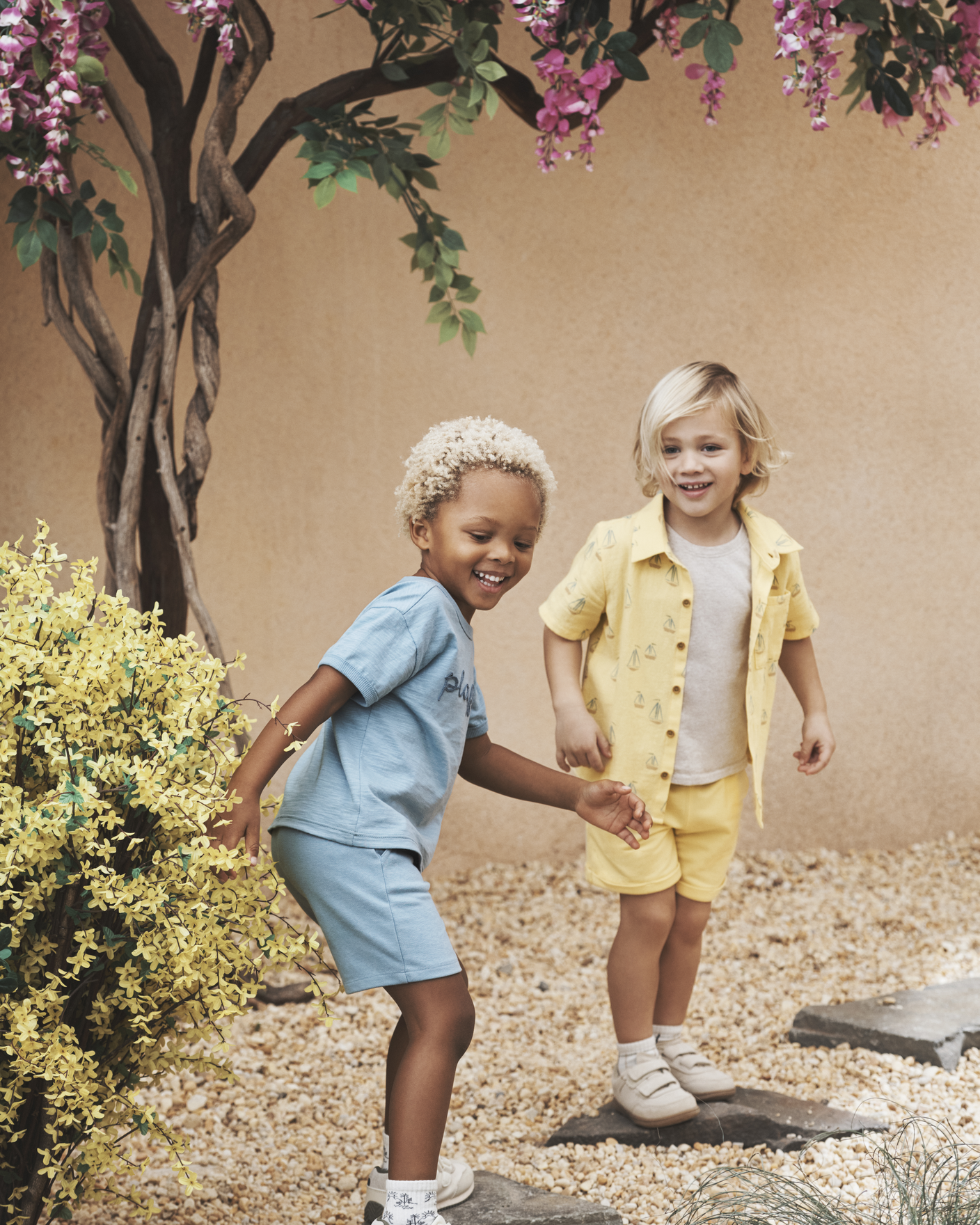
<p>- <u><mark data-color="green" style="background-color: green; color: inherit;">Children with a generally happy temperament</mark></u>, regular biological rhythms, and a readiness to accept new experiences.</p>
12
New cards

difficult children

- Children with irritable temperament, irregular biological rhythms, and intense emotional responses.

<p>- <u><mark data-color="red" style="background-color: red; color: inherit;">Children with irritable temperament</mark></u>, irregular biological rhythms, and intense emotional responses.</p>
13
New cards

slow-to-warm-up children

- Children whose temperament is generally mild but who are hesitant about accepting new experiences.
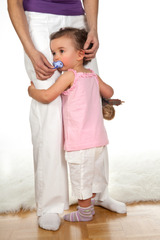
<p>- <u><mark data-color="#e6f7dc" style="background-color: rgb(230, 247, 220); color: inherit;">Children whose temperament is generally mild but who are hesitant</mark></u> about accepting new experiences.</p>
14
New cards

goodness of fit

- Appropriateness of environmental demands and constraints to a child's temperament

<p>- <u><mark data-color="#f8f1d7" style="background-color: rgb(248, 241, 215); color: inherit;">Appropriateness of environmental demands</mark></u> and constraints to a child's temperament</p>
15
New cards

gender

- Significance of being male or female.

<p>- Significance of being <strong>male or female</strong>.</p>
16
New cards

Gender typing

- Socialization process by which children, at an early age, learn appropriate gender roles.

<p>- <u><mark data-color="purple" style="background-color: purple; color: inherit;">Socialization process</mark></u> by which children, at an early age,<u><mark data-color="#f7ecf5" style="background-color: rgb(247, 236, 245); color: inherit;"> learn appropriate gender roles</mark></u>.</p>
17
New cards

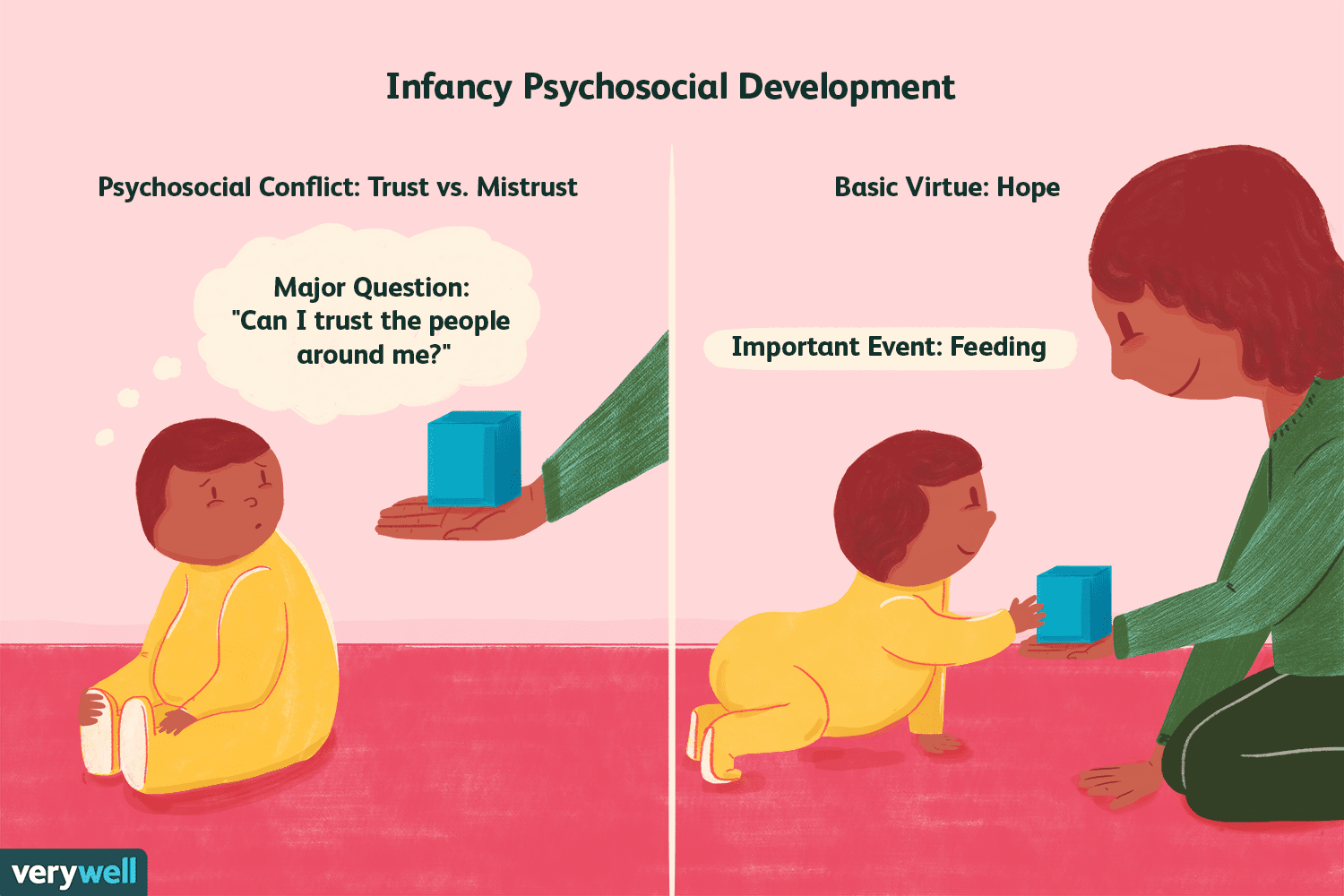
Trust Vs. Mistrust

- Erik Erikson's first stage in psychosocial development, in which infants have a sense of reliability to people and objects

- According to Erikson, the first psychosocial crisis that infants must resolve is?

- During the first year of life, infants develop this when caregivers consistently provide love and comfort and meet their basic needs
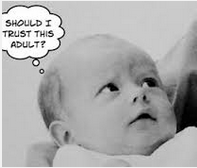
<p>- <strong>Erik Erikson's first stage in psychosocial development</strong>, in which <u><mark data-color="green" style="background-color: green; color: inherit;">infants have a sense of reliability to people and objects</mark></u></p><p>- According to Erikson, the <u><mark data-color="#ecfee3" style="background-color: rgb(236, 254, 227); color: inherit;">first psychosocial crisis that infants must resolve</mark></u> is?</p><p>- During the first year of life, infants develop this when caregivers consistently provide love and comfort and meet their basic needs</p>
18
New cards

attachment

- A reciprocal, enduring tie between two people, especially between an infant and a caregiver.

- Each of whom contributes to the quality of the relationship
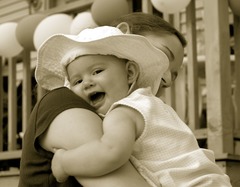
<p>- A <u><mark data-color="#f7e2e9" style="background-color: rgb(247, 226, 233); color: inherit;">reciprocal, enduring tie </mark></u>between two people, especially between an infant and a caregiver. </p><p>- Each of whom contributes to the quality of the relationship</p>
19
New cards

Strange Situation

- Laboratory technique used to study infant attachment.
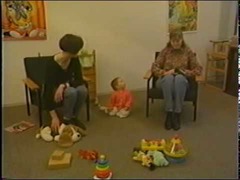
<p>- Laboratory technique used to <u><mark data-color="#f1f0cc" style="background-color: rgb(241, 240, 204); color: inherit;">study infant attachment.</mark></u></p>
20
New cards

secure attachment

- Pattern in which an infant is quickly and effectively able to obtain comfort from an attachment figure in the face of distress.
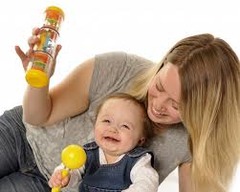
<p>- Pattern in which an infant i<u><mark data-color="#fae8fa" style="background-color: rgb(250, 232, 250); color: inherit;">s quickly and effectively able to obtain comfort from an attachment figure</mark></u> in the face of distress.</p>
21
New cards

avoidant attachment

- Pattern in which an infant rarely cries when separated from the primary caregiver and avoids contact on their return.

<p>- Pattern in which an <u><mark data-color="#eefae9" style="background-color: rgb(238, 250, 233); color: inherit;">infant rarely cries when separated from the primary caregiver and avoids contact on their return</mark></u>.</p>
22
New cards

ambivalent (resistant) attachment

- Pattern in which an infant becomes anxious before the primary caregiver leaves, is extremely upset during their absence, and both seeks and resists contact on their return.

EXAMPLE: when a baby cries intensely upon a parent's departure, but upon their return, frantically seeks comfort while simultaneously pushing the parent away, arching their back, or angrily slapping away offered toys

<p>- Pattern in which an infant becomes anxious before the primary caregiver leaves, is extremely upset during their absence, and both seeks and resists contact on their return.</p><p><strong>EXAMPLE: </strong><span>when </span>a baby cries intensely upon a parent's departure, but upon their return, frantically seeks comfort while simultaneously pushing the parent away, arching their back, or angrily slapping away offered toys</p>
23
New cards

disorganized-disoriented attachment

- Pattern in which an infant, after separation from the primary caregiver, shows contradictory, repetitious, or misdirected behaviors on their return.

EXAMPLE: when an upset baby falls and crawls toward their returning parent for comfort, they suddenly freeze, slap the floor, or turn around and back away in a dazed, confused state.
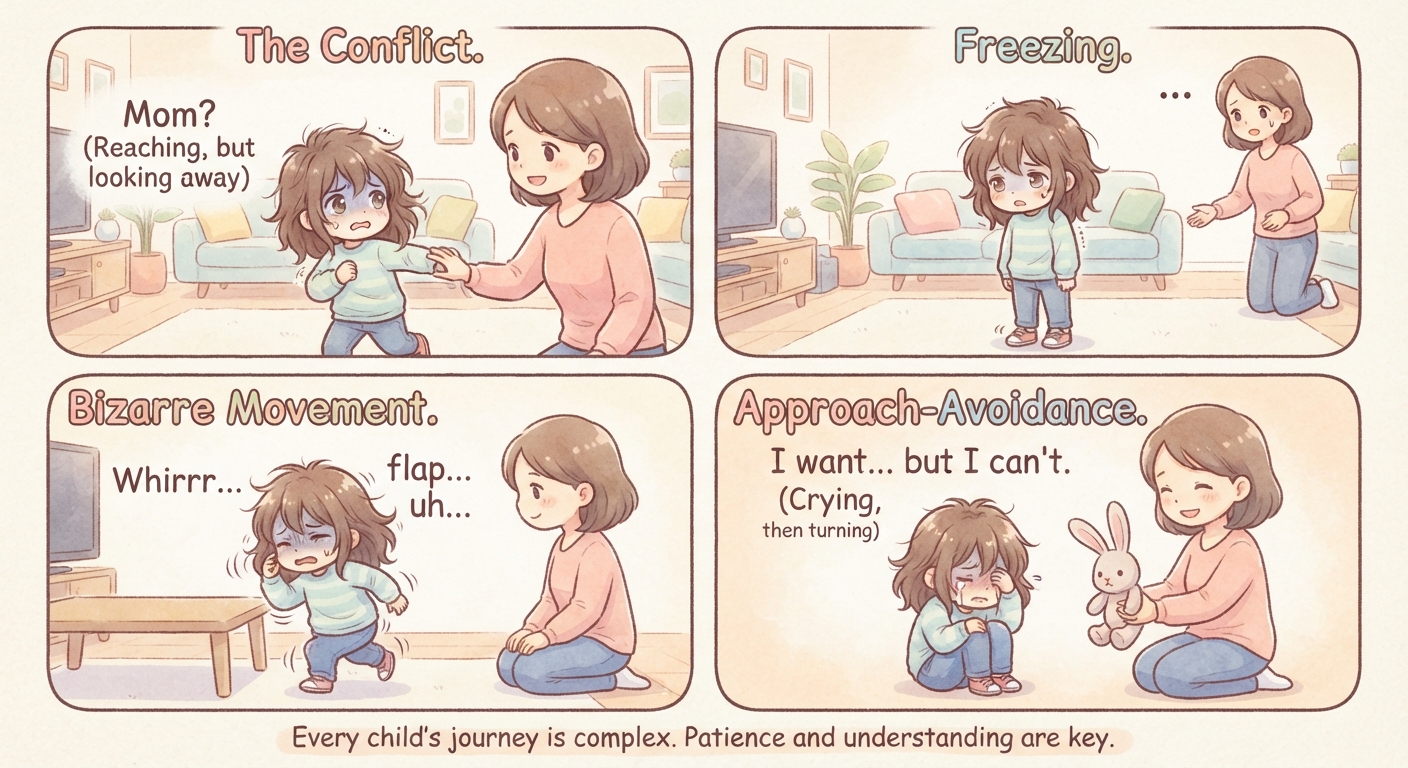
<p>- Pattern in which an infant, after separation from the primary caregiver, shows <u><mark data-color="#f9f1d4" style="background-color: rgb(249, 241, 212); color: inherit;">contradictory, repetitious, or misdirected behaviors</mark></u> on their return.</p><p><strong>EXAMPLE: </strong>when an upset baby falls and crawls toward their returning parent for comfort, they suddenly freeze, slap the floor, or turn around and back away in a dazed, confused state.</p>
24
New cards

stranger anxiety

- Wariness of strange people and places, shown by some infants during the second half of the 1st year.
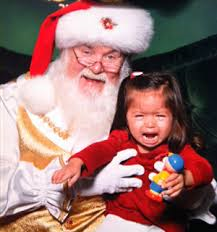
<p>- <u><mark data-color="red" style="background-color: red; color: inherit;">Wariness of strange people and places</mark></u>, shown by some infants during the second half of the 1st year.</p>
25
New cards

separation anxiety

- Distress shown by someone, typically an infant, when a familiar caregiver leaves.

<p>- Distress shown by someone, typically an infant, <u><mark data-color="#f2e3f9" style="background-color: rgb(242, 227, 249); color: inherit;">when a familiar caregiver leaves.</mark></u></p>
26
New cards

mutual regulation

- Process by which infant and caregiver communicate emotional states to each other and respond appropriately.

<p>- Process by which<u><mark data-color="#f3f7d4" style="background-color: rgb(243, 247, 212); color: inherit;"> infant and caregiver communicate emotional states to each other and respond appropriately.</mark></u></p>
27
New cards

interactional synchrony

-The synchronized coordination of behavior and affect between a caregiver and an infant.
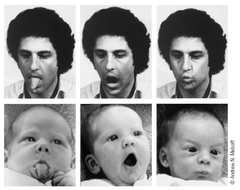
<p>-The<u><mark data-color="#e6e8f8" style="background-color: rgb(230, 232, 248); color: inherit;"> synchronized coordination of behavior</mark></u> and affect between a caregiver and an infant.</p>
28
New cards

still-face paradigm

- Experimental methodology in which a parent first interacts typically with their child, then keeps their face still and expressionless, and then ends with a return to typical behavior;

- used to demonstrate interactional synchrony
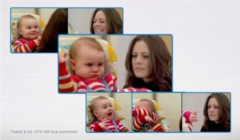
<p>- <strong>Experimental methodology</strong> in which a parent first interacts typically with their child, then keeps their face still and expressionless, and then ends with a return to typical behavior; </p><p>- used to<u><mark data-color="#ede1fa" style="background-color: rgb(237, 225, 250); color: inherit;"> demonstrate interactional synchrony</mark></u></p>
29
New cards

social referencing

- Understanding an ambiguous situation by seeking another person's perception of it.

<p>- Understanding an ambiguous situation by <u><mark data-color="#f7edd8" style="background-color: rgb(247, 237, 216); color: inherit;">seeking another person's perception of it.</mark></u></p>
30
New cards

self-concept

- Sense of self; descriptive and evaluative mental picture of one's abilities and traits.

<p>- <strong>Sense of self</strong>; descriptive and evaluative mental picture of one's <mark data-color="#feedff" style="background-color: rgb(254, 237, 255); color: inherit;">abilities and traits</mark>.</p>
31
New cards

socialization

- Development of habits, skills, values, and motives shared by responsible, productive members of a society

<p>- Development of habits, skills, values, and motives <strong>shared </strong>by responsible, productive<strong> members of a society</strong></p>
32
New cards

internalization

- During socialization, the process by which children accept societal standards of conduct as their own.

<p>- During socialization, the process by which <u><mark data-color="#faf1e2" style="background-color: rgb(250, 241, 226); color: inherit;">children accept societal standards of conduct as their own.</mark></u></p>
33
New cards

self-regulation

- A child's independent control of behavior to conform to understood social expectations

<p>- A child's independent control of behavior to <u><mark data-color="green" style="background-color: green; color: inherit;">conform to understood social expectations</mark></u></p>
34
New cards

conscience

- Internal standards of behavior, which usually control one's conduct and produce emotional discomfort when violated.

<p>-<strong> Internal standards of behavior</strong>, which usually control one's conduct and produce emotional discomfort when violated.</p>
35
New cards

situational compliance

- Kochanska's term for obedience of a parent's orders only in the presence of signs of ongoing parental control.

<p>- Kochanska's term for obedience of <u><mark data-color="#f6e1ed" style="background-color: rgb(246, 225, 237); color: inherit;">a parent's orders only in the presence of signs of ongoing parental control.</mark></u></p>
36
New cards

committed compliance

- Kochanska's term for wholehearted obedience of a parent's orders without reminders or lapses.

<p>- Kochanska's term for wholehearted obedience of<u><mark data-color="red" style="background-color: red; color: inherit;"> a parent's orders without reminders or lapses.</mark></u></p>
37
New cards

receptive cooperation

- Kochanska's term for eager willingness to cooperate harmoniously with a parent in daily interactions, including routines, chores, hygiene, and play.

<p>- Kochanska's term for<u><mark data-color="green" style="background-color: green; color: inherit;"> eager willingness to cooperate harmoniously</mark></u> with a parent in daily interactions, including routines, chores, hygiene, and play.</p>
38
New cards

physical abuse

- Action taken deliberately to endanger another person, involving potential bodily injury.
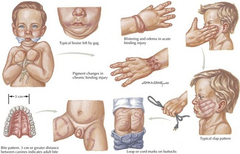
<p>- Action taken deliberately to endanger another person, involving<u><mark data-color="#fadee8" style="background-color: rgb(250, 222, 232); color: inherit;"> potential bodily injury.</mark></u></p>
39
New cards

neglect

- Failure to meet a dependent's basic needs.

<p>- <strong>Failure </strong>to <strong>meet </strong>a dependent's basic needs.</p>
40
New cards

sexual abuse

- Physically or psychologically harmful sexual activity or any sexual activity involving a child and an older person.

<p>- <u><mark data-color="#fae6f9" style="background-color: rgb(250, 230, 249); color: inherit;">Physically or psychologically harmful sexual activity</mark></u> or any sexual activity involving a child and an older person.</p>
41
New cards

emotional maltreatment

- Rejection, terrorization, isolation, exploitation, degradation, ridicule, or failure to provide emotional support, love, and affection; or other action or inaction that may cause behavioral, cognitive, emotional, or mental disorders.

<p>- Rejection, terrorization, isolation, exploitation, degradation, ridicule, or failure to provide emotional support, love, and affection; or other action or inaction that <u><mark data-color="#f7e1ed" style="background-color: rgb(247, 225, 237); color: inherit;">may cause behavioral, cognitive, emotional, or mental disorders</mark></u><mark data-color="#f7e1ed" style="background-color: rgb(247, 225, 237); color: inherit;">.</mark></p>
42
New cards

sex tracking

- The recruitment, harboring, transportation, provision, or obtaining of a person for the purposes of a commercial sex act.

<p>- The recruitment, harboring, transportation, provision, or <u><mark data-color="blue" style="background-color: blue; color: inherit;">obtaining of a person for the purposes of a commercial sex act.</mark></u></p>
43
New cards

Hope

- Which basic virtue develops when an infant successfully resolves the trust vs. mistrust crisis?

- Erikson believed that successfully resolving the first psychosocial crisis develops the virtue of?
<p>- Which basic virtue develops when an infant successfully resolves the <strong>trust vs. mistrust crisis</strong>?</p><p>- Erikson believed that successfully resolving the first psychosocial crisis develops the virtue of?</p>
44
New cards



