A&P lab (week 2)
 Call Kai
 Learn
Learn Practice Test
 Spaced Repetition
 Match
Match Flashcards
 Knowt Play
1/29

There's no tags or description
Looks like no tags are added yet.
Name | Mastery | Learn | Test | Matching | Spaced | Call with Kai | Chat |
|---|
No analytics yet
Send a link to your students to track their progress
30 Terms
Histology
the study of tissue (two or more types of cells sharing a common function)
Tissues have what two basic parts?
living and nonliving parts
cells (living)
the matrix (nonliving)
What is the matrix composed of?
ground substance and fibers
What are the four main tissue types?
epithelial
connective
muscular
nervous
What are the characteristics of epithelial tissue?
tightly packed with little matrix
avascular (not own blood supply)
covers and lines (makes up glands)
anchored to a basement membrane
basal and apical surface (down and up, respectively)
classified by number of cell layers
simple, stratified
classified by cell shape
squamous, cuboidal, columnar
Can epithelial tissue function without a blood supply?
no, it has a connective tissue layer beneath to provide nutrients
How can you distinguish between epithelial and connective tissue?
epithelial tissue has both a basement membrane and an open space while connective does not
Pseudostratified tissue
appears stratified but is actual simple (every cell touches basement membrane)


Simple Squamous Epithelium
*location
Lines alveoli (air sacs) of lungs, blood vessels, and inside of heart


Simple Cuboidal Epithelium
*location
Lines glands and ducts; lines tubules of kidneys


Simple Columnar Epithelium
*location
lines digestive tract


Pseudostratified Ciliated Columnar Epithelium
*location
Lines respiratory passages
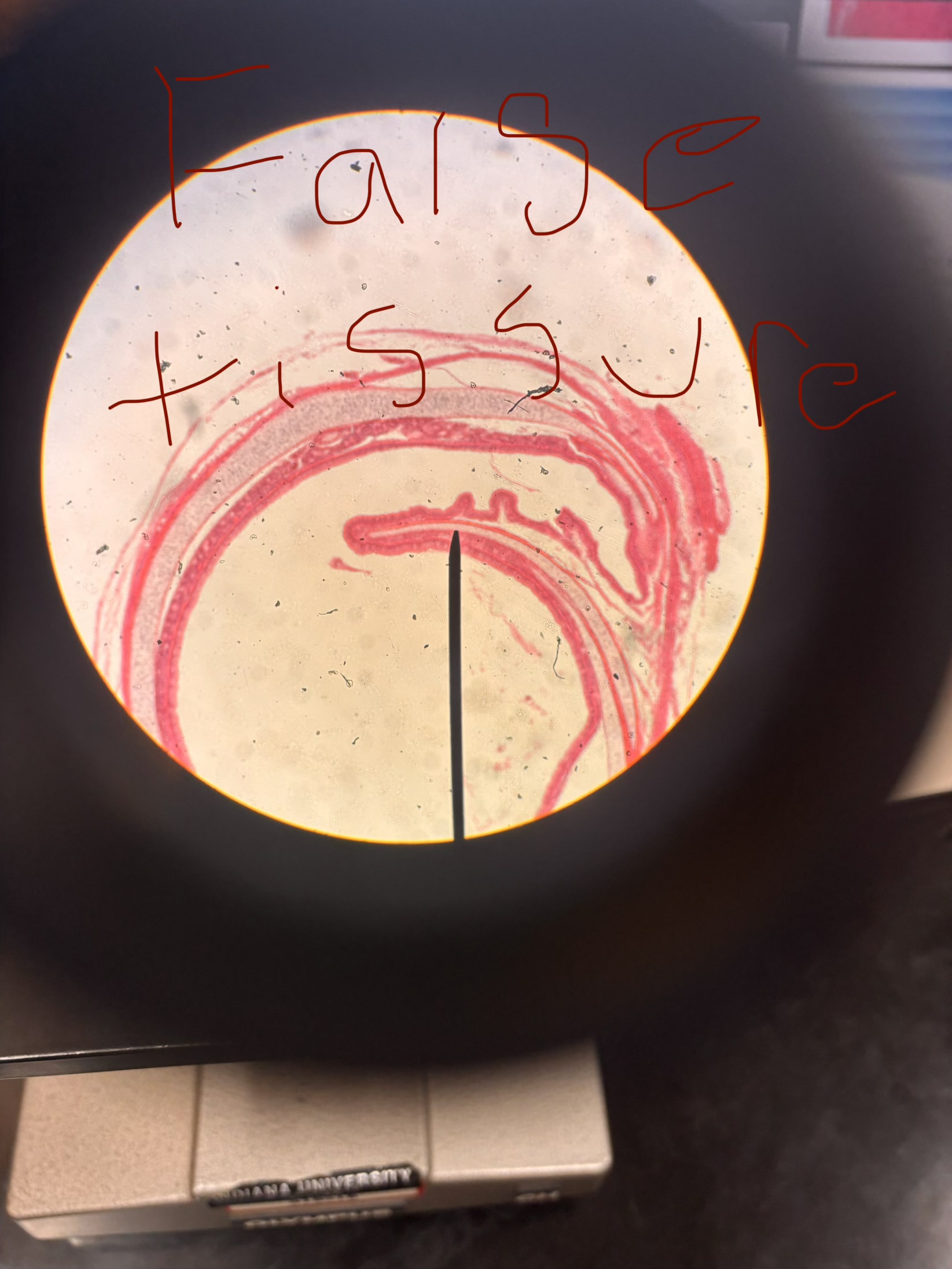
What are the two types of stratified squamous epithelium?
*location
non-keratinized (lines mouth, esophagus, vagina, and anal canal)
keratinized (epidermis)

What are the characteristics of Connective tissue?
Loosely packed cells with abundant matrix
Ground substance is fluid, gel, or solid
Contains fibers (collagen, elastic, reticular)
Vascular (own blood supply)
Most abundant tissue
Most varied in structure and functions
What are the connective tissue cell types?
fibroblasts (produce something)
mast cells (cause inflammation)
macrophages (carry out phagocytosis)
Dense Fibrous Connective tissue
two types
dense regular and dense irregular connective tissue

Dense Regular connective tissue
collagen fibers smooshed together, moving in same direction
ex. makes up tendons and ligaments

Dense irregular connective tissue
collagen fibers smooshed together, moving in opposite directions
ex. found in dermis of skin

Areolar Connective tissue
Composed of all three types of cells and fiber types
ex. found in dermis of skin


Adipose Connective tissue
Cells are adipocytes (only visible cell type)
Has all fibers (not visible)
ex. found in hypodermis (under skin) and around eyes, heart, kidneys
function: insulation and protection

Cartilage
three types
hyaline, fibrocartilage, elastic cartilage
What are the cells of cartilage?
chondrocytes
ex. found in lacunae (spaces)

Hyaline Cartilage
glass like cartilage
Has collagen but cannot see
Chondrocytes in lacunae are randomly scattered
Trachea, fetal skeleton, articular and costal cartilage
Function: does not stretch easily


Fibrocartilage
contains thick visible collagen fibers
neat rows (fibers line up)
ex. located in pubic symphysis, intervertebral discs, menisci of knee
function: resists compression and absorbs shock

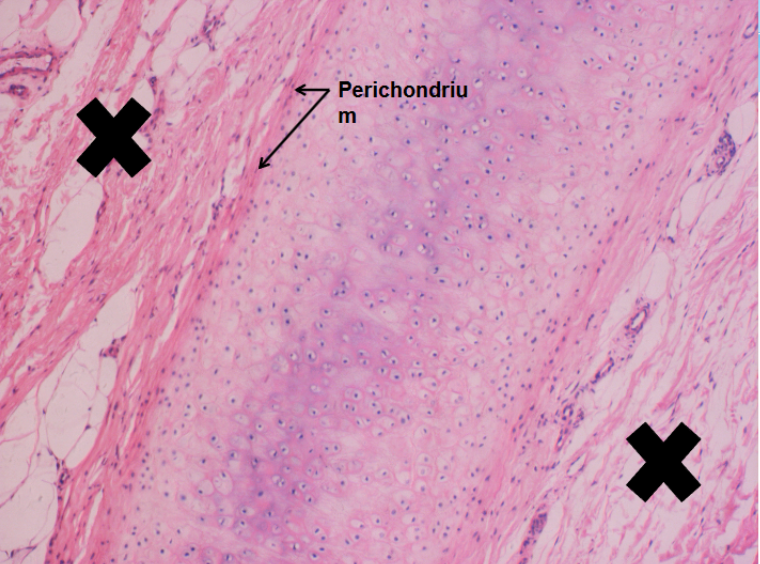
Elastic cartilage
contains elastic fibers (no collagen)
chondrocytes are randomly scattered
wispy appearance
located in external ear + epiglottis
ex. surrounded by perichondrium
function: flexible

What are elastic and most hyaline cartilages surrounded by?
perichondrium

What are the two types of bone?
1. spongy bones
2. compact bone
ex. both types contain collagen fibers

What are the cells and basic units of bone?
unit: osteon
cells: osteocytes
Osteon
located in bone
contain central canals (holes within middle) with osteocytes scattered around (not round)


What are the different components of blood?
1. RBCs
2. WBCs
3. Platelets (clott blood)
4. Plasma (liquid portion)