Unit 1: Overview of Anatomy
 Call Kai
 Learn
Learn Practice Test
 Spaced Repetition
 Match
Match Flashcards
 Knowt Play
1/49

There's no tags or description
Looks like no tags are added yet.
Name | Mastery | Learn | Test | Matching | Spaced | Call with Kai | Chat |
|---|
No analytics yet
Send a link to your students to track their progress
50 Terms
What is anatomy?
Study of body structures and their relationships to one another.
Regional Anatomy
Looking at ALL STRUCTURES in a PARTICULAR AREA of the body (ex: looking at bones, muscles, nerves of the upper limb) - Used mostly for this class
Systemic Anatomy
Looks at SPECIFIC ORGAN SYSTEM in the body and STRUCTURES RELATED to it (ex: nervous system)
4 main subdisciplines of anatomy:
Gross Anatomy: Structures without microscope (naked eye) - this course
Embryology: Development of structures fertilization to birth
Histology: Study of body/structures with microscope
Neuroanatomy: Structures of nervous system
Principle of Complementarity of Structure and Function says…
“Function always reflects structure”
Anatomy = “Structure”
Physiology = “Function”
Bicycle example: Anatomy = Circle wheels, Physiology = To move
Structural organization of an organism:
1) Atoms —> Molecules (Chemical Level = Atoms combine to form molecules simplest)
2) Organelle —> Smooth Muscle Cell (Cellular Level = Cells made up of molecules, smallest living things unit/basic function
3) Smooth Muscle Tissue (Tissue Level = Tissues consisting of similar cell types - 4 types: Epithelial, Connective, Nervous, Muscle)
4) Blood Vessel (Organ), Connective Tissue, Epithelial Tissue, Smooth Muscle Tissue (Organ Level = Organs are made of different types of tissues)
5) Cardiovascular System, Heart, Blood Vessels (Organ System Level: Organ systems consist of different organs working together closely)
6) Organism (Organismal Level: Human organism made up of many organ systems)
Skeletal System: Major Components
“Frame like a House" - Support system for structures to attach & travel through
1) Bone
2) Cartilage
3) Tendons (Attach muscles to bones)
4) Ligaments (Connects bones to other muscles)
5) Joints
Skeletal System: Major Functions
1) Protection (Ex: Ribcage surrounding heart/lungs)
2) Hematopoiesis (Formation of blood cells, occurs within many bones)
3) Storage (Bones store nutrients, Adipose (fat tissue) stored here and used for energy)
4) Leverage (Muscles attach to bones, when contracts/shortens it allows movement)
Muscular System: Major Functions
1) Provides movement
2) Generates heat (thermogenesis) (when cold, body shivers, warms up)
Muscular System: 3 Types of Muscle Tissue
1) Cardiac Muscle = Only in walls of heart, Involuntary
2) Smooth - Involuntary Movement = Walls of many hollow organs, involuntary (ex: most muscles in walls of digestive tract)
3) Skeletal - Voluntary Movement = Attached to bones across skeleton, voluntary, we have control over and allows our body to move from one location to another
Cardiovascular (Circulatory) System: Major Components
1) Heart
2) Blood Vessels
3) Blood
Cardiovascular (Circulatory) System: Major Function
Heart = Major Pump to move blood throughout body via blood vessels
1) Transportation system for body
Oxygen, nutrients, disposes Co2 and waste, hormones
Distributes hormones/nutrients/gases/picks up waste
Lymphatic System: Major Components
1) Lymph Vessels
2) Lymph Nodes
3) Spleen
4) Thymus
5) Tonsils
6) Bone Marrow
Lymphatic System: Major Functions
1) Fluid Control: Regulate fluid levels in body tissues
2) Filtration: Filters blood/Fluid called lymph (excess fluid from tissues found traveling in lymphatic vessels)
3) Immunity: Protects body from diseases using white blood cells
Nervous System: Main Components
1) Brain
2) Spinal Cord
3) Nerves (coming off structures)
4) Special Sense Organs (ex: eyes/ears)
Nervous System: Major Functions
1) Communication: Transmits nerve impulses/action potentials in body
2) Maintain Homeostasis: Create stable internal environment, DYNAMIC STATE changing for balance
Endocrine System: Major Components
1) Hormone producing glands and cells - Hormones travel in bloodstream to regulate
Endocrine System: Major Functions
1) Maintain Homeostasis
2) Communication: Within body
Respiratory System: Major Components
1) Nasal Cavity
2) Pharynx
3) Larynx
4) Bronchi
5) Lungs
Respiratory System: Major Functions
1) Responsible for gas exchange; Oxygen (in) and Co2 (out)
O2 → Nasal/Oral Cavity → Pharynx → Larynx → Trachea → Bronchi → Gas exchange site (lungs)
Digestive System: Major Components
1) Alimentary Canal/Gastrointestinal (GI) Tract: Series of hollow organs for food/waste products to travel through
2) Accessory organs which assist in chemical breakdown of food
- Salivary Glands
- Liver
- Gallbladder
- Pancreas
Digestive System: Major Functions
1) Breakdown of food for absorption (makes molecules small enough to be absorbed across the epithelial lining of the alimentary canal - “gut wall”).
2) Elimination of waste
Urinary System: Major Components
- Kidneys (2)
- Ureters (2)
- Bladder (1)
- Urethra (1)
Urinary System: Major Function
1) Filters blood
2) Concentrates waste (urine) for elimination
Reproductive System: Major Components (FEMALE)
1) Uterus
2) Vagina
3) Ovaries (set of 2)
4) Fallopian tubes (set of 2)
5) External genitalia
Reproductive System: Major Components (MALE)
1) Penis
2) Testes & Scrotum
3) Duct system
4) Associated glands
Reproductive System: Major Functions
1) Procreate
2) Produce hormones
3) Form germ cells (sperm + egg)
4) House developing embryo/fetus
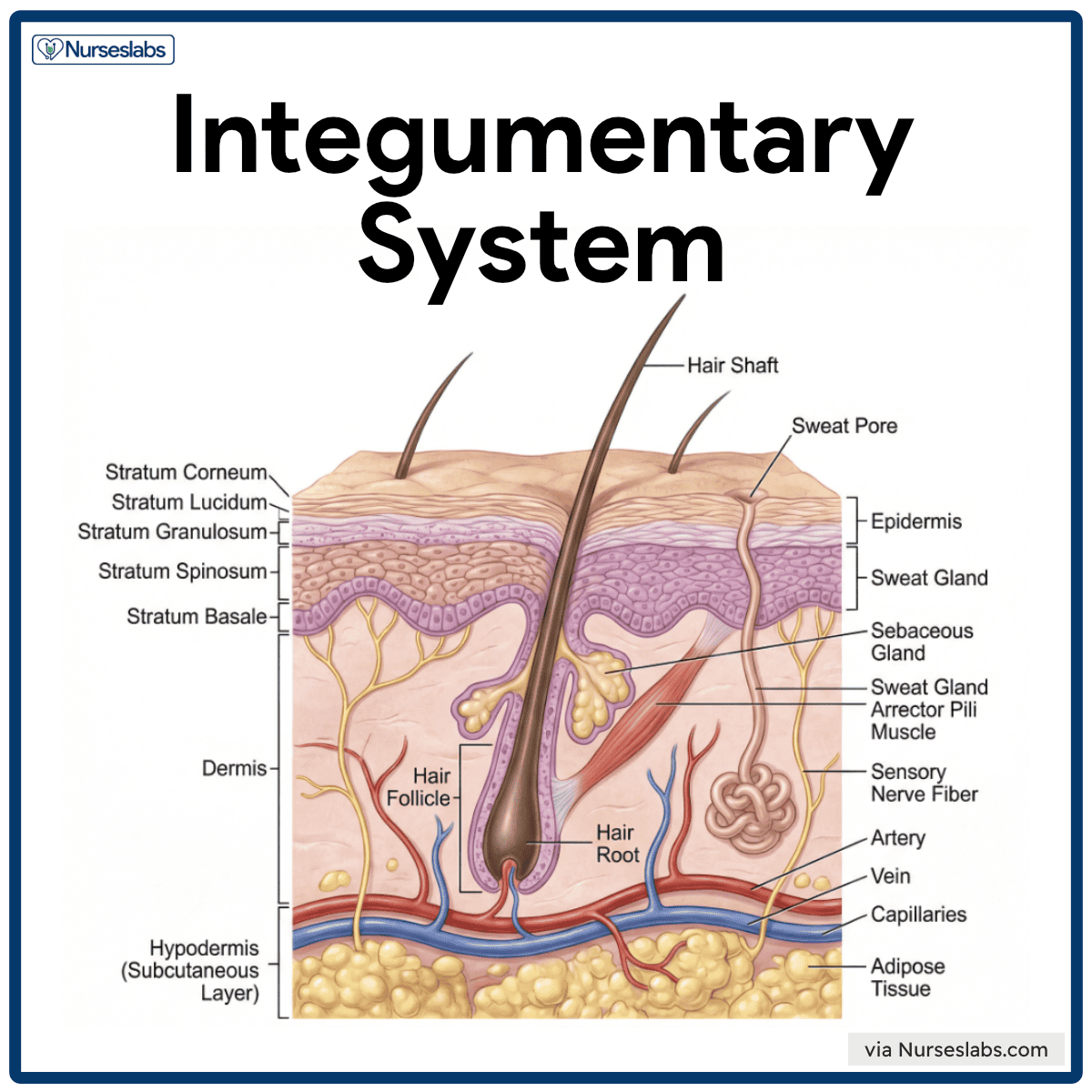
Integumentary System: Major Components
1) Skin - 2 Parts
- Part 1: Epi-(UP)-dermis = Outermost/superficial layer of skin made of epithelial tissue
- Part 2: Dermis = Deeper layer of skin; connective tissue with many nerves, vessels, follicles, and glands.
2) Accessory Structures
- Sebaceous (oil) Glands
- Sweat Glands
- Hair
- Nails
Integumentary System: Major Functions
1) Protection - BARRIER
2) Temperature Regulation
3) Sensation
4) Waste elimination - PREVENT
5) Synthesize Vitamins
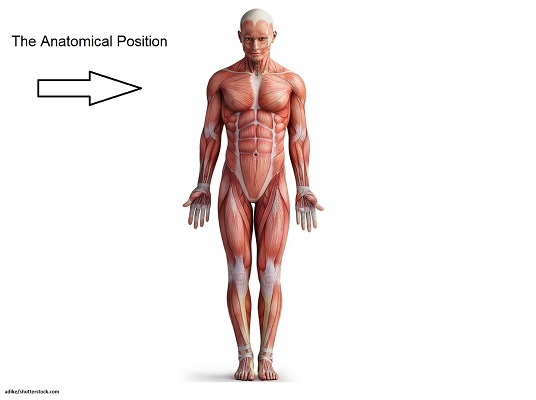
Anatomical Position
Body standing upright, facing forward, chin parallel to floor, upper limbs side to side, feet together, parallel, flat on floor with toes forward.
Right vs. Left on Model
Always refers to patient’s right or left not ours.
Prone vs. Supine position
WHEN LYING DOWN…
Supine = patient on back
Prone = lying face down
Anterior (Ventral) vs. Posterior (Dorsal)
Anterior (ventral) = front side of body (belly button, boobs, head)
Posterior (dorsal) = back side of body (spinal column, butt, ankles)

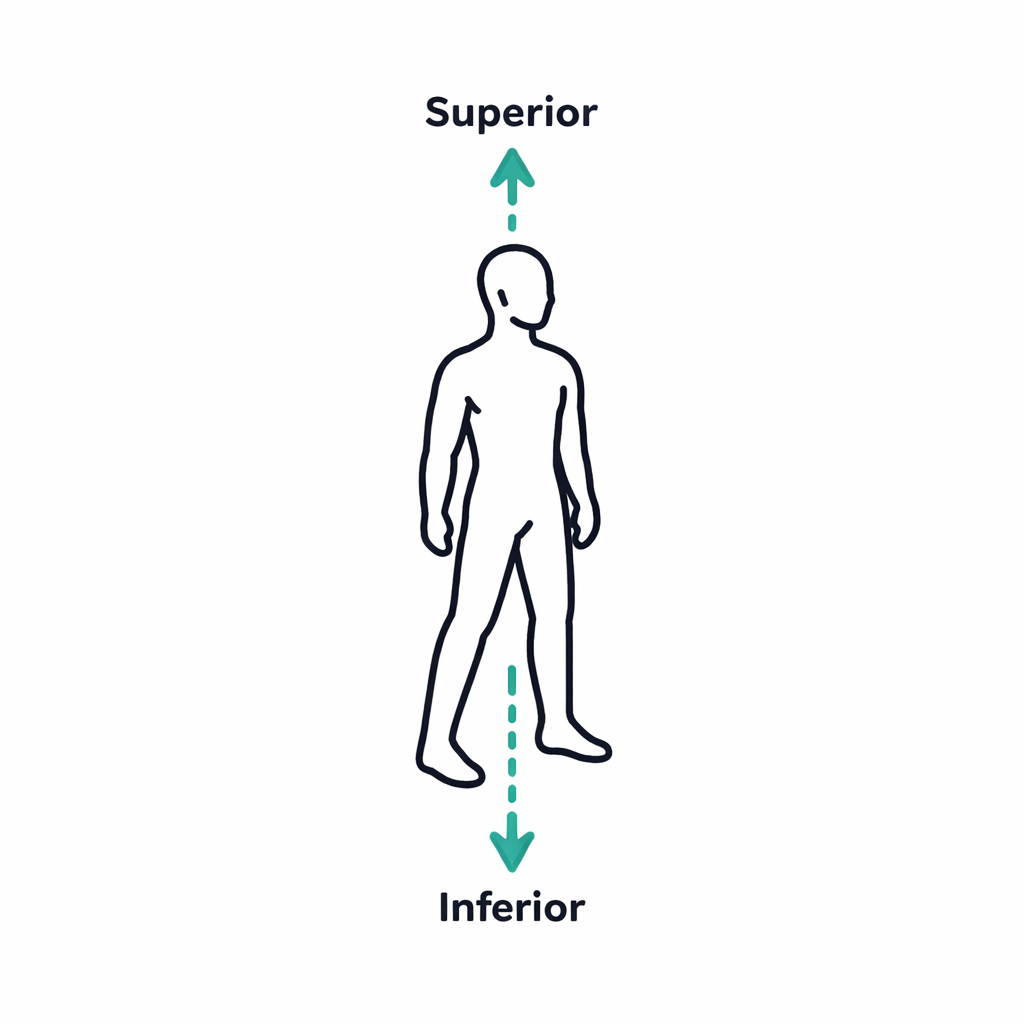
Superior vs. Inferior
Superior = Toward/nearer the head end or upper part of the body/structure
Ex: Nose superior to mouth
Inferior = Away/further from the head end or upper part of the body/structure
Ex: Mouth inferior to nose
Medial vs. Lateral
Imagine line down body in anatomical position…
Medial = Nearer to MIDLINE/MIDDLE of body
Lateral = Further from midline of the body
Ex: Left eye medial to left ear, left ear lateral to left eye
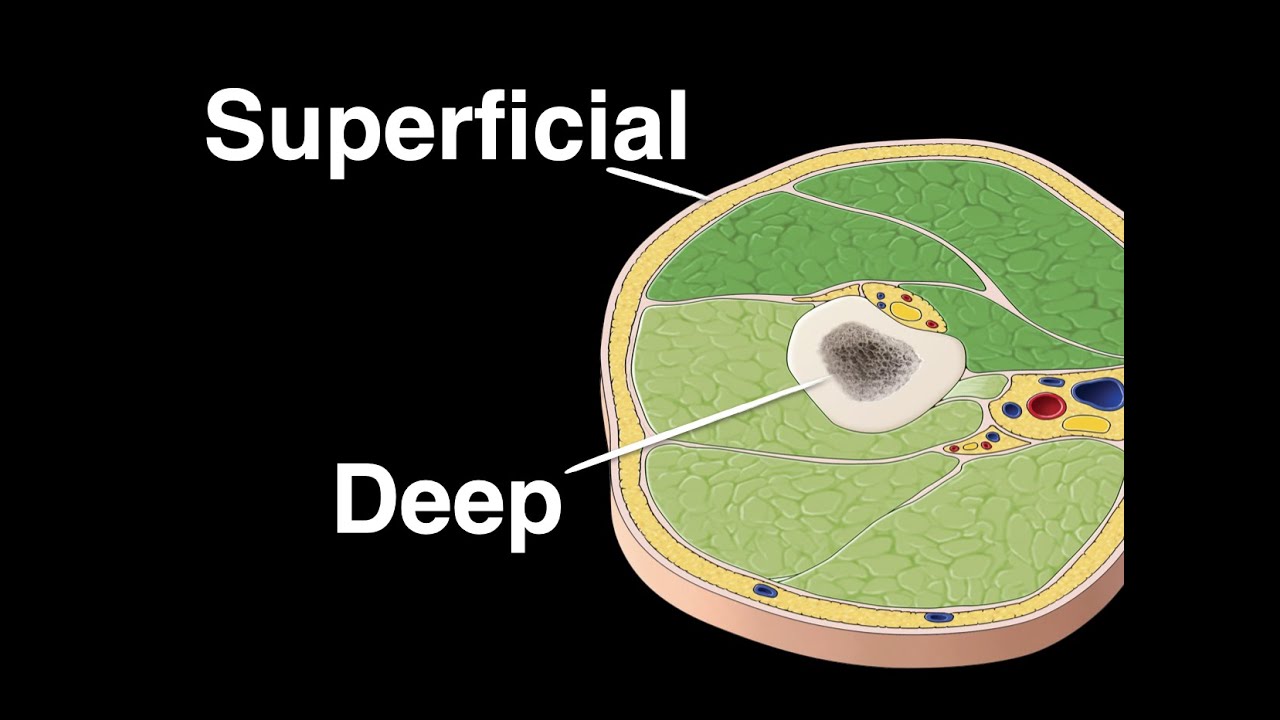
Superficial vs. Deep
Superficial = Towards/at body’s surface
Deep = Away from body’s surface (deeper)
Ex: Skin superficial to muscles, muscles deep to the skin
Proximal vs. Distal
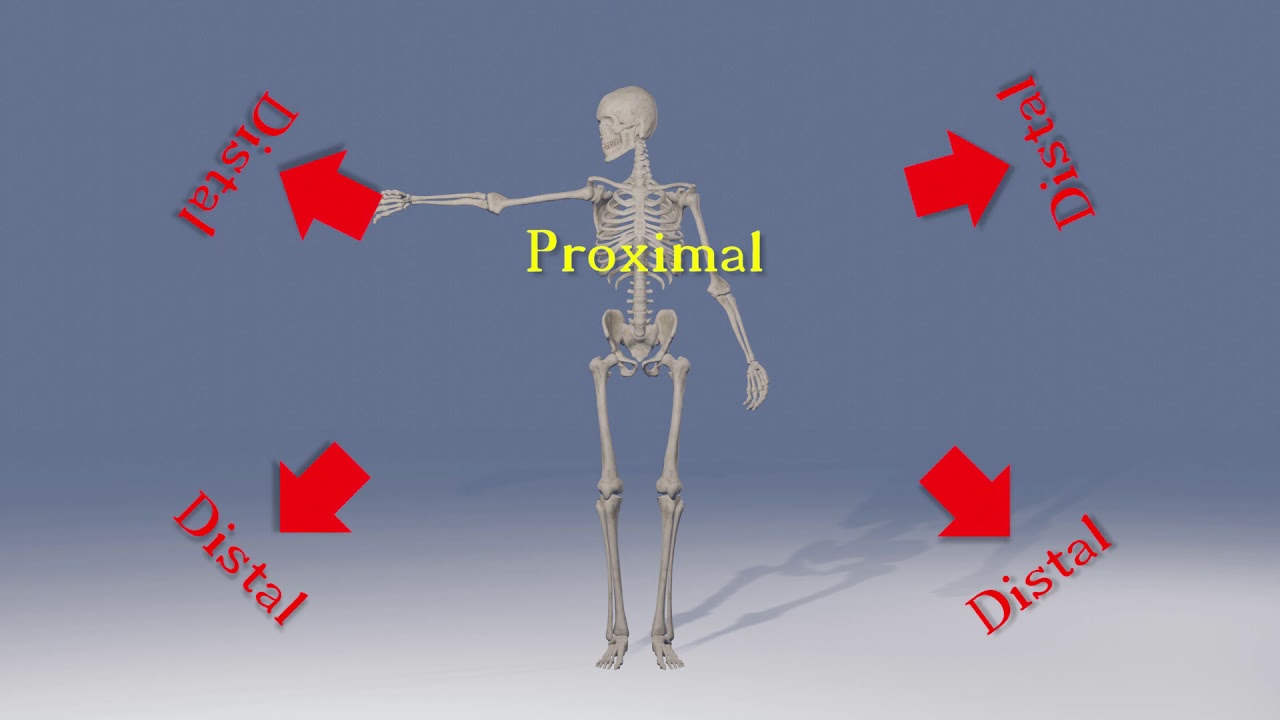
Proximal = Closer to origin of body part
Closer to attachment of limb (For GI = Closer to mouth)
Distal “DISTANCE” = Further from origin of body part
Further from attachment of limb (For GI = Further from mouth)
Upper limb attachment is shoulder joint, Lower limb attachment is hip joint
Ex: Elbow proximal to wrist, wrist distal to elbow
Unilateral vs. Bilateral
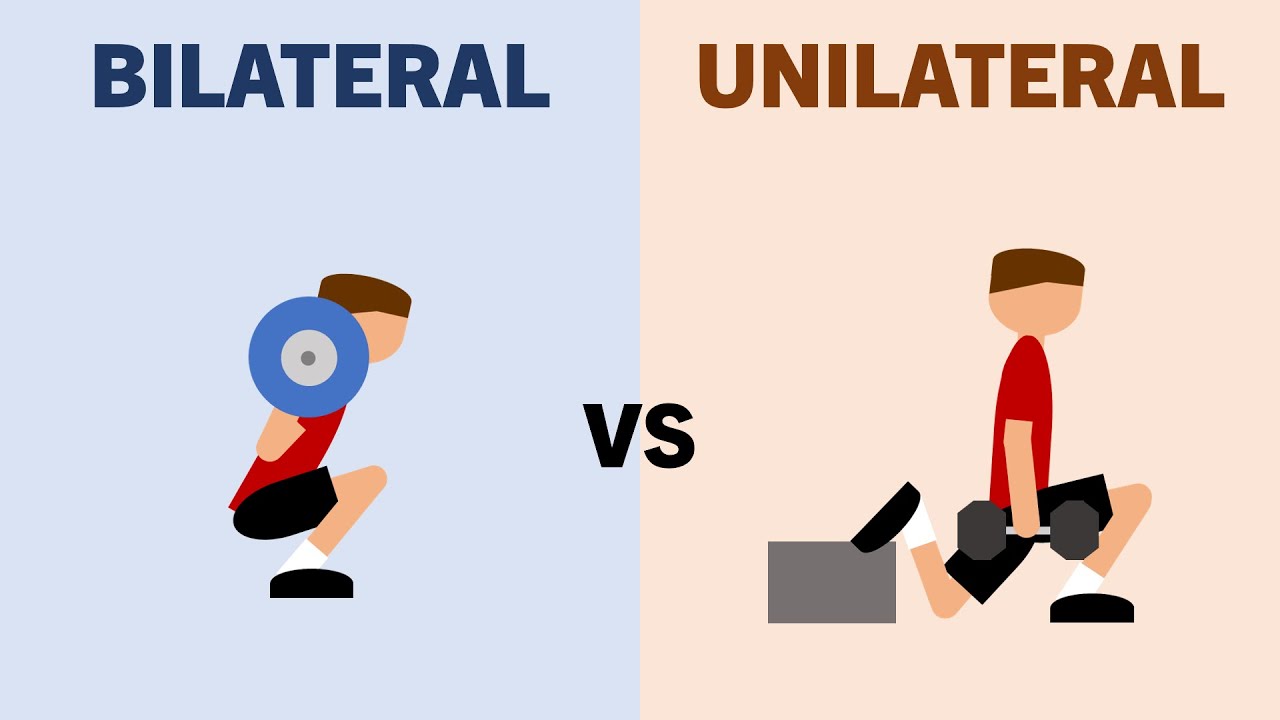
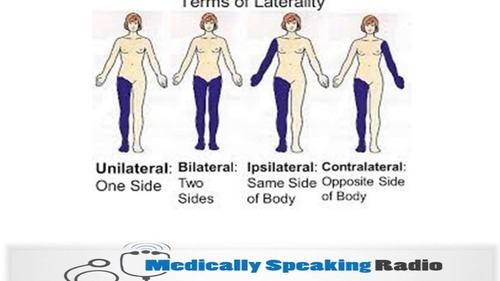
Unilateral = Relating to/occurring on/affecting only ONE SIDE of body/structure
Bilateral = Relating to/occurring on/affecting only BOTH SIDE of body/structure
Ipsilateral vs. Contralateral
Ipsilateral = SAME SIDE of body
Contra -(CONTRADICTING)-lateral = on OPPOSITE SIDES of body
Two Divisions of Body:
1) Axial division = Head, neck, trunk (thorax/abdomen/pelvis)
2) Appendicular division = Appendages/limbs
Two Major Regions of the Upper Limb:
1) Arm = Between shoulder and elbow (upper)
2) Forearm = Between elbow and wrist (lower)
Two Major Regions of the Lower Limb:
1) Thigh = Between hip and knee (upper)
2) Leg = Between knee and ankle (lower)
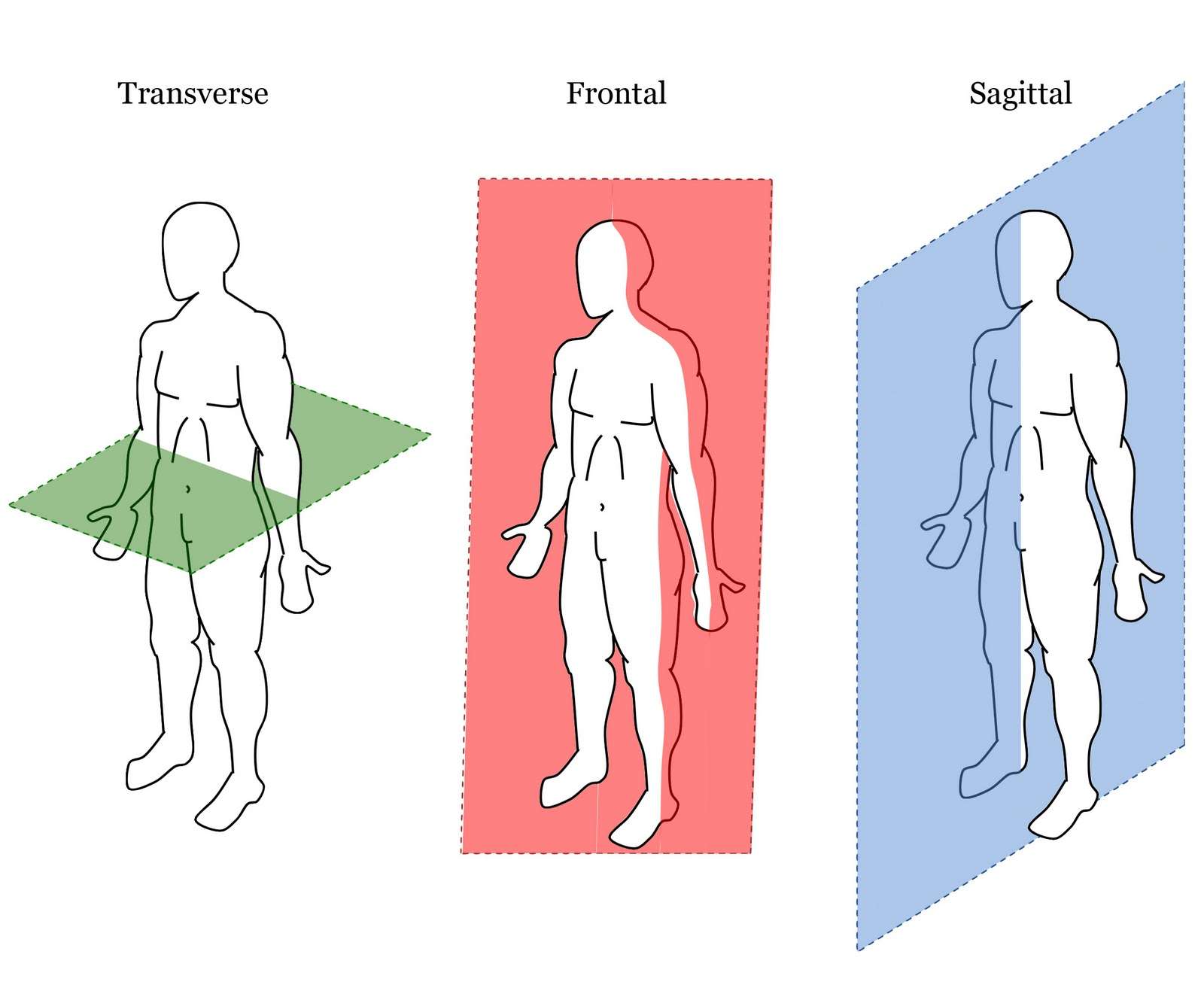
Sagittal Plane, Frontal/Coronal Plane, Transverse/Horizontal Plane
All in anatomical position
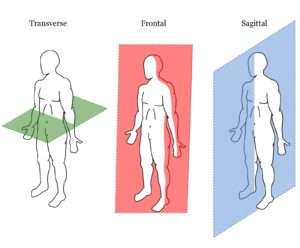
Sagittal Plane = Divides body into left and right parts
Frontal/Coronal Plane = Divides body into anterior and posterior parts
Transverse/Horizontal Plane = Knife horizontal cutting belly button to butt (slice)

Sagittal Plane
Divides body into left and right parts
Midsagittal/Median Plane: EQUAL left and right halves
- Mid = Medium = Equal ——→ Only one midsagittal line
Parasagittal Planes: UNEQUAL left and right halves
Can have many parasagittal lines
Frontal/Coronal Plane
Divides body into anterior and posterior parts
Front side, back side

Transverse/Horizontal Plane
Divides the body into superior and inferior parts
Top and bottom sides
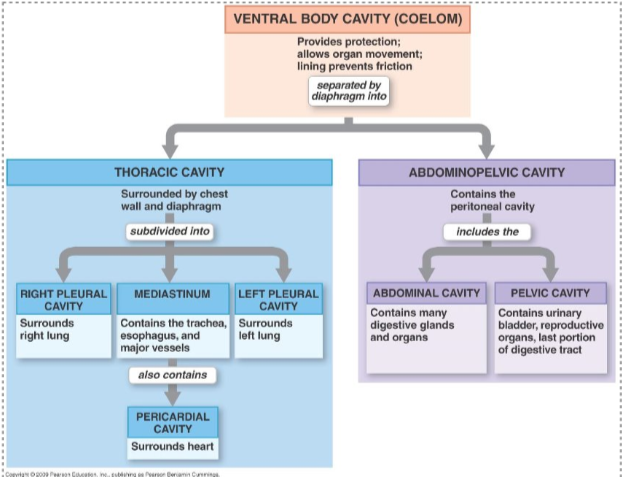
2 Main Body Cavities:
1) Dorsal Body Cavities
Two subdivisions: Cranial Cavity (houses the brain), Vertebral Cavity (houses spinal cord).
2) Ventral Body Cavities
Houses internal organs collectively (viscera)

2 Ventral Body Cavities subdivisions:
Separated by muscular diaphragm
1) Thoracic Cavity
Divided into 3 pleural cavities:
1) Left pleural cavity = Surrounds left lung
2) Mediastinum = In middle (includes esophagus, trachea, thymus, others, AND pericardial cavity which surrounds the heart)
3) Right pleural cavity = Surrounds right lung
2) Abdominopelvic Cavity
1) Abdominal Cavity = Contains digestive viscera (or organs)
2) Pelvic Cavity = Contains distal portion of digestive tract, urinary bladder, and reproductive organs
Abdominopelvic Quadrants (4)
To divide into quadrants, vertical and horizontal lines go through or cross one another at umbilicus (belly button)
Stomach mostly found in upper left quadrant

Abdominopelvic Quadrants Abbreviations
RUQ = Right Upper Quadrant
RLQ = Right Lower Quadrant
LUQ = Left Upper Quadrant
LLQ = Left Lower Quadrant
