Greenwood project
 Call Kai
 Learn
Learn Practice Test
 Spaced Repetition
 Match
Match Flashcards
 Knowt Play
1/76

There's no tags or description
Looks like no tags are added yet.
Name | Mastery | Learn | Test | Matching | Spaced | Call with Kai | Chat |
|---|
No analytics yet
Send a link to your students to track their progress
77 Terms
Inventory
Inventory is an Asset that reflects good purchased for resale to customers in the future.
Accounts payable (A/P)
A liability created when we buy inventory from a supplier and agree to pay in the future.
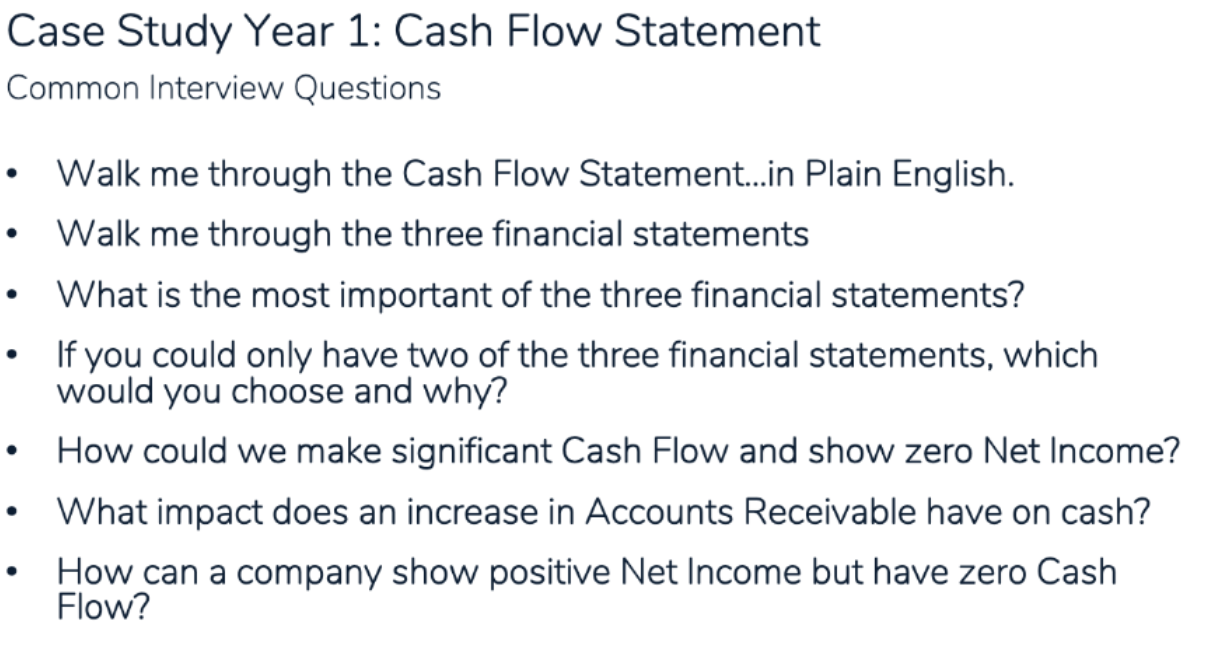
Income Statement
Shows us the underlying profit of a company over a period of time
Balance Sheet
Shows us the Cumulative Account Balance for a company at a point in time
Cash Flow Statement
Shows us Change in Cash for a Company Over a Period of Time
Accounting uses what profit method?
Accrual-based profit
What are the Three Financial Statment
Income statement - underlying profit over a period of itme
balance sheet - cumulative account balances at a point in time
cashflow statement - takes the two statements and put them together and see the amount of cash that is generated in a business over a period in time
Accrual
Transactions are recorded when they take place in substance rather than when cash flows
Revenue Recognition
Record revenue when a sale is earned and substantially complete, not when cash exchanges hands.
Matching
All expenses will be matched with the revenue they helped to create
Historical Cost
All assests, Liabilities and Equity should be recorded at their original price
Conservatism
Record items as soon as possible, and typically at the lower of cost or market value.
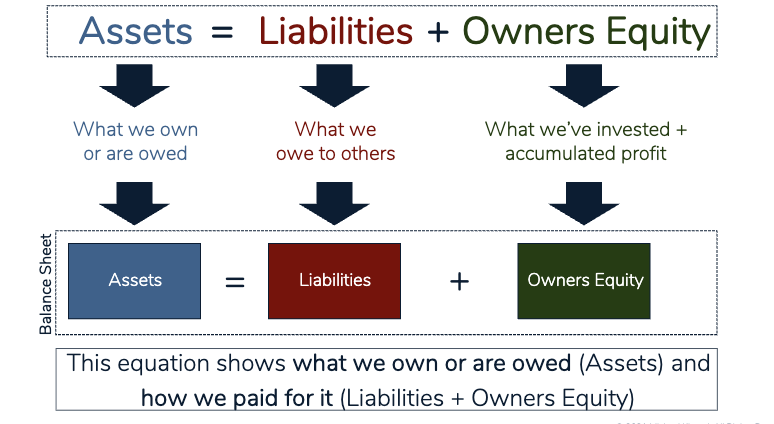
What is the accounting equation?
Assests = Liabilites + Owners Equity
Whats’ the accounting equation in simple terms?
Photo
Debits & Credits Matrix
Photo
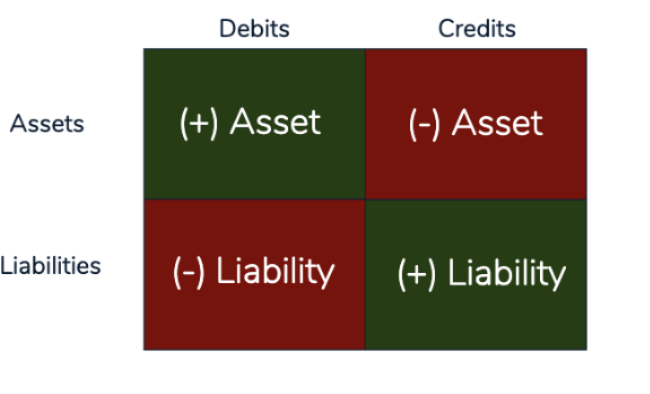
What happens to assets with 1. debits 2. credits
increase
decrese
What happens to liabilities/equity with 1. debits 2. credits
decrease
increase
How do the 3 financial statements work together/process?
We record all of our transactions in the INcome Statement and cumulative effect is recorded in the balance sheet. We then use the Cash Flow Statement to solve for the change in cash.
What are the sub-categories in Assests? and definitions
Current Assets (assets that turn into cash within 12 months)
Long term/ non-current assests (assets that turn into cash beyond 12 months)
What are the sub-categories in Liabilities? and definitions
Current Liabilities (Liabilites where money is due within 12 months)
Long-term liabilities (Liabilities where money is due beyond 12 months)
What are the sub-categories in Owners Equity? and definitions
Stock Issuance/Repurchased (money invested in company minus stock repurchased from Owners
Retained earnings (the accumulated profit of the company minus the dividens paid to the owners
What is common stock?
What are the sub-categories in Liabilities? and definitions
What is Debt?
When someone/company borrowns money and promises to pay Interest and to repay the loan in full in the future.
What does PPE stand for? and what is its defintion?
Property, Plant and Equipment. Physical assests that have a useful life of more than 1 year.
accounts payable (A/P)
A liability created when we buy inventory from a Supplier and agree to pay in the future.
What is Revenue?
Reflects the value of goods or services sold.
What is the key question to ask for Revenue?
Did the payment occur before, at the time of, or after the sale was substantially complete?
What type of revenue is it when you won’t recieve it till later?
Deffered Revenue
If a customer pays you before you substantially complete the sale… is that an assest or liability?
Liability. You owe them the good/product.
At the time of sale, the customer says they will pay you in the future. What is this called and is it an assest or liability?
This is accounts recievable and it is an assest!
What is COGS? and what is it
Cost of Goods Sold. It reflects the cost to produce the product sold by a Business.
Its simply inventory moved from the Balance Sheet to the Income Statement
What are SG&A?
Selling, General & Administrative Expense reflects Overhead (and marketing) costs not tied directly to production.
Operating Profit (EBIT)
The profit from our core business before Interest and Tax expenses
With SG&A expenses, what is the question to ask?
When did the cash flow relative to the expense?
For SG&A if you buy the insurance ahead of the coverage kicking in
This is a assest and a prepaid expense.
For SG&A if you pay the insurance after they provide the coverage
Is this an asset or liability? and what type of expense is this?
Liability! we owe them a payment for the substance in the future.
Accrued liability (expense)
What does SG&A reflect? like what type of expenses?
All overhead (Insurance, rent, utiities. etc) and Sales & Marketing costs not directly tied to production of the product sold to customers.
What are the three types of SG&A Expense transactions?
If a company pays for an Expense in Cash at the time it is incurred, then we simply decrease Cash
If a Company pays for an Expense before it is incurred, we record an assest called Prepaid Expense.
If a Company agrees to pay for an Expense after the Expense has been incurred, we record a Liability called Accrued Liabilities (or Accrued Expense)
All revenue and expenses are recorded in what section of the balance sheet?
The retained Earnings in the owners equity.
What do we to Assets we own with a useful life greater than one year (e.g.) Factories, Trucks, etc.)? If the assest is physical (or Tangible), we record it how? If the assest is Not Physical (Intangible) what do we do?
We record the full cost to the Balance Sheet (Capitalize)f to spread cost of the Assest over its useful life.
We record it on the balance sheet as a PP&E (Property, Plant, and Equipment) and record Depreciation Expense over time in proportion to its useful Life.
We record it on the Balance Sheet as ‘Intangibles’ and record Amortization Expense over time in proportion to its useful life.
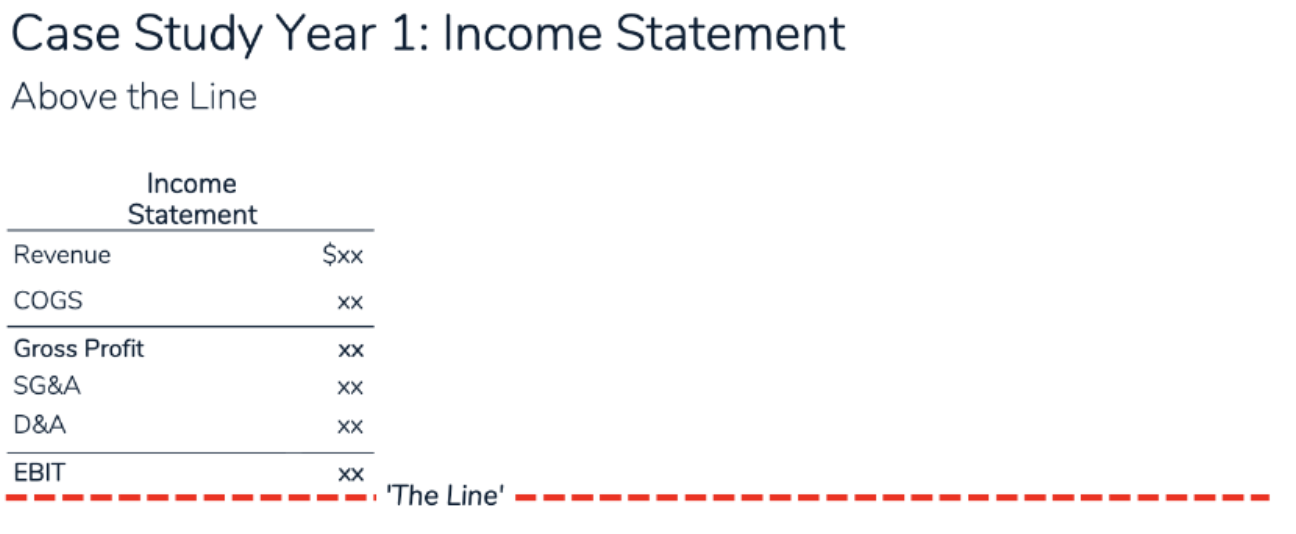
The Line refers to what? Everything above the line represents what?
represents the profits generated by the business without taxes and interest. Everything above operating income.
EBIT is calculated. (Earnings before Interest and Taxes)
What is Non-Operating Income / (Expense)?
Income and Costs not related to operations + Interest Income / (Expense)
What is interest Income?
When a business earns cash on money that’s sitting in the bank
What is interest expense?
The expense inccured from borrowing money
What is profit before tax?
It is our taxable income.
If you pay before on Interest and Income tax what is it called?
Prepaid Interest (Asset)
Prepaid Taxes (Assets)
If you pay after on Interest and income tax what is it called?
Interest Payable (Liability)
Taxes Payable (Liability)
Interest and Tax follow the same rules as what?
SG&A Expenses
What does Below the Line represent?
Profit generated by the Business incorpoarting Capital Structure (i.e. the Level of Debt and Taxes)
- Below the line refers to all items below operating income. which really incorporates capital structure or debt.
Who cares about Below the Line?
Typically used by Public Equity Investors because Shareholders aren’t paid until after Debt and Taxes
Who cares about Above the Line?
Typically its used by Investment Bankers, Private Equity and Lenders for better apples-to-apples comparison when valuing and analyzing Companies with different levels of Debt
What is everything in the income statement?
revenue - the value of goods or services sold
Cost of Goods Sold (COGS) - Cost to make the goods and services sold
Gross Profit - Core Profit from selling to customers
Selling, General & Administrative Costs (SG&A) - Overhead and Sales costs of the Business
Operating Profit (EBIT) - The profit from the core Business before INterest and Tax Expenses
THE LINE
Non-Operating Income / (expense) - Income and Costs not related to operations + Interest Income / (Expense)
Profit Before Tax - The taxable income of the business
Tax - income taxes owed based on taxable income
Net Income - the underlying net profit generated in the period
underlying - because its accrual based so when costs/income are incurred not when cash is exchanged
When do we account for Revenue? What are the diff types?
Revenue is created when a Sale is completed and earned, and not when cash is recieved.
If a Customer pays in advance, we record the sale as Deferred Revenue.
If a Customer agrees to pay after the sale, we record Accounts Receivable
For items purchased with a useful life greater than one year, what do we do?
We ‘Capitalize’ the cost to the Balance Sheet and spread the expense over the useful life of the item purchased.
For Physical (Tangible) Assets (or PP&E) the expense we create is called Depreciation.
For Non-Physical (Intangible) Assets, the expense is called Amortization.
What is Net Income?
Reflects the underlying profit of the business.
What do Retained Earnings reflect?
Retained Earnings reflect accumulated Profit (or ‘Net Income’) minus Dividends paid to Shareholders.
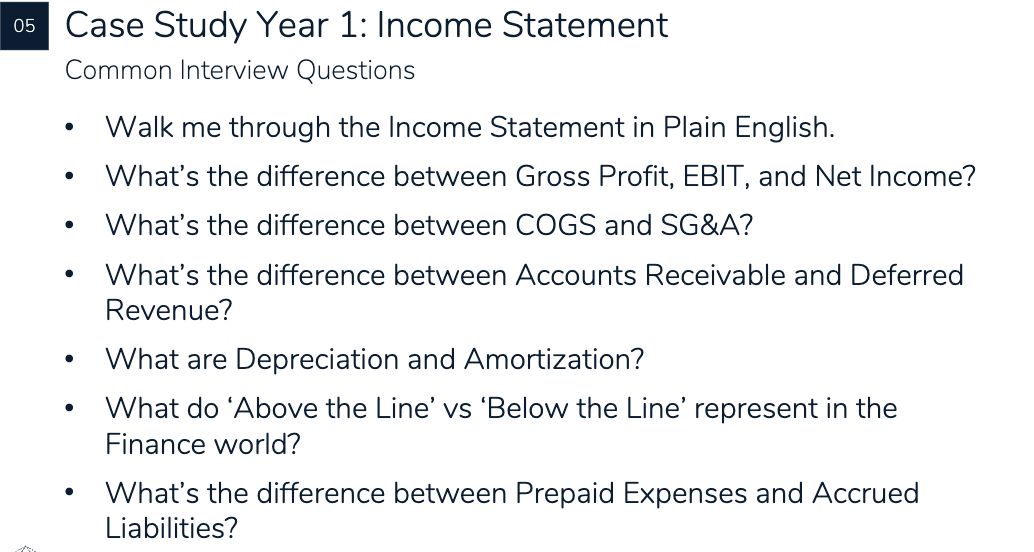
INTERVIEW QUESTIONS (SKIP FOR LATER)
What does the Cash Flow Statement show us?
It shows us the net change in Cash for a Business
How many sections does the Cash Flow Statement have and what are they?
Cash Flow From Operations
Cash Flows From Investing - investing in equipment or actual stocks
Cash Flows From Financing - money in and out from lenders and investors
The final output of this statement is the change in Cash.
Income statement shows what? Cash Flow Statement shows what?
Underlying profit of the business. Cash Flow Statement shows the cash generated by the business.
What is the indirect method?
Its a method to work from Net Income to the Cash generated by the business
How does the indirect method work?
We begin with Net income, add back all non-cash charges (e.g. Depreciation) and then reverse out the impacts of accruals (e.g. Accounts Recievable and Accrued Liabilities
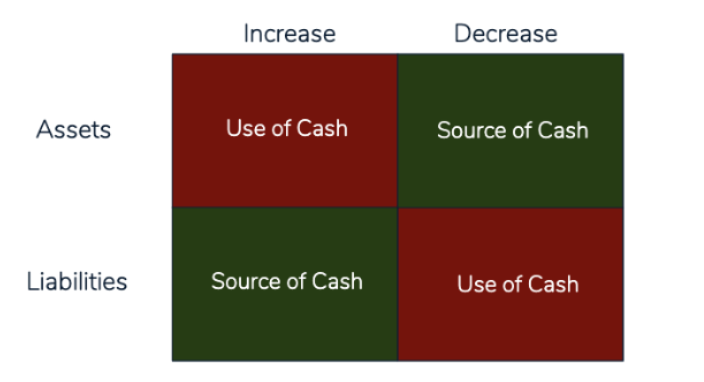
Sources & Uses of Cash Table
If assests increase (you buy more inventory) then you use cash.
If assets decrease (you sell inventory) you gain cash.
If liabilities increase (you take out a loan) you gain cash.
If liabilities decresae (you give money towards a loan) you use cash.
What do we account for in the Cash Flows From Investing (CFI) Section?
We account for the Purchase and Sale of long-lived assets (Tangible or Intangible)
Also we account for purchases and sales of regular investments (e.g. Stocks, Bonds, etc.)
What are the Cash Flow From Investing Mechanics?
Capital Expenditures - purchases of long-term Physical Assets
+Intangible Purchases - Purchases of long-term Non-Physical asset
+Investment (Purchases) / Sales - purchases and sales of invesmtnents (stocks, bonds, etc.)
=
Investing Cash Flow (the money we’ve reinvested over a single period)
I don’t understand and will have to ask AI
What is Cash Flows From Financing (CFF)
Its on the Cash Flow Statement. When we account for dollars in and out from Lenders and Investors
What is a Share Repurchase / Share BuyBack
Its when with Equity, the company buysback/repurchases their common stock they sold to a shareholder. (both are cash outflows)
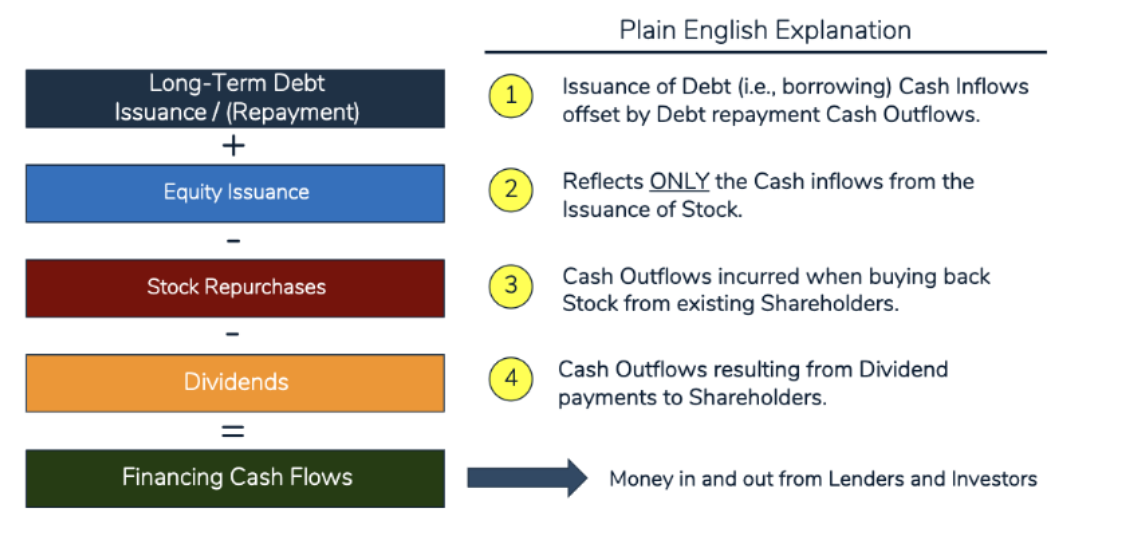
What is the Cash Flow From Financing Mechanism?
Long-Term Debt Issuance / (Repayment) - Cash Inflow from issuance of Debt
+Equity Issuance - only the cash inflos from the issuance of stock
-Stock Repurchases - cash outflows inccured when buying back stock from exisiting shareholders
-Dividends - cash outflows resulting from dividend payments to shareholders
=
Financing Cash Flows - money in and out from Lenders and Investors
What makes up the Cash Flow Statment and explain in plain english
Cash Flow From Operations - the cash generated by our Business over a period
+Cash Flow From Investing - the amount reinvested in the Assets of the Business and Investment purchases & Sales over a period
+Cash Flow From Financing - cash in an dout from Lenders and investors over a period
=
Change in Cash
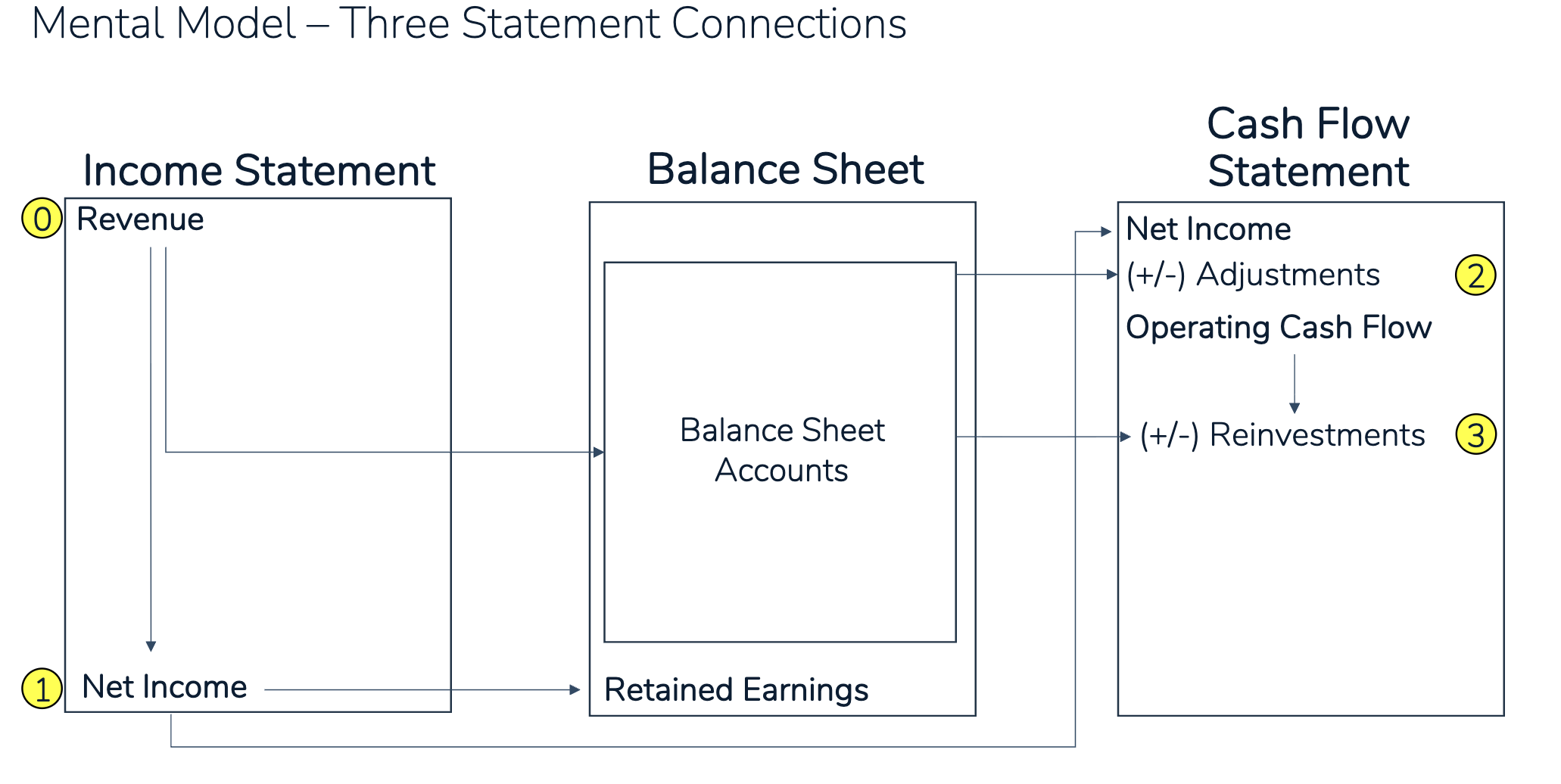
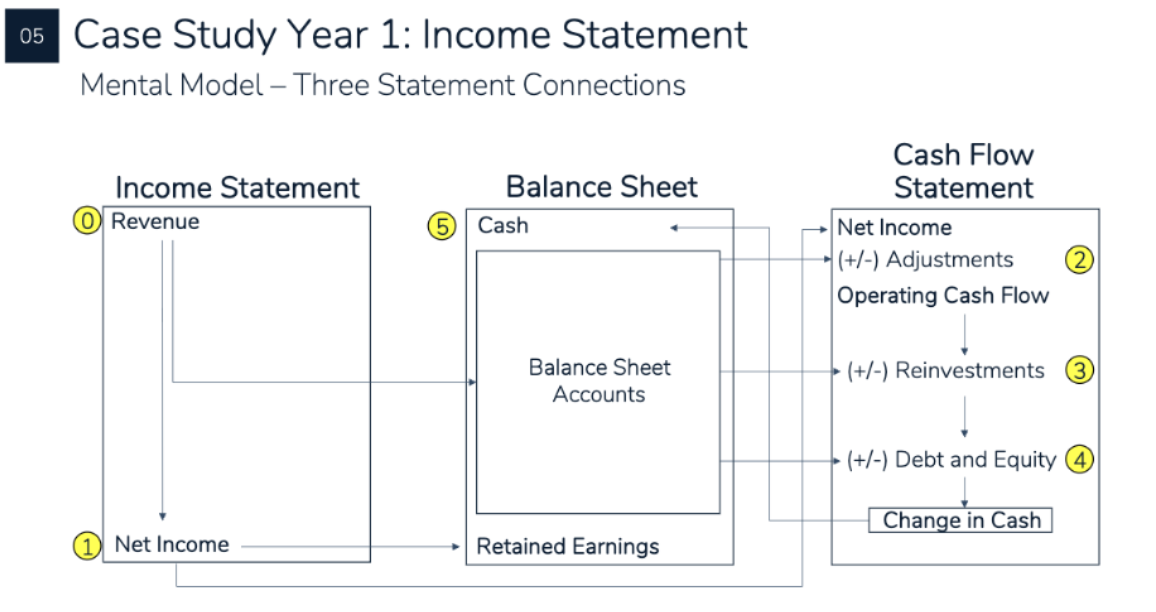
What is the Mental Model - Three Statement Connections
Revenue
Net Income
(±) Adjustments
(±) Reinvestments
(±) Debt and Equity
Cash
Revenue to Net Income to Retained Earnings, top of the Cash Flow Statement, net income adjusted to operating cash flow, reinvestments from our PP&E account largely, debt and equity cash in and out, our change in cash and then our cash balance
Cash Flows From Investing
cash reinvestments into the Business (Capital Expenditures and Purchases of Intangibles) as well as Investment Purchases
Cash Flows From Financing
Reflects the cash in and out from Lenders (Debt) and Investors (equity)
Includes repayments of dividends or stock repurchases
Interview Questions FOR LATER