intro to biochem: thermodynamics, bioenergetics, and chemical principles
 Call Kai
 Learn
Learn Practice Test
 Spaced Repetition
 Match
Match Flashcards
 Knowt Play
1/39

There's no tags or description
Looks like no tags are added yet.
Name | Mastery | Learn | Test | Matching | Spaced | Call with Kai | Chat |
|---|
No analytics yet
Send a link to your students to track their progress
40 Terms
a patient takes a drug. where does it act?
drugs act by interacting with targets, proteins, enzymes, receptors, transporters, channels
it depends on what is happening at the molecular level and what is happening at the patient level
from patient to molecule
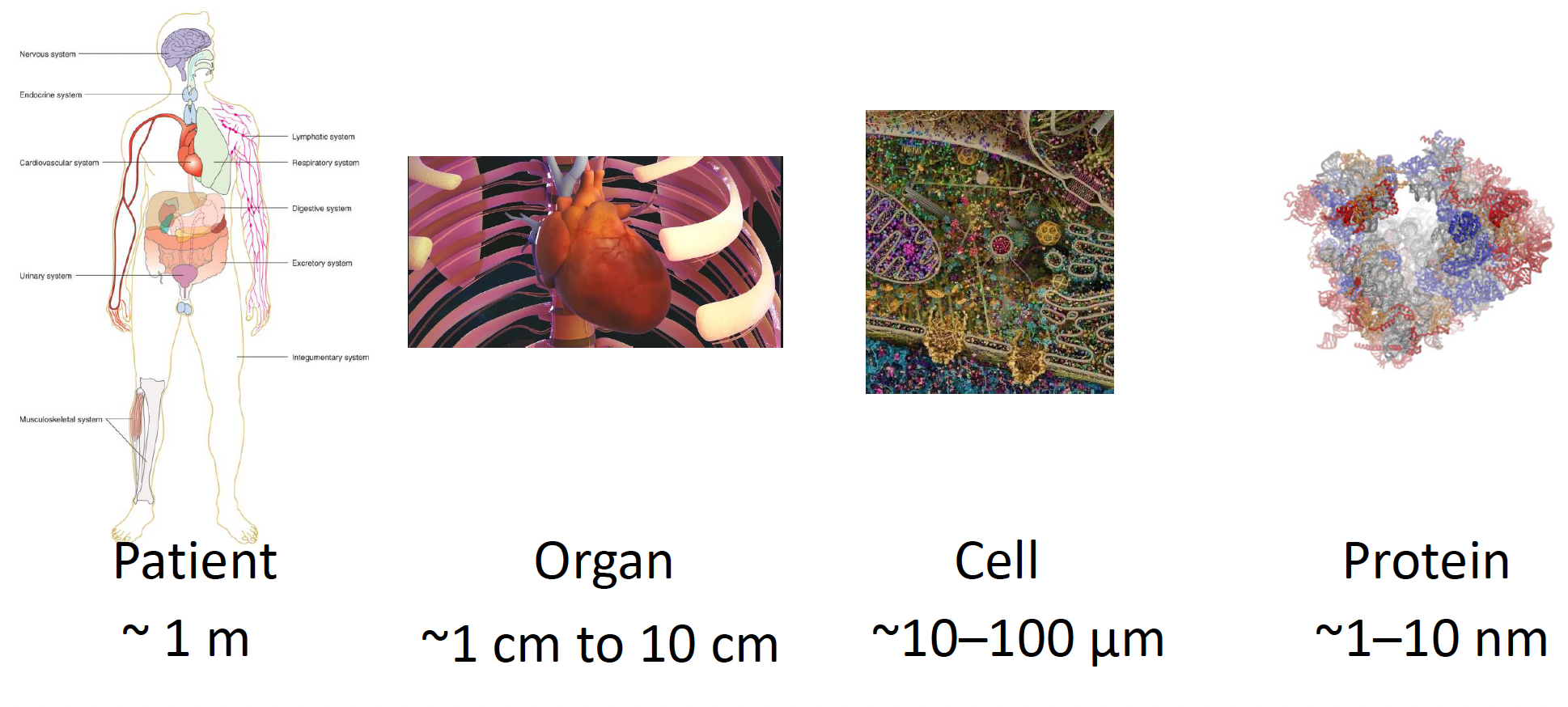
when you take a drug, ultimately something happens at the molecular level. and you should see how it affects the patient
how can blocking one enzyme lower LDL cholesterol?
this is a statin
inhibits enzyme called HMG-CoA-reductase
ultimately leads to cholesterol synthesis disruption → LDL receptor expression goes up → you have more hypotic LDL receptors → they remove LDL from blood → LDL decreases
YOU JUST NEED TO KNOW THAT THERE IS A WHOLE CHAIN OF EVENTS THAT HAPPEN AND NOT JUST ONE EVENT
oxygen is present, but cells cannot use it!?
cyanide inhibits cytochrome C oxidase (electron transport chain)
basically oxygen can’t be used because cyanide is blocking an enzyme

why does interfering with folate metabolism impair cell proliferation?
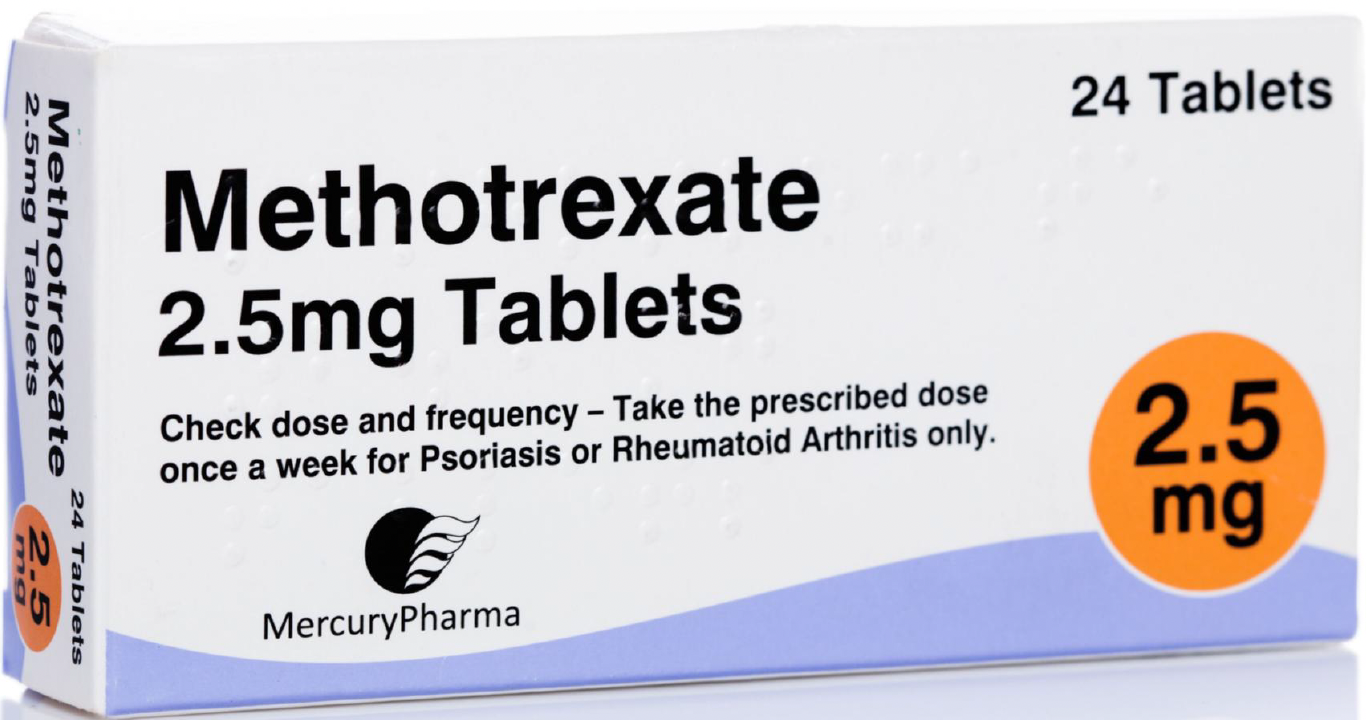
methotrexate inhibits dihydrofolate reductase → → → impaired nucleotide synthesis (DNA synthesis) so cell proliferation is affected
the same drug and dose produce different responses. why?

genetic variation can alter drug metabolizing enzymes. transporters are drug targets and can change drug response.
ultimately, the same dose and produce different efficacy or toxicity in different patients
cells drive energy-requiring reactions
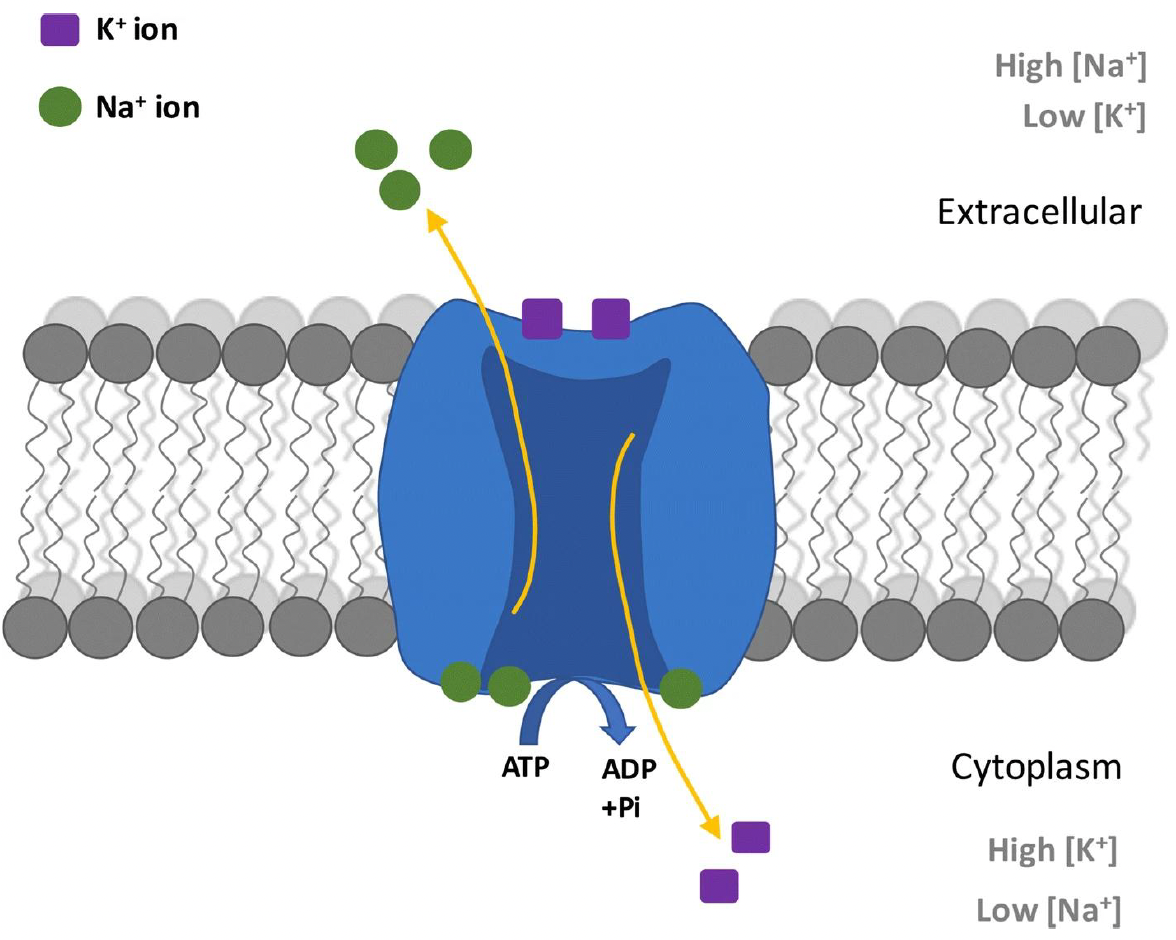
the ions are moving against their gradient
cytoplasm
high K+
low Na+
extracellular
low K+
high Na+
cells drive energy requiring reactions
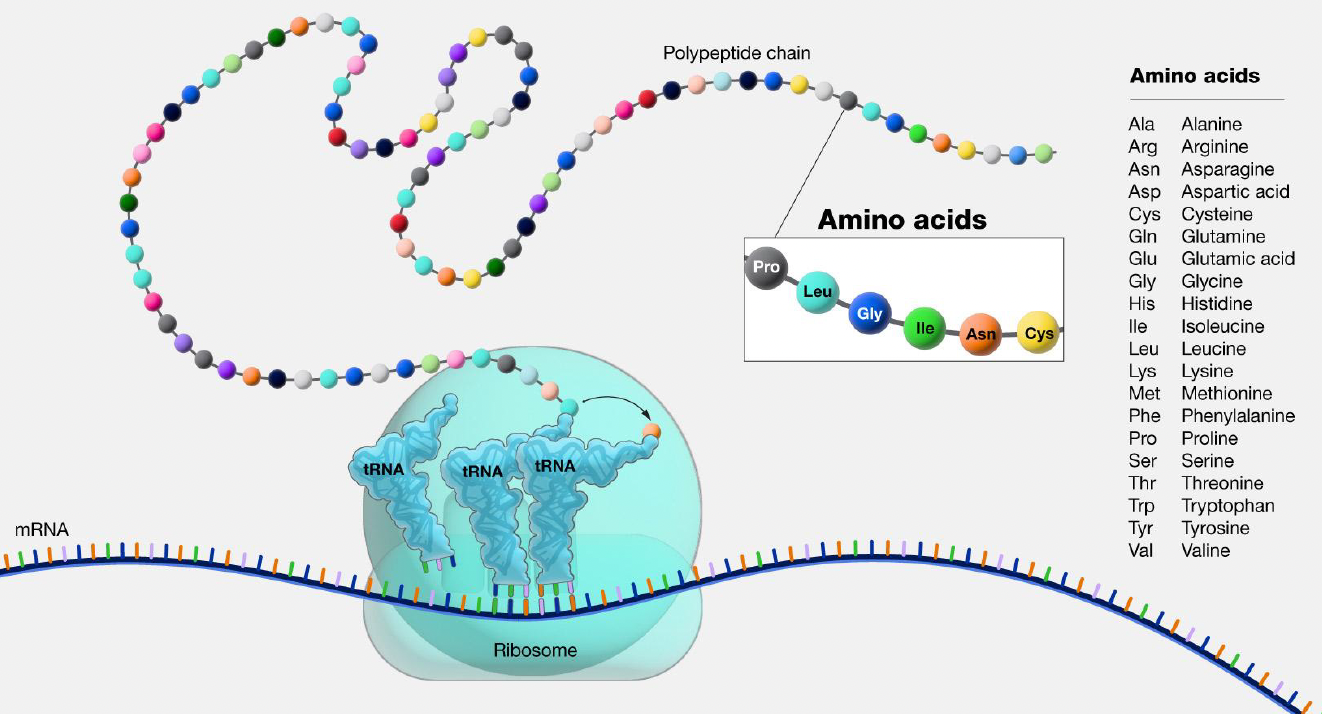
what is happening is that the ribosome is stitching all the amino acids together (making protein formation)
these reactions require energy
the cell would need to couple these types of reactions with some other types of reactions
`
exergonic reactions
spontaneous = favorable
∆G is negative
spontaneity tells you it can happen
endergonic reactions
non-spontaneous = unfavorable
∆G is positive
spontaneity tells you it can happen
what does ∆G do?
∆G predicts which direction is thermodynamically favored depending on if it’s exergonic vs endergonic
exergonic
free energy of reactants is higher than products
forward direction is thermodynamically favored
endergonic
free energy of reactants is lower than products
forward direction is not thermodynamically favored

favorable does not mean fast
higher activation barrier makes a reaction proceed slowly
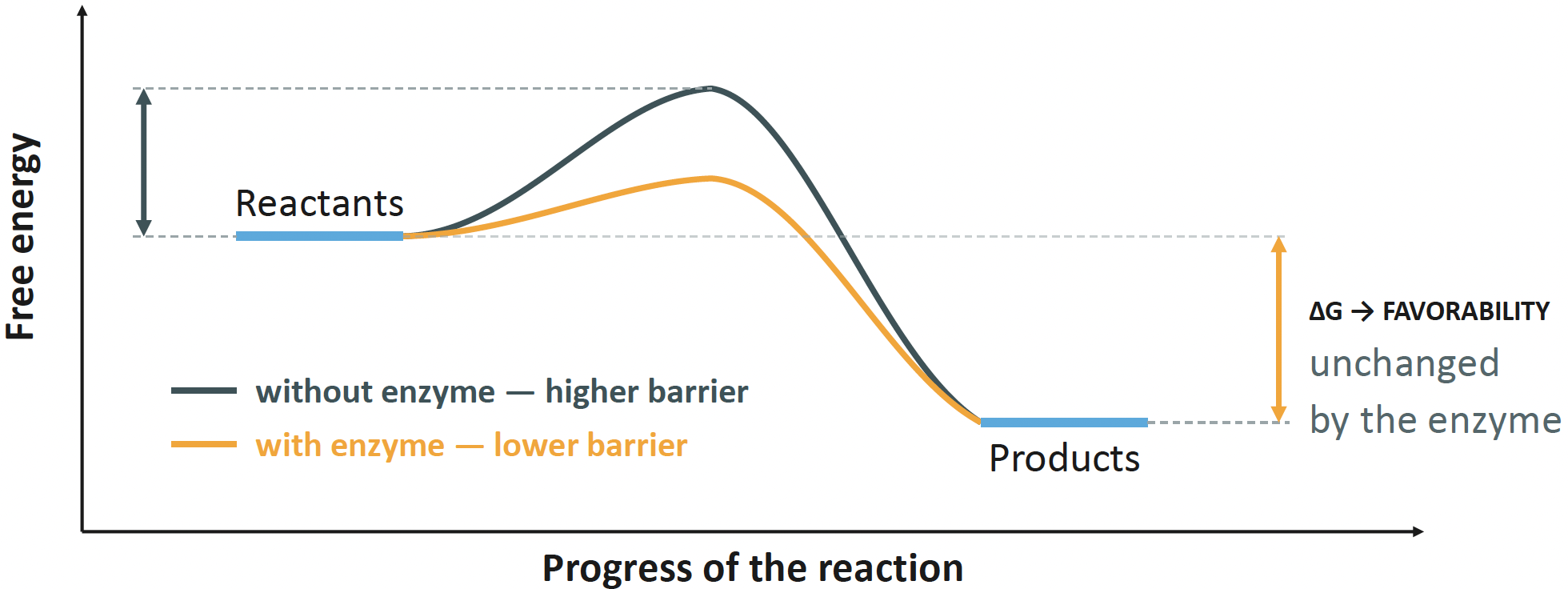
so adding in an enzyme will lower the activation barrier, making the reaction proceed faster
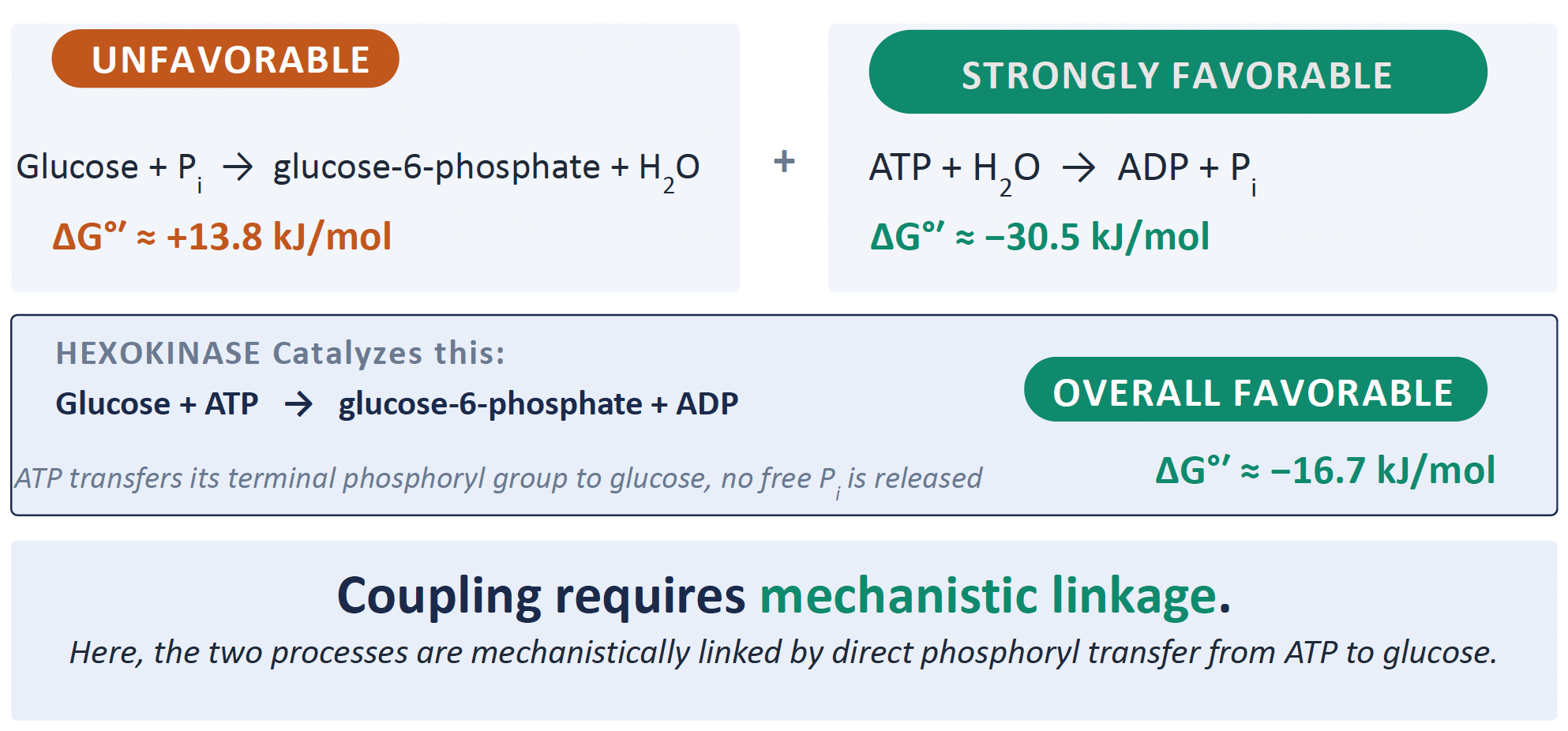
cells couple unfavorable reactions to favorable ones
you can bring an unfavorable reaction and a strongly favorable reaction together by using an enzyme to create an overall favorable reaction
it requires a mechanistic linkage
living cells maintain a non-equilibrium state
if equilibrium is reached that means that it is dead
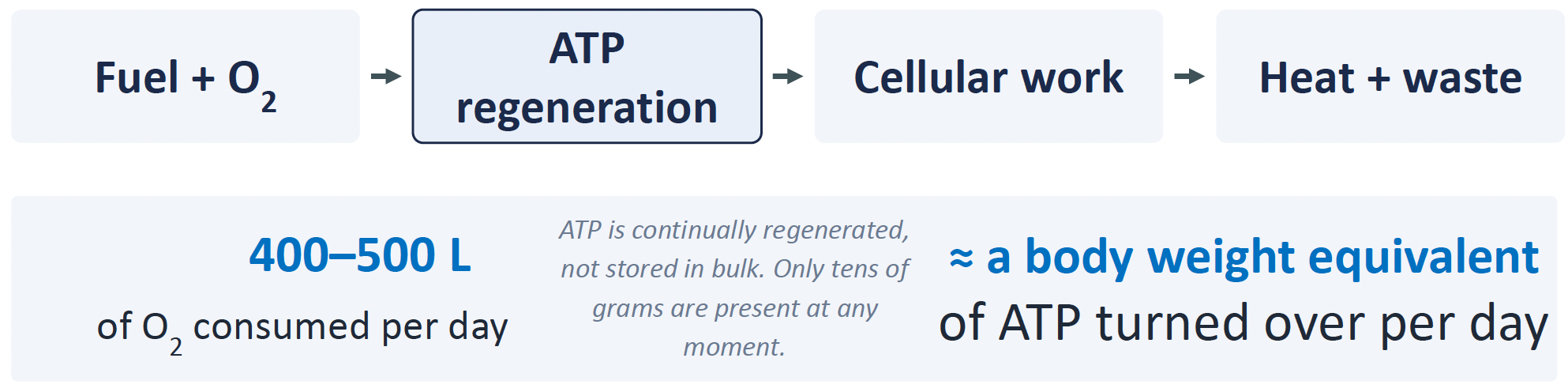
a living cell cannot be at thermodynamic equilibrium with its environment
how do molecules interact with water?
water is everywhere
it interacts with all kinds of molecules: proteins, nucleic acids, membranes, carbohydrates, metabolites, and drugs
the same chemistry applies to all molecules. all molecules have:
charged groups, polar groups, nonpolar groups, and close contacts
what are charged groups?
Strongly solvated; opposite charges attract (electrostatic)
Many are ionizable; charge depends on pH.
what are polar groups?
Form hydrogen bonds with water and other polar groups.
what are nonpolar groups?
Poorly solvated; driven together in water (the hydrophobic effect).
what are close contacts?
Atoms in close contact make many weak van der Waals attractions.
ionic interactions
depends on the charged states of the groups.
opposite charges attract. like charges repel
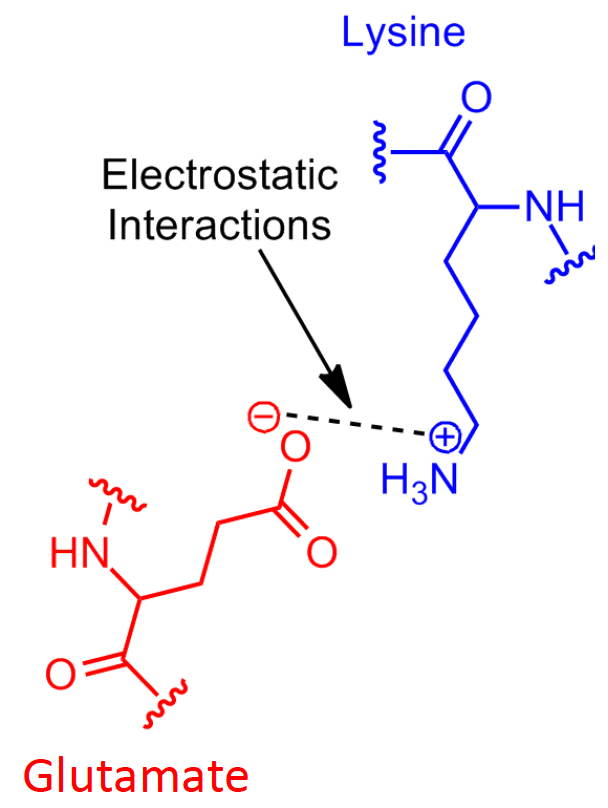
changing pH can strengthen/weaken/eliminate them and many other examples
hydrogen bonds
interaction between an H-bond donor and acceptor
H, N, O, F
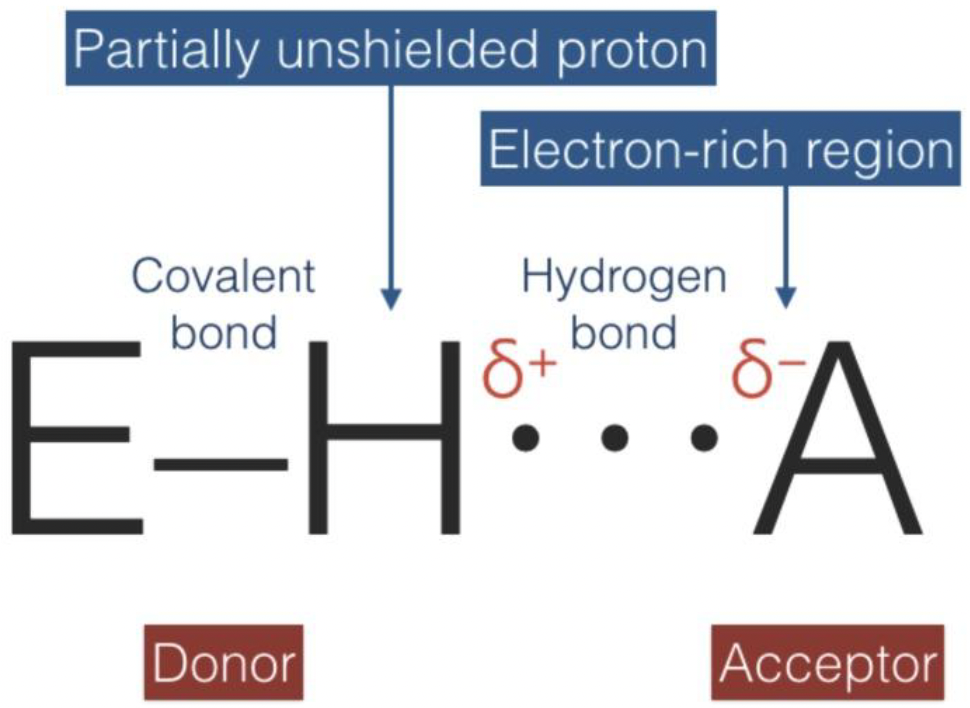
van der Waals interactions
temporary fluctuations in electron density create weak attractions at very close range

many close contacts together can contribute substantially to molecular stability and fit
hydrophobic effect
nonpolar surfaces tend to associate in water, reducing the amount of nonpolar surface exposed to water
helps drive protein folding, membrane formation, and binding of nonpolar molecular surfaces
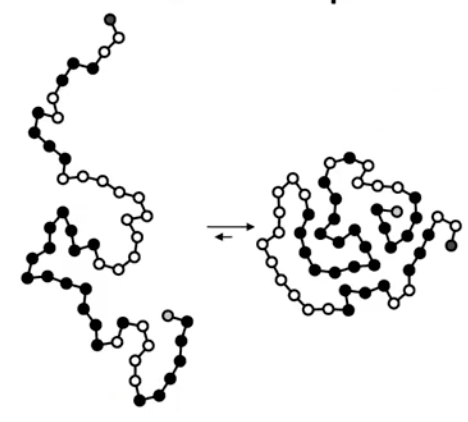
the hydrophobic amino acids (shown as black spheres) are in general shielded from the water
noncovalent forces shape molecular structure
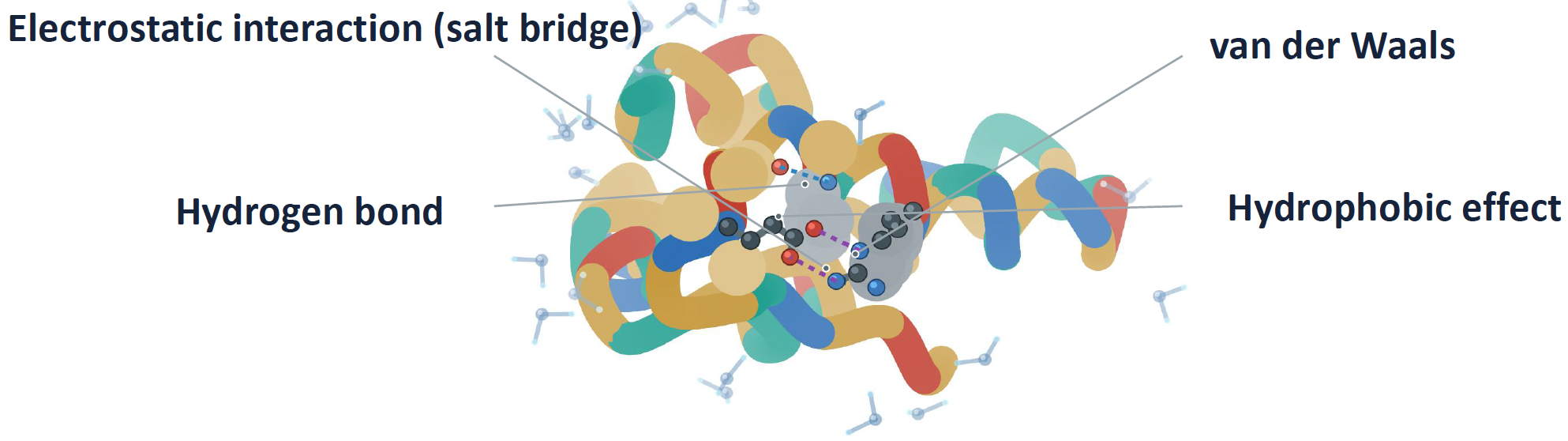
No single noncovalent interaction explains protein structure
it is a mix of multiple things happening to make a protein structure
pH can change molecular charge
some interactions depend on charge. but charge is not always fixed

ionizable groups can gain or lose their charge, depends on pH
charge affects: solubility, molecular interactions, membrane partitioning, binding
what does pH 7 actually mean?
pH ≈ −log10[H+]
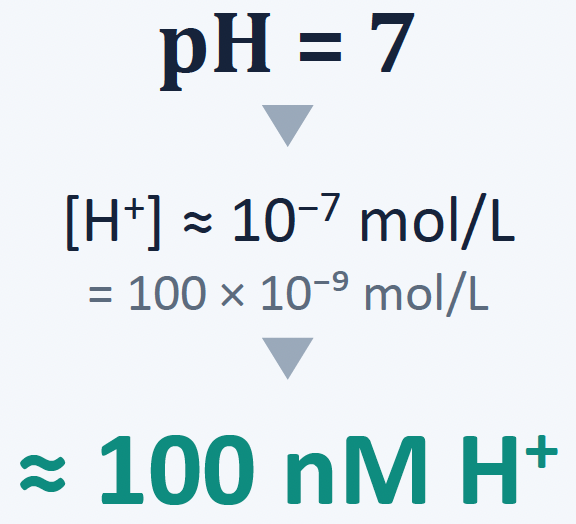
pH scale is a convenient logarithmic scale to show very small proton concentrations
small pH differences mean large changes in [H+]

every drop in pH means that there is higher [H+]
1 unit drop in pH means that there is 10x higher [H+]
2 unit drop in pH means that there is 100x higher [H+]
pH and pKa: two −log₁₀ measures (pH)
The “p”means −log₁₀. A tenfold change becomes a 1-unit change on the p-scale.
pH describes the solution
pH = −log₁₀[H⁺]
its proton environment 1 pH unit = a 10-fold change in [H+]
10⁻¹ … 10⁻⁷ … 10⁻¹⁴ M → pH 1 … 7 … 14
pH and pKa: two −log₁₀ measures (pKa)
The “p”means −log₁₀. A tenfold change becomes a 1-unit change on the p-scale.
pKa describes an ionizable group
pKa = −log₁₀ Ka
Ka = [H⁺][A⁻] / [HA] · HA ⇌H⁺ + A⁻
how readily that group gives up its [H+]
lower pKa = stronger acid
pH and pKa: two −log₁₀ measures (together)
So the same group can be charged at one pH and neutral at another
pH < pKa → protonated predominates
pH = pKa → about 50 : 50
pH > pKa → deprotonated predominates
pH < pKa → ____________________
protonated predominates
pH = pKa → _____________
about 50:50
pH > pKa → ______________________
deprotonated predominates
what does aspirin’s pKa mean?
pKa ≈ 3.5
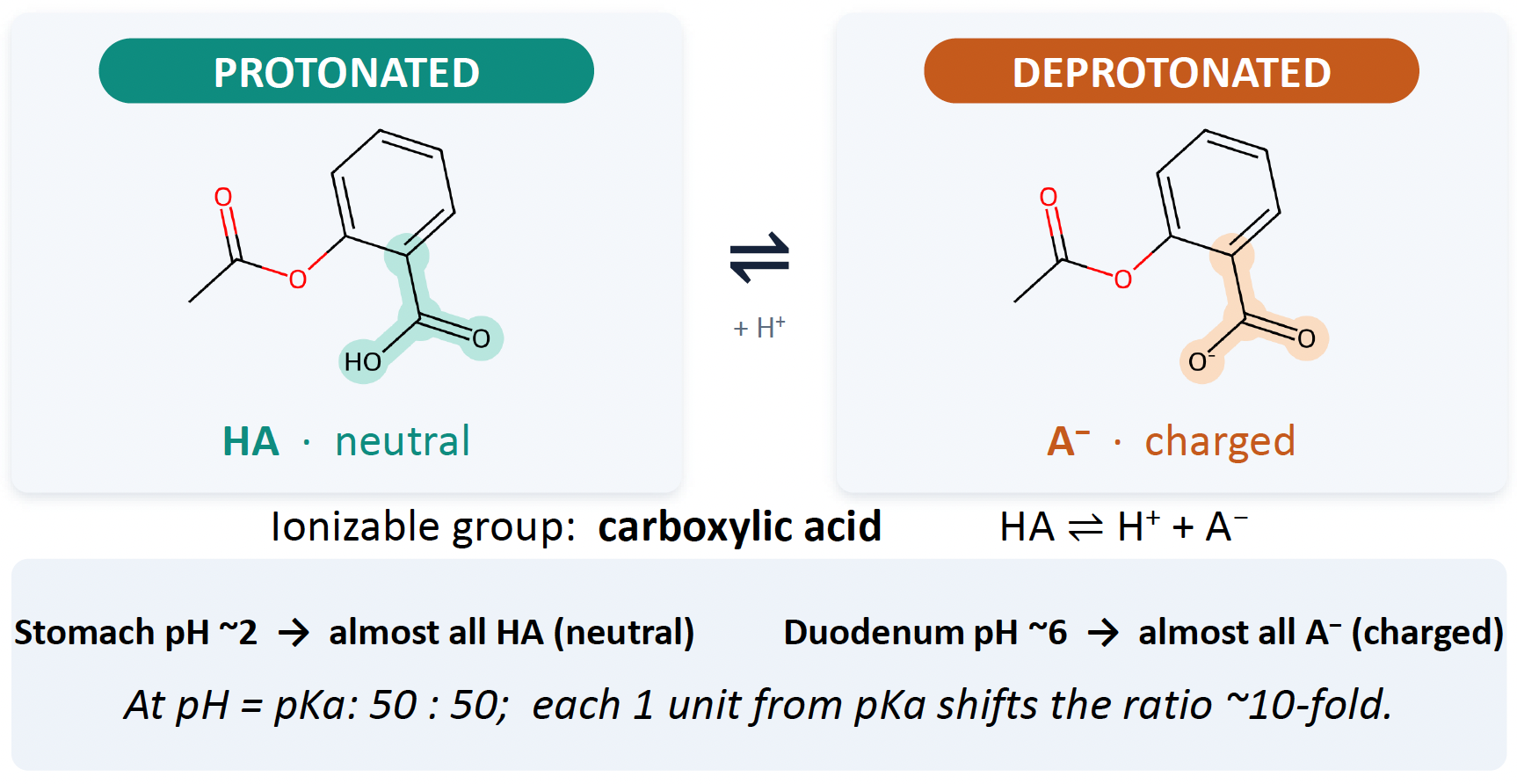
pH is about the environment
pKa is about the particular molecule
a biosynthetic reaction has ∆G°’ = +14.2 kJ/mol. ATP hydrolysis has ∆G°’ = -30.5 kJ/mol. if the two reactions are mechanistically coupled, what is the ∆G°’ of the overall process, and what is required for coupling to drive the biosynthetic reaction?
a) -16.3 kJ/mol; the reactions must be mechanistically linked so that the favorable process drives the unfavorable one
b) +14.2 kJ/mol; ATP hydrolysis does not contribute to the overall free-energy change
c) +44.7 kJ/mol; ATP hydrolysis makes the biosynthetic reaction still less favorable
d) -16.3 kJ/mol; ATP hydrolysis only needs to occur somewhere in the same cell
a
+14.2 kJ/mol + (-30.5 kJ/mol) = -16.3 kJ/mol
mechanistically linked because of cell coupling of unfavorable reactions (+) to favorable (-) ones
one important response to decreased cholesterol content in hepatocytes is increased expression of LDL receptors, which increases uptake of circulating LDL. a patient has a genetic defect that greatly reduces the number of functional LDL receptors on hepatocytes. a drug successfully inhibits hepatic cholesterol synthesis. compared with a patient who has normal LDL receptors, what would you expect?
a) a greater rise in plasma LDL because inhibition of cholesterol synthesis directly causes hepatocytes to release LDL
b) a greater fall in plasma LDL because LDL receptors are not needed for LDL clearance
c) a smaller fall in plasma LDL because the increase in receptor-mediated LDL clearance is impaired
d) no change in plasma LDL because hepatic cholesterol synthesis has no relationship to circulating LDL
c
hepatocytes are liver cells
LDL: “bad cholesterol”; travels in blood
LDL receptors: pulls LDL out of blood and into cell to clear away
for healthy people
the drug would stop the liver from making cholesterol, so liver cells run low
liver cells would make a lot of LDL receptors to get more LDL
grabbing more LDL would lower LDL levels significantly
for the patient
genetic defect → greatly reduce the number of functional LDL receptors
that means that the LDL is not able to leave the blood
a weak-base drug has a pKa of 8.0 and crosses cell membranes primarily in its uncharged form, B: BH+ ⇌ B + H+. the extracellular pH falls from 7.4 to 6.5. what is the most likely consequence?
a) a larger fraction becomes neutral B, increasing membrane penetration
b) the drug’s pKa falls below 6.5, preventing protonation
c) a larger fraction becomes protonated BH+, leaving less neutral B available to cross the membrane
d) the drug becomes permanently ionized and can no longer undergo acid-base equilibrium
c
weak base in acidic environment = ionized (protonated) so B becomes BH+
pH 7.4 (basic)
pH 7.4 (basic) and weak-base drug = unionized (deprotonated/neutral) so it was just B and is able to cross membrane because the pH is nonpolar and the membrane is nonpolar
pH 6.5 (acidic)
pH 6.5 (acidic) and weak-base drug = ionized (protonated) so it wants H+, so B (neutral) grabs H+ (protons) and makes more BH+. pH is polar and membrane is nonpolar, so less would go across
in a highly oxidative cell, an inhibitor abruptly blocks most mitochondrial ATP production. oxygen delivery to the tissue remains adequate, but cellular function begins to fail rapidly. which statement best explains the rapid effect?
a) the cellular ATP pool is small relative to ATP demand, so continued function depends on rapid ATP regeneration
b) oxygen can no longer enter the cell once mitochondrial ATP synthesis stops
c) cells normally store enough ATP to support several hours of normal activity without regeneration
d) ATP normally accumulates because cells consume very little of it
a
ATP is the main molecule cells use for energy
cells don’t store much ATP, only a tiny pool
high demand: → cells burn through pool quickly
constant recycling → burn quick = cells remake ATP
the crash: when inhibitor blocks ATP production, the cell run out of its tiny storage pool instantly, cellular function fails right away b/c there’s no backup energy left
a drug binds tightly to a protein through an alcohol -OH group. a new analogue differs only in that this -OH is replaced by a -CH3 group of similar overall size, and binding becomes much weaker. which interaction was most likely lost?