Hemostasis and Related disorders
 Call Kai
 Learn
Learn Practice Test
 Spaced Repetition
 Match
Match Flashcards
 Knowt Play
1/70

There's no tags or description
Looks like no tags are added yet.
Name | Mastery | Learn | Test | Matching | Spaced | Call with Kai | Chat |
|---|
No analytics yet
Send a link to your students to track their progress
71 Terms
what is the overall goal of hemostasis?
to form a blood clot that prevents or limits bleeding
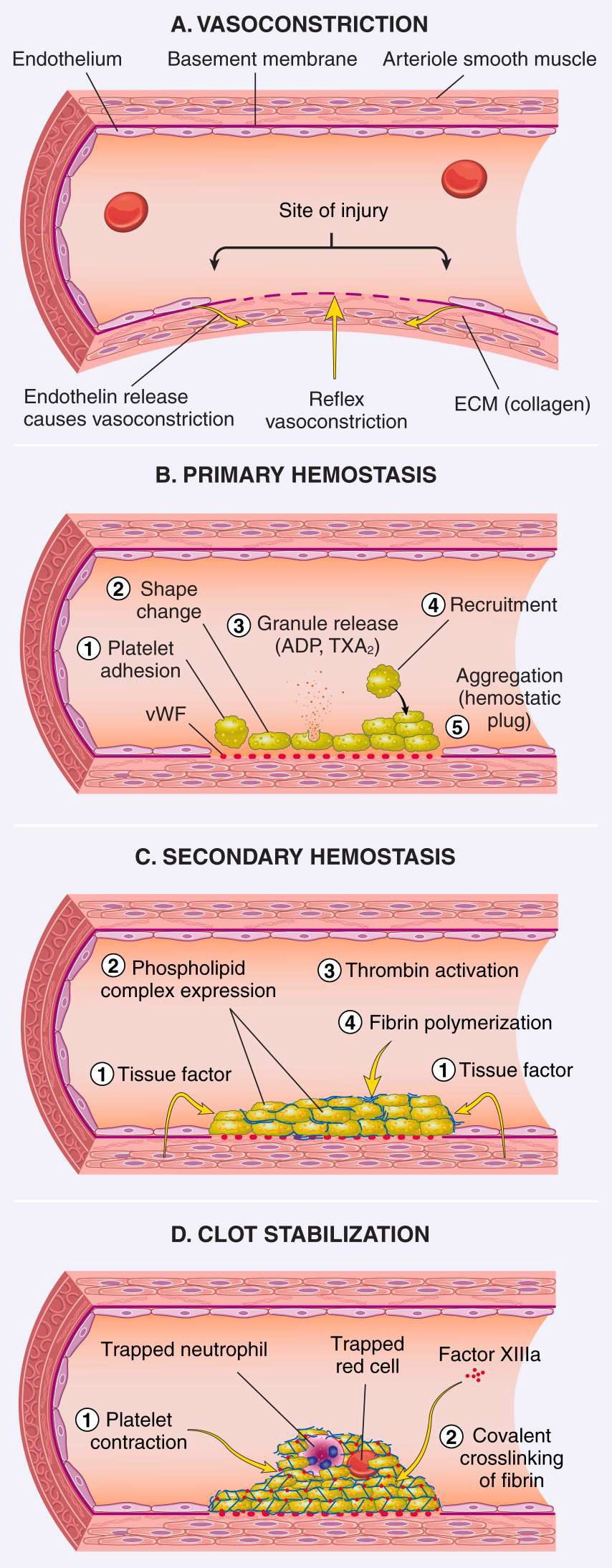
what are the 4 major steps of normal hemostasis in order?
arteriolar vasoconstriction
primary hemostasis (platelet plug)
secondary hemostasis (fibrin deposition)
clot stabilization and resorption
which step forms the initial platelet plug?
primary hemostasis
which step strengthens the platelet plug with fibrin?
secondary hemostasis
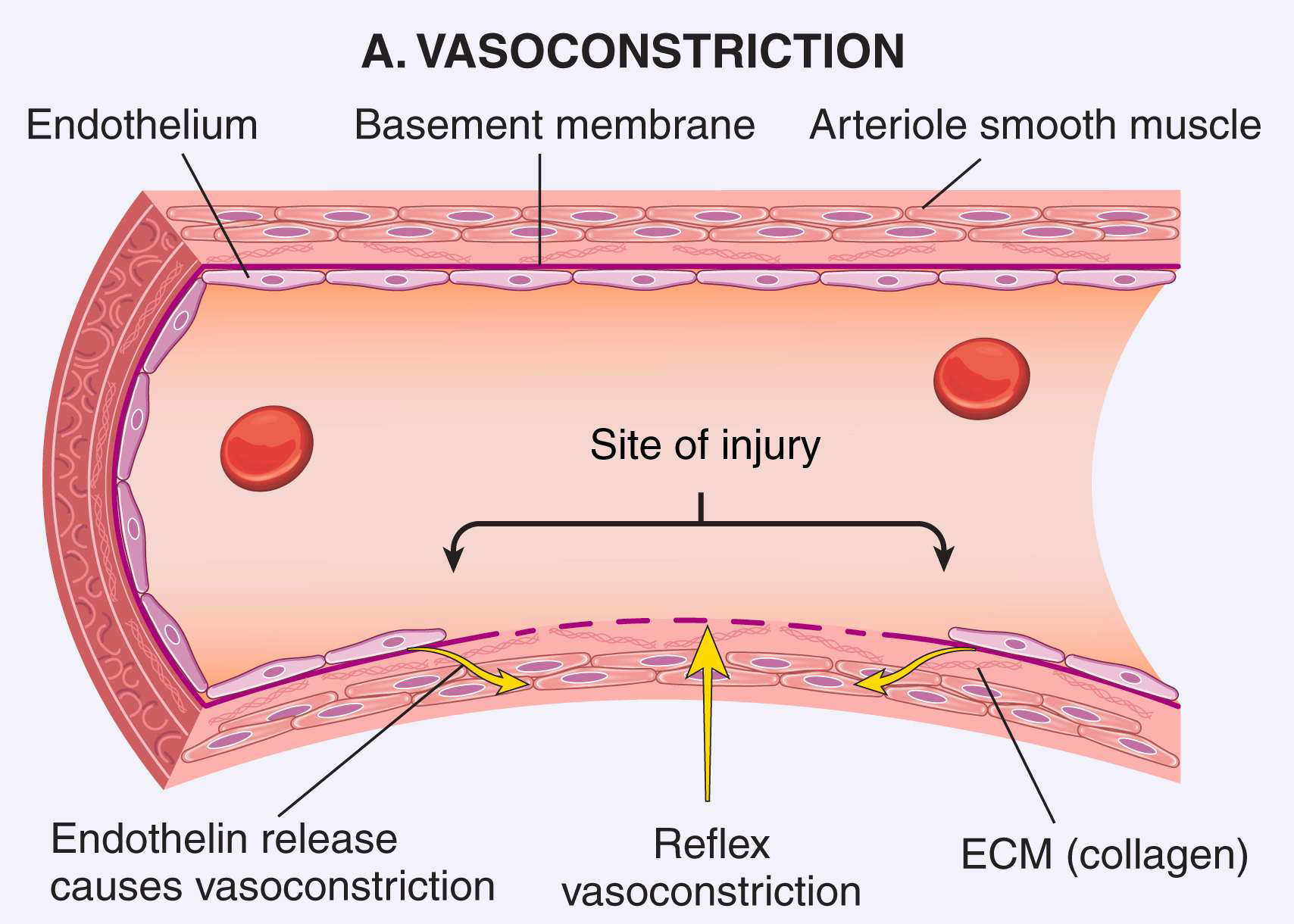
what is the immediate response after vascular injury?
arteriolar vasoconstriction
what is the purpose of vasoconstriction after injury?
reduce blood flow to injured area

what mediates arteriolar vasoconstriction?
Endothelin
endothelin
endothelium derived vasoconstrictor
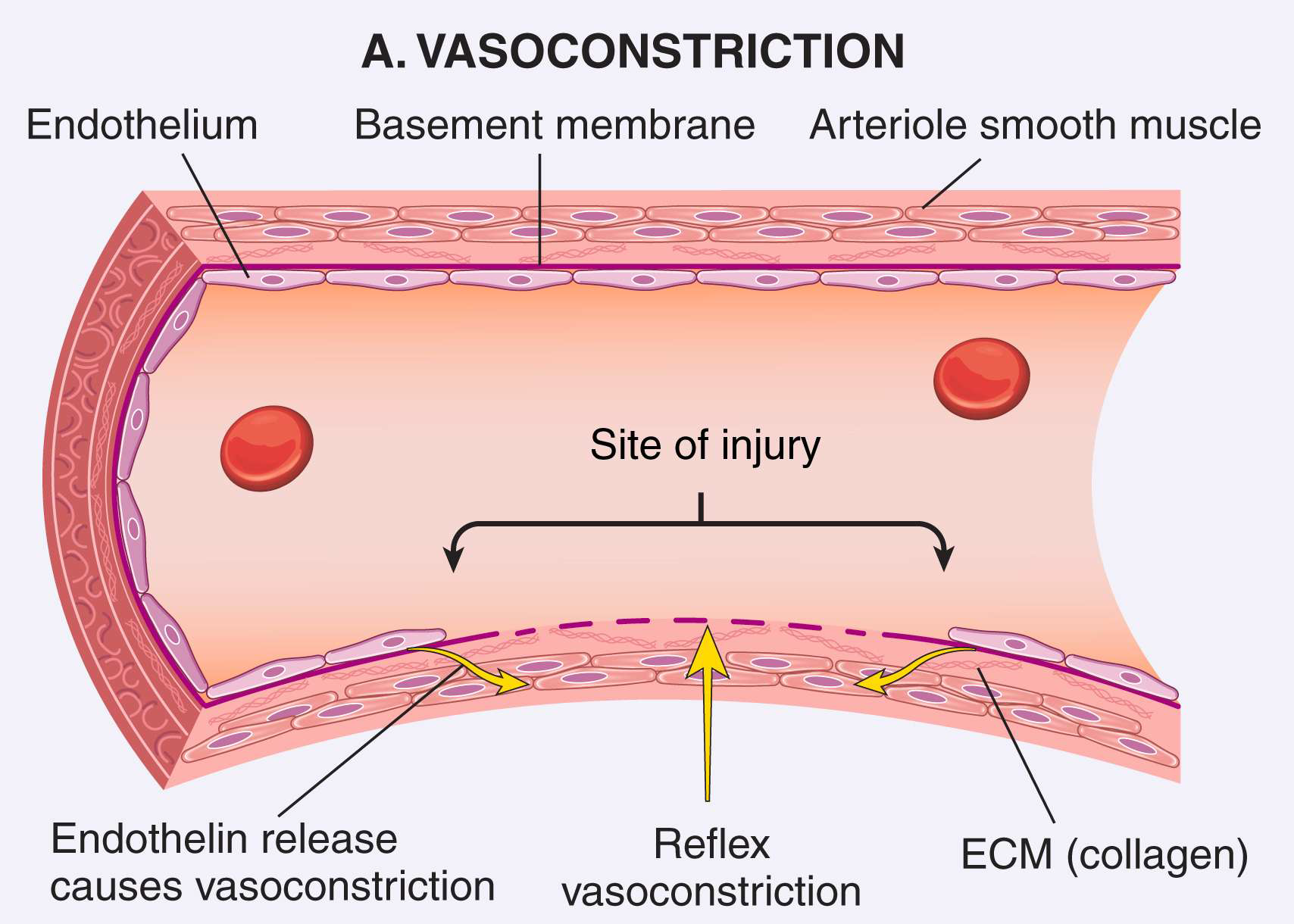
is vasoconstriction enough by itself to permanently stop bleeding ?
No. it is transient; bleeding would resume without the proper steps of hemostasis
what is the main event of primary hemostasis?
formation of the platelet plug
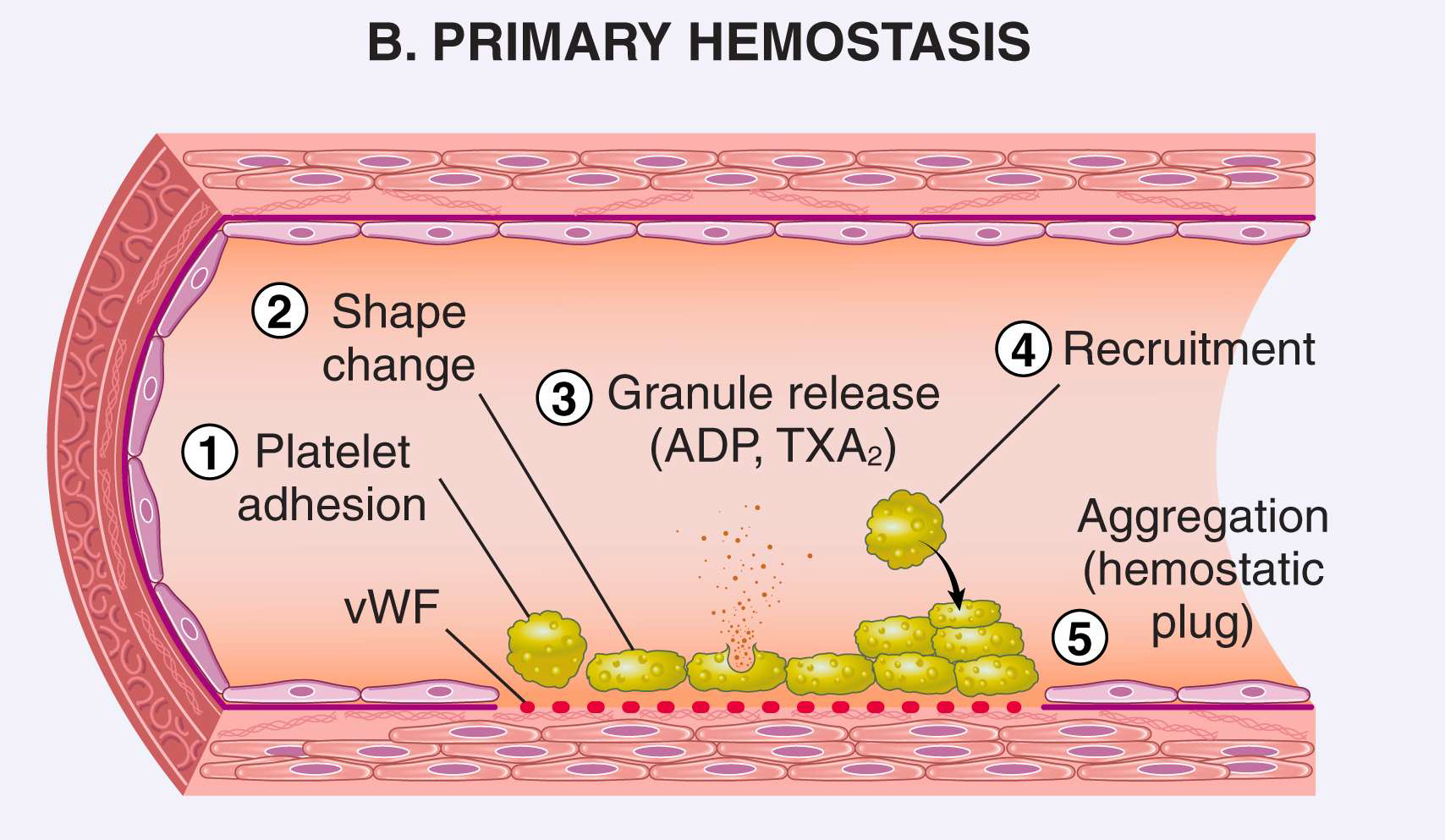
What becomes exposed when the endothelium is distrupted?
vWF and collagen
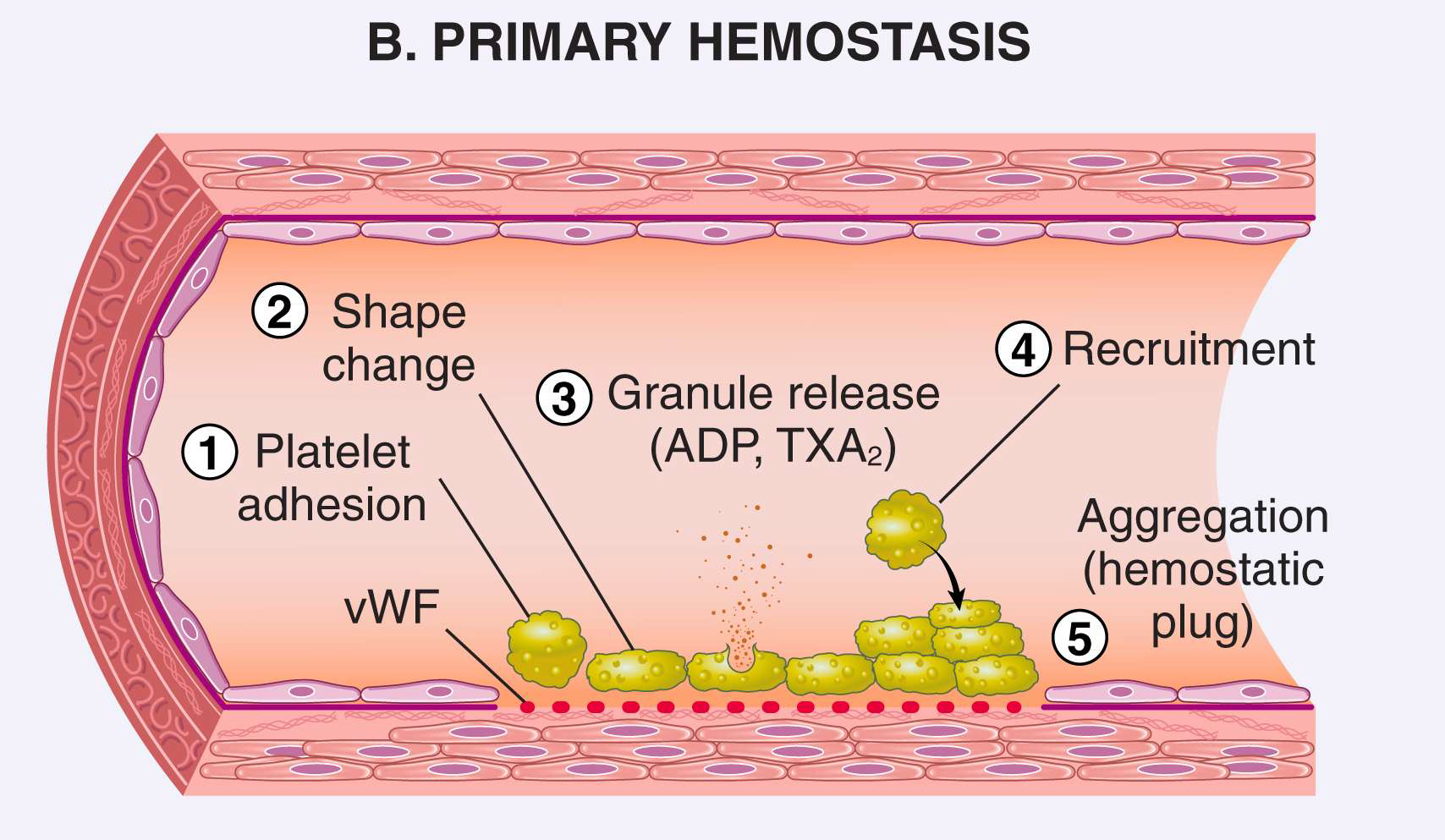
what do exposed vWF and collagen promote?
platelet adherence and activation
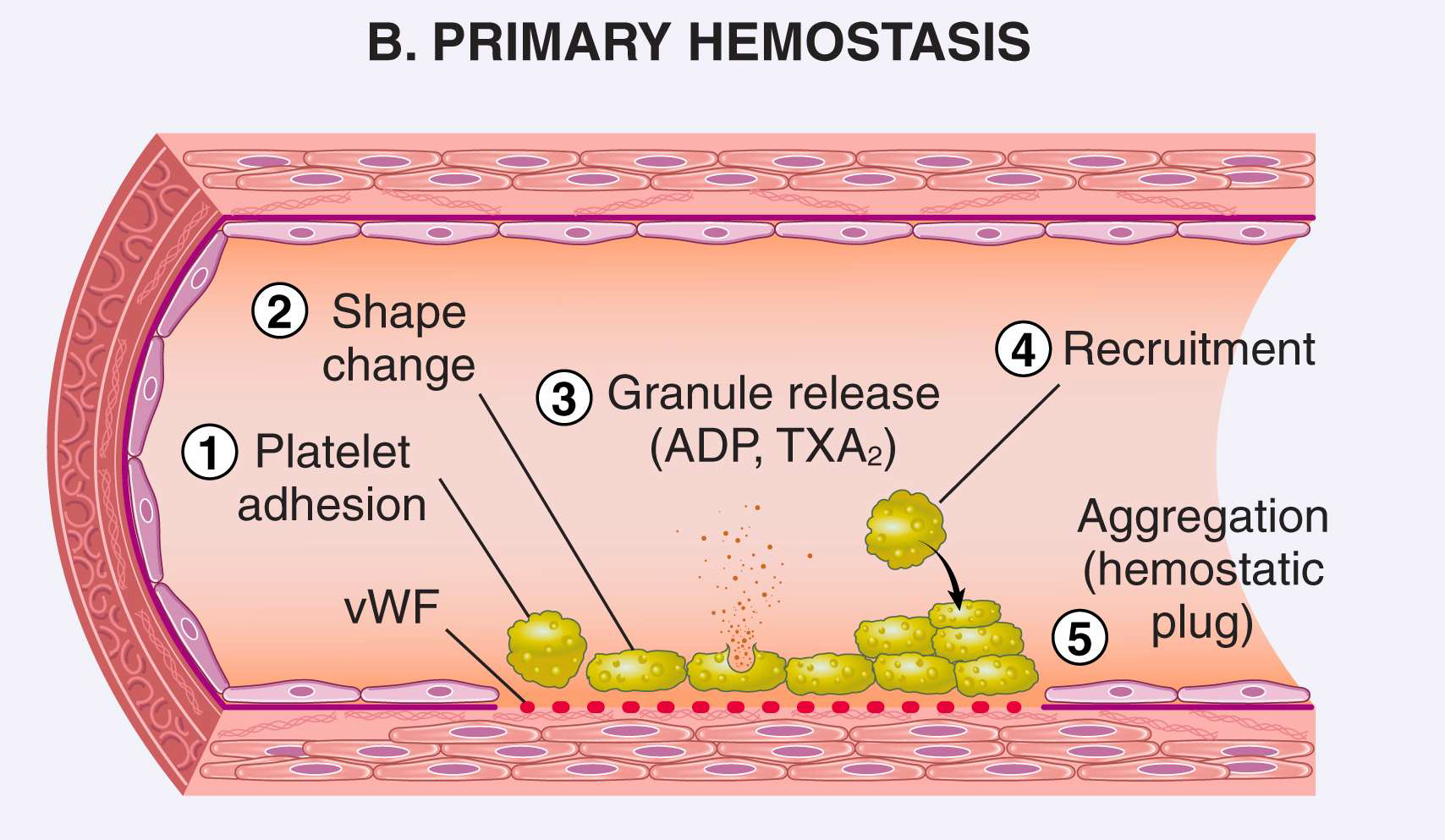
what happens to platelets after they become activated?
change shape: increase surface area
release secretory granules → (platelet recruitment and aggregation)
what two important mediators (secretory granules) are released by activated platelets?
ADP and thromboxane A2
what is the function of ADP and TXA2 in primary hemostasis?
promote platelet recruitment and aggregation
in primary hemostasis platelets go through which three steps?
adhesion
activation
aggregation
What platelet receptor is involved in adhesion?
GpIb
(glycoprotein Ib)
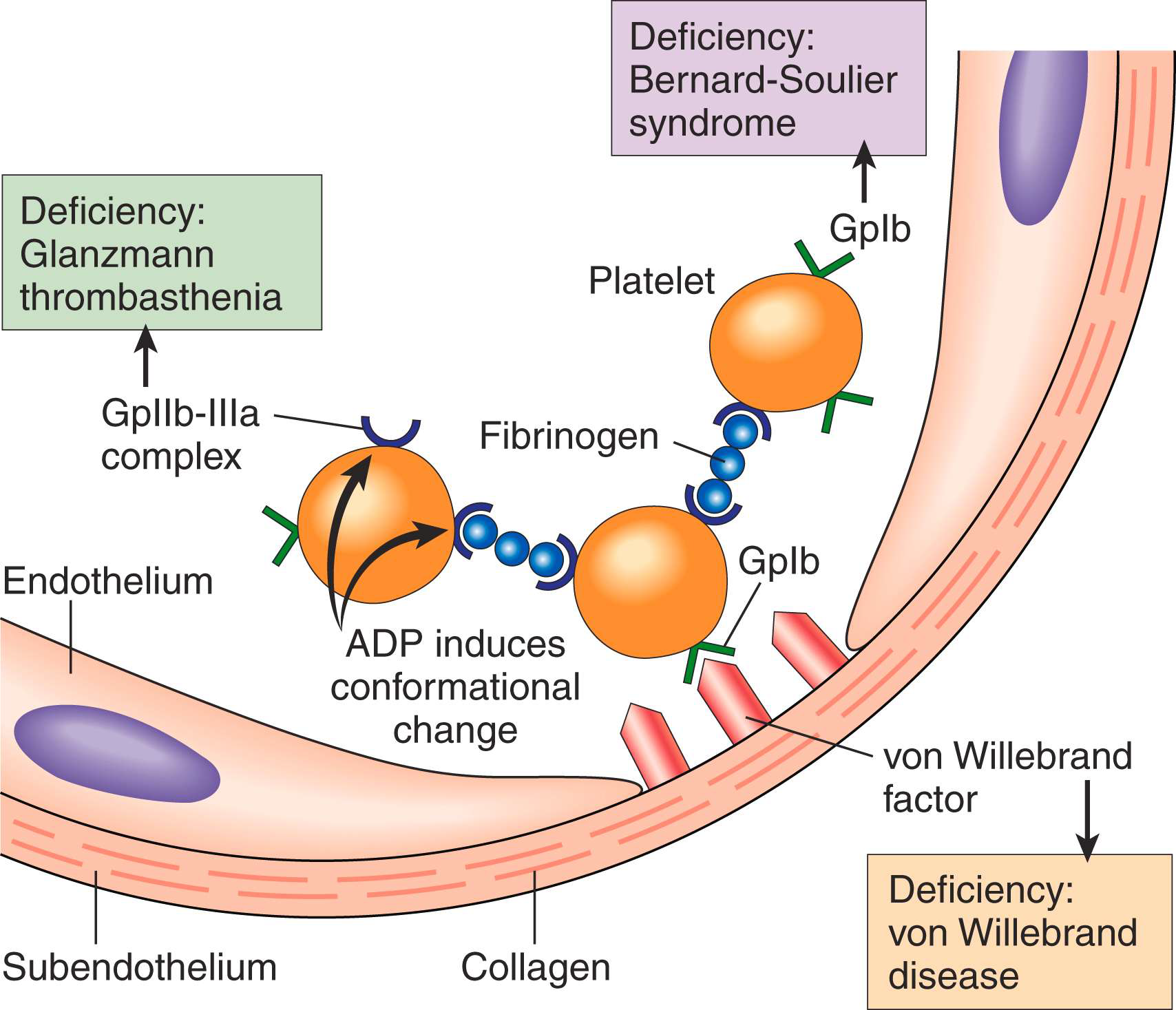
GpIb binds to what?
von willebrand factor (vWF)

Platelets adhere to the ____ through binding of _________ receptor to ____ exposed on endothelium
ECM;
glycoprotein Ib;
vWF
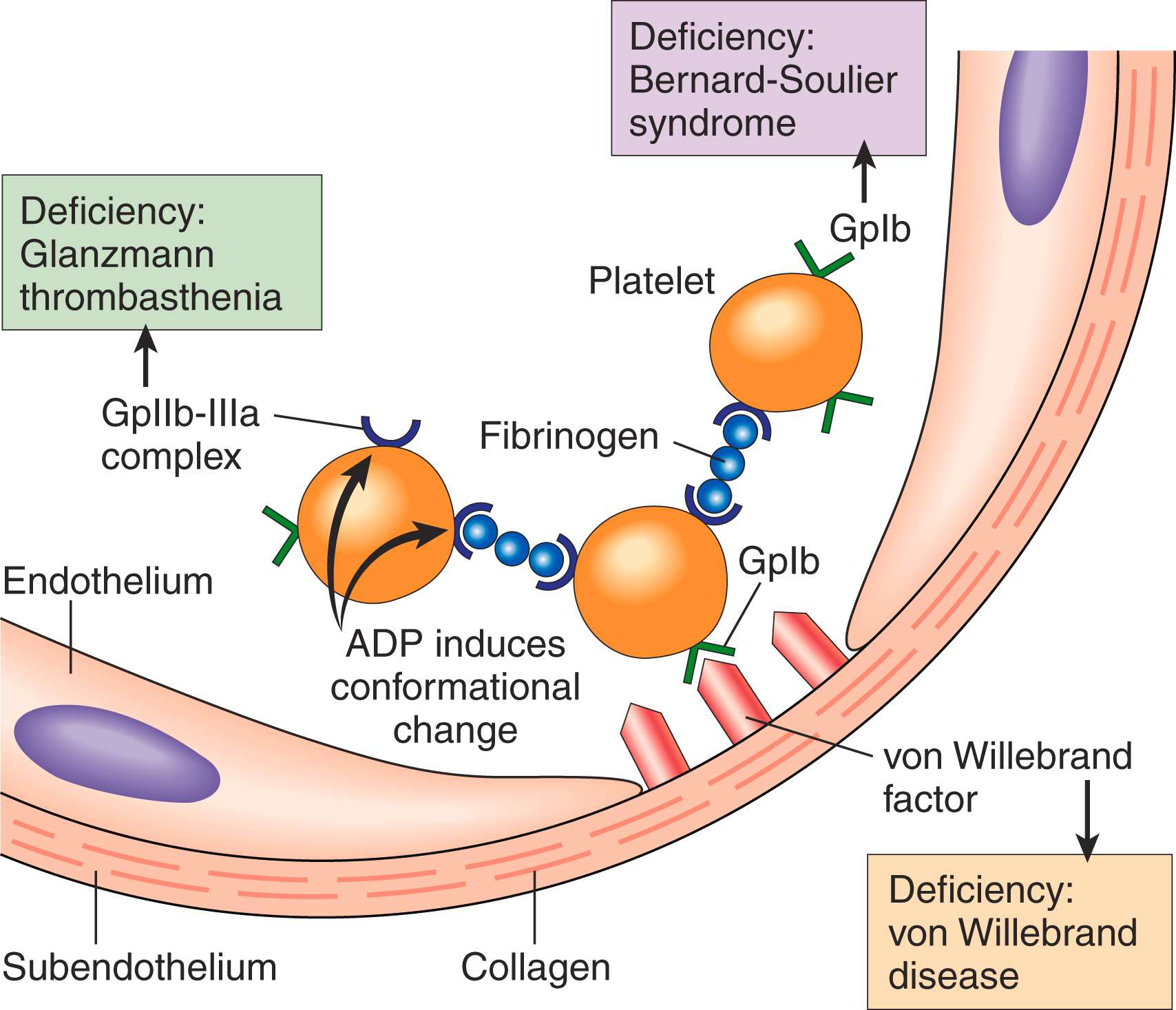
what 3 events happen during platelet activation?
change shape (increase SA)
increased affinity for fibrinogen
secretion of granule contents
what platelet receptor is involved in aggregation?
Glycoprotein IIb/IIIa

what binds GpIIb/IIIa during platelet aggregation?
fibrinogen

how does fibrinogen promote platelet aggregation?
it links platelets together by binding GpIIb/IIIa receptors
what is the major purpose of secondary hemostasis?
to consolidate/stabilize the initial platelet plug with fibrin

what is exposed at the site of injury that initiates coagulation?
tissue factor (TF)

what is the membrane-bound procoagulant glycoprotein that binds and activates factor VII
tissue factor
TF binds and activates which coagulation factor?
Factor VII
what major enzyme is generated through the coagulation cascade?
thrombin
what does thrombin do to fibrinogen?
cleaves fibrinogen→ fibrin
what does fibrin form?
fibrin meshwork that stabilizes the platelet plug
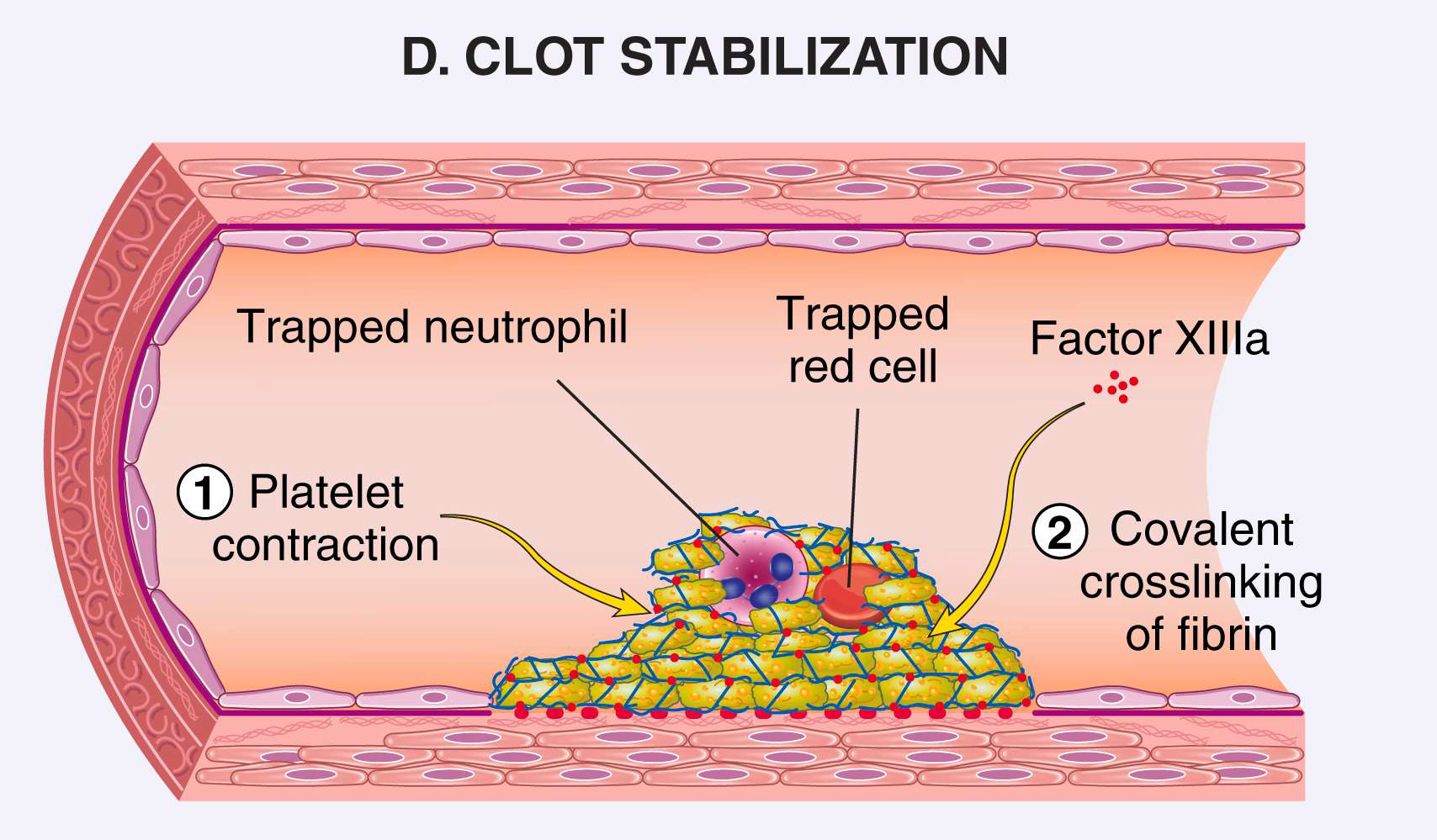
what happens to fibrin and platelet aggregates during clot stabilization?
Fibrin and platelet aggregates contract to form permanent platelet plug
What is t-PA and where is it produced?
tissue plasminogen activator, produced by endothelial cells
what is the overall role of t-PA?
helps limit clotting at the site of injury and allows clot resorption/repair
________ are the regulators of hemostasis
Endothelial cells
what enzyme breaks down fibrin?
plasmin
what is plasminogen?
precursor of plasmin
what activates plasminogen?
t-PA
What initiates the intrinsic pathway?
blood contacting negatively charged surfaces such as exposed collagen from damaged blood vessels
what are the key factors of the intrinsic pathway?
factor XII
factor XI
factor IX
factor VIII

what initiates the extrinsic pathway?
exposure of tissue factor during injury
what are the key players in the extrinsic pathway?
Tissue factor + Factor VII
what is the common pathway?
convergence of intrinsic and extrinsic pathways
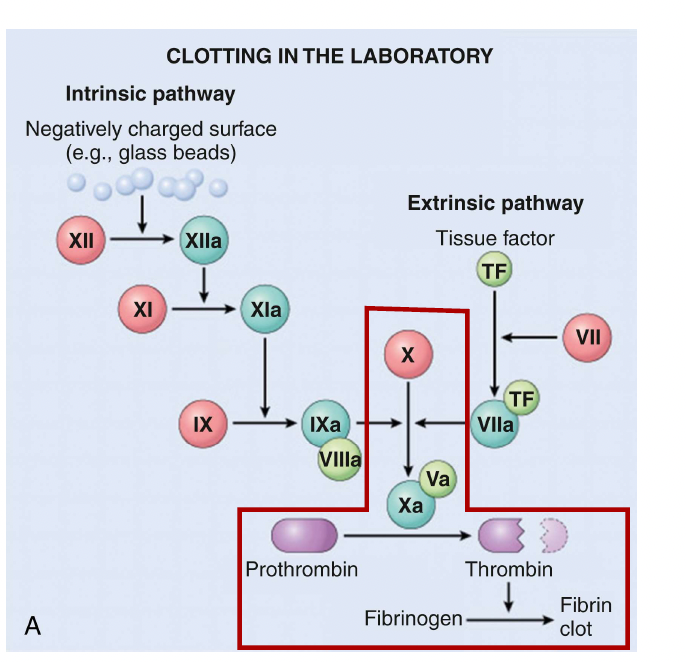
what are the major players of the common pathway?
factor X
prothrombin
thrombin
fibrinogen
fibrin
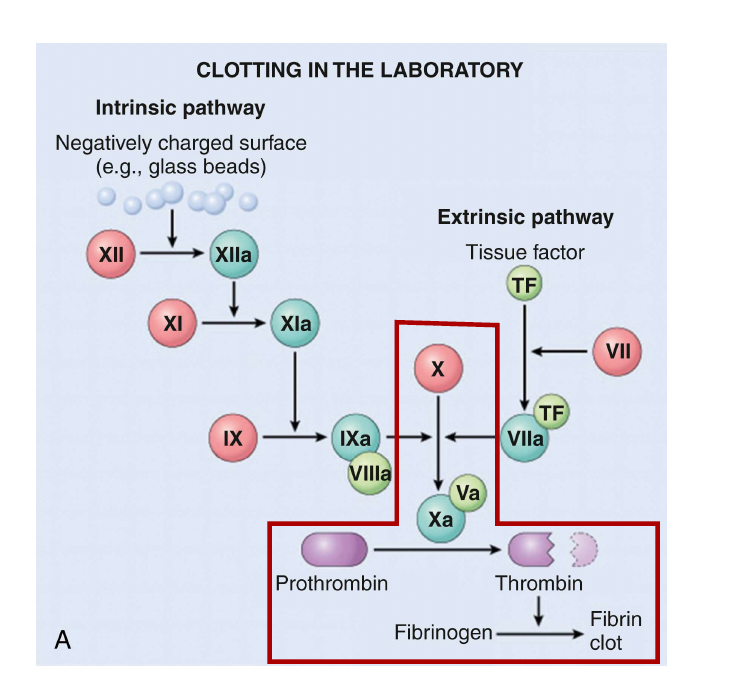
what happens to prothrombin in the common pathway?
it is converted to thrombin
what happens to fibrinogen?
converted to fibrin by thrombin
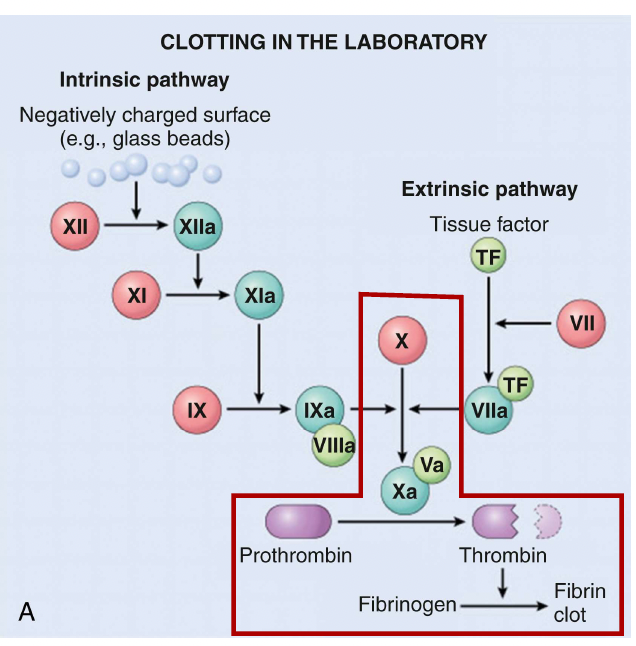
what pathway does prothrombin time evaluate
extrinsic pathway
what factors are assessed by Prothrombin time?
factors VII
factor X
factor V
prothrombin
fibrinogen
what is measured during a PT test?
time until a fibrin clot forms
what is the international normalized ratio? (INR)
“corrected” prothrombin time
Why is international normalized ratio needed?
prothrombin time results vary depending on the manufacturer/reagents, so INR accounts for reagent differences
what pathway does partial thromboplastin time (PTT) assess?
assesses the intrinsic pathway
what factors are assessed by PTT (partial thromboplastin time)?
XII,
XI,
IX,
VIII,
X,
V,
prothrombin,
fibrinogen
what is ultimately measured during PTT?
time to fibrin clot formation
What does thrombin time test and identify?
test the last step of coagulation
Fibrinogen → Fibrin → clot
identifies problem with fibrinogen or thrombin inhibitor issue ( something blocking thrombin)
Patient has a defect in the intrinsic pathway. Which test should be prolonged?
partial thromboplastintime
Patient has a defect in the extrinsic pathway. Which test should be prolonged?
prothrombin time
Factor VIII deficiency should affect which test?
partial thromboplastin time
Factor IX deficiency should affect which test?
Factor VII belongs to which pathway and therefore affects which test?
what is thrombins major action?
converts fibrinogen → fibrin

what coagulation factor does thrombin activate to help stabilize the clot?
Factor XIII
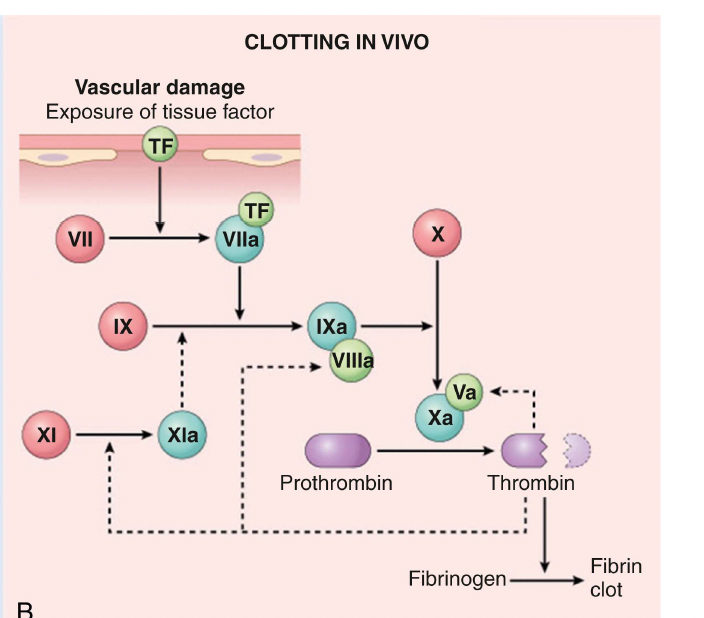
What effect does thrombin have on platelets
promotes platelet activation and aggregation
does thrombin only promote coagulation?
No. it becomes an Anticoagulant when it contacts normal endothelium
besides coagulation what process does thrombin promote?
inflammation;
Angiogenesis(new BV form from preexisting);
Repair
what factors that limit coagulation ?
dilution
fibrinolytic cascade
how does dilution limit coagulation?
blood flowing past site of injury washes out activated coagulation factors
what is the fibrinolytic cascade?
plasminogen is activated to Plasmin by t-PA (tissue plasminogen activator);
Plasmin breaks down fibrin
what is the normal platelet count ?
150,000- 450,000 uL
what is the platelet count in thrombocytopenia ?
<150,000 uL