AP Calc AB - Pretest
 Call Kai
 Learn
Learn Practice Test
 Spaced Repetition
 Match
Match Flashcards
 Knowt Play
1/27

There's no tags or description
Looks like no tags are added yet.
Name | Mastery | Learn | Test | Matching | Spaced | Call with Kai | Chat |
|---|
No analytics yet
Send a link to your students to track their progress
28 Terms
What is necessary after square rooting a value?
±
if something is raised to ¾ how do you undo it?
raise it to 4/3
How to determine VA?
factor the numerator and denominator, cancel common factors, and set the remaining denominator equal to zero
How to determine HA?
numerator degree = denominator degree: The horizontal asymptote is y = a/b where a and b are the leading coefficients of the numerator
Numerator degree (m) < Denominator degree (n): The horizontal asymptote is y = 0
Numerator degree (m) > Denominator degree (n): There is no horizontal asymptote
Remainder Theorm
when a polynomial f(x) is divided by a linear factor (x - a), the remainder of that division is equal to the value of the function evaluated at a, written as f(a)
What does a rational look like

What does a exponential look like

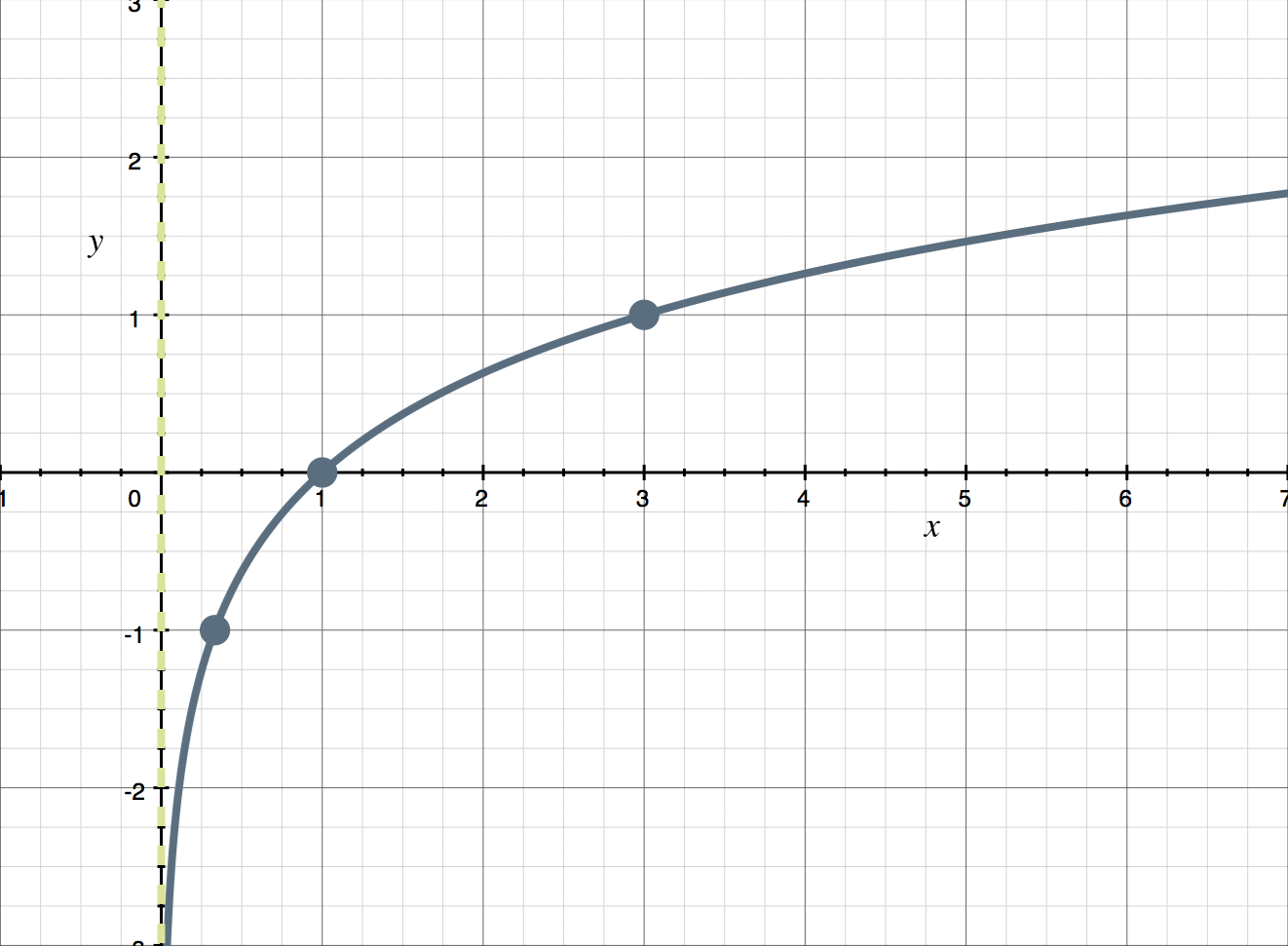
What does a logarithmic look like
What does a square root look like

difference of two cubes
a3 - b3 = (a - b)(a2 + ab + b2)
sum of two cubes
a3 + b3 = (a + b)(a2 - ab + b2)
(x-y)2
x2-2xy+y2
(x+y)2
x2+2xy+y2
Even Functions
a function where substituting a negative input gives the exact same output as the positive input, satisfying the rule f(-x) = f(x)
Symmetric across the y-axis
Odd Functions
a mathematical function that yields a negative output when you input a negative value, satisfying the rule f(-x) = -f(x)
Symmetry about the origin
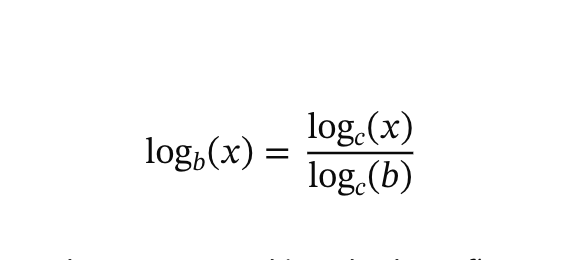
Change of Base Formula
Standard Form
Ax+By+C=0
multiplying powers of the same base
(xa)(xb) = x(a+b)
Trig identities
sin2x + cos2x = 1
tan2x + 1 = sec2x
1 + cot2x = csc2x
how to find x-int of logarithms
Set \(y = 0\): Replace \(f(x)\) or \(y\) with \(0\) in the function equation.
Isolate the logarithm: Move any outside constants or coefficients to the other side so that the log expression stands alone.
Convert to exponential form: Rewrite \(\log_b(A) = c\) as \(b^c = A\) using the definition of a logarithm.
Solve for \(x\): Use basic algebra to find the final value of \(x\).
Check the domain: Ensure your answer makes the inside of the logarithm (the argument) greater than zero
when do you limit the domain for inverses?
you limit the domain when you make a inverse from a square root
You restrict the domain to x>=0 or x<=0 so the parabola's inverse becomes a single-valued square root function instead of plus-or-minus
Which trig functions are even?
cos
sec
Which trig functions are odd?
tan
cot
sin
csc
what does in terms of x mean
that they only variable used is x
what does the argument of a logarithm need to be?
greater than 0
parts of a logarithm

sin function
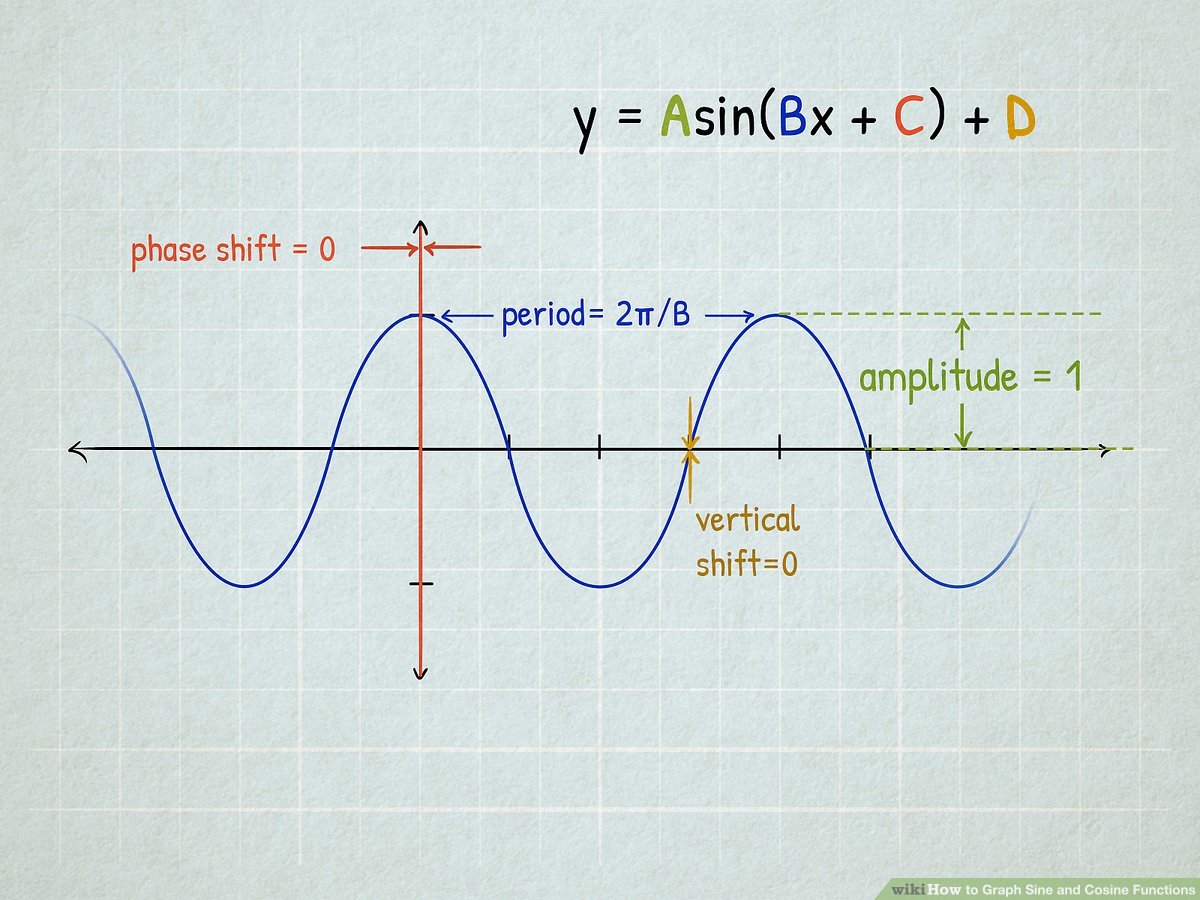
cos function

y = Acos(Bx+C) + D